What it’s like traveling in Switzerland now


Editor's Note
TPG has been following developments in travel to Switzerland throughout the pandemic — and we're particularly tuned in right now with all the winter wonderland travels to enjoy there. But you don't really know how it's going to be traveling to a place during the pandemic until, well, you actually travel to a place during the pandemic (and it's still the pandemic, even as it's getting easier to travel around the world).

I flew from Tampa to Zurich via Dulles International Airport (IAD) on United Airlines at the end of January and — as has been the case with most international places I've traveled to outside of the U.S. during the pandemic — I found that the lead-up to leaving (read: testing and paperwork to fill out before flying and QR codes to acquire) was the biggest hassle of the whole process.
And all things considered, those things weren't really that much of a hassle at all (although they do require your time and attention to detail, of course) — especially considering that my reward was a week of fondue meals on repeat and sled runs in the snowy Swiss Alps.
Thinking of traveling to Switzerland? Read on for how the process is right now — and be sure to check the country's Travelcheck portal before you go for any changes.
Before leaving
I started thinking about the ducks I needed to get in line for my trip to Switzerland about a week before my departure date in late January, even though United Airlines started sending me its "Ensure Smooth Travel to Zurich" emails almost two weeks before then (and continued to send the email checklist of what I needed to do until I actually took action and uploaded my documents).
The emails linked to the airline's Travel Ready Center, which does a good job of making it clear what you need to have for travel to Switzerland and also the exact window of accepted time frames within which to get your pre-travel COVID-testing done, which I really appreciated, because that always throws me for a loop. You can upload your pre-departure COVID-19 test right into the United app, too, for pre-trip validation of your travel documents — or you can just wait and show it at the airport.
Testing for travel to Switzerland
There's currently only one pre-departure COVID-19 test required for entry into Switzerland. And the country gives you some pretty lenient options for pre-departure testing, all things considered (and when it comes to testing, having options is a really good thing).
All travelers entering Switzerland by plane or long-distance bus are required to show a negative PCR test taken no more than 72 hours before your departure time (this is where the United Travel Ready Center makes it really easy to time things flawlessly — giving you the exact date and time, down to the minute, of the earliest test you can take, as it corresponds to your flight time). You also have the option of doing a rapid antigen test to enter Switzerland, taken no more than 24 hours before departure from the airport where you first check-in.

I live in Florida, where there are widely available free antigen testing and free PCR testing options in big cities at pharmacies like Walgreens and CVS as well as at widespread county testing sites. I opted for a 24-hour rapid antigen test taken the day before my flight (but not more than 24 hours before I boarded in Tampa) at the drive-thru at Walgreens. For good measure (read: because I didn't want anything to interfere with my trip to Switzerland), I also scheduled a backup rapid antigen test the morning of my flight just in case the first test had a flaw or didn't come back in time. I got the negative results back in a few hours from my first test, uploaded them to the United Travel Ready Center and got confirmation less than an hour later that it was approved.
Related: 5 winter wonderland escapes in Switzerland to visit now
Apply for your Swiss Covid Certificate before you leave

Equally important as testing if you want to enjoy yourself in Switzerland's restaurants, hotels, wellness areas (sauna!) and museums is obtaining the COVID-19 vaccine certificate, called the Swiss COVID Certificate, which requires applying online and having your vaccine card — or proof that you've fully recovered from COVID-19 (with proof from an approved PCR test taken within the last 270 days and proof that your quarantine has been lifted) — uploaded online through the government's official National COVID certificate application platform. The form is fairly extensive and also requires you to input information on when you received your last dose, where you will be staying in Switzerland and other details. Then you pay the 30CHF fee (via credit card) and receive an email to expect to receive your Swiss COVID Certificate in five days. Mine was in my inbox—yet another QR code to keep track of — the next day, as timely and efficient as a Swiss train.
The last piece of the paperwork puzzle and final required QR code to acquire before you leave to Switzerland is the entry form from the Federal Office of Public Health. It asks the usual questions of where you live and where you plan to stay in Switzerland, and even wants to know which seat you've been assigned on your flight. (I winged it on that one since I was in basic economy and had no assigned seat when I filled out the form — it worked fine).
Before boarding the plane in Washington, D.C., I was asked to show my vaccine card and the QR code for the Swiss Entry Form, but not my COVID test since my boarding pass was already stamped Travel Ready.
Arriving at Zurich International Airport
All my QR codes in tow and negative test results in, this is the point in the trip where everything got decidedly easier. There was no line for immigration when I landed around 8 AM on a Friday morning at Zurich's sparkling clean and contemporary international airport, which felt almost spa-like compared to most I'm used to in the U.S.
The immigration officer asked just a few questions, including my reason for visiting Switzerland (sledding, I told him, of which he approved) and to see my vaccine card. He didn't ask for proof of my negative COVID-19 test or to see the Swiss entry form QR code. He did seem a bit fascinated, however, by how my vaccine card was just handwritten with no QR code and showed it to his colleague, mumbling something I couldn't understand in Swiss German. I explained to him, sheepishly (my card looks so easy to forge) that that's just how some of the vaccine cards are in the U.S. And he told me he rather liked it because everything was right there on one small card. So I ended up feeling a bit proud of my shabby vaccine card. Then he told me to have fun sledding and stamped me in.
Use your Swiss Health Certificate to get into places


Compared to when I didn't get my French health pass in time for my trip to France last fall (and my CDC vaccine card sufficed for getting me in everywhere the health pass was required), Switzerland, simply put, doesn't play.
From the first cafe at Zurich's main train station where I wanted to sit at a table inside to have my welcome back taste (cappuccino and pain au chocolat for the win) to all three hotels I checked into during my week-long stay, I was immediately asked for my Swiss COVID certificate as I stepped in the door. (I was even asked to show it to sit outside on a terrace during apres-ski at a popular spot in Davos).
It was easy to show the QR code on my phone on demand, which was always scanned and required along with proof of identity (so keep your passport handy wherever you go). But I kind of wished I'd printed it out since I was taking so many photos of all the amazing scenery during my trip and was living in a panic of my phone battery dying and not being able to pull up my health certificate.
You don't need to show your health certificate or any proof of vaccine or testing to ride Switzerland's public transport and it's also not required in hair salons and a few other places.
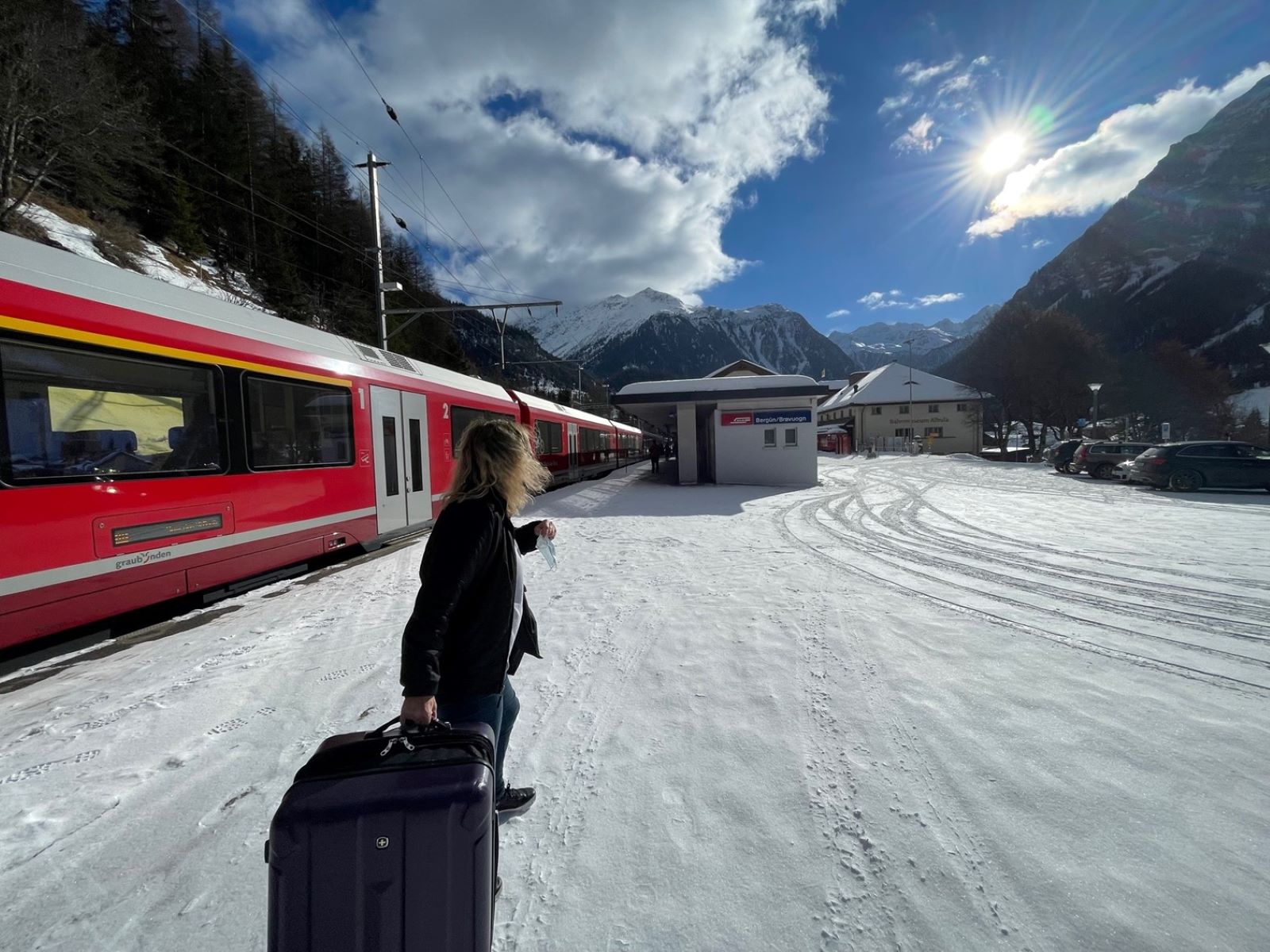
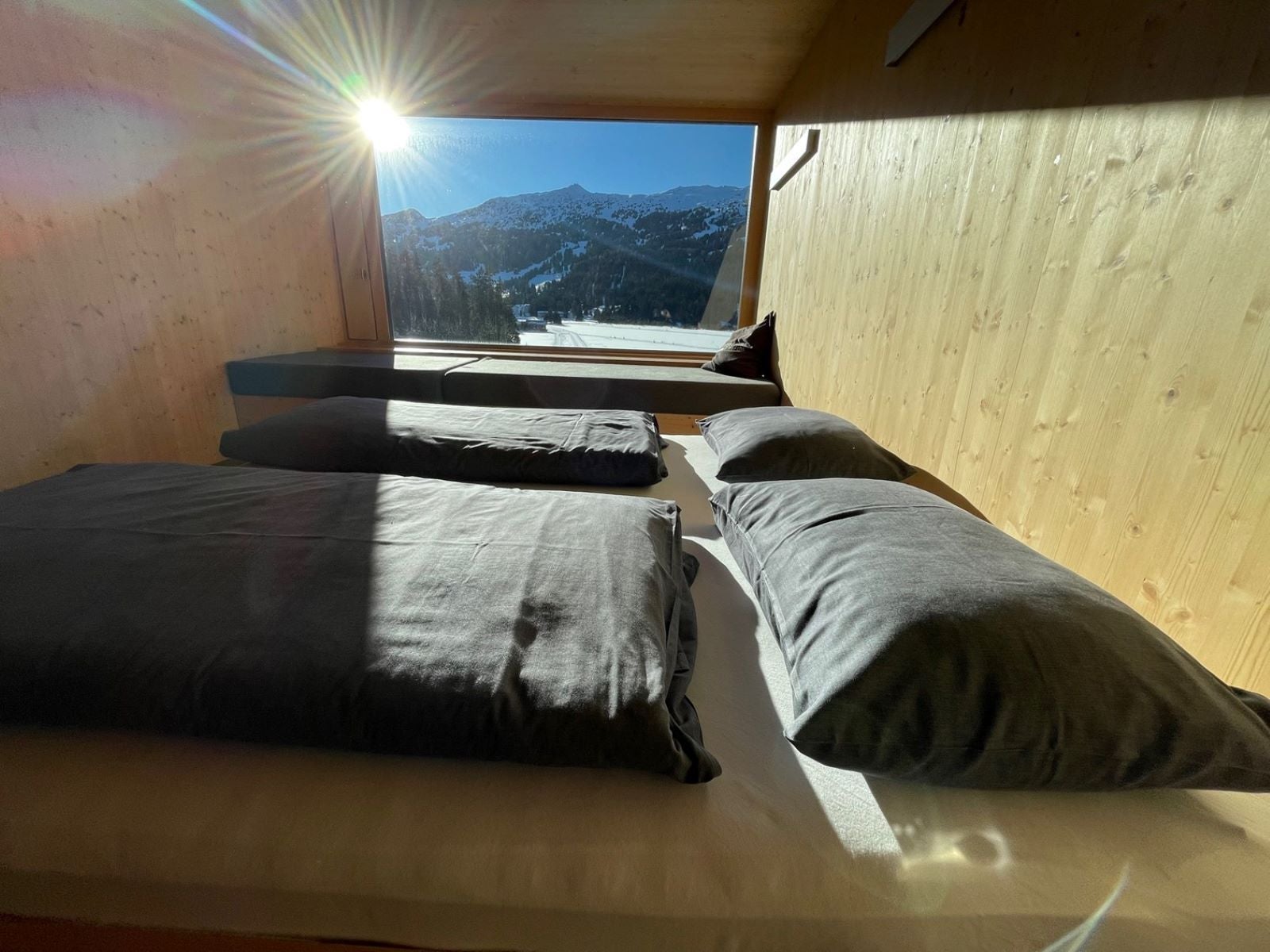
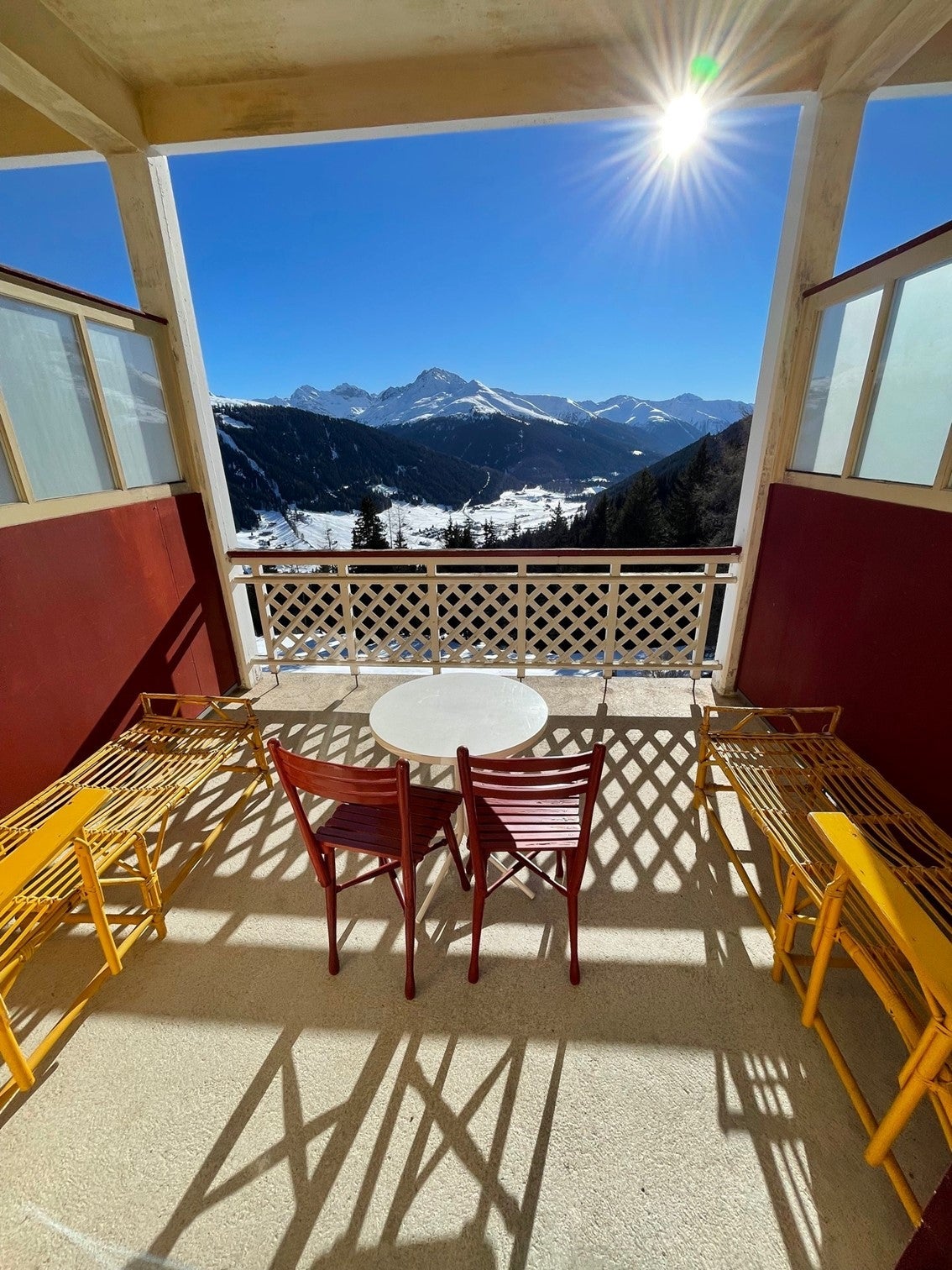
But when I arrived by train at the beautifully restored Art Nouveau Kurhaus hotel in the sledding wonderland village of Bergün in Graubünden canton, my health certificate was the first thing they asked for at reception, along with my passport. The hotel gave me a fabric wrist band like you get at an all-inclusive resort, which meant I didn't have to show my health certificate every time I sat for breakfast or dinner in the cozy dining room and could live QR code free as long as I didn't leave the premises. Masks, however, are still required in publicly accessed indoor places, like a hotel lobby, as well as on transport.
Where I ran into my first snafu with enjoying all I'd come to Switzerland to do was at the lovely Sunstar hotel in Davos, where having had both my vaccinations (2G status) was good enough for me to eat in the restaurant and stay at the hotel, but not to enjoy the saunas and wellness area where only people who can show proof of having had their last shot within 120 days or a negative rapid antigen COVID test result taken within 24 hours (or a PCR test within 72 hours) can get access (that's called 2G+ status).
Understanding Switzerland's 2G and 2G+ system
Since I didn't research Switzerland's code words denoting just how recently vaccinated you are ahead of time, it took several days of seeing signs outside bars and restaurants scrawled with "2G" and "2G+" until I realized they were talking about the required vaccination status to get in—and not the locale's mobile telecommunications technology.
The country's Federal Office of Public Health does a good job of explaining the differences here, but caveats that there are still some situations where 2G or 2G+ statuses can be applied voluntarily,
2G status means you have proof that you're vaccinated or recovered from COVID and is required for access to indoor areas of bars and restaurants, hotels, indoor events, museums, gyms, zoos and other places. 2G+ goes a step further and requires you to show that your last jab was within the prior 120 days (or a certificate for a negative COVID-19 test in addition to you older vaccines) and is required at nightclubs and discos, indoor pools and water parks and—just in case it's on your travel itinerary—"wind and brass band rehearsals," too.
It's all pretty confusing, but every place you go, whoever is greeting you and asking for your heath certificate will make it clear which one is required and if you pass muster. While I didn't pass muster to use the wellness area at the Davos hotel since it had been more than 120 days since my last shot (and I didn't have a recent enough negative COVID test to show, which would have upgraded me to 2G+ for a short while), it was no big loss. I was too busy sledding all day and eating fondue all night anyway.
If I'd wanted to go to a nightclub, however, I would have had to go get tested to gain 2G+ status for the night.
Related: How I got bored and burned 130,000 Aeroplan points for a weekend in Switzerland
Getting tested in Switzerland to return to the U.S.
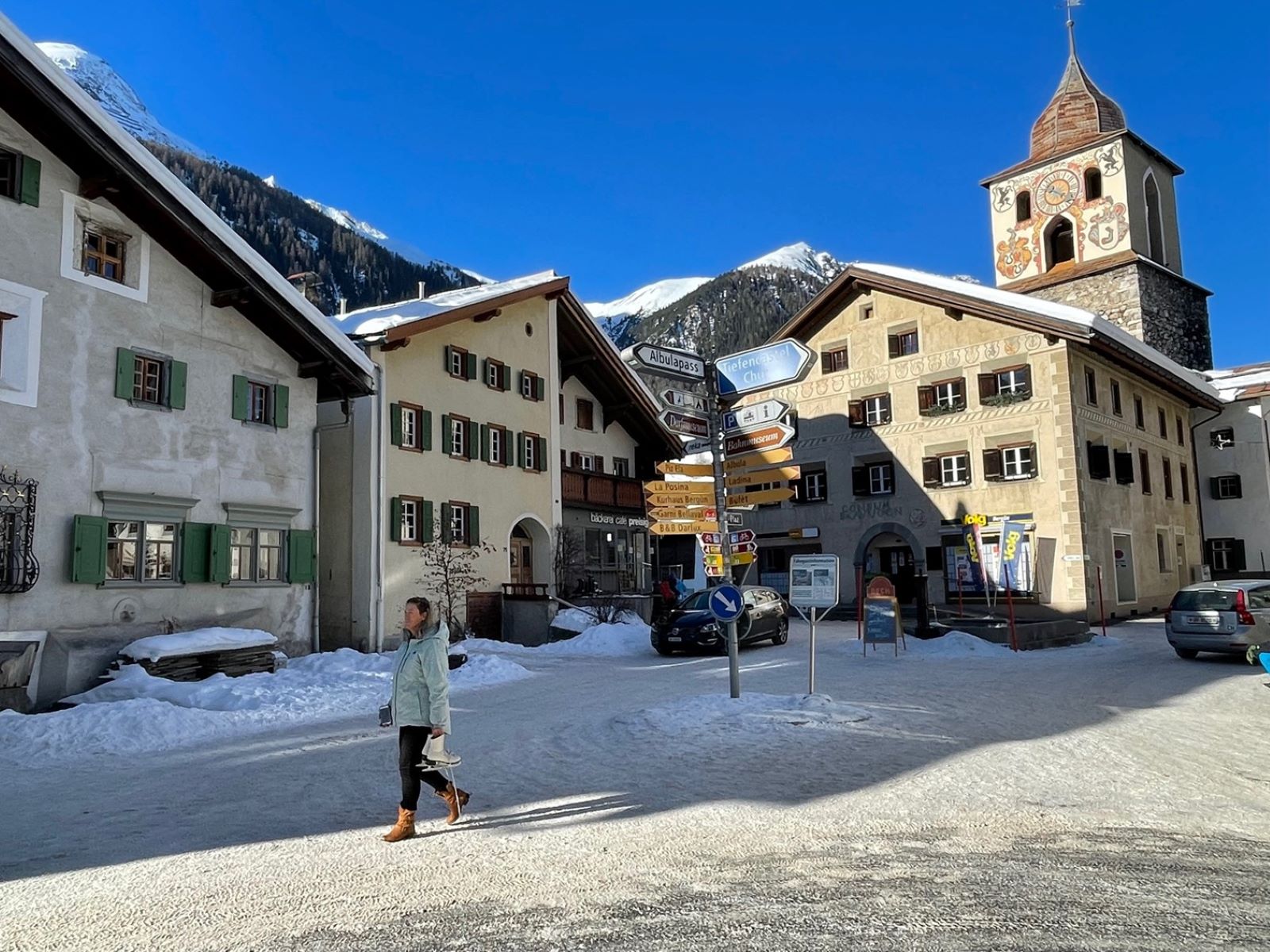
The relatively recent requirement for return testing taken within a day of your departure back to the United States isn't the easiest thing to navigate in countries that are less organized than Switzerland. But Switzerland makes it easy with inexpensive or free testing centers everywhere—I spotted them in Zurich's main train station, on the snowy streets of St. Moritz (where I got a chuckle that one "Dr. Christ" was administering them) and in the smaller ski town of Lenzerheide. My rapid antigen test required making an appointment ahead of time (you can also just walk in), was free and fast—and I got the results back in one hour with yet another QR code to show at the airport in Zurich before boarding my flight back to the U.S.
The Bottom Line
Traveling to Switzerland right now requires pre-trip COVID testing, a 30CHF fee (roughly $33) for a health certificate and several pages of paperwork to be filled out before you go. But once you're on the ground in the country, QR code in hand, everything runs smoothly. If you want to be able to have full access to every place you go in the country, make sure your most recent COVID-19 test is within the last 120 days, or plan to test regularly once you're there so you can have the almighty 2G+ status.
TPG featured card
at American Express's secure site
Terms & restrictions apply. See rates & fees.
| 4X | Earn 4X Membership Rewards® points per dollar spent on purchases at restaurants worldwide, on up to $50,000 in purchases per calendar year, then 1X points for the rest of the year. |
| 4X | Earn 4X Membership Rewards® points per dollar spent at US supermarkets, on up to $25,000 in purchases per calendar year, then 1X points for the rest of the year. |
| 5X | Earn 5X Membership Rewards® points on prepaid hotel stays booked through AmexTravel.com or the Amex Travel App™. |
| 3X | Earn 3X Membership Rewards® points on flights booked through AmexTravel.com, the Amex Travel App™, or purchased directly from airlines. |
| 2X | Earn 2X Membership Rewards® points on prepaid car rentals booked through AmexTravel.com or the Amex Travel App™ and cruises booked and paid through AmexTravel.com. |
| 1X | Earn 1X Membership Rewards® point per dollar spent on all other eligible purchases. |
Pros
- Valuable dining and food-related credits
- Flexible rewards with airline and hotel transfer partners
- Multiple travel and purchase protections
- No foreign transaction fees
- Access to Amex Offers for additional savings (enrollment required)
Cons
- Not as useful for those living outside the U.S.
- Some may have trouble using Uber and other dining credits
- You may be eligible for as high as 100,000 Membership Rewards® Points after you spend $8,000 in eligible purchases on your new Card in your first 6 months of Card Membership. Welcome offers vary and you may not be eligible for an offer. Apply to know if you’re approved and find out your exact welcome offer amount – all with no credit score impact. If you’re approved and choose to accept the Card, your score may be impacted.
- Earn 4X Membership Rewards® points per dollar spent on purchases at restaurants worldwide, on up to $50,000 in purchases per calendar year, then 1X points for the rest of the year.
- Earn 4X Membership Rewards® points per dollar spent at US supermarkets, on up to $25,000 in purchases per calendar year, then 1X points for the rest of the year.
- Earn 5X Membership Rewards® points on prepaid hotel stays booked through AmexTravel.com or the Amex Travel App™.
- Earn 3X Membership Rewards® points on flights booked through AmexTravel.com, the Amex Travel App™, or purchased directly from airlines.
- Earn 2X Membership Rewards® points on prepaid car rentals booked through AmexTravel.com or the Amex Travel App™ and cruises booked and paid through AmexTravel.com.
- Earn 1X Membership Rewards® point per dollar spent on all other eligible purchases.
- Pay It® lets you tap in the American Express® App to quickly pay for small purchase amounts throughout the month and still earn rewards the way you usually do. Plan It® gives you the option to split up big purchases into equal monthly payments with a fixed fee. You’ll know upfront exactly how much you’ll pay.
- $120 Dining Credit: Earn up to a total of $10 in statement credits monthly when you pay with the Gold Card at Grubhub (including Seamless), Buffalo Wild Wings, Five Guys, The Cheesecake Factory, and Wonder. This can be an annual savings of up to $120. Enrollment required.
- $100 Resy Credit: Get up to $100 in statement credits each calendar year at over 10,000 qualifying U.S. Resy restaurants after you pay for eligible purchases with the American Express® Gold Card. That’s up to $50 in statement credits semi-annually. Enrollment required.
- $84 Dunkin' Credit: Earn up to $7 in monthly statement credits after you pay with the American Express® Gold Card at U.S. Dunkin’ locations. Enrollment required.
- $120 Uber Cash on Gold: Enjoy up to $120 in Uber Cash annually with your Gold Card. Just add your Card to your Uber account and you'll get $10 in Uber Cash each month to use on orders and rides in the U.S. when you select an Amex Card for your transaction.
- Enjoy complimentary Hertz Five Star® Status benefits like skipping the counter at select locations, adding an additional driver at no additional cost*, and vehicle upgrades**. Benefit enrollment and Hertz Gold+ registration are required. *Additional drivers must meet standard rental qualifications and must be a spouse or domestic partner to qualify as complimentary. Other additional drivers subject to fees. **Benefits are subject to availability and vary by location. Additional Hertz program Terms and Conditions including age restrictions apply.
- Book two nights or more with The Hotel Collection through AmexTravel.com or the Amex Travel App™ and receive a $100* credit towards eligible charges at over 1,400 upscale hotels worldwide. *Eligible charges vary by property.
- Book your travel through the Amex Travel App™ with added peace of mind – backed by American Express® service and support. Only for American Express® Card Members.
- Whenever you need us, we're here. Our Member Services team will ensure you are taken care of. From lost Card replacement to statement questions, we are available to help 24/7.
- No Foreign Transaction Fees.
- Annual Fee is $325.
- Terms Apply.