Privacy, please: How much personal data would you share for the freedom to travel?

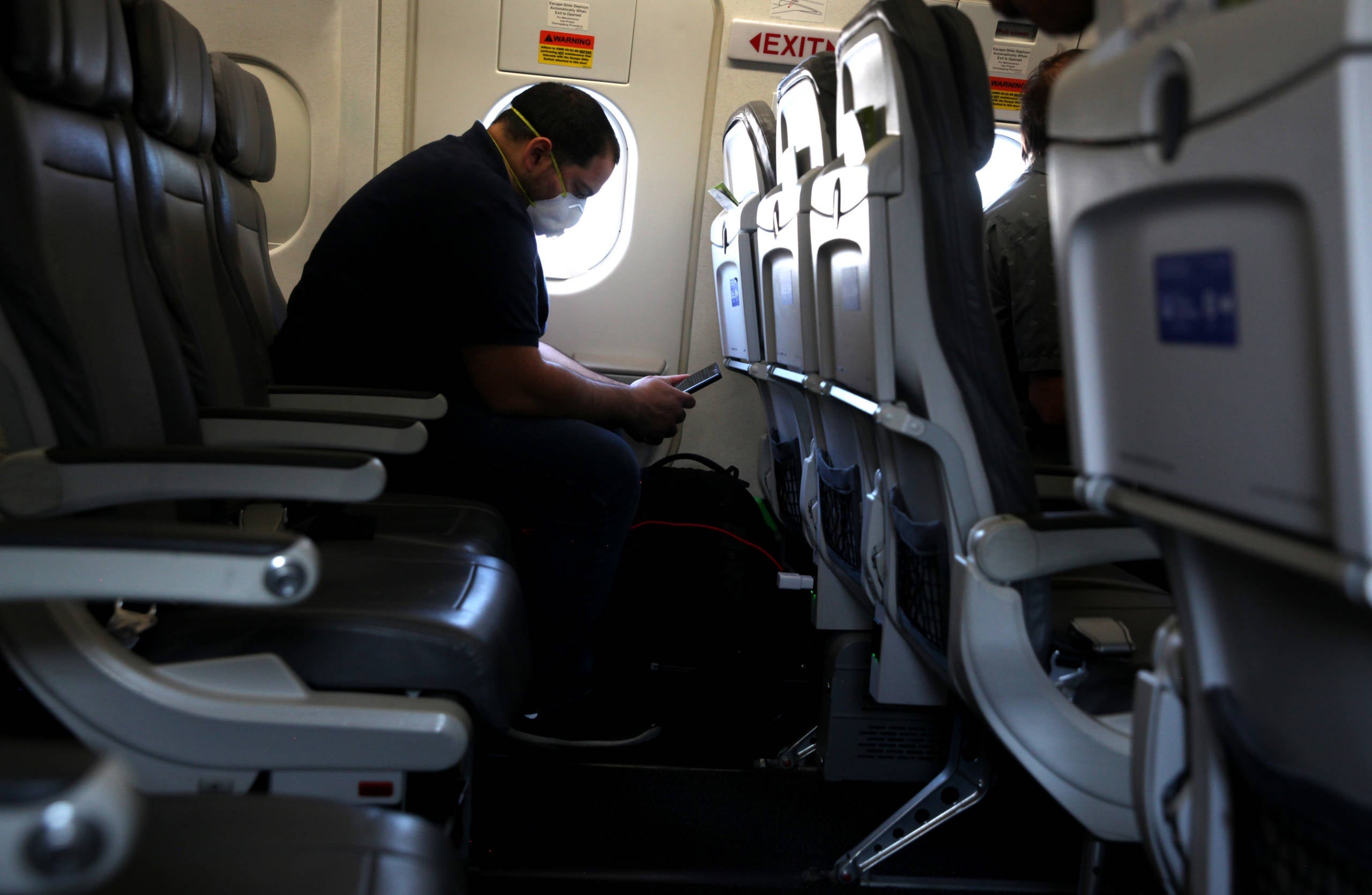
Your phone is tracking your location. The Transportation Security Administration (TSA) knows your travel plans before you even show up at the airport. An app on your phone may unlock your hotel room.
The fact is, most of us have already given up a lot of privacy and freedom to travel.
And the coronavirus pandemic has added another layer of monitoring that's less about making sure travelers aren't a security threat and more about making sure they're healthy. In recent months, the travel industry has either considered or already rolled out electronic monitoring at hotels, vaccine passports and social distancing using crowd data pulled from cellphones.
So, how much privacy -- especially health data -- will people be willing to sacrifice to travel again?

TPG's senior news editor, Clint Henderson, recently stayed at a resort in Hawaii where he was required to check in on an app daily to report his health status. It was part of an "enhanced movement quarantine" program that uses tracking bracelets to keep tabs on guests. He received daily emails from the state of Hawaii reminding him to check-in and comply with all the quarantine regulations. Breaking the rules came with stiff penalties: fines up to $5,000 or even jail time.
Visitors to New York City might receive a knock at the door to make sure they're following the quarantine rules. And if you want to visit Barbados or the Cayman Islands during the pandemic, be prepared to be tracked. Like Hawaii, both islands monitor travelers to ensure they're abiding by quarantine regulations.
For some travelers, being subjected to increased monitoring is fine as long as they get to hit the road again.
"I know I'm already being tracked for advertising purposes, at a minimum, by apps," said Kirstin Stone, a member of the TPG Lounge Facebook group. "If there was a secure public health solution that would keep people safe and allow travelers some confidence to travel without getting sick, I'd happily accept it."
But some travelers have real concerns about the privacy of their health data or view the new policies as a dangerous government and Big Tech overreach that might not be undone.

"I can see [tracking tools] being rolled out to control the spread of the virus, and then never rolled back," said Anthony Sigalas, also a member of the TPG Lounge Facebook group.
Last month, TPG reported that vaccine and health passports will likely be instrumental in restarting international travel. But that doesn't mean travelers completely trust them. A study by NordVPN found that 21.5% of Americans were afraid their vaccination record would be lost, while a third feared their record could be stolen.
"The two areas of concern are what the government is going to do with this information, and what does it mean that that information lives on my phone," said Laura Hautala, a staff writer at CNET (which is owned by TPG's parent company, Red Ventures) who writes about cybersecurity and privacy.
This information (which includes things like vaccine passports and health passports) will likely be used to further mitigate the spread of COVID-19, said Marijus Briedis, the chief technology officer at NordVPN, in an email.
"Unvaccinated people might be restricted from going to regions where herd immunity has not been formed yet," he said. "If travel restrictions are imposed for [the] unvaccinated, vaccine shot records would be used to control our journeys periodically."
But it's not unrealistic that bad actors might try to target health data. For instance, more than 41 million patient records were breached in 2019, according to HealthITSecurity, a website that covers health data security and privacy. More recently, Qatar's COVID-19 tracking app was revealed to be vulnerable to cyberattacks that could have shown users' health status and location data.
"Everything can be hacked. The question is if the reward is worth the effort ... what we must understand is that the amount of data collected from internet users is massive," Briedis said.
Several companies have already announced or rolled out health passports. American Airlines and British Airways worked with a tech firm, Daon, to introduce a mobile health passport called VeriFLY. The app -- which is voluntary to use -- certifies negative test results and required travel documentation to streamline the travel journey.
But if you're worried about protecting your privacy, Daon said that travelers have "strict controls" over how their information is shared, and with whom. An executive on a British Airways media call also said the app uses the same secure mobile wallet as a digital bank account.
"When a customer chooses to use VeriFLY, any tests or health insurance documents they upload [are] purely confidential within the VeriFLY ecosystem, and American doesn't receive any of that," Preston Peterson, American Airlines' director of customer experience innovation, said in an interview. "We've been very careful to make sure that we safeguard our customer's data and take their privacy concerns very seriously."
Bottom line
Like slipping off your shoes at the airport before security, some form of health surveillance is likely to stay in place after the pandemic is behind us. And though travelers may have genuine concerns about their privacy, and who has access to their personal data, it seems likely that tools such as vaccine passports and biotechnology screening devices may become a permanent part of the travel experience -- whether passengers like it or not.
Right now, however, it's unclear where the line will be drawn.
"Similar to facial recognition, once you create the infrastructure for something, there's a temptation to find new uses for it," Hautala told TPG. "It's entirely possible that tracking health information will become a bigger part of international travel."
TPG featured card

at Capital One's secure site
Terms & restrictions apply. See rates & fees.
| 5X miles | Earn 5X miles on hotels, vacation rentals and rental cars booked through Capital One Travel |
| 2X miles | Earn unlimited 2X miles on every purchase, every day |
Pros
- Stellar welcome offer of 75,000 miles after spending $4,000 on purchases in the first three months from account opening. Plus, a $250 Capital One Travel credit to use in your first cardholder year upon account opening.
- You'll earn 2 miles per dollar on every purchase, which means you won't have to worry about memorizing bonus categories
- Rewards are versatile and can be redeemed for a statement credit or transferred to Capital One’s transfer partners
Cons
- Highest bonus-earning categories only on travel booked via Capital One Travel
- LIMITED-TIME OFFER: Enjoy $250 to use on Capital One Travel in your first cardholder year, plus earn 75,000 bonus miles once you spend $4,000 on purchases within the first 3 months from account opening - that’s equal to $1,000 in travel
- Earn unlimited 2X miles on every purchase, every day
- Earn 5X miles on hotels, vacation rentals and rental cars booked through Capital One Travel
- Miles won't expire for the life of the account and there's no limit to how many you can earn
- Receive up to a $120 credit for Global Entry or TSA PreCheck®
- Use your miles to get reimbursed for any travel purchase—or redeem by booking a trip through Capital One Travel
- Enjoy a $50 experience credit and other premium benefits with every hotel and vacation rental booked from the Lifestyle Collection
- Transfer your miles to your choice of 15+ travel loyalty programs
- Top rated mobile app