Supreme Court Reviewing Antitrust Claims Against Amex


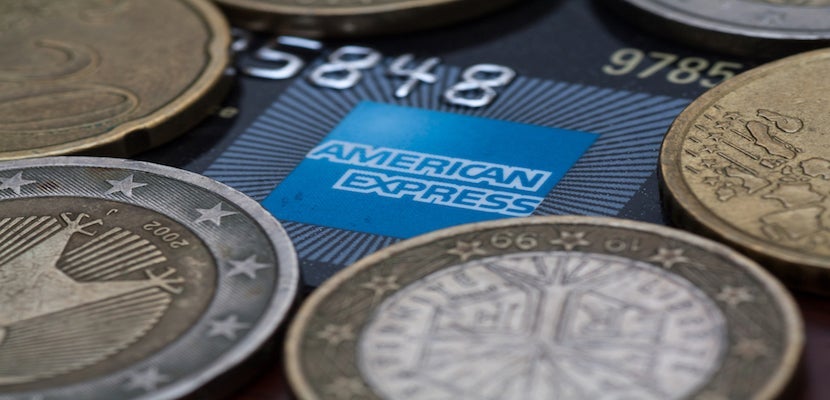
American Express merchant policies came under intense scrutiny from the United States Supreme Court on Monday as the court debated reviving an antitrust lawsuit brought against the credit card company.
The case, led by Ohio as well as 16 other states and the Justice Department, focuses on the "swipe fees" retailers pay to process transactions, which currently add up to more than $50 billion a year. American Express not only charges higher processing fees compared to other networks, but also contractually forbids its merchants to suggest customers use competing credit cards that charge less — otherwise known as "anti-steering" provisions.
According to the plaintiffs, the merchant policy violates federal antitrust law because it places limits on competition. But American Express, which accounts for about 26% of all credit card transactions, asserts that its higher fees allow the company to compete against the dominant processors, Visa and Mastercard, by offering premium perks for its customers.
The case ended up at the Supreme Court after a lower New York court ruled in 2016 that American Express did not unlawfully stifle competition through its anti-steering provisions. But Supreme Court Justices Elena Kagan, Sonia Sotomayor and Stephen Breyer had sharp criticism for the credit card company after hearing an hour of arguments from the plaintiffs.
Justice Sotomayor said that under American Express contract restrictions, merchants can't offer consumers a choice between receiving a discount by using another card, or sticking with an American Express card in order to earn rewards. "You're not giving me the choice," Sotomayor said. "And that's what price competition is about: my choice, not your choice about what's more valuable to me."
Justice Breyer said the key question was whether there is an anti-competitive aspect to the American Express conduct. "It seems to me obvious, of course, there is," he said.

But Justice Neil Gorsuch expressed doubts about the states' arguments, saying the rules don't limit Visa or Mastercard from lowering their fees or advertising that American Express charges more. "It's just the difference between Cadillacs and Kias," Gorsuch said. Consumers still have the option of choosing between a high-cost, high-reward card or a cheaper alternative, "and the two sides can compete with one another."
The case started in 2010 when American Express along with Visa and Mastercard were sued by the states and the antitrust bureau of the Justice Department, alleging that the company's anti-steering requirements kept merchants from using competition to negotiate for flatter swipe fees. Visa and Mastercard settled their lawsuits by agreeing to change their merchant rules, leaving Amex as the sole defendant. A similar class-action lawsuit was filed against Visa, Mastercard and several other companies in 2005, resulting in a $7.25 billion settlement in 2013.
While the Supreme Court's decision could affect the ability of banks to offer generous travel rewards, it may also have major implications for other industries beyond credit card processors, such as e-commerce and advertising, which encounter similar dynamics where businesses simultaneously cater to multiple competing groups offering varying benefits to end consumers.
TPG featured card

at Capital One's secure site
Terms & restrictions apply. See rates & fees.
| 5X miles | Earn 5X miles on hotels, vacation rentals and rental cars booked through Capital One Travel |
| 2X miles | Earn unlimited 2X miles on every purchase, every day |
Pros
- Stellar welcome offer of 75,000 miles after spending $4,000 on purchases in the first three months from account opening. Plus, a $250 Capital One Travel credit to use in your first cardholder year upon account opening.
- You'll earn 2 miles per dollar on every purchase, which means you won't have to worry about memorizing bonus categories
- Rewards are versatile and can be redeemed for a statement credit or transferred to Capital One’s transfer partners
Cons
- Highest bonus-earning categories only on travel booked via Capital One Travel
- LIMITED-TIME OFFER: Enjoy $250 to use on Capital One Travel in your first cardholder year, plus earn 75,000 bonus miles once you spend $4,000 on purchases within the first 3 months from account opening - that’s equal to $1,000 in travel
- Earn unlimited 2X miles on every purchase, every day
- Earn 5X miles on hotels, vacation rentals and rental cars booked through Capital One Travel
- Miles won't expire for the life of the account and there's no limit to how many you can earn
- Receive up to a $120 credit for Global Entry or TSA PreCheck®
- Use your miles to get reimbursed for any travel purchase—or redeem by booking a trip through Capital One Travel
- Enjoy a $50 experience credit and other premium benefits with every hotel and vacation rental booked from the Lifestyle Collection
- Transfer your miles to your choice of 15+ travel loyalty programs
- Top rated mobile app