Make America Boom Again! Could the Ban on Supersonic Flights Over Land Be Lifted?

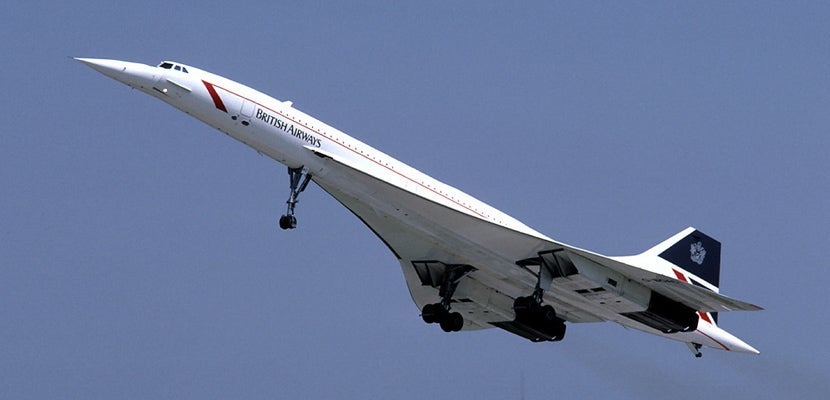
It's been over 40 years since the Federal Aviation Administration banned supersonic travel over the United States, but that could change if some members of Congress have their way.
Rep. Mark Meadows (R-N.C.), the incoming chairman of the House Freedom Caucus, has assembled a list of regulations his group would like to see repealed by the new White House administration. On the list is the FAA's supersonic ban, with the simple explanation "Make Sonic Boom Again."
Many folks might not know why a ban exists in the first place. When an object travels at supersonic speed, the waves of pressure around it are compressed together and merge into a shock wave. Traveling at the speed of sound, this shock wave trails behind the object like wake turbulence and as it reaches the ground, it creates a pair of loud booming sounds. This is known as a "sonic boom."
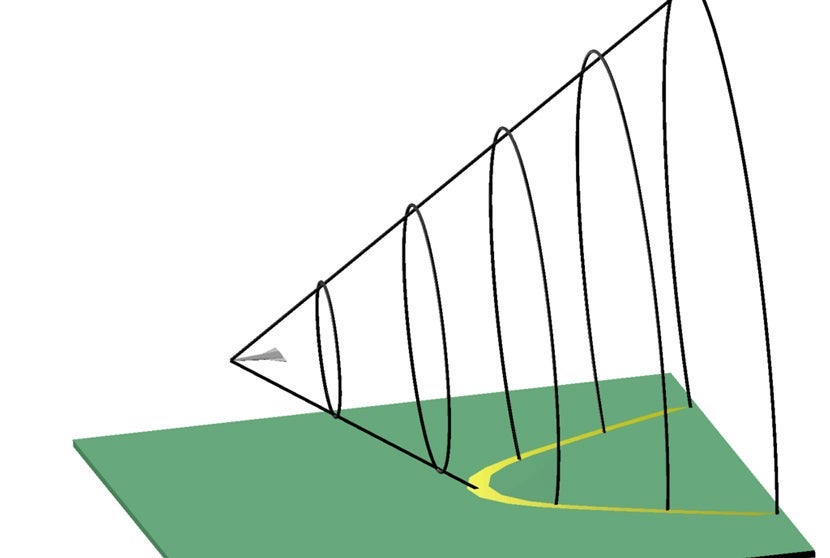
But it's not just the noise. Sonic booms can be powerful enough to rattle buildings and break windows. In the 1960s, NASA and the FAA attempted to determine the effects of supersonic travel by carrying out a series of 1,253 sonic booms over Oklahoma City. The experiment had to be ended early after over 15,000 complaints were received and 147 broken windows were reported on the two tallest buildings in the city alone.
The most famous commercial supersonic aircraft, Concorde, was operated by British Airways and Air France for nearly 30 years, but due to the FAA's overland ban, the two airlines were forced to restrict their use of the plane to transatlantic flights between East Coast cities and London and Paris.
NASA and others in the airline industry have wrestled with the problem of sonic booms and believe today's technology could provide a major improvement. By altering the shape of the aircraft, sonic booms might be as quiet as the sound of a propeller plane passing 1,000 feet from the ground.

But even if technology were invented to reduce sonic booms or the FAA's ban were repealed, it's not clear that the US would see a return of supersonic travel anytime soon. Concorde was retired in 2003, and while some believe the FAA's restriction has hurt the demand for new supersonic aircraft development, others claim the larger issue with supersonic travel is economic. Supersonic travel requires an immense amount of fuel and resources, and current subsonic planes are relatively fast. Airlines and passengers may not be willing to spend a huge premium just to save a couple of hours.
When Concorde was in operation, round-trip tickets could cost as much as $10,000 due to the high cost of operating the plane. But there was a way to redeem miles for a trip: Just 125,000 miles on British Airways partner Qantas could get you that round-trip ticket. Of course, back then miles were much less plentiful than they are today, so it could take a very long time to gather that many.
Still, if supersonic flight does return, how many miles do you think it'd be worth to fly from New York to Seattle in under 4 hours?
H/T: Washington Post
TPG featured card
at American Express's secure site
Terms & restrictions apply. See rates & fees.
| 4X | Earn 4X Membership Rewards® points per dollar spent on purchases at restaurants worldwide, on up to $50,000 in purchases per calendar year, then 1X points for the rest of the year. |
| 4X | Earn 4X Membership Rewards® points per dollar spent at US supermarkets, on up to $25,000 in purchases per calendar year, then 1X points for the rest of the year. |
| 5X | Earn 5X Membership Rewards® points on prepaid hotel stays booked through AmexTravel.com or the Amex Travel App™. |
| 3X | Earn 3X Membership Rewards® points on flights booked through AmexTravel.com, the Amex Travel App™, or purchased directly from airlines. |
| 2X | Earn 2X Membership Rewards® points on prepaid car rentals booked through AmexTravel.com or the Amex Travel App™ and cruises booked and paid through AmexTravel.com. |
| 1X | Earn 1X Membership Rewards® point per dollar spent on all other eligible purchases. |
Pros
- Valuable dining and food-related credits
- Flexible rewards with airline and hotel transfer partners
- Multiple travel and purchase protections
- No foreign transaction fees
- Access to Amex Offers for additional savings (enrollment required)
Cons
- Not as useful for those living outside the U.S.
- Some may have trouble using Uber and other dining credits
- You may be eligible for as high as 100,000 Membership Rewards® Points after you spend $8,000 in eligible purchases on your new Card in your first 6 months of Card Membership. Welcome offers vary and you may not be eligible for an offer. Apply to know if you’re approved and find out your exact welcome offer amount – all with no credit score impact. If you’re approved and choose to accept the Card, your score may be impacted.
- Earn 4X Membership Rewards® points per dollar spent on purchases at restaurants worldwide, on up to $50,000 in purchases per calendar year, then 1X points for the rest of the year.
- Earn 4X Membership Rewards® points per dollar spent at US supermarkets, on up to $25,000 in purchases per calendar year, then 1X points for the rest of the year.
- Earn 5X Membership Rewards® points on prepaid hotel stays booked through AmexTravel.com or the Amex Travel App™.
- Earn 3X Membership Rewards® points on flights booked through AmexTravel.com, the Amex Travel App™, or purchased directly from airlines.
- Earn 2X Membership Rewards® points on prepaid car rentals booked through AmexTravel.com or the Amex Travel App™ and cruises booked and paid through AmexTravel.com.
- Earn 1X Membership Rewards® point per dollar spent on all other eligible purchases.
- Pay It® lets you tap in the American Express® App to quickly pay for small purchase amounts throughout the month and still earn rewards the way you usually do. Plan It® gives you the option to split up big purchases into equal monthly payments with a fixed fee. You’ll know upfront exactly how much you’ll pay.
- $120 Dining Credit: Earn up to a total of $10 in statement credits monthly when you pay with the Gold Card at Grubhub (including Seamless), Buffalo Wild Wings, Five Guys, The Cheesecake Factory, and Wonder. This can be an annual savings of up to $120. Enrollment required.
- $100 Resy Credit: Get up to $100 in statement credits each calendar year at over 10,000 qualifying U.S. Resy restaurants after you pay for eligible purchases with the American Express® Gold Card. That’s up to $50 in statement credits semi-annually. Enrollment required.
- $84 Dunkin' Credit: Earn up to $7 in monthly statement credits after you pay with the American Express® Gold Card at U.S. Dunkin’ locations. Enrollment required.
- $120 Uber Cash on Gold: Enjoy up to $120 in Uber Cash annually with your Gold Card. Just add your Card to your Uber account and you'll get $10 in Uber Cash each month to use on orders and rides in the U.S. when you select an Amex Card for your transaction.
- Enjoy complimentary Hertz Five Star® Status benefits like skipping the counter at select locations, adding an additional driver at no additional cost*, and vehicle upgrades**. Benefit enrollment and Hertz Gold+ registration are required. *Additional drivers must meet standard rental qualifications and must be a spouse or domestic partner to qualify as complimentary. Other additional drivers subject to fees. **Benefits are subject to availability and vary by location. Additional Hertz program Terms and Conditions including age restrictions apply.
- Book two nights or more with The Hotel Collection through AmexTravel.com or the Amex Travel App™ and receive a $100* credit towards eligible charges at over 1,400 upscale hotels worldwide. *Eligible charges vary by property.
- Book your travel through the Amex Travel App™ with added peace of mind – backed by American Express® service and support. Only for American Express® Card Members.
- Whenever you need us, we're here. Our Member Services team will ensure you are taken care of. From lost Card replacement to statement questions, we are available to help 24/7.
- No Foreign Transaction Fees.
- Annual Fee is $325.
- Terms Apply.