JetBlue vs Frontier: Who will win the battle over Spirit and why does it matter?


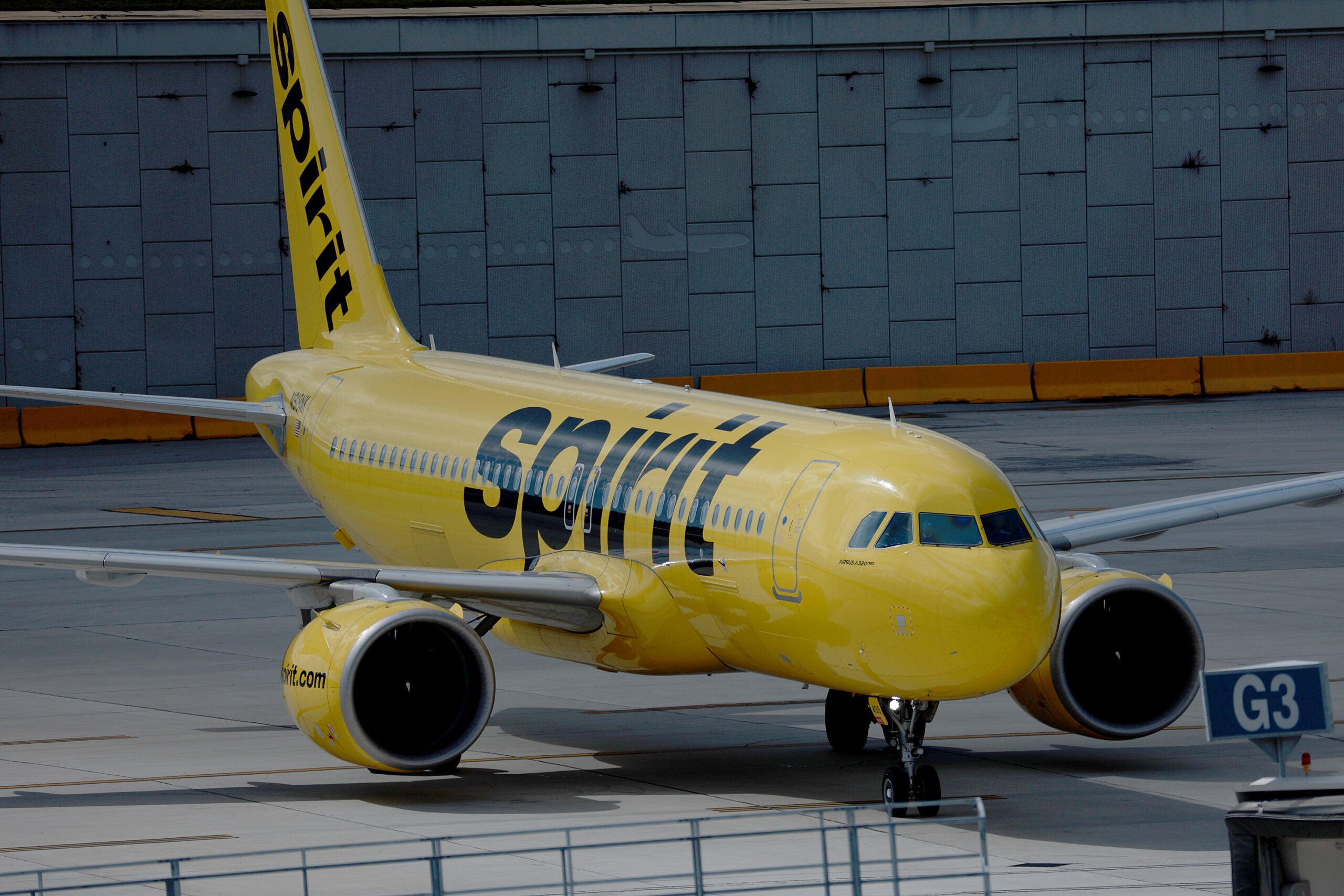
The battle between Frontier Airlines and JetBlue is about a lot more than just which carrier will get to acquire Spirit Airlines. It's ultimately a test of what kind of air service Americans want for the future.
Both Frontier and JetBlue are trying to buy growth on Wall Street because it's difficult and expensive to acquire new airplanes, get new gates at crowded airports and hire new employees. Pilots, in particular, are in short supply, and Spirit has about 3,000 of them.
The winner of this battle over Spirit will become a credible fifth U.S. major airline capable of competing against the "Big Four" — American Airlines, Delta Air Lines, United Airlines and Southwest Airlines. Those four airlines grew through mergers approved by regulators.
Why do airlines merge?
Airline consolidation gives companies the size and scope to compete profitably in a historically loss-ridden business. A viable fifth competitor needs more size and scope as well. History shows smaller airlines — including US Airways, America West Airlines, Virgin America and AirTran Airways — can't keep up.
However, this showdown represents a bigger issue than whether the U.S. will approve further consolidation. This merger battle is likely the last stand for the idea of a higher-quality coach alternative.
Related: JetBlue now trying hostile takeover in its bid to acquire Spirit Airlines
Bare-bones carrier Frontier argues it can spread more low-fare competition with Spirit. While this might seem logical, the reality is that big carriers have increasingly found ways to ignore cheaper competitors because they know most of their customers won't fly them.
For those who want cut-rate service, big airlines offer stripped-down basic economy fares which lack previously routine perks such as advance seat assignments and even carry-on baggage. These airlines also vastly limit the number of seats on each flight offered at the low-cost competitor's prices.
It's different with JetBlue. Because the airline offers credible coach service (that's perhaps even better than service on "Big Four" carriers), larger airlines can't as easily ignore JetBlue in head-to-head competition.

A comprehensive MIT study published in 2013 found JetBlue has a greater impact on prices than Southwest or Spirit. The MIT researchers found the presence of JetBlue on a route decreased average fares by $32 one-way; Southwest's impact was only $17. Spirit's average impact on markets was a $22 reduction.
Those numbers don't account for the extensive add-on fees Spirit is famous for which actually raise the cost of travel. Last year, Spirit collected an average of $59 in nonticket revenue per passenger per flight segment.
Look at how JetBlue's Mint business-class cabin continues to shake up transcontinental markets. Mint, which launched in 2014, decreased transcontinental business class fares by more than 25%, according to a story I did in 2017. Today, JetBlue still sets the business-class price in many transcontinental markets.
Related: A business-class boost: Reviewing JetBlue's new Mint suites
Frontier vs. JetBlue
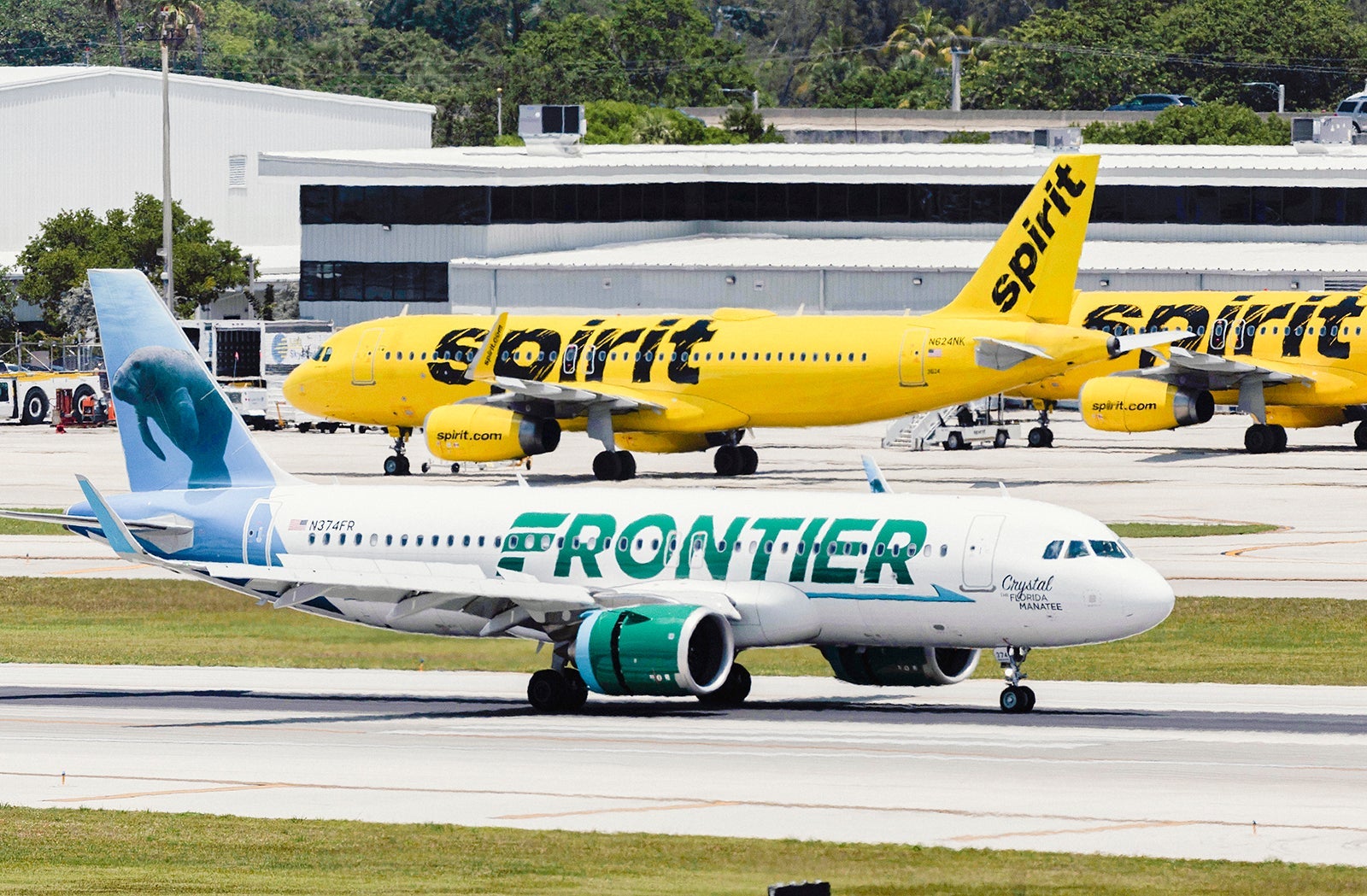
Spirit has rejected JetBlue's $30-a-share cash offer in favor of Frontier's cash-and-stock offer, which was valued Friday at about $21 a share. The reason, according to Spirit, is that JetBlue has a greater likelihood of rejection by the Justice Department. Spirit shareholders now are voting on whether to take the Frontier deal or reject it for JetBlue's cash.
Spirit has rejected JetBlue's $30-a-share cash offer in favor of Frontier's cash-and-stock offer, which was valued Wednesday at about $21 a share. The reason, according to Spirit, is that JetBlue has a greater likelihood of rejection by the Justice Department. Spirit shareholders now are voting on whether to take the Frontier deal or reject it for JetBlue's cash. On Wednesday, Spirit postponed the end of the voting from Friday to June 30 to allow "discussions with Spirit stockholders, Frontier and JetBlue."
It does appear that JetBlue is basically trying to eliminate a low-fare competitor. JetBlue has offered to mitigate this by saying it would divest all assets acquired from Spirit in New York City and Boston, JetBlue's biggest hubs.
The Justice Department has already sued to stop an alliance between JetBlue and American. (The alliance would mean JetBlue could use American takeoff and landing slots in New York, and the two carriers would market their service together in New York and Boston.) JetBlue realizes it can't have assets in New York and Boston from both American and Spirit.
For JetBlue, the real prize of a Spirit acquisition would be the opportunity to grow in the middle part of the country. Spirit has gates in Chicago, Las Vegas, Dallas, and Houston among other cities. Not to mention, it has the planes and pilots to serve them.
JetBlue has lost some loyal fans with episodes of widespread delays and cancellations. Though tattered, JetBlue still offers more coach legroom than other U.S. carriers. Its snacks, seat-back televisions and free Wi-Fi are also appreciated.
The airline's founder David Neeleman, who launched JetBlue in 2000, intended the airline to be a better coach product with friendly employees. Twenty-two years later — it still is.
To be sure, acquiring Spirit would change JetBlue. Spirit packs 182 seats in its Airbus A320s; JetBlue has 162 seats in the same airplane. That's a huge difference.
You might see JetBlue add seats to its planes as it removes seats from Spirit; its planes may end up with a fleet that has a dense, Spirit-like seating arrangement in the back and a more traditional, legroom-friendly JetBlue arrangement in the front. Like on other airlines, customers who want space will have to pay for it.
Related: Spirit says no to JetBlue acquisition offer, again
Frontier, in its latest iteration, has grown even more Spirit-like; the carrier implemented add-on fees and offers rows of seats with as little as 28 inches of space (compared to 32 inches for JetBlue).
For example, Frontier changed its baggage policy in March to limit checked bag weight to 40 pounds. (Spirit does that, too.) JetBlue has a more common 50-pound limit. Show up at Spirit or Frontier with a 45-pound bag and you'll pay overweight baggage fees of $50 per bag in each direction.
What's more, Frontier had the worst record in the U.S. regarding refunds for canceled flights in the pandemic. Frontier gave customers vouchers good for only 90 days. Naturally, many vouchers went unused, letting the airline pocket money that should have been returned to customers when it canceled flights. More than 5,500 complaints against Denver-based Frontier were filed at the Transportation Department in 2020 — 80% were regarding refunds.
Colorado Attorney General Phil Weiser called for a DOT investigation of Frontier in 2020, and this year, he questioned the Frontier-Spirit merger.
"Companies that take advantage of consumers must be held accountable,'' Weiser said in a March statement.
Bottom line
For many travelers, price is what matters most. However, there are many travelers willing to pay more for a tolerable product and better service. Ironically, the fate of Spirit — the pioneer of cheap travel — will determine whether those flyers have more choice or not.
TPG featured card

at Capital One's secure site
Terms & restrictions apply. See rates & fees.
| 5X miles | Earn 5X miles on hotels, vacation rentals and rental cars booked through Capital One Travel |
| 2X miles | Earn unlimited 2X miles on every purchase, every day |
Pros
- Stellar welcome offer of 75,000 miles after spending $4,000 on purchases in the first three months from account opening. Plus, a $250 Capital One Travel credit to use in your first cardholder year upon account opening.
- You'll earn 2 miles per dollar on every purchase, which means you won't have to worry about memorizing bonus categories
- Rewards are versatile and can be redeemed for a statement credit or transferred to Capital One’s transfer partners
Cons
- Highest bonus-earning categories only on travel booked via Capital One Travel
- LIMITED-TIME OFFER: Enjoy $250 to use on Capital One Travel in your first cardholder year, plus earn 75,000 bonus miles once you spend $4,000 on purchases within the first 3 months from account opening - that’s equal to $1,000 in travel
- Earn unlimited 2X miles on every purchase, every day
- Earn 5X miles on hotels, vacation rentals and rental cars booked through Capital One Travel
- Miles won't expire for the life of the account and there's no limit to how many you can earn
- Receive up to a $120 credit for Global Entry or TSA PreCheck®
- Use your miles to get reimbursed for any travel purchase—or redeem by booking a trip through Capital One Travel
- Enjoy a $50 experience credit and other premium benefits with every hotel and vacation rental booked from the Lifestyle Collection
- Transfer your miles to your choice of 15+ travel loyalty programs
- Top rated mobile app