Why Spirit Airlines Hopes to Never See 90% or Better On-Time Arrivals
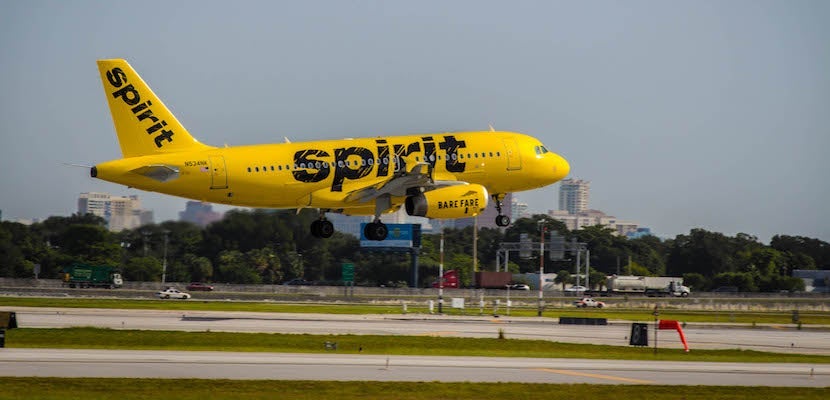
It's hardly a secret that Spirit Airlines is America's most hated airline. Rest assured that Spirit's semi-new CEO, Bob Fornaro, has heard your gripes about poor customer service, hidden fees and late or cancelled flights, and wants to improve the airline's reputation and performance — but only up to a certain point.
While that might seem like the expected response from the face of a company that is regularly accused of being detached when it comes to dealing with its customers, Fornaro's goal of doing just enough to not be considered "the" most hated airline is actually pretty strategic, according to a recent Bloomberg article, at least if the company wants to continue to operate successfully in the low-cost carrier space.
Since being named Spirit's CEO in January, Fornaro's main focus has been on improving reliability — going so far as to incentivize company executives by doubling the weight that on-time rates carry when it comes to calculating bonuses (from 10 to 20 percent). Already, there have been signs of improvement: In April, Spirit had an on-time rate of 73.8 percent, up from an average of 68 percent, yet still nearly 11 percent below the national airline average.
According to Bloomberg, Fornaro's plans for improving reliability include reducing the use of its Airbus planes to allow for more flexibility, hiring more staff to help eliminate overtime costs, purchasing more planes so a single cancelled flight doesn't wreak havoc on the airline's entire schedule and making sure that the first flight of the day gets out on time, thus improving the chance that those that follow will, too.
But he isn't expecting change to happen overnight. "If we were able to in one quarter make a dramatic improvement, it would be 'all pad and all gloss,'" Fornaro told stockholders in April, explaining why the airline would never pad its schedule. "It just simply is paying more money to show a good performance without fundamentally turning the airplanes any faster."
"Paying more money" is exactly why, according to Bloomberg, Fornaro does not expect — or want — to compete with bigger brands like Delta, Alaska, or Hawaiian Airlines, which regularly log on-time rates of 90 percent or higher. To get to that level would require that more time be allotted for each flight and that on-the-ground operations be perfectly coordinated, which can be an expensive proposition for any airline, particularly a low-cost one.

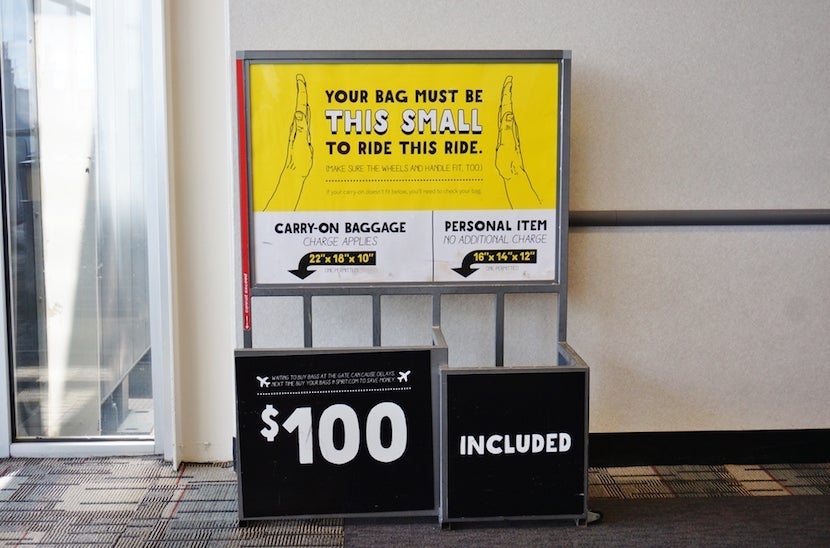
In other words: efficiency is expensive. And that's not the "Home of the Bare Fare" way. Sure, Spirit is happy to charge you $10 to have an agent print out your boarding pass, but they know there's only so far they can push those hated fees. Which makes striking a balance between price and promptness an important question for every airline to figure out for itself, as there's no one-size-fits-all answer.
For Spirit, that means letting the bigger airlines — namely Delta, American and United — duke it out for the industry's superlatives. Fornaro and his fellow Spirit powers-that-be "never want to be number one in on-time." He does, however, want to be the tops in pricing. Fornaro also understands that a little friendliness can go a long way toward building customer loyalty.
"There is a big change in terms of focusing on our operations," Fornaro told The New York Times. "This is how we want to be viewed: on time, friendly, clean and efficient."
It's a huge challenge, but some industry insiders believe that Fornaro — who spent more than a decade running AirTran — could be the person to turn the company around. "They have a big problem: Many people try Spirit because they're attracted to the low fare, but then they don't come back," Julie Yates, an airline analyst at Credit Suisse, told The New York Times. "Bob is softening the overall approach to be more friendly. Over time, that should help them retain more customers."
For his part, Fornaro told Bloomberg that he expects to see 75 to 80 percent of Spirit's flights operating on-time by the end of this year. "Next year at this time we're going to run a very reliable operation," he promised. Which doesn't mean that you still won't be paying $2 to print your boarding pass at the airport kiosk.
We want to know: What do you think of Spirit Airlines? Sound off below!
TPG featured card

at Capital One's secure site
Terms & restrictions apply. See rates & fees.
| 5X miles | Earn 5X miles on hotels, vacation rentals and rental cars booked through Capital One Travel |
| 2X miles | Earn unlimited 2X miles on every purchase, every day |
Pros
- Stellar welcome offer of 75,000 miles after spending $4,000 on purchases in the first three months from account opening. Plus, a $250 Capital One Travel credit to use in your first cardholder year upon account opening.
- You'll earn 2 miles per dollar on every purchase, which means you won't have to worry about memorizing bonus categories
- Rewards are versatile and can be redeemed for a statement credit or transferred to Capital One’s transfer partners
Cons
- Highest bonus-earning categories only on travel booked via Capital One Travel
- LIMITED-TIME OFFER: Enjoy $250 to use on Capital One Travel in your first cardholder year, plus earn 75,000 bonus miles once you spend $4,000 on purchases within the first 3 months from account opening - that’s equal to $1,000 in travel
- Earn unlimited 2X miles on every purchase, every day
- Earn 5X miles on hotels, vacation rentals and rental cars booked through Capital One Travel
- Miles won't expire for the life of the account and there's no limit to how many you can earn
- Receive up to a $120 credit for Global Entry or TSA PreCheck®
- Use your miles to get reimbursed for any travel purchase—or redeem by booking a trip through Capital One Travel
- Enjoy a $50 experience credit and other premium benefits with every hotel and vacation rental booked from the Lifestyle Collection
- Transfer your miles to your choice of 15+ travel loyalty programs
- Top rated mobile app