The Points Guy believes that credit cards can transform lives, helping you leverage everyday spending for cash back or travel experiences that might otherwise be out of reach. That's why we publish a variety of editorial content and card comparisons: to help you find a great card to turn your goals into reality.
Our site may earn compensation when a customer clicks on a link, when an application is approved, or when an account is opened with our partners, and this may impact how or where these products appear. While we don't cover all available credit cards, our editorial team creates and maintains all of the analysis of these cards, and our content is not influenced nor subject to review by any credit card company, bank or partner prior to (or after) publication. Please view our advertising policy and product review methodology for more information.
Advertiser disclosure
The Points Guy believes that credit cards can transform lives, helping you leverage everyday spending for cash back or travel experiences that might otherwise be out of reach. That's why we publish a variety of editorial content and card comparisons: to help you find a great card to turn your goals into reality.
Our site may earn compensation when a customer clicks on a link, when an application is approved, or when an account is opened with our partners, and this may impact how or where these products appear. While we don't cover all available credit cards, our editorial team creates and maintains all of the analysis of these cards, and our content is not influenced nor subject to review by any credit card company, bank or partner prior to (or after) publication. Please view our advertising policy and product review methodology for more information.
News
575 flights, 432 award nights and 259 cities: How I spent 6 years as a digital nomad
Katie Genter is a digital nomad who has traveled full time since June 2017. She writes and edits stories about points and miles, and loyalty programs, often letting her personal experiences color these stories.
July 5, 2023 • 29 min read
The cards we feature here are from partners who compensate us when you are approved through our site, and this may impact how or where these products appear. We don't cover all available credit cards, but our analysis, reviews, and opinions are entirely from our editorial team. Terms apply to the offers listed on this page. Please view our advertising policy and product review methodology for more information.Editorial disclaimer: Opinions expressed here are the author's alone, not those of any bank, credit card issuer, airline or hotel chain, and have not been reviewed, approved or otherwise endorsed by any of these entities.
Comments
By commenting, you agree to our Community Guidelines to help create a positive space for conversation. The responses below are not provided or commissioned by the bank advertiser, our partners, or The Points Guy (“TPG”). They have not been reviewed, approved, or otherwise endorsed by any of these parties. All responses are submitted by individual contributors, and neither the bank advertiser, our partners, nor TPG are responsible for ensuring that all posts and/or questions are answered.
Related stories
Quick summary
A digital nomad reflects on six years of full-time travel, covering 575 flights, 1,121,959 miles and 1,103 hotel nights across 259 cities in 52 countries.
The lifestyle includes a mix of award redemptions, paid travel, and leveraging elite status with major hotel and airline loyalty programs.
Accommodation choices span hotels, vacation rentals, camping, and stays with friends and family, with detailed insights into costs and loyalty program strategies.
The author highlights both extraordinary experiences and the appeal of everyday discoveries while living and working remotely.
What to consider
Some offers and promotions mentioned in the article are no longer available.
Hotel and airline loyalty program benefits, elite status perks, and redemption strategies can change over time, affecting value and planning.
Point and mile valuations, such as Hilton points at 0.6 cents each as of June 2025 per TPG's valuations, are subject to periodic updates.
What you'll miss from the article
A comprehensive breakdown of travel statistics, loyalty program strategies, and personal reflections on the realities of long-term digital nomad life.
Generated by AI with support from our editorial team.
Update: Some offers mentioned below are no longer available. View the current offers here.
"Where are you from?" It's a common question when you meet someone new while traveling. And it's an easy question for most people. But for me, it's complicated if I want to give more details than "the United States."
After all, my husband and I gave up our Austin, Texas, apartment in June 2017, sold or donated most of our belongings and then set out as digital nomads on July 2, 2017. So, excluding some extended time living with family early in the coronavirus pandemic, we've traveled full time while working remotely for the last six years.
In 2020, I wrote about my first three years as a digital nomad. But in this story, I'll look back at the past six years. In doing so, I'll discuss how I became a digital nomad, some of my travel statistics and how travel has changed for me during the past six years.
How I became a digital nomad
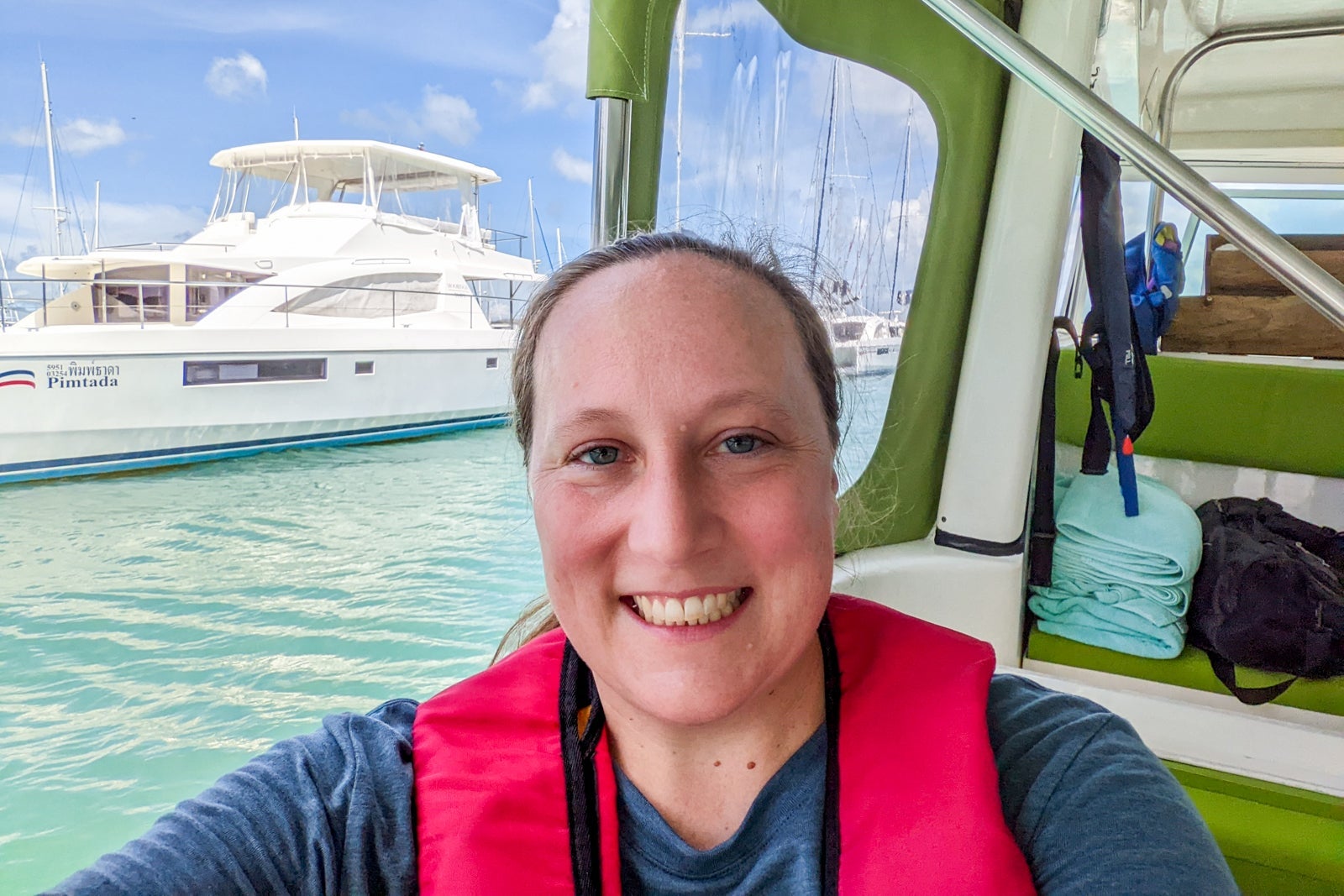
Aboard the Six Senses Yao Noi boat in Thailand. KATIE GENTER/THE POINTS GUY
On a bus from Aguas Calientes to Machu Picchu in Peru in 2013, I first heard of a gap year or sabbatical year. I hadn't gotten into points and miles yet, but my husband and I loved the idea of taking a year off to travel after I finished graduate school. Well, fast forward four years to 2017, when it was time to leave on our "gap year." By this time, we were already working as writers in the award travel space.
So, we hit the road as digital nomads instead of taking a gap year. And we quickly fell in love with the freedom and flexibility of the lifestyle. I appreciate experiencing different cultures, landscapes, experiences and cuisines daily. And I've found that frequently visiting new destinations inspires me.
I also enjoy using the topics I write about — points, miles, credit cards and elite status — on a daily basis. We make award redemptions most weeks (and often multiple times a week), and we're constantly traveling. So, I know many of the airline, hotel and credit card programs I write about from personal experience. And I'm personally invested when these programs change or devalue their rewards.
Points and miles certainly fuel some of our travel. But we also book paid flights and nights when it makes sense. After all, we only have a finite amount of points and miles, and we've found that paid partner-operated premium-cabin flights are often the best way to earn airline elite status.
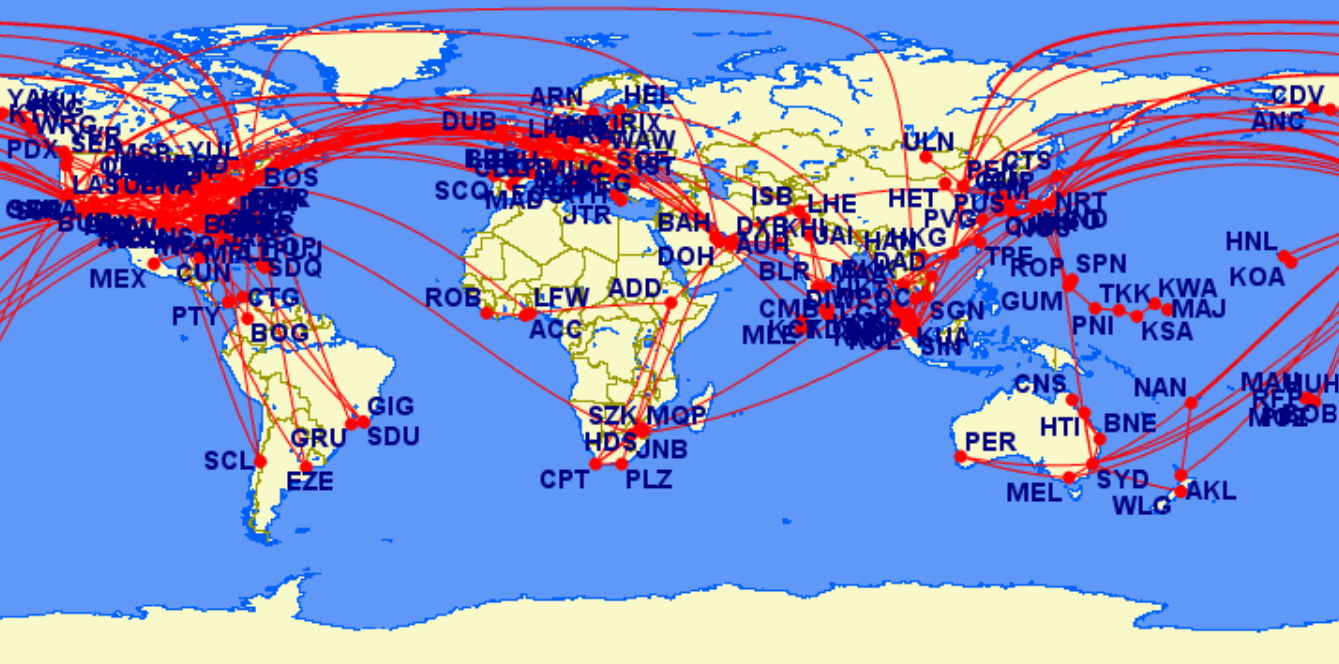
Over the last six years, I've taken 575 flights on 62 airlines to 180 airports in 58 countries. I've taken so many flights in the last six years that my flight map is difficult to read.
GCMAP.COM
I flew 1,121,959 direct flight miles in the last six years, with an average flight distance of 1,951 miles (about the distance from Atlanta to Los Angeles). My longest flight was 9,532 miles, from New York to Singapore. And my shortest flight was just 11 miles from Tahiti to Moorea in French Polynesia.
But my most memorable flight was on Sri Lanka's Cinnamon Air from Polgolla Reservoir Aerodrome (KDZ) to Koggala Airport (KCT) on a Cessna 208 amphibious caravan.
A Cinnamon Air Cessna 208 amphibious caravan in Kandy, Sri Lanka. KATIE GENTER/THE POINTS GUY
I frequently fly American Airlines and often use Hartsfield-Jackson Atlanta International Airport (ATL) when visiting family. So, it's not surprising that my three most frequent routes by flight segments are between American Airlines' hubs and Atlanta. Here's a look at my top 10 most frequent flight segments over the last six years:
New York's LaGuardia Airport (LGA) to/from ATL: 15 flights
Dallas Fort Worth International Airport (DFW) to/from ATL: 11 flights
Charlotte Douglas International Airport (CLT) to/from ATL: 10 flights
I track all my flights in OpenFlights. So, although it's relatively easy for me to gather statistics on my flights, I don't have a simple way to determine the amount I paid in points and cash for my 575 flights during the last six years.
A villa at Six Senses Yao Noi in Thailand. KATIE GENTER/THE POINTS GUY
I've spent over half of the last six years living out of hotel rooms. In particular, I've spent 894 nights at 75 major hotel brands within the last six years. And I've spent 209 nights at other brands and independent hotels.
Here's the breakdown of my stays by loyalty program and brand over the last six years, including notes about my favorite programs.
390 nights at 15 IHG brands
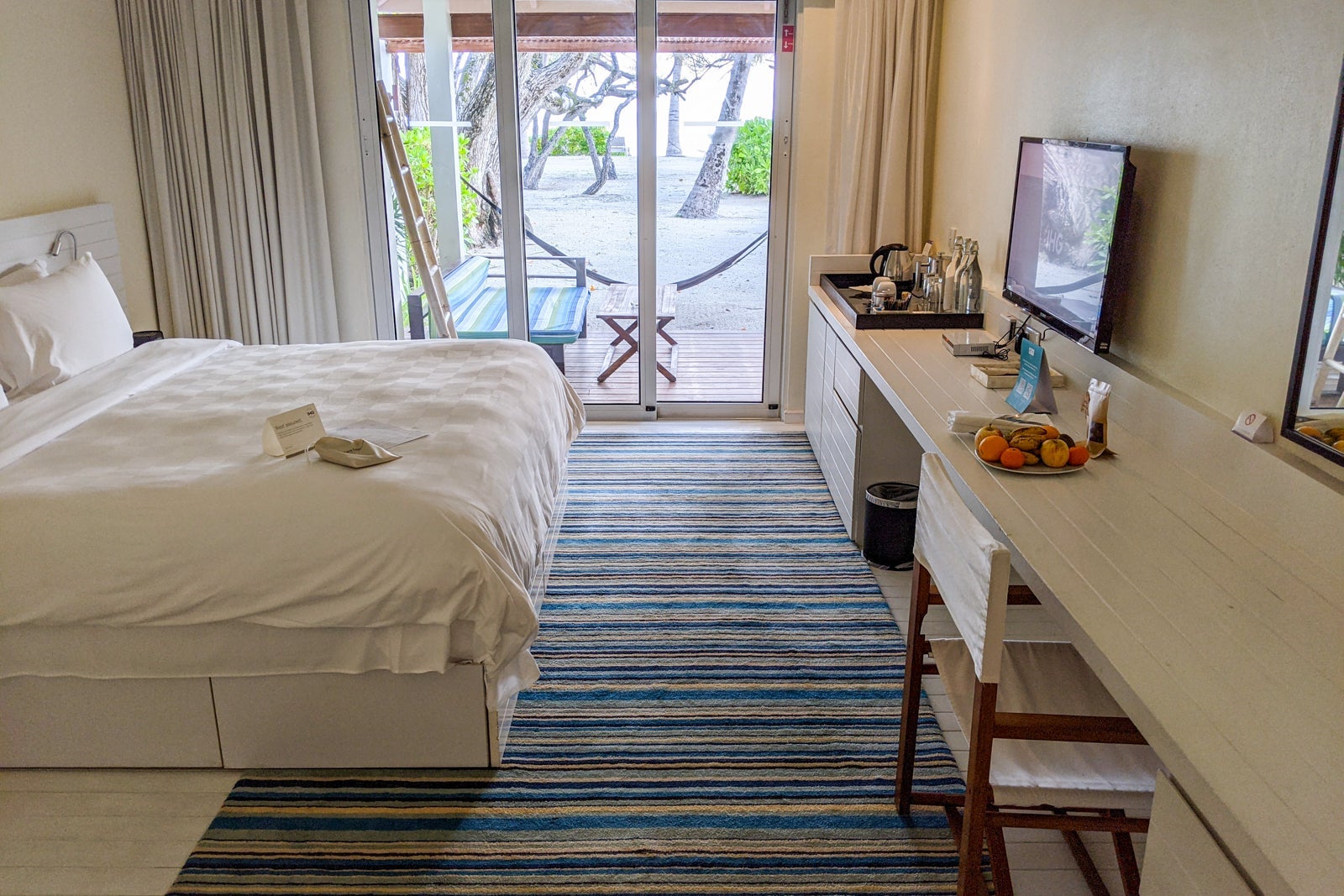
The Holiday Inn Resort Kandooma Maldives in the Maldives. KATIE GENTER/THE POINTS GUY
Over the last six years, I've stayed 161 paid nights at IHG properties for an average of $152 per night. The least I paid was $48 per night at the Holiday Inn Express Berlin — Alexanderplatz in Germany. And the most I paid was $1,564 per night during a review of the InterContinental Maldives Maamunagau Resort in the Maldives.
You might wonder how we earned so many IHG points and anniversary nights. We maximize IHG promotions to earn points on stays. And we often buy points during IHG points sales with a 100% bonus when we can do so for 0.5 cents per point. As for the anniversary night certificates, we both have multiple IHG credit cards, so we've each earned two anniversary nights for most of the last six years.
The Rondavel at Addo Main Camp in South Africa. KATIE GENTER/THE POINTS GUY
These days, we usually stay at major hotel brands to earn and use elite status perks and benefit from the consistency provided by these brands. But we often stayed at independent hotels when we first hit the road as digital nomads in 2017. And even now, we sometimes find ourselves in a destination without major hotel brands or where staying at a property outside our brand loyalties makes the most sense.
We often book these stays through online travel agencies since we don't have to worry about missing out on elite status benefits and earnings while staying at properties outside our primary brands. For example, we'll sometimes book through credit card portals to use credits, like the $50 hotel credit each account anniversary year on the Chase Sapphire Preferred. And we'll occasionally book through American Express Fine Hotels + Resorts to snag extra perks and use the prepaid hotel credit we get each calendar year as a perk of The Platinum Card® from American Express. We'll also sometimes use Rocketmiles to earn American Airlines miles and Loyalty Points on our stays.
On average, I paid $83 per night on these stays. But, my least expensive night was $18 per night for a private room with a shared bathroom at Stella Di Notte in Belgrade, Serbia. And my most expensive night was $235 per night at the RLJ Kendeja Resort & Villas in Liberia during PeaceJam.
203 nights at 21 Marriott brands
Le Meridien Maldives Resort & Spa in the Maldives. KATIE GENTER/THE POINTS GUY
Four Points by Sheraton: 32 nights
Protea Hotels: 28 nights at Protea Hotel Kruger Gate (no longer part of Marriott) in South Africa
Over the last six years, I've stayed 140 paid nights at Marriott properties for an average of $121 per night. The least I paid was $44 per night at the Four Points by Sheraton Bogota in Colombia. And the most I paid was $350 per night during a review of the Waikoloa Beach Marriott Resort & Spa in Hawaii.
Meanwhile, we redeemed Marriott points for 49 nights over the last six years, including six fifth-night-free benefits. On average, we redeemed 16,167 points per night on Marriott award stays. We also redeemed 14 free night awards we earned through Marriott credit cards and promotions over the last six years.
Over the last six years, I've stayed 34 paid nights at Choice Privileges properties for an average of $93 per night. The least I paid was $54 per night at the Comfort Hotel Airport CDG in France. And the most I paid was $239 per night at Cambria Hotel New York — Times Square in New York.
Meanwhile, we redeemed Choice points for 81 nights over the last six years. On average, we redeemed 9,531 Choice points per night. I've found I can get excellent value when redeeming Choice points for unique redemptions and for stays in Japan, Europe and destinations that typically feature high paid hotel rates. So, as with IHG, we often buy Choice points during sales or through Daily Getaways promotions.
87 nights at 11 Hyatt brands and partners
The Park Hyatt Chennai in India. KATIE GENTER/THE POINTS GUY
I didn't stay much with World of Hyatt until the program offered reduced qualification requirements and double elite night credits in early 2021. I earned Globalist status in 2021 for far fewer nights than is usually required, but I've prioritized maintaining it due to the on-site perks it provides.
I've stayed 53 paid nights at Hyatt properties for an average of $139 per night over the last six years. The least I paid was $24 per night at the Excalibur Hotel & Casino in Las Vegas. And the most I paid was $353 per night at Hyatt House New York/Chelsea in New York.
Meanwhile, I redeemed Hyatt points for 27 free nights over the last six years. I've found some excellent Category 1 Hyatt hotels that provide wonderful value on award stays. So, it isn't surprising that I've redeemed 5,563 points per night on average and just 3,500 points per night for nine nights. Additionally, I redeemed seven free night certificates that I earned through Hyatt credit cards, Hyatt Milestone Rewards and the Hyatt Brand Explorer promotion over the last six years.
40 nights at 10 Wyndham brands
Viva Wyndham Azteca All Inclusive Resort in Mexico. KATIE GENTER/THE POINTS GUY
Over the last six years, I've stayed 29 paid nights at Wyndham properties for an average of $103 per night. The least I paid was $48 per night at the Days Inn Guam-Tamuning in Guam. And the most I paid was $200 per night during a review of the Viva Wyndham Azteca — All-Inclusive Resort in Mexico.
Meanwhile, we redeemed Wyndham points for 11 nights over the last six years. On average, we redeemed 9,068 points per night on Wyndham award stays. And we love getting a 10% redemption discount when we redeem Wyndham points as a benefit of our Wyndham Rewards credit card, as this brings an award night that would typically cost 7,500 points down to just 6,750 points.
32 nights at 6 Hilton brands
The DoubleTree Resort by Hilton Hotel Fiji — Sonaisali Island in Fiji. KATIE GENTER/THE POINTS GUY
Over the last six years, I've stayed 18 paid nights at Hilton properties for an average of $130 per night. The least I've paid was $58 per night at the Hilton Jaipur in India. And the most I paid was $168 per night at the Hilton Niseko Village in Japan.
The average amount we redeemed per night with Hilton Honors is significantly higher than with other hotel loyalty programs. This, combined with my struggle to get more than TPG's valuation (0.6 cents per point) when redeeming Hilton points, is why I don't frequently stay at Hilton brands despite having Hilton Diamond status through a Hilton credit card.
19 nights at 4 Accor brands
Ibis: 12 nights
Mercure: Four nights
Grand Mercure: Two nights
Ibis Budget: One night
Over the last six years, I've stayed 19 nights at Accor properties for an average of $56 per night. The least I paid was $36 per night at the Ibis Muenchen City Nord in Germany. And the most I paid was $84 per night at the Ibis Madrid Alcobendas in Spain.
8 nights at 2 Best Western brands
Best Western: Six nights
Best Western Plus: Two nights
Over the last six years, I've stayed eight nights at Best Western properties for an average of $78 per night. The least I paid was $57 per night at the Best Western Amsterdam Airport Hotel in the Netherlands. And the most I paid was $147 per night at the Best Western Plus Mountain View Auburn Inn in Washington.
452 nights camping
Sawnee Campground in Cumming, Georgia. KATIE GENTER/THE POINTS GUY
When I became a digital nomad in 2017, I didn't think there was any chance I'd camp 452 nights in the next six years. And even three years ago, I'd only spent three nights tent camping for a concert at The Gorge in Washington state and three nights in a rental RV doing a relocation from Las Vegas to Denver.
But, as it became apparent the coronavirus pandemic would affect international travel for more than just a few months, my husband and I tried out a six-night RV relocation rental in July 2020. Then in August 2020, we decided to buy the same RV model we'd relocated.
When we bought our Class C RV, we expected we'd sell it as soon as international travel to most destinations became relatively simple again. But, we discovered we enjoy working remotely from our RV while in the U.S. We've now spent 440 nights camping in our RV since buying it — 97 nights in 2020, 234 nights in 2021, 80 nights in 2022 and 29 nights so far in 2023.
Nineteen nights in our RV have been free at locations (like select Walmarts, select Cracker Barrels and businesses that participate in Harvest Hosts) that allow RVers to stay overnight upon asking permission. We've also spent 37 nights sleeping in the driveways of friends and family while visiting them.
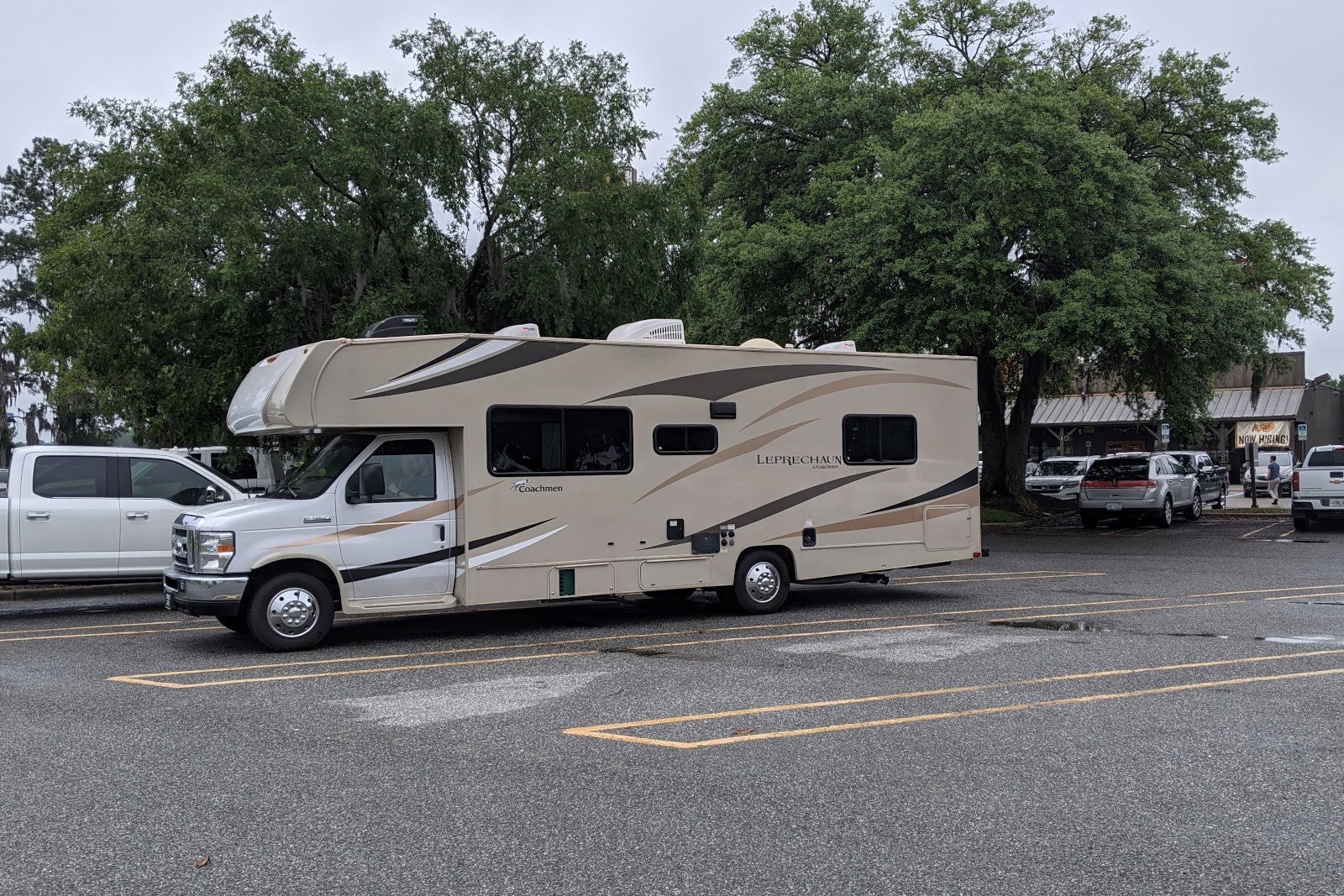
Parking overnight at a Cracker Barrel. KATIE GENTER/THE POINTS GUY
But we usually find paid RV campsites with power and water. We've paid for campsites on 393 nights as follows:
171 nights at city and county campgrounds ($32 per night on average)
133 nights at U.S. Army Corps of Engineers campgrounds ($27 per night on average)
66 nights at state park campgrounds ($34 per night on average)
37 nights at private campgrounds ($52 per night on average)
Four nights at national park campgrounds ($48 per night on average)
On average, we've paid $33 per night for our RV campsites. The highest we paid was $104 per night at Orlando / Kissimmee KOA Holiday in Florida. And the least we paid was $17 per night at Shady Grove Campground in Cumming, Georgia, during a half-off promotion.
One aspect my husband and I appreciate about being digital nomads is seeing our family more than when we lived in one place. Here's a breakdown of our nights with friends and family over the last six years:
July 2 to the end of 2017: 32 nights
2018: 90 nights
2019: 83 nights
2020: 167 nights
2021: 29 nights
2022: 27 nights
So far in 2023: 15 nights
We spent significant time with each of our parents in March through August of 2020 as much of the world locked down. However, the nights since August 2020 are lower than pre-pandemic since we now stay in our RV (either in the driveway or a nearby campground) while visiting most friends and family members.
Qatar Qsuite is a comfortable way to sleep on a long flight. KATIE GENTER/THE POINTS GUY
Over the past six years, I've spent 101 nights in flight or sleeping in airports. I typically avoid overnight flights, but sometimes overnight flights are unavoidable (and they're enjoyable if I book a lie-flat seat or luck into a row to myself in economy).
If I have an overnight layover at an airport, I'll book a hotel if the layover is long enough and I can find a modestly priced hotel on-site or with a free shuttle. But sometimes the layover is too short, or it just doesn't make sense to get a hotel. In these cases, I'll usually sleep in a lounge — ideally one with a sleeping area or at least lounge chairs — or in a Minute Suites (or a similar type of space) that participates in Priority Pass.
I've also spent three nights on trains, including two on the Amtrak Empire Builder from Portland, Oregon, to Chicago and one on a Trans-Mongolian train from Ulaanbaatar, Mongolia, to Hohhot, China. I thoroughly enjoyed both experiences, so it's surprising that I haven't taken any other overnight trains in the last six years. However, low-cost flights on many routes served by overnight trains often make flying a more convenient and less expensive alternative.
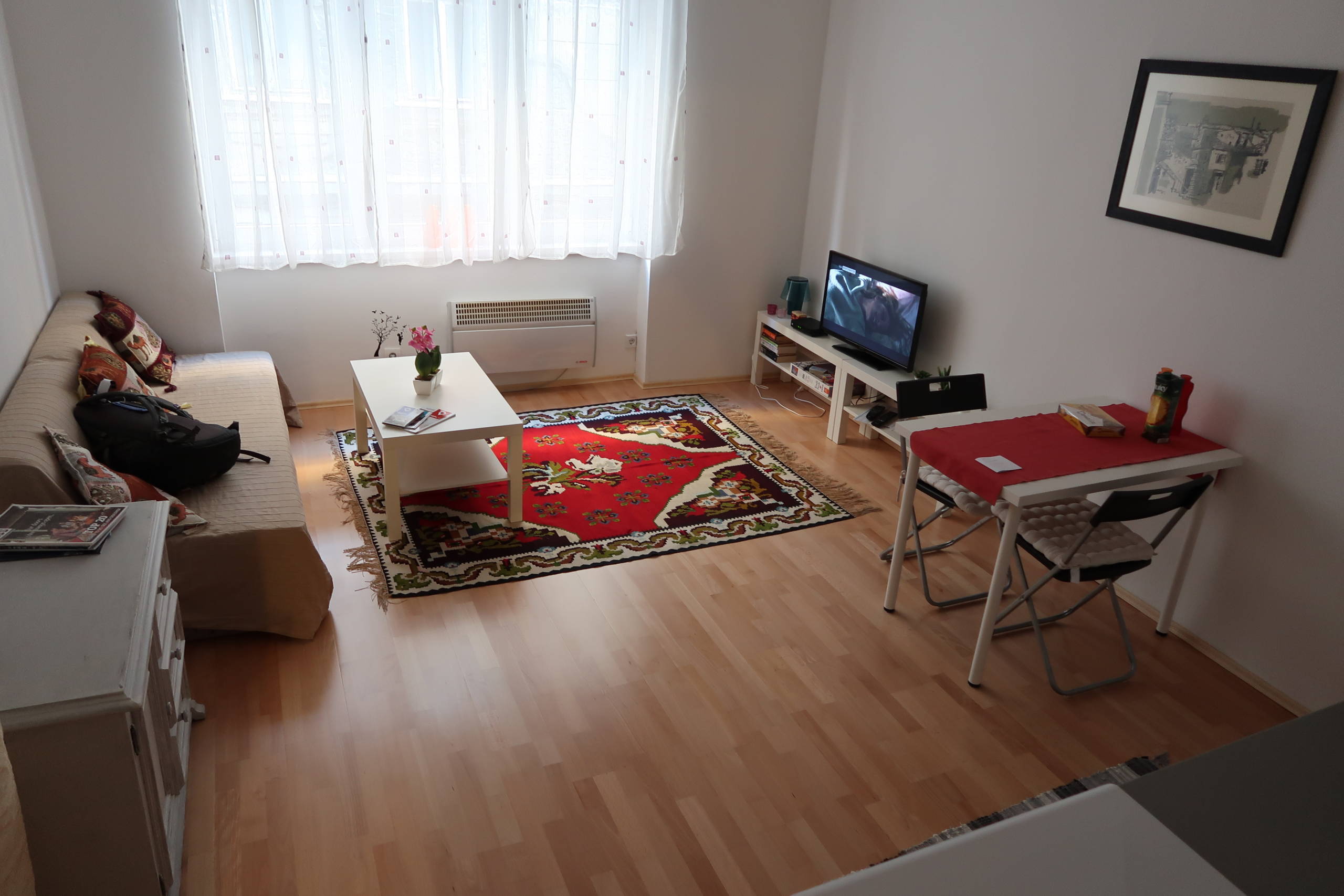
A vacation rental in Sarajevo, Bosnia and Herzegovina. KATIE GENTER/THE POINTS GUY
Vacation rentals are the accommodation of choice for many digital nomads, especially those who stay in each location for at least a month and appreciate having their own kitchen. And I spent 39 nights in vacation rentals in 2017 after becoming nomadic July 2.
However, one particularly bad Airbnb experience in 2018 and an increasing interest in hotel elite status caused me to switch most of my nights to hotels instead of vacation rentals. I stayed in vacation rentals for 17 nights in 2018 and 20 nights in 2019. I only stayed in one vacation rental each in 2020 (for three nights), 2021 (for two nights) and 2022 (for two nights). And so far, I've only stayed in one vacation rental (for seven nights) in 2023.
On average, I paid $53 per night for vacation rentals across my six years as a digital nomad. My least expensive vacation rental was $17 per night for a private studio apartment in Da Nang, Vietnam, that I booked through Airbnb. And my most expensive vacation rental was $129 per night for a waterfront apartment in Auckland, New Zealand, through Hotels.com.
I'll still stay in vacation rentals when they're my best option. But I generally prefer to stay at hotels for consistency and to earn and use my elite status perks.
Sensoji temple in Tokyo. KATIE GENTER/THE POINTS GUY
Finally, let's talk about destinations. Over the last six years, I've visited 259 cities in 52 countries and territories. Here's a look at the number of nights I stayed in each:
1,253 nights: United States of America (including 318 nights in hotels or vacation rentals)
88 nights: Germany
69 nights: Japan
56 nights: Australia
54 nights: South Africa (including 32 nights in or near South African national parks)
36 nights: Dominican Republic
27 nights: Maldives, Thailand
24 nights: Spain
22 nights: Hong Kong, Malaysia
21 nights: New Zealand, Serbia, Vietnam
20 nights: Canada, Colombia, Italy
19 nights: India
18 nights: Netherlands, United Arab Emirates
16 nights: Singapore
14 nights: Bahamas, French Polynesia, Indonesia
13 nights: Fiji, South Korea
11 nights: Brazil, Mongolia
10 nights: China
Nine nights: Bulgaria, England, France, Pakistan
Eight nights: Bosnia and Herzegovina, Latvia, Liberia, Mexico, Sri Lanka
Seven nights: Greece, Guam
Six nights: Turkey
Five nights: Belgium, Marshall Islands
Four nights: Sweden
Three nights: Argentina, Chile
Two nights: Panama
One night: Ethiopia, Finland, Ireland, Northern Mariana Islands, Taiwan
As you can see, I would have spent the most time in the U.S. even if the coronavirus pandemic hadn't kept me in the country for much of 2020 and 2021. And interestingly, even my most visited country outside the U.S. (Germany) accounted for just 88 nights across the last six years.
I also visited 14 other countries and territories before becoming a digital nomad. So, although I'm not striving to visit every country in the world, I've visited 66 different countries and territories so far. My husband and I are trying to visit a few new-to-us countries each year while also returning to some of our favorite destinations like Germany, Japan, South Africa, Australia and Hong Kong.
I feel incredibly thankful for the last six years I've spent as a digital nomad. I've grown significantly as a person and content creator while traveling full-time.
And I've had some amazing experiences, including swimming with manta rays in French Polynesia and the Maldives, watching a sea turtle dig a nest and lay her eggs on a Florida beach, staying at some awesome resorts (Six Senses Laamu, Six Senses Yao Noi and Alila Fort Bishangarh immediately come to mind), and overnighting in second-class hard bunks on a Trans-Mongolian train.
But it's not these epic experiences that keep me on the road. After all, I could enjoy many of these experiences on vacation. Instead, the daily things like being surrounded by languages I don't know, enjoying delicious local foods and exploring new cities and neighborhoods on foot keep me attached to the digital nomad lifestyle.
Comments
By commenting, you agree to our Community Guidelines to help create a positive space for conversation. The responses below are not provided or commissioned by the bank advertiser, our partners, or The Points Guy (“TPG”). They have not been reviewed, approved, or otherwise endorsed by any of these parties. All responses are submitted by individual contributors, and neither the bank advertiser, our partners, nor TPG are responsible for ensuring that all posts and/or questions are answered.