Airline Overbooking, as Explained by a New TED Talks Video
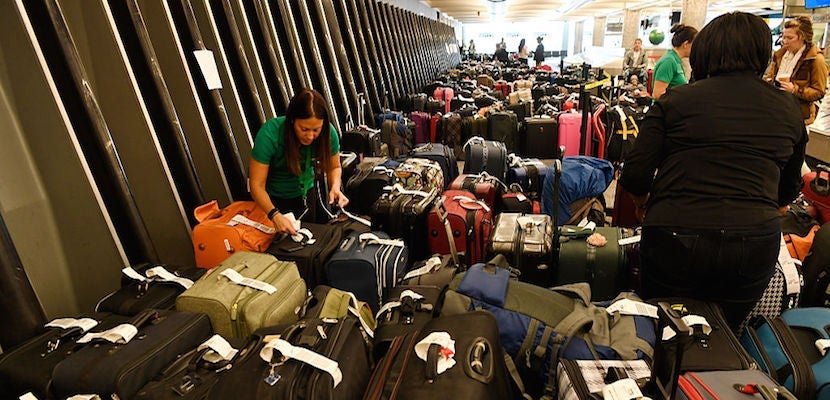
Of the many seemingly unfair practices that seem to haunt the airline industry — from high fuel surcharges to United's new policy of making passengers pay to use the overhead bin space above their seats — the most perplexing one of all may just be the rampant practice of overbooking.
According to the Daily Mail, approximately 50,000 ticketed passengers are bumped off their flights in a given year due to the airline industry's nasty habit of selling more seats than the plane has. While to travelers, this may seem like a pretty dumb thing to do, for the airlines, it all comes down to probability, statistics and perhaps, unsurprisingly, maintaining a healthy bottom line.
To help us make sense of it all, a new TED Talk video offers a fascinating mathematical overview of the practice of overbooking which, according to the video below, happens "because it increases profits while also letting businesses optimize their resources." To put it more simply: airlines know from years of experience that not all of a flight's ticketed passengers will arrive at the airport on time — if they even arrive at all. Rather than risk the chance of having an empty seat (the horror!), airlines will instead sell more tickets than can possibly be accommodated for, and hope that history and probability are on their side.
But there's more to the process than simply booking an arbitrary number of extra passengers. In order to calculate the exact number of tickets to sell or, well, oversell, airline employees analyze years of flight data to try and predict who will and will not show up at the airport. 90 percent of individual travelers are expected to show up on time for any given flight, but from there, the math gets a bit more complicated, and is best explained by the video, below.
There are, of course, proponents on both sides of the overbooking argument. While many claim that the practice of selling the same seat to two people is unfair, others believe that without 100 percent certainty that one of those people will show up, overbooking is just smart business. What we do know is if you're not in a hurry to get to your next destination, feel like volunteering to be bumped or are in the mood to negotiate, waiting to catch the next flight can sometimes be worth your while.
H/T: Daily Mail

TPG featured card

at Capital One's secure site
Terms & restrictions apply. See rates & fees.
| 5X miles | Earn 5X miles on hotels, vacation rentals and rental cars booked through Capital One Travel |
| 2X miles | Earn unlimited 2X miles on every purchase, every day |
Pros
- Stellar welcome offer of 75,000 miles after spending $4,000 on purchases in the first three months from account opening. Plus, a $250 Capital One Travel credit to use in your first cardholder year upon account opening.
- You'll earn 2 miles per dollar on every purchase, which means you won't have to worry about memorizing bonus categories
- Rewards are versatile and can be redeemed for a statement credit or transferred to Capital One’s transfer partners
Cons
- Highest bonus-earning categories only on travel booked via Capital One Travel
- LIMITED-TIME OFFER: Enjoy $250 to use on Capital One Travel in your first cardholder year, plus earn 75,000 bonus miles once you spend $4,000 on purchases within the first 3 months from account opening - that’s equal to $1,000 in travel
- Earn unlimited 2X miles on every purchase, every day
- Earn 5X miles on hotels, vacation rentals and rental cars booked through Capital One Travel
- Miles won't expire for the life of the account and there's no limit to how many you can earn
- Receive up to a $120 credit for Global Entry or TSA PreCheck®
- Use your miles to get reimbursed for any travel purchase—or redeem by booking a trip through Capital One Travel
- Enjoy a $50 experience credit and other premium benefits with every hotel and vacation rental booked from the Lifestyle Collection
- Transfer your miles to your choice of 15+ travel loyalty programs
- Top rated mobile app