New Zealand has welcomed American tourists for the first time in 2 years – here’s what it's like to visit


When New Zealand announced it would begin letting international travelers visit again in May after more than two years of isolation from the rest of the world, I began scanning airfare and mileage deals to see if I might be able to plan a trip to one of my favorite destinations.
Fortune smiled on me when United Airlines released an almost unprecedented amount of saver business-class award space from various U.S. cities to Auckland, Christchurch, Queenstown and Wellington in April for various dates throughout 2022-2023.

I immediately booked award tickets in May for 60,000 miles plus about $50-$150 each way to fly from San Francisco International Airport (SFO) to Wellington International Airport (WLG) via Sydney Airport (SYD), returning from Auckland Airport (AKL) via Sydney to Los Angeles International Airport (LAX) on a mix of United and Air New Zealand (a Star Alliance partner) flights. That way, I could report firsthand on how the country's tourism reopening was unfolding in real time.
Next, I had to figure out all the administrative hoops I would have to jump through in order to actually get into New Zealand for my trip.
Here's how my experience went, and what you can expect if you plan to visit New Zealand yourself anytime soon.
What are New Zealand's travel restrictions from the USA?
In order to travel to New Zealand right now, Americans must complete a number of steps, all of which are helpfully outlined on the government's COVID-19 information website.
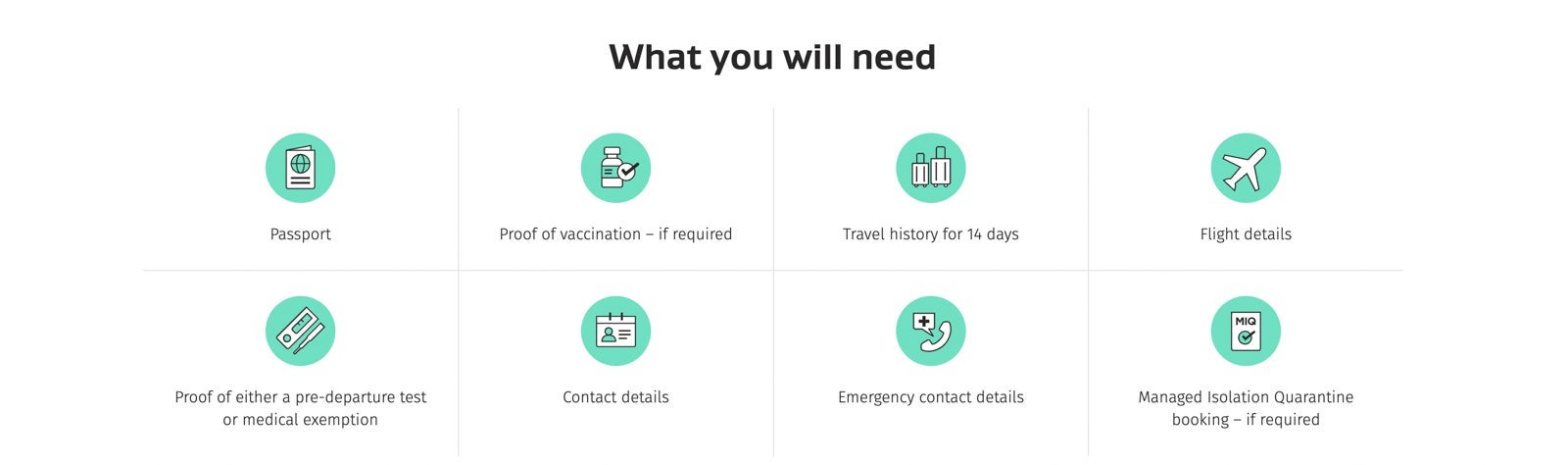
First, I had to confirm that U.S. travelers were eligible to enter at all (we are!). Next, I had to apply for a New Zealand Electronic Travel Authority visa. The application took about 10 minutes and I had to fill out my travel details, passport information and take a passport-style photo of myself. The visa itself costs 12 New Zealand dollars ($7.50), but the government tacks on a NZD$35 ($22) International Visitor Conservation and Tourism Levy, so budget for that.
Do you need to be fully vaccinated to travel to New Zealand?
At the moment, New Zealand citizens and Australian citizens who live in New Zealand do not need to be vaccinated to enter New Zealand. However, all other travelers 17 years or older must provide proof that they are fully vaccinated with an approved vaccine. That meant me, so I tucked my U.S. Centers for Disease Control and Prevention vaccination card into my passport.
Approved vaccines include the Johnson & Johnson, Moderna and Pfizer brands among 35 total possibilities, which you can find on the New Zealand government's vaccination information webpage.

Travelers 16 years or under can enter and self-test upon arrival, while some other travelers, including those who live in countries with limited access to vaccines, might receive an exemption.
Do I need a COVID-19 test to travel to New Zealand?
New Zealand requires most travelers to have a negative COVID-19 predeparture test in order to enter the country. There are three possibilities for COVID-19 tests to enter New Zealand.
- A supervised rapid antigen test within 24 hours of the scheduled departure of your first international flight en route to New Zealand.
- A supervised loop-mediated isothermal amplification test within 24 hours of the scheduled departure of your first international flight en route to New Zealand.
- A PCR test administered within 48 hours of the scheduled departure of your first international flight on the way to New Zealand.
I opted for the PCR test since it would be the easiest to obtain and would give me a longer window in which to complete the final step of the entry process for my trip to New Zealand.
What do I need for the New Zealand Traveller Declaration form?
Visa and vaccination proof in hand, and COVID-19 test in process, I had to complete the New Zealand Traveller Declaration form before travel. Although this required multiple pieces of information, it was easy and quick to go through ahead of time, with the exception of uploading my pending test results.
The steps included uploading:
- My passport details.
- A proof of vaccination (I used a photo of my CDC card).
- My travel history for the 14 days prior to flying to New Zealand.
- My specific flight details.
- Contact details in New Zealand.
- Emergency contact details.
- Proof of a predeparture test or medical exemption.
I filled in everything but the pre-travel COVID-19 test results about a week in advance. I took my test about 36 hours before my flight from San Francisco to Sydney and got my negative results eight hours later. I uploaded them to the New Zealand declaration form and I received an email within minutes containing my New Zealand Traveller Pass and QR code to present at the airport.
Although all my documentation was available via email and downloadable PDFs, I also printed everything out so I would have a backup on hand in case I had any data issues at the airport or upon arrival in New Zealand.
Barring any other hiccups, I would be able to enter New Zealand and use the country's "welcome pack" with rapid antigen tests to self-administer the first and fifth day of my trip. As long as I remained negative, I would be free to move about the country.
What other documentation did I need for my Australia layover?
While I waited for my departure date, United sent me a number of email notifications asking me to upload my documentation through the Travel Ready Center.
In addition to the materials required by New Zealand, the app told me I might need to present different credentials for my Australian transits. I didn't want to take any chances, so I completed an Australian Digital Passenger Declaration with details of my two layovers, and then also printed out another copy of my Australian electronic visa, which I'd gotten for my trip there back in February. If you don't already have one, but are transiting through Australia on your way to another country, you might want to get one just in case. It only takes a few minutes to apply and costs 20 Australian dollars ($14). I figured it was a good failsafe in case I ended up having to stay in Australia unexpectedly.
I was able to scan my passport and provide my COVID-19 testing details in the United app's Travel Ready Center, but I could not upload my New Zealand visa or passenger declaration and the app told me I'd have to check in in person at San Francisco Airport.
Sure enough, when I did, the check-in agent asked not only for my New Zealand materials — including the passenger declaration and my visa as well as my COVID-19 test results and proof of vaccination — but she also asked me to hand over my Australian visa and passenger declaration form. Good thing I'd done those in advance!
How easy was it traveling to New Zealand?
After checking in for my flight, I spent a few hours in the United Polaris lounge enjoying the facilities, including the a la carte restaurant and the shower suites. Then I boarded my first flight for Sydney and waited to see how things would unfold once I crossed the Pacific.
I deplaned in Sydney and followed the signs for international transit passengers. The normal international transit area was closed, but a circuitous walk brought me through the duty-free area to a sort of makeshift transit checkpoint where an agent looked over my passport and onward boarding pass and then waved me through security.
After that, I was free to roam the international terminal until my connecting flight. I stopped at Air New Zealand's lounge to see if my United business-class ticket gave me access even though I was continuing in economy (it didn't) and, just to be safe, to see if I needed to get a new boarding pass. The reception agent there said I did not, but she would be happy to provide me with one as soon as she looked over my visa and traveler declaration form again.
I boarded my flight to Wellington a few hours later and presented my passport and boarding pass again. On board, I filled out an arriving passenger card for customs, just like I would have before the pandemic, noting that I wasn't carrying any contraband or excessive cash.
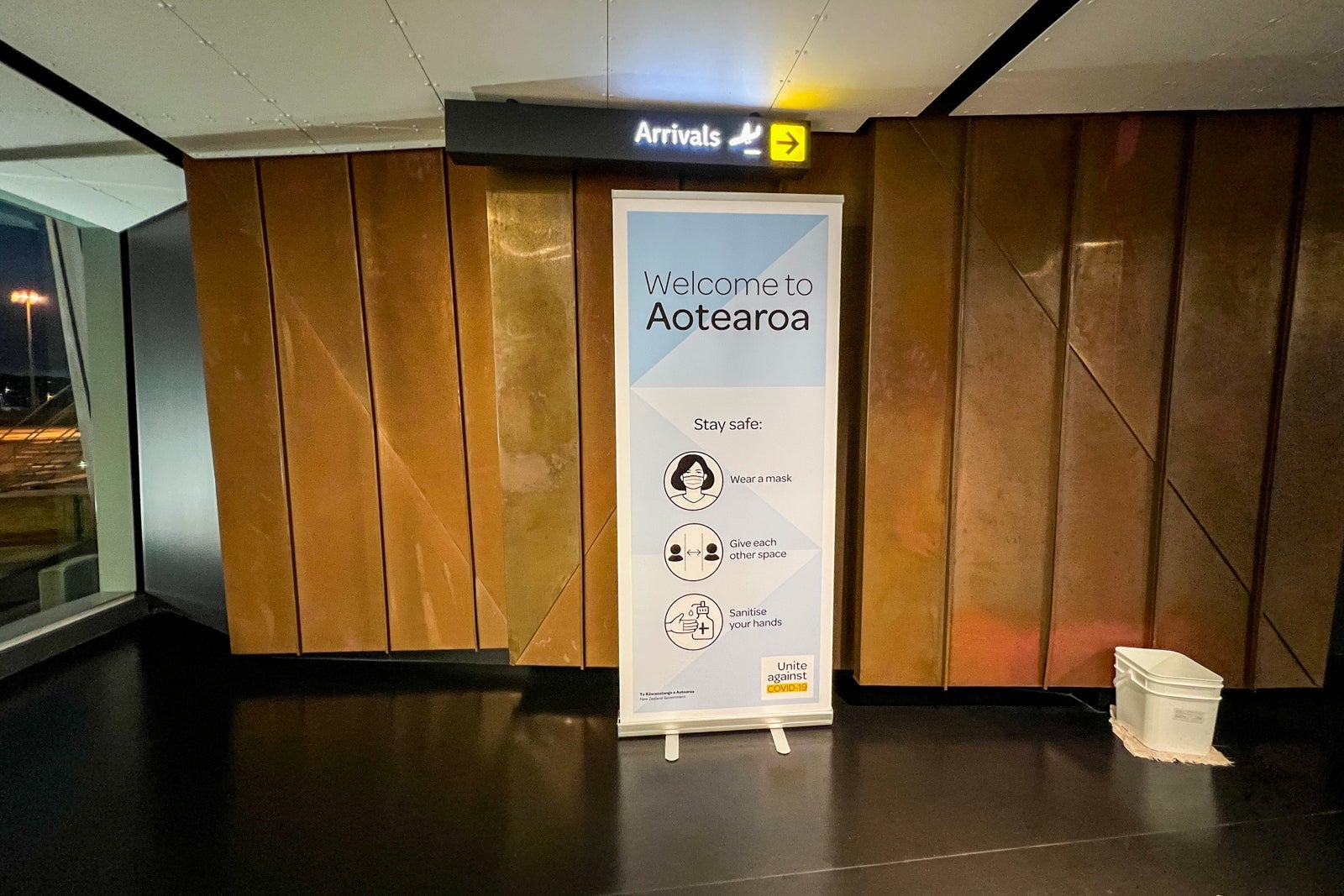
When we landed in Wellington, the airport was fairly deserted. An immigration officer was directing passengers to various electronic kiosks and lines. He asked if I had completed a traveler declaration form and a visa and when I replied that I had, he told me to use one of the automated kiosks. I scanned my passport there, had a photo taken and was then ushered on to collect my checked bag.
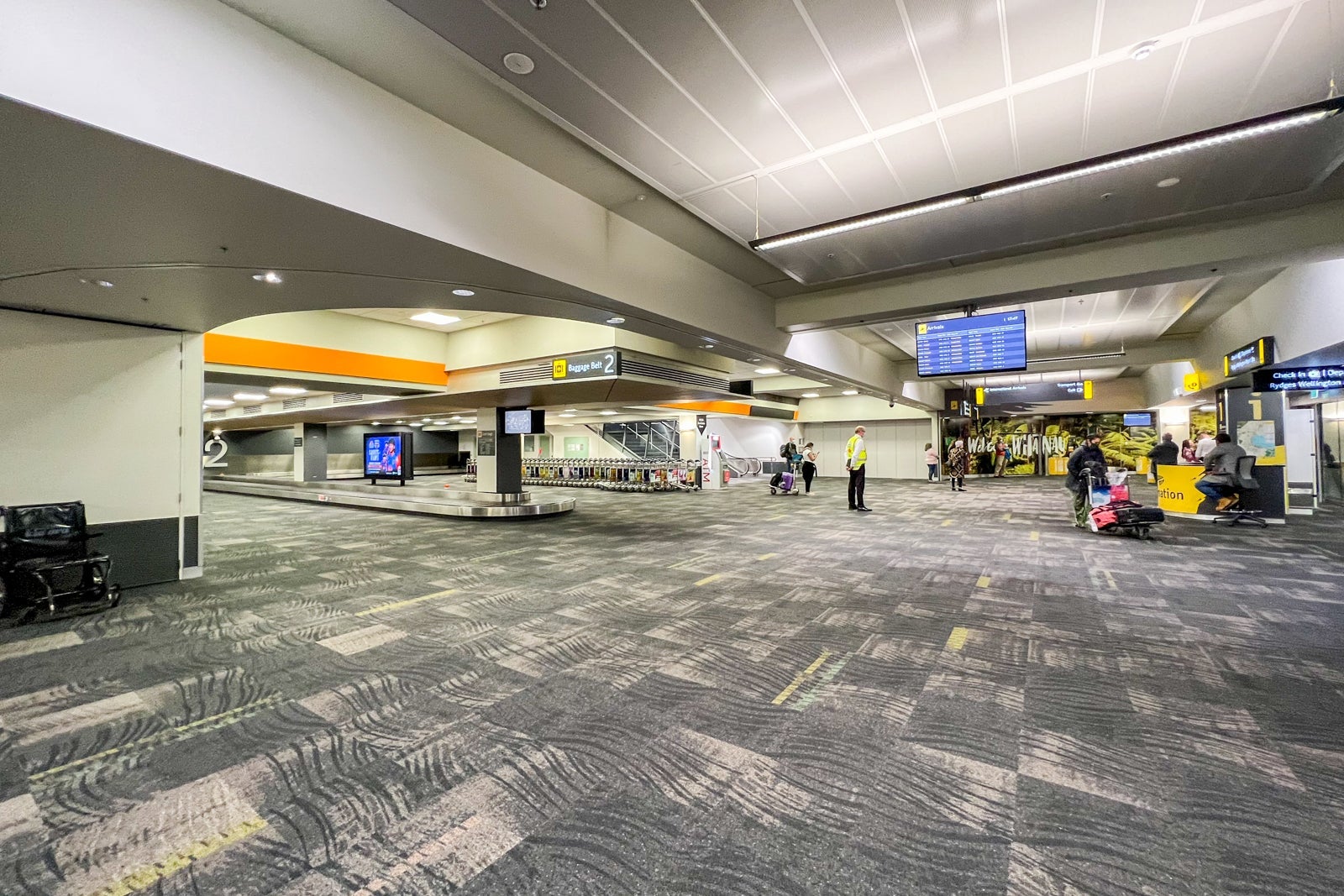
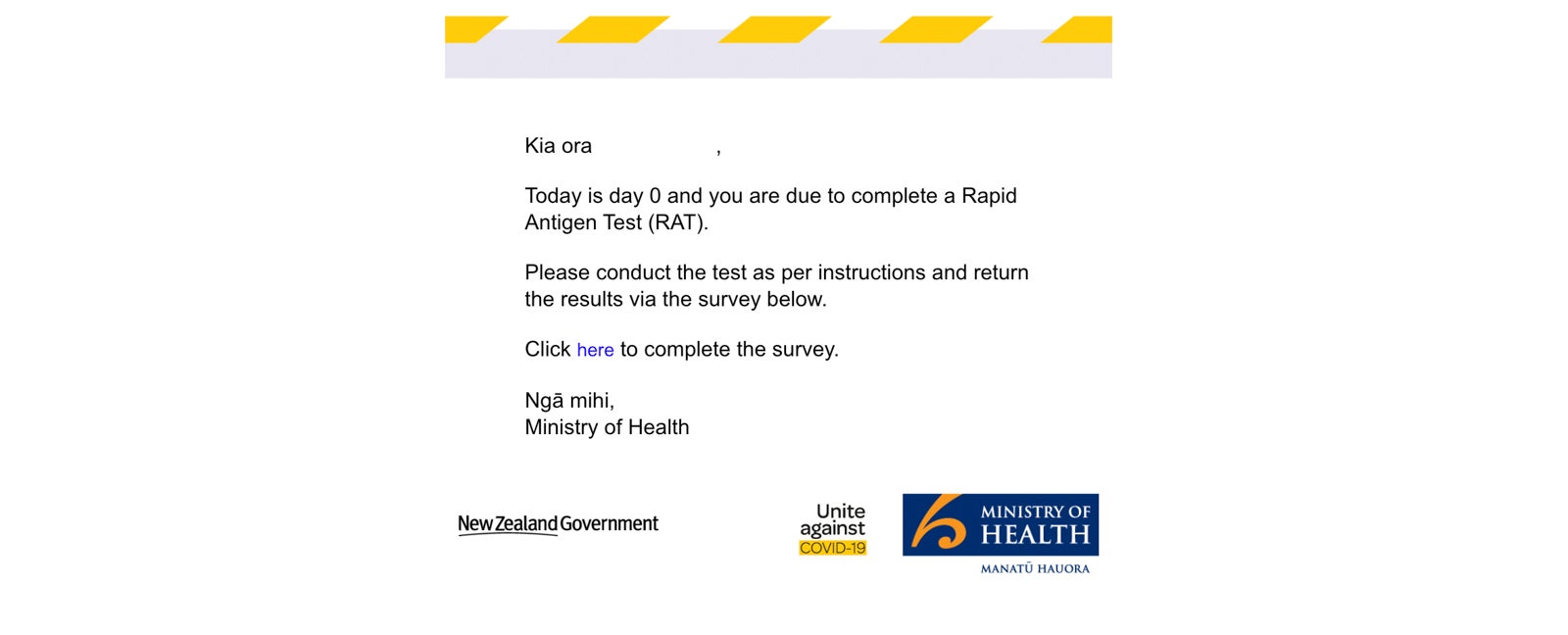
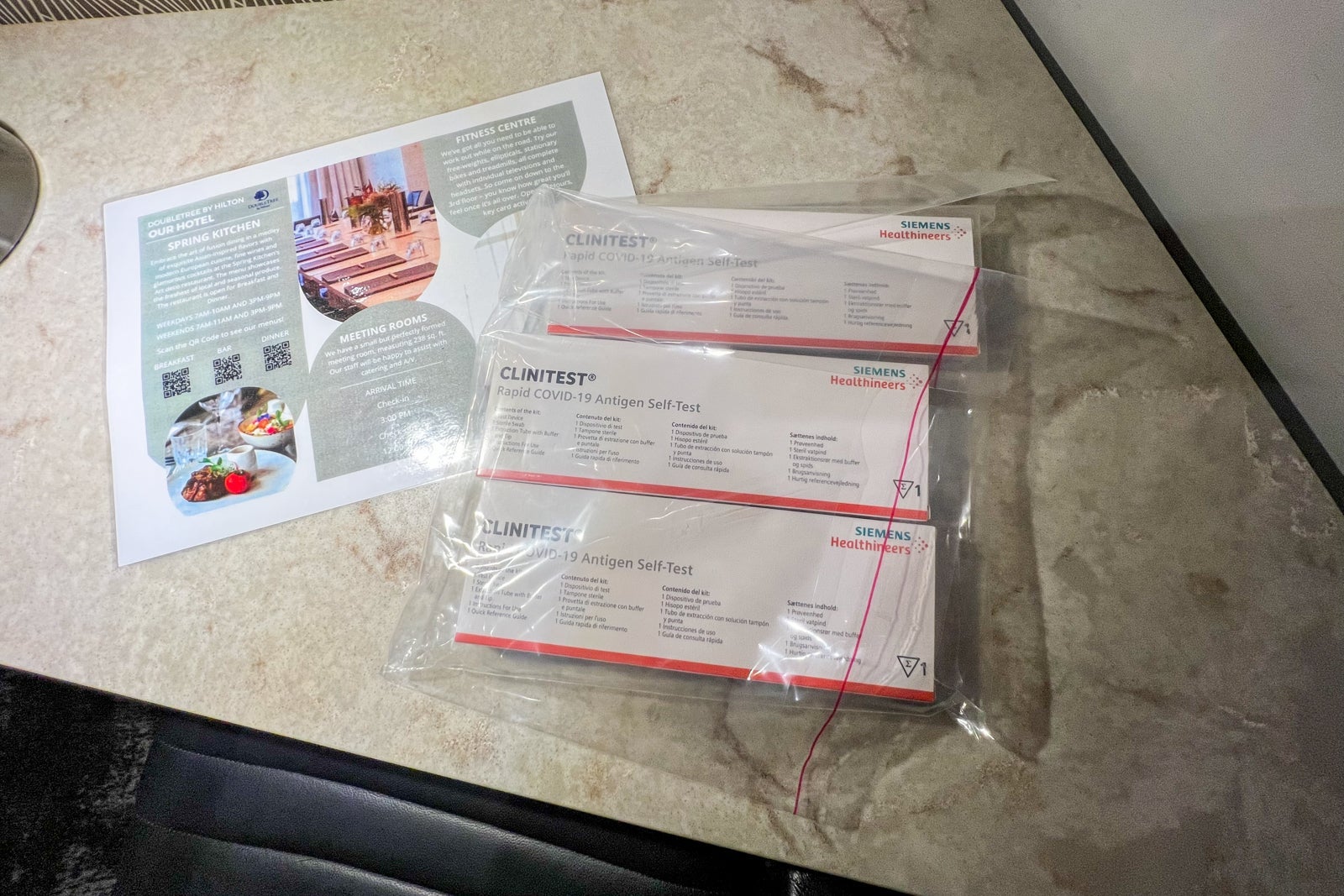
Once I had, I queued up for another checkpoint where a customs official was looking over passengers' arrival cards and then directing each person to take a bag with three self-administered rapid antigen tests. We were to take one that evening and another five days later. The third was for backup. At the same time, I noticed that I had received an email from New Zealand's Ministry of Health with a link where I could register the results of my first test.
Taking my test bag, I headed to the customs checkpoint, where my bags went through an X-ray machine, and that was it.
I was out of the airport, in a taxi and on my way to the city. Predeparture paperwork and testing notwithstanding, my actual arrival in New Zealand was as simple as it had been before COVID-19.
When I arrived at my hotel, I took my first rapid antigen test, which came back negative. I registered the results with the Ministry of Health, and then went out to dinner. If I had tested positive, I would have had to self-isolate for seven days at my own expense. So hopefully that won't happen during my visit!
Traveling around New Zealand
I will continue to be very careful and to mask up whenever around others since I don't want a positive COVID-19 test to derail my plans (or prevent me from getting back to the U.S. in a timely manner). But other than that, things feel relatively normal in this highly vaccinated country and I intend to spend most of my time out of doors since it's not quite winter yet.
Stay tuned for further coverage of what it's like traveling around New Zealand now as well as some of the phenomenal new hotels and other experiences travelers can book now that the country has reopened to international travel.
TPG featured card

at American Express's secure site
Terms & restrictions apply. See rates & fees.
| 3X | Earn 3X Miles on Delta purchases. |
| 1X | Earn 1X Miles on all other eligible purchases. |
Pros
- Delta SkyClub access when flying Delta
- Annual companion ticket for travel on Delta (upon renewal)
- Ability to earn MQDs through spending
- Various statement credits for eligible purchases
Cons
- Steep annual fee of $650
- Other Delta cobranded cards offer superior earning categories
- Earn 100,000 Bonus Miles after you spend $6,000 or more in purchases with your new Card within the first 6 months of Card Membership and an additional 25,000 bonus miles after you make an additional $3,000 in purchases on the Card within your first 6 months, starting from the date that your account is opened. Offer Ends 04/01/2026.
- Delta SkyMiles® Reserve American Express Card Members receive 15 Visits per Medallion® Year to the Delta Sky Club® when flying Delta and can unlock an unlimited number of Visits after spending $75,000 in purchases on your Card in a calendar year. Plus, you’ll receive four One-Time Guest Passes each Medallion Year so you can share the experience with family and friends when traveling Delta together.
- Enjoy complimentary access to The Centurion® Lounge in the U.S. and select international locations (as set forth on the Centurion Lounge Website), Sidecar by The Centurion® Lounge in the U.S. (see the Centurion Lounge Website for more information on Sidecar by The Centurion® Lounge availability), and Escape Lounges when flying on a Delta flight booked with the Delta SkyMiles® Reserve American Express Card. § To access Sidecar by The Centurion® Lounge, Card Members must arrive within 90 minutes of their departing flight (including layovers). To access The Centurion® Lounge, Card Members must arrive within 3 hours of their departing flight. Effective July 8, 2026, during a layover, Card Members must arrive within 5 hours of the connecting flight.
- Receive $2,500 Medallion® Qualification Dollars with MQD Headstart each Medallion Qualification Year and earn $1 MQD for each $10 in purchases on your Delta SkyMiles® Reserve American Express Card with MQD Boost to get closer to Status next Medallion Year.
- Enjoy a Companion Certificate on a Delta First, Delta Comfort, or Delta Main round-trip flight to select destinations each year after renewal of your Card. The Companion Certificate requires payment of government-imposed taxes and fees of between $22 and $250 (for itineraries with up to four flight segments). Baggage charges and other restrictions apply. Delta Basic experiences are not eligible for this benefit.
- $240 Resy Credit: When you use your Delta SkyMiles® Reserve American Express Card for eligible purchases with U.S. Resy restaurants, you can earn up to $20 each month in statement credits. Enrollment required.
- $120 Rideshare Credit: Earn up to $10 back in statement credits each month after you use your Delta SkyMiles® Reserve American Express Card to pay for U.S. rideshare purchases with select providers. Enrollment required.
- Delta SkyMiles® Reserve American Express Card Members get 15% off when using miles to book Award Travel on Delta flights through delta.com and the Fly Delta app. Discount not applicable to partner-operated flights or to taxes and fees.
- With your Delta SkyMiles® Reserve American Express Card, receive upgrade priority over others with the same Medallion tier, product and fare experience purchased, and Million Miler milestone when you fly with Delta.
- Earn 3X Miles on Delta purchases and earn 1X Miles on all other eligible purchases.
- No Foreign Transaction Fees. Enjoy international travel without additional fees on purchases made abroad.
- $650 Annual Fee.
- Apply with confidence. Know if you're approved for a Card with no impact to your credit score. If you're approved and you choose to accept this Card, your credit score may be impacted.
- Terms Apply.
- See Rates & Fees