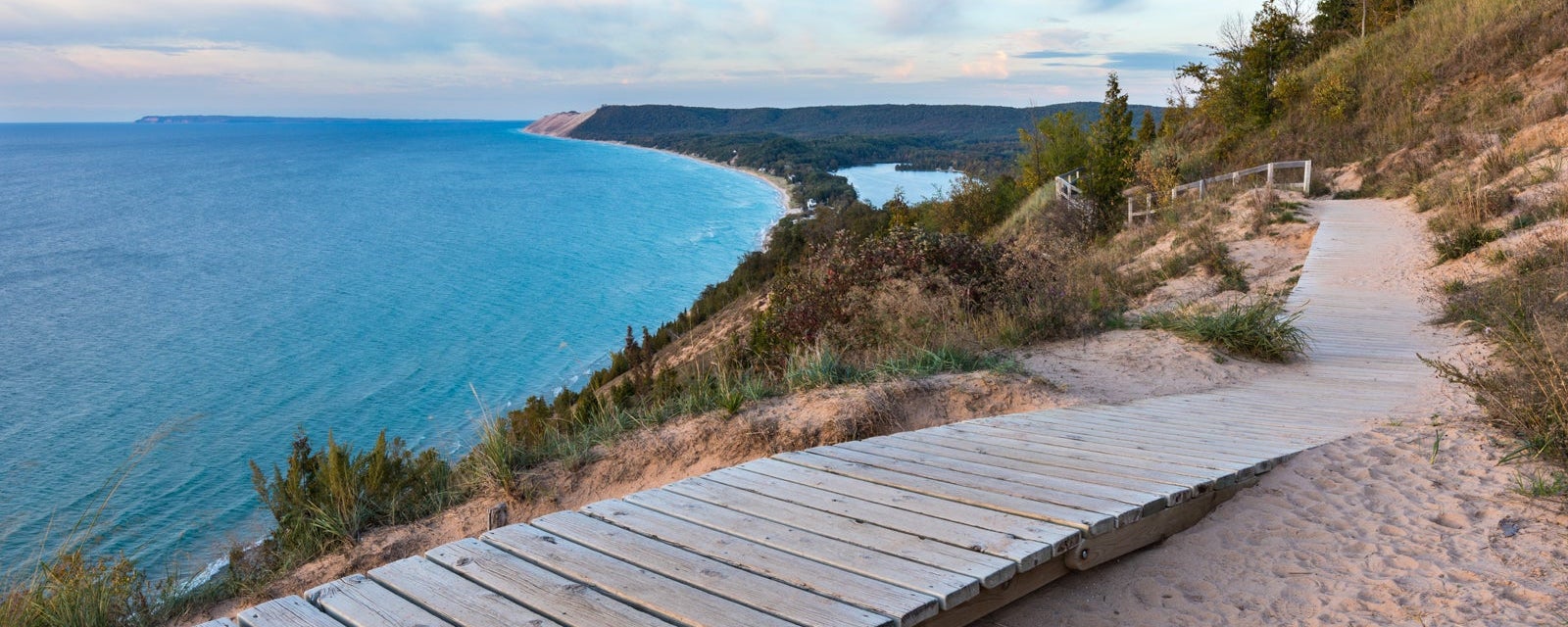
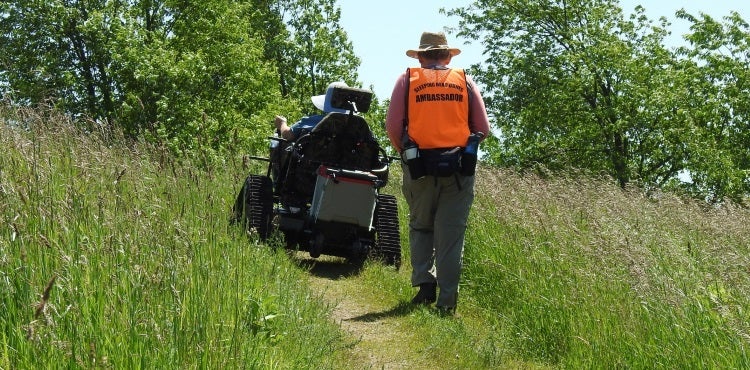
But this summer, Sleeping Bear Dunes National Lakeshore, in Michigan, introduced a track-chair program to help people with limited mobility explore the seashore's steep, sandy trails.
Launched in May by the volunteer group Friends of Sleeping Bear Dunes, the chair has wide, treaded tracks, rather than wheels, making it possible for travelers to explore the stunning landscape without altering or damaging the park. It's free to reserve for travelers who genuinely require assistance, and have purchased a park pass. The group claims it's the first program of its kind at a national park. (Staunton State Park, in Colorado, has been offering free track-chairs to make a trio of trails more accessible since May 2017.)
At this time, there's only one track chair at Sleeping Bear Dunes, and it's only available on the 8-mile-long Bay View Trail. According to CNN, the group is planning to purchase another chair designed specifically for children.
While track-chair programs are a rarity, many state and national parks, and national monuments and attractions, are wheelchair accessible. Attractions like the Golden Gate Bridge, the Statue of Liberty and the Space Needle all offer accessibility options for people with disabilities. And many parks have wheelchair-accessible paths and lawns — but those are limited.
"As communities recognize the increased demand for accessible travel opportunities, they will develop programs like these to attract new travelers with disabilities," Morris said.
In addition to the track-chair program, Friends of Sleeping Bear Dunes has been actively working to make other areas of the park more accessible to all travelers, including hard decks and walkways; an accessible kayak launch; and a 20-mile multiuse trail currently in development, CNN reported.
Feature photo by csterken / GettyImages.