More Mint, and Airbus A220s to Europe: JetBlue Hints at What's Ahead

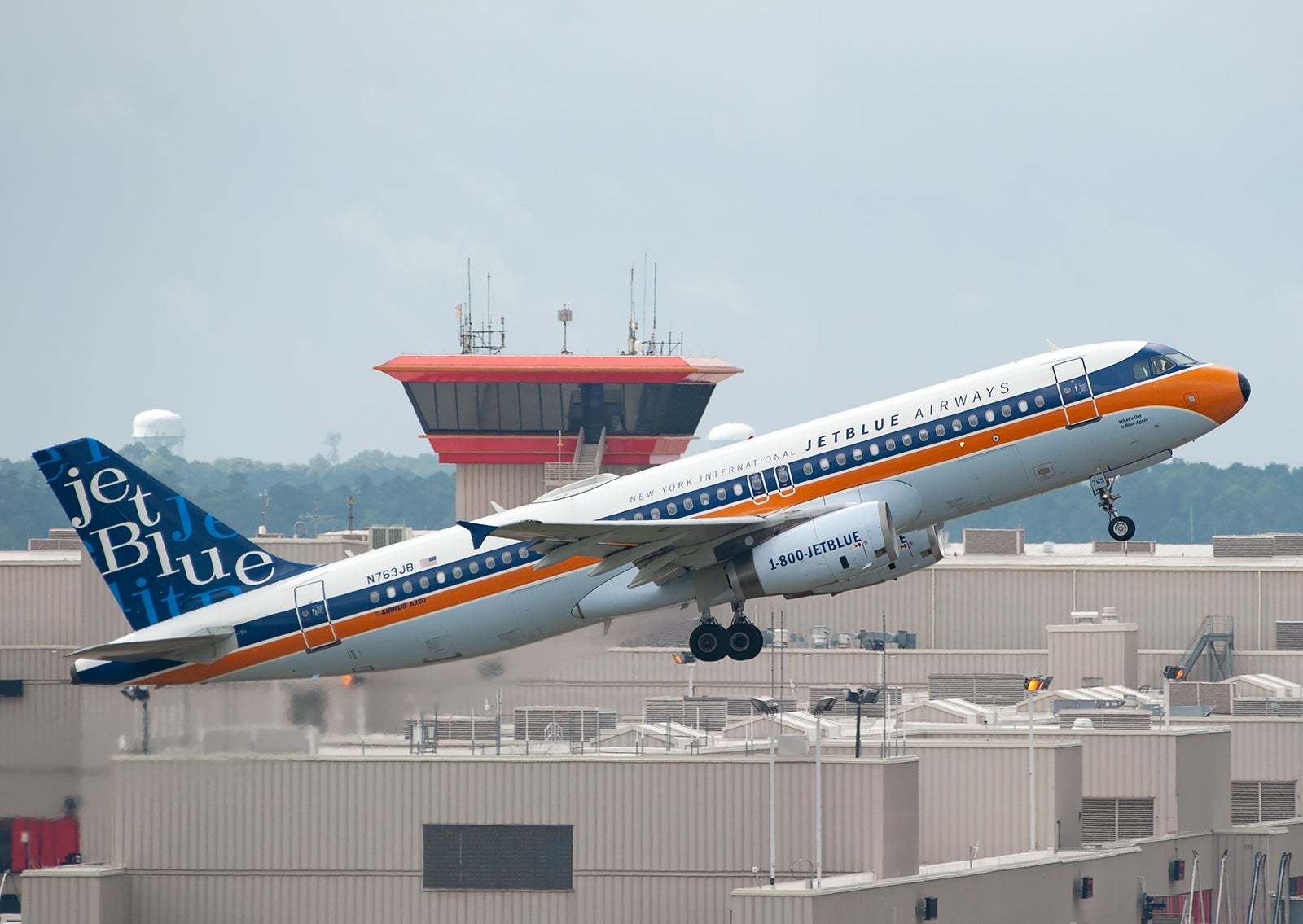
JetBlue, the sixth-largest US airline by passengers carried, has had a tougher year than usual in 2018. Faced with costs rising faster than the industry average and a stock price that's dropped about 16% since January, it announced a round of staff reductions in July and followed up this month by introducing higher passenger fees. It aims to reduce operational costs by up to $300 million a year by 2020, as fuel prices rise.
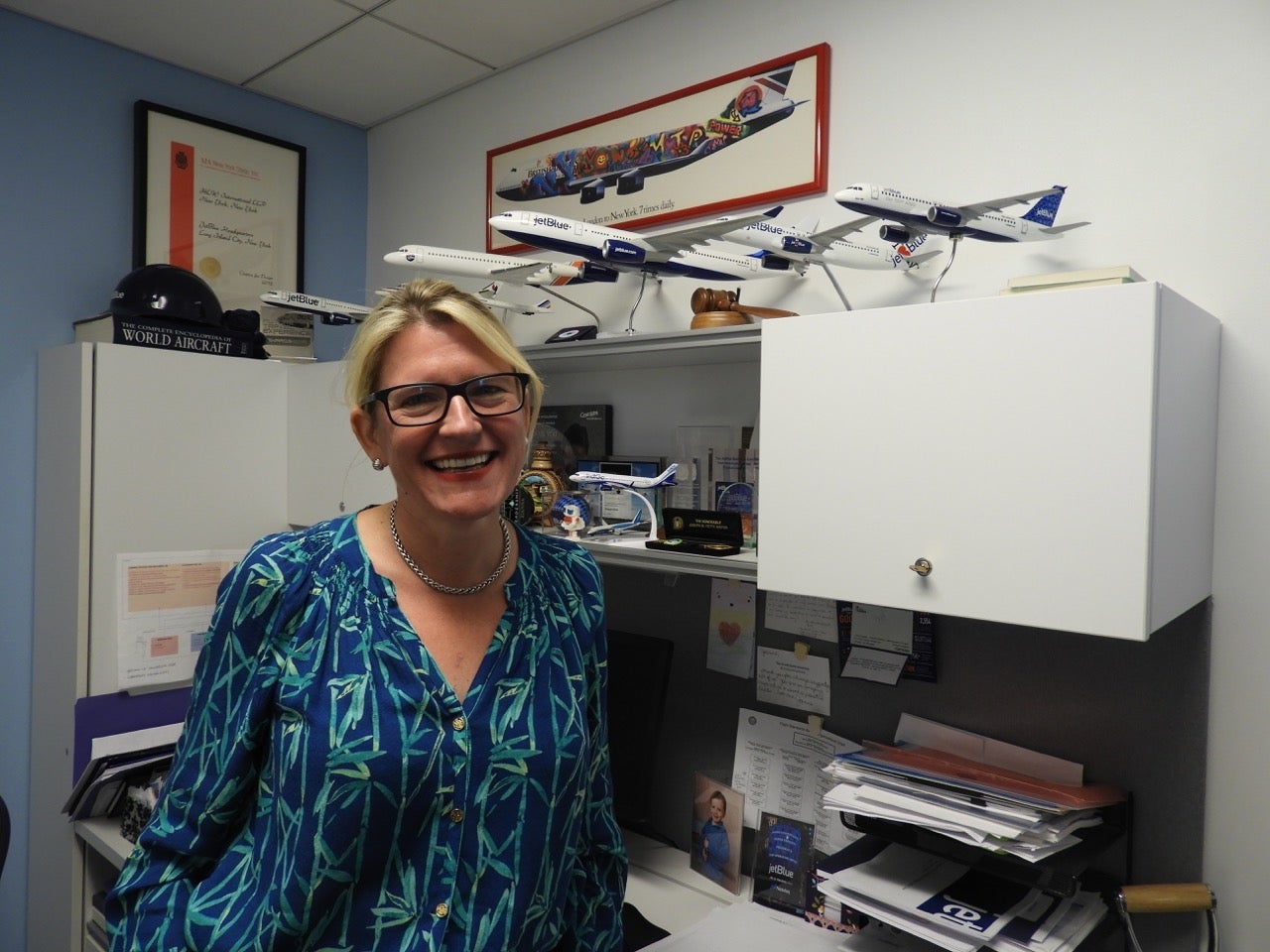
But it also placed a big order for new airplanes, buying 60 Airbus A220s with 60 more on option, and named a new president and chief operating officer, Joanna Geraghty, who happens also to be the highest-ranking woman at any US airline.
JetBlue isn't staying idle, and it has already hinted in internal messages earlier this year that it's poised to do something quite revolutionary for the 20-year old airline: Start flying across the Atlantic. Now, in an interview with TPG, Geraghty and her boss, chief executive officer Robin Hayes, allude to the fact that JetBlue is someday going to Europe. It may do so with the A220, as well as with the bigger A321 LR it also may order. And when it does, it promises to sell premium-class tickets for cheaper than the "obscene" fares it says other airlines are charging.
However, Mint lounges and upgrades to Mint for JetBlue's top Mosaic customers aren't going to happen, according to the two executives.
Geraghty and Hayes' replies have been edited for brevity.
TPG: So will JetBlue really expand to Europe?
Geraghty: Someday JetBlue will be in Europe. How about that? Europe is very interesting. We currently don't have an aircraft that can make it there. There would need to be an aircraft decision. We've publicly stated the Airbus 321LR looks interesting. We've studied it and we continue to study it. We know that out of Boston there's a number of really interesting markets we'd like to fly to in Europe, the same in New York.
We also think that the premium market in Europe is interesting -- a market that's potentially ripe for some disruption. But we have not made any decisions as to whether or not we are going to go there, let alone a timeline if we decided to. But someday, JetBlue is going to fly to Europe.

TPG: How would JetBlue disrupt the North Atlantic?
Hayes: What is the opportunity for JetBlue? The opportunity is to address the obscene fares that customers are paying for premium flights between the US and Europe. I won't mention the airline but I'm just looking at one here on a website for a round trip in Business Class in seven days' time from London to Boston from $8,795. That is just obscene.

You do have low price competition, so guess where fares are going up? They're going up in the premium market so someone has to come along and correct that and give consumers a better deal, and if we don't do it, someone else is going to do it. We just see an opportunity. We have customers, places like London and Paris are some of the largest markets that they want to go that we don't fly, and we can bring a better product at a fraction of the fare and be wildly profitable.
Geraghty: If you look at what we did with Mint, disrupting that trans-continental market, we think there's a similar opportunity for Europe, but we haven't made any decisions yet.
TPG: What's the likelihood of Mint being configured on the new Airbus A220s when they arrive in 2020? What can you disclose about the configuration?
Geraghty: We've just completed the order for the new plane. In terms of the layout of the aircraft, we have some time to work through that. Our vision is something similar to a Mint configuration. We do think that there is a premium market in Europe that is potentially interesting with the 220. We have not resolved on what the configuration will look like regarding whether it has Mint or does not.
Hayes: One of the benefits that the 220 has is range. We can fly them trans-con. (In) some circumstances, you can fly a version of it across the Atlantic. It also performs well across short sectors. That gives a lot of flexibility. If we're going to fly this on certain trans-con markets where we think there's a Mint market, but it's smaller than a 321, we have the flexibility to look at that. Most of the flying will be in those shorter-range business markets.
TPG: What about growth in the US?
Geraghty: If you were to ask the network folks, they'd say "There's dozens and dozens of opportunities." For now our focus is really on continuing to build relevance in the markets that we fly. If you look at the airports that we're in and the market share that we have, there's still quite a bit of room for growth for JetBlue. If you look at the legacy carriers and the size that they represent in places like Atlanta, Dallas-Fort Worth, San Francisco -- JetBlue in Boston, JFK and Fort Lauderdale still has quite a bit of room to continue to build out our relevance in those pillars. That's what we're focused on right now. As we continue to build relevance there, we'll start looking for other opportunities.
Hayes: Our business model is different as well. Being predominantly a point-to-point carrier and not building for connectivity, when the time comes for a new focus city we'd have to go in and bid on the strength of the point to point market as opposed to assuming a bunch of connectivity as well.
TPG: The second quarter of 2018 wasn't a great story for you. Revenue per available seat-mile grew, but operating margins tumbled to 8% from 19% in the same period of 2017, the biggest fall of any US carrier. Operating expenses swelled 18%. What cost-cutting and revenue-driving initiatives are you taking?
Hayes: The last two years we have put a lot of effort into getting above-average industry margins with a goal to drive superior margins. We believe within a reasonable period of time we should be delivering some of the highest margins in the industry.
The area where we get a lot of questions and concerns is around how we manage our cost structure. Investors (...) will say that you've done a good job on revenue over the years. But we've seen cost creep more than we've seen in other airlines and that's a concern if that continues. (With) things like the fleet deal for the A220s, we'll correct that (in the) longer term, but we have an issue in the next two years.
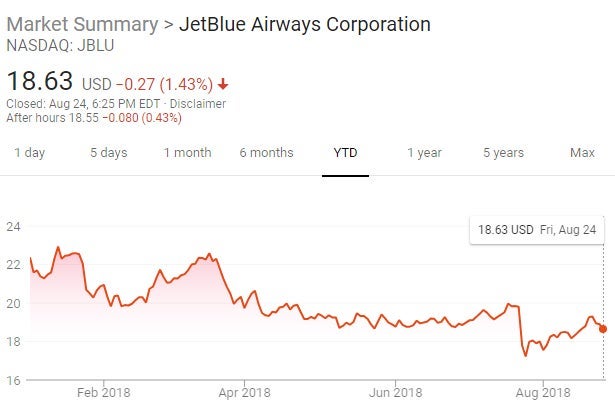
We have plans in place to meet that, (including) fixing a lot of our engine maintenance contracts and heavy maintenance contracts, which has been a source of this cost growth for the most part. We believe that's going to give our investors a very sustainable path to superior margins and that's what we're focused on.
But at the moment there's also a lot of industry questions around -- how close are we to the end of the cycle, high fuel prices, have airlines competed away the benefits of tax reform and other things, or have shareholders seen their portion back? Those are themes that I hear from investors a lot. Then the JetBlue-specific ones are really around cost control.
Hayes: Our new 320s, the retrofits, it's a shareholder-friendly initiative, because there's 12 extra seats. [JetBlue is increasing seat count on its A320s from 150 to 162, but still keeping a legroom edge over competitors in standard coach class.]
Geraghty: We have no plans to consider any kind of a low-cost carrier that's part of JetBlue. Again, our sweet spot is this high value leisure customer, that's our focus.
Hayes: We spent a little time the last two years to drive our margins to be above average industry margins in the US. That's where we continue to focus on.
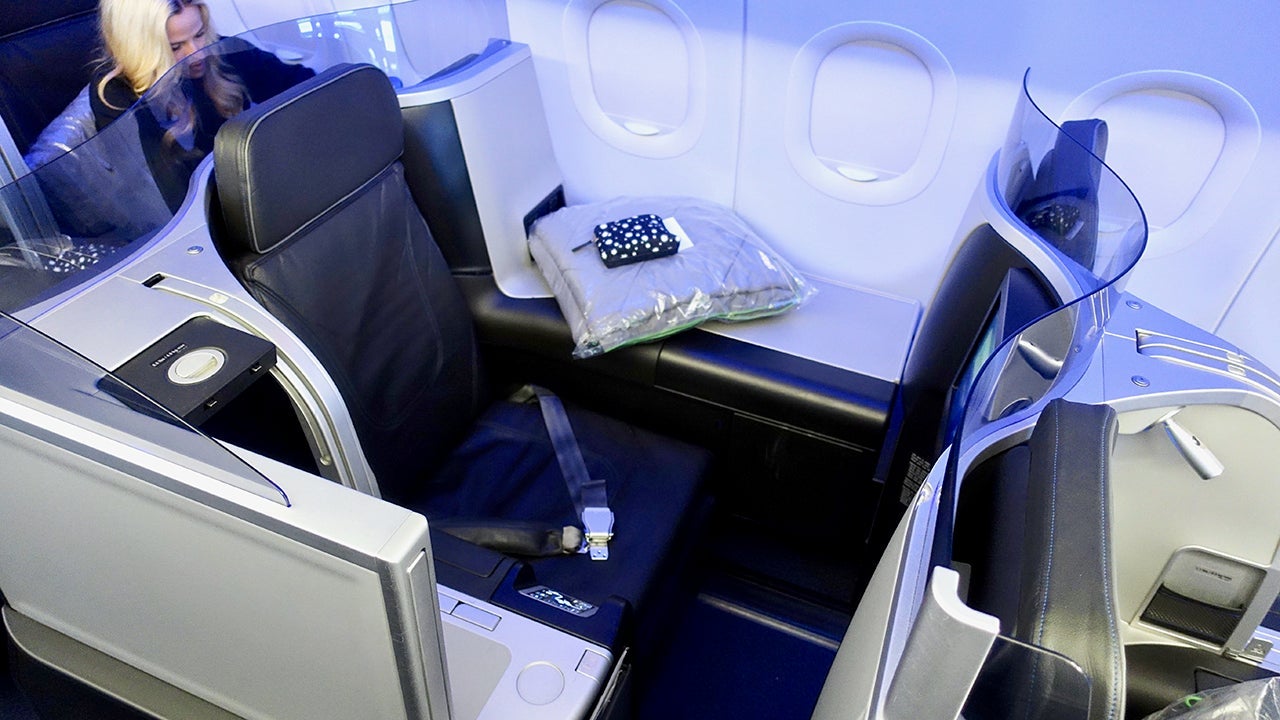
TPG: Mint's lie-flat seat product occupies a significant amount of real estate on the aircraft that limits it to longer-haul transcontinental markets, and some flights to the Caribbean. As JetBlue attracts more-well heeled leisure and business travelers, would you ever consider a 'Mint Lite' premium cabin product with recliner seats akin to more domestic first class?
Geraghty: We've explored it before... Mini Mint, Junior Mint. (The A321 with Mint) is an incredibly profitable plane for JetBlue. It flies to markets where there's a lot of demand to fly. We've looked at other markets but at the end of the day, you need to have a demographic that can support a first class trans-con product for Mint to be successful. We're not sure that is across every market in the United States. There's not necessarily a demand for that first class, premium cabin in all cases.
Hayes: A very important point when we set Mint up, we said this is about accessing the paid premium market. The vast majority of the US domestic first class market is not paid. It's more of a benefit from a frequent-flyer program. We didn't want to do that because this then becomes a product that's a downward spiral.
Airlines don't want to invest in it because it's not profitable because people are just upgrading into it. When we look at a lot of the first class on the shorter routes, much of that are upgrades. When you actually look at the first class premium that competitors charge to access those cabins, they can be pretty low. Mint will be governed by the size of the paid premium market as opposed to who's flying in first class.
TPG: Do you see a scenario for offering complimentary Mint upgrades for your high-value Mosaic customers?
Hayes: Mosaic customers are important to us. We've chosen to invest in things like free change fees and other benefits which carry a practical benefit as opposed to getting on the (upgrade) list -- "Who gets it today?" Our sense is that's probably the right way to continue.
TPG: Are lounges a possibility you're entertaining, particularly at your focus cities?
Geraghty: For JetBlue, we think our terminals are pretty darn good and we try to invest in our terminals as a way of providing a good experience for all of our customers. Lounges are expensive to operate. One of the ways that we can keep our Mint fares competitive is by not having that overhead of a lounge. That's our plan for now. It's not to say never, but we think what we offer now between Terminal 5 at JFK is a fantastic terminal and far exceeds many airline lounges out there. That's our focus right now.
Chris Sloan is an aviation journalist and lifelong AvGeek based in South Florida, where he is managing editor of Airways Magazine. At his day job, he is also owner of one of the nation's top television production companies, design, and marketing agencies, 2C Media. His mantra is pretty much the same as the classic Delta Airlines slogan: "I Love to Fly, and It Shows." His specialties are inaugural flights and financial analysis.
TPG featured card

at Capital One's secure site
Terms & restrictions apply. See rates & fees.
| 5X miles | Earn 5X miles on hotels, vacation rentals and rental cars booked through Capital One Travel |
| 2X miles | Earn unlimited 2X miles on every purchase, every day |
Pros
- Stellar welcome offer of 75,000 miles after spending $4,000 on purchases in the first three months from account opening. Plus, a $250 Capital One Travel credit to use in your first cardholder year upon account opening.
- You'll earn 2 miles per dollar on every purchase, which means you won't have to worry about memorizing bonus categories
- Rewards are versatile and can be redeemed for a statement credit or transferred to Capital One’s transfer partners
Cons
- Highest bonus-earning categories only on travel booked via Capital One Travel
- LIMITED-TIME OFFER: Enjoy $250 to use on Capital One Travel in your first cardholder year, plus earn 75,000 bonus miles once you spend $4,000 on purchases within the first 3 months from account opening - that’s equal to $1,000 in travel
- Earn unlimited 2X miles on every purchase, every day
- Earn 5X miles on hotels, vacation rentals and rental cars booked through Capital One Travel
- Miles won't expire for the life of the account and there's no limit to how many you can earn
- Receive up to a $120 credit for Global Entry or TSA PreCheck®
- Use your miles to get reimbursed for any travel purchase—or redeem by booking a trip through Capital One Travel
- Enjoy a $50 experience credit and other premium benefits with every hotel and vacation rental booked from the Lifestyle Collection
- Transfer your miles to your choice of 15+ travel loyalty programs
- Top rated mobile app