Update: US declares monkeypox a public health emergency. What is the impact on travel?


Editor's note: This article has been updated with new information.
The Biden administration declared monkeypox to be a public health emergency Thursday.
The formal announcement from the U.S. Department of Health and Human Services will help to raise awareness of the disease and be a step to unlock emergency funding to develop and improve access to vaccines and treatments.
The news of the emergency declaration was first reported by The Washington Post.
"We're prepared to take our response to the next level in addressing this virus, and we urge every American to take monkeypox seriously," said Health and Human Services Secretary Xavier Becerra at a briefing today in Washington.
The city of San Francisco already announced a state of emergency over the outbreak, and New York state declared it an "imminent threat." Internationally, the World Health Organization announced monkeypox to be a "global health emergency of international concern" on July 23.
But how will this affect travel — and the precautions you take along the way?
No current travel restrictions are in place. However, doctors and the Centers for Disease Control and Prevention caution travelers to refrain from "high-risk activities" involving intimate contact.
Let's dive into the basic facts.

According to the WHO, anyone diagnosed with monkeypox or who has signs and symptoms indicating a potential monkeypox virus infection should avoid any travel until they are no longer considered a public health risk.
More than 6,600 cases have been reported in the U.S., according to the CDC, but the WHO and local doctors caution that these numbers may be much lower than actual figures due to underreporting.
Here's what you need to know about the disease and what impact it may have on global travel.
What is its potential impact on travel?
Although a monkeypox vaccine is available, there are no requirements to be vaccinated against it in order to travel. And in fact, vaccines are still limited in their availability. However, travelers should be aware of areas with high infection rates. You can check this map to see infection rates by country.
"For most travelers, this should not cause alarm, but it is worth understanding the risk numbers in the travel destination," said Dr. Jenny Yu from Healthline (Red Ventures is the parent company of both Healthline and TPG).
"As this is a re-emerging disease, not all healthcare providers are familiar with diagnosis and treatment, which may delay diagnosis, something to consider when traveling. People should take the necessary precautions but should not panic from a travel standpoint," she added.
The United Kingdom, Belgium and Germany, all of which have rising monkeypox case numbers, have issued 21-day quarantine recommendations for people diagnosed with the disease.
However, such quarantines are thought to be inefficient for preventing its spread due to the virus's long incubation period, especially when compared to COVID-19, according to a Cowen market analysis report.
That said, for now, monkeypox "shouldn't be an issue when traveling," said New York-based Dr. Jake Deutsch, a former emergency room physician at Mount Sinai Hospital who now runs a private practice focused on men's health.
Deutsch says most travelers shouldn't worry, "unless you're engaging in higher risk behavior while in countries with high infection rates."
Travel FAQs on monkeypox
TPG contacted multiple doctors and infectious disease specialists for advice on specific travel-related monkeypox questions. Here's what they had to say:
How easy is it to catch monkeypox while traveling?
"At this point, travelers should not be terribly concerned about catching monkeypox," said Dr. Paul Holtom, chief of infectious diseases and hospital epidemiologist at Los Angeles County/USC Medical Center.
Given the close skin-to-skin contact necessary for monkeypox transmission, multiple doctors told TPG that the general public should not worry about catching the virus — unless a traveler plans to engage in high-risk behavior.
For a better understanding of potentially high-risk interactions, visit the CDC website page regarding monkeypox transmission.
Note that it is still early in the current outbreak, and advice may change as more information becomes available.
The CDC said the virus can be transmitted through infected linens. How worried should I be about hotels and other lodgings?
Healthline's Yu says "If something looks soiled, question it. But otherwise, bed linens are still very low risk."
"Standard disinfection practices with an EPA-registered disinfectant and laundering with detergent are considered efficacious by CDC to prevent ongoing transmission by contaminated objects," said Dr. Prathit Kulkarni, assistant professor of medicine for infectious diseases at Baylor College of Medicine.
He told TPG via email that, "As long as facilities follow routine cleaning at regular frequencies using standard disinfection practices, bed linens and similar materials are not thought to pose a major risk of transmission."
In fact, the CDC guidelines pointing out the danger of transmission by clothing and linens are based on a single case of a caregiver contracting the virus from a patient's bedding in a healthcare facility, according to USC's Holtom.
He says travelers should not worry about any linens or towels in hotels that appear to have been cleaned. If the linens do look dirty and used, "there are many other things more likely than monkeypox you can catch from them," said Holtom, "so by all means ask for a clean set."
Can I catch monkeypox from my seat on an airplane, bus or train? Do I need to sanitize my seat?
"It's certainly conceptually possible monkeypox could be transmitted from an airplane seat," said USC's Holtom, "but it's highly unlikely. I really don't see a particular risk there."
Holtom advises passengers to wear long pants on flights and avoid excessive skin contact with public surfaces on flights and elsewhere "for a variety of health reasons that are more concerning than monkeypox is currently."
Rubbing down a cloth seat with a sanitizing wipe will "do practically nothing," Holtom said. "It can't be disinfected that way." Of course, if the seat is leather or has a similar surface, wipes may do more to eliminate germs of all kinds.
He did suggest wiping down tray tables and armrests if you're concerned about general health safety.
Can the virus be transmitted in a swimming pool or water park?
"If you have an open wound you should avoid entering public pools and water parks at all times," Yu advised. "But in places of big bodies of water that are chlorinated, the viral amounts are diluted and there is less risk of monkeypox transmission."
Holtom said: "There's absolutely no data right now saying monkeypox can be transmitted by water… It's a very low-risk environment."
He did say that towel sharing at a pool would have a similar risk to shared linens, so people should avoid using an unknown person's towel — "but that's common sense anyway."
CDC studies on a similar pox virus showed a very low risk of transmission in pools or public water areas but cautioned that due to the long incubation period of the virus before an outbreak (it can sometimes be weeks), it is difficult to confirm exactly when or where a person might have contracted the virus.
Baylor's Kulkarni also said a towel that had not been appropriately laundered could potentially "be considered infectious materials… But importantly, they would have had to have been recently used by someone with an active monkeypox infection."
Do I have to wear a mask to protect against monkeypox?
Not unless you are in extended, very close contact with an infected person. Respiratory transmission of the virus is "very rare," according to Deutsch.
CDC guidelines say the virus can be spread "during prolonged, face-to-face contact," including "kissing and snuggling," but say masks are not necessary or even suggested in regular, day-to-day public settings.
"Monkeypox is just not transmitted by air like COVID," said Holtom.
Should I get vaccinated against monkeypox?
"At the current time, there is no broad recommendation for the general public to be vaccinated against monkeypox," said Kulkarni. "But it is possible these recommendations could be modified at some point in the future."
Given the supply of existing vaccines, and the current transmission vectors, the CDC currently recommends only high-risk individuals get vaccinated against monkeypox. People in that category are:
- Known contacts who are identified by public health via case investigation, contact tracing and risk exposure assessments.
- Presumed contacts who may meet the following criteria:
- Know that a sexual partner in the past 14 days was diagnosed with monkeypox.
- Had multiple sexual partners in the past 14 days in a jurisdiction with known monkeypox.
As always, this may evolve in time, and some areas, such as New York City, are making monkeypox vaccines available to additional groups identified as higher risk as they become available.
What is monkeypox?
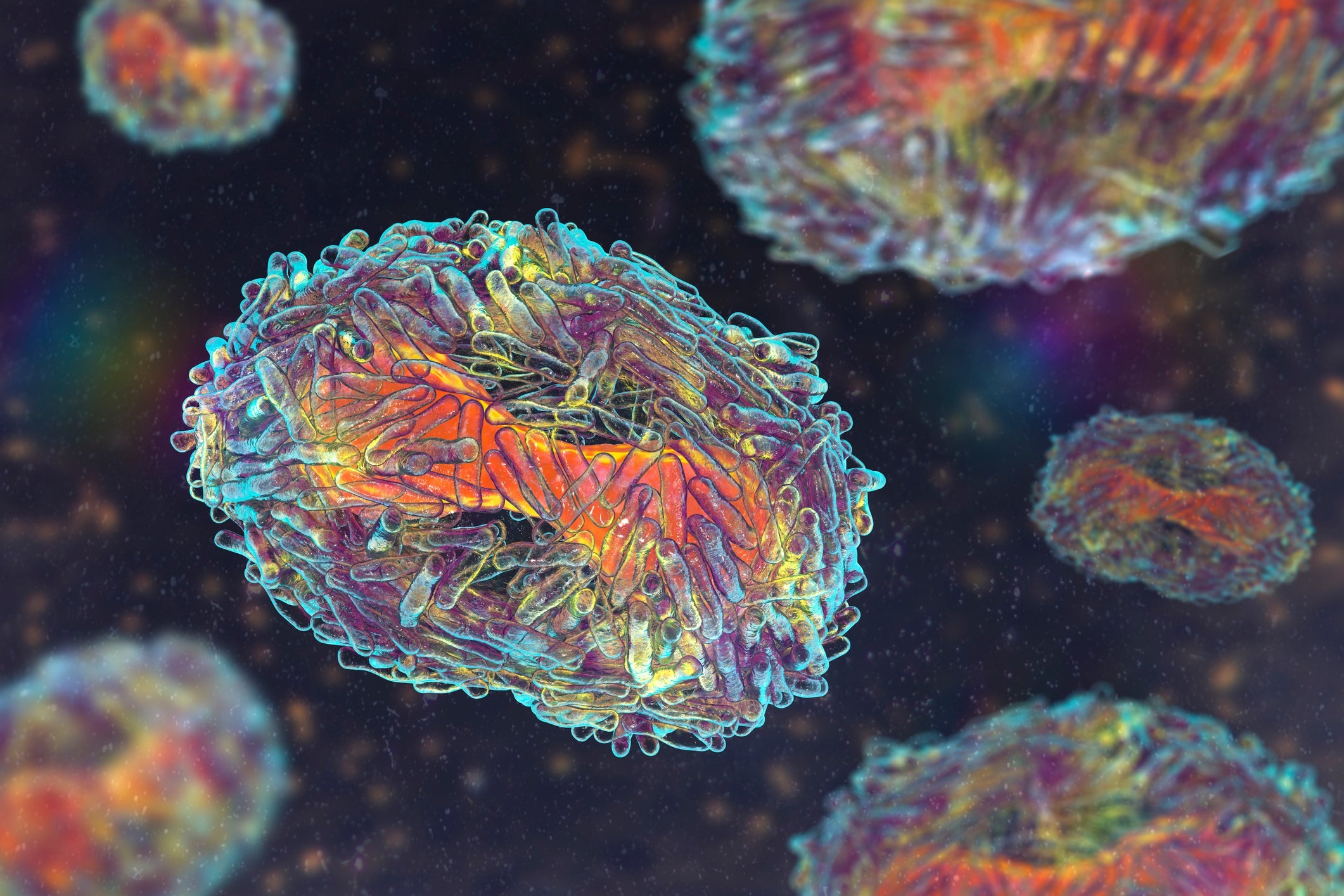
Monkeypox is a virus "characterized by a fever, swollen lymph nodes and a widespread rash," according to Healthline. The monkeypox-induced rashes can cause many unsightly and sometimes painful lesions, particularly on the face and extremities.
The monkeypox disease was first identified in the 1950s among monkeys, with the first human case occurring in the Congo in the 1970s. Before the recent outbreak, the virus had been mainly active in rural regions in central and western Africa.
Symptoms of monkeypox are similar (but milder) than those of smallpox. After contracting the virus, people may suffer from fever, headache, muscle aches, fatigue and chills within five to 21 days. The distinctive rash and lesions can appear 1-3 days later, primarily around the face, hands, feet and genitals.
Monkeypox symptoms "generally last two to four weeks and go away without treatment," according to Healthline. There are potentially more dangerous complications in rare situations, leading to fatalities in 3% to 6% of cases in past outbreaks, according to the WHO.
However, WHO data also shows the recent outbreak has only resulted in five reported deaths worldwide to date.
Deutsch cautioned that he believes the numbers are being underreported due to the stigma around the illness and the fact that it can be sexually transmitted.
In terms of the monkeypox outbreak, "what we're seeing now is only the tip of the iceberg," said Deutsch.
Plus, he said, "We're seeing it travel across borders for the first time … [the disease is] expanding across Europe, in Spain, in the U.K., in Germany, everywhere people are going this summer, the virus is going, too."
How can I avoid monkeypox?
Monkeypox spreads through direct contact and exchange of fluids between humans or humans and animals. Blood, bodily fluids, the mucous from lesions, and even bedding and clothes infused with those substances can spread the virus, according to a CDC advisory.
To help lower your chances of catching monkeypox, the CDC strongly recommends that you:
- Avoid close, skin-to-skin contact with people with a rash that looks like monkeypox.
- Do not touch the rash or scabs of a person with monkeypox.
- Do not kiss, hug, cuddle or have sex with someone with monkeypox.
- Do not share eating utensils or cups with a person with monkeypox.
- Do not handle or touch the bedding, towels or clothing of a person with monkeypox.
General health recommendations apply as well: Wash your hands often with soap and water or use hand sanitizer when in a public setting. Avoid close contact with others and reduce skin-to-skin contact.
According to Deutsch and multiple studies, the virus has expanded rapidly in the gay male community.
"We're trying to get the word out, educate higher risk people about the risks for spreading, about getting vaccinated and the viral treatments that are available," he said.
No recommendations have been issued suggesting mask-wearing or vaccination for the general population related to monkeypox except in the case of healthcare workers directly dealing with patients or those exposed to it already.
The U.S. is currently stockpiling both vaccines and antiviral treatments in case of more widespread and severe outbreaks.
Bottom line
We don't yet know all the facts about monkeypox and whether it will have an effect on travel. However, monkeypox has been spreading rapidly enough for the Biden administration to now declare it a public health emergency.
People should avoid close contact when interacting with someone who may have the disease and follow other WHO guidelines.
While there are currently no travel restrictions or requirements, watch for updates from TPG, the World Health Organization and the U.S. Centers for Disease Control and Prevention. We will continue to keep a close eye on this developing story.
Additional reporting by Clint Henderson and Rosemarie Clancy.
TPG featured card

at Capital One's secure site
Terms & restrictions apply. See rates & fees.
| 5X miles | Earn 5X miles on hotels, vacation rentals and rental cars booked through Capital One Travel |
| 2X miles | Earn unlimited 2X miles on every purchase, every day |
Pros
- Stellar welcome offer of 75,000 miles after spending $4,000 on purchases in the first three months from account opening. Plus, a $250 Capital One Travel credit to use in your first cardholder year upon account opening.
- You'll earn 2 miles per dollar on every purchase, which means you won't have to worry about memorizing bonus categories
- Rewards are versatile and can be redeemed for a statement credit or transferred to Capital One’s transfer partners
Cons
- Highest bonus-earning categories only on travel booked via Capital One Travel
- LIMITED-TIME OFFER: Enjoy $250 to use on Capital One Travel in your first cardholder year, plus earn 75,000 bonus miles once you spend $4,000 on purchases within the first 3 months from account opening - that’s equal to $1,000 in travel
- Earn unlimited 2X miles on every purchase, every day
- Earn 5X miles on hotels, vacation rentals and rental cars booked through Capital One Travel
- Miles won't expire for the life of the account and there's no limit to how many you can earn
- Receive up to a $120 credit for Global Entry or TSA PreCheck®
- Use your miles to get reimbursed for any travel purchase—or redeem by booking a trip through Capital One Travel
- Enjoy a $50 experience credit and other premium benefits with every hotel and vacation rental booked from the Lifestyle Collection
- Transfer your miles to your choice of 15+ travel loyalty programs
- Top rated mobile app