Storm chasers: Take a rare look inside 2 ‘hurricane hunter’ aircraft

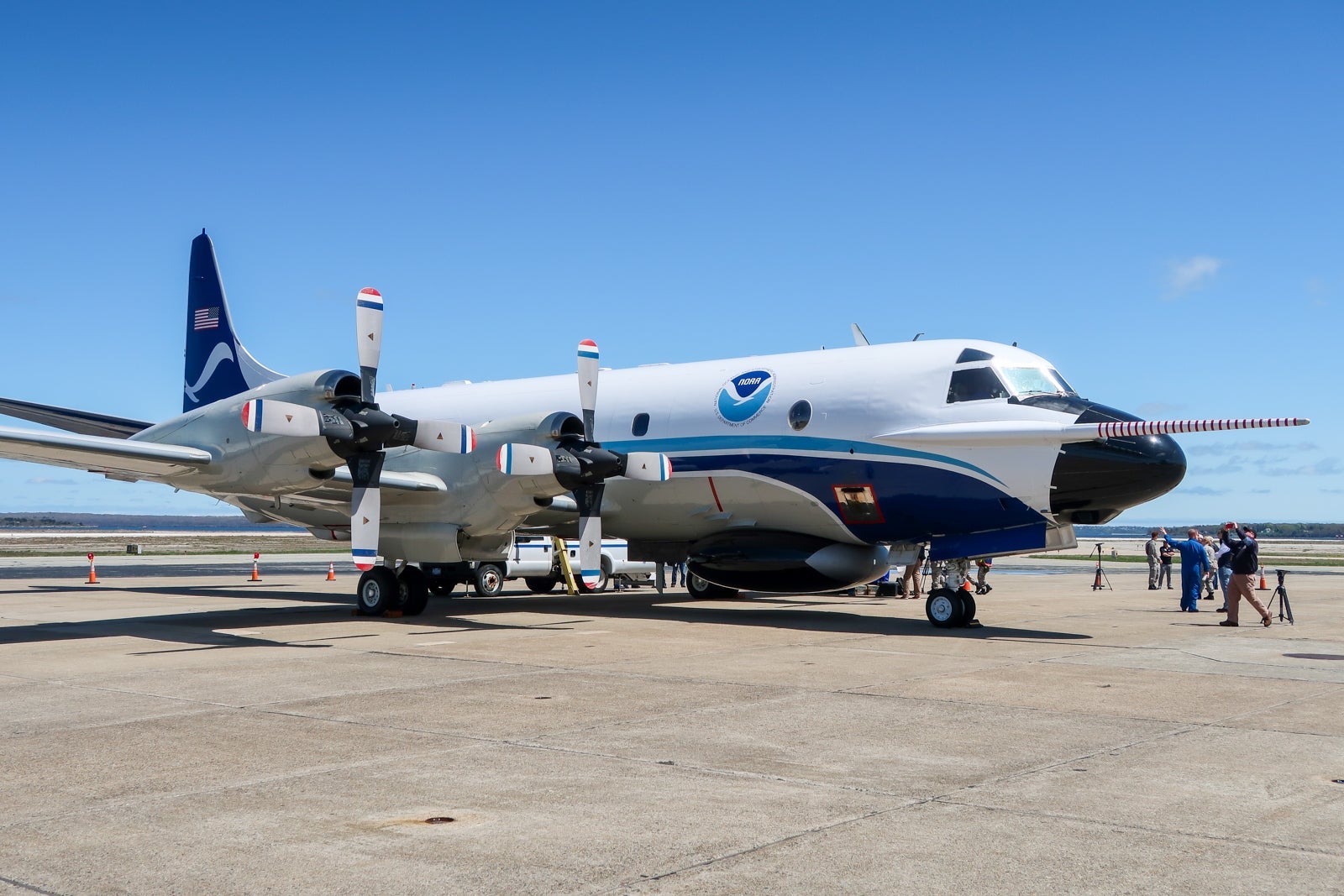
Editor's note: This post, originally published in May 2019, has been updated for Hurricane Ian.
Almost 80 years ago, an Air Force pilot became the first pilot to intentionally fly an aircraft into a hurricane, and it was to win a bet. While that 1943 "mission" didn't have an objective — besides winning a beer — Air Force pilots have since regularly performed flights into hurricanes as a critical part of tracking, understanding and predicting storms.
Back in May 2019, "hurricane hunter" pilots embarked on a tour of the East Coast, letting the general public tour two of the aircraft that regularly fly into hurricanes.
Now, as Hurricane Ian churns toward the west coast of Florida, we thought it would be a good time to revisit what we learned about these aircraft and the critical missions they perform.
There are two different groups of hurricane hunters, one military and one civilian. The Air Force is primarily responsible for reconnaissance missions, while the National Oceanic and Atmospheric Administration flies research missions into cyclones to learn more about the storms. Both serve different but crucial parts of the mission to understand hurricanes and develop accurate forecasts.
I grew up in Tampa, in a house located just a block from the waters of Tampa Bay. Each hurricane season, we depended on the crews that regularly risk their lives to fly missions into hurricanes to get accurate forecasts. So, there was no way that I was going to miss this opportunity to talk with — and thank — the crews that operate missions using these aircraft.
Let's take a look inside each aircraft and learn more about their missions.
Air Force Reconnaissance
The Air Force's hurricane hunters are officially part of the 53rd Weather Reconnaissance Squadron based in Keesler Air Force Base near Biloxi, Mississippi. While some hurricane reconnaissance missions may be conducted from Keesler, this squadron regularly deploys all over the Western Hemisphere in order to scout hurricanes.
The squadron operates a fleet of 10 Lockheed WC-130 aircraft. It's a C-130 Hercules transport with a few modifications to allow crews to perform their weather-specific missions. (Weather missions is what the "W" stands for in the U.S. military-aircraft nomenclature; the "C" indicates a cargo aircraft.) One of those 10 aircraft was part of the tour, sporting a proud "Hurricane Hunters" on the tail — the squadron's nickname.

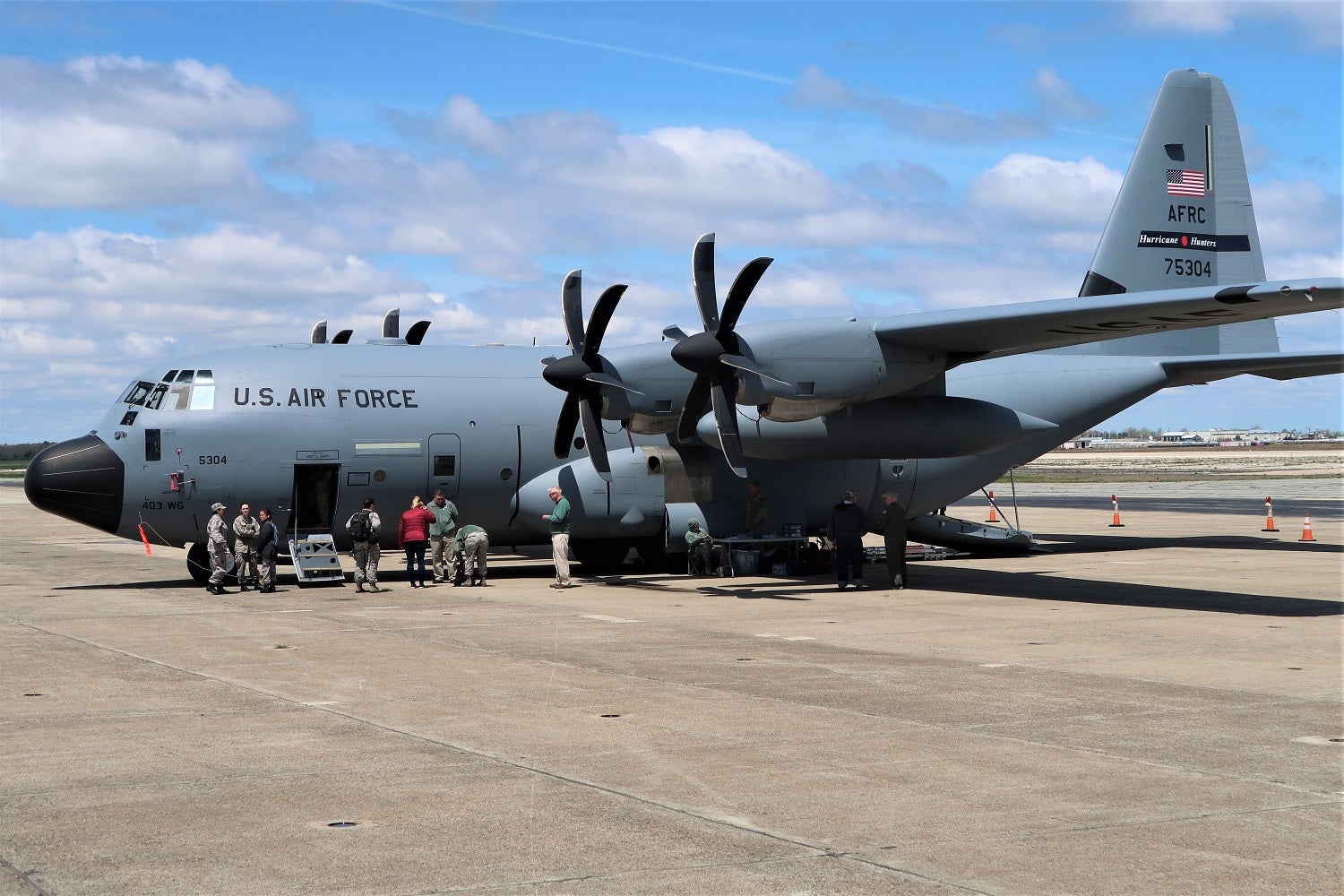
One of the weather-specific modifications can be seen if you look closely enough at the belly of the aircraft. A small dropsonde — an "expendable weather-reconnaissance device" — delivery tube extends out a few feet from the aircraft.
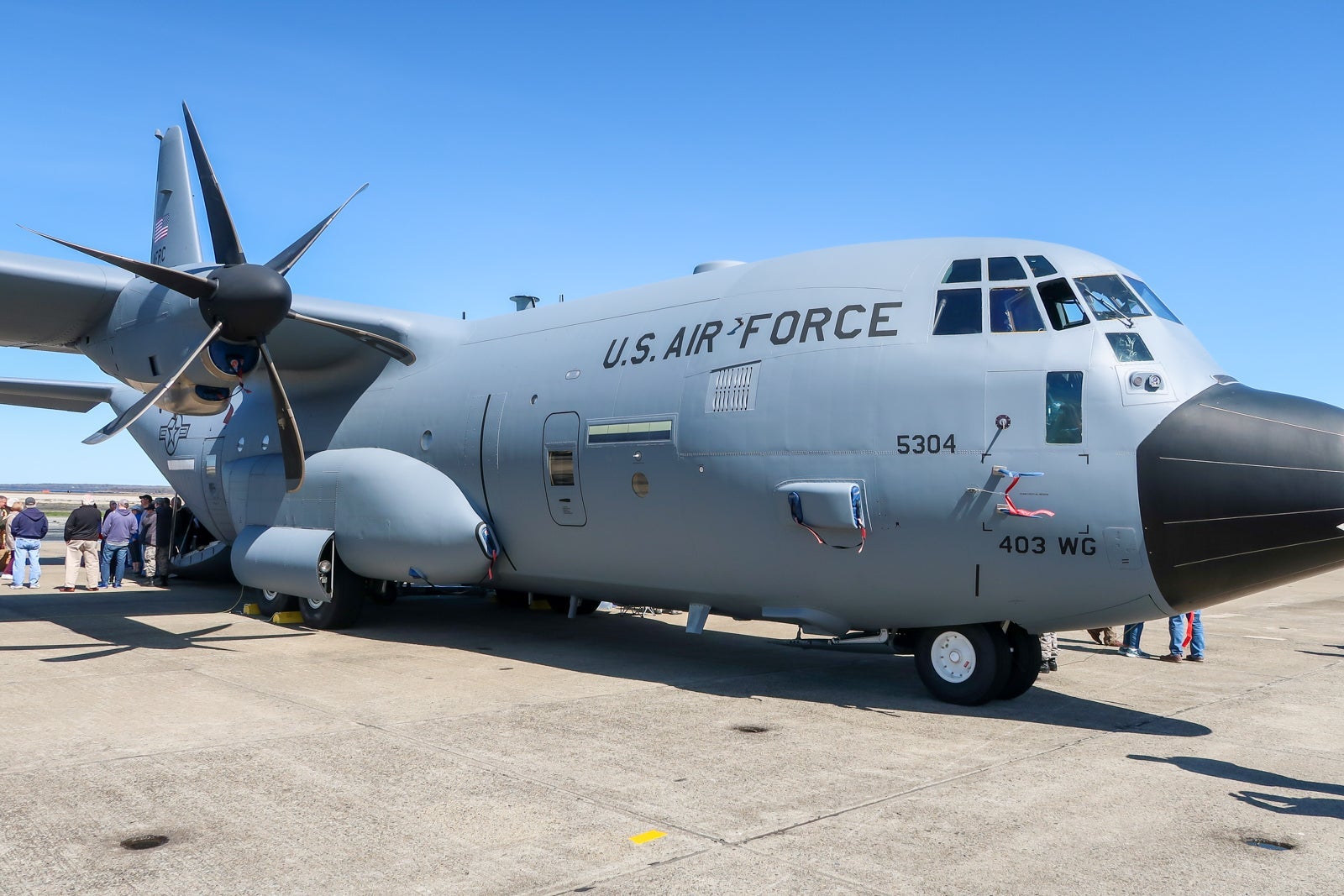
The Air Force crew inside uses that tube to drop sensors into the storm to measure its pressure, temperature, humidity and wind speed through GPS tracks.
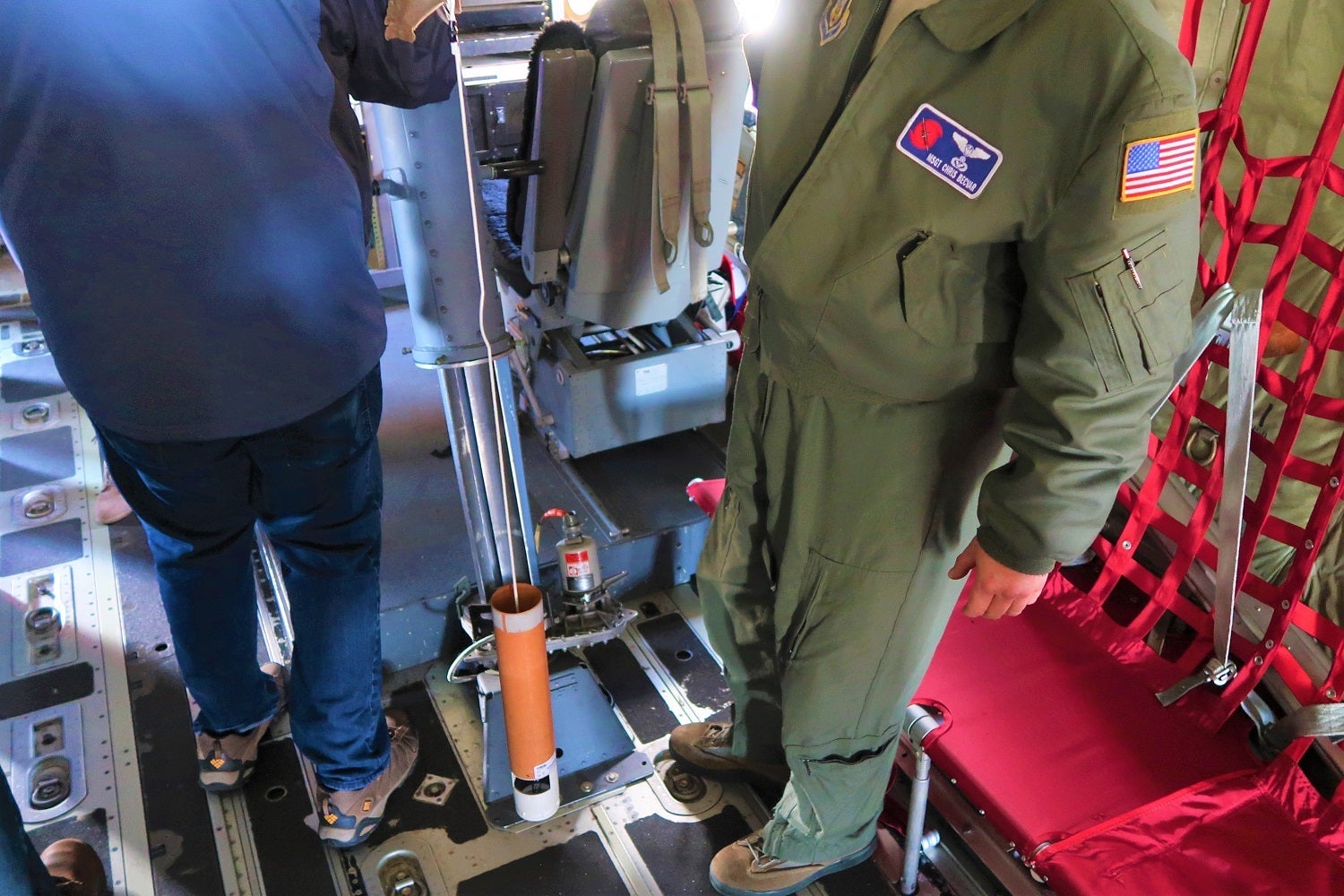
A five-person crew operates each reconnaissance flight, two more than operate a typical C-130. In addition to a pilot, co-pilot and loadmaster that make up a standard C-130 crew, the WC-130 operates with a navigator (officially a "combat systems officer") and an aerial reconnaissance weather officer.
The navigator is stationed in the cockpit with the pilots while the weather officer sits facing backward on the port side of the aircraft, at a permanently installed weather collection station.
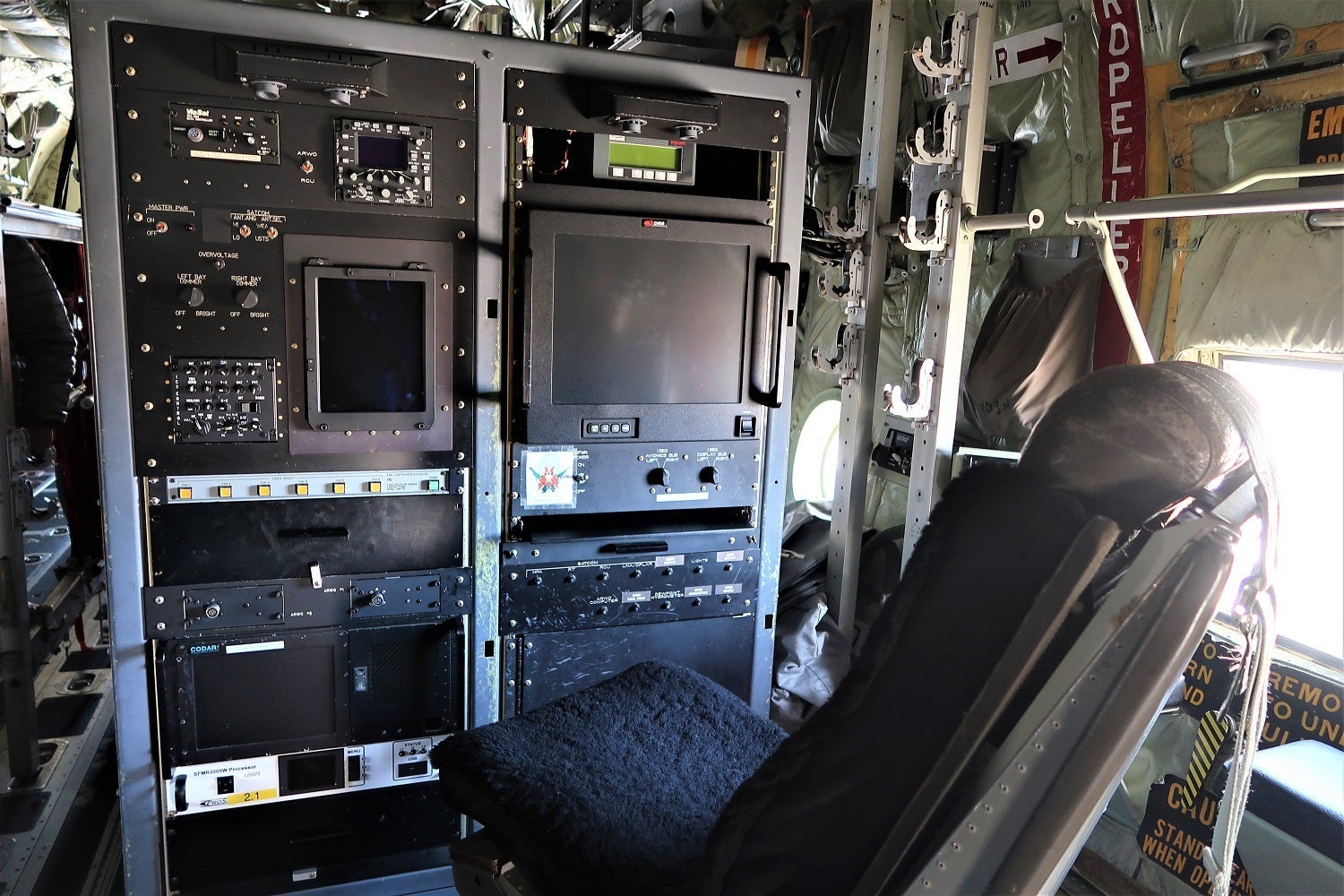
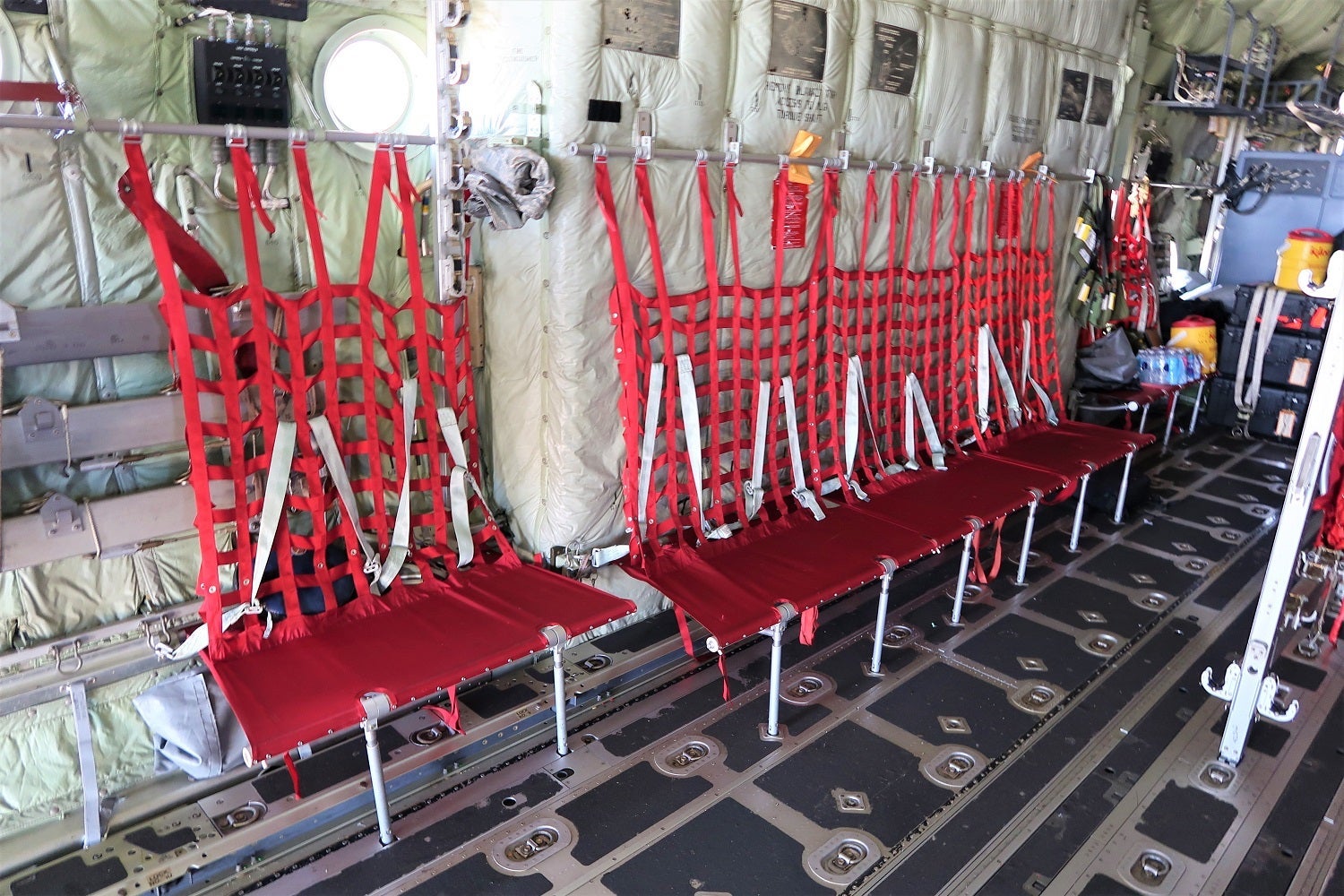
There's space for many others to ride along, although only the five-person crew is needed for the mission. There's a lot of legroom, but the seats aren't exactly designed for comfort. And it can be quite a long ride.
This squadron doesn't make the decision on when to fly into a storm. As the crew dryly explained, the storm "needs to be interesting enough" to deploy assets to study it. When that decision has been made by the National Hurricane Center, some of the squadron's 20 flight crew members will deploy to a strategically located base.
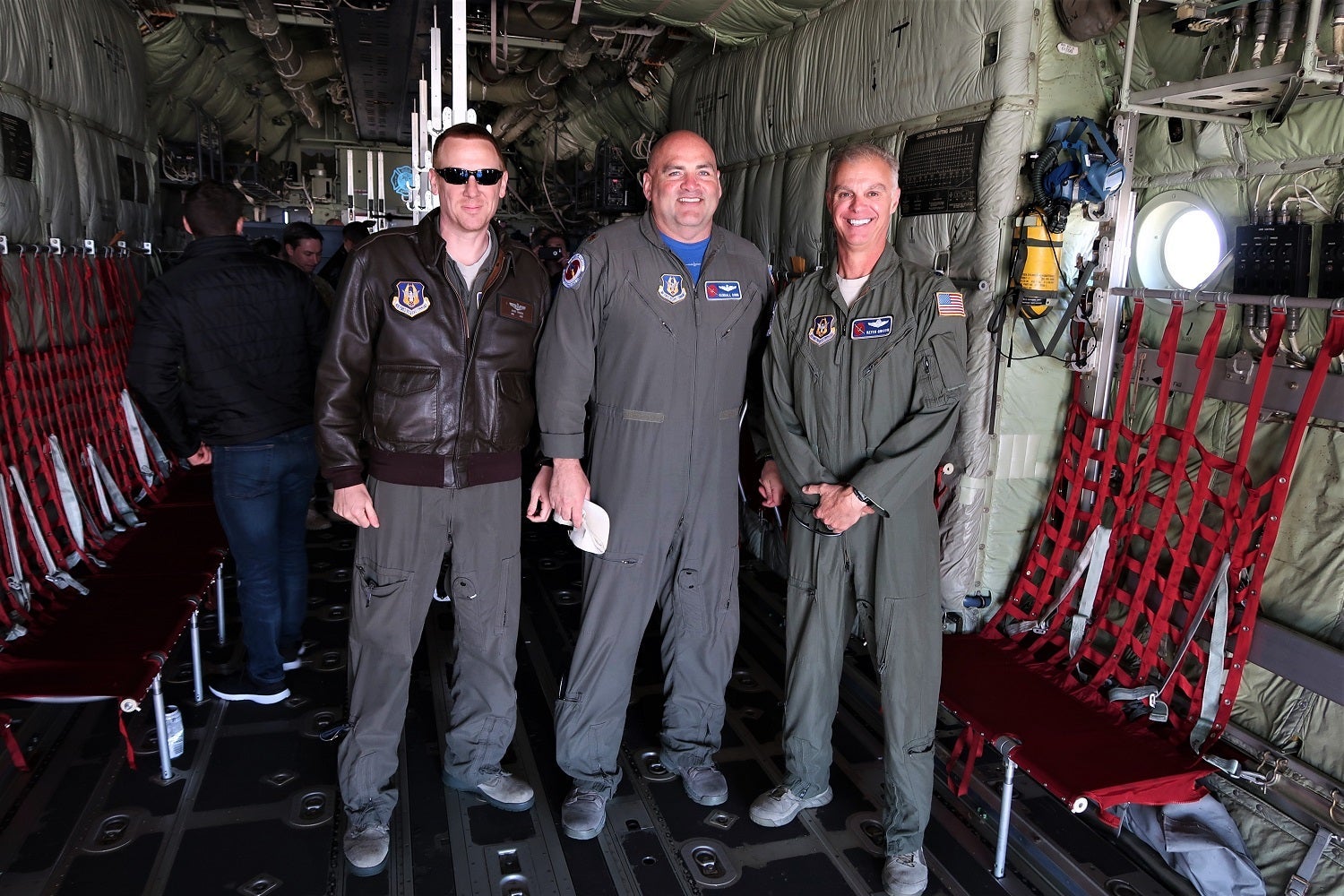
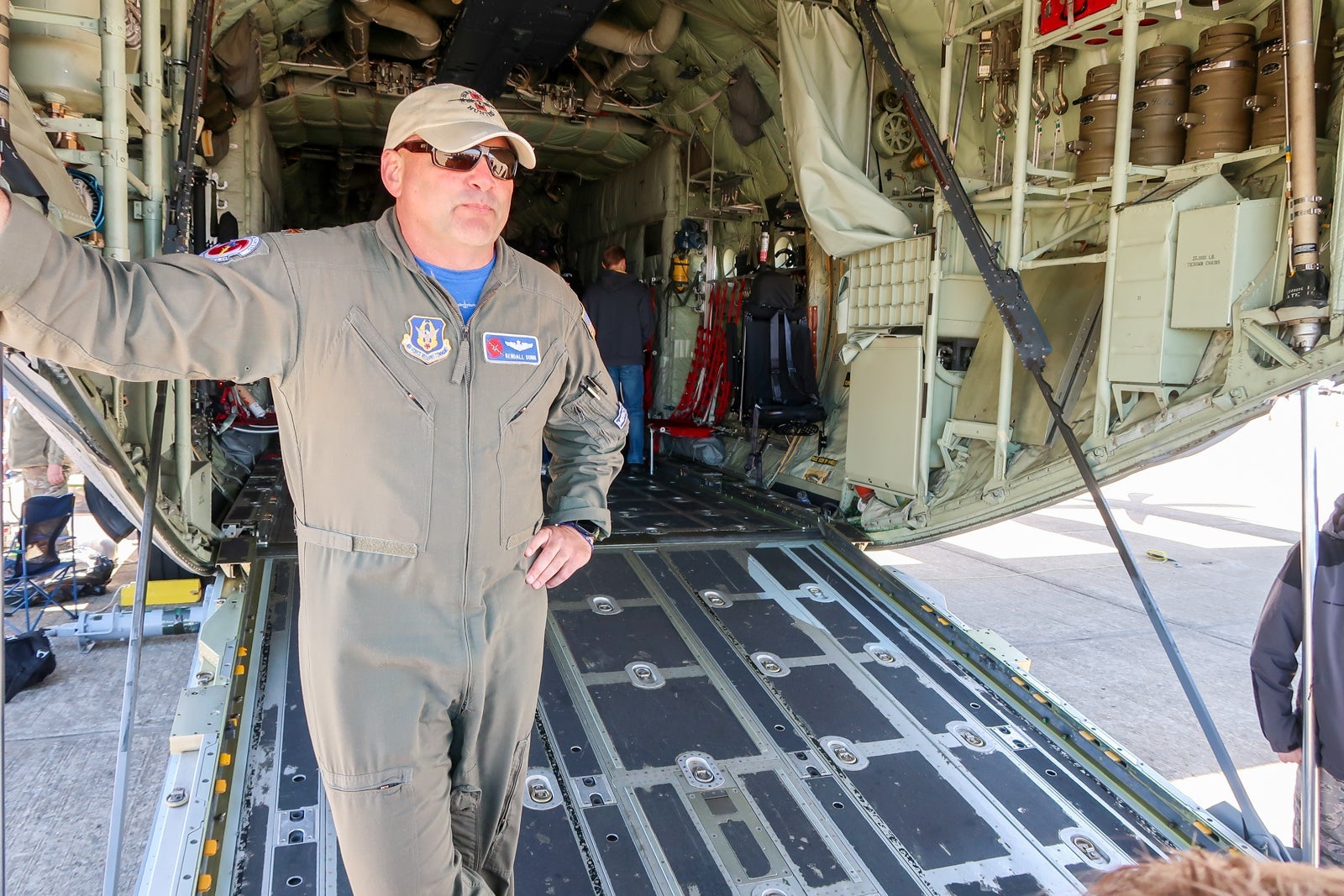
Typically three aircraft and approximately 70 personnel in total will make the journey for Atlantic storms. However, Hawaii storms can take more resources, so the squadron will usually send a fourth aircraft, sometimes just to haul the personnel and equipment necessary for the deployment. Conveniently, the C-130 is designed as a cargo aircraft, complete with a cargo ramp.
The squadron is contracted by the National Hurricane Center to fly from up to three locations with at least three aircraft at each location. So, the squad's maintenance crew needs to make sure that all 10 aircraft in the fleet are kept "battle ready." That's a daunting task.
The digital "glass cockpit" is thoroughly modern, as are the engines and other systems, but the C-130 was designed in the 1950s. The C-130J is the most recent version of the legendarily rugged aircraft.
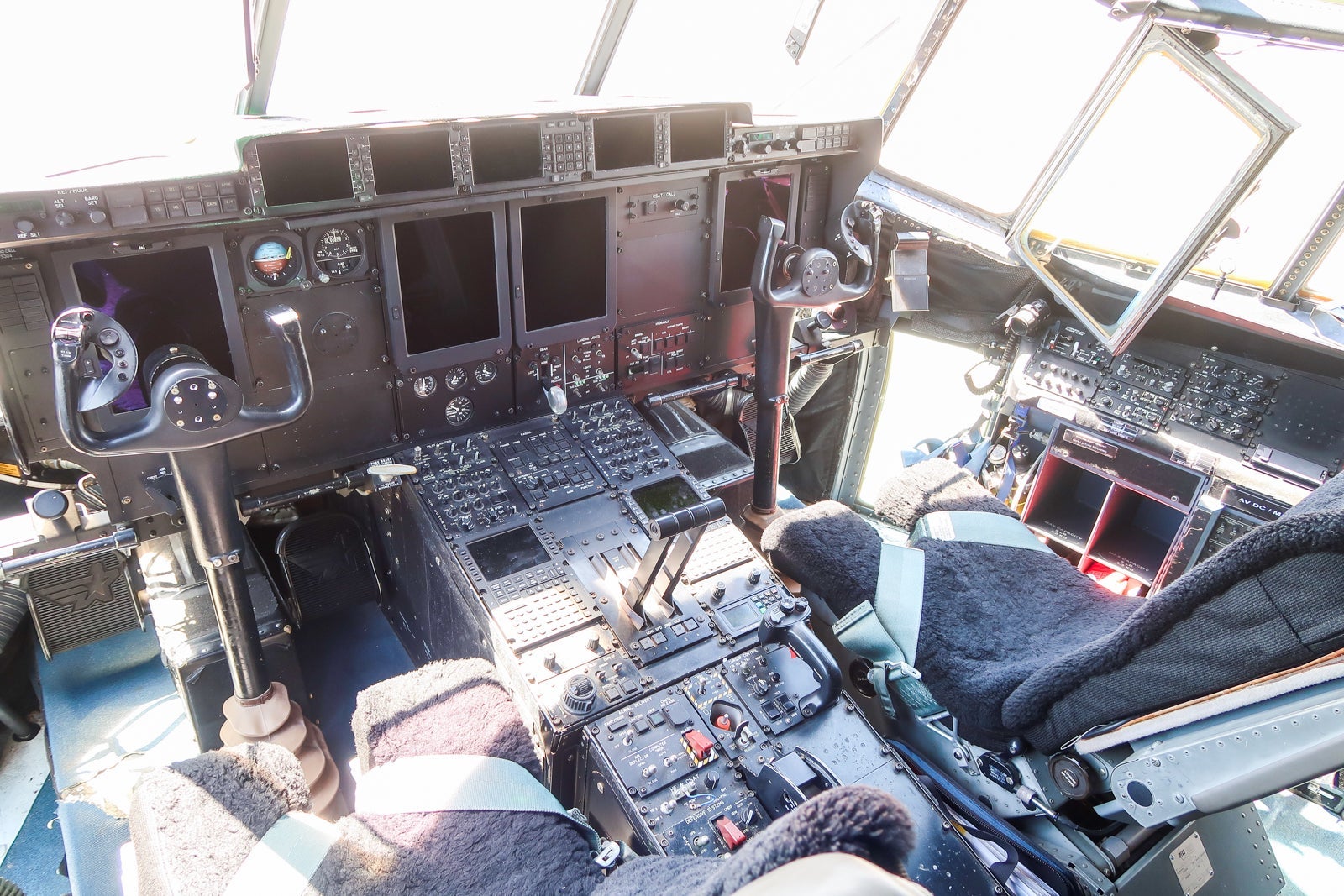
The crew members explained that they only perform missions in storms over open water. Once the storm moves ashore, ground-based weather stations are able to adequately measure its strength and direction.
Missions usually range from eight to 12 hours, with three or four hours of that spent flying through the storm itself. During this time, the crew will deploy dropsondes at critical parts of the storm, while continuously measuring the storm's strength at flight level via weather instruments attached to the outside of the aircraft.
Twelve hours is a long time to spend on an aircraft, and a kid at the briefing held for the public asked the obvious question: Where does the crew go to the bathroom? There is one on board, and as a crew member noted, it has "everything you want in a bathroom, except for the walls." There's just a curtain that can be extended around the toilet seat and stows away nicely for public presentations.
NOAA Research
Compared to the Air Force's fleet of 10 aircraft, NOAA has just two. Both are Lockheed WP-3D Orions, a heavily modified variant of the P-3 Orion maritime-patrol aircraft the Navy has used for decades to patrol the seas, hunt for submarines and listen to other countries' communications.
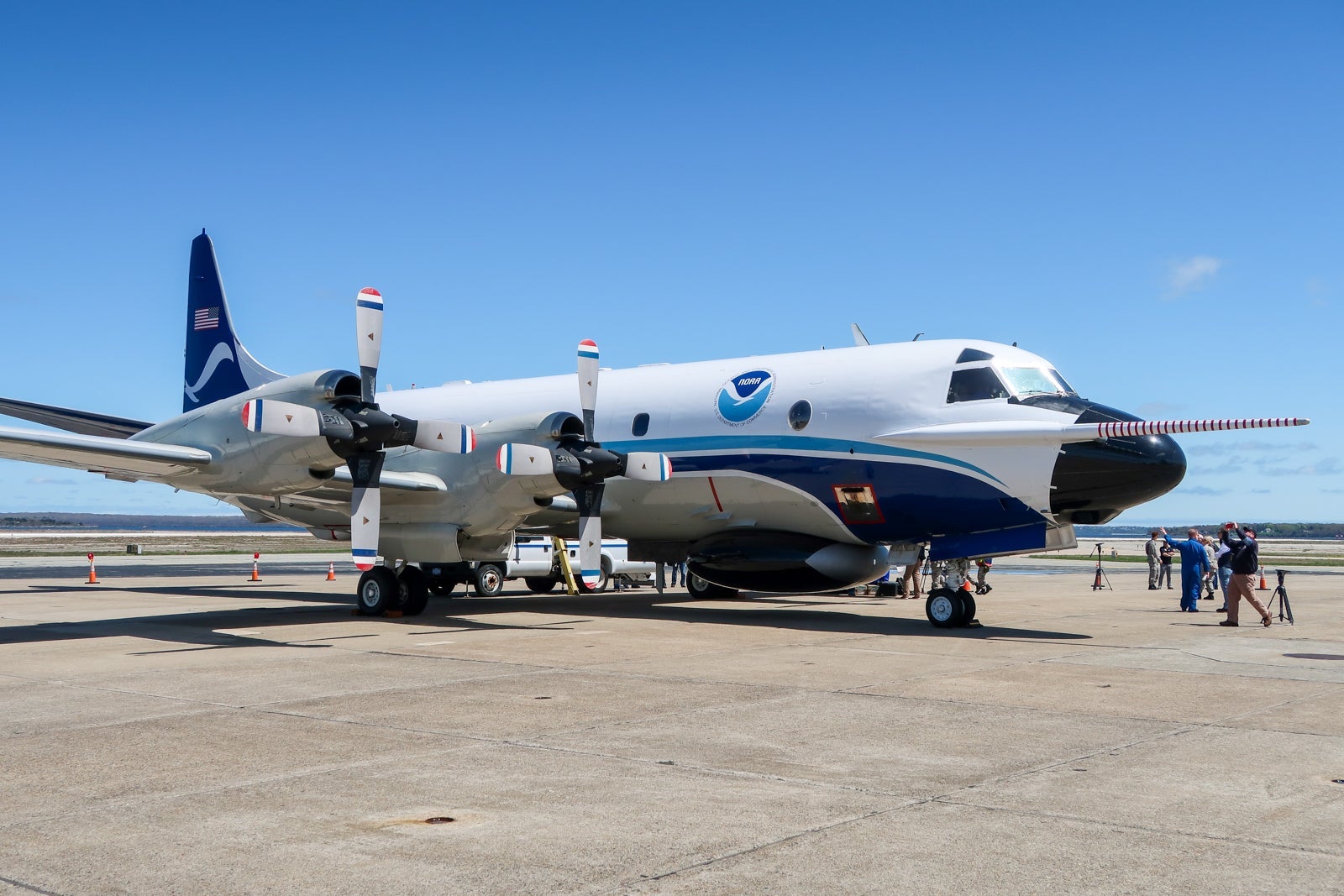
Each aircraft is powered by four Allison T56-14 turboprops, which are powerful enough that the aircraft can safely fly with just two operational.
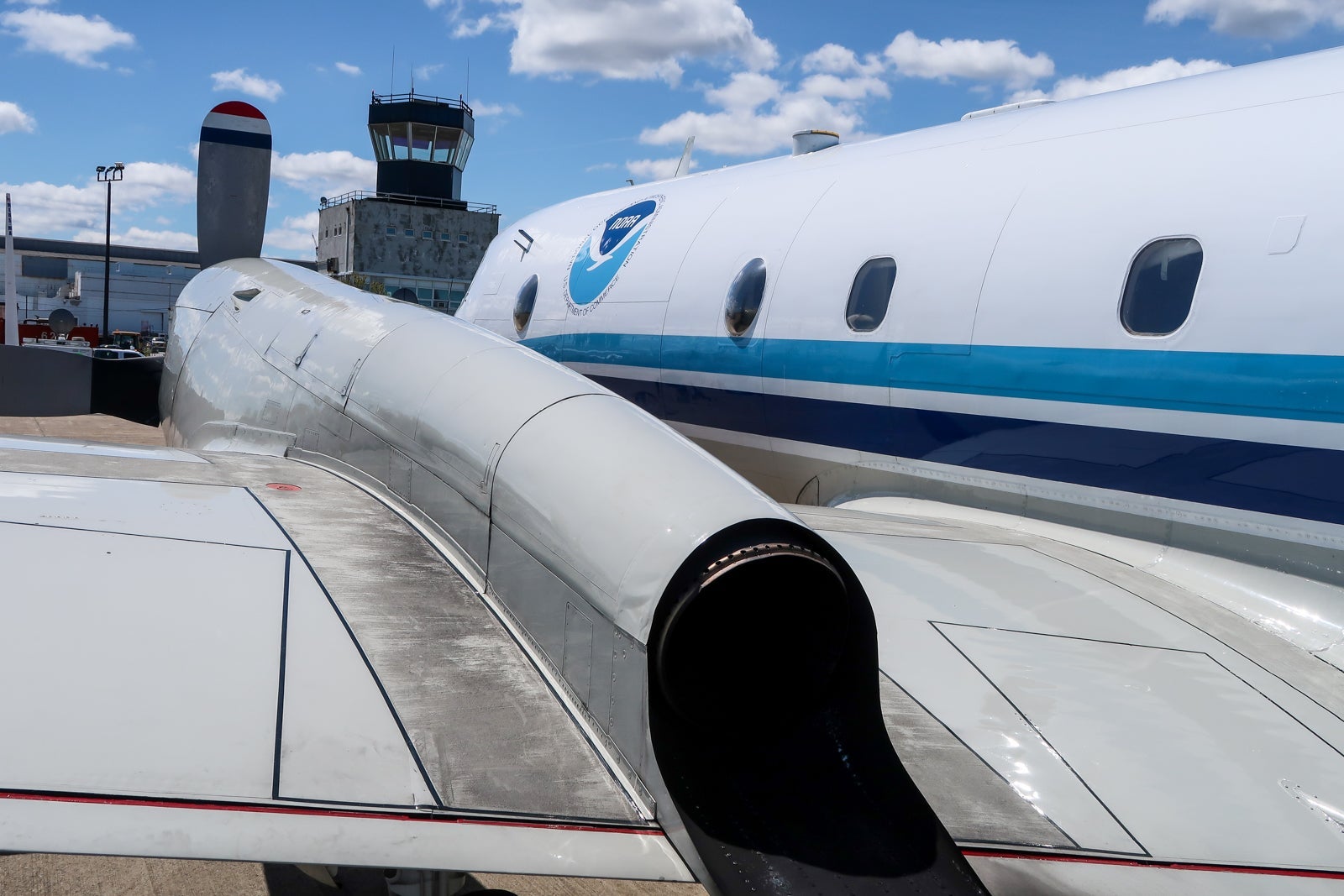
With signoff from Jim Henson Productions, one is nicknamed Kermit the Frog (registration N42RF) and the other is nicknamed Miss Piggy (registration N43RF). Kermit was the aircraft on display for us.
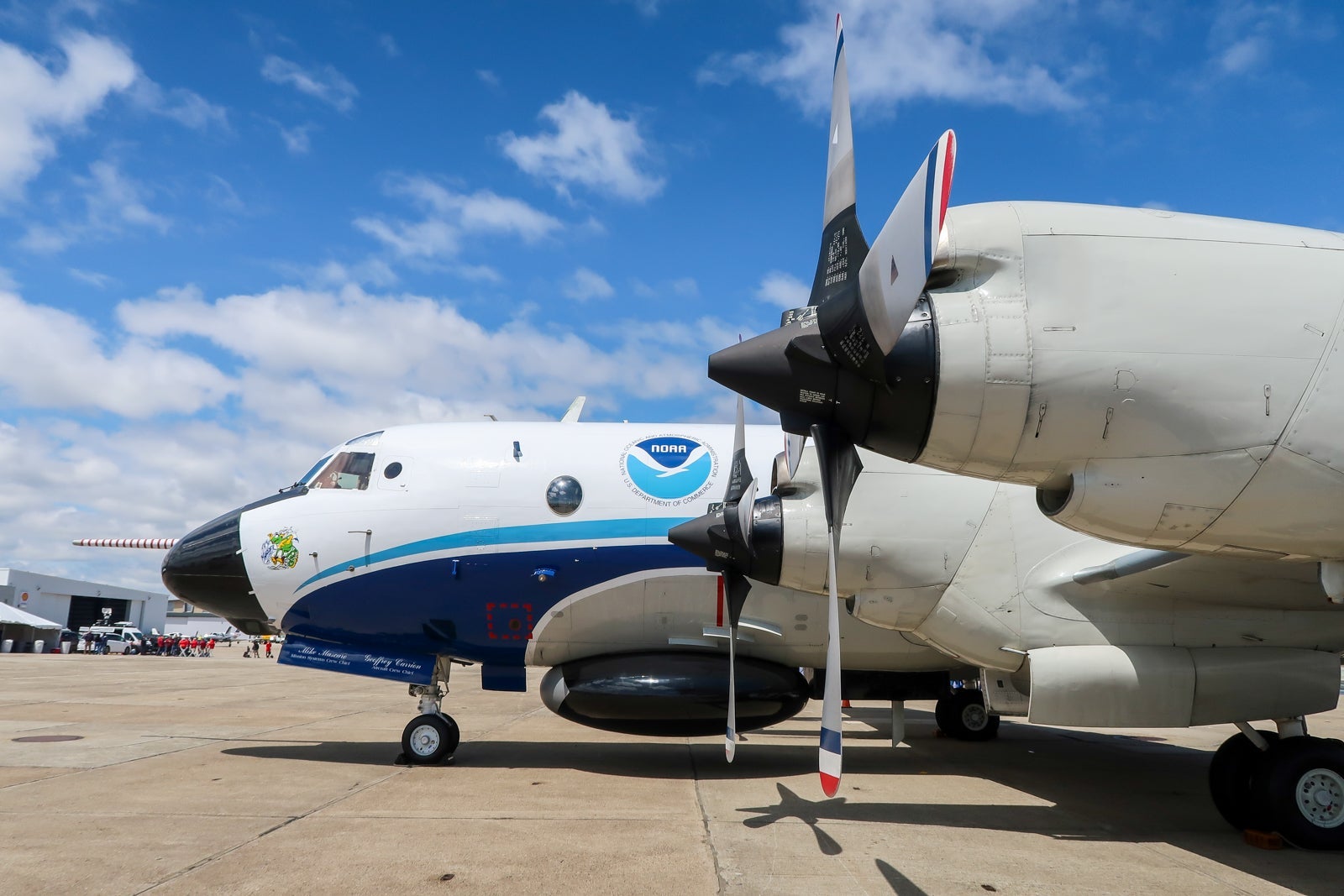
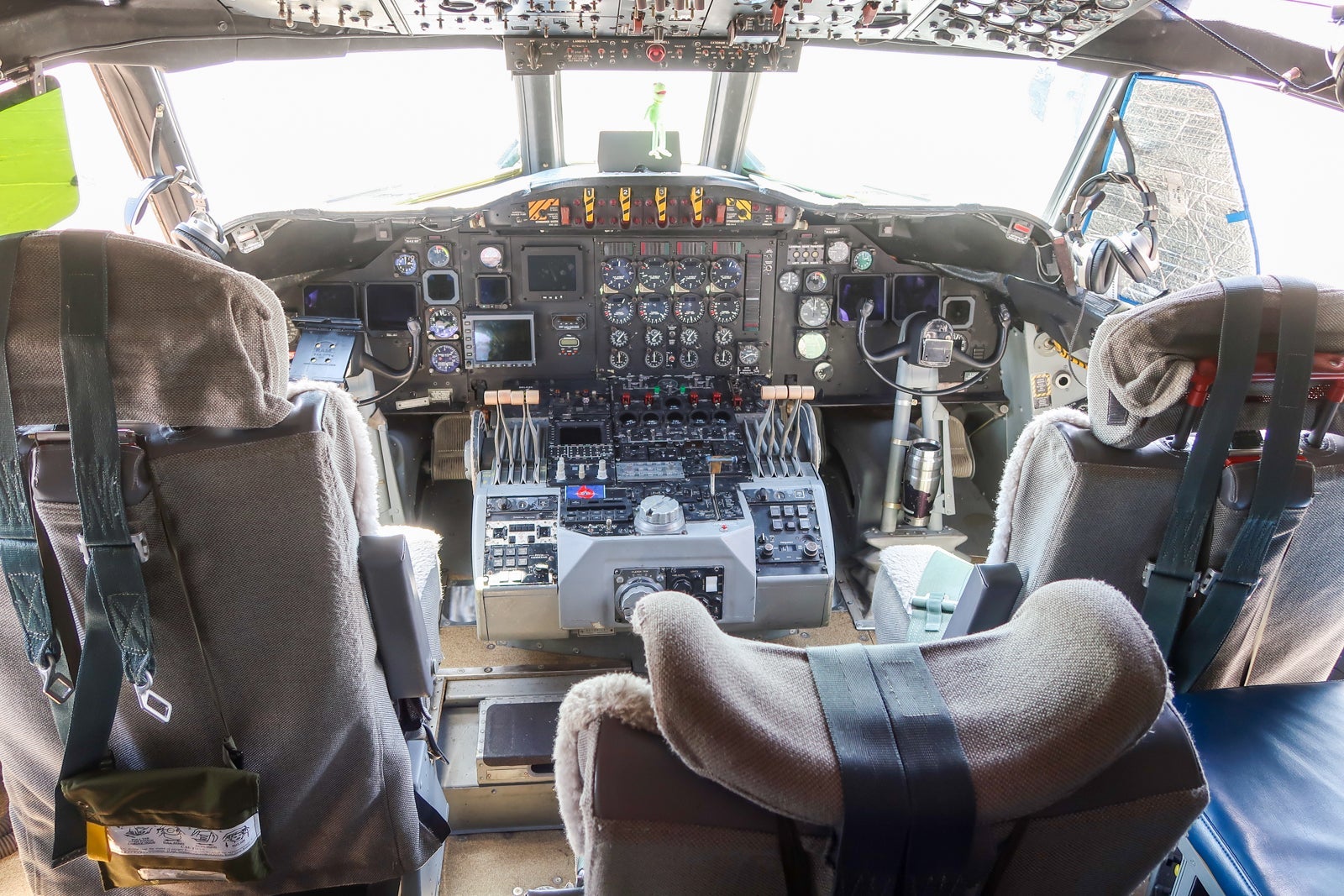
Each aircraft has its respective mascot hanging from the instrument panel in the cockpit. The crew insisted that these stay up during missions and help act as a "turbulence indicator."
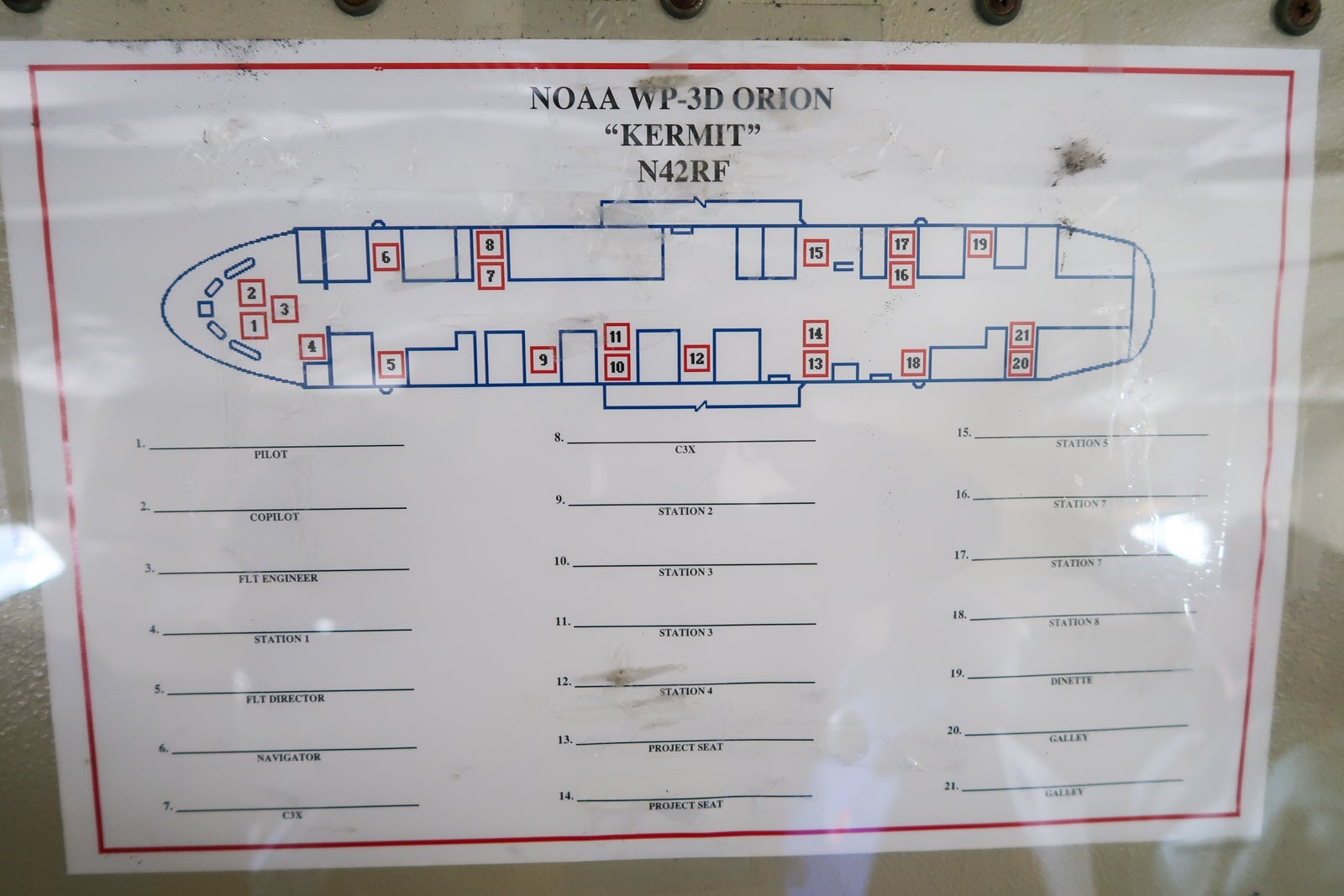
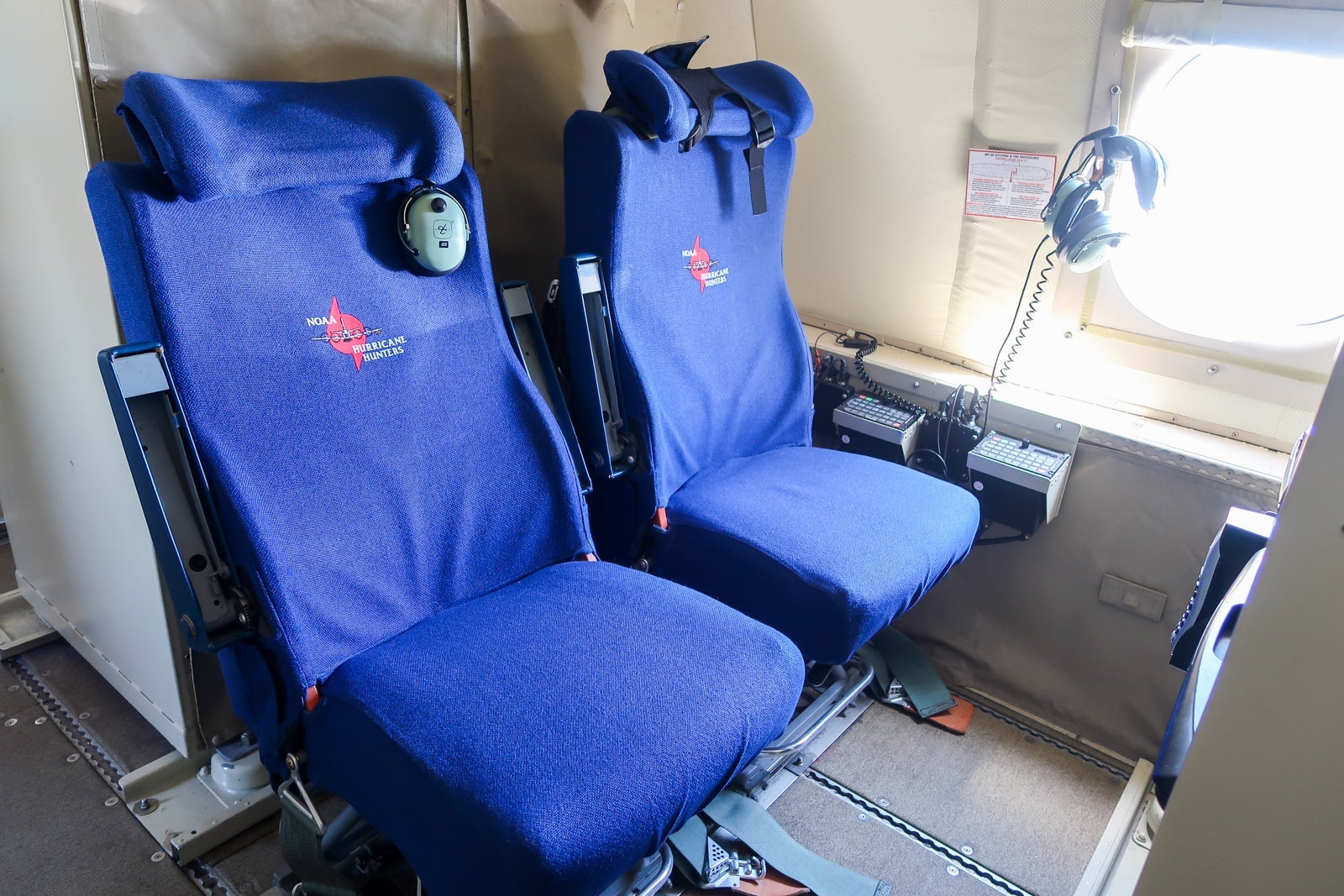
Both NOAA aircraft are fitted with 21 seats; at least 18 are filled for a typical research flight. A seat diagram with positions was posted on the wall in the aircraft for reference.
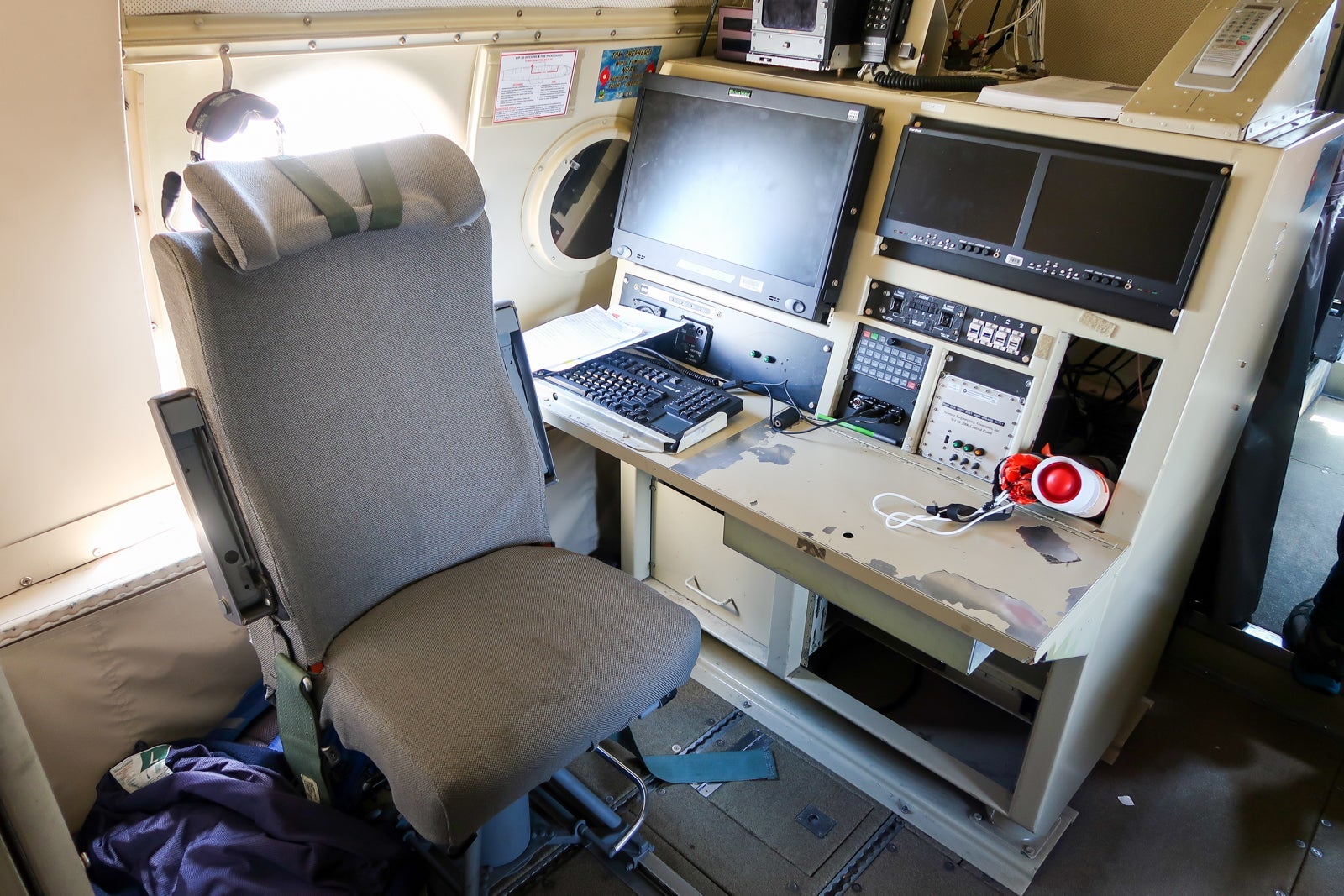
Just behind the cockpit on the port side of the aircraft is the flight director's station. This is where the chief meteorologist directs the flight, balancing the mission's objectives with keeping the aircraft and crew safe.
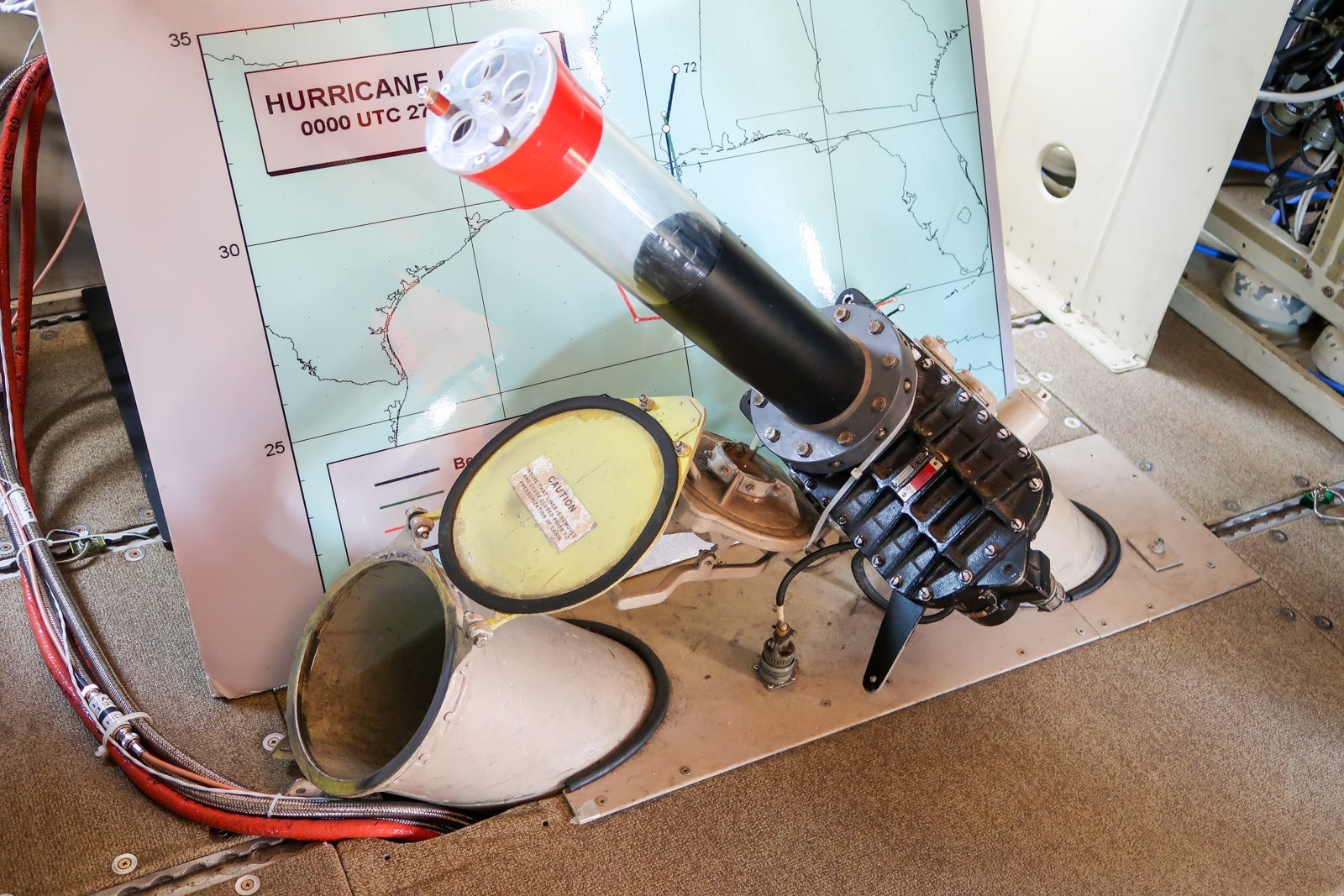
Like on the WC-130, the NOAA aircraft have a dropsonde delivery tube installed to take external measurements.
In addition to standard wind-speed measurement tools, the NOAA aircraft have advanced tools mounted on the wing for measuring all different aspects of the storms they pass through.
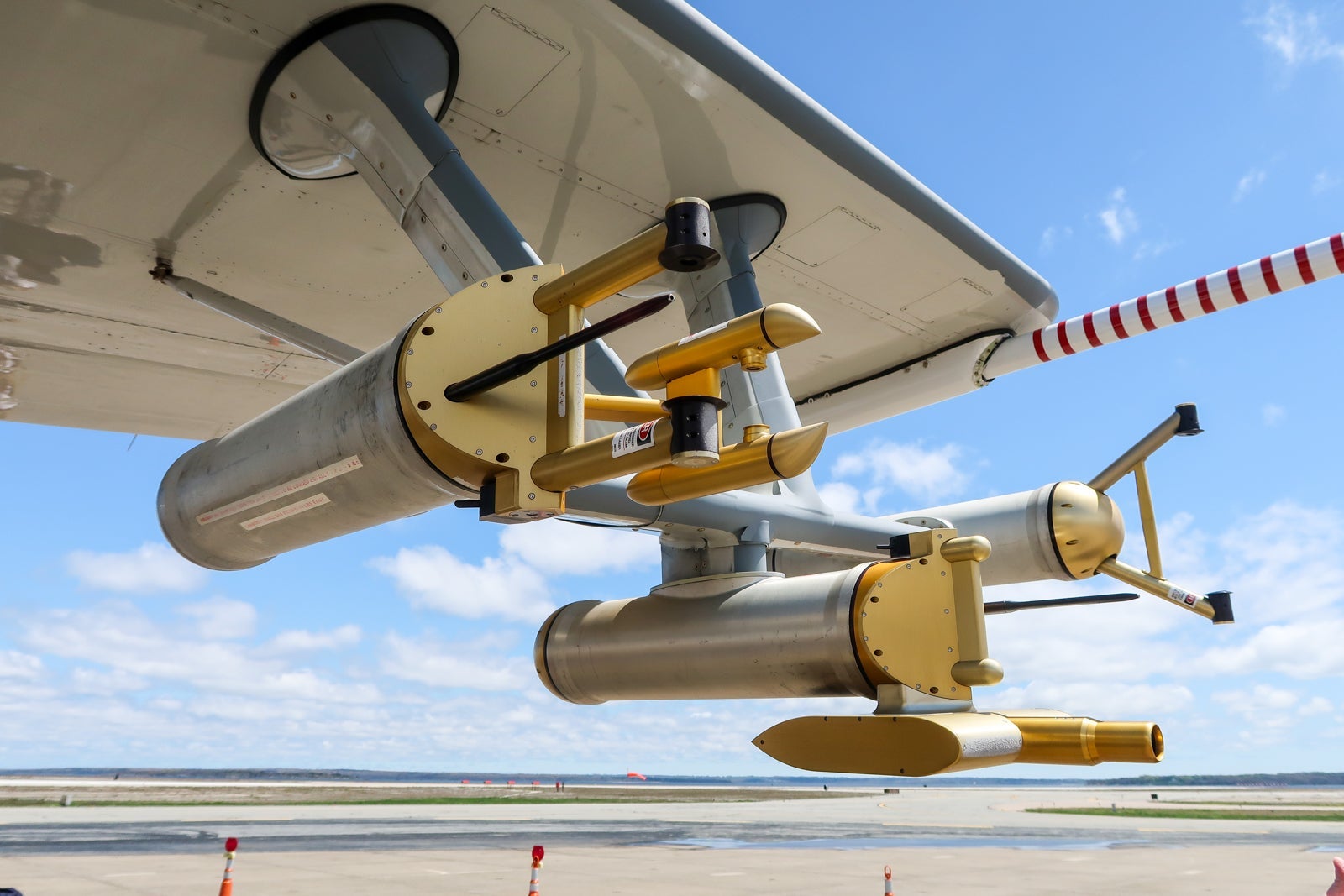
Unlike the WC-130, NOAA's WP-3D Orion is much more geared to onboard research. This means that there are plenty of research stations throughout the aircraft.
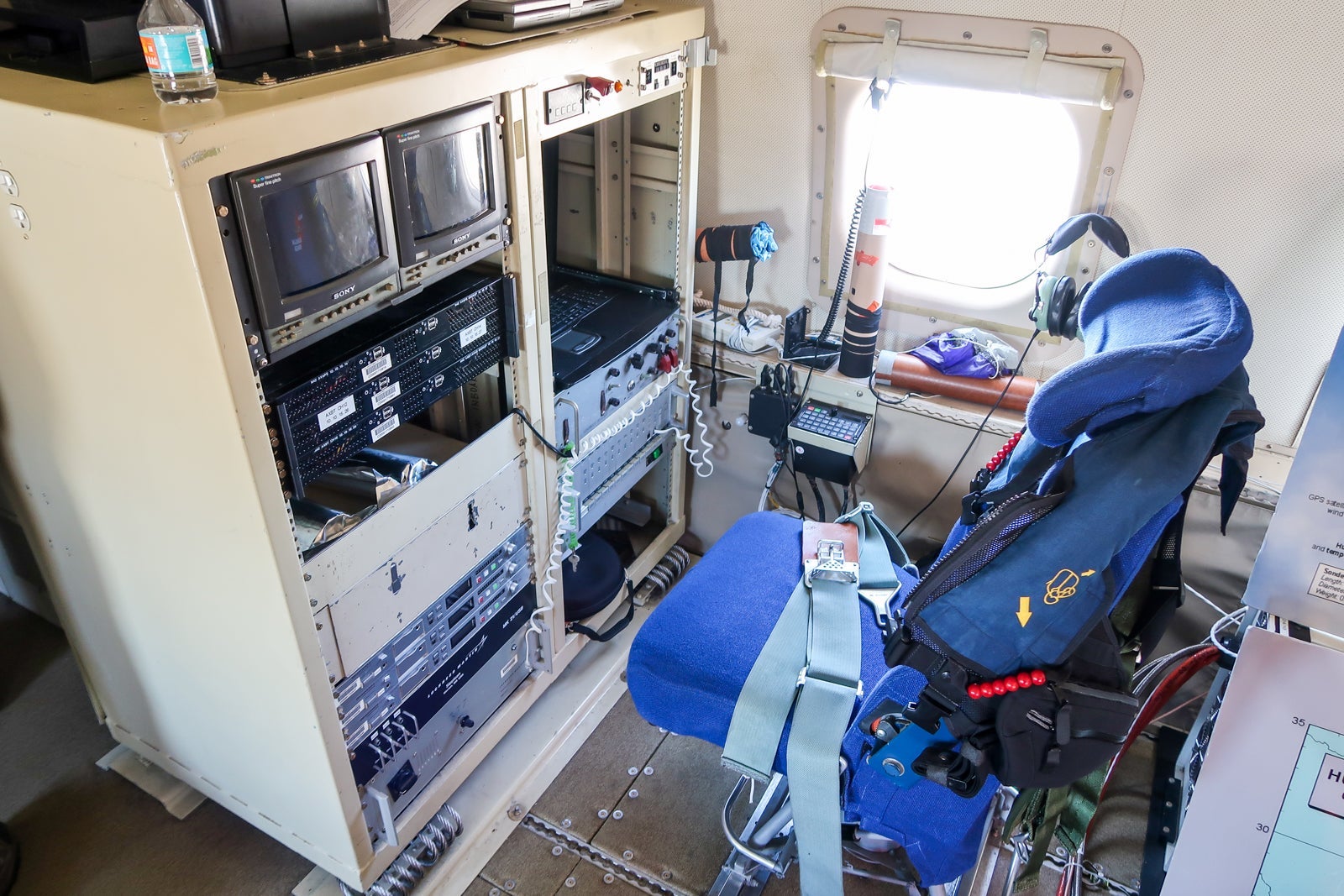
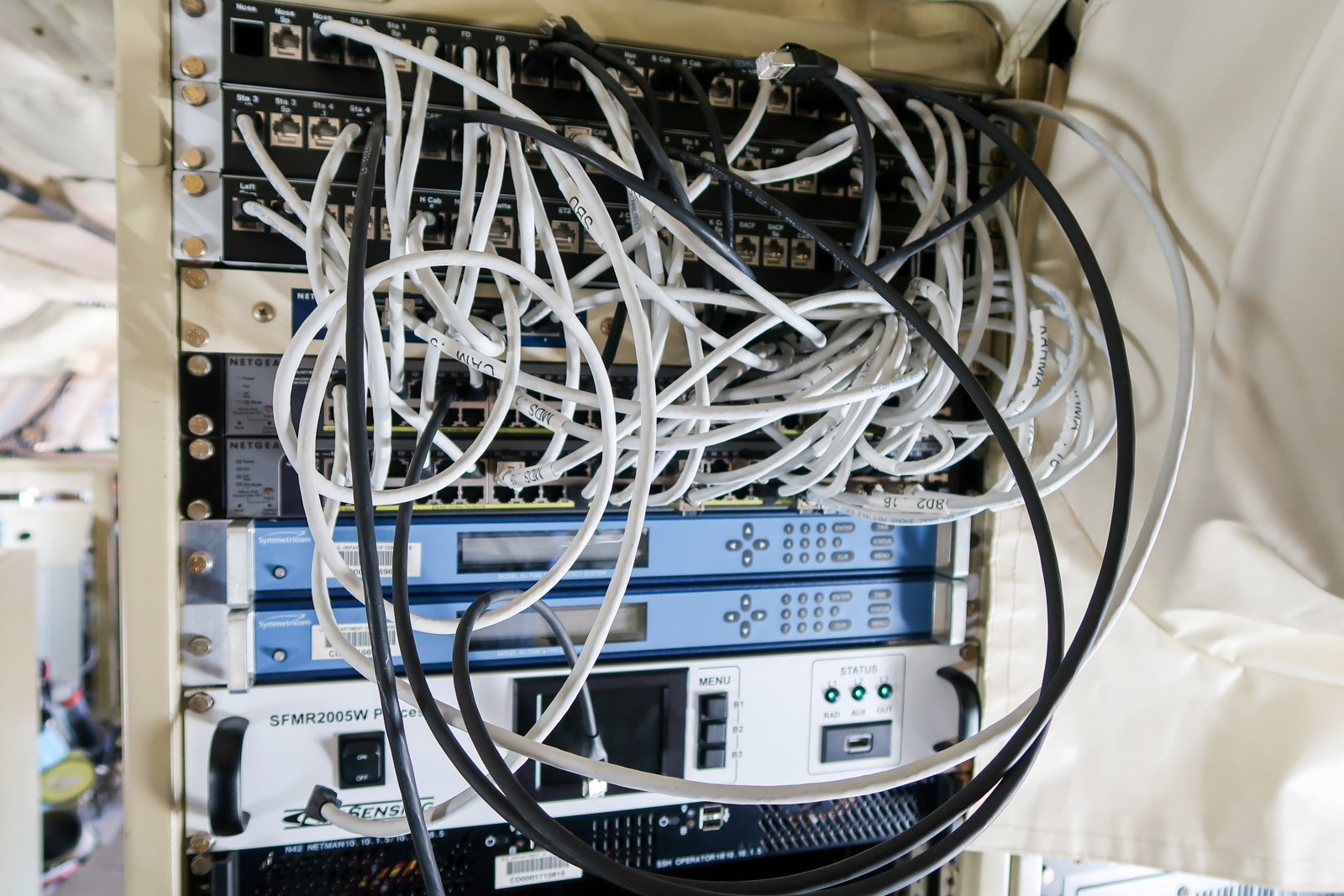
A lot of computing power is needed on board. There are some serious server racks installed on the plane.
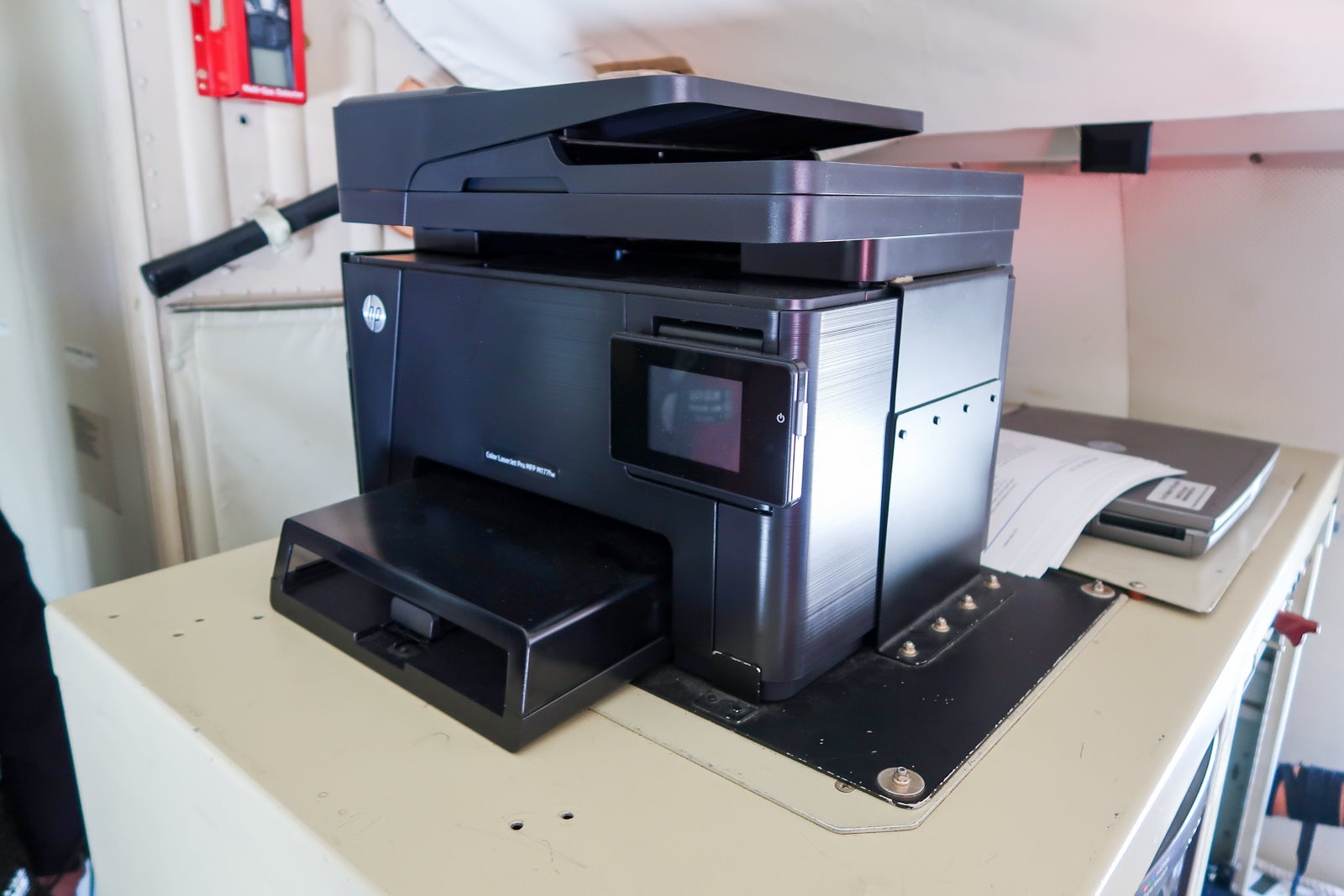
Of course, everything needs to be fully bolted down for when the turbulence starts, including the onboard printer.
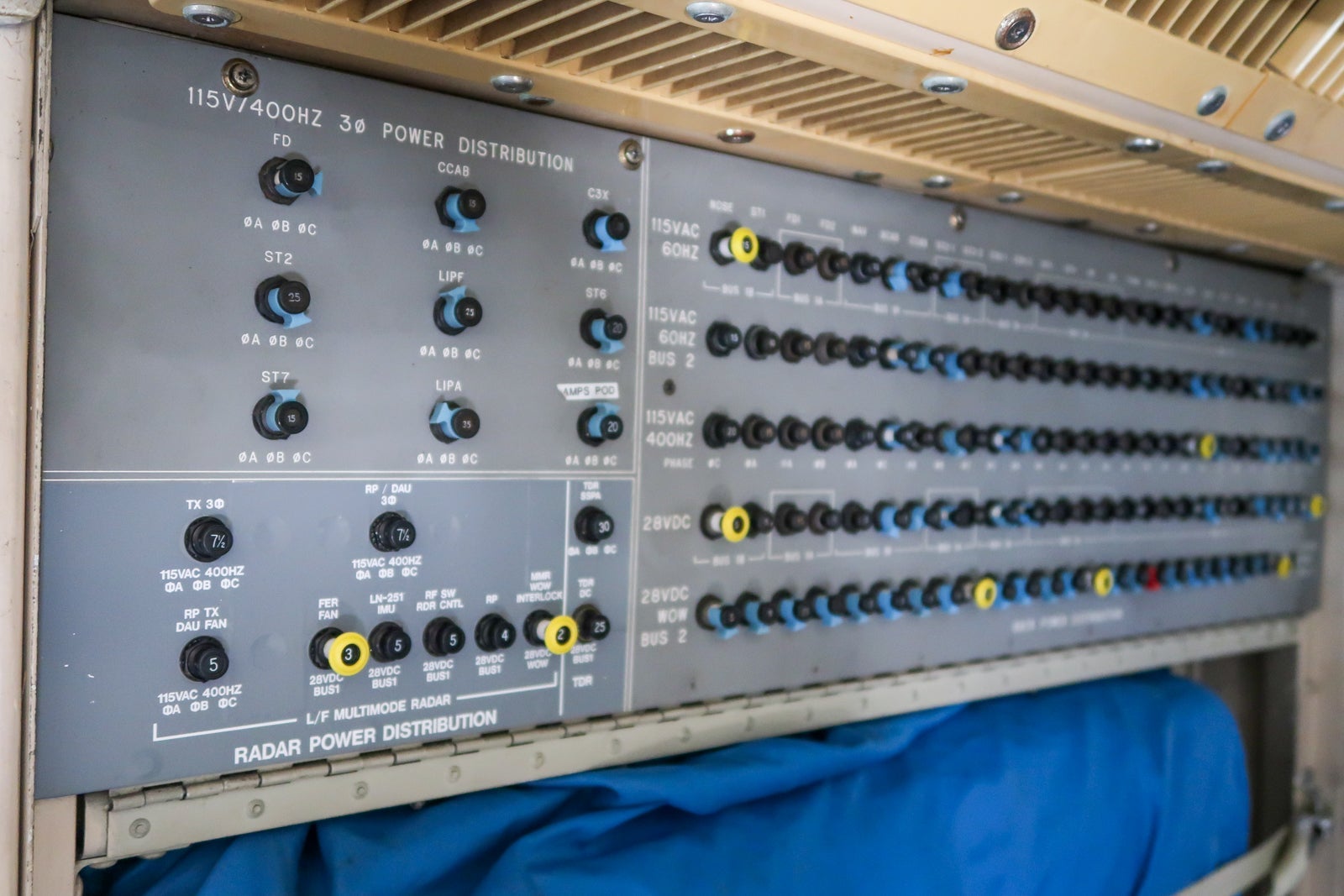
With all of the onboard and external electronics, there's quite a large circuit breaker panel installed.
Like the WC-130s, these aircraft fly right through the hurricane to study it. And it seems that the NOAA crews have faced some extraordinarily harrowing experiences — such as losing three of four engines to fires in a matter of minutes. In each circumstance, the crew has pulled off miraculous feats to save the aircraft, sometimes only a few hundred feet from the ocean. There are multiple incidents that the crew recalled where multiple members retired from flying into hurricanes once back on terra firma.
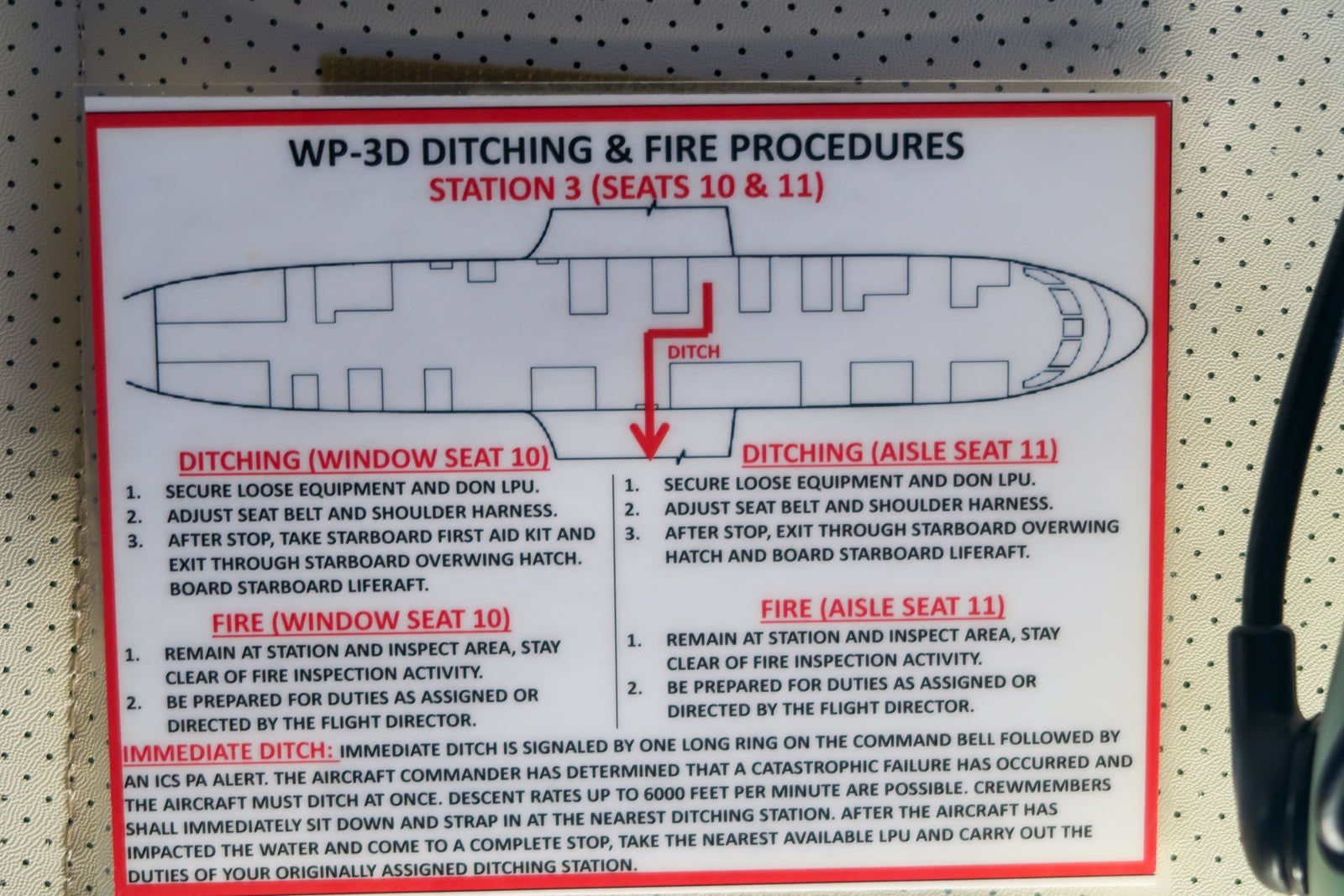
Understandably, safety is paramount on board. Each station includes detailed instructions for what to do in the case of ditching or an onboard fire.
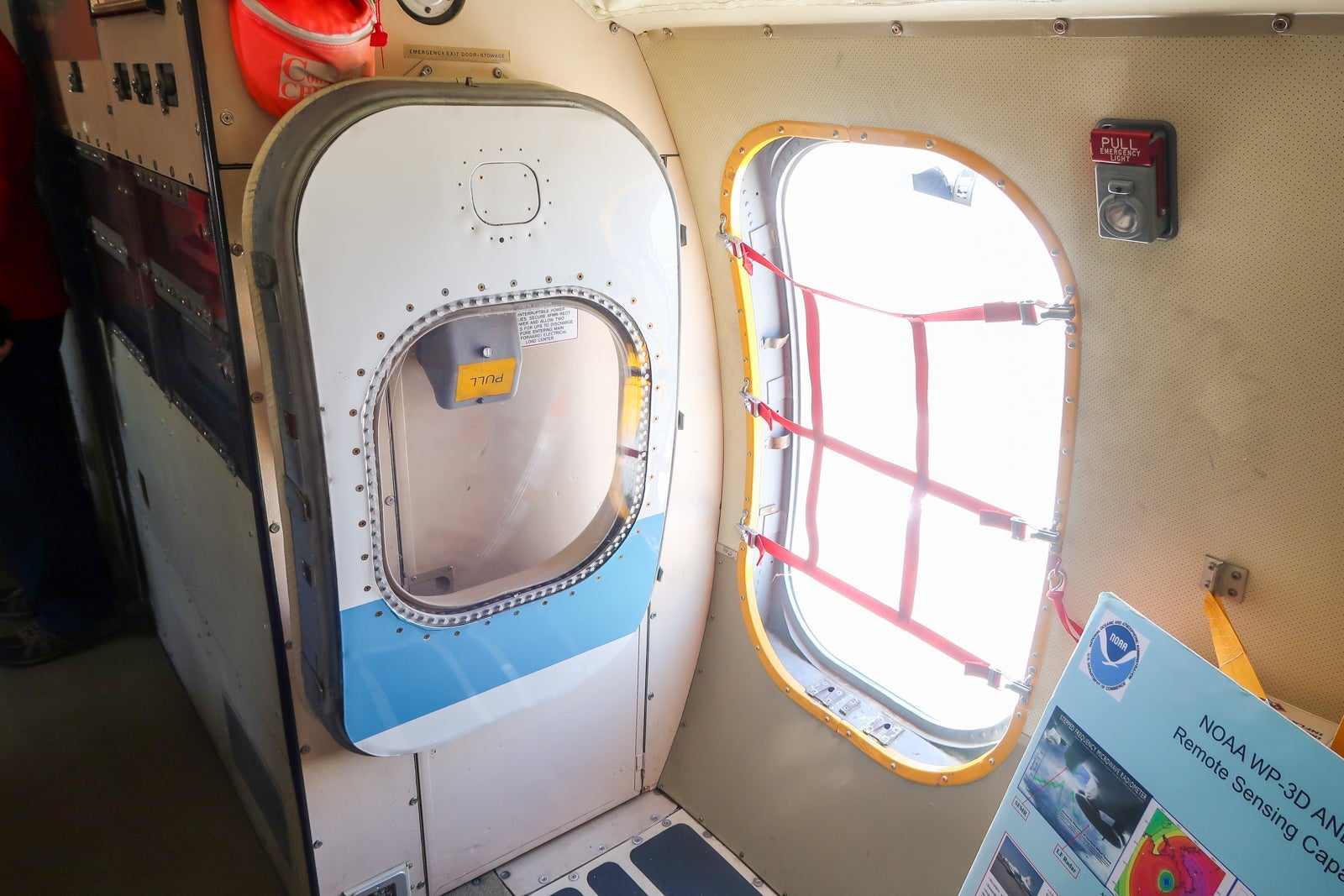
The primary ditching escape is an overwing exit hatch, which the crew opened during our tour to cool off the interior of the aircraft.
On the outside of the plane, there are logos for each of the hurricanes that Kermit has flown into — 110, including many Category 5 storms and infamous ones like the 1992 Hurricane Andrew that devastated South Florida (Kermit, however, did not fly into Katrina).
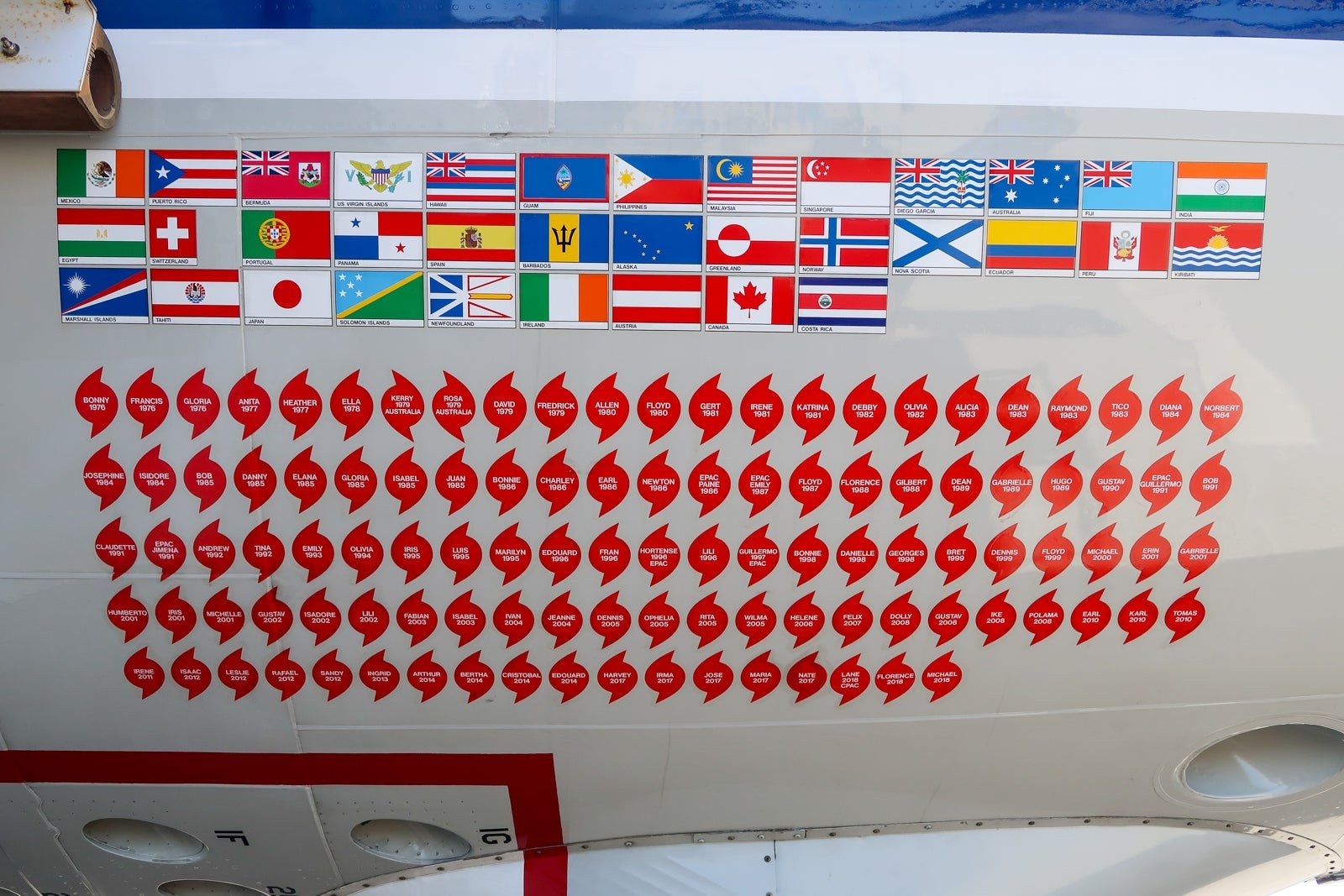
Keen eyes may notice that two of the hurricane logos are different from the others. They refer to Southern Hemisphere storms the airplane studied in 1979, which spin in the opposite direction from those that originate north of the equator. Thanks to new wings fitted recently, Kermit — which has been in service since 1976 — can keep flying for another 15 to 20 years.
While flying into a Category 5 hurricane may sound incredibly dangerous, both the Air Force and NOAA crews insisted that the strongest hurricanes aren't necessarily the worst to fly through. After all, commercial airliners fly through jet streams faster than many hurricanes with maybe just some light chop.
Instead, the hurricane hunters are wary of storms that are rapidly intensifying, falling apart or have ingested dry air. It's these storms that can cause the most issues for the aircraft flying through them. Both the Air Force and NOAA crews recalled times when the aircraft would drop more than 6,000 feet due to a strong downdraft. When you're flying at 40,000 feet, that's going to feel like a wild drop but there's still plenty of time to recover. However, the hurricane hunters typically only fly at around 10,000 feet, making such a drop much more dangerous.
If you missed your chance to tour these aircraft during previous events, hopefully the Air Force and NOAA will team up again to show these aircraft for another Hurricane Awareness Tour in the future. Make sure to follow the National Hurricane Center, the 53rd Weather Reconnaissance Squadron and the NOAA Aircraft Operations Center for more about these hurricane flight operations and upcoming displays.
TPG featured card

at Capital One's secure site
Terms & restrictions apply. See rates & fees.
| 5X miles | Earn 5X miles on hotels, vacation rentals and rental cars booked through Capital One Travel |
| 2X miles | Earn unlimited 2X miles on every purchase, every day |
Pros
- Stellar welcome offer of 75,000 miles after spending $4,000 on purchases in the first three months from account opening. Plus, a $250 Capital One Travel credit to use in your first cardholder year upon account opening.
- You'll earn 2 miles per dollar on every purchase, which means you won't have to worry about memorizing bonus categories
- Rewards are versatile and can be redeemed for a statement credit or transferred to Capital One’s transfer partners
Cons
- Highest bonus-earning categories only on travel booked via Capital One Travel
- LIMITED-TIME OFFER: Enjoy $250 to use on Capital One Travel in your first cardholder year, plus earn 75,000 bonus miles once you spend $4,000 on purchases within the first 3 months from account opening - that’s equal to $1,000 in travel
- Earn unlimited 2X miles on every purchase, every day
- Earn 5X miles on hotels, vacation rentals and rental cars booked through Capital One Travel
- Miles won't expire for the life of the account and there's no limit to how many you can earn
- Receive up to a $120 credit for Global Entry or TSA PreCheck®
- Use your miles to get reimbursed for any travel purchase—or redeem by booking a trip through Capital One Travel
- Enjoy a $50 experience credit and other premium benefits with every hotel and vacation rental booked from the Lifestyle Collection
- Transfer your miles to your choice of 15+ travel loyalty programs
- Top rated mobile app