How United's Working to Right the Ship: An Interview With UA Leaders

Editor's Note
Despite its vast network, United has long been seen as the snakebitten, dysfunctional laggard of US network carriers. The world's third-biggest airline by revenue has done itself no favors, either, becoming a lightning rod for controversy and critical media coverage. But more than eight years after its troubled merger with Continental and a year after the widespread opprobrium of the Dr. Dao incident, United's narrative seems to be changing for the better.
The numbers say United has improved its operations and is doing better financially. United shares are up 27% for the year, performing far better than the average for airlines on Wall Street — the ARCA Airline Index is down 10% over the same period.
Plus, United's adding to its fleet, incorporating a long-awaited premium-economy cabin and finally seeing its Polaris cabins and lounges live up to expectations. Those aging and inefficient hubs? United's been shining a bright light on them. The gradual marriage of legacy UA and Continental cabin crews? It's about to enter the honeymoon phase. And customer service, naturally, has taken front-and-center priority for the airline.
But the airline readily admits it has many self-inflicted wounds left to heal. And it still has to face the economic and geopolitical challenges the entire industry is.
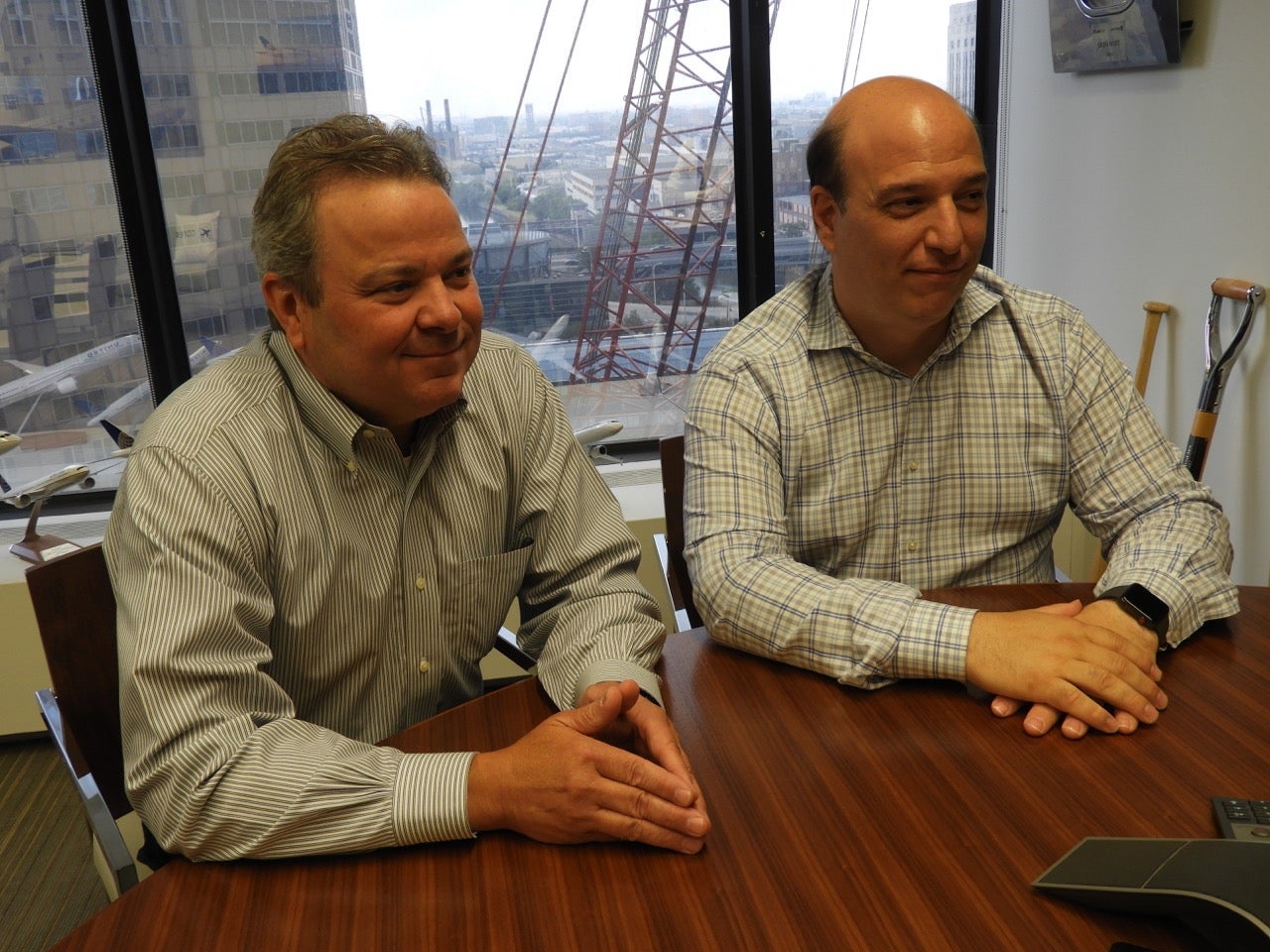
TPG contributor Chris Sloan sat down with United's chief operations officer, Greg Hart, and chief commercial officer, Andrew Nocella (formerly of American Airlines) for an interview in mid-August. Their answers have been edited for clarity and brevity.
TPG: Do you feel the negative public narrative about United is starting to swing in your favor?
Hart: The old moniker "perception lags reality" is definitely true in our case. We've actually been running a really good airline, better than we ever have, for a couple of years now, and haven't been getting a lot of credit for that. So I think that my sense is that things have definitely turned for the better. I've been in this business for 25 years and I've never been more excited to be a leader at an airline than I am right now. We've got an incredible amount of opportunity in front of us, a really engaged, excited workforce, and a lot of runway here at United Airlines.
TPG: The legacy Continental and United cabin crews will finally be integrated in October. How will that improve how you operate?
Hart: Right now, we have essentially two separate inflight bases at every hub we operate. Obviously, that's inefficient and also drives some reliability issues for us. Operationally, it's going to be a big benefit to us. More importantly, it's going to provide the opportunity for us to truly be one airline.

TPG: As fuel expenses have gone up, United said it's recaptured approximately 75% of the cost through higher yield and commercial and operational initiatives. What are examples of those initiatives?
Nocella: Our systems are getting better, [like] our new revenue-management system and how we're approaching segmentation for our customers. The investment in the product has been amazing. The opening of the new Polaris clubs — they're clearly the best clubs in the country. When you combine all those things together, you get an amazing result, and I think that's exactly what we're seeing.
"Quite frankly, we're a little bit behind some of our competitors on this front."
What's most exciting about that is we've just started, from a product perspective and segmentation perspective. Quite frankly, we're a little bit behind some of our competitors on this front. As we catch up, I think that's going to be even more and more meaningful to our results.
[]
TPG: Is there a target you'd like to see in oil prices?
Nocella: We have a natural hedge against the price of oil that our competitors don't have because of having a hub in [oil-industry center] Houston. I still think we'd probably prefer lower oil prices at the end of the day, but that being said, as oil prices go up, our oil revenues go up, and we've been watching that carefully. Our service to Midland/Odessa [another oil-industry center in Texas] is off the charts. We have a lot more flights than we used to have to Midland. And it's not the only place; there are quite a few other Gulf Coast markets that are like that. It's a structural advantage that we have versus some of our competitors. (But) we'd always prefer the lower price of oil. Houston is a gigantic hub in our system. We have seven hubs, so Houston is just one of seven.
TPG: United is projected to grow its available seat miles (ASM) capacity by 5% through 2020, much to the chagrin of investors. United president Scott Kirby has said the reason for this is to catch up to the competition and rebuild the neglected and shrunken domestic network. Can explain the case for building out capacity that far exceeds the economic growth that's expected?
Nocella: Our target is earnings per share. We put out targets to Wall Street that are very important to us, and we're very focused on them. So it's not a capacity number that we're trying to shoot for, it is an earnings number. We think the capacity number allows us to achieve the earnings number, and so far I think we've proven that to be the case. We're well on our way, and we will be very nimble.
"It's not a capacity number that we're trying to shoot for, it is an earnings number."
Gerry Laderman (the chief financial officer) works on the fleet plan for us every day to make sure we have optionality in everything we do. We own a large chunk of our fleet. We can choose to sell aircraft if we wanted and shrink to make sure that we're flexible and nimble. Right now, we're in the mode of, "the plan is working exactly as we thought it would," so we're excited to see what 2019 brings.
TPG: So that's what's driving your used-aircraft purchases? That you can park them if you need to?
Nocella: That, and the economics of some of these used aircraft are just incredibly compelling. We'll look to make sure we do the best thing. It puts a bit of a burden on Greg's team in terms of inducting used aircraft.
Hart: We've actually had really good experience with it. So good we went out and got some wide-body used aircraft, which is something you don't see very often. We've got the best tech-ops team in the business, [and they've] proven time and time again that they've got capabilities to do pretty much everything we ask.
TPG: San Francisco to Tel Aviv is less than a year old, and now you've announced plans to connect Dulles with Tel Aviv for the first time. So why the focus on Israel? Are you contemplating any other destinations in the Middle East?
Nocella: We're always looking for opportunities and we're growing fast in Israel right now. We're optimistic that the marketplace will absorb that capacity. We've done well out of Newark, so we wanted to try some other markets. Those markets are still developmental at this point, but we're excited to connect Washington, DC, to Tel Aviv next year.
TPG: US-China trade relations are not exactly the best they've been. Have you seen any ill effect?
Nocella: We hope all these issues get resolved as quickly as possible. Our network is large and diversified, and there's always going to be parts of the world that are stronger and other parts of the world that are weaker. What I can tell you right now is that China demand is strong. In fact, China is coming off a couple of years of negative revenues, and as we've reported on the earnings call, we now see positive revenues in China. We're really optimistic about the future. The headlines, at least at this point, have not resulted in a change in traffic.
TPG: How is United coping with the slowing GDP growth in China?
Nocella: We eliminated service to two smaller Chinese cities, which we were disappointed to have to do, [since] we'd rather spend some more time to develop those cities. But in that environment, we thought that was a prudent move, and our services to Beijing, Shanghai and Chengdu are successful.
TPG: Scott Kirby said he regrets that United discontinued service to New York-JFK. Does United have any figures about how much high-yield business travel it lost when not all of it transferred to Newark? Will JFK ever return to the network?
Nocella: It's something we think about. When we talk to our customers, they tell us they miss that optionality. There are no immediate plans to return to JFK. We don't have the appropriate slot portfolio and gate position to do it in a competitive way, but those conditions could change, and we will constantly re-evaluate them.
"With 20/20 hindsight, I think we'd prefer to still be in JFK."
For now, our service out of Newark is doing well. It serves a vast majority of the marketplace very effectively. Newark is an airport not for just New Jersey but for all of New York City and New York. We think we're in a good position. With 20/20 hindsight, I think we'd prefer to still be in JFK. But we are where we are, and we're pushing the company forward in the best way we can given the assets we have.
TPG: At LAX, United is in third place in market share for daily departures at 14% compared to American and Delta, respectively (which are at 19% and 17%). United has launched opportunistic flights to Melbourne but pulled out of Singapore from LA. What does LAX mean to United while Delta and American duke it out for No. 1?
Nocella: LA is one of our seven hubs. It's very important. Again, our international network in particular is really unique, and it's built upon a foundation of San Francisco and LA, New York and Washington, DC, on the coasts. We would like to see more in LA.
As we looked at Singapore, we felt like the second flight out of San Francisco at this particular moment in time was the better choice for that asset. That's not to say we won't ever fly LA to Singapore again. Quite frankly, we fly many other international routes out of LA, and we do well out of Los Angeles in total. We're here managing our results day to day and felt like we needed to make a change. Today, in terms of our footprint in LA, it is slightly smaller than one competitor, and a little bit smaller than the other competitor. It's a race that we're in and not going to be giving up on.
We basically fully utilize our gate facilities at the airport. It's not that we don't want to grow. It's that the facility footprint we have today ... is full. So our footprint is just slightly smaller than some of our competitors, and therefore our operation is slightly smaller. That's the output of all kinds of things that have happened over decades.
"I believe in Los Angeles."
We are working with LAWA [Los Angeles World Airports] in terms of where we'd like to be in the future. Los Angeles is going to continue to be a key part of our network. I believe in Los Angeles. I think I've proven that time and time again. We've grown the operation considerably in Los Angeles over the last 12 months.
TPG: United lacks a large presence or hub in the Southeast. This weakness in Florida and the Caribbean translates to a traditionally weak first quarter. But you've re-instituted seasonal flights from Dulles to Miami. Is there more to come in the Southeast?
Nocella: Our opportunities right now are greatest in the seven hubs we have. And so we're focused on building those out. It's not that we don't believe there are other opportunities in the country. We believe our greatest opportunity, the best for our shareholders or employees and every stakeholder at United Airlines, is in one of our seven hubs right now. So most of our, if not all of our, capacity growth has gone into the seven hubs, and it simply needs to be that way to drive the results that we want to drive as a company.

TPG: Word on the street is that United is looking at aircraft with 100 to 150 seats, like the Embraer E2 or Airbus A220. Is this true, and if so, what does it mean?
Hart: The nice thing is we've got a big installed base on the narrow-body side of Airbus and Boeing aircraft. The used marketplace is something that we can participate in across the spectrum. We obviously don't have a 100-seat airplane today in our network. I know the planning guys see a lot of value there, so it's something we look at. Having said that, we are very mindful of complexity.
"We don't have a 100-seat airplane. I know the planning guys see a lot of value there."
Bringing a new fleet type on a can drive upwards of $75 to $100 million dollars a year in operating expense, which means that fleet has to be that much better than whatever it would replace or whatever the alternative would be. We're very focused on making sure that we set our employees up for success, part of which is simplifying what we do. Having said that, obviously we are mindful of the value that the network can drive as well.
TPG: United was the launch customer for the 727, 737-200, 767 and 777, so it historically has played a significant role in the development of Boeing aircraft. What is United's interest in the Boeing NMA versus some sort of Airbus A321 LR? What would the ideal configuration look like for United?
Nocella: We're in constant contact with Boeing. Boeing is a great partner for United. There's no other way to say it. We are constantly providing input as to what we'd like that aircraft to look like, because it needs to fit our needs for it to operate at United Airlines some day. We're still a long way away from understanding exactly what the airplane is to a T and when it will actually enter service. It's a bit foggy at this point from our perspective.
We're excited about the prospect of this aircraft being out there. As you go forward in time and you look at how aircraft sizes have changed and what we fly domestically, then you look at the hubs that United Airline operates from, particularly in New York and San Francisco, we definitely can see the potential to have a larger capacity, narrow-bodied economic jet flying out of many of our hubs because of the constraints that we have. It just has to meet the economic criteria.
The interesting thing about the NMA is in a domestic configuration. It could have 250-plus seats on board. With narrow-body economics, that would be something we'd want to evaluate very carefully. That's the message that we've given to Boeing.
TPG: Will there be a domestic, transcontinental Polaris product?
Nocella: We do provide a very enhanced level of service on many of our New York transcon flights today. The product-development folks are thinking about what that needs to be over the next 10 years, not just over the next 12 months. We don't have much more to say on that today, but people are always thinking about how we can deliver a more exciting and stimulating product and how we can innovate.
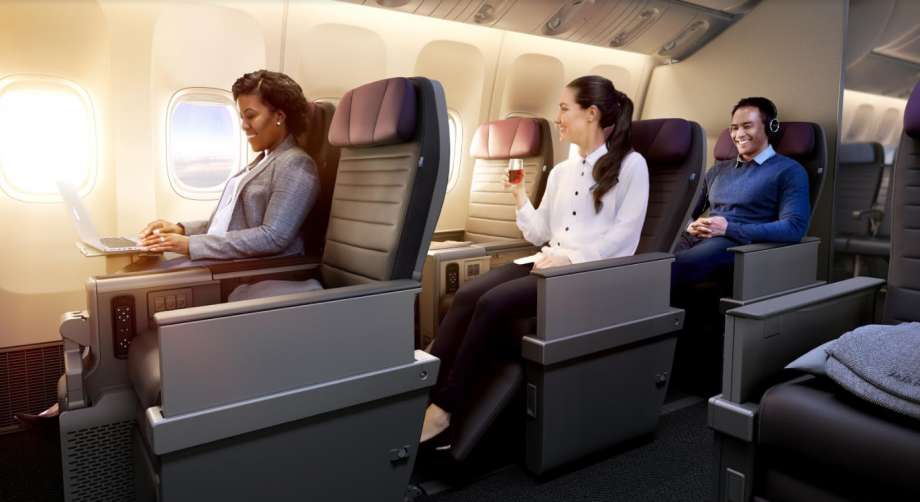
TPG: United is the third US carrier to introduce premium economy. What details of Premium Plus, such as initial routes, aircraft, configuration and whether it will ever be added to the domestic network, can you share?
Nocella: We have three aircraft flying. Our first 787-10 will come with that product later this year, November or somewhere around that. So it's happening. The rollout is tied to the Polaris rollout. So by the end of 2020, you'll have it on the fleet. We haven't said exactly what aircraft it will be on, but it'll be on almost everything that flies intercontinental.
"It'll be on almost everything that flies intercontinental."
We think it's going to be a home run. You'll listen to what everybody's saying about their own experience with it. We will have some announcements probably in the next 60 days on how it integrates into the frequent-flyer program, which many of our flyers are most interested to hear. So the work on that is coming, but for more details on the product and the launch planner, we'll wait until we get very close to a first sale, which is late this year, early next year.
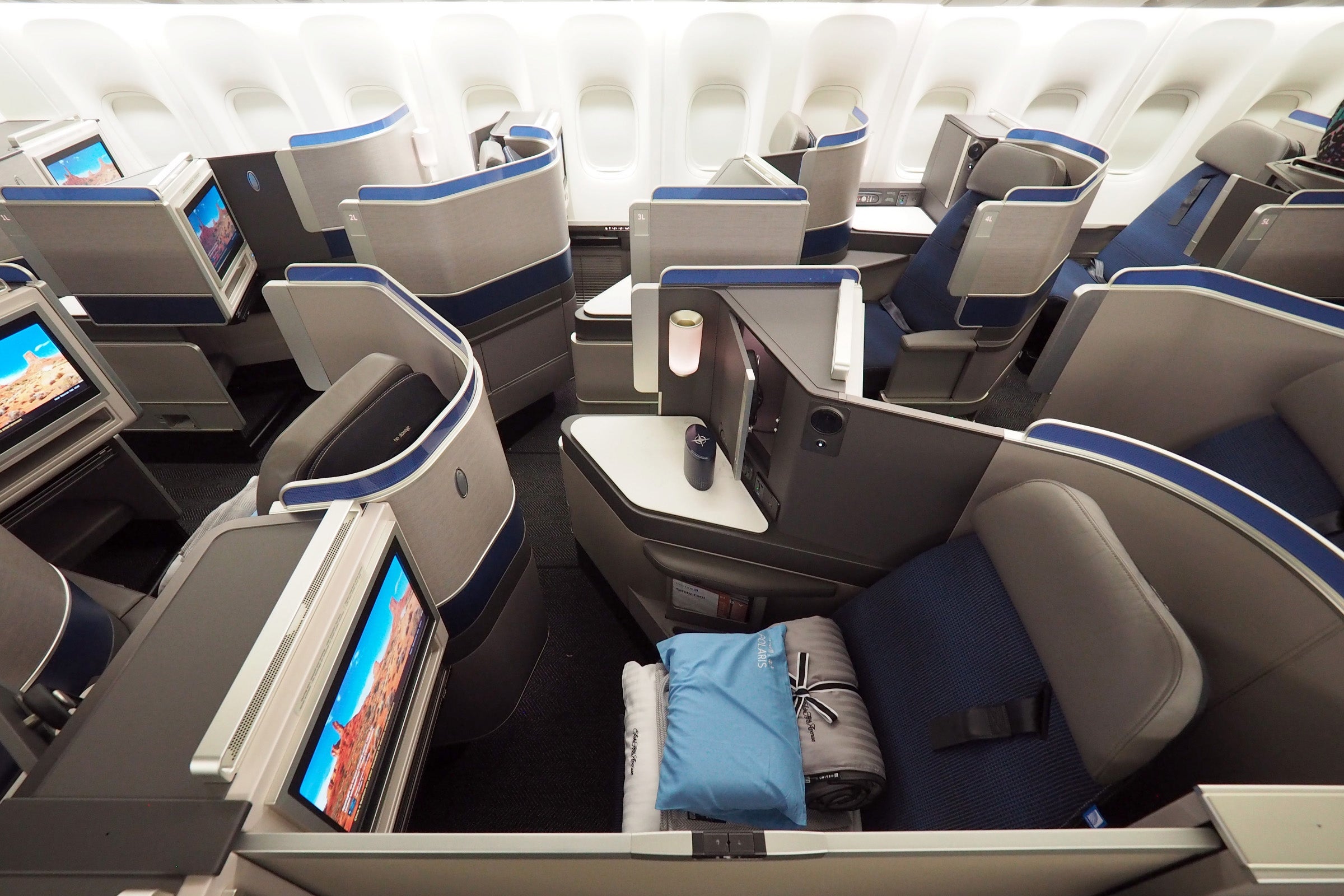
TPG: Even though people seem to like the product, critics have dubbed Polaris "Fauxlaris" because of the slow rollout of both the lounge and seat. If United had it do all over again, what would you have done differently?
Hart: In retrospect, could we have handled perhaps parts of it differently — perhaps not such a focus on the seats? Sure. Which I think is the piece that didn't show. I can tell you we've learned quickly, we are investing a ton of time, a ton of resources and making sure we're converting as many airplanes as quickly as we can.
As well, we've learned from our experiences in the lounge. For example, what we learned very quickly was people loved the product so much they didn't leave and got there early, so we needed a bigger lounge. We've changed the product materially to better reflect the needs and desires of our customers. I think that, again, shows our willingness to adapt and be a better airline for it.
"By the end of 2022, we'll be done."
Nocella: We are in a great spot with Polaris. We'd love for it to be done, but we are a large airline with a large number of wide-body jets. The fact that it's taken multiple years at United is not atypical for a program of this size. That's hard to communicate sometimes, and with 20/20 hindsight, I'm sure we would probably do things differently.
Going forward, we're on target with one airplane converted every 10 days on average. By the end of 2022, we'll be done. The seating manufacturers are on board with that plan, which is one of the critical things.
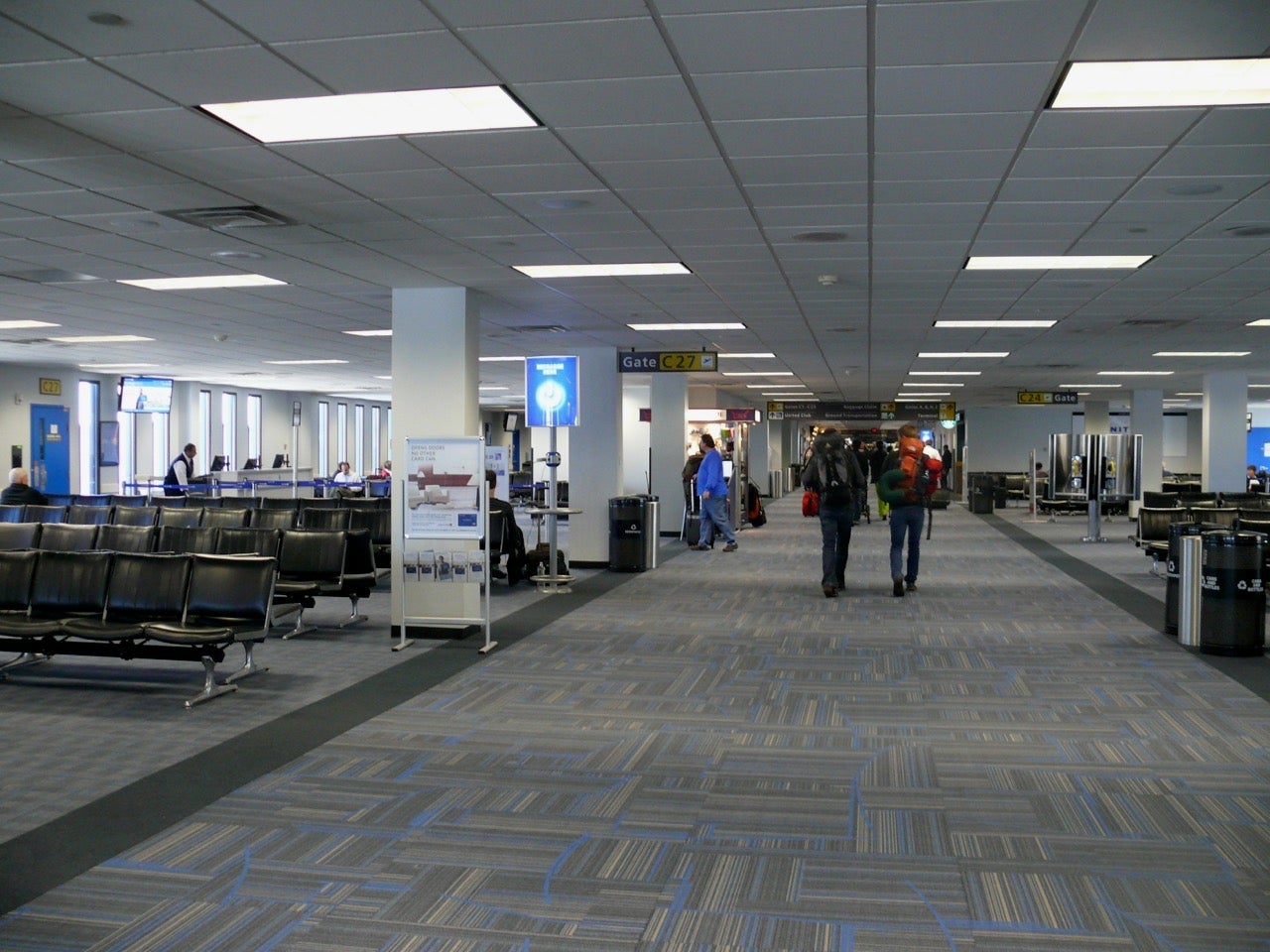
TPG: United is shifting much connecting traffic to Dulles from Newark, but the Dulles midfield terminal is outdated and cramped. Why hasn't there been broad support to replace the nearly 35-year-old "temporary" midfield terminal at IAD?
Hart: Stay tuned. We're going to be making quite a bit of investment in Dulles in the next year or two, and it goes beyond just what the customer sees as they pass through our terminal. There are a lot of infrastructure investments we need to make, but it's a great hub for us, does very well. As we move forward, we're going to be making some investments that will really impact the customer experience as well. It will be significant. It will be noticeable to our customers.
Chris Sloan is an aviation journalist based in South Florida, where he is managing editor of Airways Magazine. At his day job, he is also owner of one of the nation's top television-production, design and marketing agencies, 2C Media. Follow him at @airchive on Twitter.
TPG featured card

at Capital One's secure site
Terms & restrictions apply. See rates & fees.
| 5X miles | Earn 5X miles on hotels, vacation rentals and rental cars booked through Capital One Travel |
| 2X miles | Earn unlimited 2X miles on every purchase, every day |
Pros
- Stellar welcome offer of 75,000 miles after spending $4,000 on purchases in the first three months from account opening. Plus, a $250 Capital One Travel credit to use in your first cardholder year upon account opening.
- You'll earn 2 miles per dollar on every purchase, which means you won't have to worry about memorizing bonus categories
- Rewards are versatile and can be redeemed for a statement credit or transferred to Capital One’s transfer partners
Cons
- Highest bonus-earning categories only on travel booked via Capital One Travel
- LIMITED-TIME OFFER: Enjoy $250 to use on Capital One Travel in your first cardholder year, plus earn 75,000 bonus miles once you spend $4,000 on purchases within the first 3 months from account opening - that’s equal to $1,000 in travel
- Earn unlimited 2X miles on every purchase, every day
- Earn 5X miles on hotels, vacation rentals and rental cars booked through Capital One Travel
- Miles won't expire for the life of the account and there's no limit to how many you can earn
- Receive up to a $120 credit for Global Entry or TSA PreCheck®
- Use your miles to get reimbursed for any travel purchase—or redeem by booking a trip through Capital One Travel
- Enjoy a $50 experience credit and other premium benefits with every hotel and vacation rental booked from the Lifestyle Collection
- Transfer your miles to your choice of 15+ travel loyalty programs
- Top rated mobile app