How to Read Airport Taxiway Signs
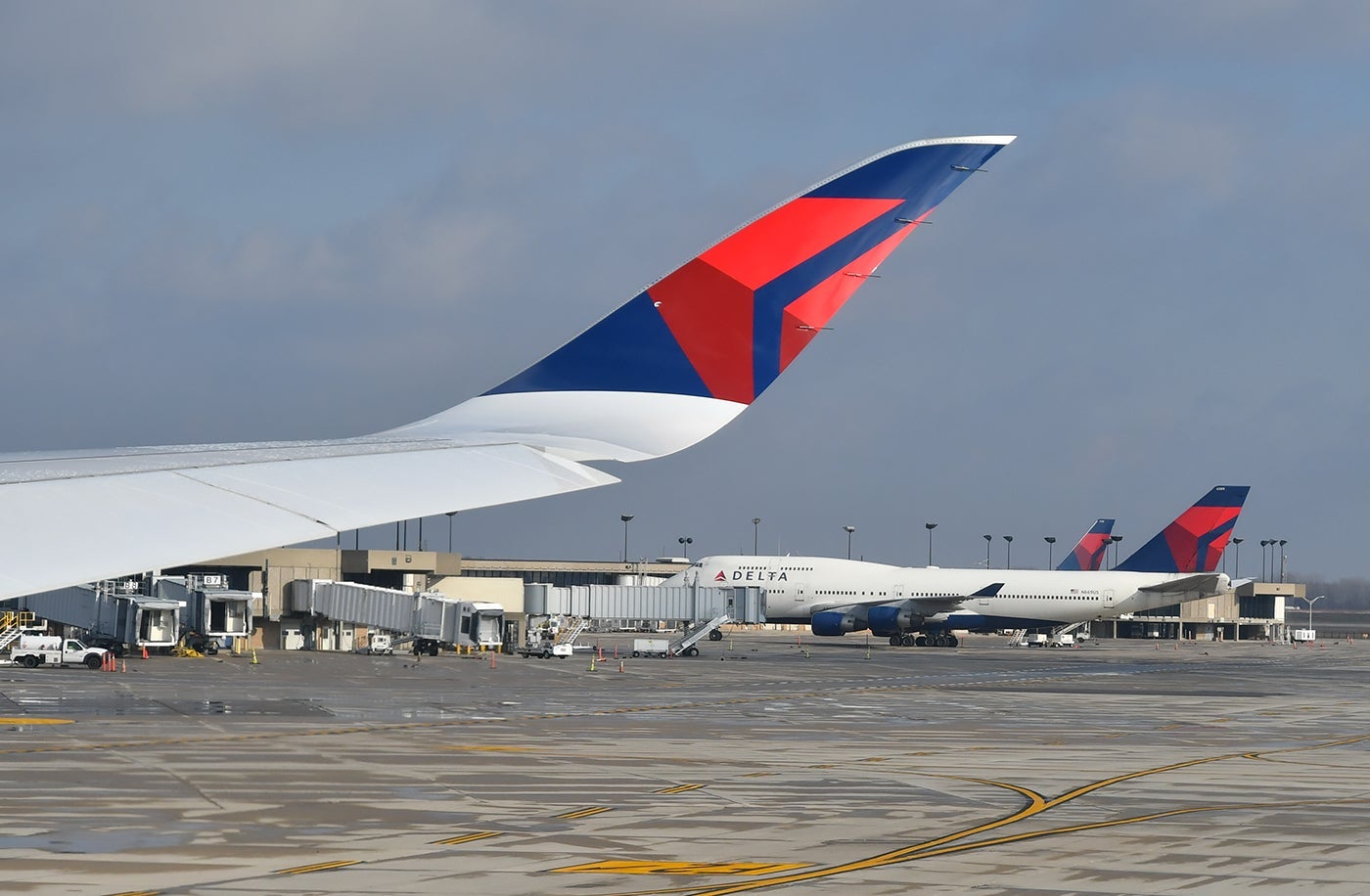
On your next flight, you might spend 25 minutes or more taxiing to the runway. Take a look out the window and you'll spot a variety of signs — some indicating the runway you're headed to. They're designed primarily for pilots, but you can follow along by understanding how they work and comparing what you see out the window to the freely available airport diagram.
Here's how the taxiway markings work.
Taxiways can be a combination of letters and numbers, or letters alone. They are indicated on a black sign with yellow letters or a yellow sign with black letters and arrows.
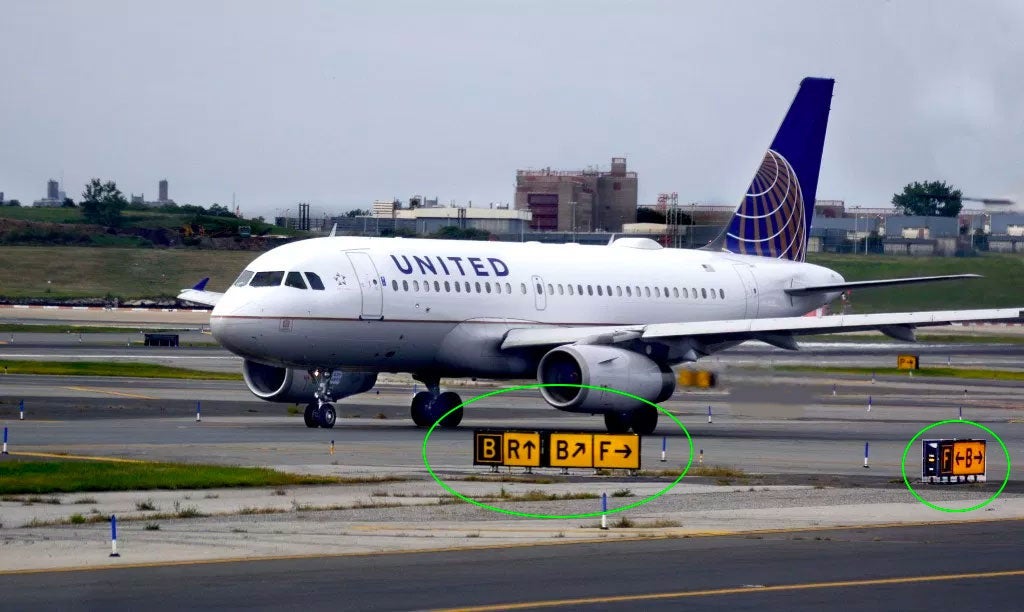
In the photo above, first, ignore the lovely United Airlines Airbus A319.
In the first ellipse, you'll see four panels labeled "B" "R" "B" and "F". (This does not stand for "Be Right Back.")
A black square with yellow letters and/or numbers inside signifies the plane's position on the various taxiways. This black square indicates to pilots: "This is where you are right now," and in this case a pilot seeing this sign knows they are on taxiway B. The yellow panels indicate directions: taxiway R is straight ahead, B continues to the right in the direction of the arrow, and taxiway F requires a right turn.
In the second ellipse to the right you can see "F" and "B". Seen from a pilots point of view facing this sign, the pilot knows that he or she is on taxiway F, at an intersection with taxiway B which continues to the left and right.
Below, you'll find a similar intersection, this time with a bird's eye view.
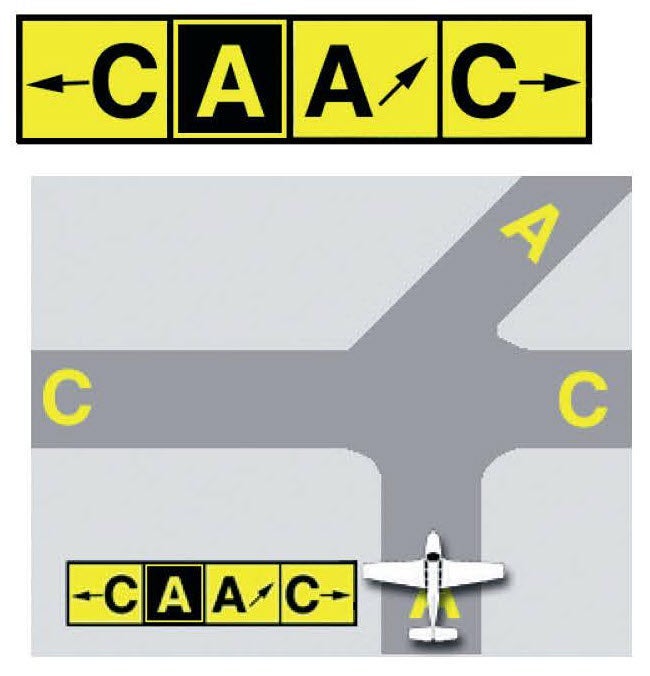
Here, the sign indicates to pilots they are on taxiway A, which continues to the right and taxiway C is perpendicular in both directions. (Note that the taxiways are referred to using the NATO phonetic alphabet. This plane is on "Taxiway Alpha".)

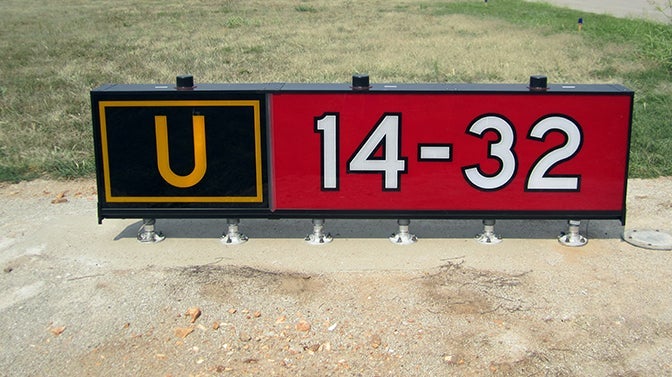
The sign above is a different version and with an important distinction. Notice the black square with a yellow letter. (This is a taxiway location sign; same as above.) Here it is coupled with the red sign with white letters which gives an indication to a pilot to be more alert. That's because the pilot is approaching the intersection of runway. This is a holding position sign which requires specific ground clearance for the pilot to proceed. (There are additional markings on the ground, but that's beyond the scope the article and you can't easily see them as a passenger.) Ground controllers will have airplanes cross runways. Inadvertently crossing a runway without clearance while taxiing is a major safety concern in aviation. In this case, Runway 14's approach end is to the left and Runway 32's approach end is to the right.
So, Where Am I?
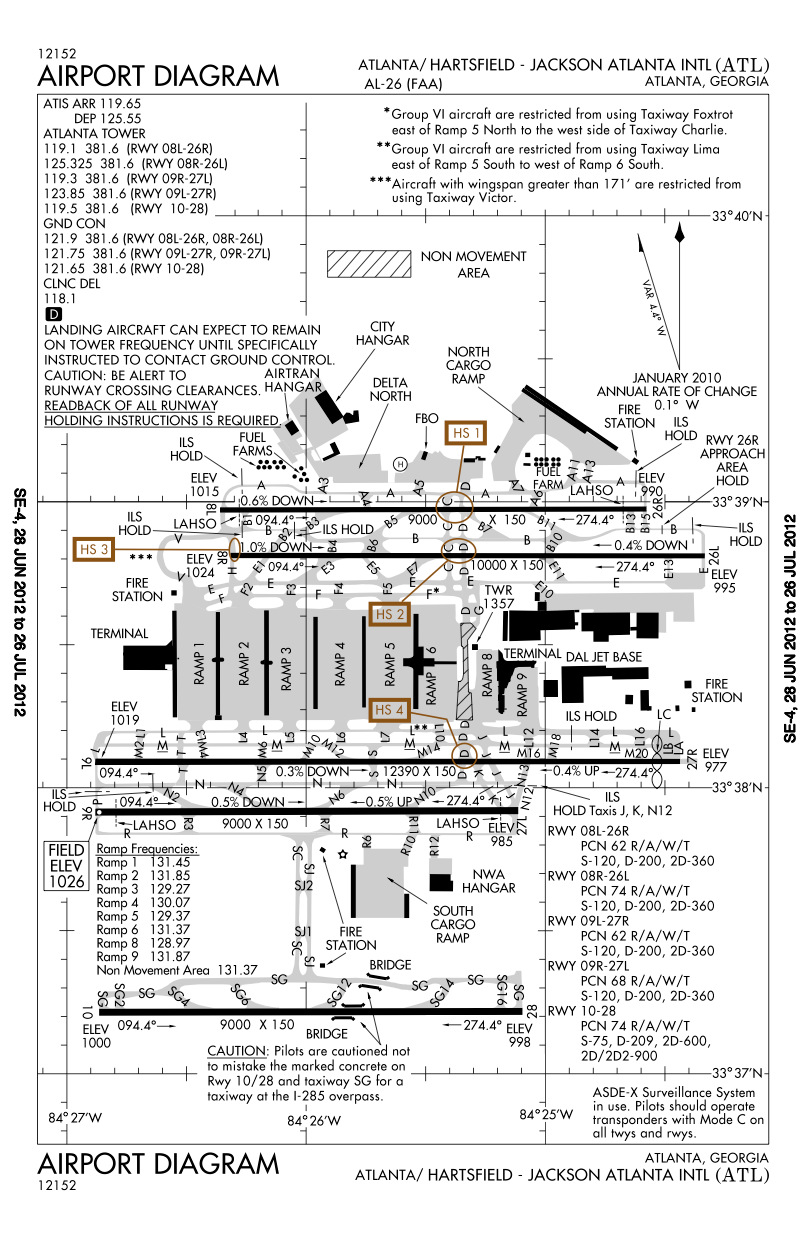
Do a Google search for "ATL Airport Diagram" and find this PDF. You can do the same for any airport in the world and pull it up on your phone. Zoom in and you'll see taxiways, named and numbered. At every intersection and taxiway, you'd see signs on the ground. Follow along the next time as your plane taxies out, and you'll know where you are, where you're going, and what runway you're departing from.
Mike Arnot is the founder of Boarding Pass NYC, a travel brand, and a private pilot.
TPG featured card
at American Express's secure site
Terms & restrictions apply. See rates & fees.
| 4X | Earn 4X Membership Rewards® points per dollar spent on purchases at restaurants worldwide, on up to $50,000 in purchases per calendar year, then 1X points for the rest of the year. |
| 4X | Earn 4X Membership Rewards® points per dollar spent at US supermarkets, on up to $25,000 in purchases per calendar year, then 1X points for the rest of the year. |
| 5X | Earn 5X Membership Rewards® points on prepaid hotel stays booked through AmexTravel.com or the Amex Travel App™. |
| 3X | Earn 3X Membership Rewards® points on flights booked through AmexTravel.com, the Amex Travel App™, or purchased directly from airlines. |
| 2X | Earn 2X Membership Rewards® points on prepaid car rentals booked through AmexTravel.com or the Amex Travel App™ and cruises booked and paid through AmexTravel.com. |
| 1X | Earn 1X Membership Rewards® point per dollar spent on all other eligible purchases. |
Pros
- Valuable dining and food-related credits
- Flexible rewards with airline and hotel transfer partners
- Multiple travel and purchase protections
- No foreign transaction fees
- Access to Amex Offers for additional savings (enrollment required)
Cons
- Not as useful for those living outside the U.S.
- Some may have trouble using Uber and other dining credits
- You may be eligible for as high as 100,000 Membership Rewards® Points after you spend $8,000 in eligible purchases on your new Card in your first 6 months of Card Membership. Welcome offers vary and you may not be eligible for an offer. Apply to know if you’re approved and find out your exact welcome offer amount – all with no credit score impact. If you’re approved and choose to accept the Card, your score may be impacted.
- Earn 4X Membership Rewards® points per dollar spent on purchases at restaurants worldwide, on up to $50,000 in purchases per calendar year, then 1X points for the rest of the year.
- Earn 4X Membership Rewards® points per dollar spent at US supermarkets, on up to $25,000 in purchases per calendar year, then 1X points for the rest of the year.
- Earn 5X Membership Rewards® points on prepaid hotel stays booked through AmexTravel.com or the Amex Travel App™.
- Earn 3X Membership Rewards® points on flights booked through AmexTravel.com, the Amex Travel App™, or purchased directly from airlines.
- Earn 2X Membership Rewards® points on prepaid car rentals booked through AmexTravel.com or the Amex Travel App™ and cruises booked and paid through AmexTravel.com.
- Earn 1X Membership Rewards® point per dollar spent on all other eligible purchases.
- Pay It® lets you tap in the American Express® App to quickly pay for small purchase amounts throughout the month and still earn rewards the way you usually do. Plan It® gives you the option to split up big purchases into equal monthly payments with a fixed fee. You’ll know upfront exactly how much you’ll pay.
- $120 Dining Credit: Earn up to a total of $10 in statement credits monthly when you pay with the Gold Card at Grubhub (including Seamless), Buffalo Wild Wings, Five Guys, The Cheesecake Factory, and Wonder. This can be an annual savings of up to $120. Enrollment required.
- $100 Resy Credit: Get up to $100 in statement credits each calendar year at over 10,000 qualifying U.S. Resy restaurants after you pay for eligible purchases with the American Express® Gold Card. That’s up to $50 in statement credits semi-annually. Enrollment required.
- $84 Dunkin' Credit: Earn up to $7 in monthly statement credits after you pay with the American Express® Gold Card at U.S. Dunkin’ locations. Enrollment required.
- $120 Uber Cash on Gold: Enjoy up to $120 in Uber Cash annually with your Gold Card. Just add your Card to your Uber account and you'll get $10 in Uber Cash each month to use on orders and rides in the U.S. when you select an Amex Card for your transaction.
- Enjoy complimentary Hertz Five Star® Status benefits like skipping the counter at select locations, adding an additional driver at no additional cost*, and vehicle upgrades**. Benefit enrollment and Hertz Gold+ registration are required. *Additional drivers must meet standard rental qualifications and must be a spouse or domestic partner to qualify as complimentary. Other additional drivers subject to fees. **Benefits are subject to availability and vary by location. Additional Hertz program Terms and Conditions including age restrictions apply.
- Book two nights or more with The Hotel Collection through AmexTravel.com or the Amex Travel App™ and receive a $100* credit towards eligible charges at over 1,400 upscale hotels worldwide. *Eligible charges vary by property.
- Book your travel through the Amex Travel App™ with added peace of mind – backed by American Express® service and support. Only for American Express® Card Members.
- Whenever you need us, we're here. Our Member Services team will ensure you are taken care of. From lost Card replacement to statement questions, we are available to help 24/7.
- No Foreign Transaction Fees.
- Annual Fee is $325.
- Terms Apply.