Skip to content

How the big U.S. airlines managed an unprecedented 18-year safe streak

Nov. 12, 2019
5 min read
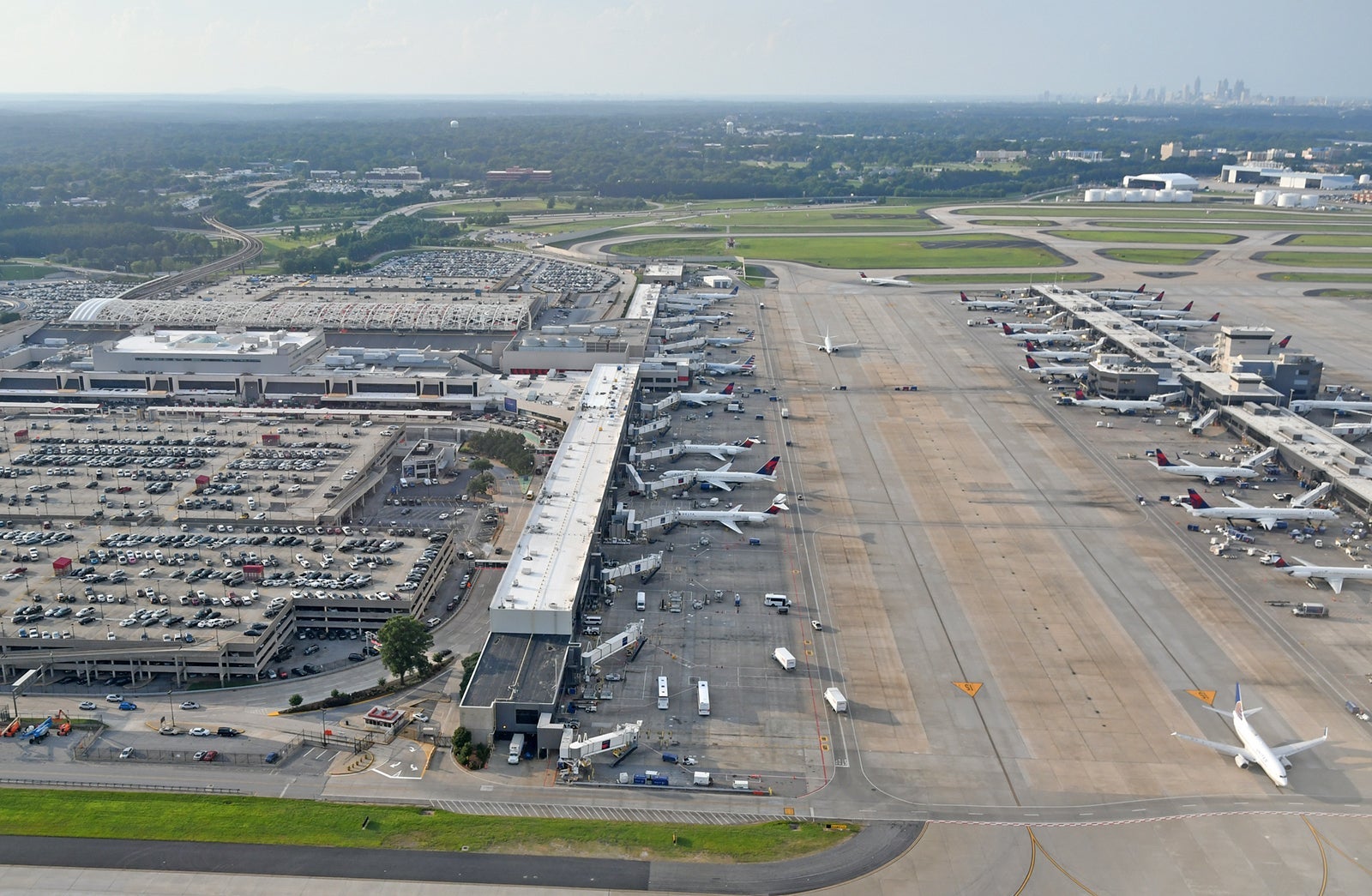
Atlanta Airport Overview
How the big U.S. airlines managed an unprecedented 18-year safe streak
The cards we feature here are from partners who compensate us when you are approved through our site, and this may impact how or where these products appear. We don’t cover all available credit cards, but our analysis, reviews, and opinions are entirely from our editorial team. Terms apply to the offers listed on this page. Please view our advertising policy and product review methodology for more information.

Eighteeen years ago today, on the sunny morning of Nov. 12, 2001, American Airlines Flight 587, an Airbus A300 bound for the Dominican Republic, crashed after takeoff from Kennedy Airport in New York City.

Seconds into its climb, the flight encountered wake turbulence spun from a Japan Airlines 747 that had departed a few minutes earlier. The wake itself was nothing deadly, but the first officer, Sten Molin, who was at the controls, overreacted, rapidly and repeatedly moving the widebody jet's rudder from side to side, to maximum deflection. The rudder is a large hinged surface attached to the tail, used to help maintain lateral stability, and Molin was swinging it back and forth in a manner it wasn't designed for. Planes can take a surprising amount of punishment, but airworthiness standards are not based on applications of such extreme force. In addition, the A300's rudder controls were designed to be unusually sensitive, meaning that pilot inputs, even at low speeds, could be more severe than intended. In other words, the pilot didn't realize the level of stress he was putting on the tail. The vigor of his inputs caused the entire tail to fracture and fall off.

Quickly out of control, the plane plunged into the Belle Harbor neighborhood of Queens, a skinny section of Rockaway only a few blocks wide, with ocean on both sides. All 260 passengers and crew were killed, as were five people on the ground. It remains the second-deadliest aviation accident ever on U.S. soil, behind only that of American Flight 191 in Chicago, in 1979.

Flight 587 was well known among New York City's Dominican community. In 1996, merengue star Kinito Mendez paid a sadly foreboding tribute with his song El Avión. "How joyful it could be to go on Flight 587," he sang, immortalizing the popular daily nonstop.

This was a catastrophe, to be sure. It was also the last multiple-fatality crash involving a major American airline. Since the crash of Flight 587, approximately 20 billion passengers have flown safely aboard our largest airlines.

To get a sense of how momentous a streak this has been, one needs only to flip through the accident archives of the 1960s, 1970s, 1980s and 1990s. Rarely did a span of two or three years pass without a legacy airline recording at least one major accident. In some years there were two, even three. In the eighteen years prior to November, 2001, and not counting the September 11th attacks, the American majors suffered 10 major accidents, plus several more involving regional and supplemental carriers, including the Arrow Air catastrophe in Newfoundland. The idea that nearly two decades would pass without another disaster would have been unthinkable. Yet here we are.

Yet here we are.

A view of runway 31L at JFK from an airplane about to take off on it (Photo by Alberto Riva/TPG)

To be clear, there have been a number of post-2001 tragedies involving regional carriers and freighters, from the UPS accidents in Dubai and Birmingham, to the Colgan Air and Comair crashes, in which dozens died. In 2005 a young boy in a car was killed when a Southwest Airlines 737 overran a runway in Chicago, and in 2018 a woman on a Southwest Airlines 737 was killed after being partially ejected through a blown-out cabin window.

Some will argue that it's unfair to gerrymander statistics in this fashion, separating airlines into categories of convenience. However, it's necessary. Regional carriers, for instance, can have substantially different cultural and operational environments than their legacy carrier affiliates. It's the majors that set the standard, and it's only fair that we measure from there. Despite seething public contempt for the industry at large, and despite the fiscal devastation it has been through (at least five bankruptcies during the 2000s), the nation's mainline carriers have nevertheless maintained an almost perfect safety record.

Daily Newsletter
Reward your inbox with the TPG Daily newsletter
Join over 700,000 readers for breaking news, in-depth guides and exclusive deals from TPG’s experts

When we expand the context globally, the trend is even more astonishing. From the 1980s through the mid-2000s there were literally dozens of large-scale disasters worldwide — sometimes five or more in a year. In 1985 alone, 27 major crashes — twenty-seven! — killed almost 2,400 people.

How we got here is mainly the result of better training, better technology, and the collaborative efforts of airlines, pilot groups, and regulators. We've engineered away what used to be the most common causes of accidents. Yes, we've been lucky too, and lack of a headline tragedy does not mean we should rest on our laurels. Complacency is about the worst response we could have. Air safety is all about being proactive — even a little cynical. Our air traffic control system needs upgrades, our airports need investment. Terrorism and sabotage remain threats, and regulatory loopholes need closing. The ongoing saga of the 737 MAX is a cautionary window into just how fortunate we've been, and has exposed some pretty glaring weaknesses.

Duly noted, but a congratulatory moment is, for today, well earned. This isn't a minor story. On the contrary, it's one of the most significant and impressive accomplishments in U.S. aviation history.

Predictably, however, the media is silent. Plane crashes, not a lack of them, are usually the juicier news. At the five-year mark, the 10-year mark… nowhere along the way has this streak been acknowledged. Neither will it be acknowledged, I'm afraid, when the inevitable accident finally comes. So, let's acknowledge it now.

And, knock on wood, we hope to be revisiting this story in another 24 months, when the streak hits 20

Patrick Smith is an airline pilot and the host of askthepilot.com. His book Cockpit Confidential is a New York Times bestseller.

Featured image by Alberto Riva

TPG featured card

Best for businesses with high spending
TPG Editor‘s Rating
4.5 / 5
Go to review

Rewards

2 - 10X miles

Intro offer

LIMITED-TIME OFFER: Earn up to 400K bonus miles

Annual Fee

$395

Recommended Credit

740-850
Excellent

Why We Chose It

The Capital One Venture X Business Card has all the Capital One Venture X Rewards Credit Card has to offer and more. It offers an incredible welcome bonus and requires an equally impressive spend to qualify. In addition, the card comes with premium travel perks like annual travel credit. (Partner offer)

Pros

  • The Capital One Venture X business card has a very lucrative welcome offer.
  • In addition, the card comes with many premium travel perks such as an annual $300 credit for bookings through Capital One Business Travel.
  • Business owners are also able to add employee cards for free.

Cons

  • The card requires significant spending to earn the welcome offer.
  • Another drawback is that the annual travel credit can only be used on bookings made through Capital One Business Travel.
  • LIMITED-TIME OFFER: Earn up to 400K bonus miles: 200K miles when you spend $30K in the first 3 months, and an additional 200k miles when you spend $150k in the first 6 months
  • Earn unlimited 2X miles on every purchase, everywhere—with no limits or category restrictions
  • Earn 10X miles on hotels and rental cars and 5X miles on flights and vacation rentals booked through Capital One Business Travel
  • With no preset spending limit, enjoy big purchasing power that adapts so you can spend more and earn more rewards
  • Empower your teams to make business purchases while earning rewards on their transactions, with free employee and virtual cards. Plus, automatically sync your transaction data with your accounting software and pay your vendors with ease
  • Redeem your miles on flights, hotels and more. Plus, transfer your miles to any of the 15+ travel loyalty programs
  • Every year, you'll get 10,000 bonus miles after your account anniversary date. Plus, receive an annual $300 credit for bookings made through Capital One Business Travel
  • Receive up to a $120 credit for Global Entry or TSA PreCheck®. Enjoy access to 1,300+ airport lounges worldwide, including Capital One Lounge locations and Priority Pass™ lounges, after enrollment
  • Enjoy a $100 experience credit and other premium benefits with every hotel and vacation rental booked from the Premier Collection
  • This is a pay-in-full card, so your balance is due in full every month
Apply for Capital One Venture X Business
at Capital One's secure site
Terms & restrictions apply. See rates & fees
Best for businesses with high spending
TPG Editor‘s Rating
4.5 / 5
Go to review

Rewards Rate

2X miles2 miles per dollar on every purchase
5X miles5 miles per dollar on flights and vacation rentals booked through Capital One Business Travel
10X miles10 miles per dollar on hotels and rental cars booked through Capital One Business Travel
  • Intro Offer

    LIMITED-TIME OFFER: Earn up to 400K bonus miles
  • Annual Fee

    $395
  • Recommended Credit

    740-850
    Excellent

Why We Chose It

The Capital One Venture X Business Card has all the Capital One Venture X Rewards Credit Card has to offer and more. It offers an incredible welcome bonus and requires an equally impressive spend to qualify. In addition, the card comes with premium travel perks like annual travel credit. (Partner offer)

Pros

  • The Capital One Venture X business card has a very lucrative welcome offer.
  • In addition, the card comes with many premium travel perks such as an annual $300 credit for bookings through Capital One Business Travel.
  • Business owners are also able to add employee cards for free.

Cons

  • The card requires significant spending to earn the welcome offer.
  • Another drawback is that the annual travel credit can only be used on bookings made through Capital One Business Travel.
  • LIMITED-TIME OFFER: Earn up to 400K bonus miles: 200K miles when you spend $30K in the first 3 months, and an additional 200k miles when you spend $150k in the first 6 months
  • Earn unlimited 2X miles on every purchase, everywhere—with no limits or category restrictions
  • Earn 10X miles on hotels and rental cars and 5X miles on flights and vacation rentals booked through Capital One Business Travel
  • With no preset spending limit, enjoy big purchasing power that adapts so you can spend more and earn more rewards
  • Empower your teams to make business purchases while earning rewards on their transactions, with free employee and virtual cards. Plus, automatically sync your transaction data with your accounting software and pay your vendors with ease
  • Redeem your miles on flights, hotels and more. Plus, transfer your miles to any of the 15+ travel loyalty programs
  • Every year, you'll get 10,000 bonus miles after your account anniversary date. Plus, receive an annual $300 credit for bookings made through Capital One Business Travel
  • Receive up to a $120 credit for Global Entry or TSA PreCheck®. Enjoy access to 1,300+ airport lounges worldwide, including Capital One Lounge locations and Priority Pass™ lounges, after enrollment
  • Enjoy a $100 experience credit and other premium benefits with every hotel and vacation rental booked from the Premier Collection
  • This is a pay-in-full card, so your balance is due in full every month