Airliners in the Desert: How Planes Are Put in Storage


There are airports around the world where hundreds of aircraft sit quietly, wind whistling over wings that have safely carried passengers over millions of miles.
Airliners fly in from around the world to airports in places like Marana, Arizona; Victorville, California; and Teruel, Spain. Some planes will spend just a short time basking in the sun before heading back into service for another airline, while others may have reached the point where required extensive and expensive maintenance doesn't make financial sense for their owners.
Those planes won't leave the ground again, will be stripped of valuable parts, and will ultimately be broken up for scrap. But what happens to airplanes between the moment they land at a storage facility, sometimes known a bit crudely as a boneyard, and the moment they fly out, or get broken up for parts?
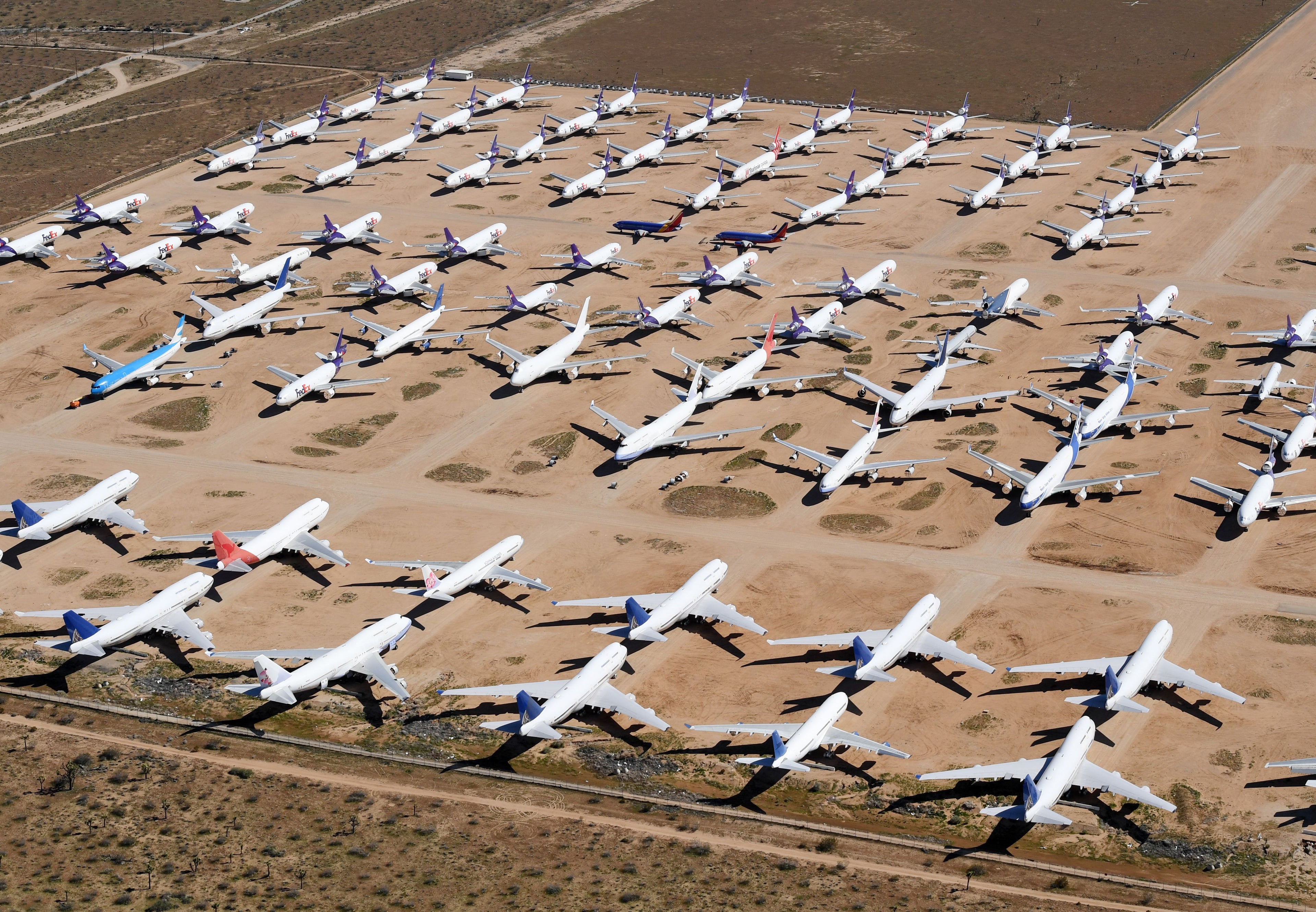
"From an owner's standpoint, the storage of aircraft is the last thing they want to do," explained David Querio, president of Ascent Aviation Services, in an interview with TPG. "The only time you would hopefully have to have an aircraft on the ground or if it was transitioning at the end of the lease from one operator to a new operator."
Querio said that there are many other factors that could lead to the decision to send an aircraft to his facility, perhaps flying for the last time: "Rising fuel costs certainly play a part in the decision to store a less fuel-efficient aircraft, and the state of the economy is a huge driver of whether or not people can afford to travel and take vacations."
Based at Pinal Air Park in Marana, northwest of Tucson, Arizona, Ascent is one of the world's largest aircraft storage, maintenance and reclamation operators.
"If an aircraft has marketability (...) or if the airline intends to redeploy the aircraft, it will be placed into a storage program," Querio said.
Those storage procedures are defined in an operational manual such as the Airbus Aircraft Maintenance Document, whose chapter 10 is titled covering "Parking, Mooring, Storage & Return to Service." In case you're wondering, "mooring" describes what needs to be done to secure an aircraft on the ground, in high winds.
According to Christoph Maier, Customer Management Maintenance Programmes & Services, Airbus splits up its storage program into "two times two" procedures. There are two parking procedures, up to one month and beyond one month, and two storage procedures, up to one year and beyond one year.

"The main difference is not really the length, but it's the question of whether the aircraft is in flight-ready condition, or not," Maier said. "If an aircraft is to be in flight-ready condition, it will always be in parking mode. That typically means that you have to do a lot of maintenance during the [parking] time on the aircraft."
But, "if you say, 'I'm not going to use this aircraft for a while,' you would have to put this aircraft into storage mode," he added.
At Ascent, inducting a plane into storage can take up to two weeks, depending on the size of the plane and the specific requirements of the airline's or manufacturer's program. Sometimes the engines, which are the most valuable parts of the plane, aren't owned by the airline, but leased. So, they could be removed and returned to their owner.
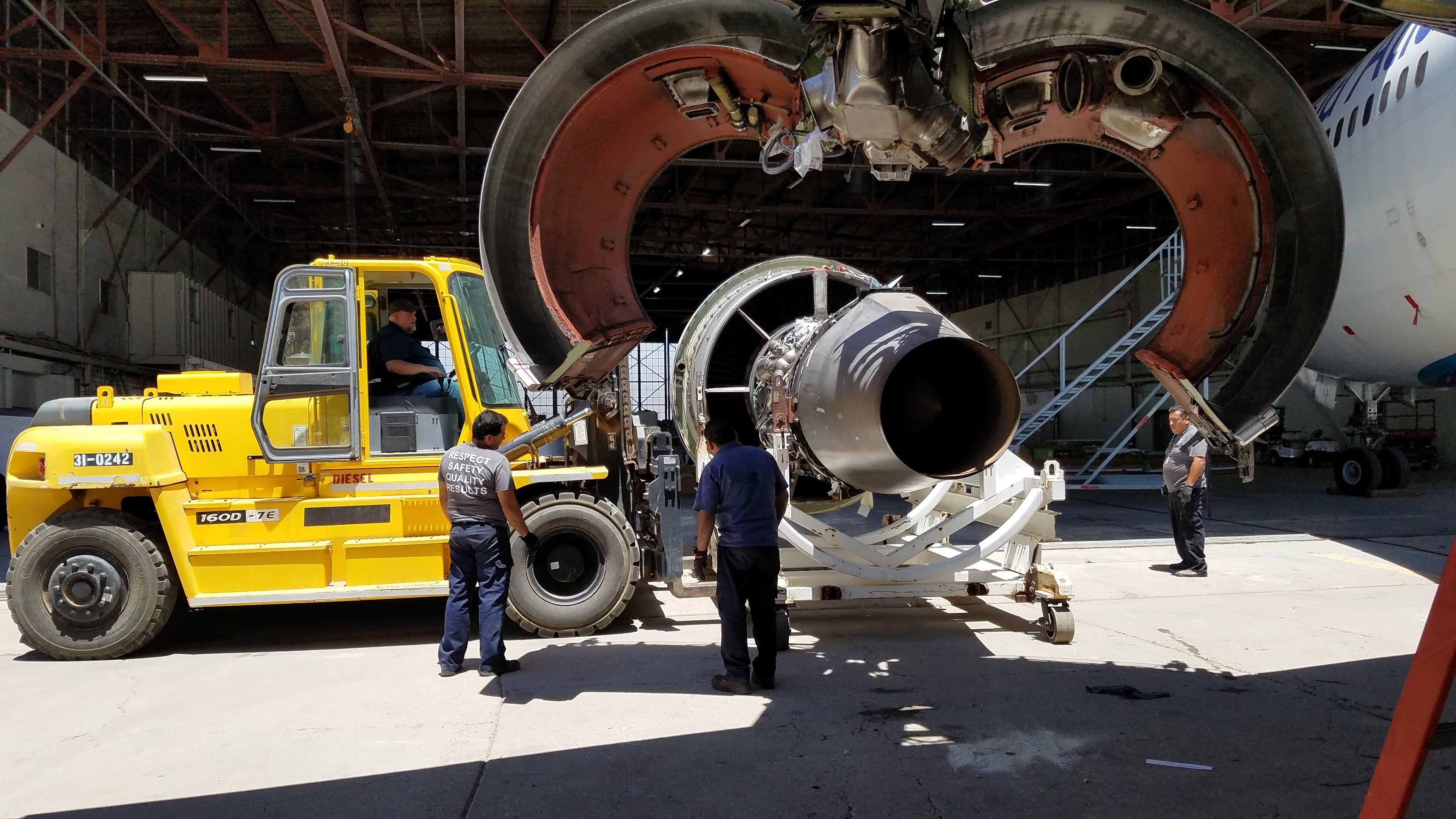
If the engines stay on the plane, "you may or may not preserve (them), which involves draining the normal oil and placing preservative oil inside the tanks," Querio explained. "You will totally secure the aircraft. You'll deactivate certain systems, cover all the openings, cover all windows, and cover the landing gear and tires to protect them from the elements."
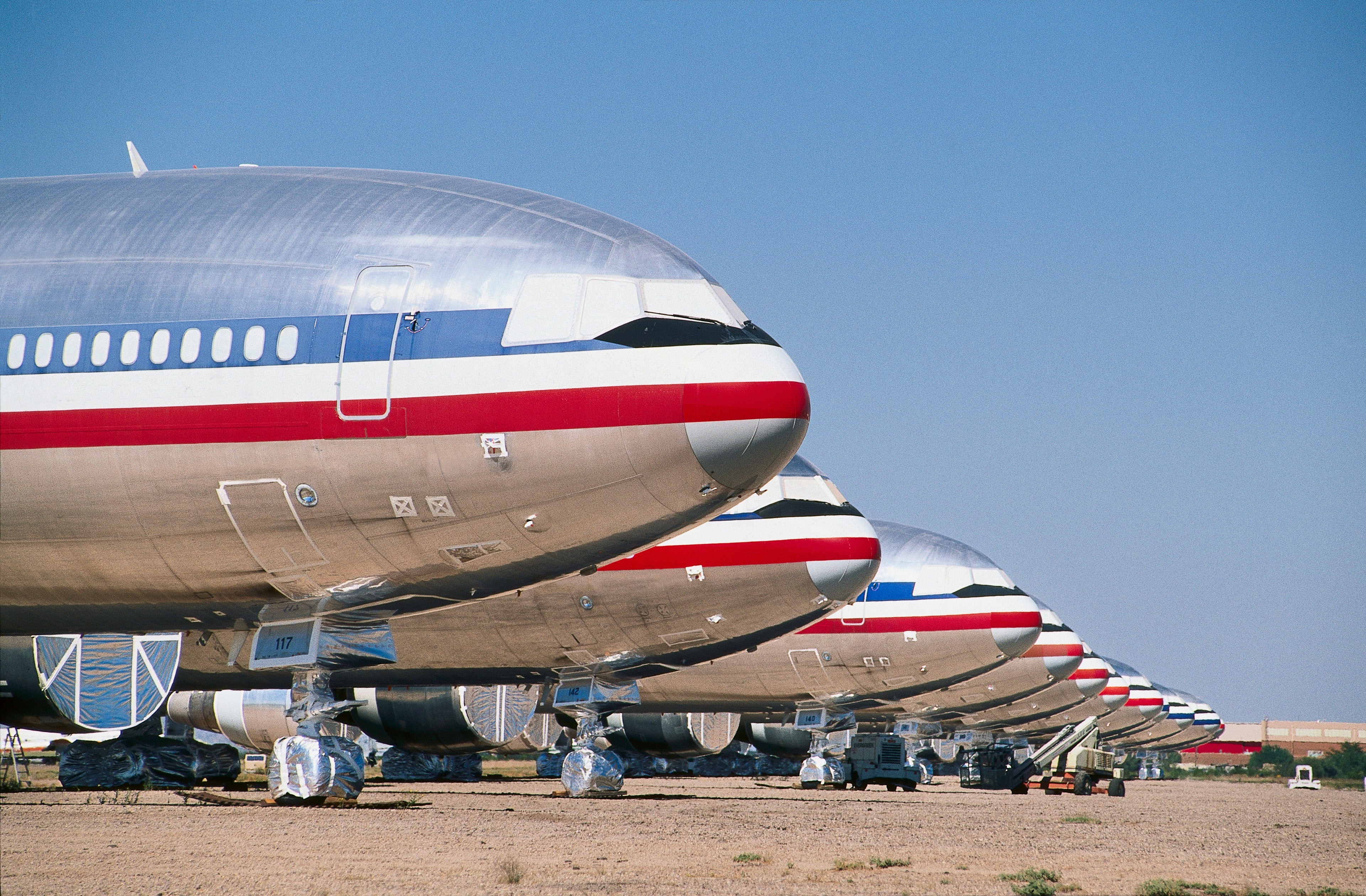
Those covers are made from special materials designed to repel the heat at places like Pinal. The low humidity of the American Southwest's high desert is what makes it attractive for aircraft storage, despite the heat: corrosion isn't the problem it would be in more humid climates. And with the wide-open spaces of the Southwest, there's usually room for lots of planes at these facilities. Right now, Ascent has between 150 and 200 aircraft, with "capacity for 400 and up to 500 if it's the right mix of aircraft," Querio said. In Europe, Tarmac Aerosave — a joint venture between Airbus, Safran and Suez — has room for more than 300 aircraft in Spain and France.
Depending on the owner's requirements, regular maintenance on a plane in storage could include rolling the plane so that the tires don't get flat-spotted, or opening the cabin doors to circulate the stale air.
"For storage, you have quite a lot to do in the beginning, and then you can keep the aircraft with very, very little maintenance during the [storage] time. You don't need to regularly power up the aircraft electrics, hydraulics and pneumatics," Maier said.
But while maintenance needs might be low when a plane is in storage, there's still a clock ticking, at least for Airbus planes.
"Currently we have a requirement, if an aircraft has been in storage for two years, you need to bring it back to operability and do a short non-revenue flight, and then you can put it back into storage for another two years," Maier said.
That process can be time-consuming and expensive, and instead, an aircraft owner may decide to recycle the plane.
"An aircraft needs to be properly disposed of in order to both retain the most potential in resale value of the parts and also for ecological reasons," Maier said. "There is a lot of worth in an aircraft, even in its second life."
But Maier explained it's important to show that parts taken from aircraft are airworthy, with a trackable history of authenticity.
"The most convenient form to do that is that they are installed on an airworthy aircraft. At the moment that you have an aircraft that is deregistered, then it's much more complicated to resell the part and install it on another aircraft."
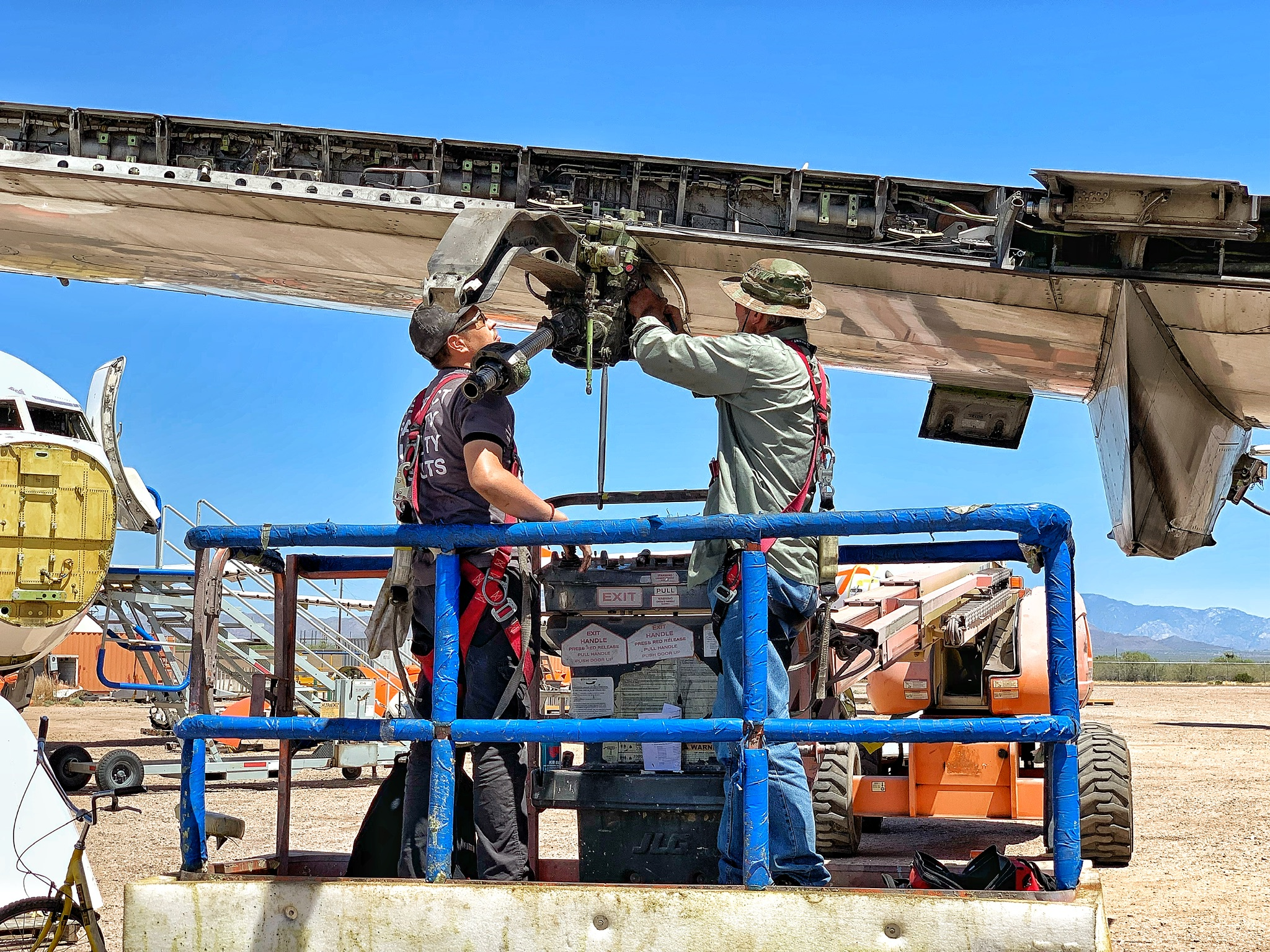
And although it might be jarring to watch a retired plane meet its end in the jaws of a metal-mashing monster, Querio is philosophical about it: "You know there's a bit of melancholy there. But you realize that like the human life, it's part of the life cycle and it's out with the old and in with the new. When you're crunching aircraft, that means that there's new technology, better and newer products and new innovations are out there in the industry."
TPG featured card

at Bilt's secure site
Terms & restrictions apply. See rates & fees.
| 1X | Choose to earn up to 1X points on rent and mortgage payments with no transaction fee |
| 2X | Earn 2X points + the option to earn 4% back in Bilt Cash on everyday purchases |
Pros
- Choice to earn up to 1 Bilt Point per dollar spent on rent and mortgage payments
- Elevated everyday earnings with both Bilt Points and the option to earn Bilt Cash
- $400 Bilt Travel Portal hotel credit per year (up to $200 biannually)
- $200 Bilt Cash annually
- Priority Pass membership
- No foreign transaction fees
Cons
- Moderate annual fee
- Designed primarily for members seeking a premium, all-in-one card
- Earn points on housing with no transaction fee
- Choose to earn 4% back in Bilt Cash on everyday spend. Use Bilt Cash to unlock point earnings on rent and mortgage payments with no transaction fee, up to 1X.
- 2X points on everyday spend
- $400 Bilt Travel Hotel credit. Applied twice a year, as $200 statement credits, for qualifying Bilt Travel Portal hotel bookings.
- $200 Bilt Cash (awarded annually). At the end of each calendar year, any Bilt Cash balance over $100 will expire.
- Welcome bonus (subject to approval): 50,000 Bilt Points + Gold Status after spending $4,000 on everyday purchases in the first 90 days + $300 of Bilt Cash.
- Priority Pass ($469/year value). See Guide to Benefits.
- Bilt Point redemptions include airlines, hotels, future rent and mortgage payments, Lyft rides, statement credits, student loan balances, a down payment on a home, and more.