Traveling to France? Here's what to know about booster and testing requirements


Though we took a brief departure last week to detail what's required of travelers to visit other countries outside of France, I'm back this week with story No. 12. It's dedicated entirely to providing logistical information to aid in traveling to France with as much assurance as possible.
By the way, I recently decided I had spent more than enough time writing about France from the confines of my home, without having been on the ground recently myself. I'm pleased to report that I'll rectify my multiyear absence and return to France, for both work and fun, later this spring.
At that time, I anticipate providing a firsthand perspective of what traveling to France actually looks like at the moment that will be helpful to share here.
Booster shots
Booster is required to be seen as 'fully vaccinated'
The No. 1 question I've been asked is whether a booster shot is required to be considered "fully vaccinated," which is necessary to enter France currently without having to also participate in predeparture COVID-19 testing.
Admittedly, the language around booster requirements has been a bit unclear, particularly as it relates to one exception for Johnson & Johnson vaccine recipients ages 12-18, which I previously detailed in-depth and address below as well.
When previous "vaccine pass" requirements were dropped earlier this month, no longer limiting access to public spaces to boosted travelers, the question around boosters shifted to become whether a booster was still necessary to visit the country. The answer to this question depends on how much time has elapsed since the final dose of your COVID-19 vaccine.

Timing of booster shot
In the eyes of the French government, American travelers age 12 and older must fulfill two vaccine-related requirements to be treated as fully vaccinated.
The first is that you must show proof of receipt of either two doses of the Pfizer, Moderna or AstraZeneca vaccine or one dose of the J&J vaccine.
Regardless of whether you received a single- or double-dose vaccine, if nine months or more have elapsed since your final dose, you must also show proof of a booster in order to maintain a full vaccination status.

However, there's an exception for younger travelers between 12 and 18 years old who were vaccinated with the J&J vaccine: These travelers do not need to be boosted in order to be seen as fully vaccinated.
Travelers in this age group vaccinated with Pfizer, Moderna or AstraZeneca must have proof of two shots to meet vaccination requirements.
"For travelers between 12 and 18, the definition of fully vaccinated is now two shots of an mRNA or one shot of J&J," according to a spokesperson for Atout France, the French tourism organization.
"Travelers who received the booster more than nine months after their second dose may still enter France, so long as one week has passed since they received the booster dose ," per the U.S. Embassy in France.

Testing protocols
Applicable entry protocols are based on age, too
Remember, proof of vaccination entry protocols only apply to travelers age 12 and older, meaning travelers ages 0-12 do not need to be fully vaccinated to visit France.
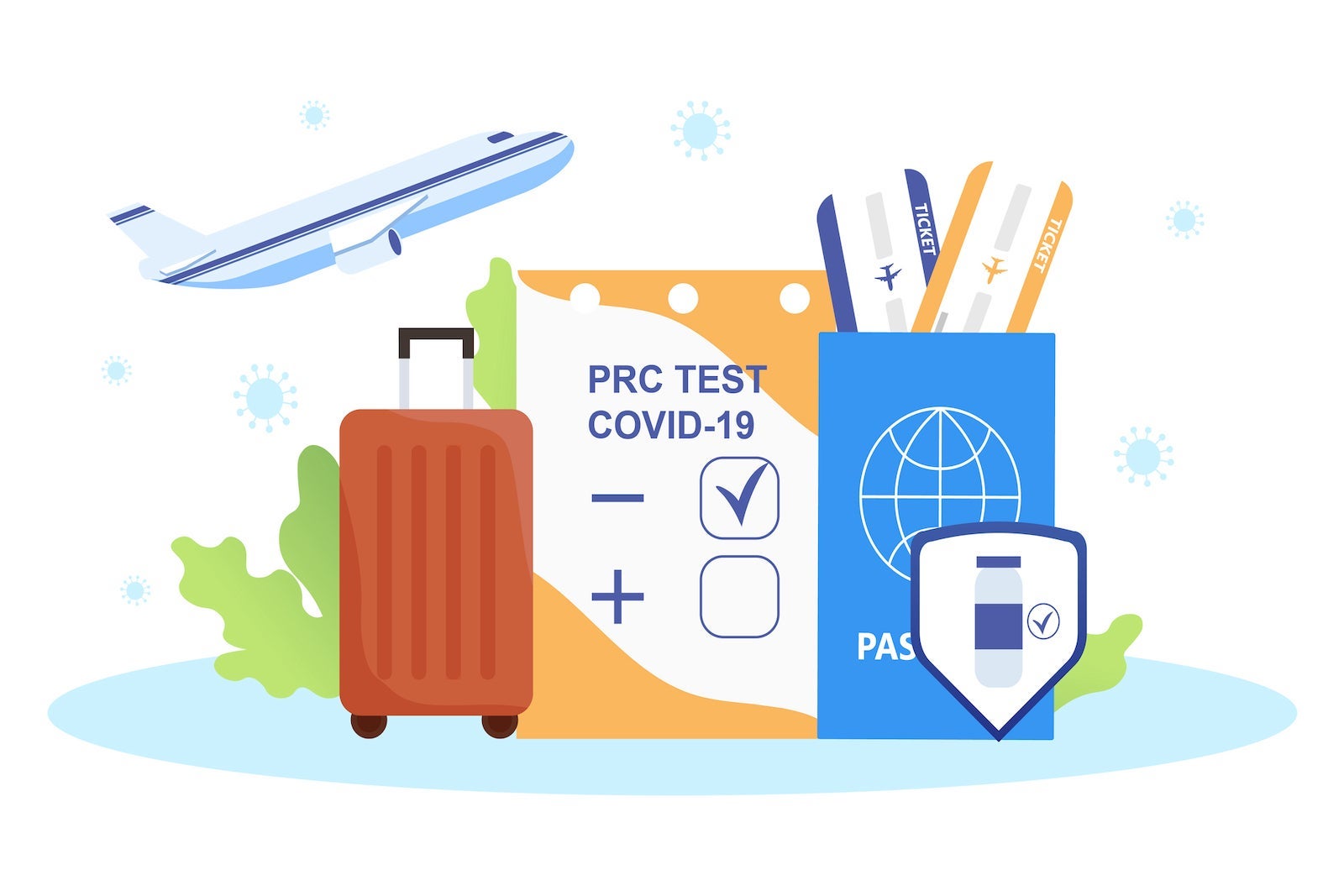
But all unvaccinated travelers, age 12 and older, must adhere to current testing rules, which ask travelers to show results of a negative PCR test taken within 72 hours or a rapid test administered within 48 hours of boarding their flight to France.
Airline officials will ask for your test results (if applicable) during the check-in process for your flight either online or at the airport.
1 testing exception
Travelers who recently recovered from COVID-19, specifically within 11 days to six months of entering France, may visit France without taking a predeparture test by showing proof of the original positive test result, as noted by the embassy in its guidance outlining entry and exit requirements for U.S. citizens.

Vaccine proof
CDC card is sufficient
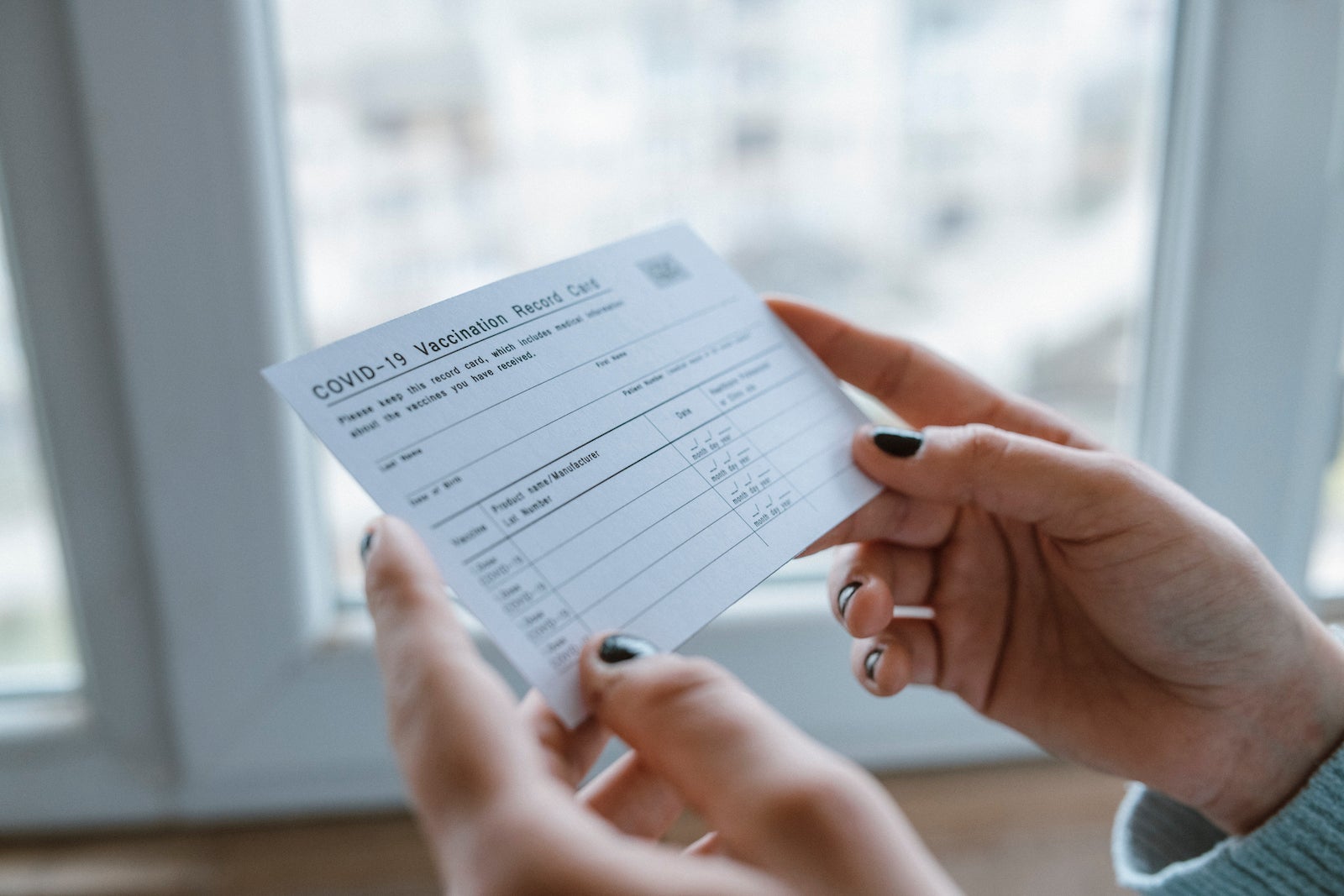
Any authority during the predeparture process of traveling to or through France requesting vaccination proof -- i.e., the airport or a train station -- should accept the vaccination record card issued by the U.S. Centers for Disease Control and Prevention as proof of being vaccinated in the United States. Other than identifying documents, such as a passport (which you will already have since France is a foreign country), you should not need any further information to certify your vaccination status.
"The CDC card is sufficient for entry," according to the embassy.
Have a question for next week? Email me at caroline.tanner@thepointsguy.com or tips@thepointsguy.com.
TPG featured card
at American Express's secure site
Terms & restrictions apply. See rates & fees.
| 4X | Earn 4X Membership Rewards® points per dollar spent on purchases at restaurants worldwide, on up to $50,000 in purchases per calendar year, then 1X points for the rest of the year. |
| 4X | Earn 4X Membership Rewards® points per dollar spent at US supermarkets, on up to $25,000 in purchases per calendar year, then 1X points for the rest of the year. |
| 5X | Earn 5X Membership Rewards® points on prepaid hotel stays booked through AmexTravel.com or the Amex Travel App™. |
| 3X | Earn 3X Membership Rewards® points on flights booked through AmexTravel.com, the Amex Travel App™, or purchased directly from airlines. |
| 2X | Earn 2X Membership Rewards® points on prepaid car rentals booked through AmexTravel.com or the Amex Travel App™ and cruises booked and paid through AmexTravel.com. |
| 1X | Earn 1X Membership Rewards® point per dollar spent on all other eligible purchases. |
Pros
- Valuable dining and food-related credits
- Flexible rewards with airline and hotel transfer partners
- Multiple travel and purchase protections
- No foreign transaction fees
- Access to Amex Offers for additional savings (enrollment required)
Cons
- Not as useful for those living outside the U.S.
- Some may have trouble using Uber and other dining credits
- You may be eligible for as high as 100,000 Membership Rewards® Points after you spend $8,000 in eligible purchases on your new Card in your first 6 months of Card Membership. Welcome offers vary and you may not be eligible for an offer. Apply to know if you’re approved and find out your exact welcome offer amount – all with no credit score impact. If you’re approved and choose to accept the Card, your score may be impacted.
- Earn 4X Membership Rewards® points per dollar spent on purchases at restaurants worldwide, on up to $50,000 in purchases per calendar year, then 1X points for the rest of the year.
- Earn 4X Membership Rewards® points per dollar spent at US supermarkets, on up to $25,000 in purchases per calendar year, then 1X points for the rest of the year.
- Earn 5X Membership Rewards® points on prepaid hotel stays booked through AmexTravel.com or the Amex Travel App™.
- Earn 3X Membership Rewards® points on flights booked through AmexTravel.com, the Amex Travel App™, or purchased directly from airlines.
- Earn 2X Membership Rewards® points on prepaid car rentals booked through AmexTravel.com or the Amex Travel App™ and cruises booked and paid through AmexTravel.com.
- Earn 1X Membership Rewards® point per dollar spent on all other eligible purchases.
- Pay It® lets you tap in the American Express® App to quickly pay for small purchase amounts throughout the month and still earn rewards the way you usually do. Plan It® gives you the option to split up big purchases into equal monthly payments with a fixed fee. You’ll know upfront exactly how much you’ll pay.
- $120 Dining Credit: Earn up to a total of $10 in statement credits monthly when you pay with the Gold Card at Grubhub (including Seamless), Buffalo Wild Wings, Five Guys, The Cheesecake Factory, and Wonder. This can be an annual savings of up to $120. Enrollment required.
- $100 Resy Credit: Get up to $100 in statement credits each calendar year at over 10,000 qualifying U.S. Resy restaurants after you pay for eligible purchases with the American Express® Gold Card. That’s up to $50 in statement credits semi-annually. Enrollment required.
- $84 Dunkin' Credit: Earn up to $7 in monthly statement credits after you pay with the American Express® Gold Card at U.S. Dunkin’ locations. Enrollment required.
- $120 Uber Cash on Gold: Enjoy up to $120 in Uber Cash annually with your Gold Card. Just add your Card to your Uber account and you'll get $10 in Uber Cash each month to use on orders and rides in the U.S. when you select an Amex Card for your transaction.
- Enjoy complimentary Hertz Five Star® Status benefits like skipping the counter at select locations, adding an additional driver at no additional cost*, and vehicle upgrades**. Benefit enrollment and Hertz Gold+ registration are required. *Additional drivers must meet standard rental qualifications and must be a spouse or domestic partner to qualify as complimentary. Other additional drivers subject to fees. **Benefits are subject to availability and vary by location. Additional Hertz program Terms and Conditions including age restrictions apply.
- Book two nights or more with The Hotel Collection through AmexTravel.com or the Amex Travel App™ and receive a $100* credit towards eligible charges at over 1,400 upscale hotels worldwide. *Eligible charges vary by property.
- Book your travel through the Amex Travel App™ with added peace of mind – backed by American Express® service and support. Only for American Express® Card Members.
- Whenever you need us, we're here. Our Member Services team will ensure you are taken care of. From lost Card replacement to statement questions, we are available to help 24/7.
- No Foreign Transaction Fees.
- Annual Fee is $325.
- Terms Apply.