Is flying private safer than flying commercial?

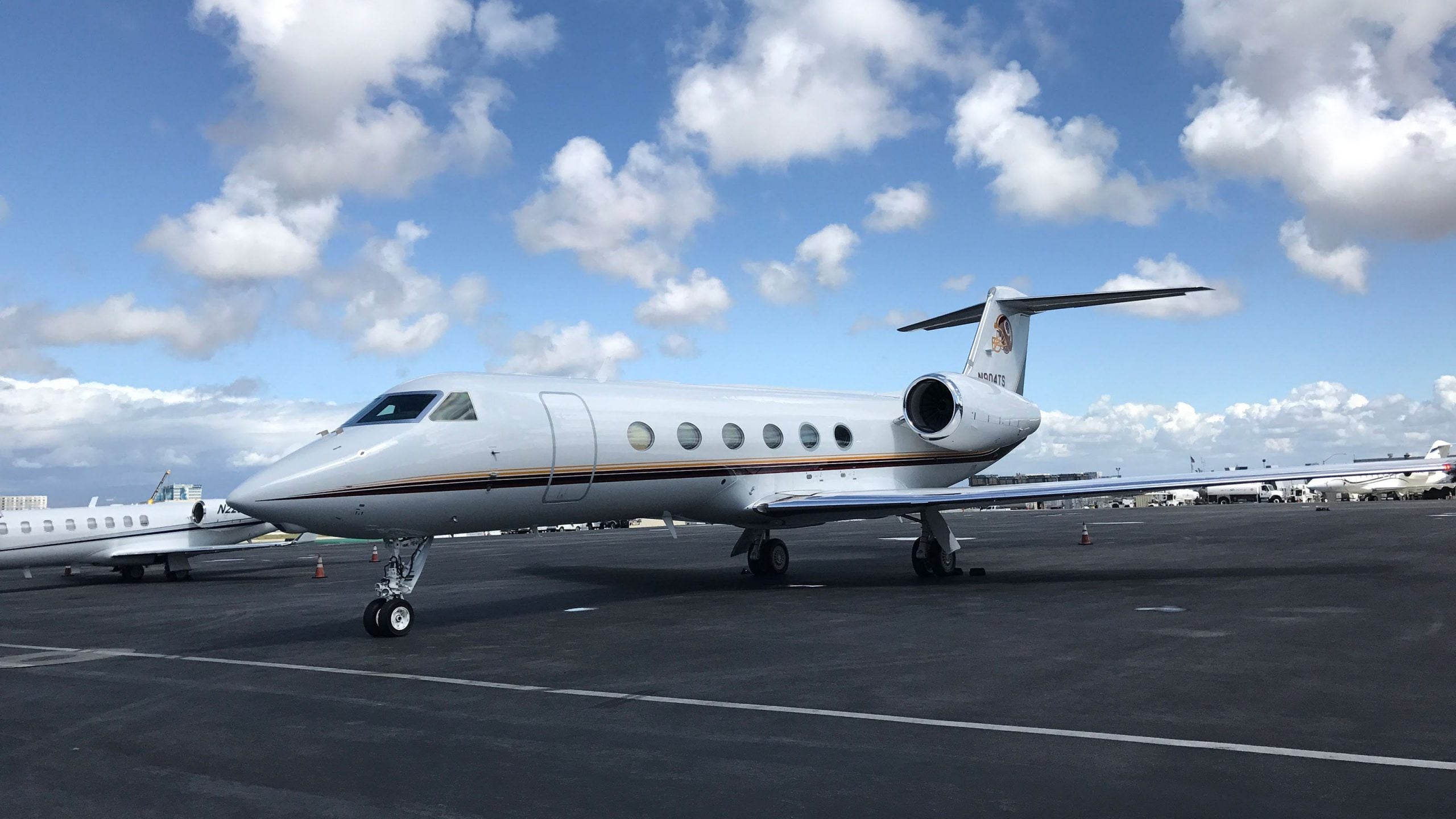
In 2019, the Duke of Sussex found himself under fire for regularly using private jets while simultaneously endorsing environmental causes. Prince Harry and wife Meghan Markle faced mounting criticism after reportedly taking four private jet flights in 11 days.
The Prince defended his air travel choices, explaining, "I spend 99% of my life travelling the world by commercial". However, analysis of Harry and Meghan's known flights from that point since their wedding in 2018 showed that six of the 10 return trips they took were by private jet. He later doubled down on his use of these aircraft, insisting he only does so "to ensure that my family are safe".
But is travelling by private jet safer than flying onboard a commercial airline aircraft?
As an industry, aviation today is incredibly safe. And while accidents have shown that vulnerabilities still exist, such as extraordinary malfunctions with Boeing's 737 MAX, air travel around the globe has never been safer. When comparing a private jet from London to Nice — a route previously flown by Harry and Meghan — with a British Airways Airbus A320 jet that operates the same route (albeit from a different London airport), the obvious and most significant difference that has the potential to affect the safety of the flight is the lack of passengers on the private jet — which is especially true as the world finds its way out of a pandemic. But, in a British Airways Club Europe (business class) cabin with a 2-2 seating configuration, and surrounded by their royal protection officers — is there a chance the couple could have had their safety compromised on board? It's extremely unlikely.
While the UK's Civil Aviation Authority (CAA) admits that "Disruptive behaviour in-flight or on the ground can affect your safety and the safety of fellow passengers", airlines routinely exercise their right to refuse to carry passengers that they consider to be a potential risk to the safety of the aircraft, its crew or its passengers. According to the CAA, there were 370 disruptive passenger reports in 2018, down from 417 the year before.
It's worth highlighting that The Queen regularly takes the train to Sandringham, and airlines such as British Airways and Virgin Atlantic were always considered safe enough for Harry's mother, Princess Diana. The future King and Queen, the Duke and Duchess Cambridge (William and Kate) flew with their children on a Flybe Embraer 145 commercial flight from Norfolk to Scotland, much to the amazement of other passengers in the cabin.
For private jet companies, such as NetJets, the world's largest private jet company, and a reportedly a 'favourite' of Harry and Meghan, their services are marketed on the very promise that customers will experience "total security, privacy and comfort" — reducing the risk of any unwanted public encounters.
In terms of the safety of a private jet when compared with the likes of an Airbus A320 — a workhorse of the commercial skies — statistics show a difference in safety record. "While the airline industry has improved their accident rate by almost 80% over the last 10, 12 years, the general aviation industry [including business jets] has been flat," Earl Weener, a member of the US' National Transportation Safety Board (NTSB), was quoted stating in 2017.
According to ICAO, the United Nations body for Aviation, out of 35 million commercial global flights in 2017, there were just five fatal accidents, a decrease from seven in 2016. The numbers show 2017 as being the safest year ever on record for aviation. By contrast, the 'general aviation' sector, which includes business jets, there were more than 210 fatal accidents, resulting in more than 345 deaths in the US alone according to the Federal Aviation Administration.

While there have been 188 fatalities in commercial air travel in a five-year period (2014-2018), there were 866 fatalities in other aviation categories on EU territory involving EU-registered aircraft. In 2018, 12 persons were killed in general aviation accidents involving EU-registered aircraft with a maximum takeoff weight above 2,250 kg, such as a Gulfstream private jet — an increase of around 70% compared to the previous year where seven fatalities were recorded. Since 2006, it is only the second time that more than 10 fatalities were registered from accidents on EU territory involving such large aircraft registered in the EU. In 2013, there were 11 fatalities registered in such accidents.

The accident rate for general aviation is improving — it's declined from 1.1 fatal accidents per 100,000 flight hours in 2010 to 0.84 in the year that followed. But statistically, and based on direct comparisons each year, it's theoretically still safer to fly commercial.
On the other hand, if an unforeseen emergency situation were to take place between London and Nice, would you be safer in a private jet? These aircraft have the ability to land at more airports than commercial aircraft given their smaller size, and can also change flight plans very quickly. In addition to this, private jets are often less exposed to bad weather or heavy turbulence as these jets often fly above the normal cruising altitude of a commercial airliner. In fact, some recent private jets from Gulfstream have the ability to fly up to 51,000 feet.
But with a harmonised aviation industry, modern technology across the board, including cockpit software, flight planning, air traffic control management, aircraft performance upgrades and more, the reality is that both private jets and commercial airliners are extremely safe.
The clear difference between flying commercial and flying private is less associated with safety, and instead on how flying private jets is worse for the planet than taking a scheduled passenger flight. While the amount of fuel burnt and therefore CO2 emitted is a lot lower than a commercial jet given the small size of a private jet, the personal carbon footprint of passengers is significantly higher.
TPG featured card

at Capital One's secure site
Terms & restrictions apply. See rates & fees.
| 5X miles | Earn 5X miles on hotels, vacation rentals and rental cars booked through Capital One Travel |
| 2X miles | Earn unlimited 2X miles on every purchase, every day |
Pros
- Stellar welcome offer of 75,000 miles after spending $4,000 on purchases in the first three months from account opening. Plus, a $250 Capital One Travel credit to use in your first cardholder year upon account opening.
- You'll earn 2 miles per dollar on every purchase, which means you won't have to worry about memorizing bonus categories
- Rewards are versatile and can be redeemed for a statement credit or transferred to Capital One’s transfer partners
Cons
- Highest bonus-earning categories only on travel booked via Capital One Travel
- LIMITED-TIME OFFER: Enjoy $250 to use on Capital One Travel in your first cardholder year, plus earn 75,000 bonus miles once you spend $4,000 on purchases within the first 3 months from account opening - that’s equal to $1,000 in travel
- Earn unlimited 2X miles on every purchase, every day
- Earn 5X miles on hotels, vacation rentals and rental cars booked through Capital One Travel
- Miles won't expire for the life of the account and there's no limit to how many you can earn
- Receive up to a $120 credit for Global Entry or TSA PreCheck®
- Use your miles to get reimbursed for any travel purchase—or redeem by booking a trip through Capital One Travel
- Enjoy a $50 experience credit and other premium benefits with every hotel and vacation rental booked from the Lifestyle Collection
- Transfer your miles to your choice of 15+ travel loyalty programs
- Top rated mobile app