Flying the flag: The rise, fall and future of flag-carrier airlines
For any aviation geek, the sight of aircraft tails lined up at Los Angeles International Airport’s Tom Bradley International Terminal is iconic. At any given moment you can see liveries from around the world including British Airways, Singapore Airlines, Emirates and Air France widebodies lined up together.
For countries around the world, big and small, having an airline of their own has served as a symbol of national pride and economic strength. That's why so-called “flag carriers” flourished during the early days of commercial aviation. Showing the flag around the world, on routes to big cities like New York or London, was a matter of prestige.
But flag carriers, once seen as global agents of influence, have lost their clout in recent decades, and some have ceased flying altogether. In the United States, there isn’t even a designated flag carrier.
WHAT IS A FLAG CARRIER?
In many ways, the definition of a flag carrier is what it appears. It’s an opportunity to show a nation’s flag by painting it on the aircraft. Early on, it also often meant that they were owned by the government. That was especially true in the post-World War II era, when European colonies became independent.
“One of the first things they wanted to do, to kind of show that they had made it, was to create their own airline,” said Dr. Dawna Rhoades, a professor of strategy at Embry-Riddle Aeronautical University in Daytona Beach, Florida. Much of this growth was in Asia and Africa, where airlines from newly established nations were eager to establish international routes.
“It used to be that if you were the flag carrier, you were designated and you got preference. And part of it was ownership,” said Rhoades.
Governments would also foot the bill, so those flag carriers did not necessarily need to make money on those prestige routes, where they sometimes flew Boeing 747s. It was much more airplane than they needed, but the goal was flying the flag, not necessarily turning a profit.

A relevant exception was, and is, the cradle of aviation. The United States has never formally designated a specific flag carrier. It had one that functioned as a flag carrier in practical terms, although it never was one — and that's Pan American.
“Back in those days, if you were in Europe and ran into trouble, you went either to the U.S. embassy or the Pan Am ticket office. I mean, they were that dominant,” said Mike Boyd, an industry veteran who provides consulting, forecasting and research to airlines.

The de facto U.S. flag carrier filed for bankruptcy in 1991, and no one's filled the role since. It is unlikely that anyone will: the big three U.S. legacy airlines – American, Delta and United — are vying for market supremacy, but certainly not for a title that doesn't bring any perks or profits with it.
In other nations, once-mighty flag carriers have gone out of business: Belgian Sabena, Brazilian Varig and Switzerland's Swiss Air have all disappeared, leaving hurt national pride in their wake.
“When Swiss Air went into bankruptcy and quit flying, there were press reports in the Swiss newspapers, they were complaining that their soccer team or football team had to fly to a soccer match in Russia on Aeroflot,” said Rhoades.
FLAG CARRIERS TODAY—AND TOMORROW
Government ownership of airlines is largely a thing of the past.
“That was before airlines really grew. That was back when people still wore suits and ties when they flew,” said Boyd.
Major flag carriers owned by governments in Europe and North America are a rarity these days. The biggest among them is Aeroflot, which used to be the flag carrier of the Soviet Union, and is still 51% owned by the Russian government but now has private investors in its ownership. Other flag carriers owned by European governments include LOT Polish and Air Serbia.
Other iconic names are owned by private investors now. Air Canada was privatized in 1989 and is traded on the Toronto Stock Exchange. Icelandair is publicly traded. Air France and KLM are not only no longer owned by the French or Dutch governments, but have merged into one company. So have British Airways and Spain's Iberia, both subisidiaries of IAG and former state enterprises.
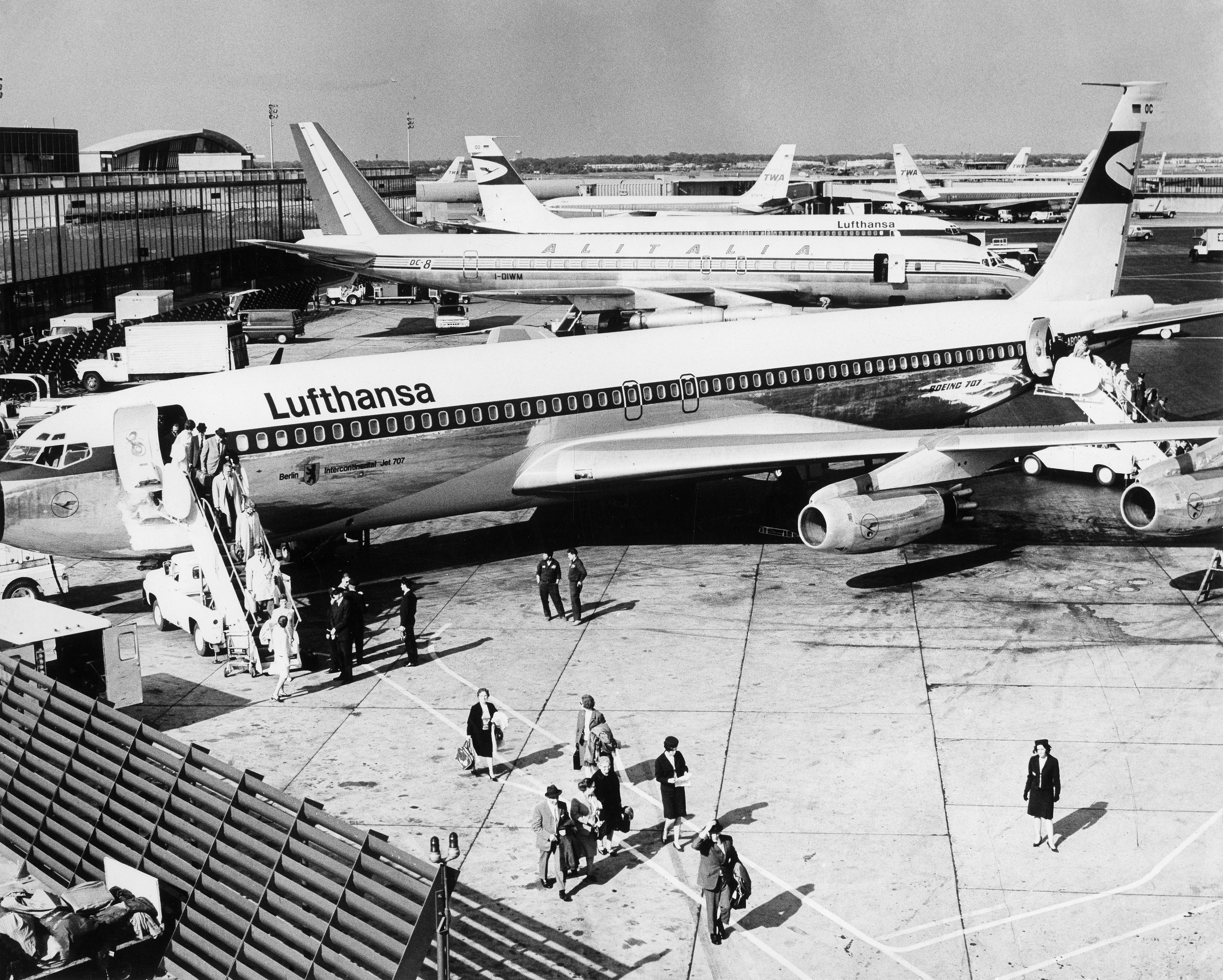
Ownership remains a big issue in contemporary aviation.
“Many countries specifically have (...) rules that their carriers must be majority-owned" by domestic investors, said Rhoades. Aviation is often seen as a strategic asset, which is why foreign subjects cannot take majority control of an airline. Some countries "have restrictions on how much foreigners and foreign companies, foreign airlines can own,” Rhoades added. “British Airways couldn’t come over here and just buy American Airlines.”
At times, government investment rather than ownership has been a source of cross-border conflict, including a recent dispute between the "big three" Middle East airlines and U.S.-based airlines, with the Americans accusing the Gulf carriers of using public money to distort competition.
At other times, private competitors say that the formerly state-owned player still enjoys advantages the newer entrants don't have: “Virgin Atlantic and Richard Branson argue to this day that the British government still favors British Airways over them,” said Rhoades.
There are big names in commercial aviation still owned by the state. Emirates, Ethiopian Airlines, Singapore Airlines and South African Airways are all government property, and they can all be considered flag carriers, being both the biggest airline in their nation and bearer of the national standard on their tails. The Chinese government owns controlling stakes in the major airlines in mainland China, including the biggest airline in Asia, China Southern.
But in an era of global economic uncertainty, amid fears of a slowdown, being backed by the state is no guarantee of survival, or of avoding painful downsizing.
“When they can’t make any money," said Boyd, "they’re the first thing to get cut.”
TPG featured card
Rewards
| 4X | Earn 4X Membership Rewards® points per dollar spent on purchases at restaurants worldwide, on up to $50,000 in purchases per calendar year, then 1X points for the rest of the year. |
| 4X | Earn 4X Membership Rewards® points per dollar spent at US supermarkets, on up to $25,000 in purchases per calendar year, then 1X points for the rest of the year. |
| 3X | Earn 3X Membership Rewards® points per dollar spent on flights booked directly with airlines or on AmexTravel.com. |
| 2X | Earn 2X Membership Rewards® points per dollar spent on prepaid hotels and other eligible purchases booked on AmexTravel.com. |
| 1X | Earn 1X Membership Rewards® point per dollar spent on all other eligible purchases. |
Intro offer
Annual Fee
Recommended Credit
Why We Chose It
There’s a lot to love about the Amex Gold. It’s a fan favorite thanks to its fantastic bonus-earning rates at restaurants worldwide and at U.S. supermarkets. If you’re hitting the skies soon, you’ll also earn bonus Membership Rewards points on travel. Paired with up to $120 in Uber Cash annually (for U.S. Uber rides or Uber Eats orders, card must be added to Uber app and you can redeem with any Amex card), up to $120 in annual dining statement credits to be used with eligible partners, an up to $84 Dunkin’ credit each year at U.S. Dunkin Donuts and an up to $100 Resy credit annually, there’s no reason that foodies shouldn’t add the Amex Gold to their wallet. These benefits alone are worth more than $400, which offsets the $325 annual fee on the Amex Gold card. Enrollment is required for select benefits. (Partner offer)Pros
- 4 points per dollar spent on dining at restaurants worldwide and U.S. supermarkets (on the first $50,000 in purchases per calendar year; then 1 point per dollar spent thereafter and $25,000 in purchases per calendar year; then 1 point per dollar spent thereafter, respectively)
- 3 points per dollar spent on flights booked directly with the airline or with amextravel.com
- Packed with credits foodies will enjoy
- Solid welcome bonus
Cons
- Not as useful for those living outside the U.S.
- Some may have trouble using Uber and other dining credits
- You may be eligible for as high as 100,000 Membership Rewards® Points after you spend $6,000 in eligible purchases on your new Card in your first 6 months of Card Membership. Welcome offers vary and you may not be eligible for an offer. Apply to know if you’re approved and find out your exact welcome offer amount – all with no credit score impact. If you’re approved and choose to accept the Card, your score may be impacted.
- Earn 4X Membership Rewards® points per dollar spent on purchases at restaurants worldwide, on up to $50,000 in purchases per calendar year, then 1X points for the rest of the year.
- Earn 4X Membership Rewards® points per dollar spent at US supermarkets, on up to $25,000 in purchases per calendar year, then 1X points for the rest of the year.
- Earn 3X Membership Rewards® points per dollar spent on flights booked directly with airlines or on AmexTravel.com.
- Earn 2X Membership Rewards® points per dollar spent on prepaid hotels and other eligible purchases booked on AmexTravel.com.
- Earn 1X Membership Rewards® point per dollar spent on all other eligible purchases.
- $120 Uber Cash on Gold: Add your Gold Card to your Uber account and get $10 in Uber Cash each month to use on orders and rides in the U.S. when you select an American Express Card for your transaction. That’s up to $120 Uber Cash annually. Plus, after using your Uber Cash, use your Card to earn 4X Membership Rewards® points for Uber Eats purchases made with restaurants or U.S. supermarkets. Point caps and terms apply.
- $84 Dunkin' Credit: With the $84 Dunkin' Credit, you can earn up to $7 in monthly statement credits after you enroll and pay with the American Express® Gold Card at U.S. Dunkin' locations. Enrollment is required to receive this benefit.
- $100 Resy Credit: Get up to $100 in statement credits each calendar year after you pay with the American Express® Gold Card to dine at U.S. Resy restaurants or make other eligible Resy purchases. That's up to $50 in statement credits semi-annually. Enrollment required.
- $120 Dining Credit: Satisfy your cravings, sweet or savory, with the $120 Dining Credit. Earn up to $10 in statement credits monthly when you pay with the American Express® Gold Card at Grubhub, The Cheesecake Factory, Goldbelly, Wine.com, and Five Guys. Enrollment required.
- Explore over 1,000 upscale hotels worldwide with The Hotel Collection and receive a $100 credit towards eligible charges* with every booking of two nights or more through AmexTravel.com. *Eligible charges vary by property.
- No Foreign Transaction Fees.
- Annual Fee is $325.
- Terms Apply.
Rewards Rate
| 4X | Earn 4X Membership Rewards® points per dollar spent on purchases at restaurants worldwide, on up to $50,000 in purchases per calendar year, then 1X points for the rest of the year. |
| 4X | Earn 4X Membership Rewards® points per dollar spent at US supermarkets, on up to $25,000 in purchases per calendar year, then 1X points for the rest of the year. |
| 3X | Earn 3X Membership Rewards® points per dollar spent on flights booked directly with airlines or on AmexTravel.com. |
| 2X | Earn 2X Membership Rewards® points per dollar spent on prepaid hotels and other eligible purchases booked on AmexTravel.com. |
| 1X | Earn 1X Membership Rewards® point per dollar spent on all other eligible purchases. |
Intro Offer
You may be eligible for as high as 100,000 Membership Rewards® Points after spending $6,000 in eligible purchases on your new Card in your first 6 months of Membership. Welcome offers vary and you may not be eligible for an offer.As High As 100,000 points. Find Out Your Offer.Annual Fee
$325Recommended Credit
Credit ranges are a variation of FICO® Score 8, one of many types of credit scores lenders may use when considering your credit card application.Excellent to Good
Why We Chose It
There’s a lot to love about the Amex Gold. It’s a fan favorite thanks to its fantastic bonus-earning rates at restaurants worldwide and at U.S. supermarkets. If you’re hitting the skies soon, you’ll also earn bonus Membership Rewards points on travel. Paired with up to $120 in Uber Cash annually (for U.S. Uber rides or Uber Eats orders, card must be added to Uber app and you can redeem with any Amex card), up to $120 in annual dining statement credits to be used with eligible partners, an up to $84 Dunkin’ credit each year at U.S. Dunkin Donuts and an up to $100 Resy credit annually, there’s no reason that foodies shouldn’t add the Amex Gold to their wallet. These benefits alone are worth more than $400, which offsets the $325 annual fee on the Amex Gold card. Enrollment is required for select benefits. (Partner offer)Pros
- 4 points per dollar spent on dining at restaurants worldwide and U.S. supermarkets (on the first $50,000 in purchases per calendar year; then 1 point per dollar spent thereafter and $25,000 in purchases per calendar year; then 1 point per dollar spent thereafter, respectively)
- 3 points per dollar spent on flights booked directly with the airline or with amextravel.com
- Packed with credits foodies will enjoy
- Solid welcome bonus
Cons
- Not as useful for those living outside the U.S.
- Some may have trouble using Uber and other dining credits
- You may be eligible for as high as 100,000 Membership Rewards® Points after you spend $6,000 in eligible purchases on your new Card in your first 6 months of Card Membership. Welcome offers vary and you may not be eligible for an offer. Apply to know if you’re approved and find out your exact welcome offer amount – all with no credit score impact. If you’re approved and choose to accept the Card, your score may be impacted.
- Earn 4X Membership Rewards® points per dollar spent on purchases at restaurants worldwide, on up to $50,000 in purchases per calendar year, then 1X points for the rest of the year.
- Earn 4X Membership Rewards® points per dollar spent at US supermarkets, on up to $25,000 in purchases per calendar year, then 1X points for the rest of the year.
- Earn 3X Membership Rewards® points per dollar spent on flights booked directly with airlines or on AmexTravel.com.
- Earn 2X Membership Rewards® points per dollar spent on prepaid hotels and other eligible purchases booked on AmexTravel.com.
- Earn 1X Membership Rewards® point per dollar spent on all other eligible purchases.
- $120 Uber Cash on Gold: Add your Gold Card to your Uber account and get $10 in Uber Cash each month to use on orders and rides in the U.S. when you select an American Express Card for your transaction. That’s up to $120 Uber Cash annually. Plus, after using your Uber Cash, use your Card to earn 4X Membership Rewards® points for Uber Eats purchases made with restaurants or U.S. supermarkets. Point caps and terms apply.
- $84 Dunkin' Credit: With the $84 Dunkin' Credit, you can earn up to $7 in monthly statement credits after you enroll and pay with the American Express® Gold Card at U.S. Dunkin' locations. Enrollment is required to receive this benefit.
- $100 Resy Credit: Get up to $100 in statement credits each calendar year after you pay with the American Express® Gold Card to dine at U.S. Resy restaurants or make other eligible Resy purchases. That's up to $50 in statement credits semi-annually. Enrollment required.
- $120 Dining Credit: Satisfy your cravings, sweet or savory, with the $120 Dining Credit. Earn up to $10 in statement credits monthly when you pay with the American Express® Gold Card at Grubhub, The Cheesecake Factory, Goldbelly, Wine.com, and Five Guys. Enrollment required.
- Explore over 1,000 upscale hotels worldwide with The Hotel Collection and receive a $100 credit towards eligible charges* with every booking of two nights or more through AmexTravel.com. *Eligible charges vary by property.
- No Foreign Transaction Fees.
- Annual Fee is $325.
- Terms Apply.