FAA says more planes cleared from 5G concerns, but some disruptions reported

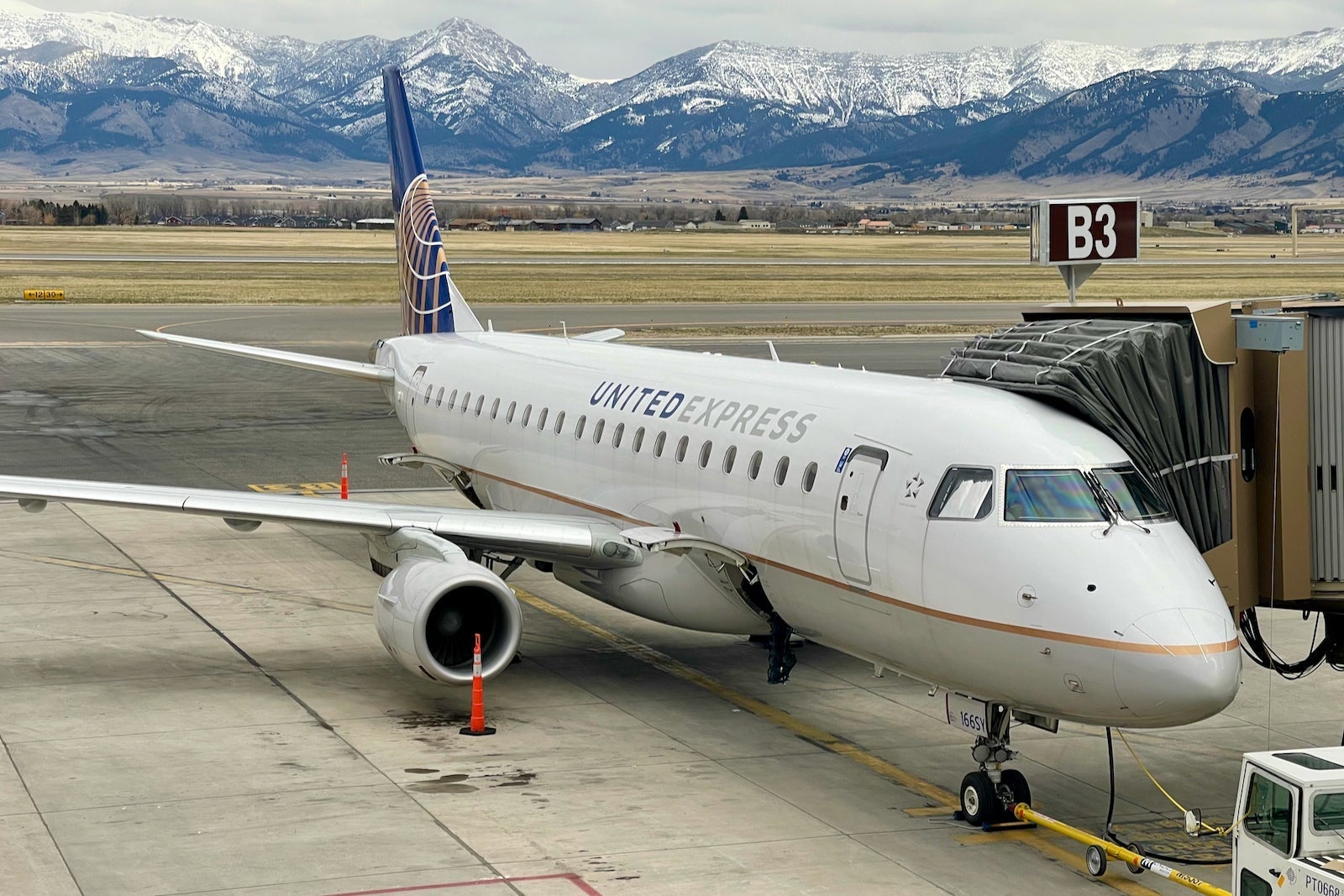
The Federal Aviation Administration on Thursday said it had cleared approximately 78% of the U.S. commercial fleet for operations at airports impacted by 5G C-band, as some regional flights near San Francisco saw 5G-related disruptions.
Thursday's update saw the FAA add some jets popular with regional airlines to its list of cleared aircraft: "some" Embraer 170/190 models, one of the most popular mid-sized jets in the U.S. With that, there are 13 models of radio altimeters — the devices at the center of the 5G issue — that are cleared for use at airports that have 5G C-band towers installed nearby.
Notably, the list leaves off two other popular regional jets: the Canadair Regional Jet and the Embraer Regional Jet. The Airbus A220, a popular member of the Delta Air Lines and JetBlue fleets, is also left out for the time being.
In a statement, the agency said that it continues to make progress, though some radio altimeters might not be able to be cleared.
"The FAA is working diligently to determine which remaining altimeters are reliable and accurate where 5G is deployed in the United States," the FAA said. "We anticipate some altimeters will be too susceptible to 5G interference."
A radio (or radar) altimeter is a type of instrument that is used to precisely measure an aircraft's height above the ground. This type of instrument is essential during low-visibility conditions because the data from it is essential for pilots to be able to conduct high-precision instrument approaches and even automatic landings, allowing operations to continue in little to no visibility. A 2020 study found that 5G C-band, which operates on an adjacent set of the frequency spectrum, can interfere with this instrument. In addition, other flight deck instruments and safety systems that rely on radio altimeters could be also be affected.

More: Airlines stave off another 5G impasse with a late, temporary and limited reprieve
The FAA's move came hours after a number of SkyWest flights, including some Embraer 175s, experienced delays and diversions near San Francisco (SFO) due to low-visibility conditions. Flight tracking website Flightradar24.com showed multiple SkyWest flights in holding patterns to the north and south of the airport as other flights were landing normally. One of the flights, a United Express flight from Boise (BOI), diverted to Reno (RNO).
In a statement, a SkyWest spokesperson confirmed the operational disruptions.
Weather conditions at some airports led to a small number of flight cancels and diversions this morning as a result of 5G implementation. We will process changes as soon as we receive the FAA's mitigations for our E175 aircraft in low visibility conditions. We are hopeful the FAA will provide additional mitigation for the rest of our fleet soon. The potential for ongoing operational impact remains until full mitigations can be put into place for all commercial aircraft. As always, we will not compromise safety.
For other airlines, Thursday was business as usual. A spokesperson for Southwest Airlines told TPG that the airline was not experiencing any disruptions or cancelations due to 5G. Southwest operates a fleet made up only of Boeing 737s, a model that's mostly avoided the altimeter concerns.
On Tuesday, AT&T and Verizon, which provide 5G service in the C-band spectrum, voluntarily agreed to keep 5G C-band towers near certain airports turned off. Airlines have said that this agreement made a big difference.
"There are modest impacts still from the rollout of 5G," United Airlines CEO Scott Kirby said during his airline's earnings call on Thursday. "They're not nearly as significant as they were scheduled to be without the agreement that was reached."
Additional reporting by David Slotnick.
TPG featured card
at American Express's secure site
Terms & restrictions apply. See rates & fees.
| 4X | Earn 4X Membership Rewards® points per dollar spent on purchases at restaurants worldwide, on up to $50,000 in purchases per calendar year, then 1X points for the rest of the year. |
| 4X | Earn 4X Membership Rewards® points per dollar spent at US supermarkets, on up to $25,000 in purchases per calendar year, then 1X points for the rest of the year. |
| 5X | Earn 5X Membership Rewards® points on prepaid hotel stays booked through AmexTravel.com or the Amex Travel App™. |
| 3X | Earn 3X Membership Rewards® points on flights booked through AmexTravel.com, the Amex Travel App™, or purchased directly from airlines. |
| 2X | Earn 2X Membership Rewards® points on prepaid car rentals booked through AmexTravel.com or the Amex Travel App™ and cruises booked and paid through AmexTravel.com. |
| 1X | Earn 1X Membership Rewards® point per dollar spent on all other eligible purchases. |
Pros
- Valuable dining and food-related credits
- Flexible rewards with airline and hotel transfer partners
- Multiple travel and purchase protections
- No foreign transaction fees
- Access to Amex Offers for additional savings (enrollment required)
Cons
- Not as useful for those living outside the U.S.
- Some may have trouble using Uber and other dining credits
- You may be eligible for as high as 100,000 Membership Rewards® Points after you spend $8,000 in eligible purchases on your new Card in your first 6 months of Card Membership. Welcome offers vary and you may not be eligible for an offer. Apply to know if you’re approved and find out your exact welcome offer amount – all with no credit score impact. If you’re approved and choose to accept the Card, your score may be impacted.
- Earn 4X Membership Rewards® points per dollar spent on purchases at restaurants worldwide, on up to $50,000 in purchases per calendar year, then 1X points for the rest of the year.
- Earn 4X Membership Rewards® points per dollar spent at US supermarkets, on up to $25,000 in purchases per calendar year, then 1X points for the rest of the year.
- Earn 5X Membership Rewards® points on prepaid hotel stays booked through AmexTravel.com or the Amex Travel App™.
- Earn 3X Membership Rewards® points on flights booked through AmexTravel.com, the Amex Travel App™, or purchased directly from airlines.
- Earn 2X Membership Rewards® points on prepaid car rentals booked through AmexTravel.com or the Amex Travel App™ and cruises booked and paid through AmexTravel.com.
- Earn 1X Membership Rewards® point per dollar spent on all other eligible purchases.
- Pay It® lets you tap in the American Express® App to quickly pay for small purchase amounts throughout the month and still earn rewards the way you usually do. Plan It® gives you the option to split up big purchases into equal monthly payments with a fixed fee. You’ll know upfront exactly how much you’ll pay.
- $120 Dining Credit: Earn up to a total of $10 in statement credits monthly when you pay with the Gold Card at Grubhub (including Seamless), Buffalo Wild Wings, Five Guys, The Cheesecake Factory, and Wonder. This can be an annual savings of up to $120. Enrollment required.
- $100 Resy Credit: Get up to $100 in statement credits each calendar year at over 10,000 qualifying U.S. Resy restaurants after you pay for eligible purchases with the American Express® Gold Card. That’s up to $50 in statement credits semi-annually. Enrollment required.
- $84 Dunkin' Credit: Earn up to $7 in monthly statement credits after you pay with the American Express® Gold Card at U.S. Dunkin’ locations. Enrollment required.
- $120 Uber Cash on Gold: Enjoy up to $120 in Uber Cash annually with your Gold Card. Just add your Card to your Uber account and you'll get $10 in Uber Cash each month to use on orders and rides in the U.S. when you select an Amex Card for your transaction.
- Enjoy complimentary Hertz Five Star® Status benefits like skipping the counter at select locations, adding an additional driver at no additional cost*, and vehicle upgrades**. Benefit enrollment and Hertz Gold+ registration are required. *Additional drivers must meet standard rental qualifications and must be a spouse or domestic partner to qualify as complimentary. Other additional drivers subject to fees. **Benefits are subject to availability and vary by location. Additional Hertz program Terms and Conditions including age restrictions apply.
- Book two nights or more with The Hotel Collection through AmexTravel.com or the Amex Travel App™ and receive a $100* credit towards eligible charges at over 1,400 upscale hotels worldwide. *Eligible charges vary by property.
- Book your travel through the Amex Travel App™ with added peace of mind – backed by American Express® service and support. Only for American Express® Card Members.
- Whenever you need us, we're here. Our Member Services team will ensure you are taken care of. From lost Card replacement to statement questions, we are available to help 24/7.
- No Foreign Transaction Fees.
- Annual Fee is $325.
- Terms Apply.