The 4 Best Exercises to Combat Jet Lag
I've heard my fair share of theories describing the causes of jet lag, but none explain it fully. Sometimes it's worst going east, other times it's worst going west. Regardless of the direction, I've come up with a short routine I do whenever I get to my hotel room after a long flight.
The primary theory behind this routine and these particular exercises is to calm the nervous system by using a few simple yoga postures. The main idea is that "grounding" your energy — think, grounded electrical wiring — can have a beneficial and catalytic effect on all your systems. Below, I've also included a brief meditation to enhance the grounding effect and help calm the mind. Here are four easy exercises you can do to help combat jet lag after a long flight.
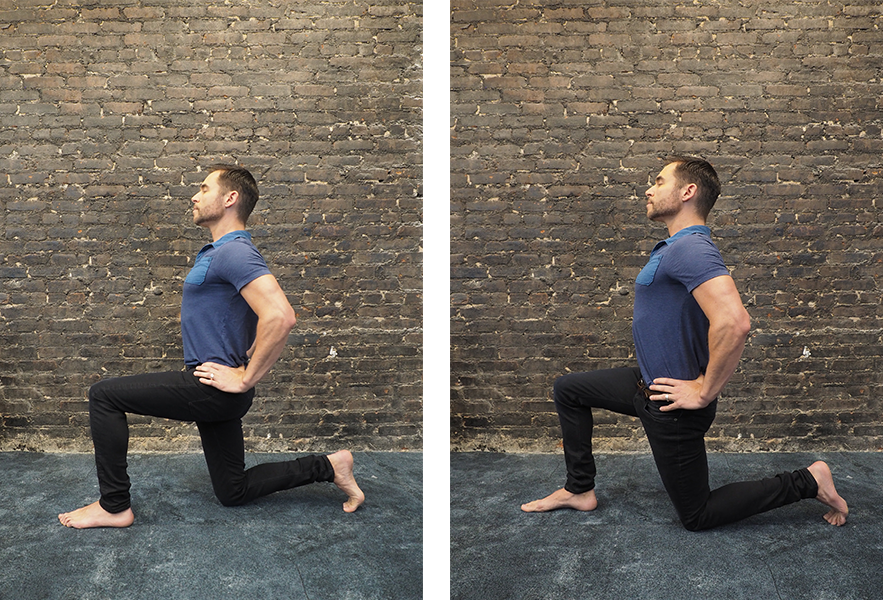
1. Square Lunges to Anchor the Pelvis
The hips, or pelvis, is essentially the foundation for the spine and the nervous system. Whenever we are tense, anxious or generally disturbed, like after a long flight, the general energy of the pelvis is pulled up and stays tight. Imagine how your shoulders tense up toward your ears when you're frightened — well, your pelvis does the same thing. Therefore, this exercise can anchor your hips back down toward the floor, calming your hip flexors, lower back and spinal muscles.
- Find a padded surface so it's comfortable to kneel on the floor (note: a folded towel will work)
- Step one foot forward into a lunge with the back knee on the ground
- Gently lunge forward toward the front foot, stretching the back your thigh muscle
- Back out of the forward lunge until your hips are directly over your back knee (both knees will be 90 degrees)
- Stick your butt out so there's an inward/upward curve in your lower back
- Place your hands on your waistline (at the top of the pelvis) and anchor your pelvis down toward the floor
- Use your abdominal muscles and lower back muscles to lift your torso up (imagine that the top of your head is pushing up against the ceiling)
- Hold this pose for three to five deep breaths
- Switch legs to repeat the move on the other side
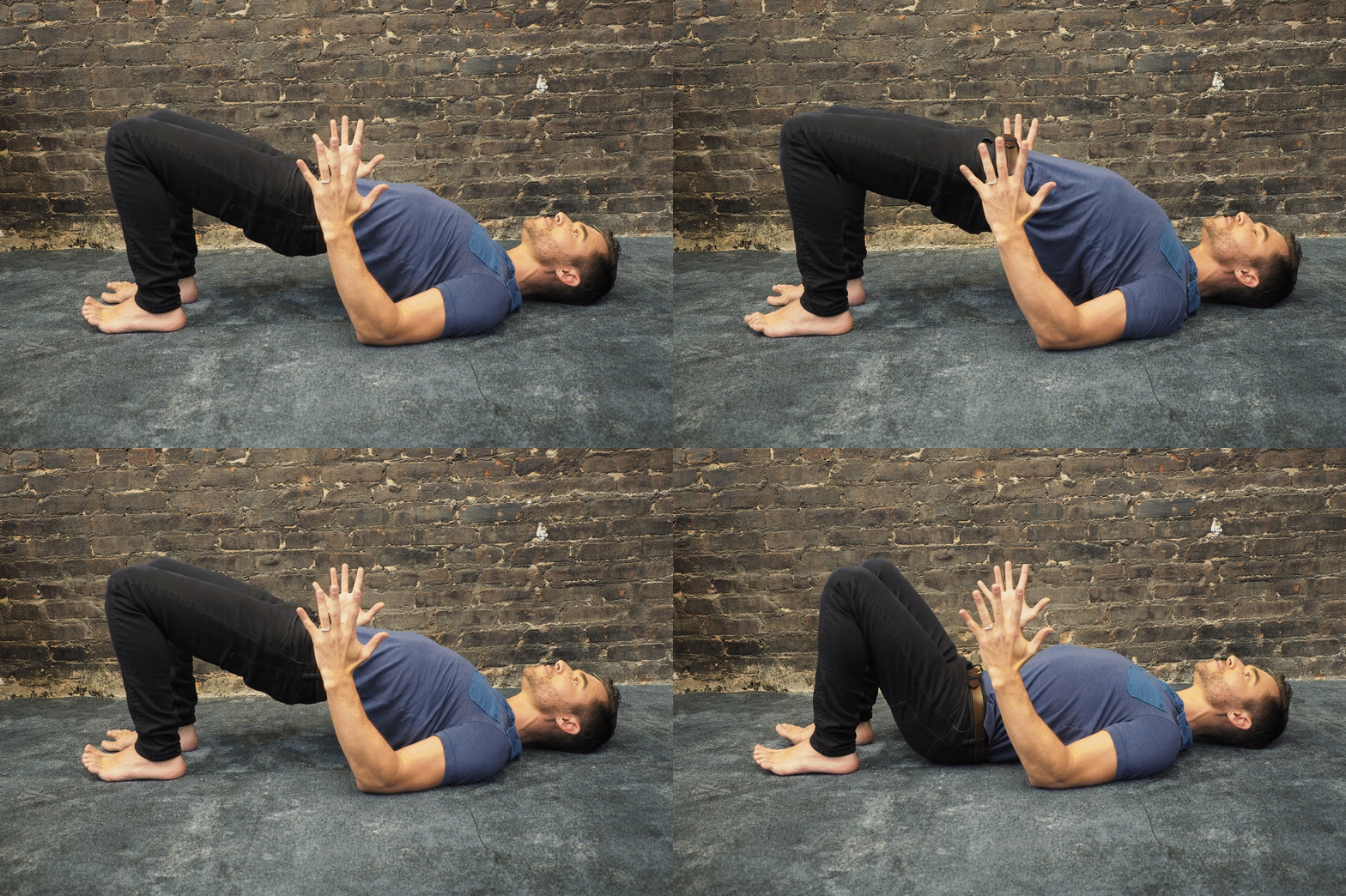
2. Bridge Pose
This is a basic backbend that grounds your energy and gives relief to the neck and shoulders.
- Lie on your back
- Bend your knees with your feet flat on the floor directly under them
- Lift your hips up until you feel a tone in the buttocks, but avoid lifting so high that the butt muscles clench
- With your elbows on the floor, bend them to "robot arms" position, kind of like you're holding an invisible box in front of your chest
- Tone the legs by gently pressing the feet down and pulling them backward toward your shoulder without actually moving them
- Lift your chin away from your chest until there is a natural, gentle curve in your neck
- Press your elbows and back of your head to the floor (think toned muscles, not tense muscles)
- Stretch your knees away from your hips (try to keep pulling the feet backward energetically)
- Hold this pose for 10-12 deep breaths
- Notice how the chest and the heart region are open during this posture
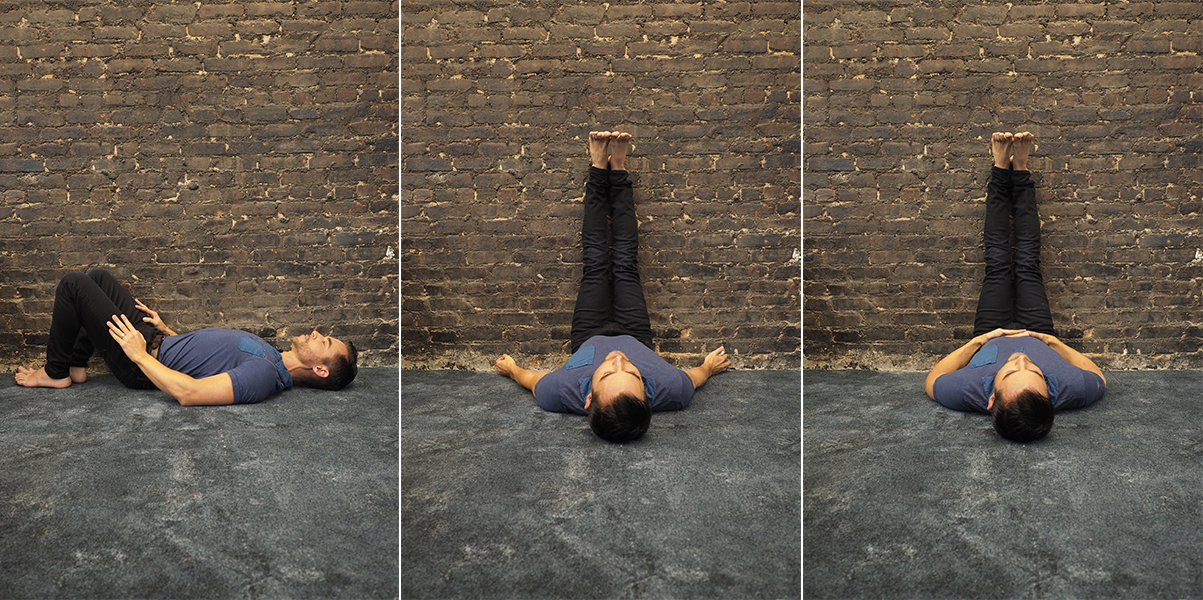
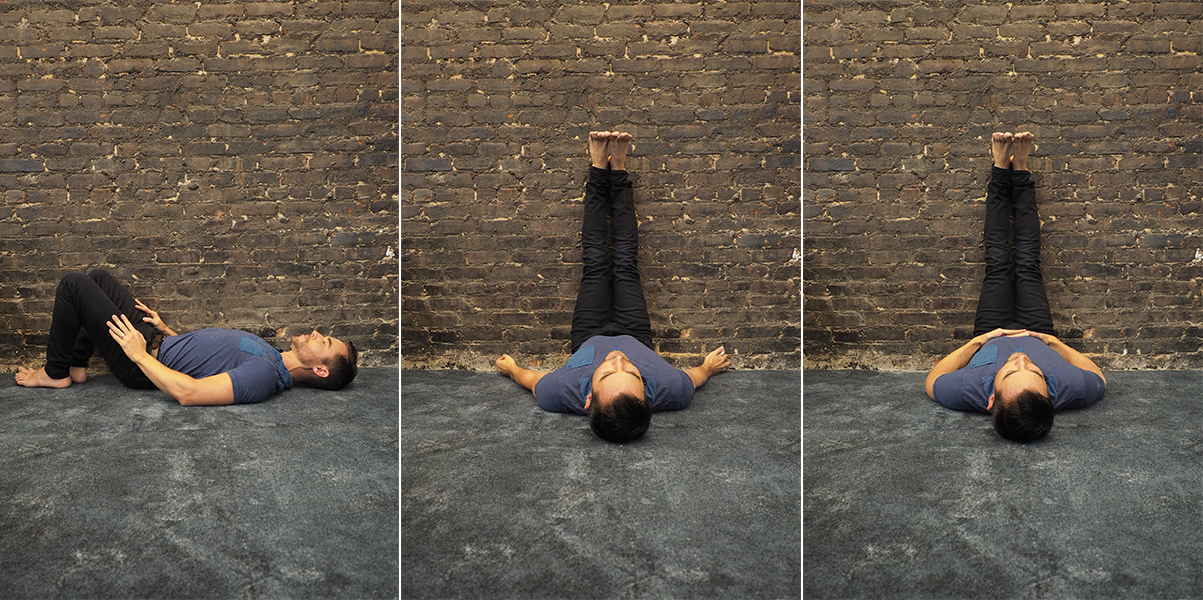
3. Legs Up The Wall
This is a restorative pose to calm the nervous system and give relief to the primary glands of the endocrine system. The pituitary, pineal and thymus glands regulate numerous functions in the body, yet they sit under the weight of the brain. Taking the legs up the wall forces the circulatory system to function differently and relieves the pressure on the upper surface of these primary glands.
- Lie on your side near a wall and slide close enough so that your butt is at the base of the wall
- You may use a thin blanket or pillow as support under your hips
- Turn onto your back and extend your legs up the wall
- Rest your hands on your stomach in order to feel the rise and fall of your breath (this will help you slow down and take deeper breaths, too)
- Remain here for five to 10 minutes
- Roll to your side to safely exit the pose — pause on your side for a few breaths before sitting up.
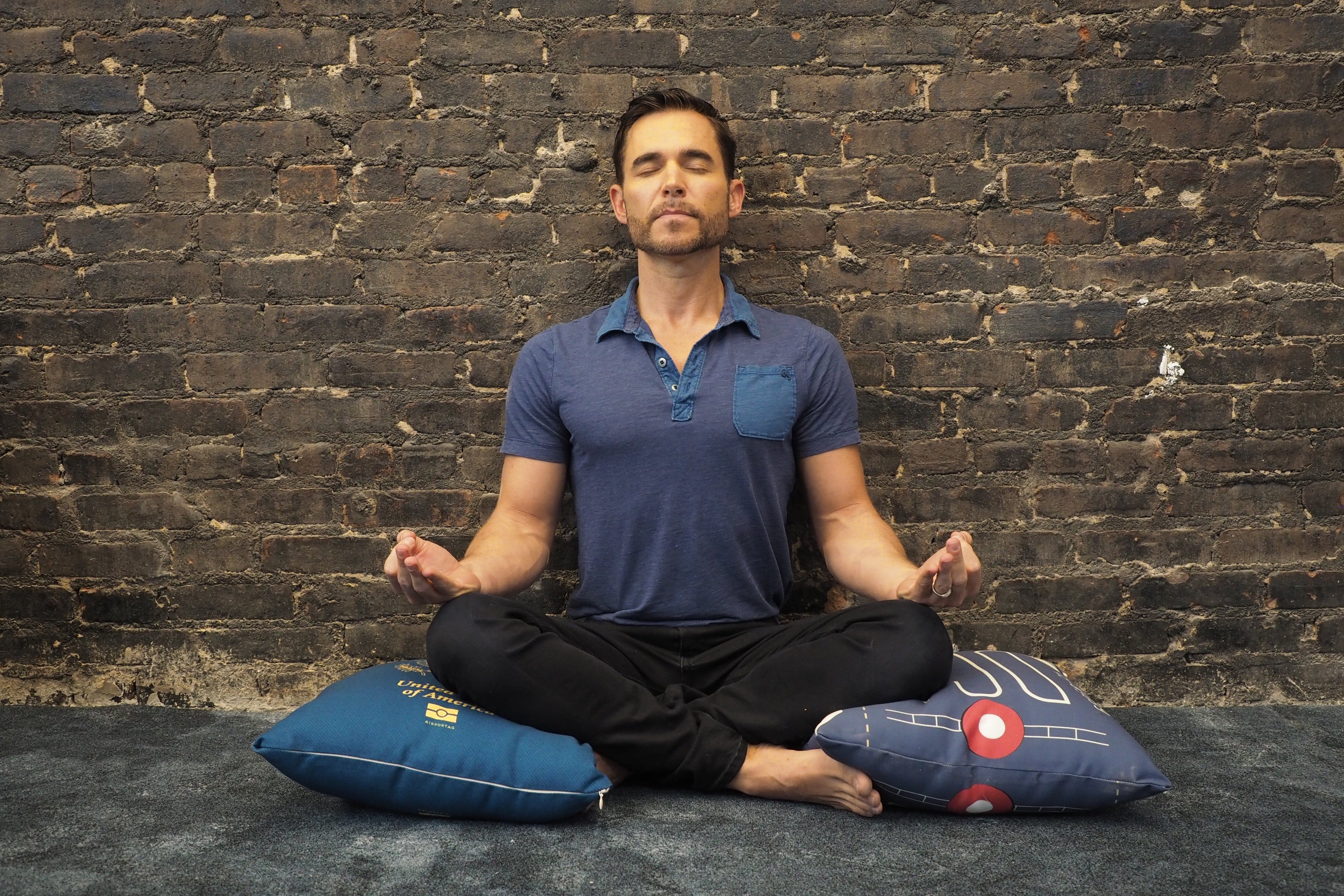
4. Meditation
A meditation practice has numerous benefits, including calming any anxiety that often accompanies jet lag.

- Sit comfortably on the floor (or with your back against wall for extra support) or in a supportive, upright chair
- Use pillows and blankets to support your knees, ankles and elbows
- Close your eyes and listen to the sound of a deep nasal breath — make a whisper sound with your breath in order to hear it more easily
- Think of an image like a waterfall or leaves falling, and imagine the energy of different parts of your body flowing down into the earth. Spend a few minutes on the hip region, a few minutes on the head/brain region and a few minutes on the heart/chest region
- For the last few minutes, allow your thoughts to move wherever they naturally go, doing your best to not judge what you think or where your thoughts go, but simply to notice them as if you were watching a movie
- Lie on your back for three to seven minutes following the meditation
Bottom Line
I hope these tips help with your jet lag. Give them a shot when you first get to your hotel and then again before you go to bed. For more information, check out some of my therapeutic videos. Safe travels. Namaste!
Ross Rayburn is a guest columnist for TPG. He teaches yoga workshops, trainings and retreats all around the world. You can follow him on Instagram and Twitter and at www.rossrayburn.com.
All images by Brendan Dorsey, TPG's Assistant Editor.
TPG featured card

at Capital One's secure site
Terms & restrictions apply. See rates & fees.
| 5X miles | Earn 5X miles on hotels, vacation rentals and rental cars booked through Capital One Travel |
| 2X miles | Earn unlimited 2X miles on every purchase, every day |
Pros
- Stellar welcome offer of 75,000 miles after spending $4,000 on purchases in the first three months from account opening. Plus, a $250 Capital One Travel credit to use in your first cardholder year upon account opening.
- You'll earn 2 miles per dollar on every purchase, which means you won't have to worry about memorizing bonus categories
- Rewards are versatile and can be redeemed for a statement credit or transferred to Capital One’s transfer partners
Cons
- Highest bonus-earning categories only on travel booked via Capital One Travel
- LIMITED-TIME OFFER: Enjoy $250 to use on Capital One Travel in your first cardholder year, plus earn 75,000 bonus miles once you spend $4,000 on purchases within the first 3 months from account opening - that’s equal to $1,000 in travel
- Earn unlimited 2X miles on every purchase, every day
- Earn 5X miles on hotels, vacation rentals and rental cars booked through Capital One Travel
- Miles won't expire for the life of the account and there's no limit to how many you can earn
- Receive up to a $120 credit for Global Entry or TSA PreCheck®
- Use your miles to get reimbursed for any travel purchase—or redeem by booking a trip through Capital One Travel
- Enjoy a $50 experience credit and other premium benefits with every hotel and vacation rental booked from the Lifestyle Collection
- Transfer your miles to your choice of 15+ travel loyalty programs
- Top rated mobile app