Can a plane be evacuated in 90 seconds? We may not actually know

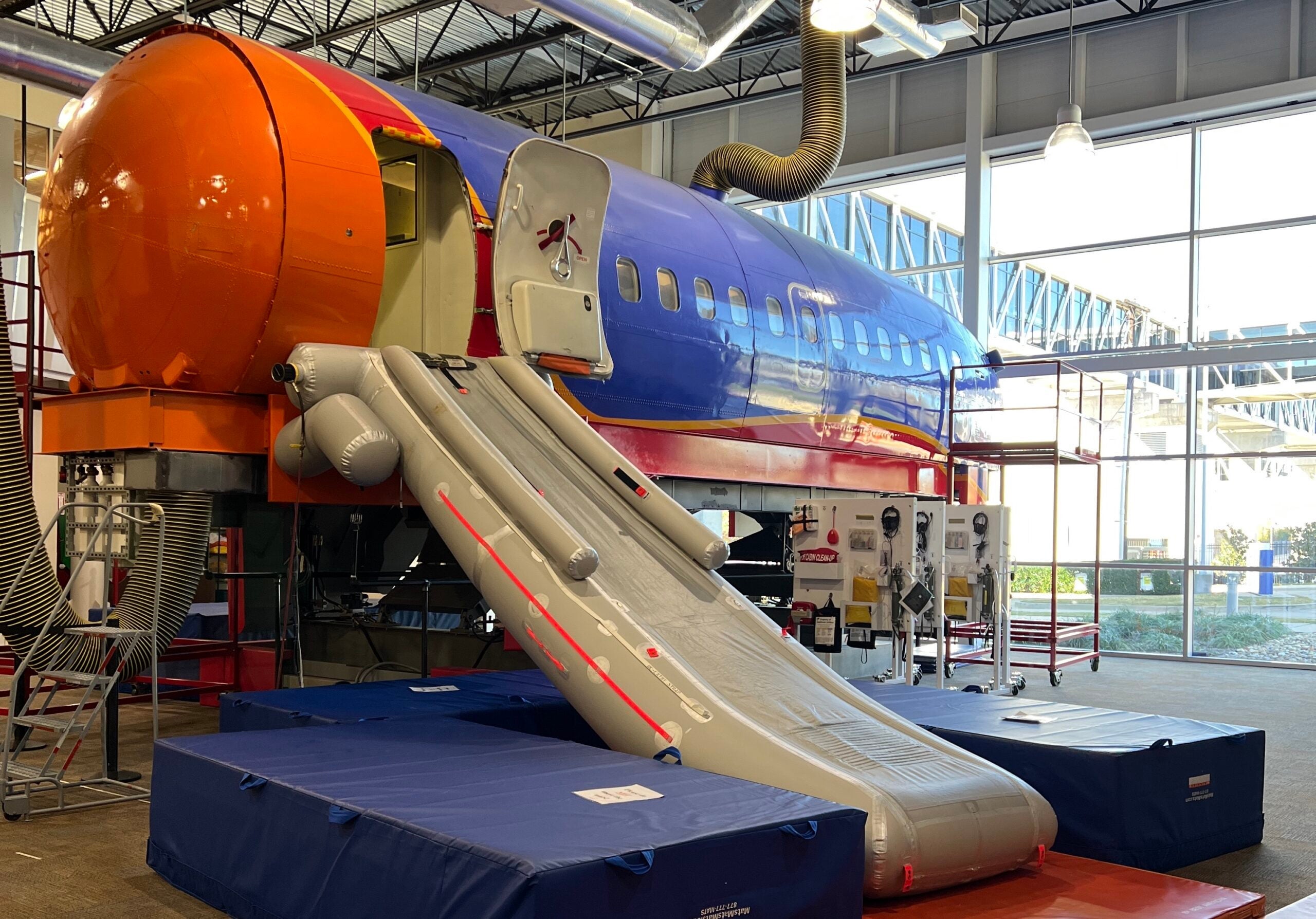
It's exceedingly rare to have an emergency on an airplane that calls for everyone to evacuate. But if one were to happen, could everyone get off the plane within 90 seconds?
In theory, yes, but what about reality?
A new bill in the Senate aims to find out.
The Emergency Vacating of Aircraft Cabin Act co-sponsored by Democratic Sen. Tammy Duckworth of Illinois and Democratic Sen. Tammy Baldwin of Wisconsin would require the Federal Aviation Administration to test evacuation times using a more realistic setting.
"Putting 60 people on part of a fuselage of an airplane and pretending that no one has carry-on baggage, and there are no children and senior citizens on board" doesn't reflect real-world conditions, Duckworth told TPG in a Zoom interview. "I wrote the legislation because I saw that these tests were not being done in a realistic way."
The bill would require the FAA to issue an updated rule on evacuation testing standards. The tests would have to take likely real-life variables, such as passengers with disabilities or who don't speak English, passengers ranging in age from babies to senior citizens, the presence of carry-on items under the seats and modern seat size and pitch, into account.
Currently, tests are conducted using only a section of an aircraft cabin with groups of 60 who tend to be able-bodied adults.
Duckworth, who sits on the Senate subcommittee for aviation, was a helicopter pilot for the U.S. Army before losing both legs during combat in Iraq.
One lingering question would be what would happen if aircraft fail the 90-second test. Would airlines have to remove seats and add more legroom, driving up costs and fares? Not necessarily, Duckworth said.

"I just want to get the basic data," Duckworth said, adding that any next steps that the FAA takes would be based on the new test findings. It could be that the 90-second standard is found to be unrealistic, unhelpful or unnecessary, leading to a longer standard.
That scenario wouldn't negatively impact safety, though, Duckworth insisted. It would mean that instead, pilots, flight attendants and ground rescue crews would have a new, more realistic real-world standard to train to.
"The FAA may have to rewrite their regulations," she said. Maybe "it's going to be 120 seconds, it's going to be 180, whatever it is. That way, we can train our aircrews to the correct standard."
"I think that ultimately it's going to make everybody safer in the long run," she added. "But to have an arbitrary standard and then to finesse the test so that you meet those standards is not how FAA regulations and safety regulations are supposed to work."
It's also possible that the tests find that modern aircraft seating makes it impossible to evacuate quickly enough in an emergency, but Duckworth insisted that the bill isn't about the ever-shrinking size of coach seats.
"I didn't write my legislation because of the seat size and pitch issue," she said.
The bill was widely endorsed by airline worker unions and various advocacy groups, including the unions representing flight attendants at major U.S. airlines, the Allied Pilots Association (which represents pilots at American Airlines), AARP, the Paralyzed Veterans of America and the American Council for the Blind.
"Cheers to Senator Duckworth for introducing the EVAC Act to direct the FAA to establish evacuation standards that reflect the current realities of cabin environment including cabin density, carry-on bags, charging cords, and challenges for passengers with disabilities," Sara Nelson, president of the Association of Flight Attendants-CWA, said in a statement. "We don't need the first test on this to be an active emergency. Let's get real now!"
The bill was also endorsed by Capt. Chesley "Sully" Sullenberger, the pilot who successfully landed an Airbus A320 on the Hudson River after losing both engines in a bird strike shortly after departing LaGuardia Airport (LGA) in New York.
"As one of the few people who has had to command the evacuation of an airliner after an emergency landing, I have seen firsthand how challenging it can be," Sullenberger said in an emailed statement. "I support this bill because it improves passenger and crew safety by making aircraft evacuation standards better reflect the reality of emergency evacuations, and will save lives when seconds count."
Airlines for America, the industry trade group that represents U.S. airlines in Washington, D.C., said in a statement that safety was its top priority.
"The FAA, our industry's safety regulator, is the global gold standard for safety in the skies, and we remain committed to working collaboratively to ensure aviation remains the safest mode of transportation in the world," the statement said.
Commercial aviation remains incredibly safe, among the safest possible forms of transportation — a 2020 study by Massachusetts Institute of Technology statistician and aviation safety expert Arnold Barnett found that in the decade from 2008 to 2017, airline passenger fatalities globally were one death per 7.9 million passengers, down significantly from prior decades. Limited to just the U.S., the European Union, Canada, China, Japan, Australia, New Zealand and Israel, the rate falls to one in 33.1 million.
Related: End of an era: Boeing just finished building the final 747
It's difficult to make a direct comparison to driving, but the odds of dying in a crash during a 500-mile drive are about 1.2 in 200,000, according to several academics writing in The Washington Post, based on data provided by the National Safety Council.
Part of what makes flying so safe are the lessons learned from past accidents and the constant training that airline workers and airport fire and rescue personnel undergo. But doing that training based on inaccurate data means that the training and procedures could be optimized better.
"We just need to know that the crews are being given all the resources that they need, not the least of which is the training to evacuate an aircraft when it's needed," Duckworth said.
A companion bill in the House is expected to be introduced by Democratic Rep. Steve Cohen of Tennessee, a spokesperson for Duckworth said.
TPG featured card

at Capital One's secure site
Terms & restrictions apply. See rates & fees.
| 5X miles | Earn 5X miles on hotels, vacation rentals and rental cars booked through Capital One Travel |
| 2X miles | Earn unlimited 2X miles on every purchase, every day |
Pros
- Stellar welcome offer of 75,000 miles after spending $4,000 on purchases in the first three months from account opening. Plus, a $250 Capital One Travel credit to use in your first cardholder year upon account opening.
- You'll earn 2 miles per dollar on every purchase, which means you won't have to worry about memorizing bonus categories
- Rewards are versatile and can be redeemed for a statement credit or transferred to Capital One’s transfer partners
Cons
- Highest bonus-earning categories only on travel booked via Capital One Travel
- LIMITED-TIME OFFER: Enjoy $250 to use on Capital One Travel in your first cardholder year, plus earn 75,000 bonus miles once you spend $4,000 on purchases within the first 3 months from account opening - that’s equal to $1,000 in travel
- Earn unlimited 2X miles on every purchase, every day
- Earn 5X miles on hotels, vacation rentals and rental cars booked through Capital One Travel
- Miles won't expire for the life of the account and there's no limit to how many you can earn
- Receive up to a $120 credit for Global Entry or TSA PreCheck®
- Use your miles to get reimbursed for any travel purchase—or redeem by booking a trip through Capital One Travel
- Enjoy a $50 experience credit and other premium benefits with every hotel and vacation rental booked from the Lifestyle Collection
- Transfer your miles to your choice of 15+ travel loyalty programs
- Top rated mobile app