CrowdStrike suggests Delta is to blame for its extended meltdown

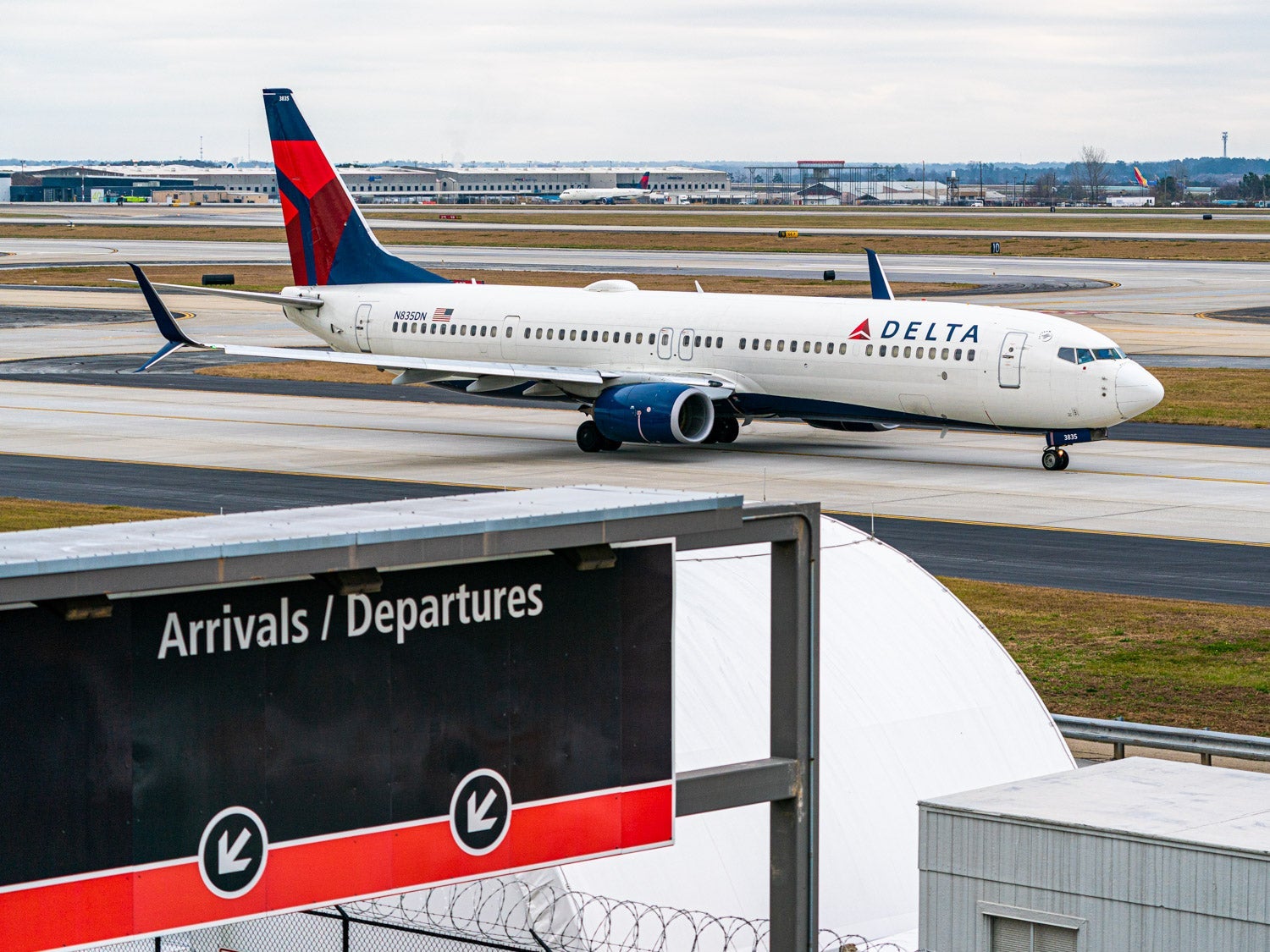
CrowdStrike is striking back.
The company said that it was not responsible for Delta Air Lines' extended meltdown late last month, which saw days of cancellations and delays following a tech outage that affected airlines across the U.S. and the rest of the world.
Delta CEO Ed Bastian said on CNBC last week that the outage and its aftermath had cost the airline $500 million and that it would seek damages from CrowdStrike and Microsoft. CrowdStrike provides security software for Microsoft's Windows operating system, which runs many Delta technologies. A faulty CrowdStrike software update crashed thousands of Microsoft-based networks and systems after it was accidentally set live.
The airline said in a memo to staff members that it would seek to pursue legal claims against the tech companies and had retained the well-known law firm Boies Schiller Flexner.
But in a letter sent to Delta on Sunday night, which was reviewed by TPG, CrowdStrike's outside legal counsel at Quinn Emanuel Urquhart & Sullivan pushed back against Bastian's comments, accusing him and the airline of creating a "misleading narrative that CrowdStrike is responsible for Delta's IT decisions and response to the outage."
"Should Delta pursue this path, Delta will have to explain to the public, its shareholders, and ultimately a jury why CrowdStrike took responsibility for its actions—swiftly, transparently, and constructively—while Delta did not," Michael Carlinsky, a partner at Quinn Emanuel, wrote in the letter.
While admitting fault for the initial outage and reiterating an apology, CrowdStrike said that Delta had declined on-site assistance during the outage and that Bastian had not responded to direct outreach from the tech firm's CEO.
CrowdStrike pointed to the fact that rival airlines, which were also forced to ground their flights during the initial outage, restored their operations much more quickly than Delta. While delays and cancellations lingered after a fix was developed for the outage, most rivals, including American Airlines and United Airlines, were more or less back to normal within a day or two, while Delta struggled for nearly a week, canceling more than 5,000 mainline flights between July 19 and July 25.
In the letter, CrowdStrike's attorneys suggested that Delta's IT infrastructure did not have "design and operational resiliency capabilities" like the other airlines, and said that its liability was capped at "an amount in the single-digit millions" based on contracts with the airline.

Related: How to get money back if you were stranded on Delta Air Lines
In public communications during the aftermath of the initial outage, Delta cited issues with crew scheduling software, while internal memos to the staff, seen by TPG, repeatedly offered incentives for off-duty crew members to pick up trips as the airline struggled to get displaced crews back into position.
Bastain said that Delta used CrowdStrike and Microsoft products more heavily across its system than other carriers, meaning that the airline's systems were more hobbled by the outage than its competitors were.
"If you're going to be having access, priority access, to the Delta ecosystem in terms of technology, you've got to test this stuff," Bastian told CNBC last week, referring to the faulty CrowdStrike software update that caused the outage. "You can't come into a mission-critical 24/7 operation and tell us we have a bug. It doesn't work."
A Delta spokesperson said the airline did not have any further comment in response to the CrowdStrike letter, and pointed to Bastian's earlier statements.
Millions of computers across a variety of businesses and sectors were disabled during the outage, ranging from airlines and airports to banks, government agencies and television networks. While some airlines were completely grounded until a fix was distributed, other carriers that do not use CrowdStrike services continued operations without interruption.
Related reading:
- Key travel tips you need to know — whether you're a first-time or frequent traveler
- Best travel credit cards
- Where to go in 2024: The 16 best places to travel
- 6 real-life strategies you can use when your flight is canceled or delayed
- 8 of the best credit cards for general travel purchases
- 13 must-have items the TPG team can't travel without
TPG featured card

at Capital One's secure site
Terms & restrictions apply. See rates & fees.
| 5X miles | Earn 5X miles on hotels, vacation rentals and rental cars booked through Capital One Travel |
| 2X miles | Earn unlimited 2X miles on every purchase, every day |
Pros
- Stellar welcome offer of 75,000 miles after spending $4,000 on purchases in the first three months from account opening. Plus, a $250 Capital One Travel credit to use in your first cardholder year upon account opening.
- You'll earn 2 miles per dollar on every purchase, which means you won't have to worry about memorizing bonus categories
- Rewards are versatile and can be redeemed for a statement credit or transferred to Capital One’s transfer partners
Cons
- Highest bonus-earning categories only on travel booked via Capital One Travel
- LIMITED-TIME OFFER: Enjoy $250 to use on Capital One Travel in your first cardholder year, plus earn 75,000 bonus miles once you spend $4,000 on purchases within the first 3 months from account opening - that’s equal to $1,000 in travel
- Earn unlimited 2X miles on every purchase, every day
- Earn 5X miles on hotels, vacation rentals and rental cars booked through Capital One Travel
- Miles won't expire for the life of the account and there's no limit to how many you can earn
- Receive up to a $120 credit for Global Entry or TSA PreCheck®
- Use your miles to get reimbursed for any travel purchase—or redeem by booking a trip through Capital One Travel
- Enjoy a $50 experience credit and other premium benefits with every hotel and vacation rental booked from the Lifestyle Collection
- Transfer your miles to your choice of 15+ travel loyalty programs
- Top rated mobile app