The 70-foot concrete arrows you didn’t notice that were the maps of the sky

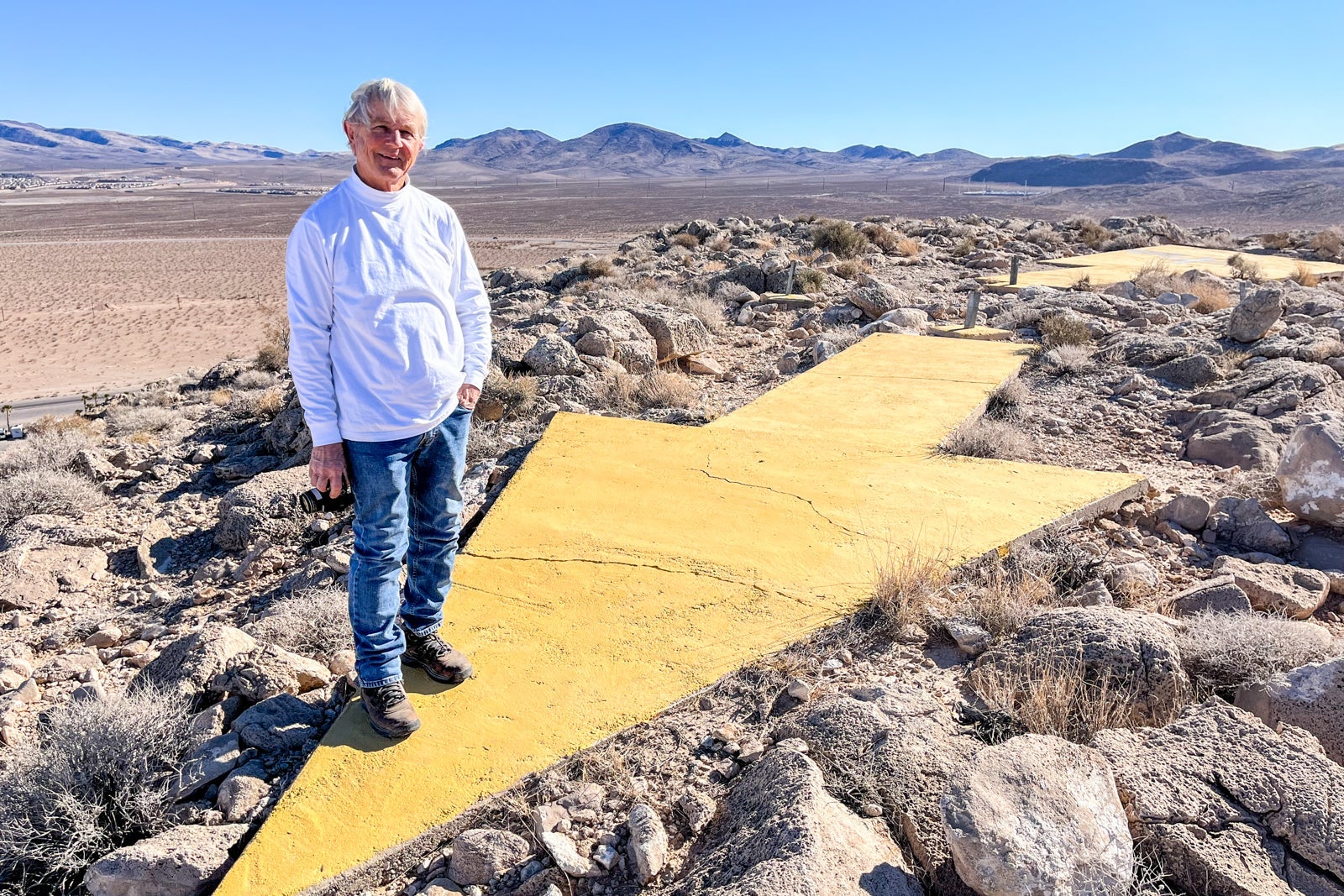
Though perhaps not as famous or enigmatic as the Nazca lines in southern Peru, the Kazakhstan Steppe geoglyphs or California's Blythe Intaglios, the U.S. has some interesting 20th-century manmade creations meant to be seen from above. They played a key role in flight long before the days of modern navigational software and technology.
What are these mysterious monuments of which I speak? The answer is ... pointed — as in the tip of an arrow, pointed.
In fact, they are 50- to 70-foot-long concrete navigational arrows that originally helped guide the U.S. Postal Service as it entered into the field of airmail delivery.
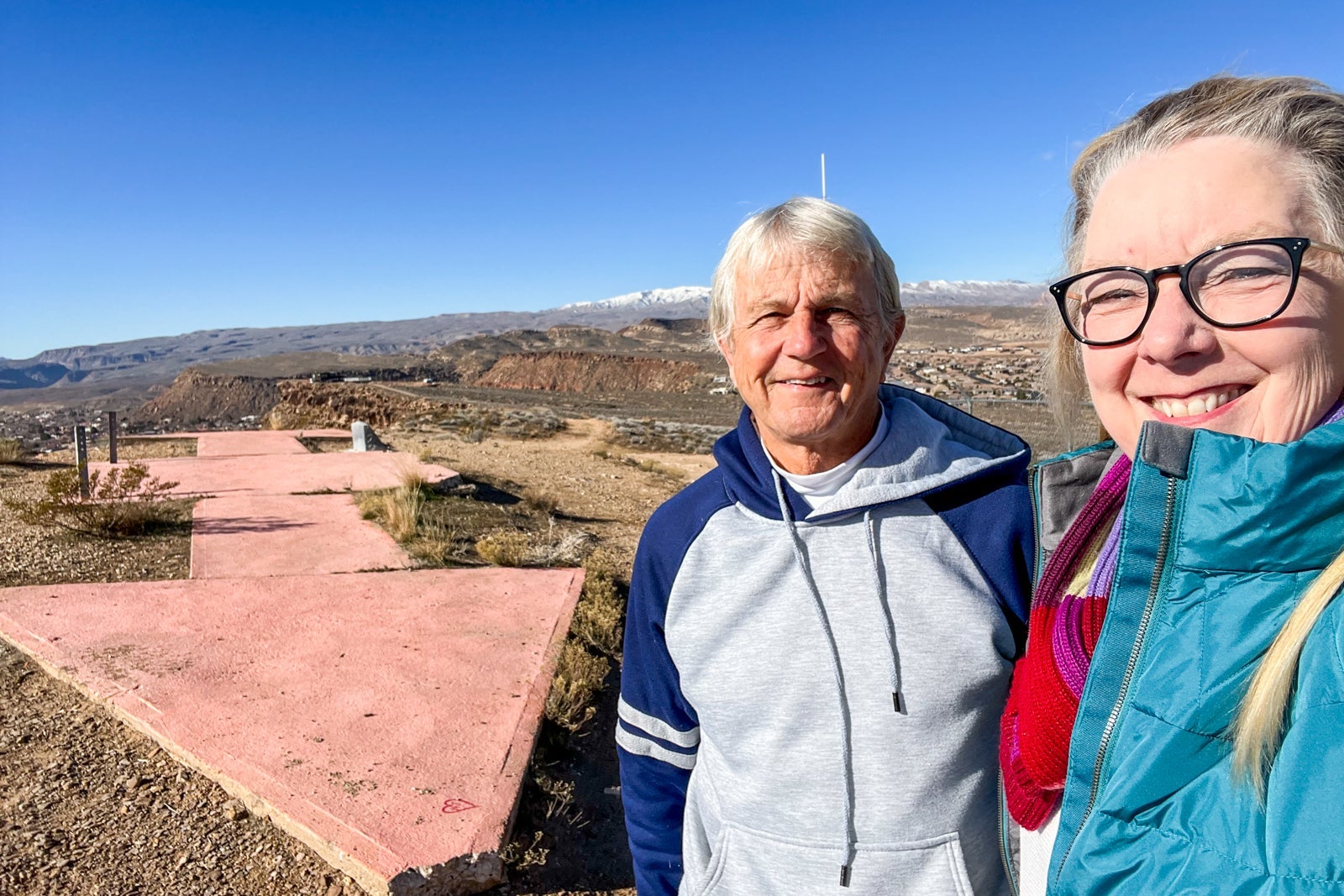
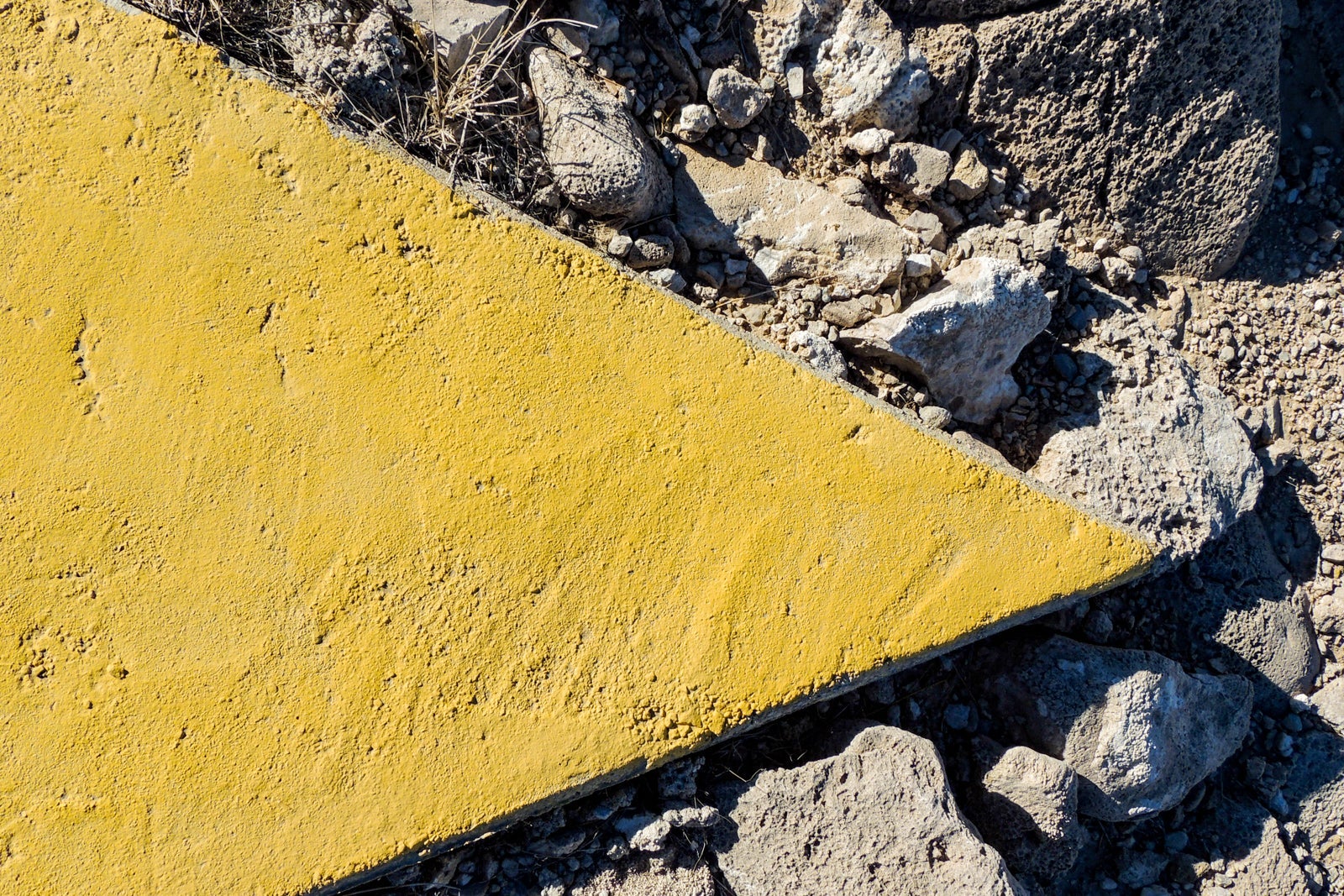
Almost 100 years ago, about 1,500 of these arrows were constructed to serve as navigational "signs" to be seen from the sky as the Postal Service and Commerce Department looked to expedite the movement of mail in a new era of flight.
These relics of the past that once pushed us toward the future are still out there — or rather, under 200 of them are in varying states of existence. However, if my conversations and observations are even remotely accurate, even the most seasoned travelers and aviation enthusiasts may not know of their existence. Of the few people who do know about them, even fewer have seen one.
The remaining arrows are in locales ranging from off-the-beaten-path spots to areas just off the busiest of highways (but perhaps hidden under a canopy of underbrush and trees or even on an open mountaintop).
We first learned of these arrows by happenstance a few years ago and have since made it a mission to take the next opportunity to see it for ourselves. If, like us, you are curious and always looking for new adventures, here's what we learned.
Related: I'm 74 and just got my first new credit card in years -- here's why
The history of the navigational arrows
In the early days of airmail in the U.S., primarily using World War I aircraft and pilots, airmail was still not a particularly "express" journey even though it was a big step forward. At the time, such flying was restricted to the daylight hours, and the mail would be transported by train during the night.

This system obviously hindered overall progress and speed. So, the federal government developed a plan to provide a connect-the-lighted-dots pathway from coast to coast.
A series of 51-foot metal towers with beacons were constructed and placed approximately 10 miles apart. At the base of each beacon, a 50- to 70-foot concrete arrow was built and painted a bright chrome yellow to enhance visibility.
The arrows were laid out and aimed to direct the pilot to the next navigational complex. The next complex would then guide them to the next complex, and so on, until they reached their destination.
The rotating beacons eventually offered lights of 2 million candlepower. Additionally, a 10-by-14-foot shed was constructed at each site to house generators and fuel. Visual information was painted on the sheds as to the beacon number, based on mileage, along with letters to designate the route.
As secondary identifiers, red or green lights flashed Morse code to distinguish each specific beacon and tower. In conjunction with these guiding lights, emergency airfields were constructed every 25 miles to aid the pilot in case a problem occurred in flight — which certainly happened, especially in those early days.
The arrows pointed toward the eastern terminus on east-to-west routes and to the most northern stop on north-to-south paths. Los Angeles to Salt Lake City would have the marker pointed to Salt Lake City, and Dallas to Chicago would have the indicator aiming toward Chicago.
In fact, many of the major U.S. commercial airlines can trace their roots to the incomes generated by the contracts of these early airmail routes.
Related: Completing a journey 50 years in the making
Searching for the arrows
Once we first learned of the arrows, we researched the routes and original locations of the arrows and beacons. We were thrilled (and perhaps dismayed) to learn that we had unknowingly driven within a mile of several sites while traveling through places like St. George, Utah and Las Vegas.
On the way to a ski trip in Brian Head, Utah, we charted a course that involved turning off I-15, going past a Walmart and a golf course, and through a subdivision until we reached a water tower on the side of a hill. The arrow was awaiting just above the tower.
At the very crest of the ridge, there it was. A bit lonely, isolated and worn, but a piece of history all the same. A monument had been placed there to memorialize its significance and its mission.
We photographed it from every angle and spent a great deal of time there just appreciating the find. It was perhaps not on the same level as finding the Lost Dutchman Mine, but we felt rewarded all the same.
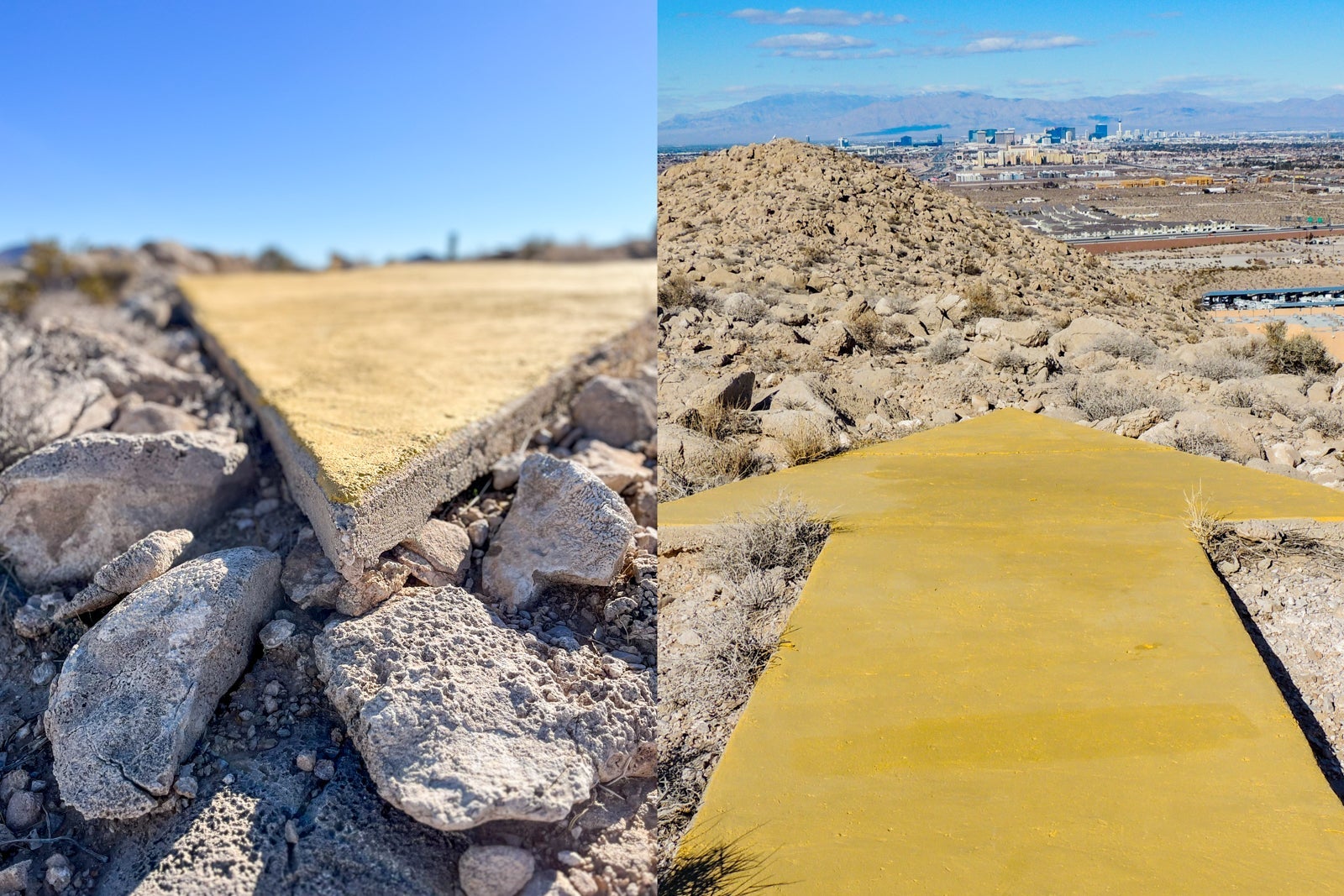
We wondered how many young'uns had climbed this hill, or one just like it, in the late 1920s and waved when the low-flying Western Air Express Douglas M2 aircraft flew by as it made its way to or from Salt Lake City. We certainly would have.
Our appetites now duly whetted, we set out toward Las Vegas to continue our arrow search. Just south of Las Vegas, where Las Vegas Boulevard and I-15 are separated only by a small hill, our crusade took on new zeal. We knew from research that another coveted arrow was perched on the top of that same high ground.
Unfortunately, we began our ascent in the worst possible spot and our climb slowly wound around the rocky rise as we searched for the best avenue to its treasured apex. However, just when our pessimism was peaking, an easier path presented itself; in a few more minutes, we were not only on top but also on top of the arrow.
This arrow, part of the old 650-mile Contract Airmail Route 4 from LA to Salt Lake City, pointed directly at Las Vegas.
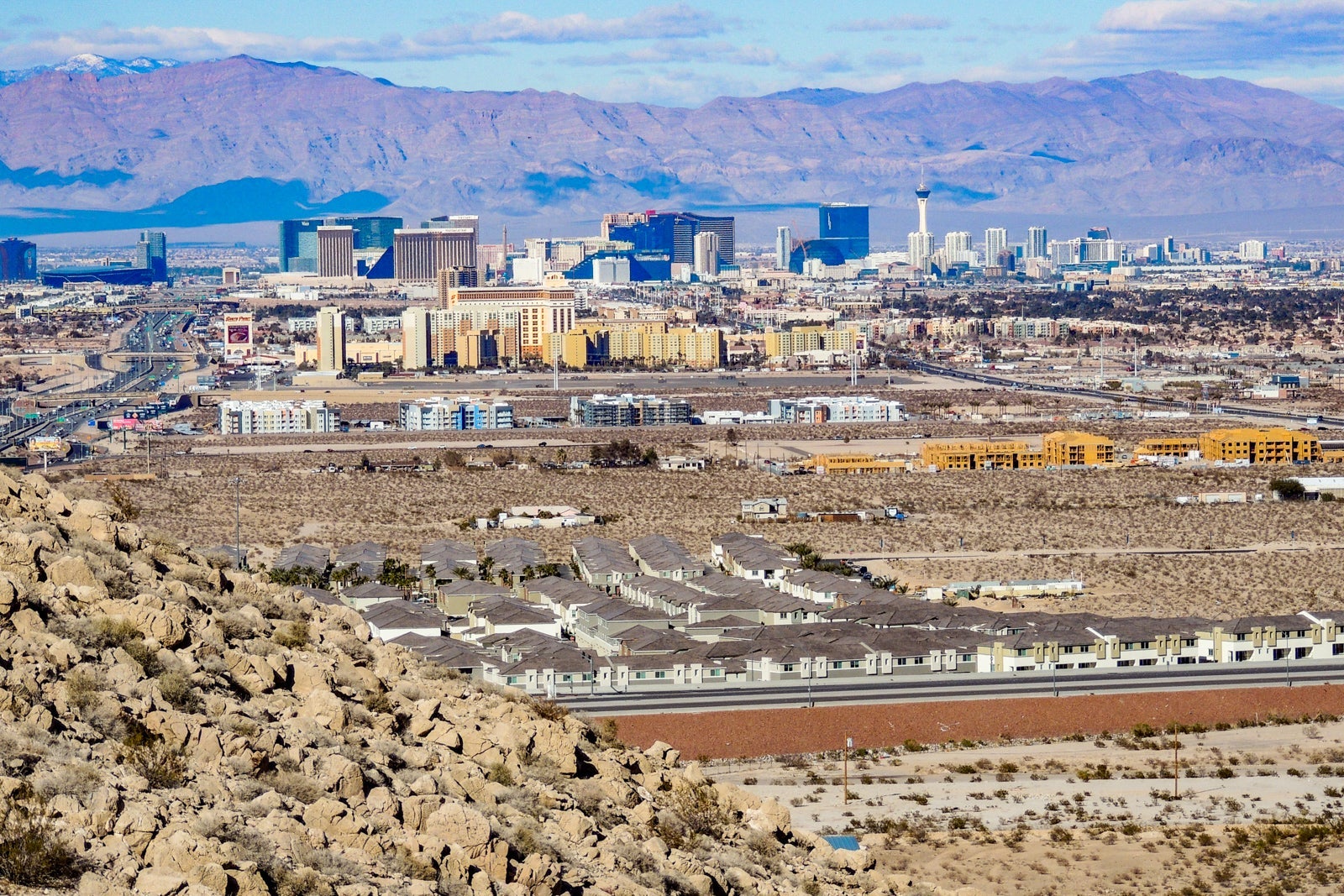
In the 1920s and 1930s, the arrow would not have directed the pilot's vision and attention to anything resembling what we could see from that peak on that day. Lying below would have been only miles of uninterrupted desert and a railroad-centric small town of about 5,000 inhabitants.
Not even the wildest of dreams could have predicted the future that awaited that arid scape. This particular arrow had been repainted in the near past, but no remnants of the beacon tower or the operation shed remained. We recorded this memory and left the arrow to its usual solitude.
We have since added a third arrow to our visual collection with a find near Meridian, Mississippi, and we hope to continue discovering new locations as our travels allow. While perhaps not worth setting out to find on their own, they are a worthy "side quest" as we cross the country on future trips.
Related: Embracing credit cards after years of 'cash is king'
Bottom line
The use of the beacons and arrows started in 1925, and by 1929, the Transcontinental Airway System had stretched from New York to San Francisco. Mail could be flown from coast to coast in about 29 hours flying west or 34 hours flying east.
The lighted airway had a reasonably short history of about 10 years as technological advances in radar and other navigational aids forced them into obsolescence. Most of the towers were eventually disassembled when their mission ended, with some of the steel used in the war effort of the 1940s.
A number of the concrete arrows were purposefully destroyed in that same era just in case enemy aircraft invaded the U.S. and might use them for guidance.
While the era of the arrows as they once were is now over, some are still out there waiting to be seen again by those curious travelers ready to take a look.
Related reading:
TPG featured card
at American Express's secure site
Terms & restrictions apply. See rates & fees.
| 4X | Earn 4X Membership Rewards® points per dollar spent on purchases at restaurants worldwide, on up to $50,000 in purchases per calendar year, then 1X points for the rest of the year. |
| 4X | Earn 4X Membership Rewards® points per dollar spent at US supermarkets, on up to $25,000 in purchases per calendar year, then 1X points for the rest of the year. |
| 5X | Earn 5X Membership Rewards® points on prepaid hotel stays booked through AmexTravel.com or the Amex Travel App™. |
| 3X | Earn 3X Membership Rewards® points on flights booked through AmexTravel.com, the Amex Travel App™, or purchased directly from airlines. |
| 2X | Earn 2X Membership Rewards® points on prepaid car rentals booked through AmexTravel.com or the Amex Travel App™ and cruises booked and paid through AmexTravel.com. |
| 1X | Earn 1X Membership Rewards® point per dollar spent on all other eligible purchases. |
Pros
- Valuable dining and food-related credits
- Flexible rewards with airline and hotel transfer partners
- Multiple travel and purchase protections
- No foreign transaction fees
- Access to Amex Offers for additional savings (enrollment required)
Cons
- Not as useful for those living outside the U.S.
- Some may have trouble using Uber and other dining credits
- You may be eligible for as high as 100,000 Membership Rewards® Points after you spend $8,000 in eligible purchases on your new Card in your first 6 months of Card Membership. Welcome offers vary and you may not be eligible for an offer. Apply to know if you’re approved and find out your exact welcome offer amount – all with no credit score impact. If you’re approved and choose to accept the Card, your score may be impacted.
- Earn 4X Membership Rewards® points per dollar spent on purchases at restaurants worldwide, on up to $50,000 in purchases per calendar year, then 1X points for the rest of the year.
- Earn 4X Membership Rewards® points per dollar spent at US supermarkets, on up to $25,000 in purchases per calendar year, then 1X points for the rest of the year.
- Earn 5X Membership Rewards® points on prepaid hotel stays booked through AmexTravel.com or the Amex Travel App™.
- Earn 3X Membership Rewards® points on flights booked through AmexTravel.com, the Amex Travel App™, or purchased directly from airlines.
- Earn 2X Membership Rewards® points on prepaid car rentals booked through AmexTravel.com or the Amex Travel App™ and cruises booked and paid through AmexTravel.com.
- Earn 1X Membership Rewards® point per dollar spent on all other eligible purchases.
- Pay It® lets you tap in the American Express® App to quickly pay for small purchase amounts throughout the month and still earn rewards the way you usually do. Plan It® gives you the option to split up big purchases into equal monthly payments with a fixed fee. You’ll know upfront exactly how much you’ll pay.
- $120 Dining Credit: Earn up to a total of $10 in statement credits monthly when you pay with the Gold Card at Grubhub (including Seamless), Buffalo Wild Wings, Five Guys, The Cheesecake Factory, and Wonder. This can be an annual savings of up to $120. Enrollment required.
- $100 Resy Credit: Get up to $100 in statement credits each calendar year at over 10,000 qualifying U.S. Resy restaurants after you pay for eligible purchases with the American Express® Gold Card. That’s up to $50 in statement credits semi-annually. Enrollment required.
- $84 Dunkin' Credit: Earn up to $7 in monthly statement credits after you pay with the American Express® Gold Card at U.S. Dunkin’ locations. Enrollment required.
- $120 Uber Cash on Gold: Enjoy up to $120 in Uber Cash annually with your Gold Card. Just add your Card to your Uber account and you'll get $10 in Uber Cash each month to use on orders and rides in the U.S. when you select an Amex Card for your transaction.
- Enjoy complimentary Hertz Five Star® Status benefits like skipping the counter at select locations, adding an additional driver at no additional cost*, and vehicle upgrades**. Benefit enrollment and Hertz Gold+ registration are required. *Additional drivers must meet standard rental qualifications and must be a spouse or domestic partner to qualify as complimentary. Other additional drivers subject to fees. **Benefits are subject to availability and vary by location. Additional Hertz program Terms and Conditions including age restrictions apply.
- Book two nights or more with The Hotel Collection through AmexTravel.com or the Amex Travel App™ and receive a $100* credit towards eligible charges at over 1,400 upscale hotels worldwide. *Eligible charges vary by property.
- Book your travel through the Amex Travel App™ with added peace of mind – backed by American Express® service and support. Only for American Express® Card Members.
- Whenever you need us, we're here. Our Member Services team will ensure you are taken care of. From lost Card replacement to statement questions, we are available to help 24/7.
- No Foreign Transaction Fees.
- Annual Fee is $325.
- Terms Apply.