What do the CDC's new isolation and quarantine recommendations mean for travel?

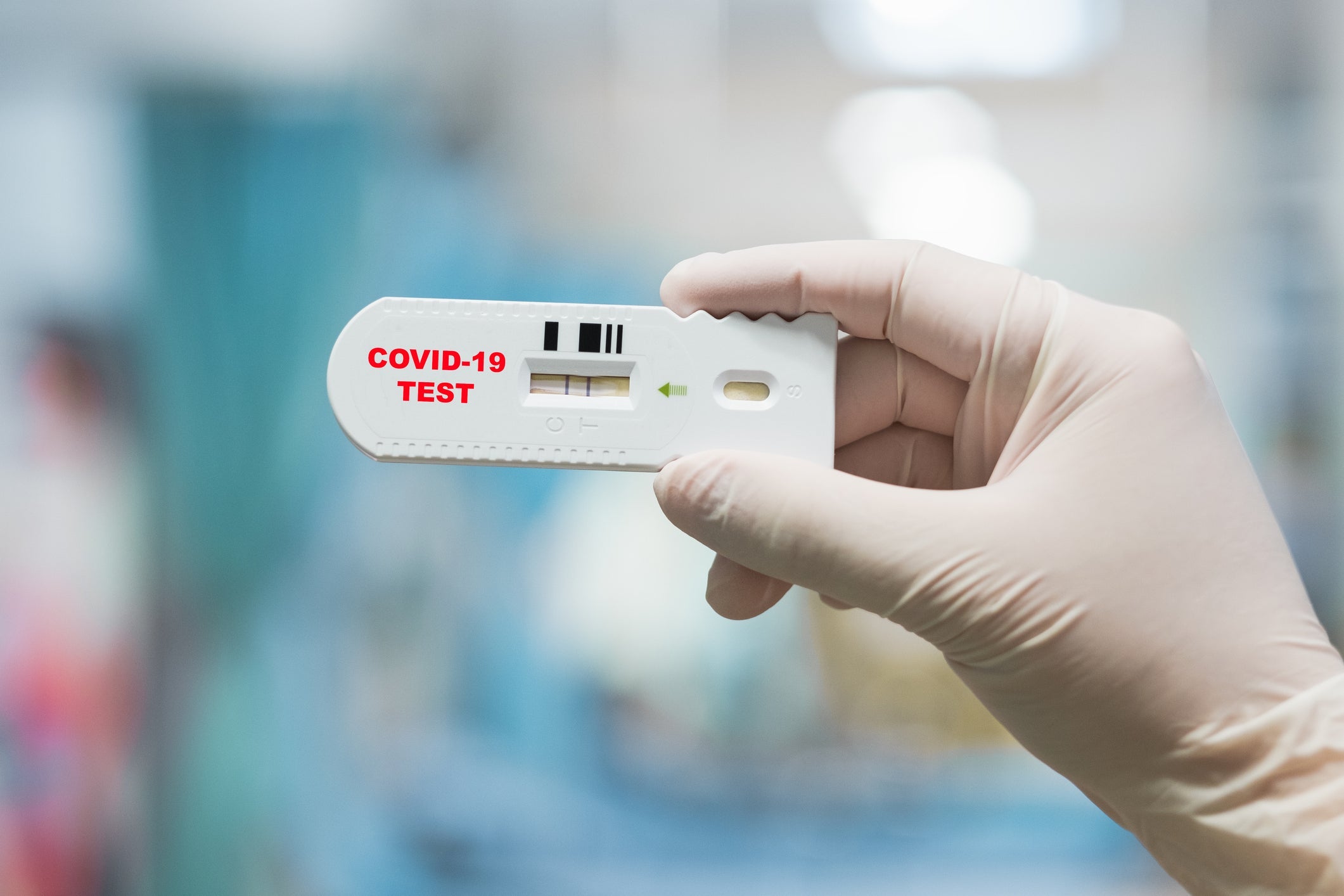
Despite a spike in cases due to the omicron variant, the U.S. Centers for Disease Control and Prevention issued new isolation and quarantine guidance for the general population on Dec. 27, 2021.
In particular, the CDC shortened the recommended isolation time from 10 days to five for people who test positive for COVID-19 but are asymptomatic. Additionally, individuals with no symptoms or resolving symptoms can exit isolation after five days but should wear a mask for at least five more days. Individuals with a fever should continue to stay at home and isolate, though.
The CDC also issued new guidance for individuals who have been exposed to someone with COVID-19. In short, if you've been boosted or recently vaccinated, you should wear a mask around others for 10 days. Otherwise, you should stay home for five days and then wear a mask around others for five more days. In either case, you should test on day five if possible. And of course, you should get a test if you develop symptoms.
In issuing the new isolation and quarantine guidance, the CDC said "The change is motivated by science demonstrating that the majority of SARS-CoV-2 transmission occurs early in the course of illness, generally in the 1-2 days prior to onset of symptoms and the 2-3 days after."
But, here at TPG, we have questions. The biggest: What does all of this mean for travel? Below, we'll break down some specific questions, taking a look at what we know, what we don't and what we'll be watching out for in the coming weeks.
If I test positive abroad, can I now fly back to the U.S. sooner?
Under the U.S.' current rules, it depends. You cannot enter the country by air if you continue to test positive unless you show a signed letter from a health care provider or a public health official stating you have been cleared for travel. So, regardless of the CDC's recommendations, unless the U.S. changes its testing rules for entry by air, you will have to remain abroad until you test negative or obtain clearance from a doctor or other authorized official.
However, even if you have the necessary clearance, you could run into roadblocks with your airline. Many carriers -- United, American, Delta and others -- require you to attest that you do not have COVID-19 when you check-in online for your flight. If you test positive and you're truthful, you likely won't be able to check-in online. You could proceed to the airport and try to check in there with your documentation, but you still risk being denied boarding.
For that reason, be sure to plan accordingly in case you find yourself stuck overseas due to COVID-19.
Related: How to find a COVID-19 test while traveling abroad

Will the U.S. change its testing requirements for entry by air?
Currently, the requirements remain the same. Specifically, U.S. citizens, nationals and lawful permanent residents must show proof of a negative test taken within one day of departure, regardless of vaccination status, or obtain a signed letter from a doctor or public health official certifying they're fit to travel with a positive test result.
These regulations mainly affect travelers entering the U.S. via air. They do not apply if you drive across the border or disembark a cruise in the U.S.
Related: Here's why it's still easy to meet 1-day testing for entry to US — even in the middle of nowhere
What do the recommendations mean for airline passengers?
As they exist now, most airline check-in policies will hinder COVID-19-positive flyers -- even if those travelers have isolated for five days and don't have symptoms -- because they require passengers to attest during check-in that they haven't recently tested positive for COVID-19. For example, Delta currently asks its passengers to commit they haven't been diagnosed with COVID-19 within the past 10 days.
As such, the new CDC recommendations currently do little to help airline passengers get to where they're going shortly after testing positive, even if they follow the isolation suggestions.
Related: As the omicron variant rises, here's what to do if you need to cancel your trip
Will airlines change their policies for passengers?
So far, TPG is unaware of any changes to check-in policies or attestations to coincide with the new CDC guidelines. But, we will continue to monitor the situation and update our content accordingly.
We don't think it's a coincidence that Delta, JetBlue and Airlines for America -- on Dec. 21, 22 and 23, respectively -- wrote letters to the CDC, asking the organization to reduce its 10-day isolation and quarantine rules for vaccinated individuals who test positive for COVID-19. These letters cited the effect the lengthier recommendations were having on the airlines' workforces, following a spate of canceled holiday flights that resulted from COVID-19 cases among crew. For example, here's the letter from Delta:
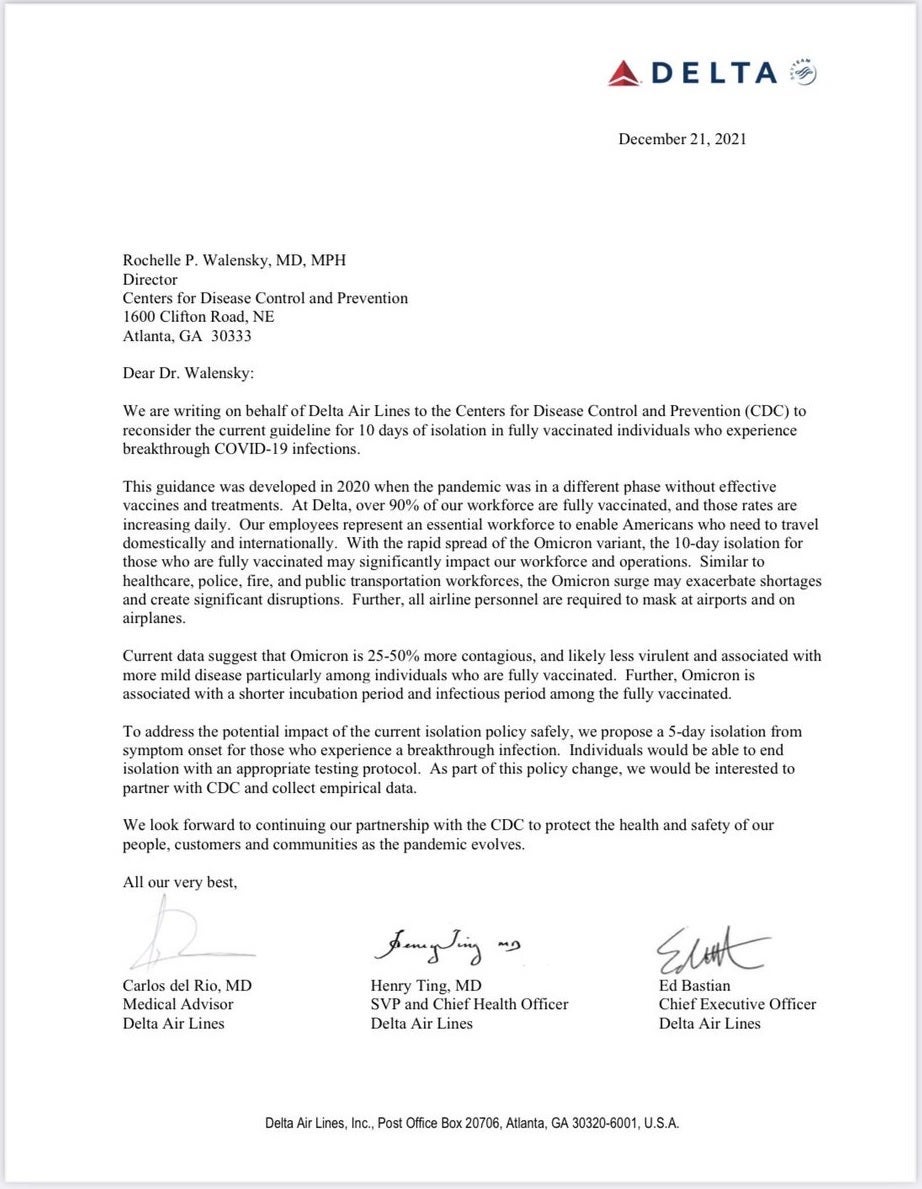
The letters mainly focused on getting airline employees back to work sooner. So, it's unclear whether the airlines will change their guidance for passengers.
Related: Airlines cancel nearly 1,000 flights Tuesday as disruptions continue to climb
Will I have to prove that I isolated or that I'm asymptomatic?
If you test positive and hope to procure the appropriate signed permission from a health care provider to reenter the U.S. before testing negative, you may have to prove you isolated for the proper length of time and that you aren't presenting symptoms. The exact process will likely vary depending on the health care provider.
But, for domestic flights, testing isn't required. So, it's most likely that if airlines change their check-in attestations or commitments, it will still all be on the honor system. As such, it's doubtful anyone will check whether you've isolated or whether you're asymptomatic before a domestic flight.
Related: Dr. Fauci clarifies that travelers shouldn't expect a domestic flight vaccine mandate
TPG featured card
at American Express's secure site
Terms & restrictions apply. See rates & fees.
| 4X | Earn 4X Membership Rewards® points per dollar spent on purchases at restaurants worldwide, on up to $50,000 in purchases per calendar year, then 1X points for the rest of the year. |
| 4X | Earn 4X Membership Rewards® points per dollar spent at US supermarkets, on up to $25,000 in purchases per calendar year, then 1X points for the rest of the year. |
| 5X | Earn 5X Membership Rewards® points on prepaid hotel stays booked through AmexTravel.com or the Amex Travel App™. |
| 3X | Earn 3X Membership Rewards® points on flights booked through AmexTravel.com, the Amex Travel App™, or purchased directly from airlines. |
| 2X | Earn 2X Membership Rewards® points on prepaid car rentals booked through AmexTravel.com or the Amex Travel App™ and cruises booked and paid through AmexTravel.com. |
| 1X | Earn 1X Membership Rewards® point per dollar spent on all other eligible purchases. |
Pros
- Valuable dining and food-related credits
- Flexible rewards with airline and hotel transfer partners
- Multiple travel and purchase protections
- No foreign transaction fees
- Access to Amex Offers for additional savings (enrollment required)
Cons
- Not as useful for those living outside the U.S.
- Some may have trouble using Uber and other dining credits
- You may be eligible for as high as 100,000 Membership Rewards® Points after you spend $8,000 in eligible purchases on your new Card in your first 6 months of Card Membership. Welcome offers vary and you may not be eligible for an offer. Apply to know if you’re approved and find out your exact welcome offer amount – all with no credit score impact. If you’re approved and choose to accept the Card, your score may be impacted.
- Earn 4X Membership Rewards® points per dollar spent on purchases at restaurants worldwide, on up to $50,000 in purchases per calendar year, then 1X points for the rest of the year.
- Earn 4X Membership Rewards® points per dollar spent at US supermarkets, on up to $25,000 in purchases per calendar year, then 1X points for the rest of the year.
- Earn 5X Membership Rewards® points on prepaid hotel stays booked through AmexTravel.com or the Amex Travel App™.
- Earn 3X Membership Rewards® points on flights booked through AmexTravel.com, the Amex Travel App™, or purchased directly from airlines.
- Earn 2X Membership Rewards® points on prepaid car rentals booked through AmexTravel.com or the Amex Travel App™ and cruises booked and paid through AmexTravel.com.
- Earn 1X Membership Rewards® point per dollar spent on all other eligible purchases.
- Pay It® lets you tap in the American Express® App to quickly pay for small purchase amounts throughout the month and still earn rewards the way you usually do. Plan It® gives you the option to split up big purchases into equal monthly payments with a fixed fee. You’ll know upfront exactly how much you’ll pay.
- $120 Dining Credit: Earn up to a total of $10 in statement credits monthly when you pay with the Gold Card at Grubhub (including Seamless), Buffalo Wild Wings, Five Guys, The Cheesecake Factory, and Wonder. This can be an annual savings of up to $120. Enrollment required.
- $100 Resy Credit: Get up to $100 in statement credits each calendar year at over 10,000 qualifying U.S. Resy restaurants after you pay for eligible purchases with the American Express® Gold Card. That’s up to $50 in statement credits semi-annually. Enrollment required.
- $84 Dunkin' Credit: Earn up to $7 in monthly statement credits after you pay with the American Express® Gold Card at U.S. Dunkin’ locations. Enrollment required.
- $120 Uber Cash on Gold: Enjoy up to $120 in Uber Cash annually with your Gold Card. Just add your Card to your Uber account and you'll get $10 in Uber Cash each month to use on orders and rides in the U.S. when you select an Amex Card for your transaction.
- Enjoy complimentary Hertz Five Star® Status benefits like skipping the counter at select locations, adding an additional driver at no additional cost*, and vehicle upgrades**. Benefit enrollment and Hertz Gold+ registration are required. *Additional drivers must meet standard rental qualifications and must be a spouse or domestic partner to qualify as complimentary. Other additional drivers subject to fees. **Benefits are subject to availability and vary by location. Additional Hertz program Terms and Conditions including age restrictions apply.
- Book two nights or more with The Hotel Collection through AmexTravel.com or the Amex Travel App™ and receive a $100* credit towards eligible charges at over 1,400 upscale hotels worldwide. *Eligible charges vary by property.
- Book your travel through the Amex Travel App™ with added peace of mind – backed by American Express® service and support. Only for American Express® Card Members.
- Whenever you need us, we're here. Our Member Services team will ensure you are taken care of. From lost Card replacement to statement questions, we are available to help 24/7.
- No Foreign Transaction Fees.
- Annual Fee is $325.
- Terms Apply.