Cathay Pacific and the future of long-haul travel: Emirates president Tim Clark assesses the industry

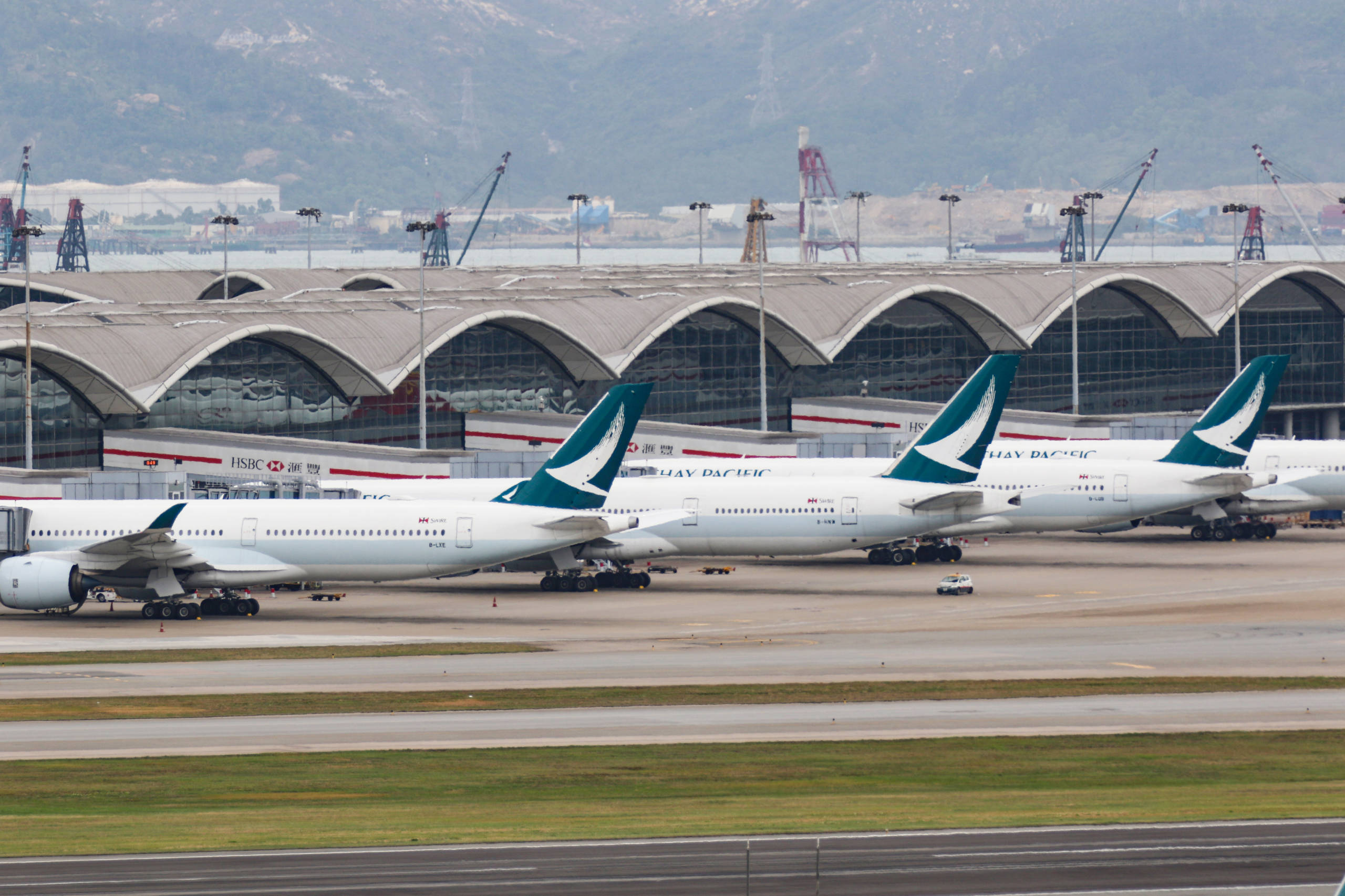
Cathay Pacific's standing has suffered throughout the pandemic, and now one of the biggest names in airline management is casting doubt on whether the Hong Kong-based carrier can ever recover to what it once was.
Emirates President Tim Clark suggested on Thursday that Cathay Pacific might no longer be counted among the major flagship airlines that facilitate long-haul travel.
Clark was the architect of Emirates' long-haul strategy that focused on using wide-bodies to connect far-flung global destinations via its now massive hub in Dubai. The success of that strategy over the past two decades has made Emirates one of the world's top carriers of international passengers, and – in turn – has made Clark one of the global airline industry's most influential executives.
Clark's comments came during a panel at the CAPA Airline Leadership Summit near Manchester, England.
"Looking at the future, the incumbents today will still be there," Clark said. "You'll still have a Thai [Airways] International, you'll still have a Qantas, you'll still have Malaysia. You may or may not still have Cathay Pacific; of course, that's anybody's guess."
The good news, Clark believes — although it's a self-serving belief — is that the market Cathay Pacific specializes in will return to its former strength.
Clark delivered his comments during a panel discussion on the future of long-haul airlines that operate extensive wide-body service via hub airports. That was contrasted to a recent shift that has some airlines turning to narrow-body aircraft that can fly on "thinner" point-to-point routes that likely wouldn't have enough passengers for a nonstop wide-body flight. The latter strategy has been employed by large legacy carriers during the past decade, as well as by low-cost airlines — such as new Icelandic startup Play — that run their narrow-body flights on cheap connecting service via smaller or midsized hubs.
Clark tried to put that all in perspective during his turn on the panel.
"I'm a great believer that corporate markets will return," Clark said, adding the

He continued: "The notion that the long-haul international super hub comes under threat from smaller aircraft, point-to-point, all this; I'm sorry, but I don't share that with you."
Clark argued that with air travel demand expected to return to growth mirroring its pre-pandemic trajectory, many major airports simply won't have the capabilities to handle many more flights operated by smaller aircraft. That, he argued, means a continued need for airlines to operate larger planes for longer distances.
"When you've only got a limited number of slots at primary hubs like Sydney, Heathrow, Hong Kong, New York, etc., what are you going to do with a single-aisle five- or six-hour aircraft [like] the [Airbus] A321XLR?" he said. "Slots are going to be at a real premium. If you drop in a 200-seater and we drop a 600-seater in," he added, insinuating that bigger planes will become ever-more crucial to serving those types of capacity restricted airports. "(T)hese large aircraft will be of huge interest in the 2030s," he said, though he admitted that environmental concerns are likely to continue to hamper larger planes.
"My biggest single problem will be the decline of the A380," he added, referring to the double-decker superjumbo that Emirates has used to great effect in expanding around the world.
However, Clark's fellow panelist Anko van der Werff, CEO of Stockholm-based SAS, disagreed with some of Clark's assessments.
"Yes, we see rebound; yes, we see pent-up demand; yes, we see premium demand," he said, "but I think in essence ... this industry as a whole has never made any money."
"There's an issue in the long run because the debt that we've taken on has to be repaid," van der Werff added, noting that wide-body aircraft are expensive to acquire and operate, and are less versatile than narrow-bodies.
Don't miss: Skepticism on Wall Street as details emerge on JetBlue's bid for Spirit
"I believe that already, for the last 10 years, the world has produced too many wide-body aircraft," he said. "I'm not negative, but I'm certainly not positive when I see what's going on: high fuel, inflation, war in Europe and all the connected elements."
Clark's comments on Cathay Pacific echo those by International Air Transport Association Director General Willie Walsh on Tuesday.
"It's effectively off the map now, and I think it's going to be difficult for Hong Kong to recover," Walsh said. "It's going to lag significantly behind the recovery that we're seeing elsewhere and has led to a tough time for all airlines operating there."
While Hong Kong lifted some travel restrictions on April 1, the city, along with mainland China, has levied some of the most draconian locations in terms of pandemic restrictions. Unlike many other global carriers, Cathay Pacific has no domestic or regional network on which it could rely during the pandemic. With harsh penalties for rule violators and strict quarantine requirements, the airline has significantly reduced its service and downsized, with just a fraction of its 2019 capacity planned for this summer.
The airline is further hampered from quickly scaling up as the pandemic recedes after mass resignations of pilots and flight attendants over strict quarantine requirements for aircrew imposed by Hong Kong. The airline closed overseas bases and cut more than 6,000 jobs in 2020.
TPG featured card

at Capital One's secure site
Terms & restrictions apply. See rates & fees.
| 5X miles | Earn 5X miles on hotels, vacation rentals and rental cars booked through Capital One Travel |
| 2X miles | Earn unlimited 2X miles on every purchase, every day |
Pros
- Stellar welcome offer of 75,000 miles after spending $4,000 on purchases in the first three months from account opening. Plus, a $250 Capital One Travel credit to use in your first cardholder year upon account opening.
- You'll earn 2 miles per dollar on every purchase, which means you won't have to worry about memorizing bonus categories
- Rewards are versatile and can be redeemed for a statement credit or transferred to Capital One’s transfer partners
Cons
- Highest bonus-earning categories only on travel booked via Capital One Travel
- LIMITED-TIME OFFER: Enjoy $250 to use on Capital One Travel in your first cardholder year, plus earn 75,000 bonus miles once you spend $4,000 on purchases within the first 3 months from account opening - that’s equal to $1,000 in travel
- Earn unlimited 2X miles on every purchase, every day
- Earn 5X miles on hotels, vacation rentals and rental cars booked through Capital One Travel
- Miles won't expire for the life of the account and there's no limit to how many you can earn
- Receive up to a $120 credit for Global Entry or TSA PreCheck®
- Use your miles to get reimbursed for any travel purchase—or redeem by booking a trip through Capital One Travel
- Enjoy a $50 experience credit and other premium benefits with every hotel and vacation rental booked from the Lifestyle Collection
- Transfer your miles to your choice of 15+ travel loyalty programs
- Top rated mobile app