Carnival is cleaning up its act with better cruise fuel, waste reduction

As the world experiences record-setting temperatures this summer, and wildfires rage through several countries, global warming and the environment are top-of-mind issues for many.
The cruise industry often comes under fire for everything from its emissions to the level of food waste that occurs onboard ships. Historically, many vessels have also committed infractions like illegal dumping of trash, oil and gray water -- dirty (non-sewage) water from showers, sinks and laundry facilities.
One of the biggest offenders has been Carnival Corp., the company that operates several popular brands, such as Carnival Cruise Line, Princess Cruises, Holland America Line and Cunard Line -- all of which have been guilty of one or more of the above.
Although Carnival Corp. is still on probation following several violations for which it was fined tens of millions of dollars, the environmental advancements Carnival Cruise Line has made on its newest ship, Mardi Gras, are impressive.
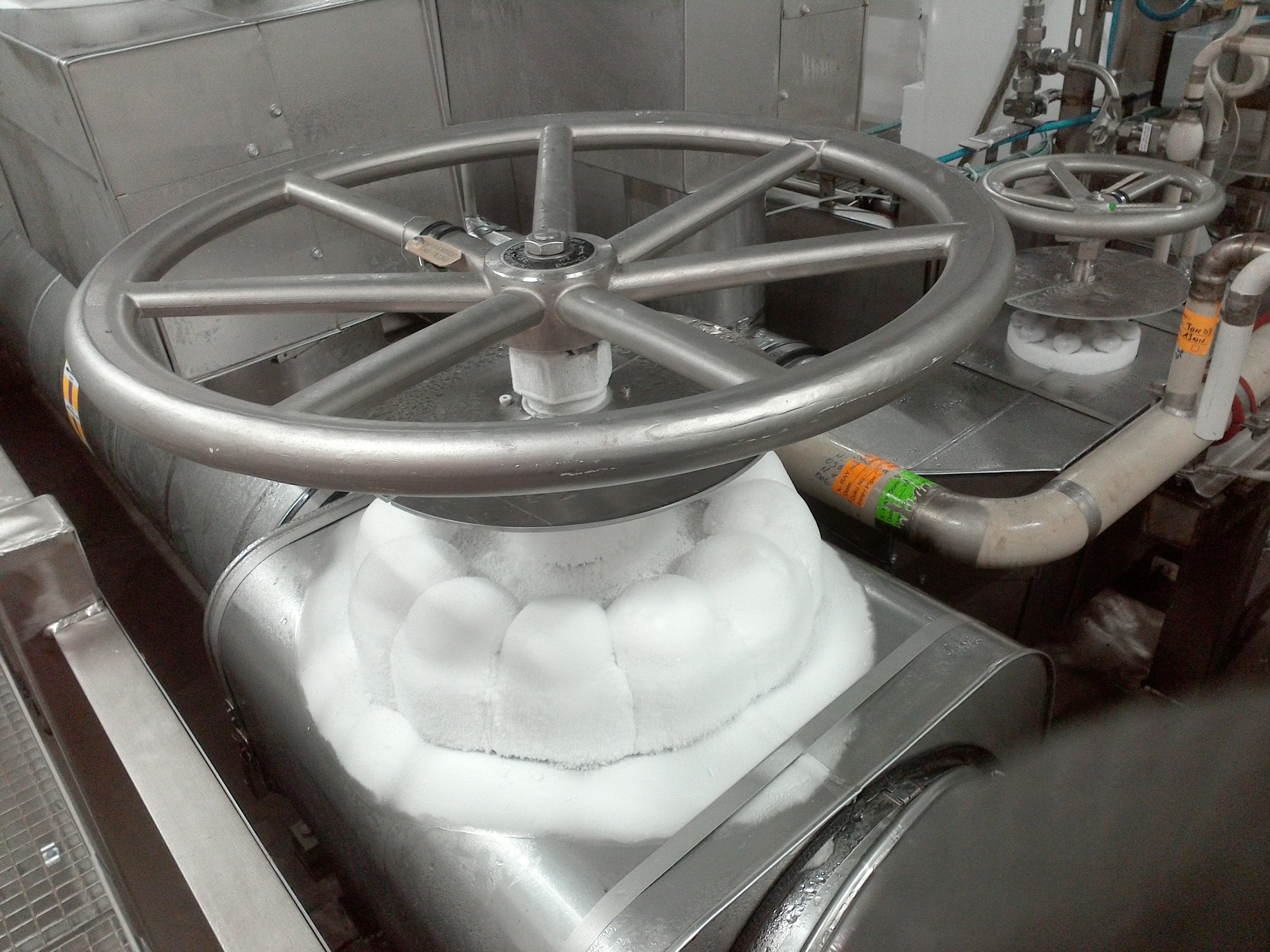
Upon its debut, the vessel became the first in North America with the capability to run on liquefied natural gas (LNG), a cleaner-burning fuel that greatly reduces sulfur and nitrogen oxide emissions as well as particulates, and also cuts down on greenhouse emissions.
Reducing harm to air and marine life
LNG fuel
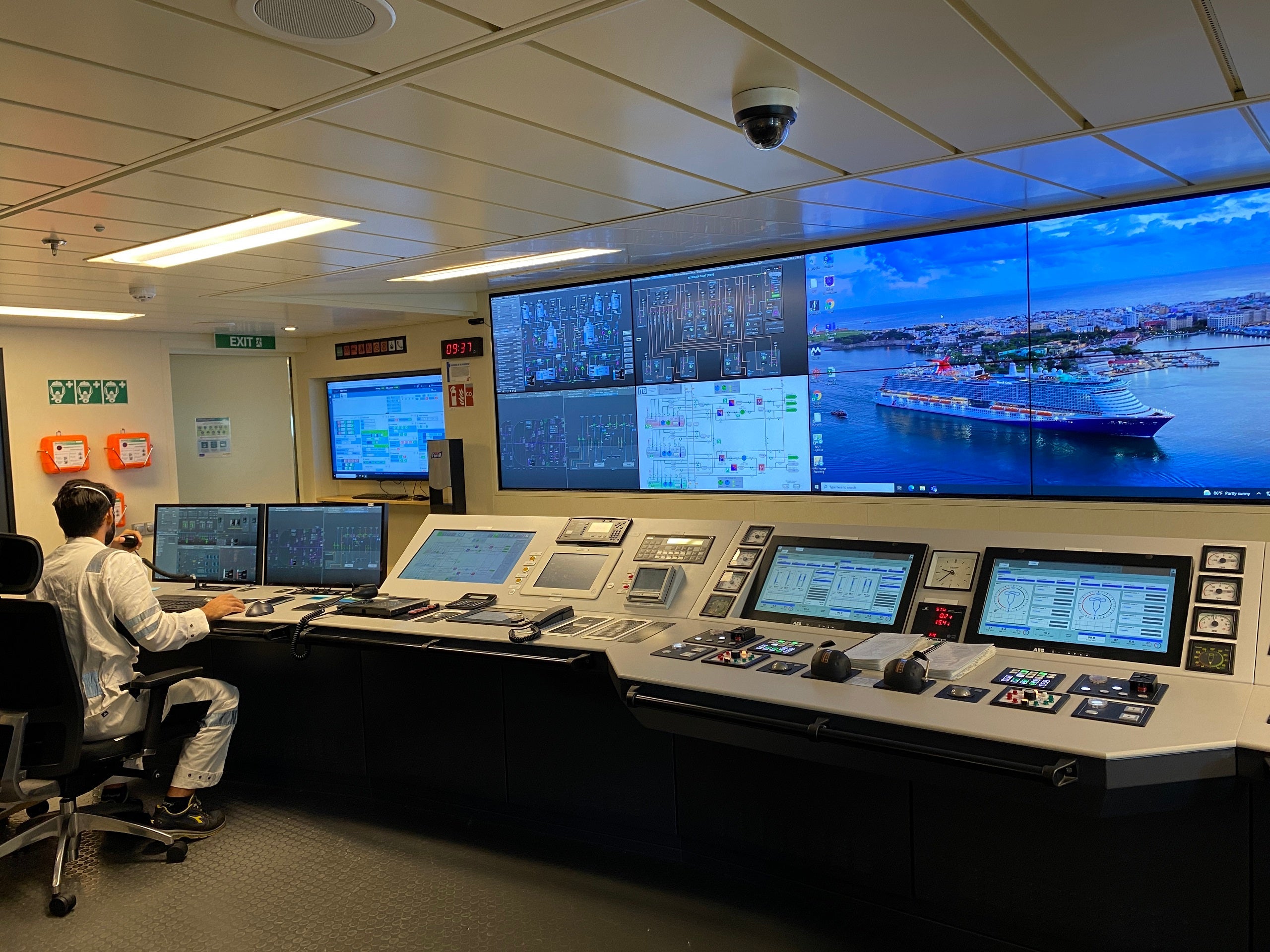
During my recent sailing on Mardi Gras, I went on a tour of the ship's engine control center, recycling facility and engine room with Richard Pruitt, Carnival Cruise Line's vice president of environmental operations.
Pruitt explained that the ship, which is a diesel/LNG-electric hybrid (meaning that it runs on a combination of the two) is more efficient than a vessel that runs on one or the other because it allows the ship's engineers to match the amount of energy produced by the engines to the amount of energy needed to run the vessel without worrying that there won't be enough (which would cause a blackout) or that there's too much (which would create waste).
Pruitt said the engines produce power that goes into a system that apportions energy to whichever onboard systems need it -- propulsion, air-conditioning, galleys, laundry, staterooms and more.
Although the engines can run on either LNG or diesel fuel, LNG was being used on my voyage. But that doesn't mean there isn't still a small bit of diesel needed.

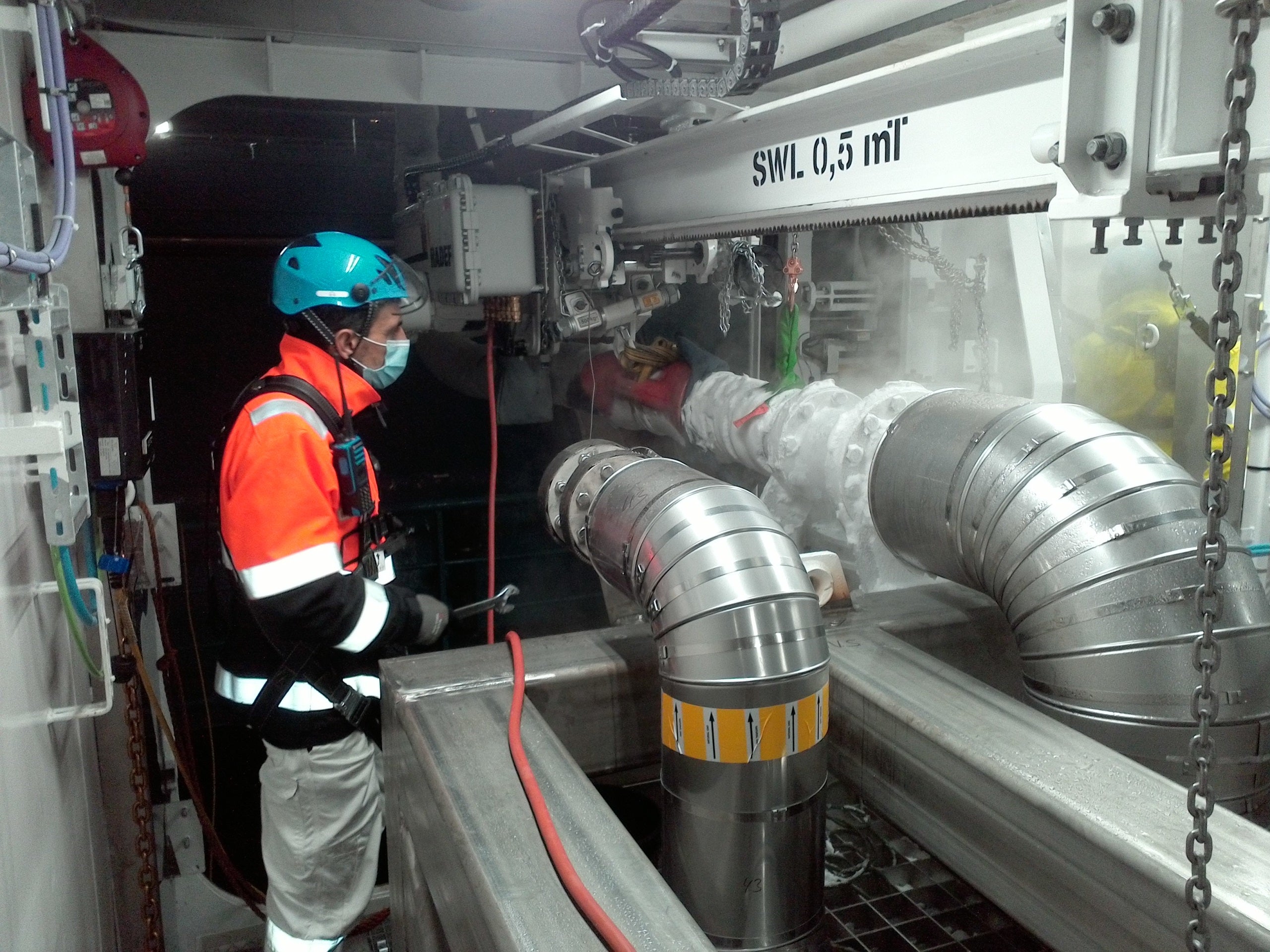
"The ship has three large tanks for LNG and several tanks for what we call marine gas oil [MGO], which is similar to diesel that you see in an airplane or that you might even have in a truck or a car on the road," Pruitt said. "It's highly refined. [The ship] can run on either one. In fact, when the ship is running on LNG, we actually inject a very small amount of MGO into the cylinders because LNG [is so cold -- 250 degrees below zero, Fahrenheit -- that it] can't ... self-ignite.... So we have to spray a little bit of MGO into each cylinder. It's effectively the spark plug for getting the LNG to ignite and combust."
The ship, Pruitt said, can run for about two weeks on LNG when the tanks are full, but fill-ups happen more frequently for operational and safety reasons.
Dynamic positioning
Dynamic positioning, a system that allows a vessel to stay in place using thrusters and GPS coordinates, has been around for a while, but it's only recently that we've begun to hear about it on cruise ships.
The benefit of this technology is that it keeps a ship in one place without the use of anchors, which can cause significant damage to seabeds that are home to marine life.
Mardi Gras is certainly not the first vessel to operate using it, but it's important to note it as part of Carnival's overall effort to be more environmentally friendly.
Waste reduction and management
Single-use items
Several years ago, nearly all mainstream cruise lines made a push to eliminate single-use plastics from their ships. These included everything from plastic bags in retail shops and drinking straws (which have been replaced with paper and even sugar straws on Carnival vessels) to single-serve condiment packets, coffee stirrers and, on some ships, even bottled water in plastic containers. But Pruitt says it's about more than that.
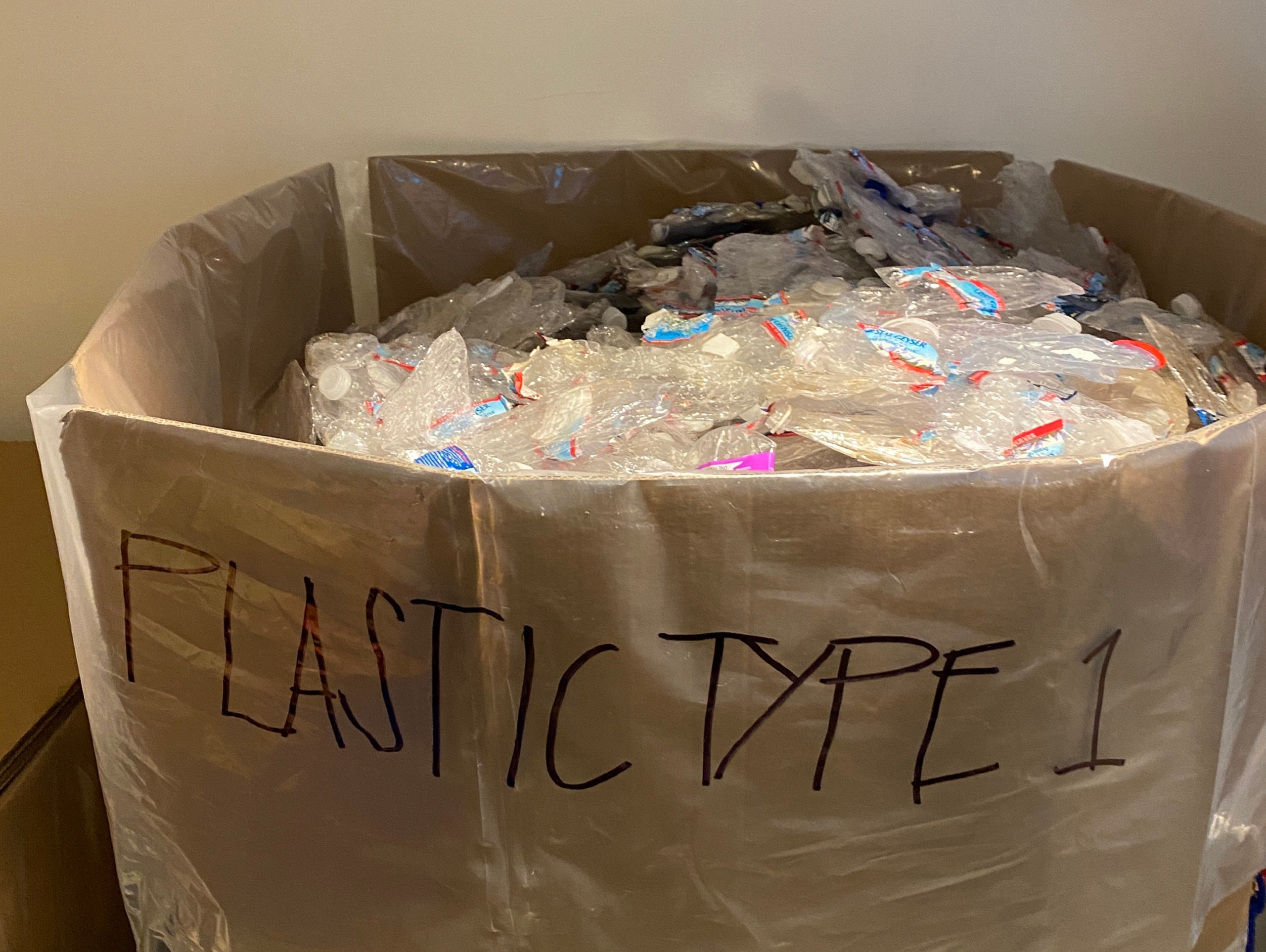
"If you don't generate it to begin with, then you don't have to handle it; you don't have to dispose of it," Pruitt said. "We've reduced a lot of single-use items. You hear a lot about single-use plastics, but it's really more than plastics. It's everything.
"You'll notice things like [single-use] butter pats are no longer on the ship. We've gone with small, little dishes with butter in it. Bulk sugar: We went from 100 million sugar packets [in the last full year of guest operations] down to where we just have sweeteners [in packets and sugar in larger refillable containers placed on tables].... You'll notice we don't have stirrers in the coffee bars anymore. You just get a spoon.... You'll notice also we've got bulk dispensers for cereal, rather than the little boxes."
The line has also reduced paper waste by providing lists of spa treatments, shore excursions and each day's FunTimes daily activities on its Hub mobile app, rather than as physical printouts. (Paper copies of the FunTimes are still available at the front desk on request.)
Recycling
Recycling is another crucial component of most ships' onboard environmental efforts. Great care goes into sorting the contents of every trashcan that's emptied, whether it's from the galley or your stateroom.
An entire team of workers separates plastic, glass, metal and cardboard so it can be offloaded and properly processed in port.
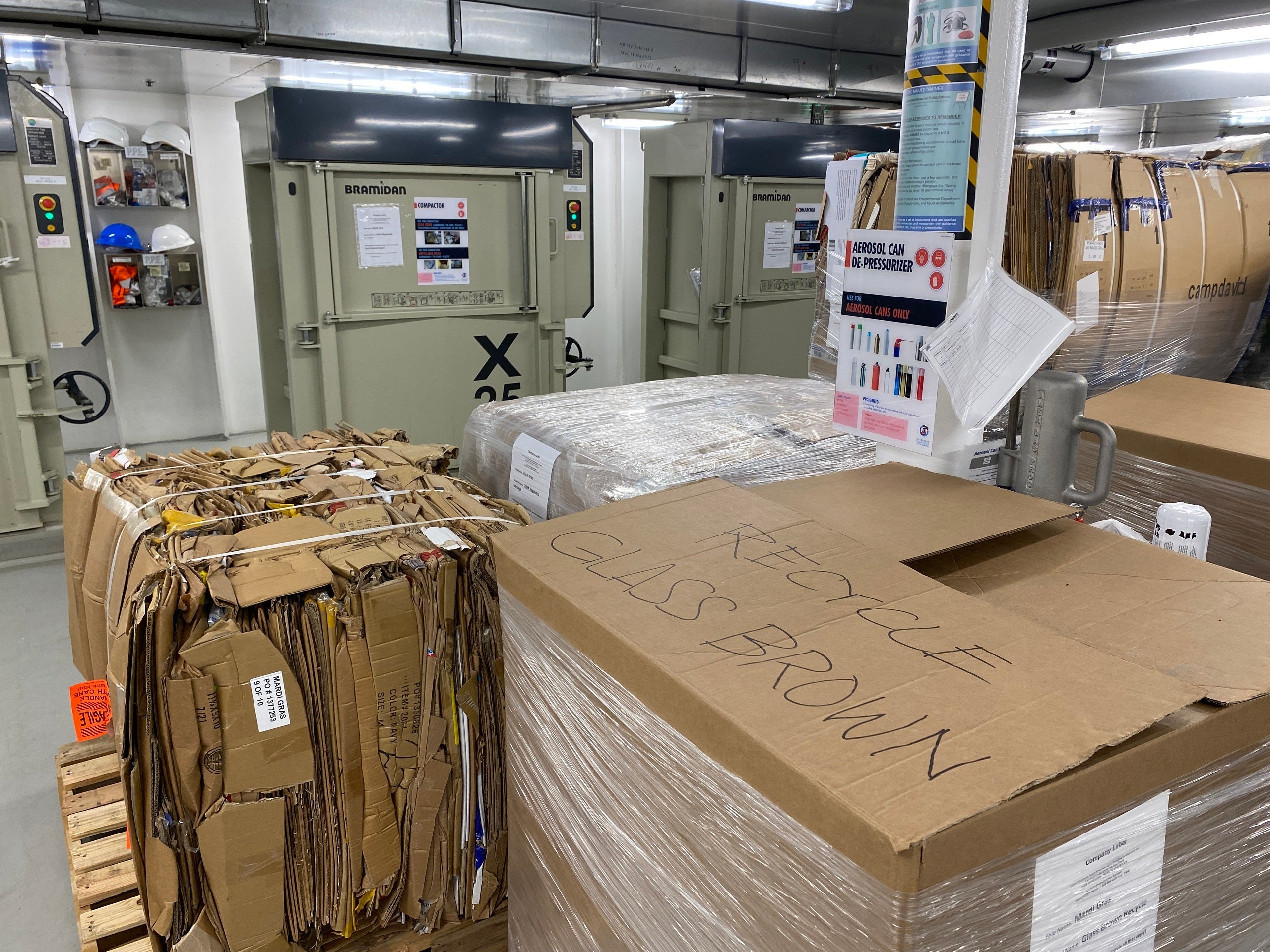
Recycling is one of the most basic green initiatives undertaken by cruise lines in the past couple of decades. It's now a standard practice onboard modern passenger vessels, but Carnival even goes so far as to donate items like unwanted bedding, kitchenware, furniture and small appliances to shoreside charities instead of throwing them into landfills.
Food waste
"We obviously generate a lot of food waste..." Pruitt admitted. "So we decided we wanted to try to address this, and we've done a couple things. We have a corporatewide food waste reduction. The last time we had guests onboard for a full quarter, we had achieved a 20% reduction, corporatewide, from where we had our baseline."
The main way Carnival Cruise Line accomplished the reduction was by slightly tweaking the portion sizes in its restaurants.
"It should be invisible to you," Pruitt said. "It shouldn't feel like 'oh, they're being stingy with my food.' But they've made adjustments; they've made improvements in [galley food] prep. We have a program that's called 'don't waste your waste,' where we're trying to minimize prep waste. It's like being thrifty at home. If you're chopping something up, 'oh, that could go in a soup,' so a lot of work has gone into that. We're very careful about first in, first out, trying to avoid spoilage ... because that all counts against us when it comes to food waste."
On our Mardi Gras sailing, Pruitt said the average food waste per person, per day, was 2.3 pounds.
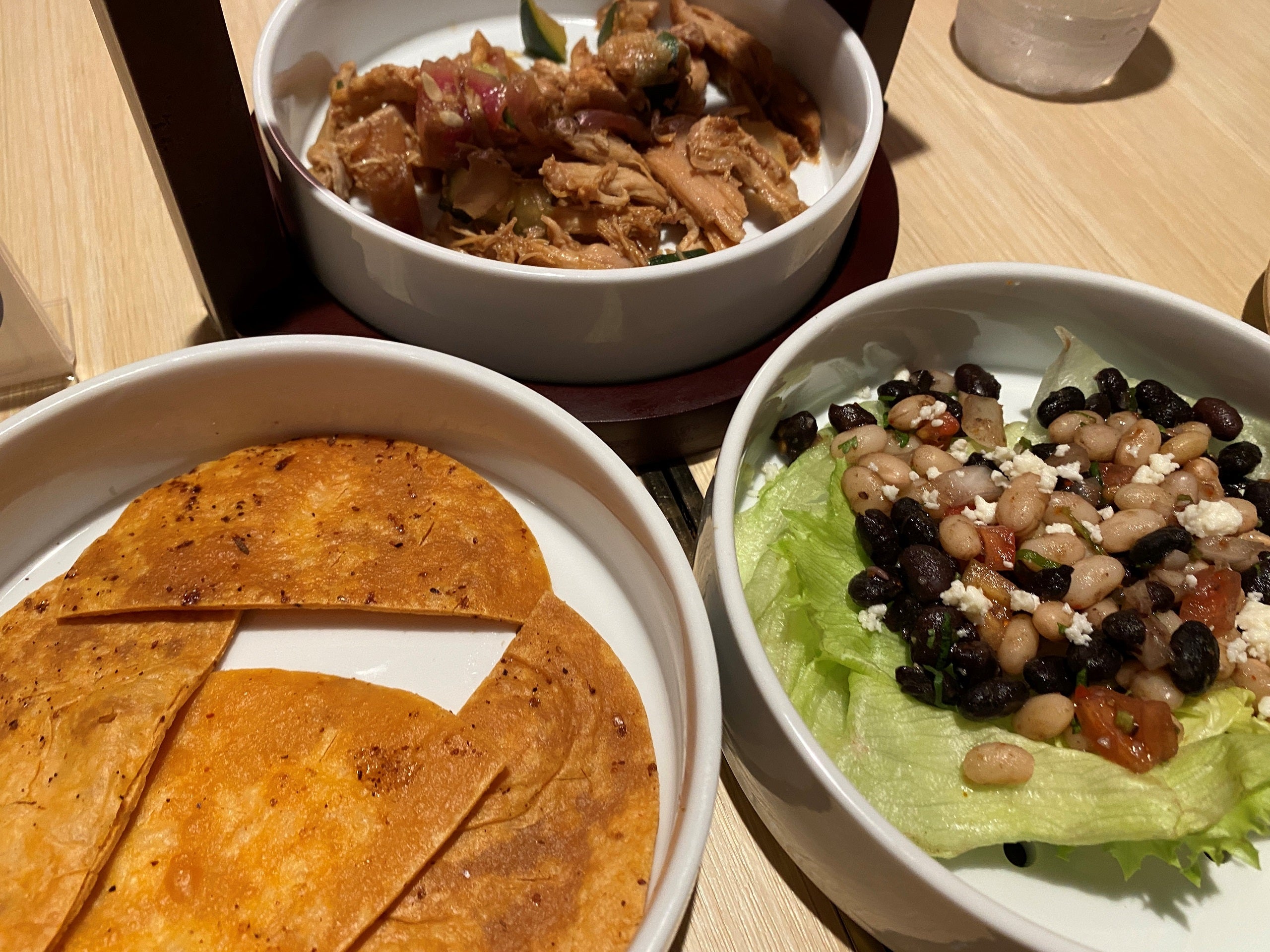
"Food waste either gets landed [taken ashore for disposal], or it's chopped up, pulped up, and discharged at sea when we're outside of 12 nautical miles [from land]."
As a way to further reduce the amount of food waste discharged, Pruitt said the line implemented some additional technology, including what he refers to as a "stainless steel stomach," which aerates the food and introduces beneficial bacteria to break it down to a liquid form that's only a fraction of the original waste's volume. (Carnival Cruise Line is currently the only mainstream line using this type of system onboard.)
"Effectively, what you have in there is some media; we add in beneficial organisms that basically digest the food waste inside the tank," Pruitt said. "We're ... committed to installing these things throughout our fleet.... We're [already] at around 190-ish.... I've got two teams out there installing these things as we speak. This ship has 14."
"What we put in here is anything that can be digested," Pruitt said. "So, I'm not going to put in an oyster shell. I'm not going to put in a lobster shell. I'm not going to put in a heavily calcified beef bone or something in there because it might eventually break it down, but it would take up space. So if you put in there fruits and vegetables and meat and carbohydrates ... it will eat it down to where there's effectively just a liquid.... I've seen it where the [liquid] is fairly clear to where it can be a little bit thicker, like a bisque."
The machine models vary, but they have the ability to eat anywhere from 600 to 2,400 pounds of food waste per day, depending on their size. Pruitt monitors them with an app that allows him to see their progress and report any faults to an onboard engineer.
Pruitt also mentioned that Carnival might explore other food waste reducers, including dehydrators, which are used by some other cruise lines.
Water treatment and consumption
Pruitt said each person on Mardi Gras is responsible for about 50 to 60 gallons of water use per day. That includes everything from showering and brushing teeth to galley usage in order to prepare the meals each person consumes.
"On land, the typical American uses about 100 gallons a day," Pruitt said. "So, through water conservation measures, we save a lot of water onboard, and that's important because water is an energy issue for us.... We have to use energy to treat it."
"[On] Mardi Gras, like all of Carnival's ships going back to the Vista Class..., we've installed advanced wastewater treatment systems onboard. These treat all of the gray water and all of the black water to standards that are as good [as] or better than how most municipalities treat wastewater in the United States."
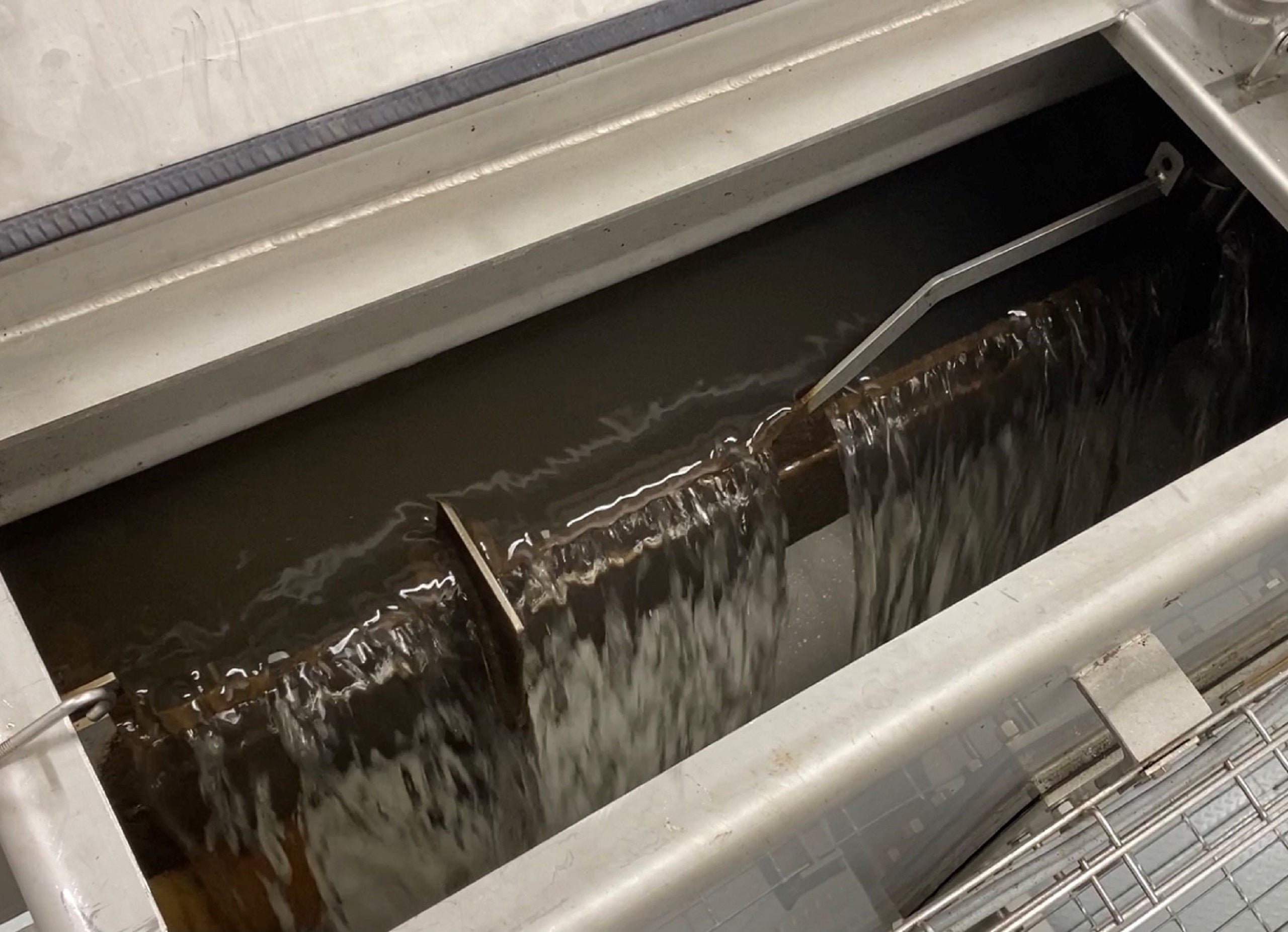
All water that comes from the ships' galleys is run through a grease separator to remove any grease, oil and other grill-related substances that could be harmful to the environment. The grease is then put into drums. (The ship also has an oil separator that uses centrifugal force to separate oil from water, based on their weight difference.)
All black water -- water that contains sewage -- goes through a pre-screen to remove toilet paper, feminine products, condoms and other debris that might be flushed down the toilet. In some cases, it's landed; in others, it's incinerated right onboard the ship.
After the black water is pretreated and the gray water is stripped of grease, they're combined in a mixing tank, where they undergo a series of processes to remove further solids as they rise to the top. Beneficial bacteria are then introduced to eat the solid matter.
Finally, ultraviolet light is used to disinfect the water, killing both good and bad bacteria and making it clean enough to discharge while docked (assuming the correct permits are in place). Onboard engineers are in charge of periodically testing the wastewater to make sure the processes are working.
Separate processes involving filtration and UV light are also used to treat bilge water (water that ends up in the lowest part of the ship due to leaking pipes or condensation) and ballast water (water used to make the ship heavier as potable water is consumed or to stabilize a ship to prevent listing).
Although chlorine is required to be used in pool and potable water, it is not used in wastewater. Potable water is taken onboard and goes through a reverse osmosis process in order to make it clean enough for drinking.
Power consumption
Many newer cruise ships have taken to using keycard-activated lighting in staterooms. In order for the lights to turn on, passengers must put a card into the slot near the cabin door.
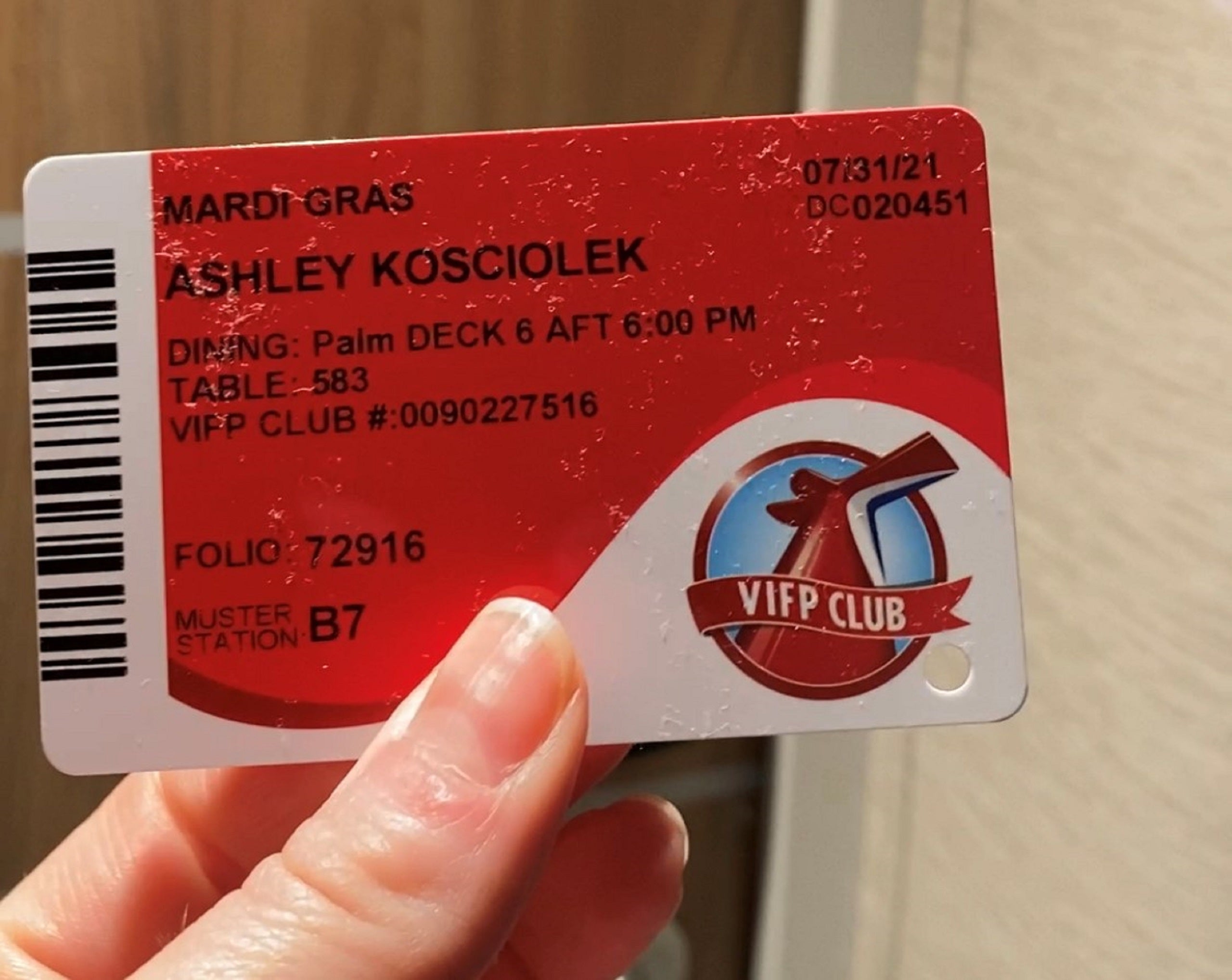
Although Mardi Gras has them -- and they're worth mentioning as part of the big picture onboard -- they aren't new. In fact, they've been in operation for years, largely on European ships, but they have slowly begun to make their way over to vessels sailing from North America.
Carnival's newest ships will continue to follow along this greener path. The next vessel due to launch is Carnival Celebration, slated to debut in November 2022.
TPG featured card

at Capital One's secure site
Terms & restrictions apply. See rates & fees.
| 5X miles | Earn 5X miles on hotels, vacation rentals and rental cars booked through Capital One Travel |
| 2X miles | Earn unlimited 2X miles on every purchase, every day |
Pros
- Stellar welcome offer of 75,000 miles after spending $4,000 on purchases in the first three months from account opening. Plus, a $250 Capital One Travel credit to use in your first cardholder year upon account opening.
- You'll earn 2 miles per dollar on every purchase, which means you won't have to worry about memorizing bonus categories
- Rewards are versatile and can be redeemed for a statement credit or transferred to Capital One’s transfer partners
Cons
- Highest bonus-earning categories only on travel booked via Capital One Travel
- LIMITED-TIME OFFER: Enjoy $250 to use on Capital One Travel in your first cardholder year, plus earn 75,000 bonus miles once you spend $4,000 on purchases within the first 3 months from account opening - that’s equal to $1,000 in travel
- Earn unlimited 2X miles on every purchase, every day
- Earn 5X miles on hotels, vacation rentals and rental cars booked through Capital One Travel
- Miles won't expire for the life of the account and there's no limit to how many you can earn
- Receive up to a $120 credit for Global Entry or TSA PreCheck®
- Use your miles to get reimbursed for any travel purchase—or redeem by booking a trip through Capital One Travel
- Enjoy a $50 experience credit and other premium benefits with every hotel and vacation rental booked from the Lifestyle Collection
- Transfer your miles to your choice of 15+ travel loyalty programs
- Top rated mobile app