Can pilots predict turbulence?


"A superior pilot uses his superior judgment to avoid situations which require the use of his superior skill."
This famous quote by aviation hero Frank Borman epitomizes exactly what the job of an airline pilot is all about. It's our job to use our knowledge and experience to assess the conditions around and ahead of the aircraft to make decisions to keep those on board safe.
This is particularly true when it comes to turbulence. Whilst turbulence in itself is not dangerous to an aircraft, it is, of course, uncomfortable for those passengers inside. In addition to this, some of the sources of turbulence can pose a threat to the aircraft.
It is, therefore, a competent pilot's responsibility to be aware of what turbulence is, how it can affect the aircraft and, most importantly, how to recognize the signs of potential turbulence and void them before it affects the aircraft.

What is turbulence?
Simply put, turbulence is fluctuations in the air around the aircraft, leading to short and rapid changes in lift. To understand why this happens, we need to peek into some high school physics.
It's all about the molecules
Air is made up of molecules, which are happily moving around and bouncing off each other. In the same way, water is also made up of molecules moving around and bouncing off each other. The main difference being that the molecules in water are packed more tightly together, giving it a "thicker" feel. As a result, air and water behave in much the same way.
An aircraft flies not because of the engines, but because of the air molecules passing over the wing. The more molecules that pass over the wing in a given time, the more lift there is. This is why aircraft have to accelerate to a certain speed on takeoff before there is enough lift to get airborne.
Once up in the air, the forward propulsion provided by the engines keeps the air flowing over the wings and the aircraft carries happily on its way to the destination.
However, very rarely is the air around us still. Even on the ground, air moves from areas of high pressure to areas of low pressure and we experience this as the wind. Some days there is a small difference between the high pressure and the low-pressure areas, so there is little air movement. Other days, when there is a big difference in pressure values like when a storm front passes through, there is a rapid movement of air, giving us strong winds.

Up in the air, without hills and buildings to block the flow of air, this effect is felt even more. As the wind changes speed and direction, the molecules around the wing change rapidly. Sometimes there may be more molecules, giving greater lift and other times there may be fewer, giving less lift; and it's these differences that cause turbulence.
Multiply these changes in lift hundreds of times a second and the rapid fluctuations between more lift and less lift result in the aircraft climbing and descending. This is turbulence.
Turbulence is just a bumpy road in the sky
When driving a car, rarely is the road perfectly smooth for the entire journey — and it's the same in the sky. The air over the wings acts as the road. In the same way that it's impossible to fall through the road, it's impossible to fall out of the sky.
Driving along a motorway, for the most part, it's nice and smooth. It's like this for the majority of a flight. However, when you turn off the motorway and onto the country roads, they tend to be a little more rough and bumpy. Taking it to an extreme, if you turn down a muddy track full of puddles and holes, the ride will be extremely uncomfortable.
It's exactly the same in the air. Sometimes the air road is smooth like the motorway and other times it is bumpy like the country track; you just need to remember that it is merely uncomfortable but not dangerous.

What are the different causes of turbulence?
Knowing that turbulence is caused by changes in wind velocity (the speed and direction), it is then possible to predict scenarios where turbulence may occur.
The boundary layer
The most simple form of turbulence, both close to the ground and up in the air. Winds rarely blow consistently so changes in this velocity will result in turbulence. The U.K. winter has regular storm patterns passing though and when we fly in these, we know that it will get windy.
Close to the ground, flying conditions tend to get bumpier due to a phenomenon known as the boundary layer. As the wind passes over obstructions close to the ground such as hills, trees and buildings, the flow of air becomes disrupted.
Going back to air's similarity with water, if the water in a fast-flowing river hits a rock, the water downstream of it becomes choppy and turbulent. This is exactly what happens with the boundary layer.
When the free-flowing air hits these obstructions, the airflow gets disrupted, resulting in turbulent air. If you've ever landed into London Heathrow on the northern runway with a strong wind from the south, you may well have experienced this is the wind rolls of Terminal 5 at one end and the engineering hangars at the other.
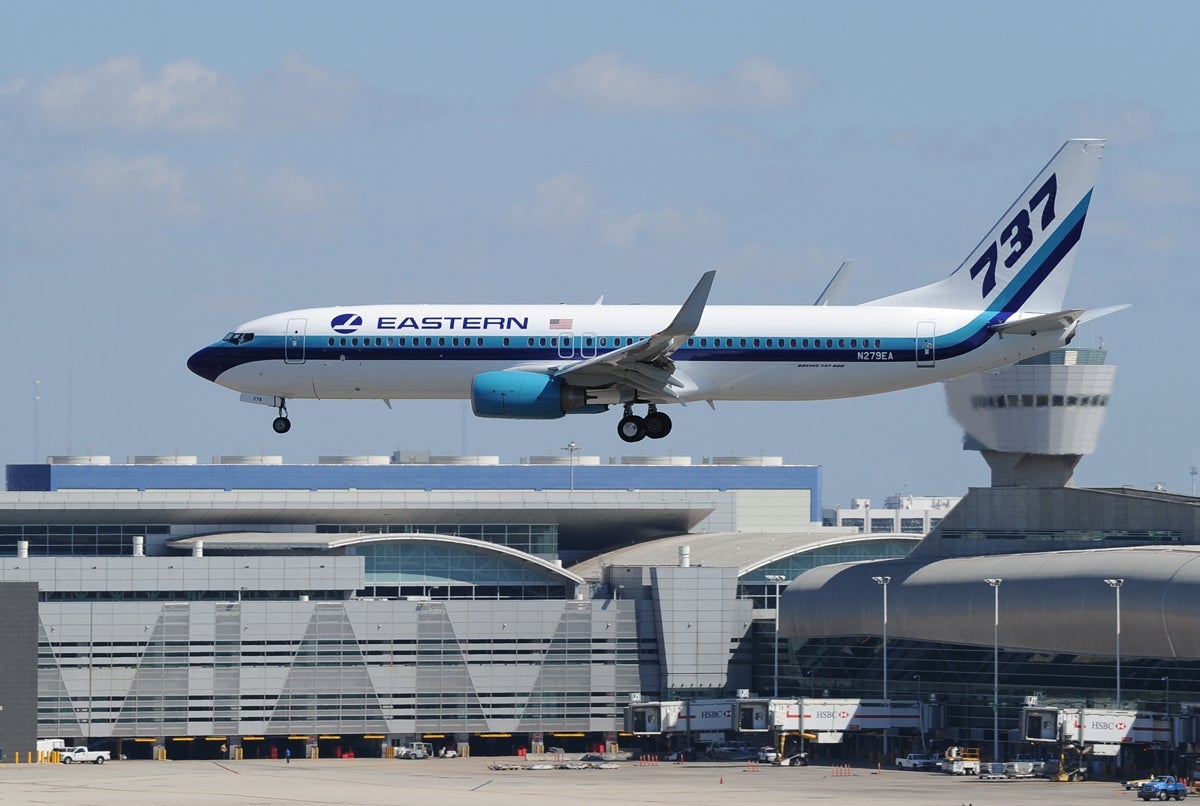
When making an approach to land, we will know the wind direction and speed in advance. We can then look to see if this will interact with any objects around the airport and cause us any issues on the final approach.
A great example of this is Gibraltar. The runway sits at the base of The Rock and when the wind blows over it, severe turbulence can be experienced. This can get so bad that if the wind is greater than a certain speed from a certain direction, aircraft are not allowed to make an approach to land.
Mountain ranges
If small obstructions such as trees and buildings can cause the air to become disrupted enough to cause turbulence, mountain ranges with peaks over 10,000 feet high are an obvious source of bumpy air.
When crossing a mountain range with a strong wind blowing across it, the effects of the wind whipping off the top of the peaks can be quite dramatic on the downwind side. In some parts of the world, it can be so marked that there are local procedures in place which all operators must abide by.

Crossing the Andes into Chile, there is often a strong wind blowing across the mountains, which can cause a phenomenon known as a mountain wave. As the wind rolls off the top of the mountains, it creates circular rotors of air. These create sudden updrafts and then downdrafts in a very short space of time, resulting in severe turbulence.
To protect the occupants of the aircraft from the sudden effects of this turbulence, all passengers and crew must be seated with their seatbelts fastened 40 minutes before landing into Santiago.
Thunderstorms
Thunderstorms can be impressive and imposing feats of nature, and they deserve the respect which they command. It may come as a surprise that the biggest threat from a thunderstorm is not in fact lightning. Aircraft are actually the perfect conductor for the safe passage of lighting, acting as a Faraday Cage. The biggest threats from thunderstorms are the strong winds and updrafts which they generate.
In order to form, a thunderstorm needs moisture and rapidly rising air. As the two combine, the cloud will grow vertically, getting larger as it goes. In some parts of the world, the rising air is so strong that it's possible to see storms growing in front of your very eyes. A storm in the distance that is much lower than the aircraft could grow so quickly that it could be a threat in just a few minutes' time.
The underneath of a thunderstorm can provide an even bigger threat. As the rain falls from the cell, the inertia of the falling moisture pushes air away from it, creating wind known as a gust front. The bigger the storm, the bigger the gust front can be. If you're ever outdoors and notice the sky getting darker and then a strong wind starts to blow, this is your sign that a heavy shower is imminent.
In extreme cases, a column of moisture falling from a storm cell can produce winds of up to 150 miles per hour — this is known as a microburst.
Thermals
As I just mentioned, one of the elements required to create a thunderstorm is rising air, commonly known as "thermals." These columns of hot rising air can give a sudden lift to an aircraft making an approach to land, followed by a sudden sink on the other side.
Thermals often develop over areas of dark dense material, such as the large car parks, which are often dotted around airports. The turbulence created from these is often sharp and abrupt but can result in the aircraft getting a little high on the approach. If not anticipated and dealt with accordingly, it could result in the aircraft landing farther down the runway than expected.
The 5 levels of turbulence
In order to share the severity of turbulence experienced with other pilots, there is a defined system to categorize what was experienced.
Light chop
Light chop is turbulence that causes slight bumpiness with an almost rhythmic feel. Walking around the cabin or performing the cabin service is not affected.
Light
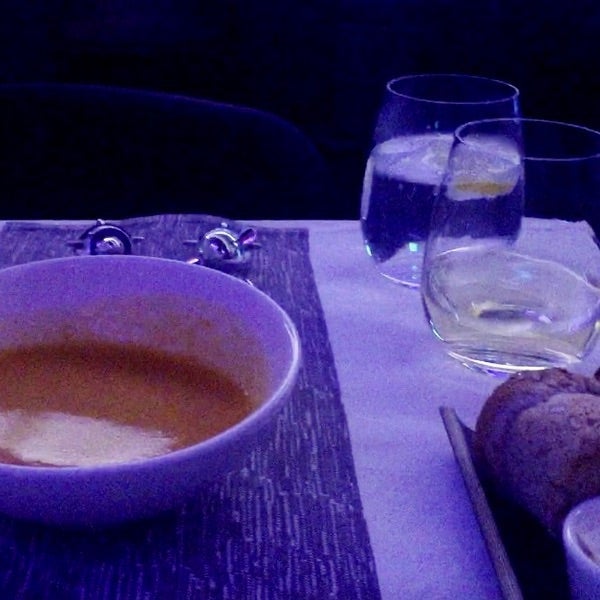
Light turbulence causes slight, momentary changes in the aircraft's altitude. In the cabin, passengers may notice drinks shaking but walking around is still no problem. Depending on the severity and what is anticipated ahead, the seatbelt sign may or may not be switched on.
Moderate chop
Like light chop but of greater intensity. Walking around the cabin will be difficult and the cabin service may well be paused. The seatbelt sign will most likely be switched on.
Moderate
Passengers feel definite strains against their seatbelts and unsecured objects will be dislodged. Your drink will be in your lap. This level of turbulence is the worst that most passengers will ever experience.
Severe
Rarely, the turbulence gets so intense that unsecured items can become airborne and the aircraft can experience large, abrupt changes to its speed and altitude. Even then, this will only be in the tens of feet, not thousands.
In over 10,000 hours of flying in my career, I have experienced severe turbulence for just 10 to 15 seconds. It really is that rare.
Could it damage the aircraft?
Aircraft are designed and built to withstand environmental forces far greater than any turbulence could inflict on them. The wing acts as the suspension when riding the bumps and is designed to bend and flex to absorb them. The wing on the 787 is particularly good at this.
Looking out of the window during turbulence, the wing may be flexing so much that it looks like it's flapping. But this is exactly what it is designed to do.
During the testing process, a wing is put in a rig, which gradually bends the wing upwards until it breaks. The design of the 777 predicted that the wing would break at 150% of the maximum load an aircraft could ever experience in flight. This would give a 24-foot deflection from the normal position — around the same as a two-story house. When tested, it finally broke at 154%, as can be seen in the video below.
Bottom line
Airline pilots spend a large part of their training learning about the weather and how it affects flying conditions and the aircraft. We then spend our whole careers building on that knowledge with real-world experience, each day enabling us to make informed decisions to avoid any impending turbulence.
That said, nature is wild. At times when all signs point towards turbulence occurring, it doesn't. Conversely, when the air is smooth and there are no other suggestions of turbulence, it gets bumpy. We just have to react to the situation and deal with it accordingly.
TPG featured card

at Capital One's secure site
Terms & restrictions apply. See rates & fees.
| 5X miles | Earn 5X miles on hotels, vacation rentals and rental cars booked through Capital One Travel |
| 2X miles | Earn unlimited 2X miles on every purchase, every day |
Pros
- Stellar welcome offer of 75,000 miles after spending $4,000 on purchases in the first three months from account opening. Plus, a $250 Capital One Travel credit to use in your first cardholder year upon account opening.
- You'll earn 2 miles per dollar on every purchase, which means you won't have to worry about memorizing bonus categories
- Rewards are versatile and can be redeemed for a statement credit or transferred to Capital One’s transfer partners
Cons
- Highest bonus-earning categories only on travel booked via Capital One Travel
- LIMITED-TIME OFFER: Enjoy $250 to use on Capital One Travel in your first cardholder year, plus earn 75,000 bonus miles once you spend $4,000 on purchases within the first 3 months from account opening - that’s equal to $1,000 in travel
- Earn unlimited 2X miles on every purchase, every day
- Earn 5X miles on hotels, vacation rentals and rental cars booked through Capital One Travel
- Miles won't expire for the life of the account and there's no limit to how many you can earn
- Receive up to a $120 credit for Global Entry or TSA PreCheck®
- Use your miles to get reimbursed for any travel purchase—or redeem by booking a trip through Capital One Travel
- Enjoy a $50 experience credit and other premium benefits with every hotel and vacation rental booked from the Lifestyle Collection
- Transfer your miles to your choice of 15+ travel loyalty programs
- Top rated mobile app