Step inside Boeing's South Carolina Dreamliner factory

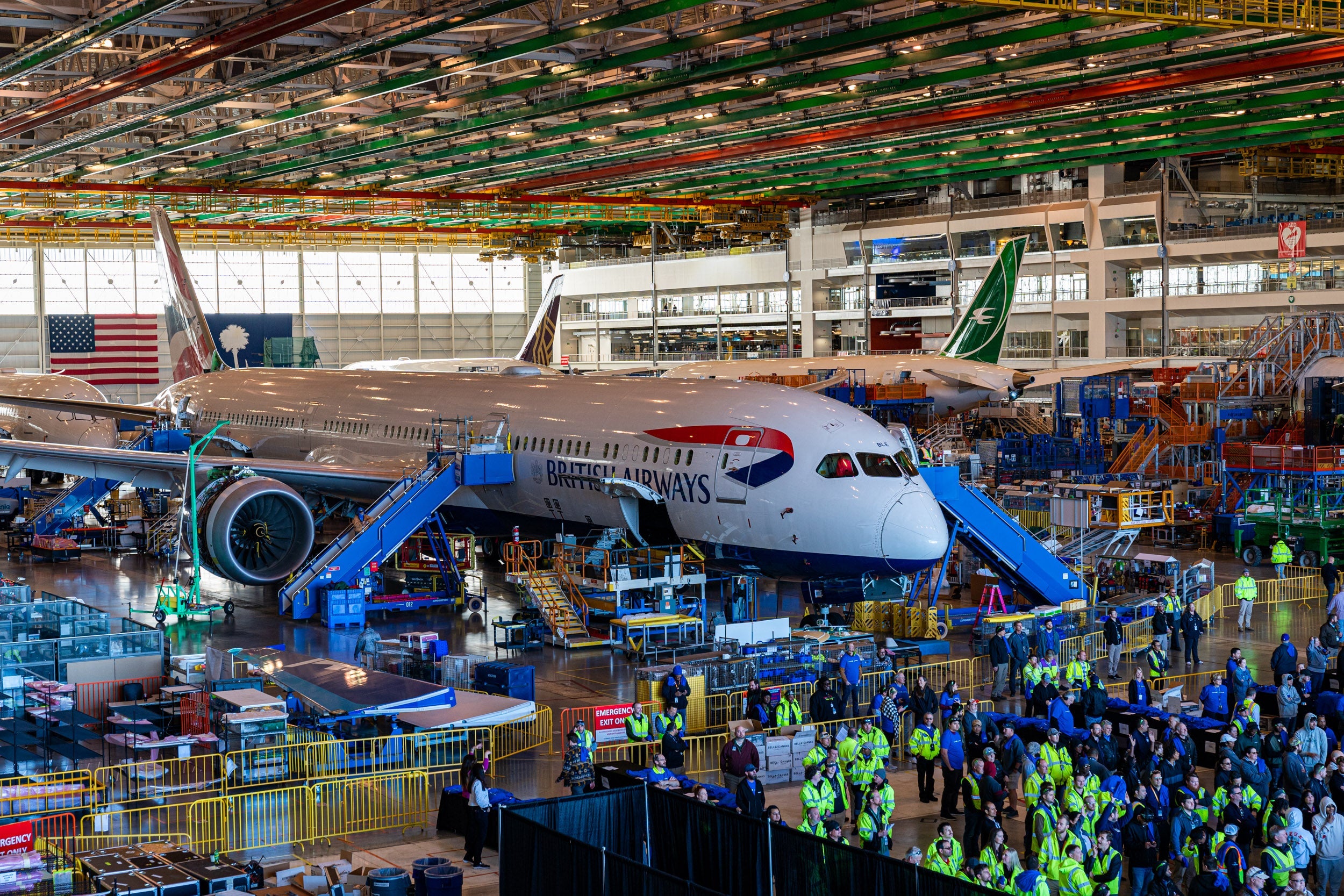
For most of its history, Boeing has been synonymous with the Seattle area. Although the global aerospace company has facilities across the U.S. and abroad, it was founded in Seattle, and for most of its history, it built its commercial aircraft at two Seattle-area factories.
In 2011, Boeing opened a third commercial factory, this one in Charleston, South Carolina.
The new location came to be after Boeing purchased the South Carolina-based operations of two suppliers in 2008 and 2009: Vought Aircraft Industries and Global Aeronautica, which built components for Boeing.
Boeing absorbed both operations and combined them, before opening a final 787 assembly and delivery line on the site two years later.
The Charleston site operates alongside Boeing's Everett factory in Washington state, which produces wide-body commercial jets.
Boeing said that it needed the second assembly line in order to "expand our production capability to meet the market demand for the airplane" and that it chose the Charleston site due to the component work already being done on the property.
However, the announcement came during a period of turbulent relations with its Washington-based union, leading to allegations that the plane-maker was attempting to illegally circumvent the union. Boeing has since allegedly fought any effort by Charleston workers to unionize.
Boeing said in 2020 that it would consolidate 787 production in Charleston instead of splitting it between South Carolina and Washington, a move which was completed the following year.
TPG had a chance to tour the factory last December ahead of an event marking United Airlines' new order for up to 200 airplanes.

Saying that Boeing makes the Dreamliners at its factory is a bit misleading because Boeing — just like Airbus, Embraer and other airframe makers — doesn't actually manufacture much of the plane itself.
More: The 787 Dreamliner: What are the differences between an -8, -9 and -10?
Instead, the company outsources components to specialized manufacturers, while building a few parts itself. Then, Boeing gathers each of the components and assembles them as the final product.
So really, the Charleston facility is more of an assembly plant.
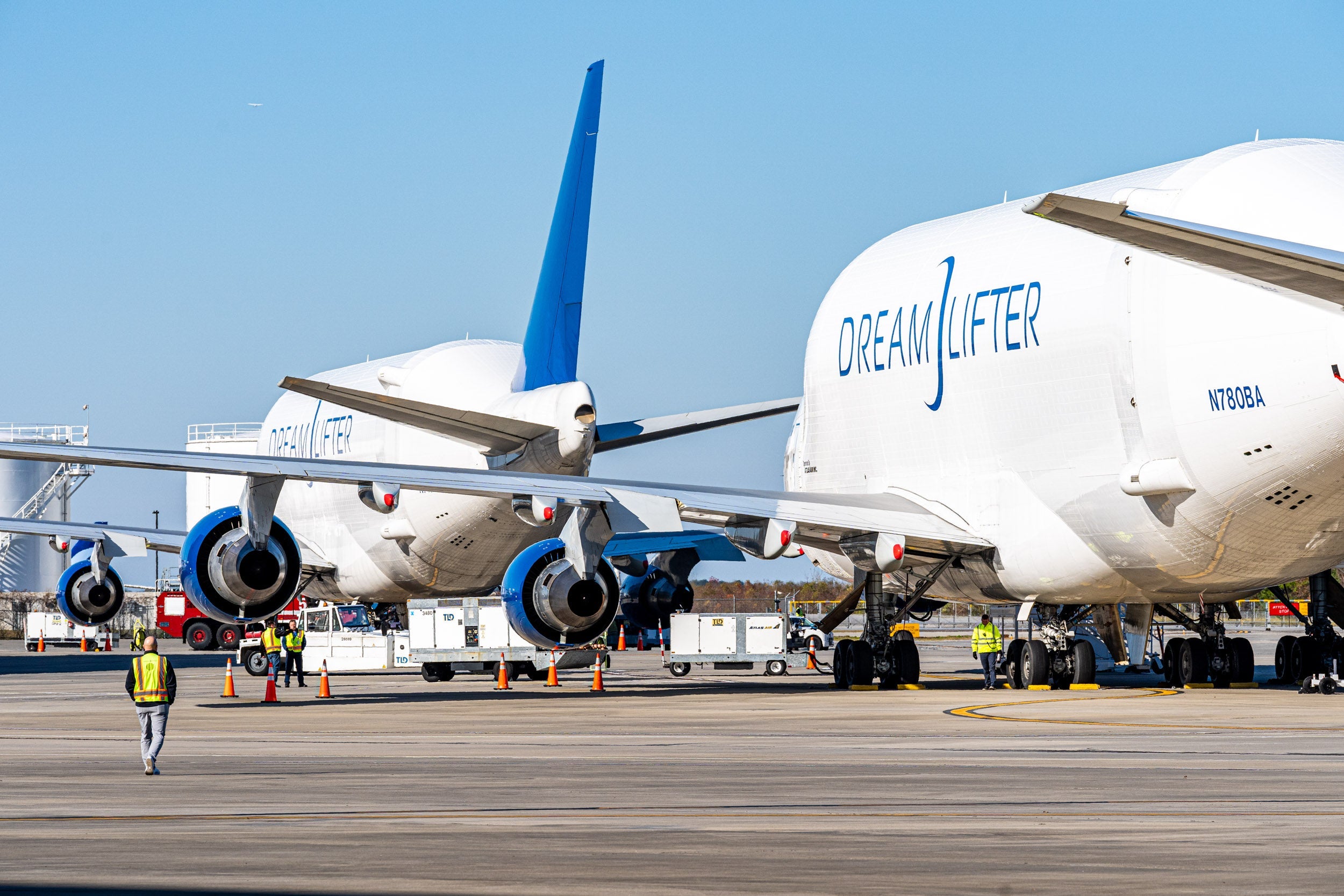
Because of this, as you drive around the facility, which is located on the grounds of the airport, you won't only see 787s in various states of completion. You'll also spot a rare aircraft type: Boeing's custom "Dreamlifter."
The Dreamlifter is a converted 747-400 with roughly triple the cargo volume thanks to its bulbous hull. Boeing designed the type in the mid-2000s specifically to transport large components for the 787 — such as wings — from suppliers to its manufacturing plant. Other oversized cargo aircraft at the time were too small.
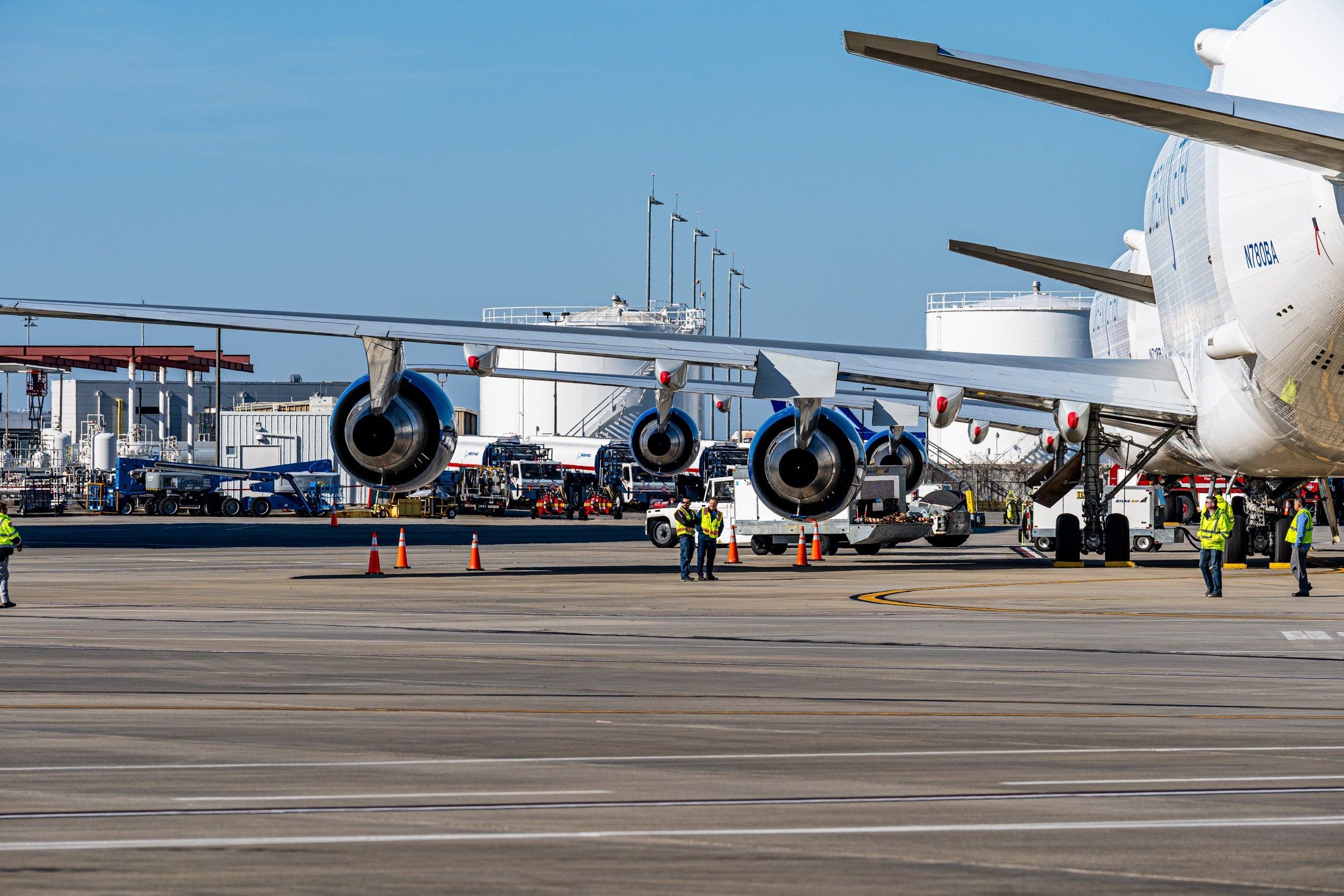
The four Dreamlifters, which are operated for Boeing by cargo carrier Atlas Air, primarily pick up Dreamliner wings, made by Mitsubishi Heavy Industries in Japan, as well as several fuselage sections, frames, horizontal stabilizers and other parts from Leonardo in Italy, and drop them off in Charleston.
The Dreamlifters also deliver disassembled sections of the main fuselage, which are built by several suppliers including Spirit AeroSystems in Wichita, Kansas, Leonardo in Italy and Kawasaki in Japan. Meanwhile, thousands of other components are shipped using a variety of modes of transportation.
During TPG's visit, two of the Dreamlifters were on-site.
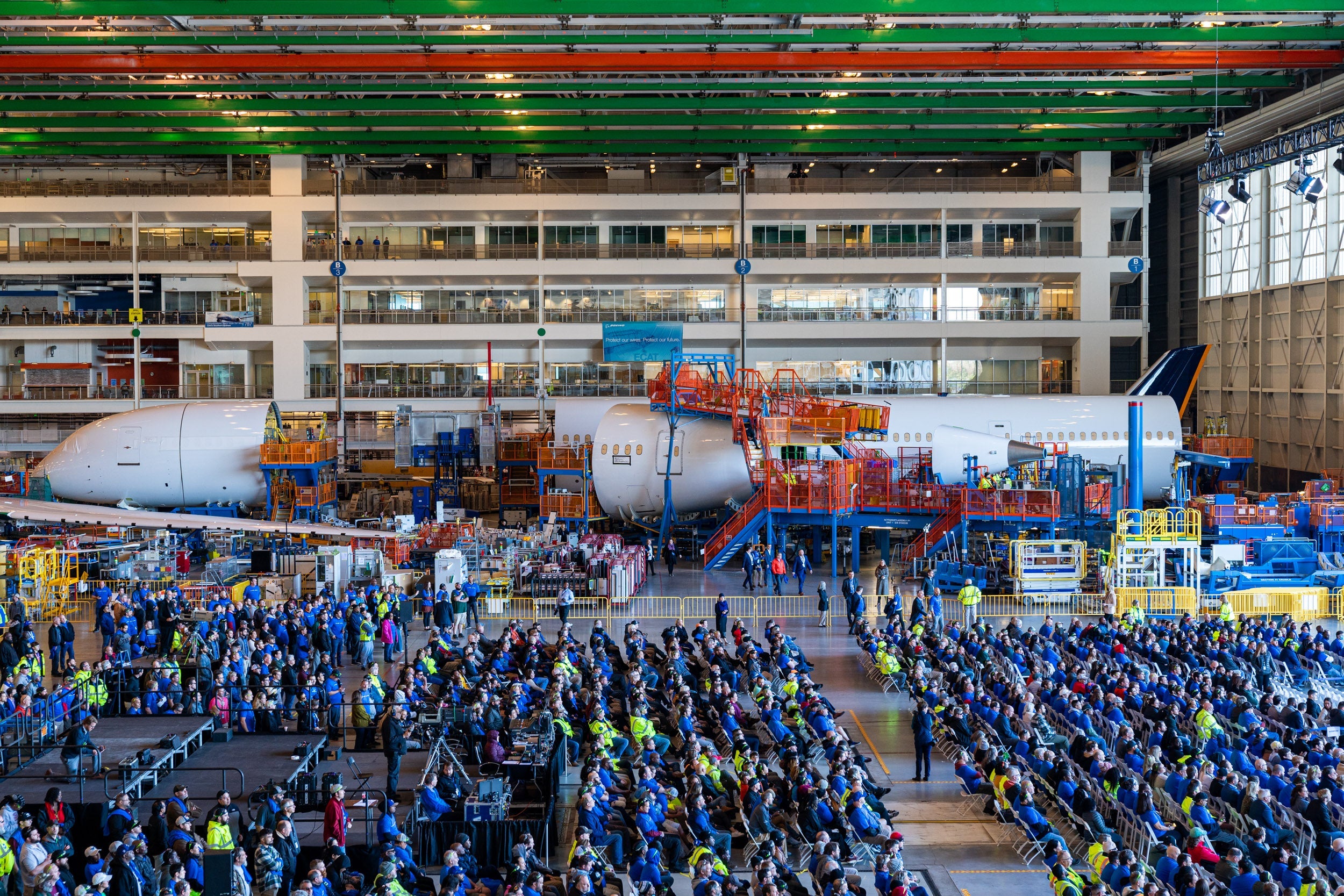
Boeing still builds some components itself, though — in particular the aft section, or back, of the airplane.
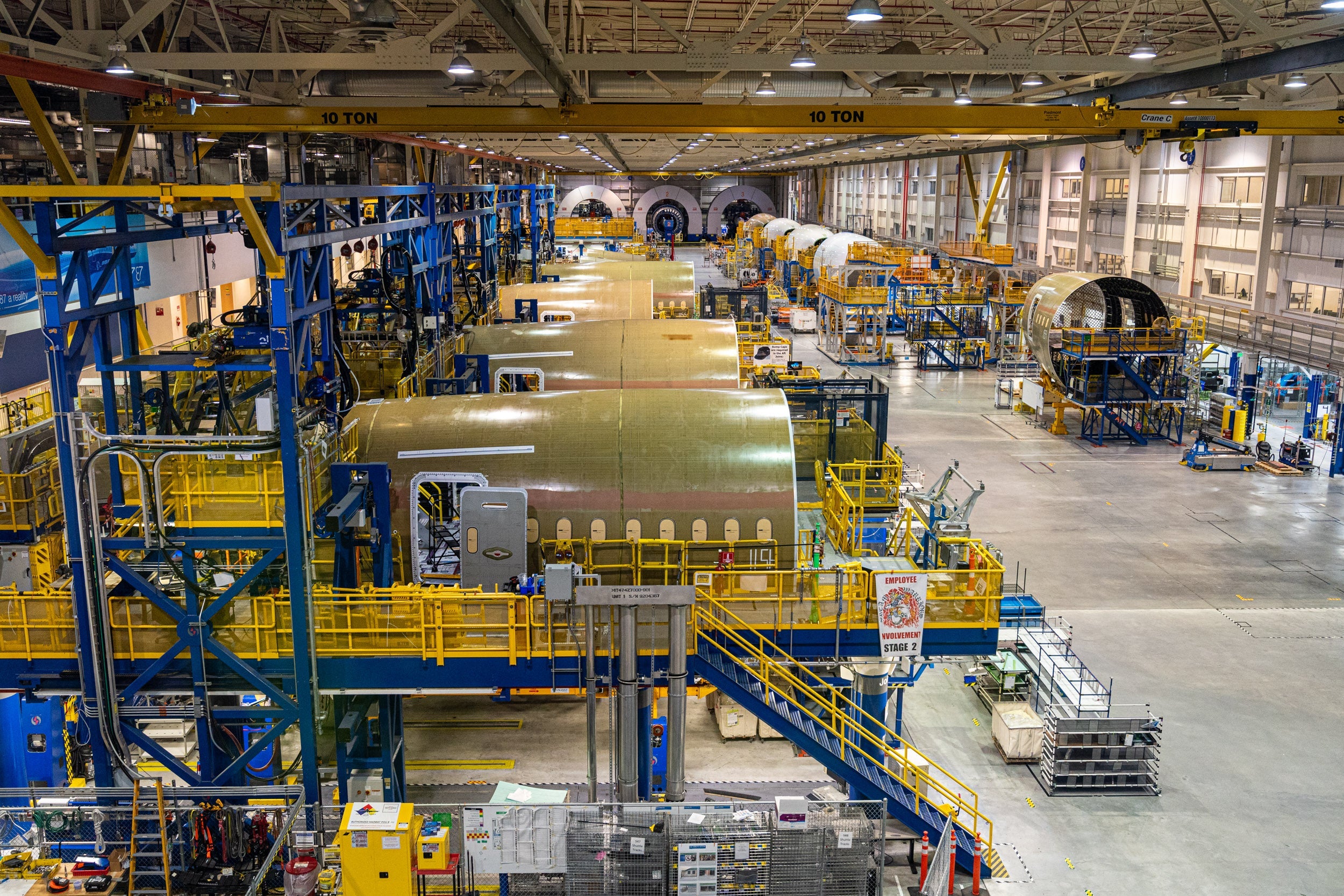
Unfortunately, Boeing asked us to agree not to photograph some parts of the facility, since it uses proprietary technology and methods in the manufacturing process. Still, we were able to get a look and take photos in some areas.
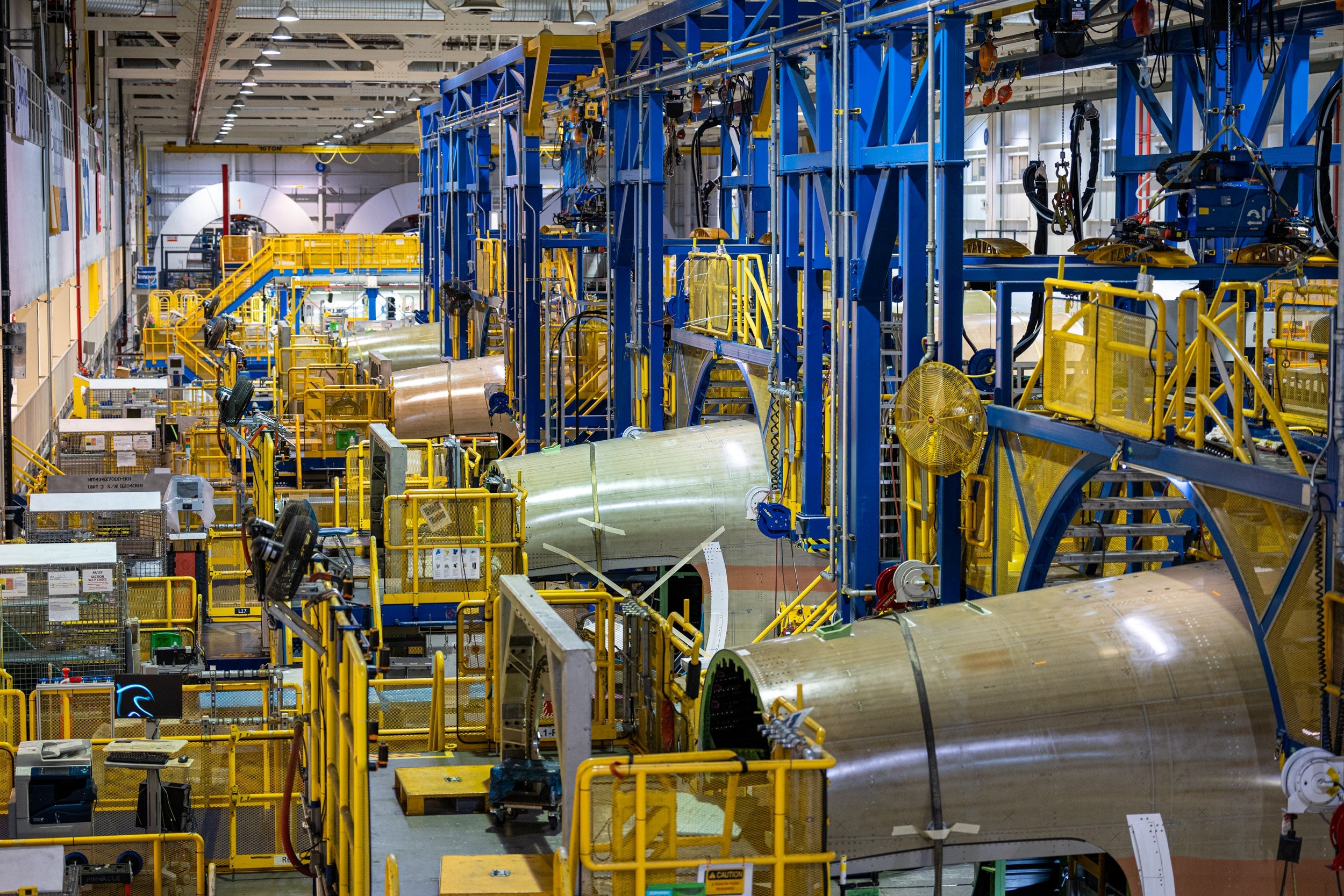
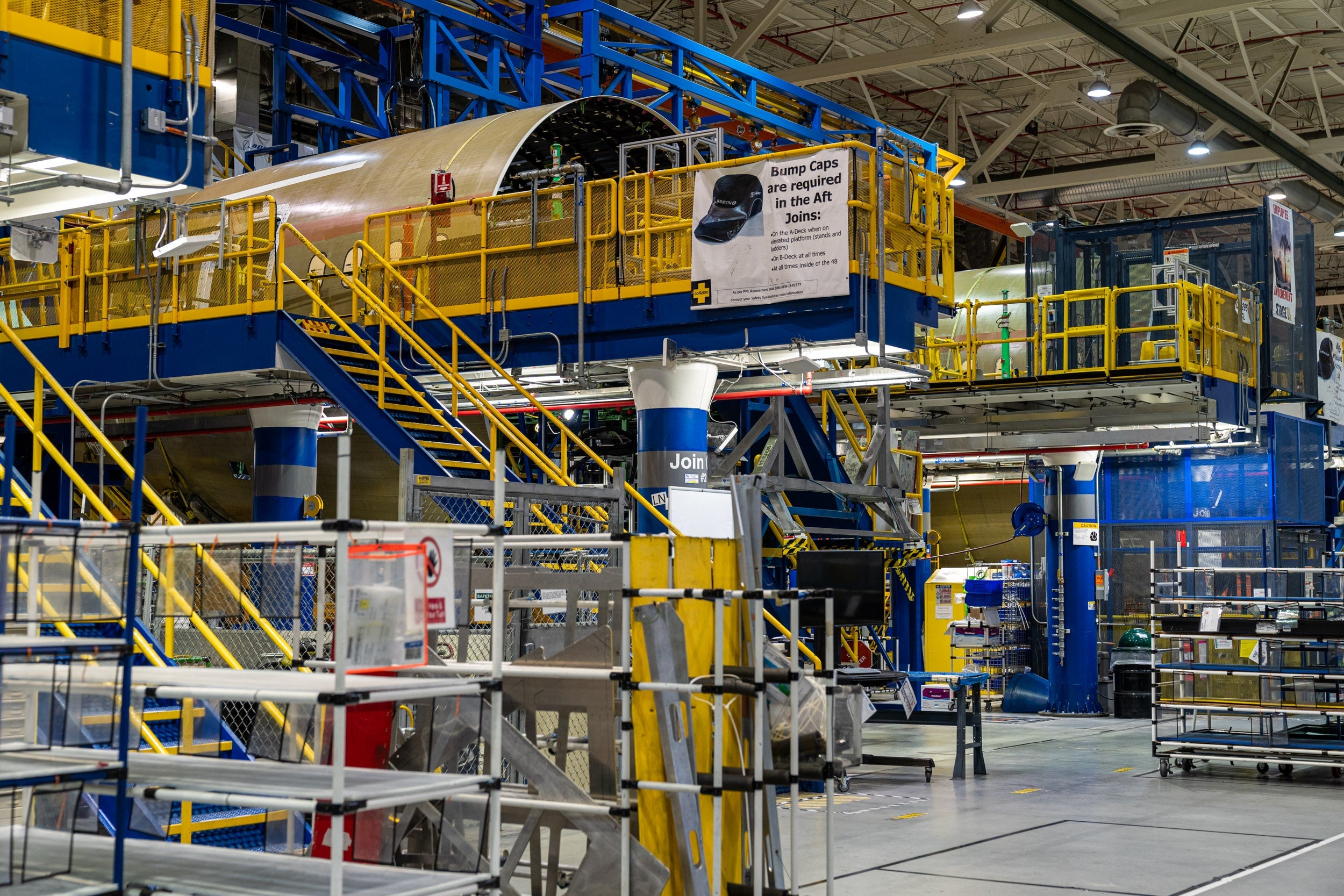
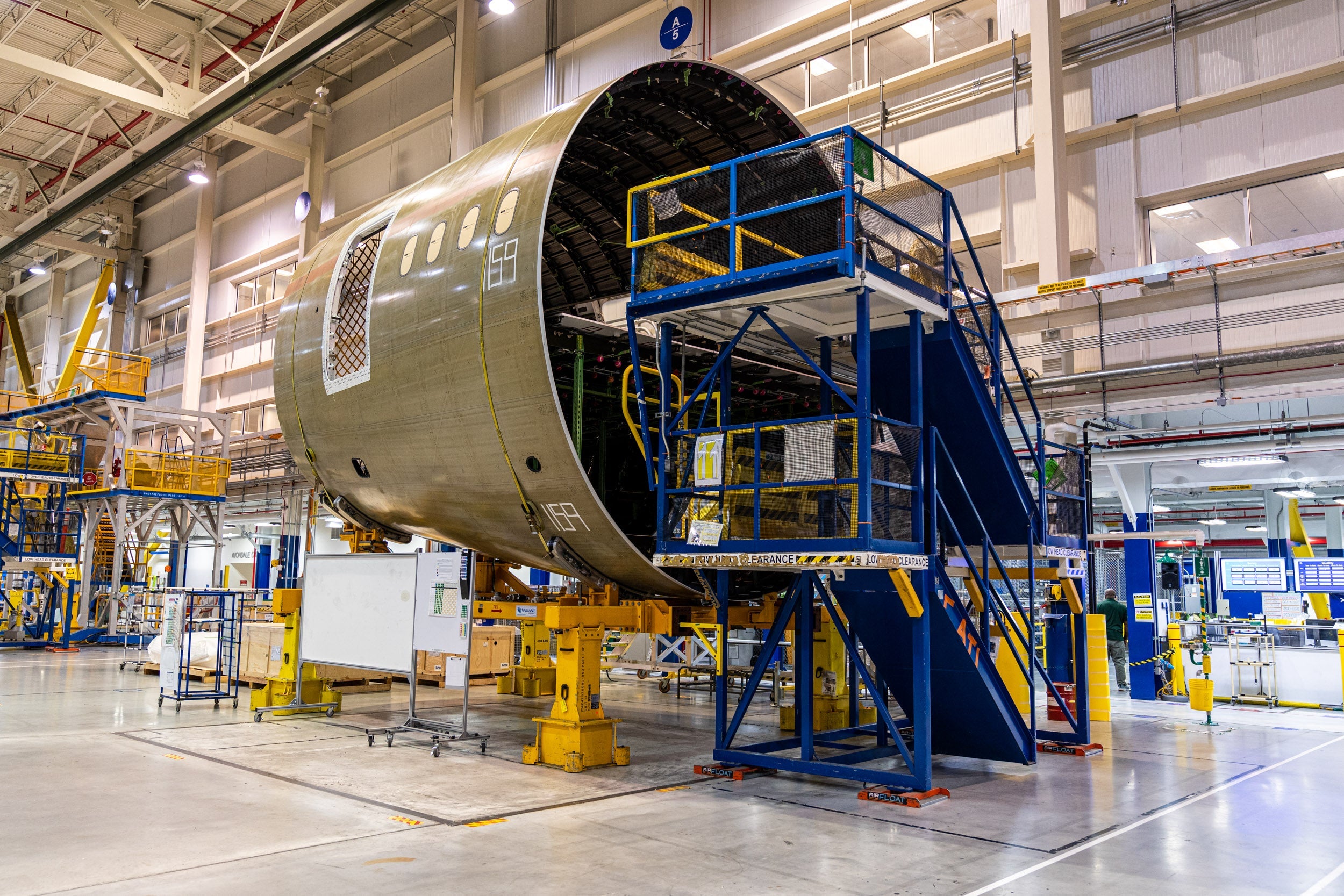
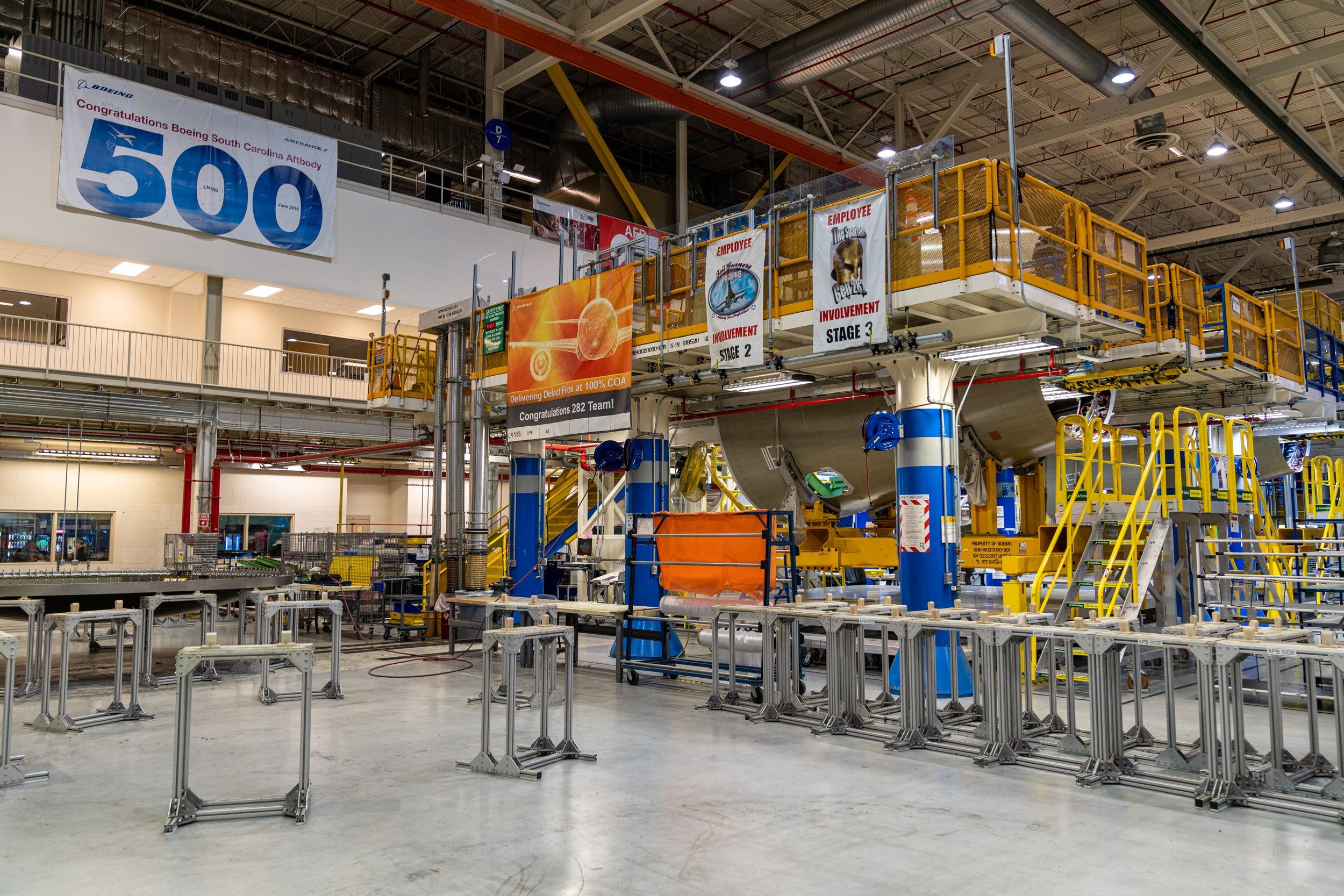
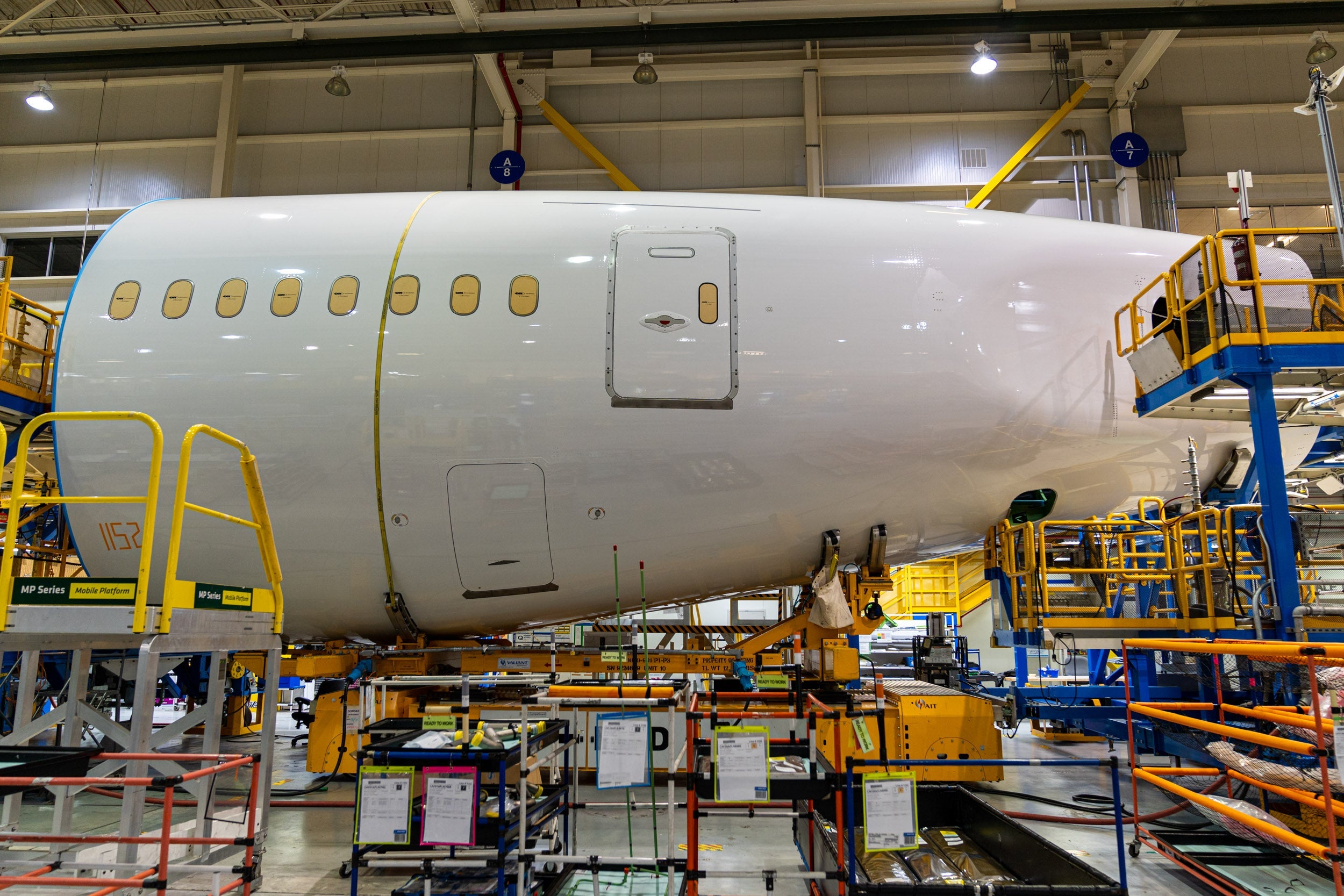
Once the aft section is completed, workers bring it over to a final assembly building.
There, the aft section is joined to the fuselage, and the wings and other structures are attached to the main body. The plane moves down the assembly line, and the aircraft interiors are installed, along with flight control systems. The vertical stabilizer has already been painted by the time the plane enters final assembly, and the livery is applied to the rest of the aircraft once it completes its run through the assembly line.
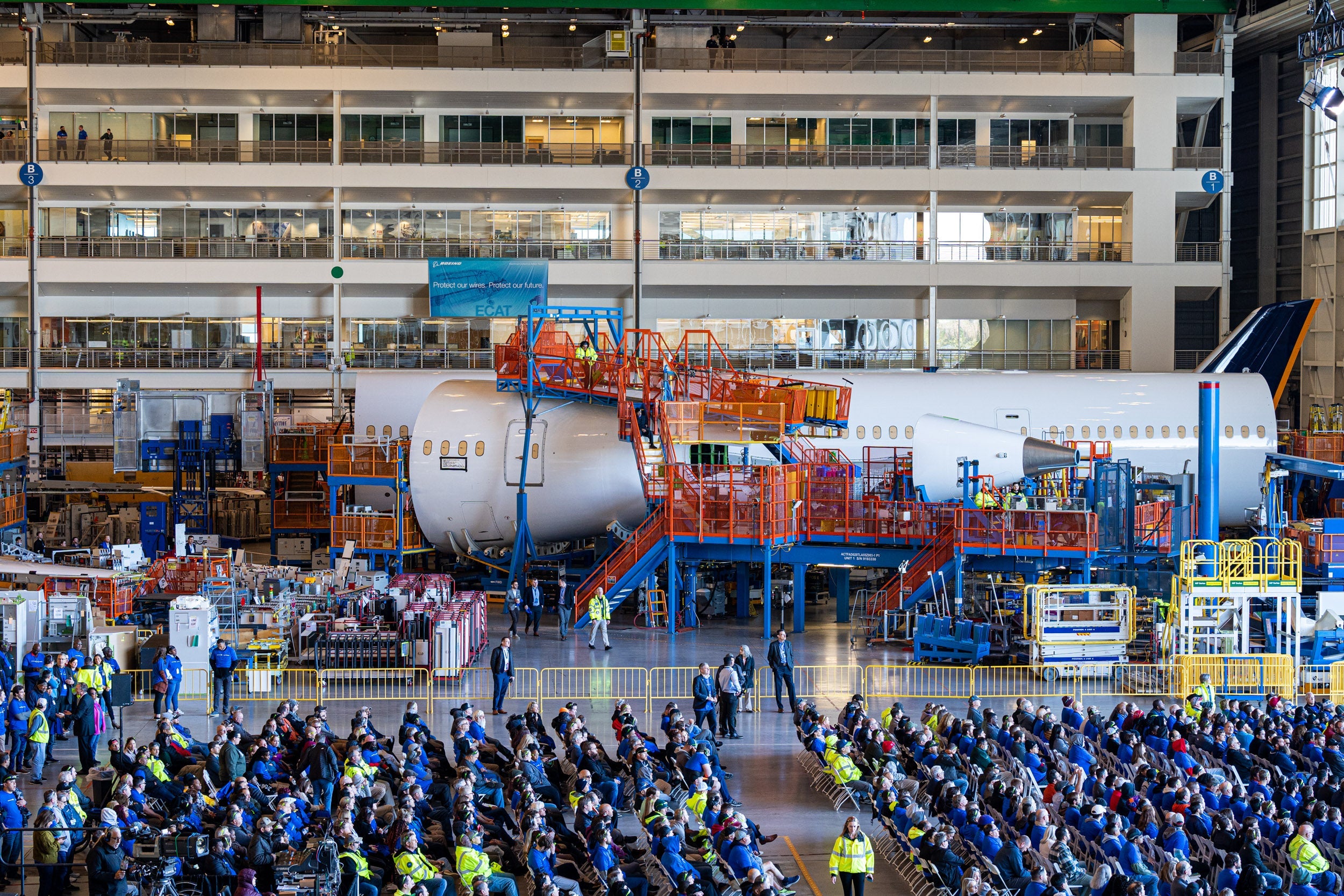
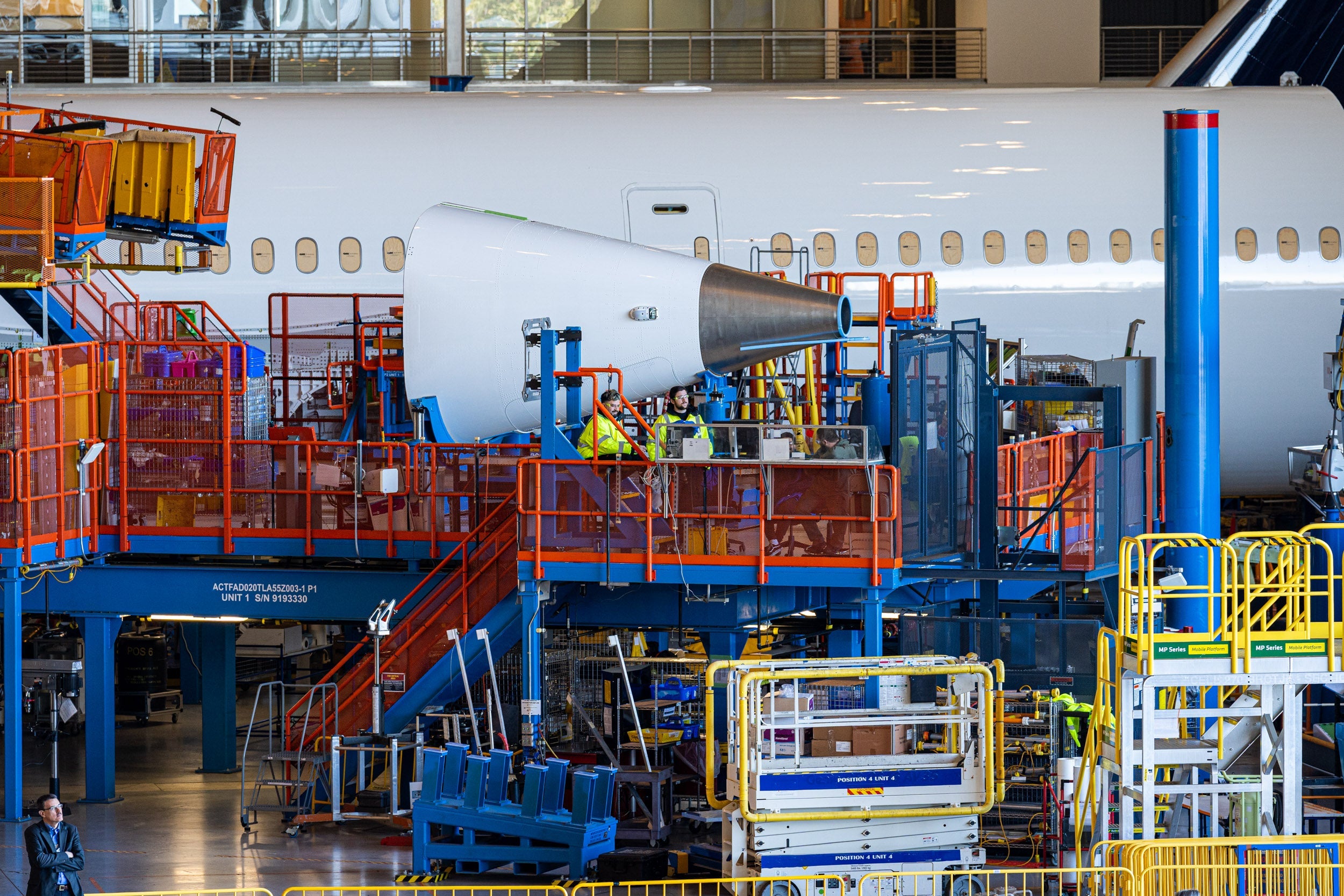
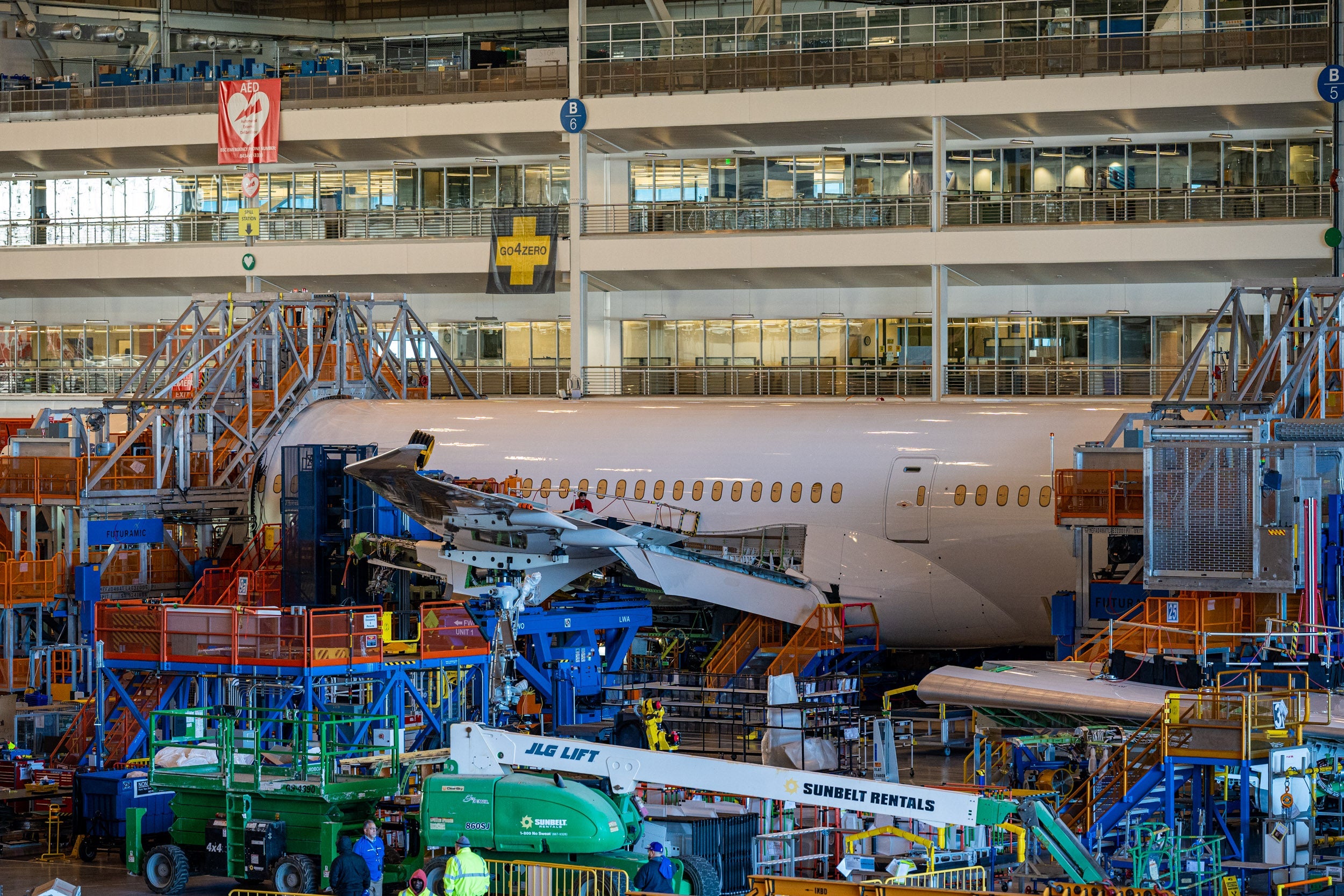
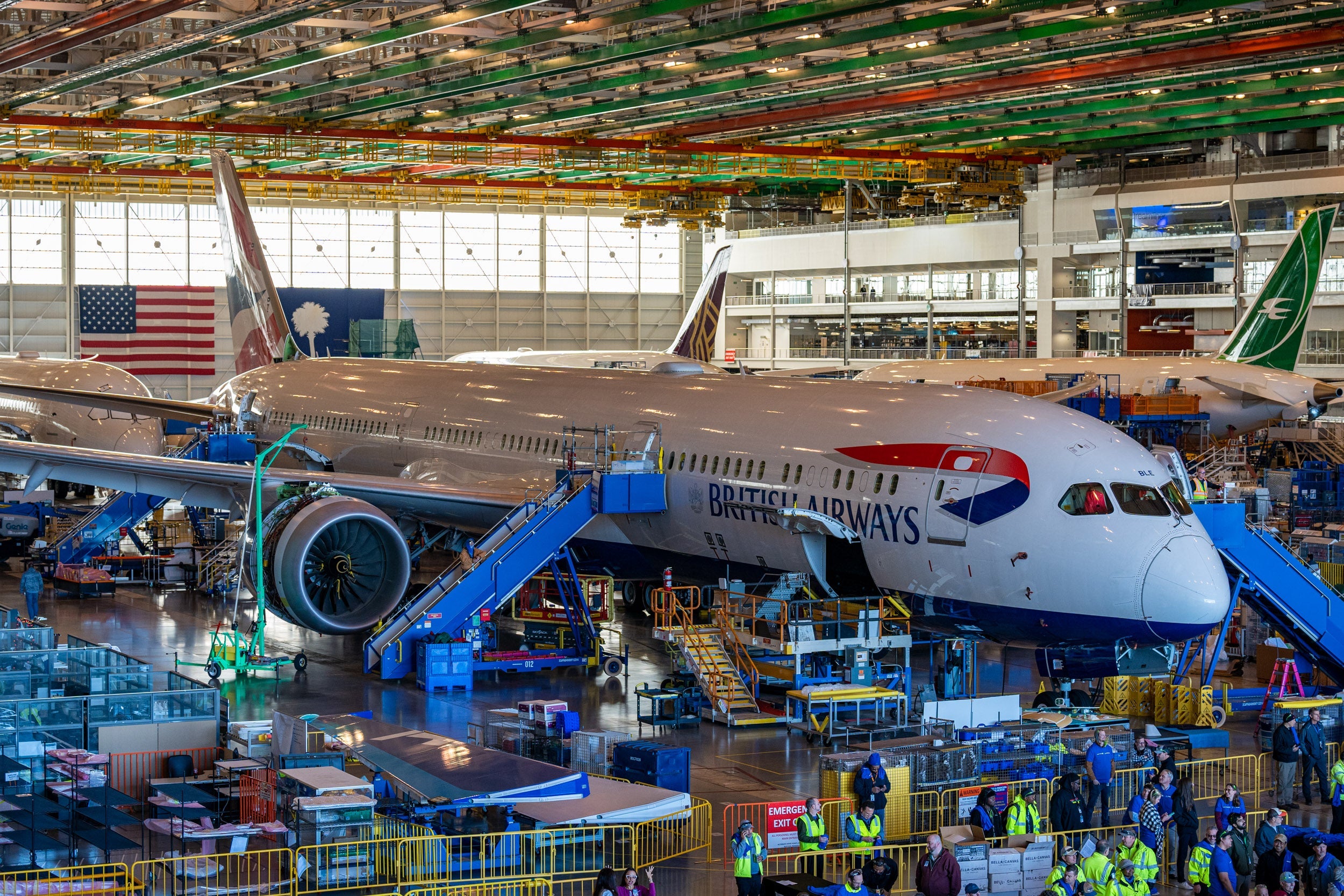
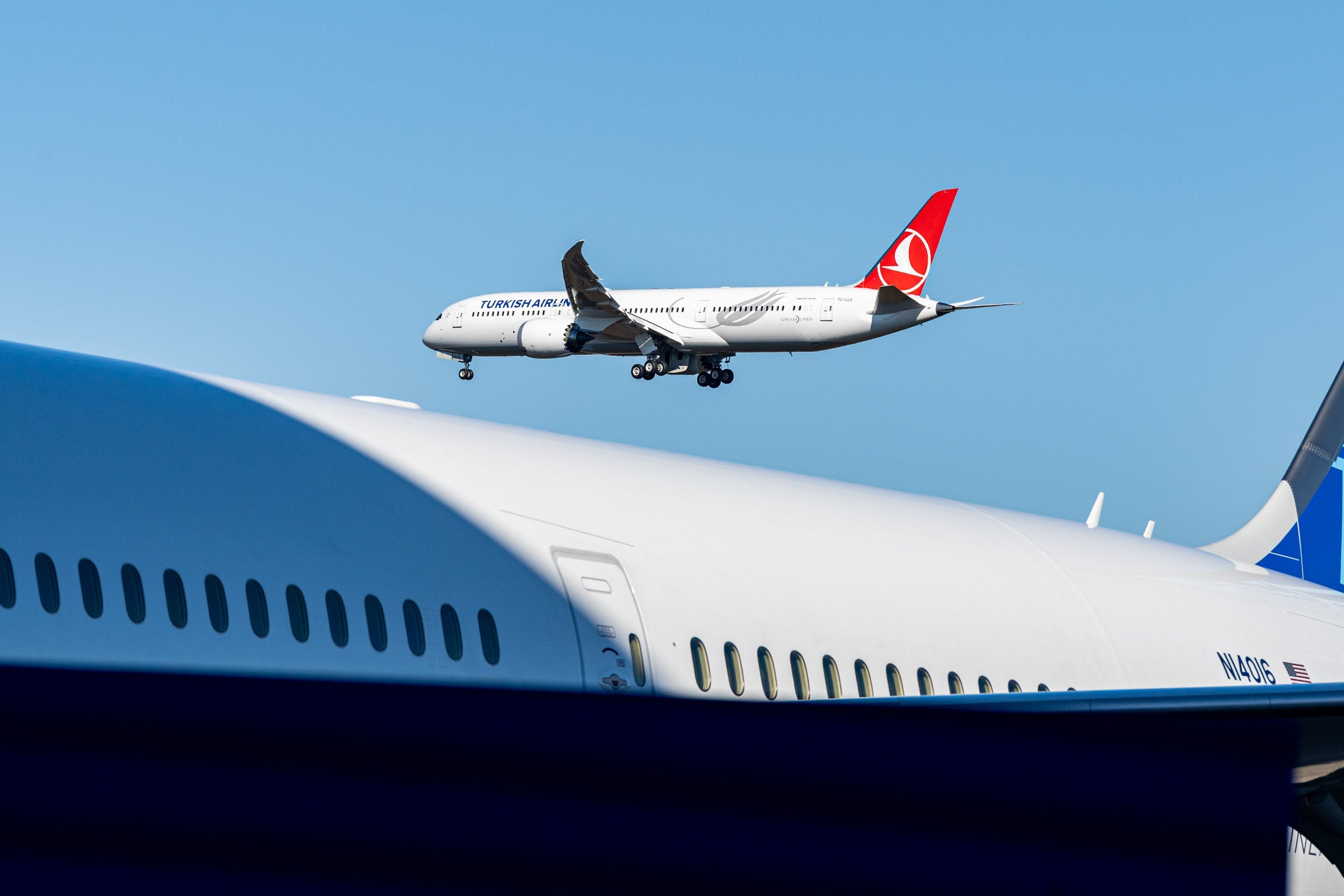
Finishing touches are put on, and each individual airplane is flown for a grueling test program before being delivered. During TPG's tour, a 787-9 bound for Turkish Airlines landed after returning from nearly three hours of testing over the Atlantic Ocean.
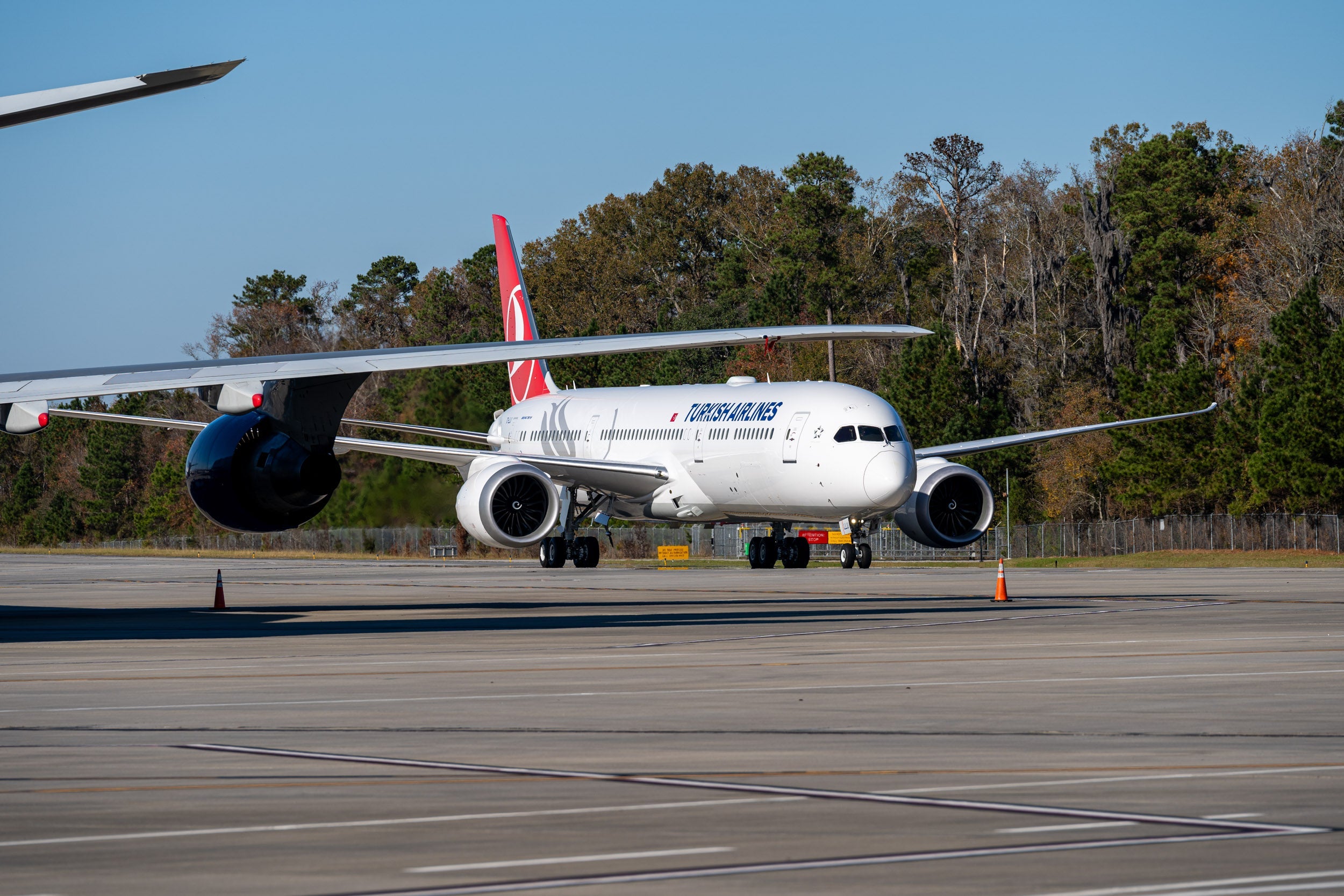
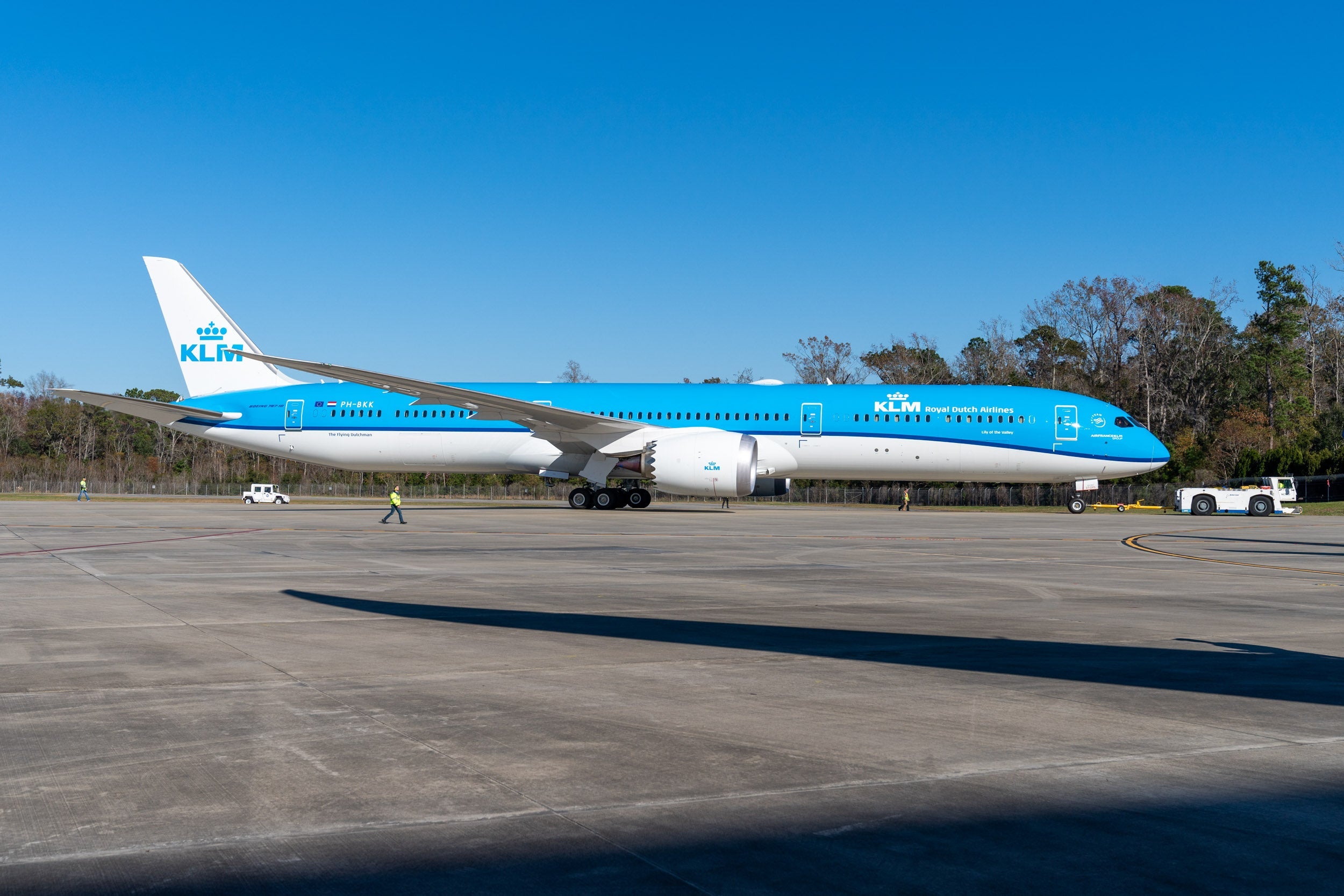
The Charleston facility has 787s parked all around waiting to be delivered. The Federal Aviation Administration ordered 787 deliveries to pause in mid-2021 after numerous concerns arose surrounding Boeing's quality control process in Charleston. Deliveries resumed late last summer.
Because of the year-plus pause in deliveries, which came just as air travel demand was beginning to return following pandemic-era lows, Boeing is working to get a backlog of completed airplanes to airline customers.
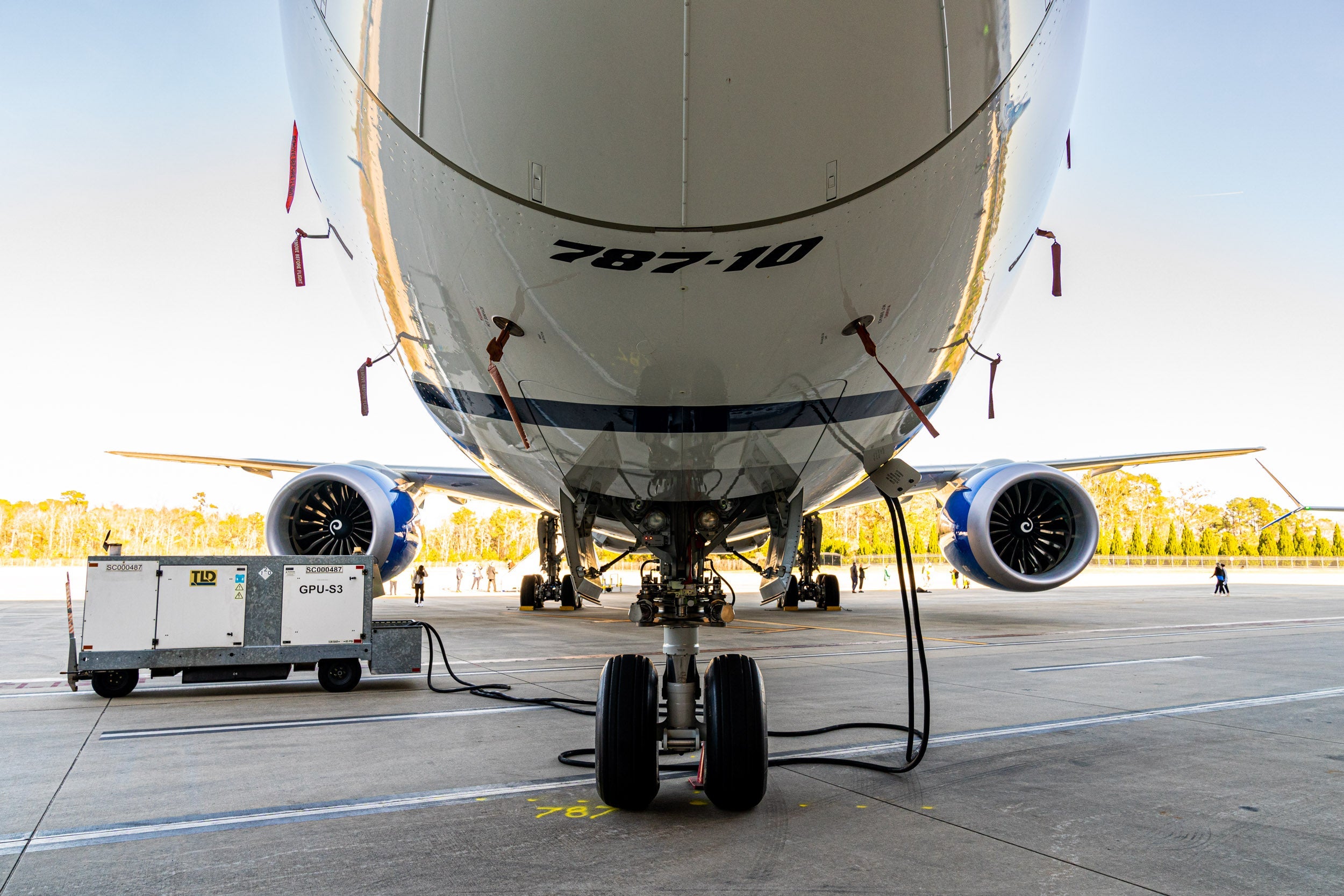
Between the pandemic and the delivery pause, the company also slowed the production line. Boeing is targeting a rate of five completed Dreamliners each month, according to Lisa Fahl, senior director of quality.
The line peaked at 14 new airplanes per month between Charleston and Everett, Fahl said, suggesting that output could scale up in the future.
It's not clear when production will speed up, but as United's order demonstrates, there's heavy demand for new Dreamliners — and there will likely continue to be for years to come.
TPG featured card
at American Express's secure site
Terms & restrictions apply. See rates & fees.
| 4X | Earn 4X Membership Rewards® points per dollar spent on purchases at restaurants worldwide, on up to $50,000 in purchases per calendar year, then 1X points for the rest of the year. |
| 4X | Earn 4X Membership Rewards® points per dollar spent at US supermarkets, on up to $25,000 in purchases per calendar year, then 1X points for the rest of the year. |
| 5X | Earn 5X Membership Rewards® points on prepaid hotel stays booked through AmexTravel.com or the Amex Travel App™. |
| 3X | Earn 3X Membership Rewards® points on flights booked through AmexTravel.com, the Amex Travel App™, or purchased directly from airlines. |
| 2X | Earn 2X Membership Rewards® points on prepaid car rentals booked through AmexTravel.com or the Amex Travel App™ and cruises booked and paid through AmexTravel.com. |
| 1X | Earn 1X Membership Rewards® point per dollar spent on all other eligible purchases. |
Pros
- Valuable dining and food-related credits
- Flexible rewards with airline and hotel transfer partners
- Multiple travel and purchase protections
- No foreign transaction fees
- Access to Amex Offers for additional savings (enrollment required)
Cons
- Not as useful for those living outside the U.S.
- Some may have trouble using Uber and other dining credits
- You may be eligible for as high as 100,000 Membership Rewards® Points after you spend $8,000 in eligible purchases on your new Card in your first 6 months of Card Membership. Welcome offers vary and you may not be eligible for an offer. Apply to know if you’re approved and find out your exact welcome offer amount – all with no credit score impact. If you’re approved and choose to accept the Card, your score may be impacted.
- Earn 4X Membership Rewards® points per dollar spent on purchases at restaurants worldwide, on up to $50,000 in purchases per calendar year, then 1X points for the rest of the year.
- Earn 4X Membership Rewards® points per dollar spent at US supermarkets, on up to $25,000 in purchases per calendar year, then 1X points for the rest of the year.
- Earn 5X Membership Rewards® points on prepaid hotel stays booked through AmexTravel.com or the Amex Travel App™.
- Earn 3X Membership Rewards® points on flights booked through AmexTravel.com, the Amex Travel App™, or purchased directly from airlines.
- Earn 2X Membership Rewards® points on prepaid car rentals booked through AmexTravel.com or the Amex Travel App™ and cruises booked and paid through AmexTravel.com.
- Earn 1X Membership Rewards® point per dollar spent on all other eligible purchases.
- Pay It® lets you tap in the American Express® App to quickly pay for small purchase amounts throughout the month and still earn rewards the way you usually do. Plan It® gives you the option to split up big purchases into equal monthly payments with a fixed fee. You’ll know upfront exactly how much you’ll pay.
- $120 Dining Credit: Earn up to a total of $10 in statement credits monthly when you pay with the Gold Card at Grubhub (including Seamless), Buffalo Wild Wings, Five Guys, The Cheesecake Factory, and Wonder. This can be an annual savings of up to $120. Enrollment required.
- $100 Resy Credit: Get up to $100 in statement credits each calendar year at over 10,000 qualifying U.S. Resy restaurants after you pay for eligible purchases with the American Express® Gold Card. That’s up to $50 in statement credits semi-annually. Enrollment required.
- $84 Dunkin' Credit: Earn up to $7 in monthly statement credits after you pay with the American Express® Gold Card at U.S. Dunkin’ locations. Enrollment required.
- $120 Uber Cash on Gold: Enjoy up to $120 in Uber Cash annually with your Gold Card. Just add your Card to your Uber account and you'll get $10 in Uber Cash each month to use on orders and rides in the U.S. when you select an Amex Card for your transaction.
- Enjoy complimentary Hertz Five Star® Status benefits like skipping the counter at select locations, adding an additional driver at no additional cost*, and vehicle upgrades**. Benefit enrollment and Hertz Gold+ registration are required. *Additional drivers must meet standard rental qualifications and must be a spouse or domestic partner to qualify as complimentary. Other additional drivers subject to fees. **Benefits are subject to availability and vary by location. Additional Hertz program Terms and Conditions including age restrictions apply.
- Book two nights or more with The Hotel Collection through AmexTravel.com or the Amex Travel App™ and receive a $100* credit towards eligible charges at over 1,400 upscale hotels worldwide. *Eligible charges vary by property.
- Book your travel through the Amex Travel App™ with added peace of mind – backed by American Express® service and support. Only for American Express® Card Members.
- Whenever you need us, we're here. Our Member Services team will ensure you are taken care of. From lost Card replacement to statement questions, we are available to help 24/7.
- No Foreign Transaction Fees.
- Annual Fee is $325.
- Terms Apply.