Apple explains how the new MacBook Air was designed for travel

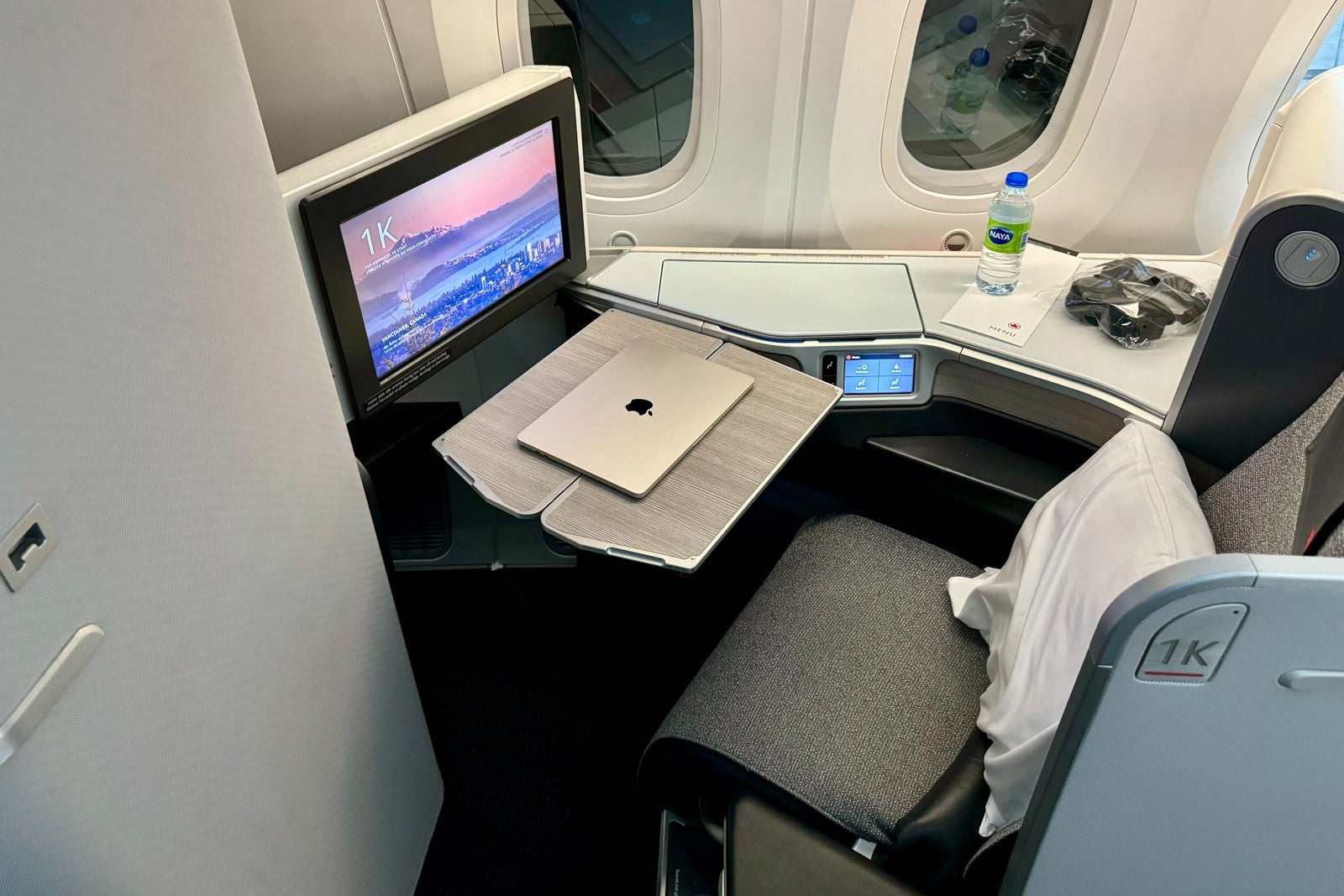
Take a look around an airport, airplane or hotel, and odds are that you'll see at least a few Apple devices nearby.
From iPhones to iPads to AirTags, the tech giant has developed a portfolio of products that have proven popular with scores of travelers. Perhaps it's their portable and durable design or the ease with which the devices interact with one another, but the company has worked hard to try to convince road warriors to splurge for its tech.
Apple may already have won the majority of the smartphone, smartwatch and tablet markets. However, Apple's MacBook laptops haven't risen to the top of the laptop space — especially among corporate travelers who rely primarily on Windows machines.
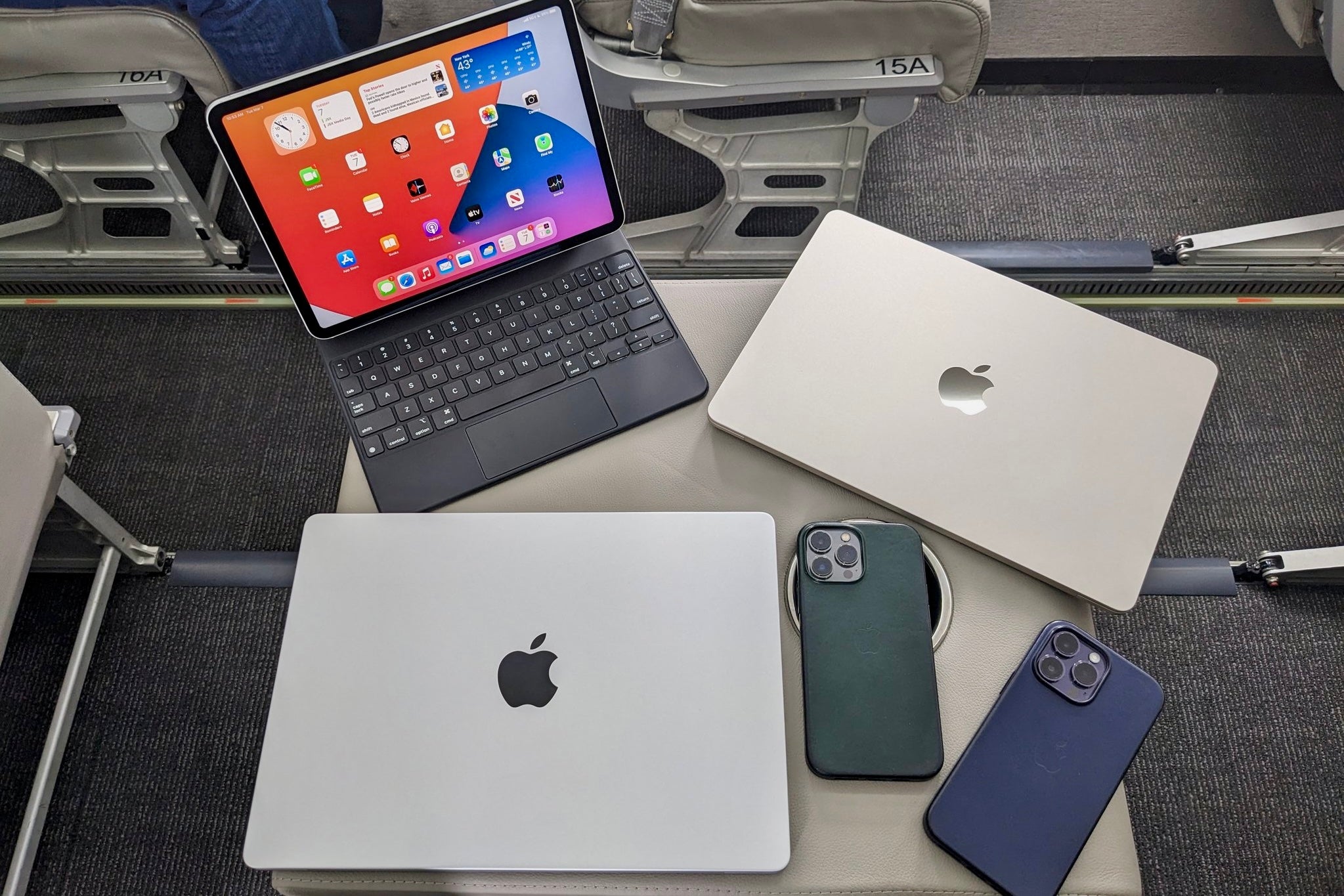
But Apple is still working to make a play in that space. Earlier this month, the company unveiled a new MacBook Air that packs a slew of upgrades, all designed to woo users — especially travelers — to upgrade to this laptop.
How is Apple going to do that? TPG secured an exclusive interview with Evan Buyze on Apple's Mac product marketing team to find out. Buyze walked us through how the company has specifically designed this computer for travelers.
Thin, light and durable design
It starts with the thin, light design that comes in both a 13.6- and 15.3-inch version.
The smaller computer weighs just 2.7 pounds and is only 0.44 inches thick, making it the ideal choice for the traveler who wants to maximize portability, Buyze said. It's also the more affordable of the two options, starting at $1,099.
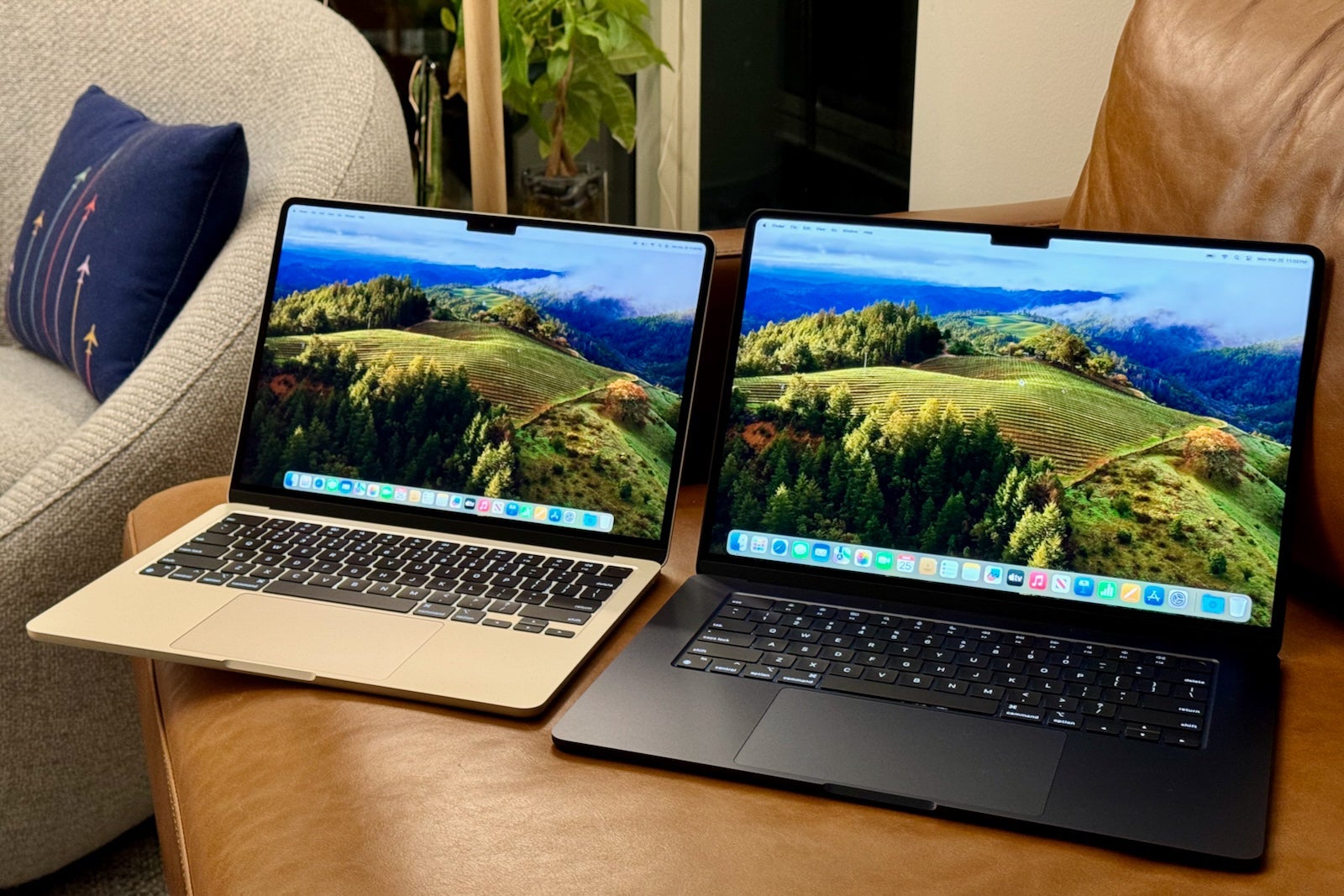
Business travelers — as well as those looking for a little more screen real estate for multitasking — will likely prefer the larger 15-inch model. It's only about a half-pound heavier than the 13-inch version, and it starts at $1,299.
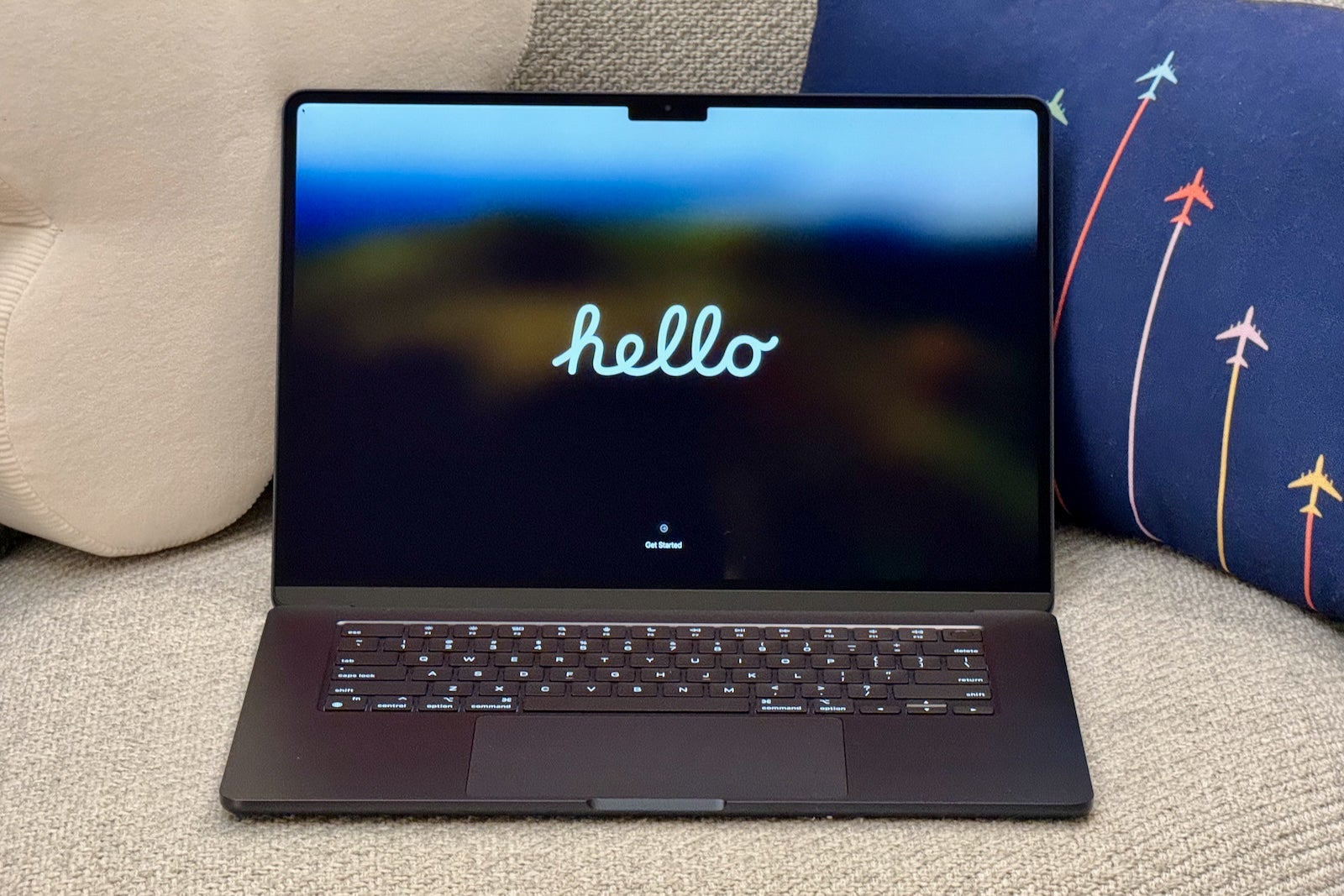
Aside from the size differences, the design of the 13- and 15-inch models is practically identical. The latter just has a more robust speaker system.

Both laptops are no thicker than about a 100-page book; Buzye said Apple worked hard so that the width didn't come at the expense of durability. The new MacBook Air is built with an all-aluminum unibody enclosure that's "designed to be super durable."
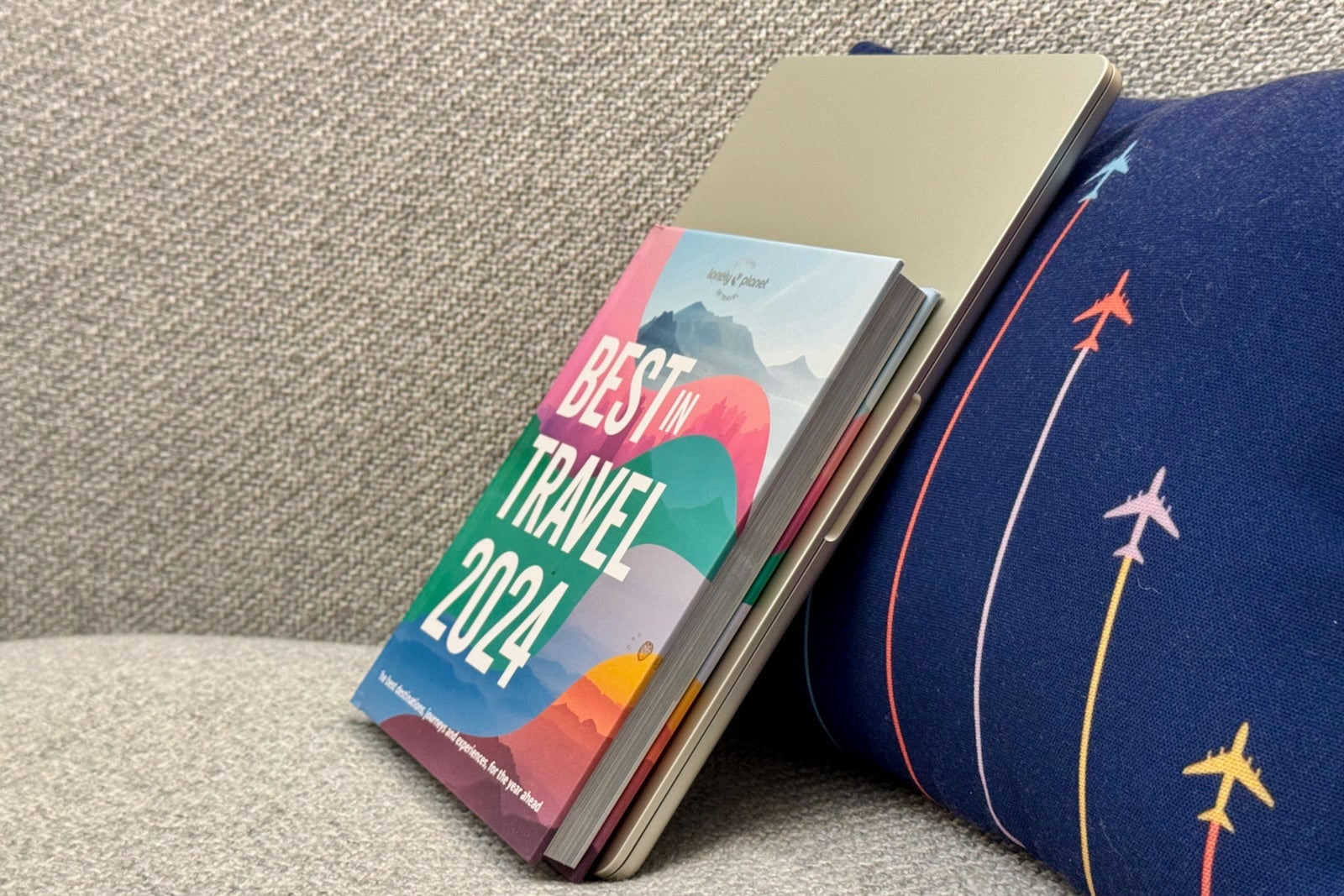
Whether it's unexpected turbulence or an unwieldy galley cart coming down the aisle, Buyze explained that Apple puts the MacBook Air through its special "reliability testing lab."
"[It] simulates a lot of different customer experiences," he said. "[In the lab,] they do a lot of different things to be able to make sure that whatever situation you are in, whether it's in your backpack or you're carrying it, it meets our standards for reliability."
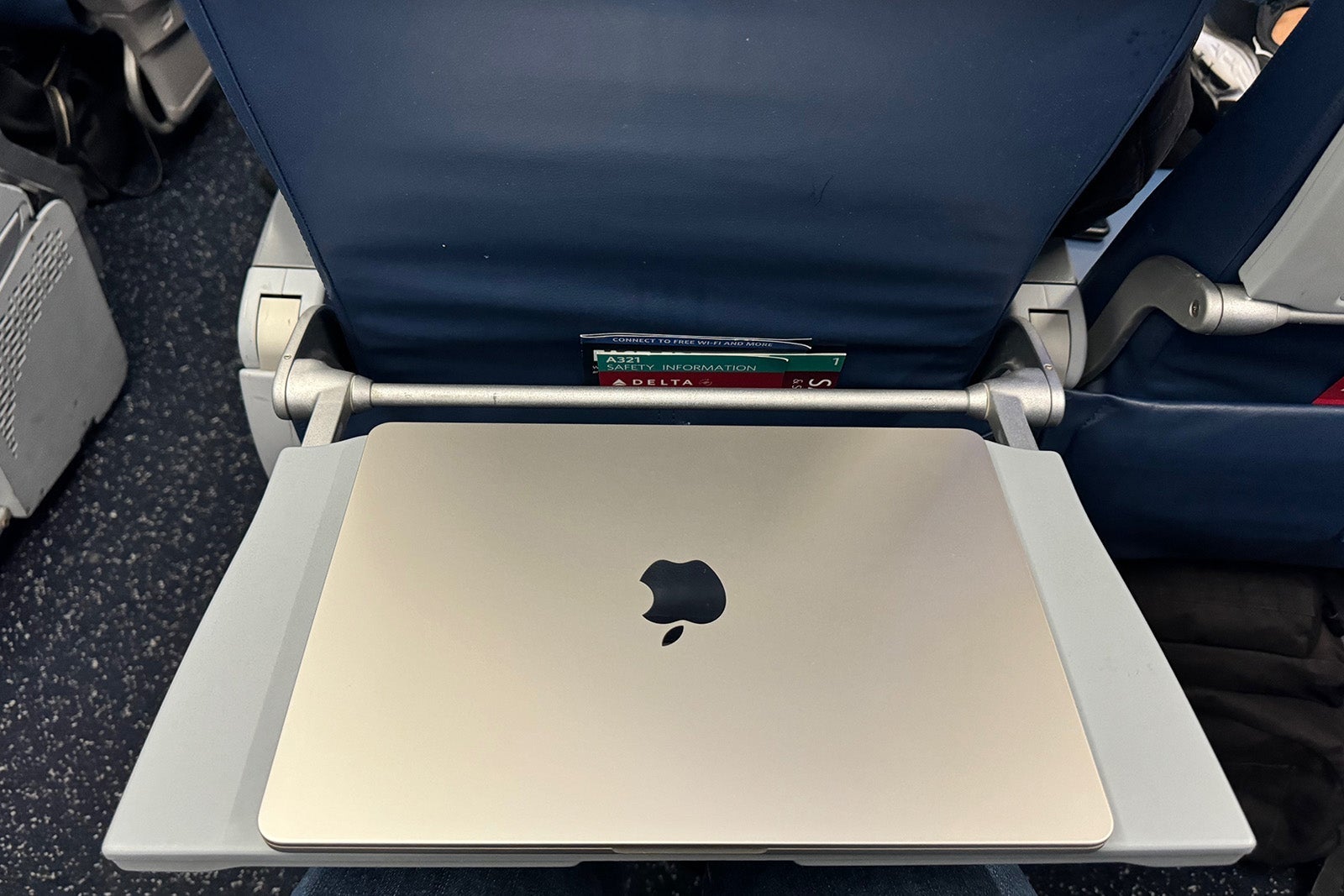
During Buyze's four-year tenure working on the MacBook Air, he's heard from travelers who have used the computer on airplane tray tables, in Ubers, in hotel rooms and in coffee shops. He and the team have weighed all these instances as use cases when considering durability requirements.
Buyze wouldn't share more details about whether Apple has mock airplane seats or tray tables in its testing labs; he only said that the company uses "rigorous testing methods" to ensure the computer works in all travel scenarios.
All-day battery life
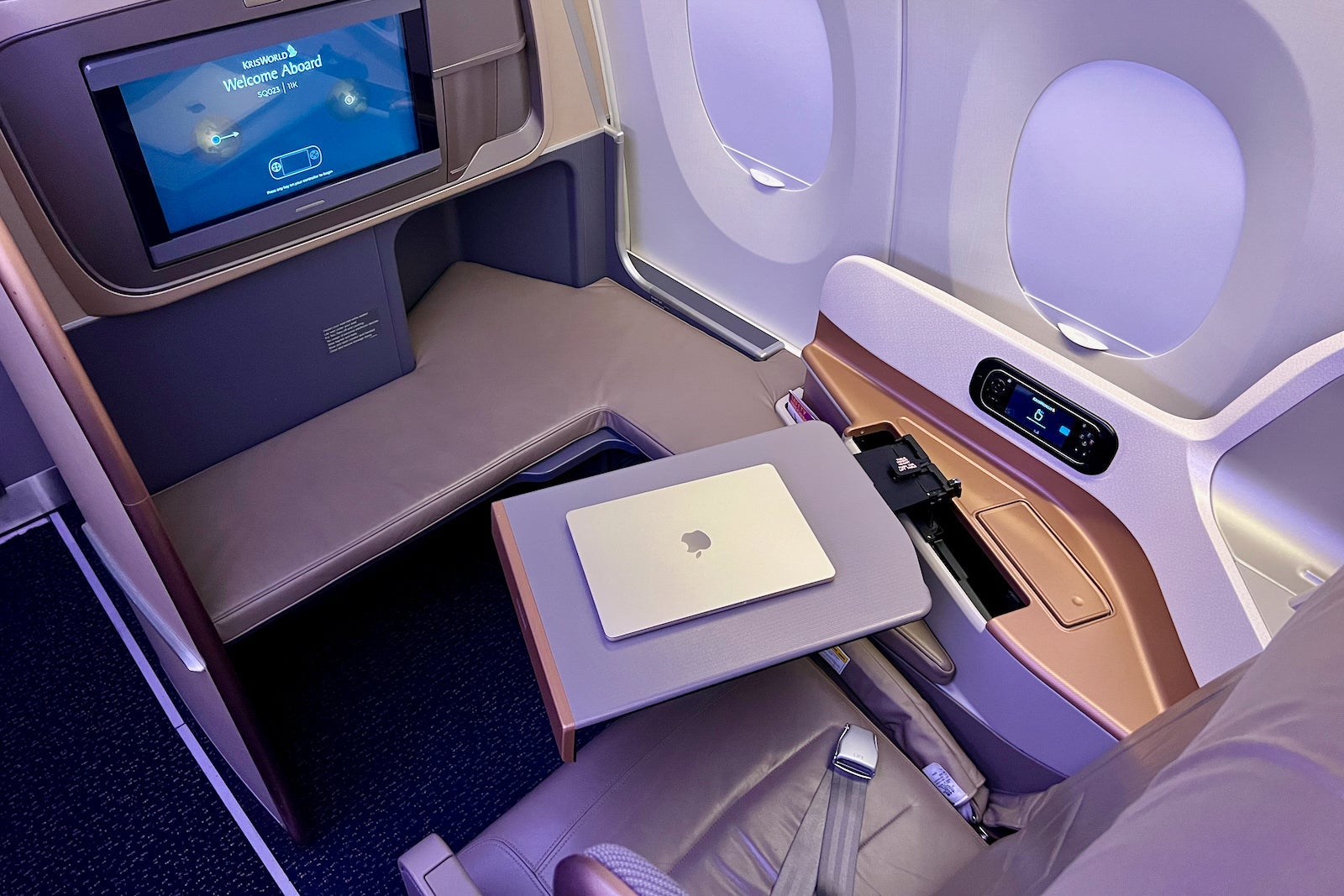
Despite the increased power demands from an upgraded processor (more on that below), Apple was able to maintain 18 hours of battery life for both models of the MacBook Air.
Of course, when traveling, you often don't know where you'll find your next (operational) power outlet. So, the all-day battery should provide plenty of juice even if you're on a flight without a power outlet.
While I haven't tested the battery life on the new MacBook Air, I recently took the previous model — which I use as my personal everyday computer — on the world's longest flight from New York to Singapore. I started the flight at 100% and played a looping movie on the laptop to see when it would die. After nearly 18 hours in the air, I landed and saw the battery level was at 17% — about as good as it gets for a laptop.
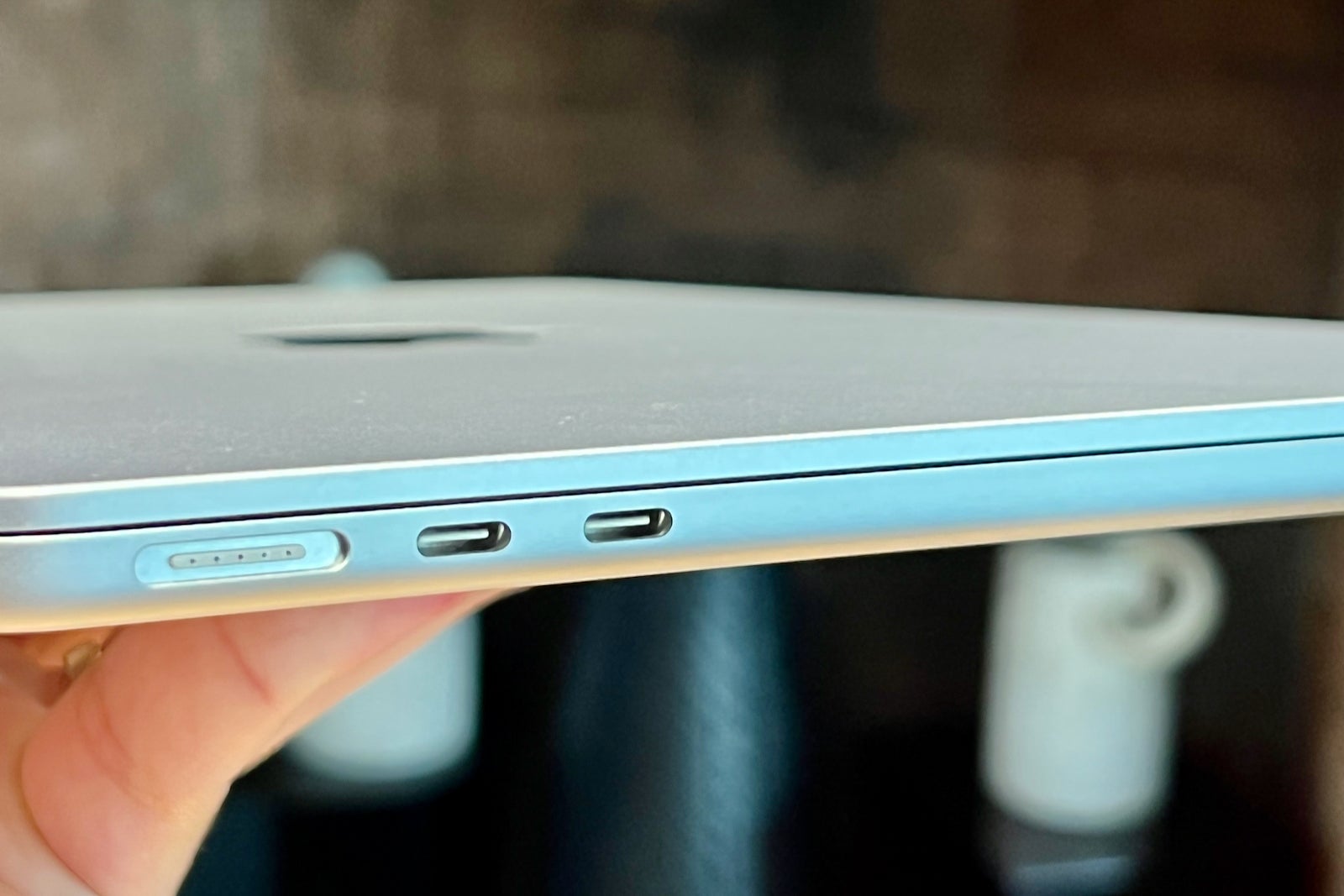
Plus, even if you don't plan to use the full 18-hour battery, the computer also doubles "as a great charger for your iPhone or your iPad," according to Buyze. With two USB-C ports, you can power two devices simultaneously and still have juice left for the laptop itself; this could be useful when you're not near a power outlet.
New processor delivers more power
Perhaps the biggest upgrade with the new computer is the introduction of Apple's proprietary M3 processor chip. While the technical details — an 8-core CPU, up to 10-core GPU and 16-core Neural Engine — might be dizzying, Buyze turned them into easy-to-understand comparisons.
"If you're coming from an M1 MacBook Air, it's up to 60% faster with MacBook Air with M3. If you're upgrading from an Intel-based MacBook Air, it's up to 13 times faster," he said.
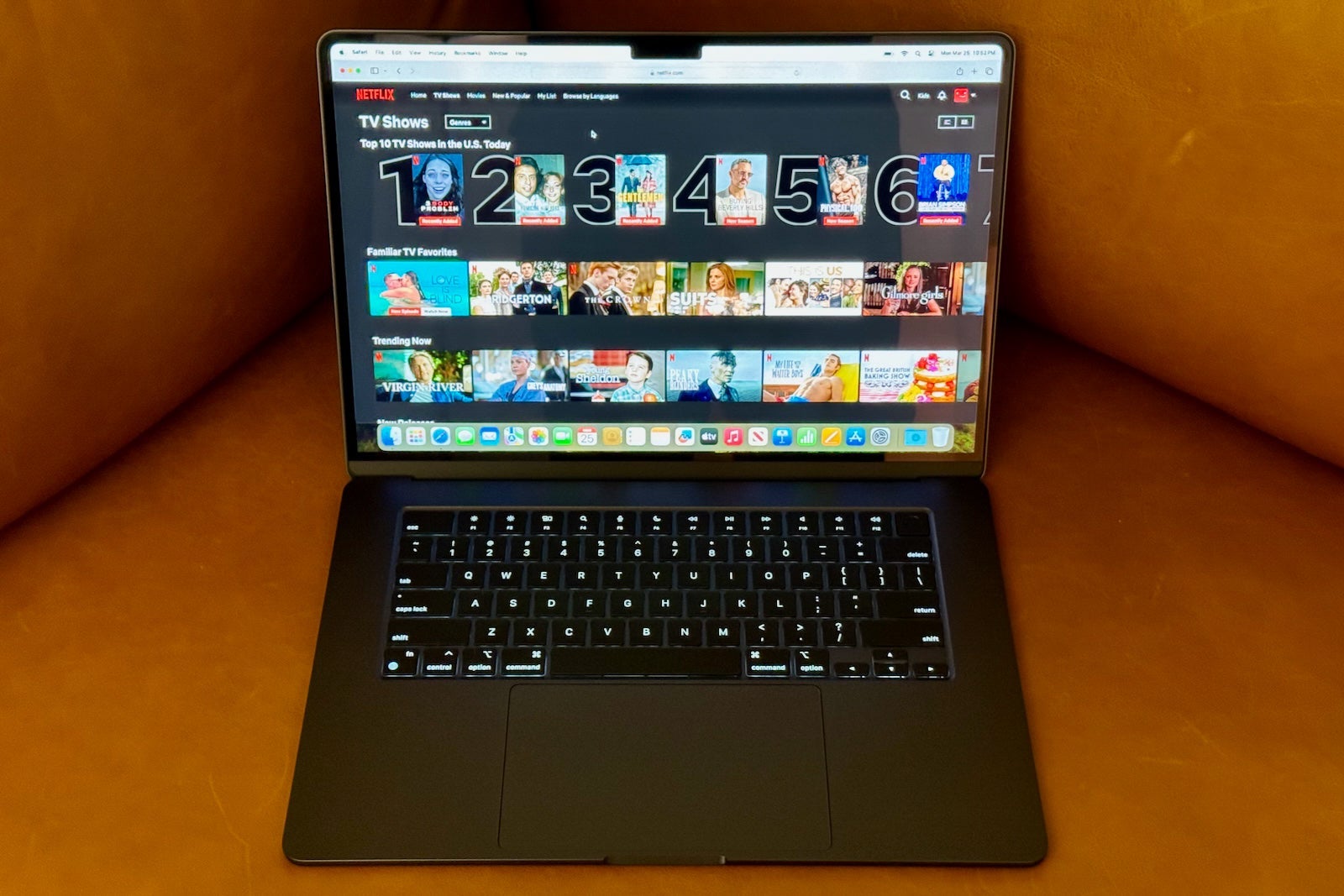
One particular aspect of the new processor that might appeal to travelers is the introduction of more efficient video streaming for services like Netflix. This will allow you to stream for longer, according to Buyze.
While the new chips might pack a mighty punch, they also were the "secret sauce" to making the computer so portable.
"How do we get that thin-and-light design that fits on the tray table?" Buzye asked. He answered by explaining that the "transition to Apple silicon [processor chips] ... was really the game changer where we could actually make these new designs that we had only imagined making before."
Connectivity upgrades
Another big travel-focused improvement Apple is touting with the new MacBook Air is the introduction of upgraded connectivity.
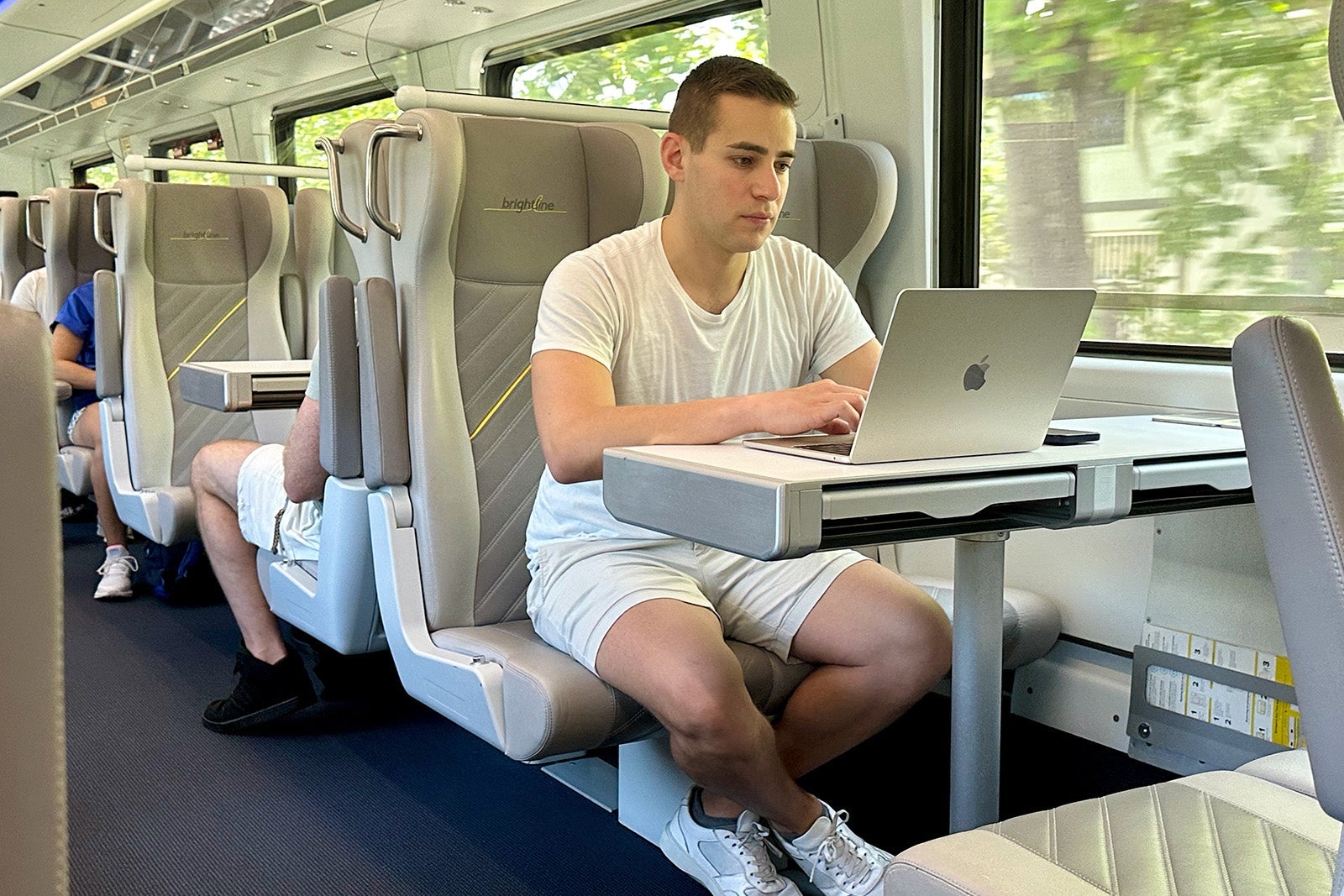
The laptops now support Wi-Fi 6E, which "has twice-as-fast speeds" with "increased wireless spectrum," according to Buyze. This means that when you're on a train or in an airport or hotel with a congested network, the new antennas can still connect to the internet without any hiccups.
To take full advantage of Wi-Fi 6E, airlines and hotels must also upgrade their internet routers. Some have already begun this process, and other new planes and hotels come with this pre-installed.
The MacBook Air also supports Apple's MagSafe charging port, which magnetically attaches the charging cable to the computer and automatically disconnects when someone trips over it or pulls it out.
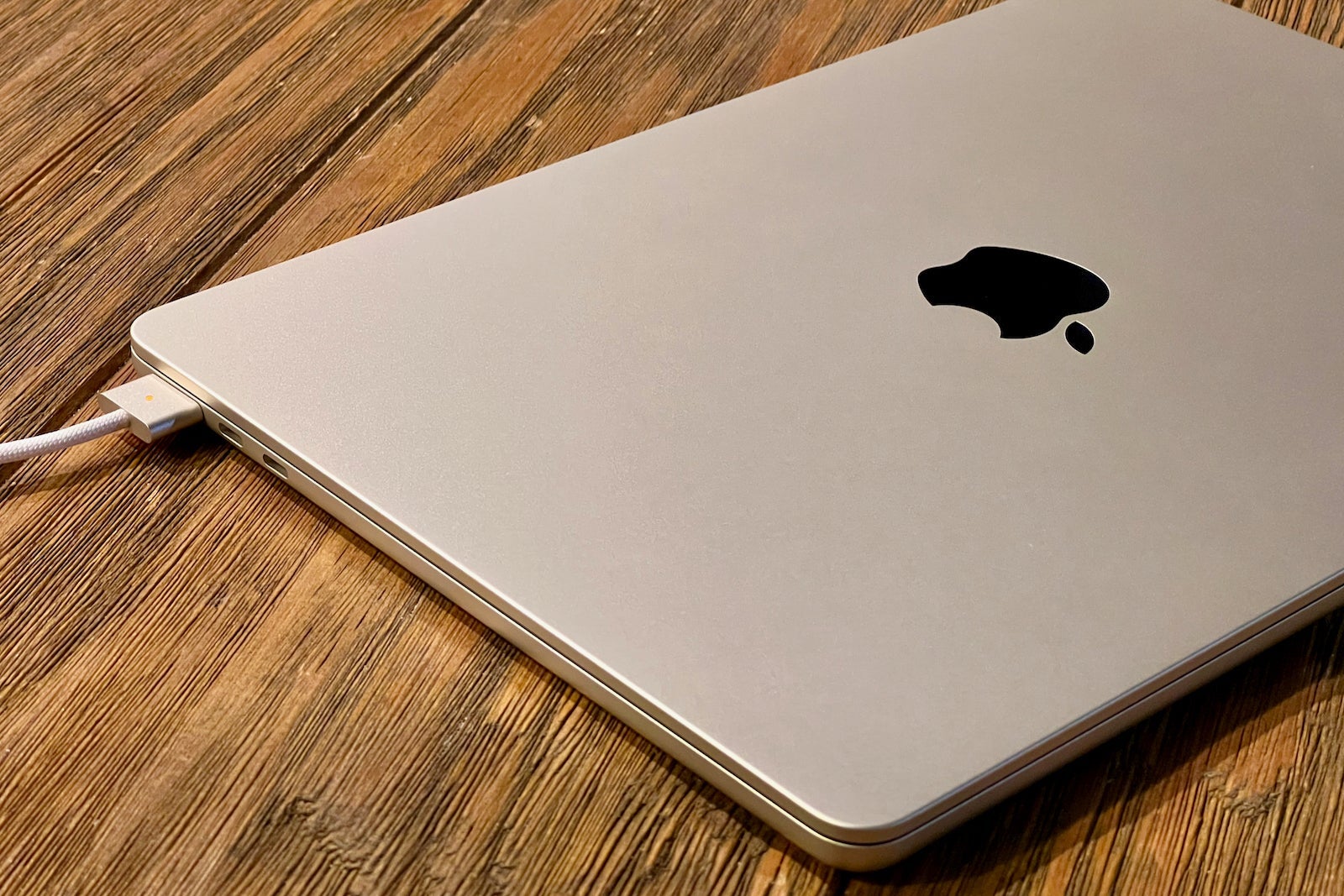
This is "perfect for travel when you don't know the environment, and it just gives you that peace of mind for all different scenarios," he said.
Finally, to minimize space, many of the most portable laptops on the market compromise on the size and durability of the keyboard. The MacBook Air maintains a full-size keyboard "designed to be really comfortable with a quiet and enjoyable typing experience," according to Buyze.
Bottom line
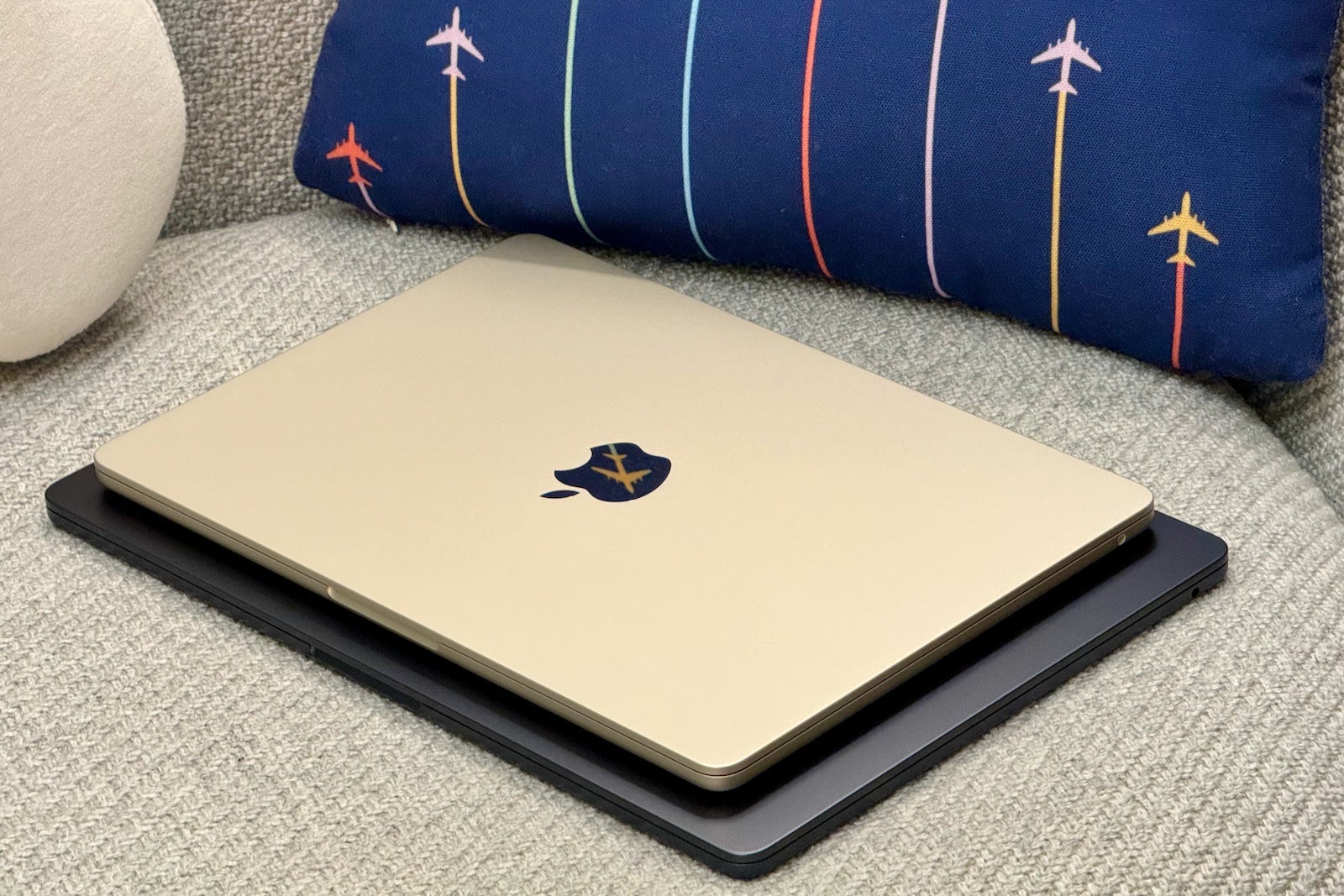
A new model of Apple's best-selling laptop, the MacBook Air, is now in stores.
It comes with a handful of upgrades, many of which were designed specifically for travelers, according to Apple. This includes things like a new processor and improved connectivity, all while maintaining an all-flight battery life in a thin, light and durable design.
The new model builds on the strong foundation set by the previous versions of the MacBook Air. With its travel-friendly features and lack of price increases, it's safe to say that the MacBook Air is a strong candidate for one of the best travel laptops money can buy.
Related reading:
- Key travel tips you need to know — whether you're a first-time or frequent traveler
- Best travel credit cards
- Where to go in 2024: The 16 best places to travel
- 6 real-life strategies you can use when your flight is canceled or delayed
- 8 of the best credit cards for general travel purchases
- 13 must-have items the TPG team can't travel without
TPG featured card

at Capital One's secure site
Terms & restrictions apply. See rates & fees.
| 5X miles | Earn 5X miles on hotels, vacation rentals and rental cars booked through Capital One Travel |
| 2X miles | Earn unlimited 2X miles on every purchase, every day |
Pros
- Stellar welcome offer of 75,000 miles after spending $4,000 on purchases in the first three months from account opening.
- You'll earn 2 miles per dollar on every purchase, which means you won't have to worry about memorizing bonus categories
- Rewards are versatile and can be redeemed for a statement credit or transferred to Capital One’s transfer partners
Cons
- Highest bonus-earning categories only on travel booked via Capital One Travel
- Enjoy a one-time bonus of 75,000 miles once you spend $4,000 on purchases within 3 months from account opening, equal to $750 in travel
- Earn unlimited 2X miles on every purchase, every day
- Earn 5X miles on hotels, vacation rentals and rental cars booked through Capital One Travel
- Miles won't expire for the life of the account and there's no limit to how many you can earn
- Receive up to a $120 credit for Global Entry or TSA PreCheck®
- Use your miles to get reimbursed for any travel purchase—or redeem by booking a trip through Capital One Travel
- Enjoy a $50 experience credit and other premium benefits with every hotel and vacation rental booked from the Lifestyle Collection
- Transfer your miles to your choice of 15+ travel loyalty programs
- Top rated mobile app