American adds a 3rd route from Philly operated by a bus

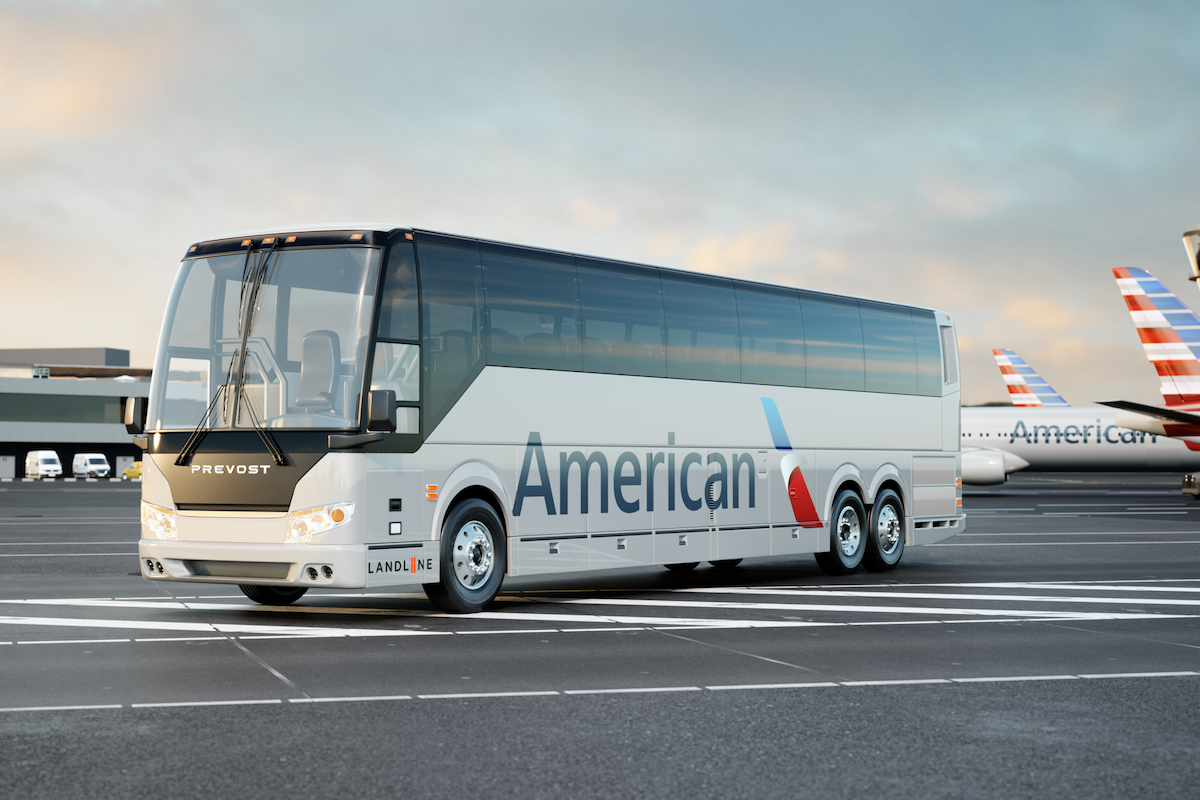
Out with the regional jets and in with the buses at American Airlines' Philadelphia hub.
Instead of flying to nearby cities, American Airlines is adding yet another bus connection from its hub at the Philadelphia International Airport (PHL) via ground transportation provider Landline.
While the carrier's first tranche of bus routes launch on June 3, the airline just filed a third route — to Lancaster, Pennsylvania — that'll begin on Aug. 16.
Service to Lancaster Airport (LNS) will join the already announced bus routes to Lehigh Valley International Airport (ABE), in Allentown, Pennsylvania, and Atlantic City International Airport (ACY) in New Jersey.
Travelers headed to or from these three cities can book connecting itineraries through American which will include a segment operated by a Landline bus.
American last operated flights between Philly and Allentown in May 2020, before cutting them entirely due to the pandemic, Cirium schedules show. The airline hasn't flown to either Atlantic City or Lancaster since (at least) 2003, which is as far back as Cirium timetables go.
Perhaps the most interesting aspect of the Lancaster addition is that the city is technically covered by the Essential Air Service program run by the Department of Transportation, which subsidizes airlines to serve airports that would otherwise remain unserved due to their small size.
Airlines receive subsidies in exchange for guaranteeing minimum levels of air service to certain small cities.
The contract in Lancaster was awarded to Southern Airways Express in October 2021, and American isn't seemingly eligible to apply for subsidies until at the earliest Jan. 1, 2026, when the Southern Airways contract expires.

Even if American could apply, it isn't clear whether the feds would provide subsidies for the Landline bus service instead of a regional jet operation. Yet with the rise in Landline service at American (and United and Sun Country), it seems fair to wonder if bus service could emerge as a viable option for some small airports that have historically relied on EAS service.
In terms of the passenger experience, the bus operation is poised to be quite seamless.
If you're beginning your journey at an outstation, you'll arrive at the airport and check in with American — which presumably will open a counter at Lancaster. Your checked bags will be tagged and collected, and you'll clear security there (a new feature that Landline is debuting with its American partnership).
But, instead of walking down the jet bridge to board a flight, there'll be a Landline bus, wrapped in American's livery, waiting to whisk you off to Philadelphia.
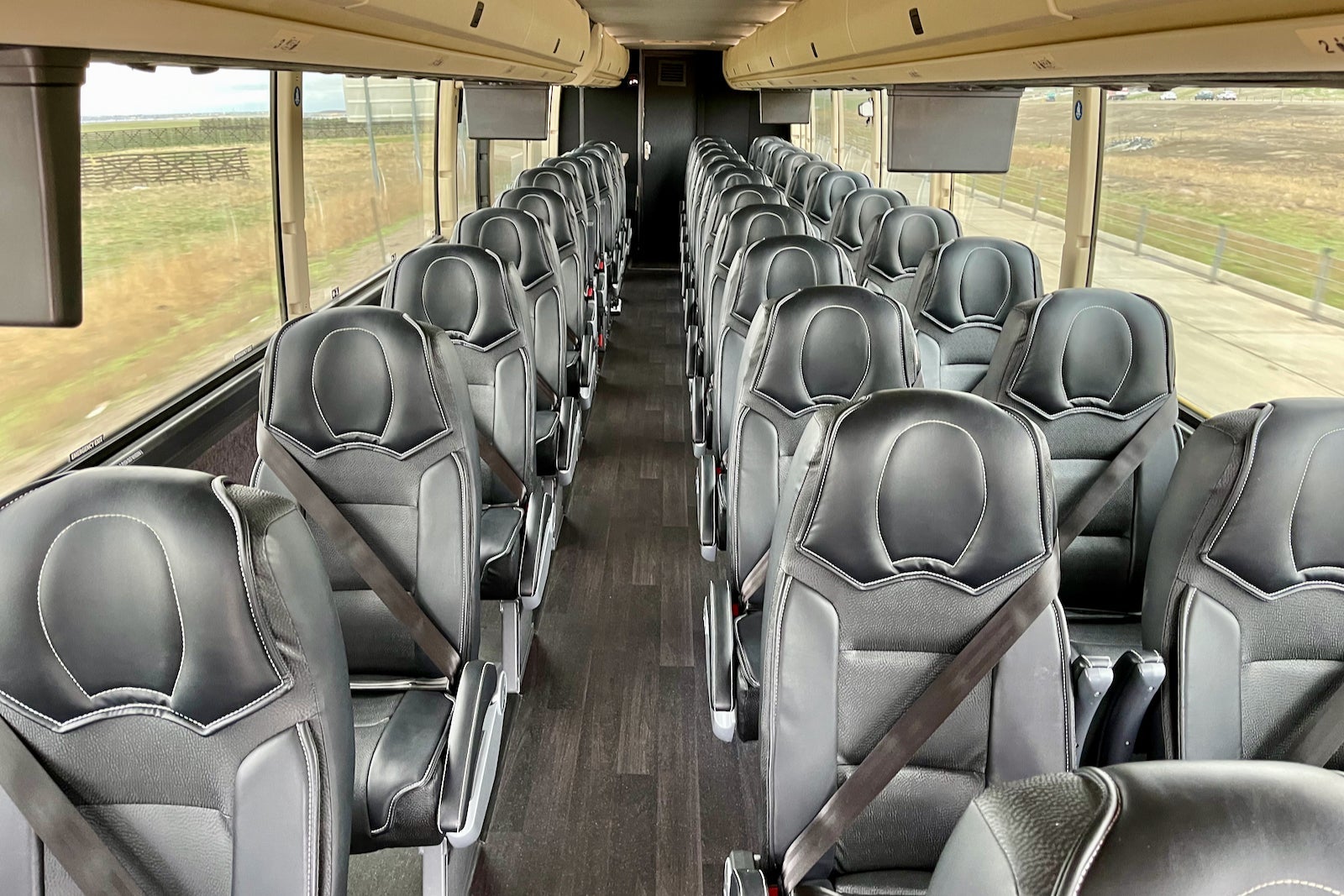
During the drive, you can enjoy one of the 35 leather seats, complimentary Wi-Fi, streaming entertainment and power at each seat.
Upon arrival in Philadelphia, the bus will pull up airside (past security) and you'll disembark at the terminal. Your checked bags will be automatically transferred to your connecting flight, and you won't need to reclear security.
Meanwhile, if your journey ends in Allentown, Atlantic City or Lancaster, you'll land in Philadelphia, and then follow signs for a dedicated bus gate from which the Landline vehicle will depart. Once again, your checked bags will be automatically transferred.
Itineraries that include bus segments operated by Landline are eligible for AAdvantage mileage and Loyalty Points accrual.
All in, operating a bus service to these nearby airports seemingly makes sense from a cost perspective.
The smallest aircraft in American's regional fleet (the ERJ-145) seats 50 passengers and requires two pilots and a flight attendant. Meanwhile, operating the bus takes just one driver and is significantly cheaper than flying a plane for such a short route.
Add in a nationwide pilot shortage, and the economics seem to favor a bus over a plane for such short routes.
Plus, given what's likely inconsistent demand for flights to and from these smaller airports, being able to deploy different sizes of coach buses depending on demand is likely even more efficient.
TPG featured card

at Capital One's secure site
Terms & restrictions apply. See rates & fees.
| 5X miles | Earn 5X miles on hotels, vacation rentals and rental cars booked through Capital One Travel |
| 2X miles | Earn unlimited 2X miles on every purchase, every day |
Pros
- Stellar welcome offer of 75,000 miles after spending $4,000 on purchases in the first three months from account opening. Plus, a $250 Capital One Travel credit to use in your first cardholder year upon account opening.
- You'll earn 2 miles per dollar on every purchase, which means you won't have to worry about memorizing bonus categories
- Rewards are versatile and can be redeemed for a statement credit or transferred to Capital One’s transfer partners
Cons
- Highest bonus-earning categories only on travel booked via Capital One Travel
- LIMITED-TIME OFFER: Enjoy $250 to use on Capital One Travel in your first cardholder year, plus earn 75,000 bonus miles once you spend $4,000 on purchases within the first 3 months from account opening - that’s equal to $1,000 in travel
- Earn unlimited 2X miles on every purchase, every day
- Earn 5X miles on hotels, vacation rentals and rental cars booked through Capital One Travel
- Miles won't expire for the life of the account and there's no limit to how many you can earn
- Receive up to a $120 credit for Global Entry or TSA PreCheck®
- Use your miles to get reimbursed for any travel purchase—or redeem by booking a trip through Capital One Travel
- Enjoy a $50 experience credit and other premium benefits with every hotel and vacation rental booked from the Lifestyle Collection
- Transfer your miles to your choice of 15+ travel loyalty programs
- Top rated mobile app