How aircraft transport dangerous goods

Despite the huge reduction in demand for passenger flights over the past few months, the requirement to transport freight still exists. As there are fewer passengers, airlines are turning to freight to make a profit on the flights that they are operating.
With fewer flights operating between key cities, the cargo space onboard these limited services are now sold for a premium. Bananas from South America, fish from Norway and lobsters from Alaska all need transporting rapidly to reach the supermarket shelves as fresh as customers expect.
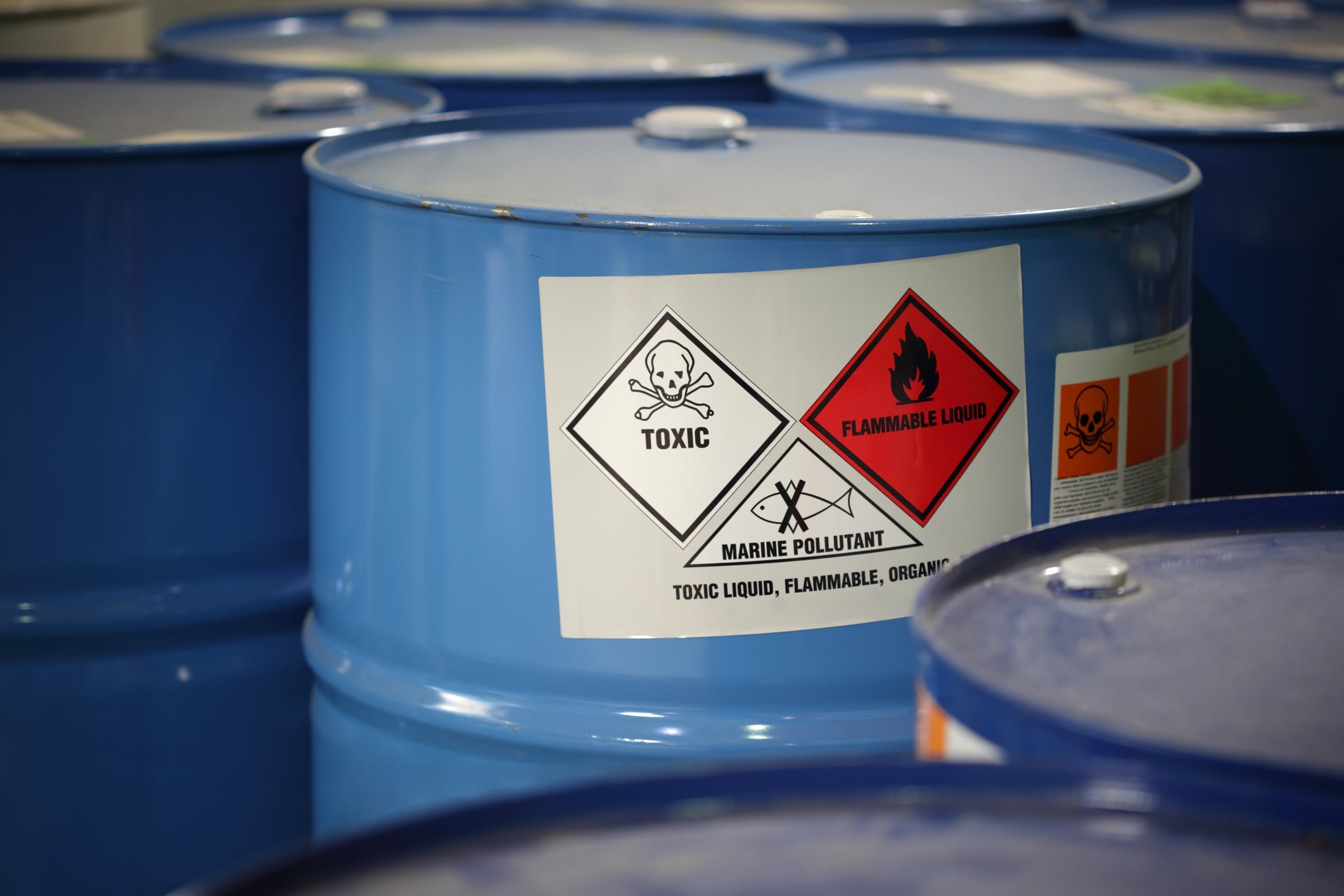
However, it's not just edible produce that's being transported under your feet in the cargo compartments. Lithium-ion batteries, petrol engines and various chemicals could be crossing the Atlantic along with you and your suitcases.
When potentially dangerous items such as these are carried onboard an aircraft, they must comply with strict rules known as the IATA Dangerous Goods Regulations.
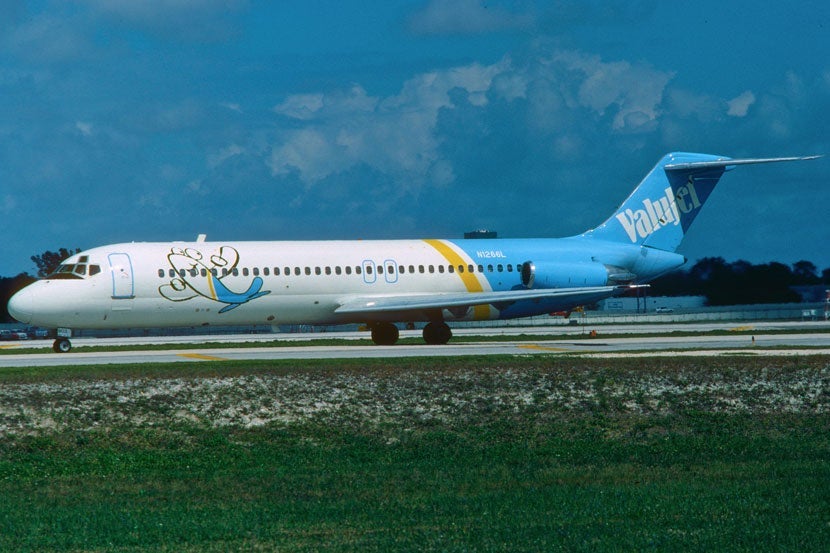
ValuJet 592
On the May 11, 1996, a DC-9 operated by ValuJet took off from Miami International Airport bound for Atlanta, Georgia. Just 10 minutes later, the crew would lose control of the aircraft, killing all on board as it crashed into the Florida Everglades.
The investigation into the crash found that the likely cause was the ignition of improperly packed oxygen generators being carried as freight in the cargo compartment of the aircraft. This lead to an uncontrollable fire, which resulted in the crew losing control of the aircraft.
In addition, the report stated three factors as contributors to the event.
- The company shipping the cylinders did not prepare them correctly for the flight;
- The airline had not properly overseen the implementation of its hazardous good carriage policy; and
- The FAA did not require smoke detection and extinguishing systems in the aircraft cargo compartments.
The crash served as a wake-up call to the industry, with both regulators and airlines giving a greater focus on how they carry dangerous goods onboard aircraft.

IATA dangerous goods regulations
Next time you get on a flight, take a closer look at what's in your carry-on luggage. Chances are that you've got a mobile phone, maybe some aftershave/perfume and some nail polish to add those finishing touches during the flight.
All these are everyday items, but when taken into the confined space of an aircraft, they're classified as dangerous goods. The good news is that as they are packed in your carry-on luggage, they pose little danger to the aircraft. However, when shipped together in large quantities in the cargo compartments, they could become a threat.
To ensure items are carried safely, the International Air Transport Authority (IATA) drew up the Dangerous Goods Regulations (DGR). They provide airlines, freight handlers, shippers and ground handlers with instructions on how certain items should be packaged and handled when being transported by air.
Read more: How pilots and controllers communicate digitally

Classification of dangerous goods
To enable shippers and airlines to package and carry items safely, there are nine categories into which items will fall, as defined by the United Nations. Each individual item has a unique code, known as the "UN code".
- Class 1 -- Explosive materials (not normally carried by air)
- Class 2 -- Gases
- Class 3 -- Flammable liquids (e.g. gasoline)
- Class 4 -- Flammable solids
- Class 5 -- Oxidising substances and organic pesticides
- Class 6 -- Toxic and infectious substances (e.g. cyanide/vaccines)
- Class 7 -- Radioactive materials
- Class 8 -- Corrosive materials (e.g. battery acids)
- Class 9 -- Miscellaneous (e.g. asbestos)
Preparation for travel
The safe carriage of dangerous goods begins with the company shipping the item. They must ensure that they are packed in the quantities and types of packaging specified in the DGR. The effects of altitude and temperature must be considered.
On a normal flight, the altitude and temperature will not vary a huge amount from on the ground. However, the loss of cabin pressurization will cause a rapid, albeit temporary, change to both these environmental factors.
As a result, items must be packed in a way to prevent leakages in the case of a change in altitude and temperature. This is particularly relevant to liquid and gasses.
If a package shows any signs of leakage or damage any time up until it is loaded into the aircraft, it will not be accepted for travel. The contents must be completely repackaged before it is allowed to fly.
Marks and labeling
All packages containing dangerous goods must have an appropriate label fixed to the outside, clearly visible to handlers.
Most of these you may have seen before, particularly on the back of trucks. If you've ever ordered an item online which contains a lithium battery, such as a mobile phone or a battery pack, you may have noticed the new lithium battery hazard label on the packaging.
Read more: How do pilots deal with an engine failure on takeoff?

On board the aircraft
With the items correctly packaged, it is down to the airline to ensure that the cargo is safely loaded into the aircraft and secured for flight. Not only does it matter how it is loaded, but where it is loaded is even more important.
Consignments containing dangerous goods that may react with each other must not be loaded next to each other. To take this a step further, they must not be stowed in a way that would enable a leak from one package to interact with another package, even if they are not next to each other.
To ensure that this happens, liquids will always be placed below other dangerous goods and incompatible items will be loaded in separate cargo containers.
Once in the cargo compartment, the items must be safely secured to ensure that they do not move during flight. This can either be done using ropes or straps. If it is not possible to secure the package in this way, it can be loaded with other non-conflicting freight to ensure that it remains secure for the duration of the flight.
A contributing factor to the ValuJet crash was the proximity of a consignment of tires to the oxygen cylinders. As the cylinders ignited, the fire caused the tires to explode, damaging some of the aircraft systems.
Items carried by passengers
Technically, dangerous goods must not be taken on board an aircraft by passengers or crew. However, if you asked passengers to leave their duty-free alcohol and mobile phones at the gate, you'd have a mutiny on your hands.
As a result, there is a provision that allows those in the cabin to take a small number of dangerous goods on board with certain restrictions. These restrictions are largely universal, but individual airlines/countries may have their own version of these rules.
Alcohol
So long as they are in the original retail packaging, drinks more than 24% but less than 70% are allowed to be carried by passengers, up to a limit of 5 liters, though don't get this confused with the duty-free limit, which is often much less.
Avalanche backpacks
Keen skiers often travel with specialist avalanche backpacks. These contain a small compressed gas canister that is used to inflate a protective airbag around the skier should they be caught in an avalanche. These are permitted in the aircraft cabin so long as the bottle is disconnected from the activation mechanism.
Countries like the U.S. and Japan have their own restrictions on the number of bottles that can be carried.
Read more: Brace for impact! How the landing gear on the 787 Dreamliner works

Matches and lighters
As innocuous as they may seem, there are rules pertaining to the carriage of matches and lighters. "Strike anywhere" matches are forbidden, and a lighter, if carried, must be kept in your pocket. This may seem bizarre but my take on this rule is that it's to stop it igniting in a bag without anyone knowing. If it happens in your pocket, you'll know pretty quickly!
Christmas crackers and party poppers
Always one that causes tears during the holiday season, the small explosives contained within these items makes them fall under the dangerous goods umbrella. As a result, they are subject to restrictions.
Christmas crackers are permitted (up to two boxes per passenger) in checked luggage but party poppers are not permitted either in the checked bags or the cabin.
Scuba diving tanks
Another favorite with leisure passengers, scuba tanks can be checked-in provided that the air has been released and the valves left open.
The notice to captain
The captain has overall responsibility for the safety of the aircraft and its occupants. As a result, they must be informed of not only what is in the cargo compartments, but also where it has been loaded. The notification to captain (NOTOC) comes in two parts — the first detailing any dangerous goods and the second showing any other special loads, for example, perishable foods.
The NOTOC must be completed before every departure when dangerous goods are carried. This must be signed by the person responsible for loading the aircraft. It is then given to the captain to confirm that they are aware of any special items in the cargo compartments and where they have been loaded. The captain then signs a copy of the NOTOC and leaves it with the ground staff.
In addition to any dangerous goods, the NOTOC will also contain details of any live animals or temperature-sensitive cargo. On the Boeing 787, the air in the forward cargo compartment can be conditioned to maintain an exact temperature anywhere between 39 to 79 degrees Fahrenheit.
The NOTOC must list several details pertaining to the carriage of any dangerous goods. These include what the item is (including the UN number), the class of the hazard, the total weight of the item and where it has been loaded in the aircraft.
This information is critical in the event of an emergency on the ground or if there are any leaks or fumes detected inflight.
Inflight emergency response
The reason for such stringent rules and procedures as detailed above is to reduce the risk of dangerous goods posing a problem in flight. However, as with all things in life, the risk can never be reduced to zero.
Should a problem occur inflight, pilots and cabin crew also have procedures to follow that will reduce the risk of damage to the aircraft and harm to its occupants.
The captain will always keep the crew copy of the NOTOC in a safe place on the flight deck — either in their pocket or somewhere easy to grab if we need to exit the aircraft in a hurry.
At any point during the flight where an emergency situation is developing, the captain must inform ATC of any dangerous goods being carried as cargo. This information is then passed on to the airport authorities.
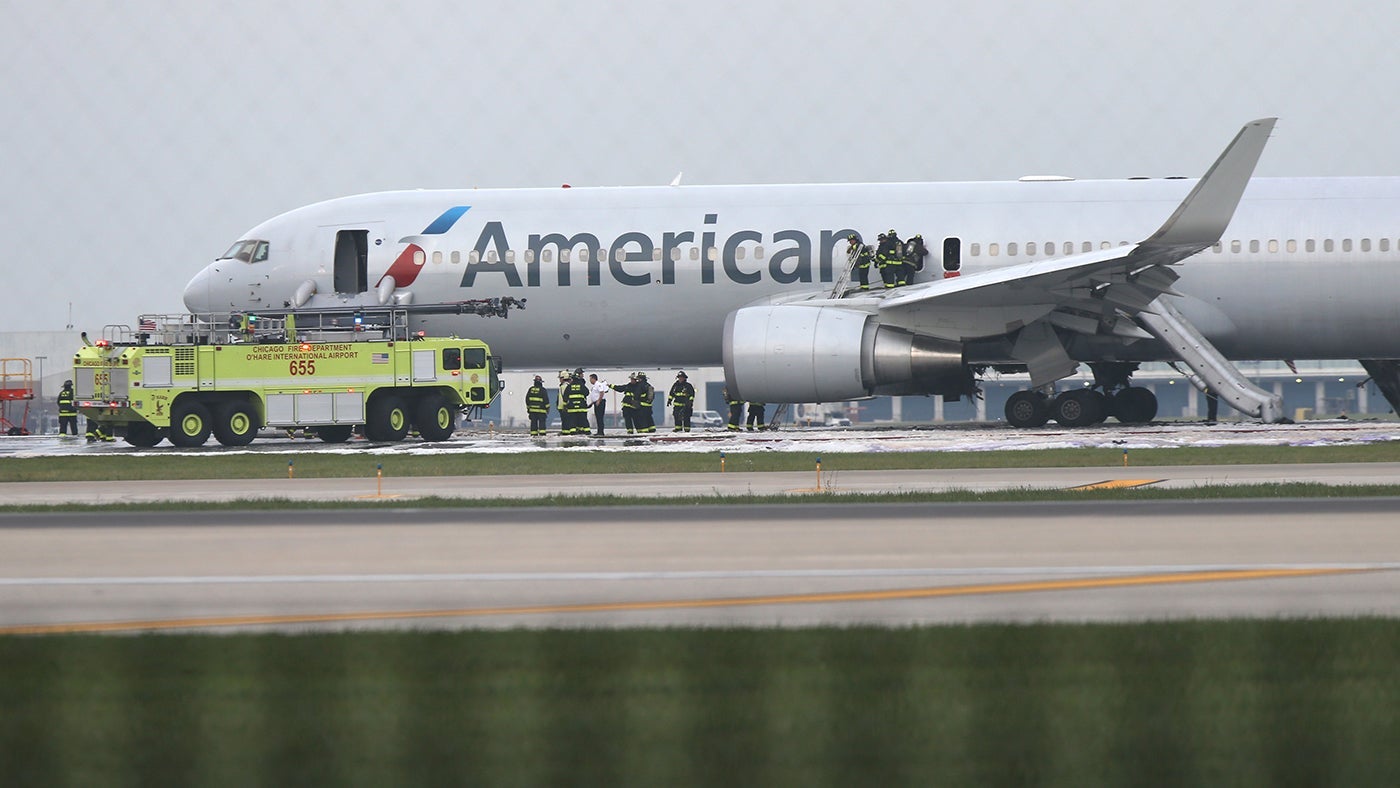
This will include the shipping name of the items, the UN number, the class, the risks they pose, the quantity and the location on the aircraft. With this information, emergency crews on the ground can adapt how they approach the aircraft and deal with any potential fire.
If there is a spillage in the cabin, it is most likely from an item a passenger has brought on the aircraft undeclared. The crew will move passengers away from the area and will consult the IATA Dangerous Goods Emergency Response Guide (ERG).
This comprehensive manual contains the UN numbers of all items that could be brought onto an aircraft. It then details how the spillage or leak should be handled, depending on the type of substance.
Bottom line
Carrying certain items on aircraft comes with added risk. In order to mitigate this, airlines ensure that dangerous goods are packed properly and are loaded securely in a way in which they will not come into contact with other items they could react with.
The captain is notified before each flight as to the exact nature of what is being carried in the cargo compartments and where exactly they have been loaded. In the event of an emergency, the crew can then inform emergency services about any items that may pose a danger.
TPG featured card

at Capital One's secure site
Terms & restrictions apply. See rates & fees.
| 5X miles | Earn 5X miles on hotels, vacation rentals and rental cars booked through Capital One Travel |
| 2X miles | Earn unlimited 2X miles on every purchase, every day |
Pros
- Stellar welcome offer of 75,000 miles after spending $4,000 on purchases in the first three months from account opening. Plus, a $250 Capital One Travel credit to use in your first cardholder year upon account opening.
- You'll earn 2 miles per dollar on every purchase, which means you won't have to worry about memorizing bonus categories
- Rewards are versatile and can be redeemed for a statement credit or transferred to Capital One’s transfer partners
Cons
- Highest bonus-earning categories only on travel booked via Capital One Travel
- LIMITED-TIME OFFER: Enjoy $250 to use on Capital One Travel in your first cardholder year, plus earn 75,000 bonus miles once you spend $4,000 on purchases within the first 3 months from account opening - that’s equal to $1,000 in travel
- Earn unlimited 2X miles on every purchase, every day
- Earn 5X miles on hotels, vacation rentals and rental cars booked through Capital One Travel
- Miles won't expire for the life of the account and there's no limit to how many you can earn
- Receive up to a $120 credit for Global Entry or TSA PreCheck®
- Use your miles to get reimbursed for any travel purchase—or redeem by booking a trip through Capital One Travel
- Enjoy a $50 experience credit and other premium benefits with every hotel and vacation rental booked from the Lifestyle Collection
- Transfer your miles to your choice of 15+ travel loyalty programs
- Top rated mobile app