Low visibility: How aircraft operate in foggy conditions

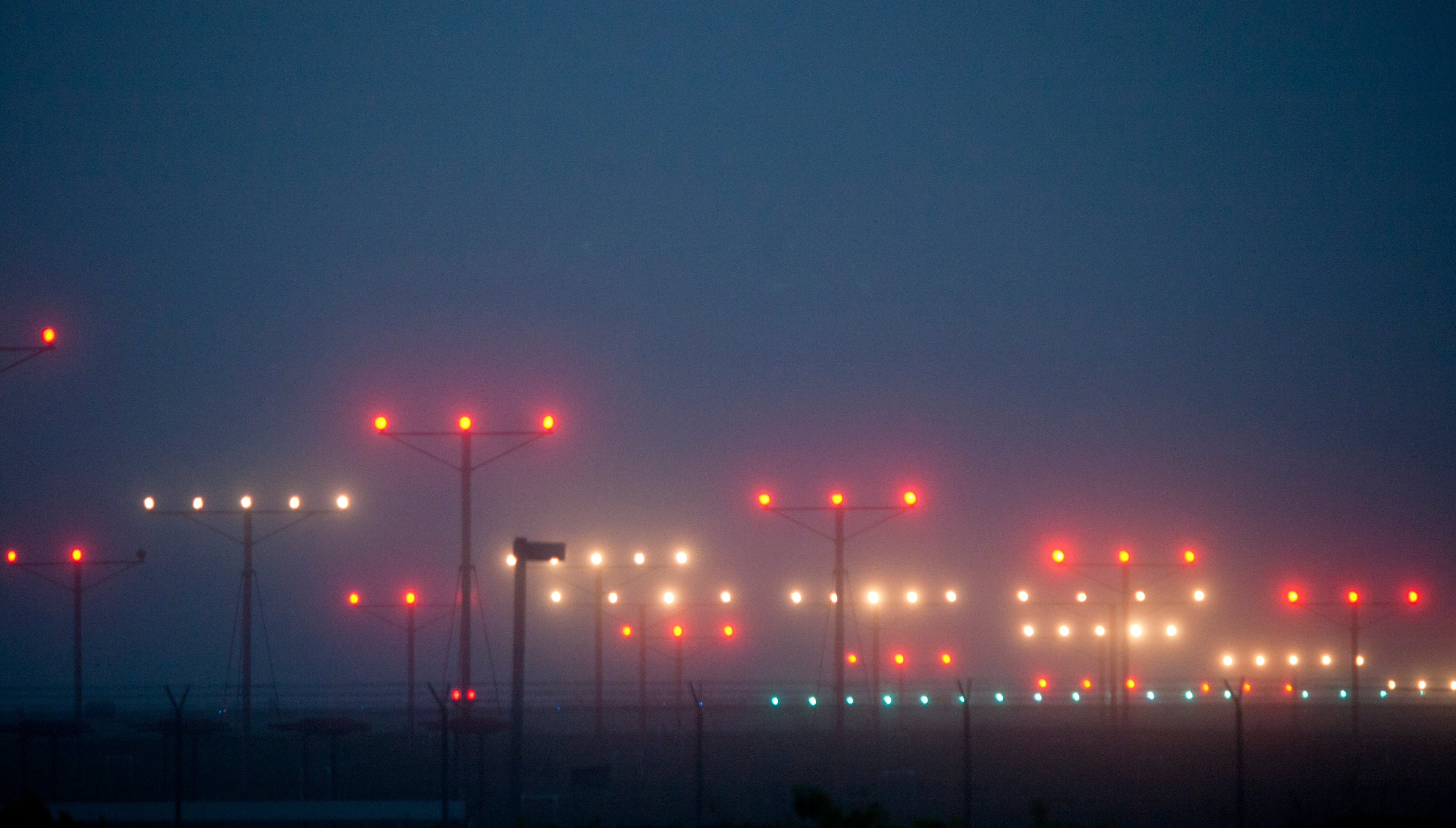
As winter closes in, the nights are getting colder and there's more moisture in the air. Combine the two and you've got the perfect recipe for fog. While it's great for the photographers out there, we all know that fog combined with air travel normally results in delays and disruption.
Fogbound airports are forced to reduce the number of flights taking off and landing every hour. This results in aircraft backed up at the gates and other aircraft going round holding patterns in the air, waiting for their turn to land.
So why does fog cause delays, and how do pilots operate differently to keep our passengers safe in foggy conditions? Here's your guide.
What causes fog?
Fog and mist are, in effect, just clouds sitting on the ground. Mist is defined when the visibility is greater than 1 kilometer (.6 miles) and fog is when the visibility is less than 1 kilometer. There are several different types of fog, each caused by different weather conditions.
Radiation fog
Radiation fog is the type of fog you'll most commonly see. Ever woken up in the morning to drive to work and there's a layer of fog sitting on the road? This is most likely to be radiation fog.
On nights where there is no cloud cover to keep the heat in, the land surface loses its heat to the atmosphere. As the land cools, moist air close to the surface also cools. When the temperature of this air reaches the dew point, it is unable to hold water as a gas. This water vapor condenses around particles in the air and forms fog.

That said, if there is no wind, fog may not form at all. Instead, there will be a layer of dew or frost on the ground. For fog to form, a gentle mixing of the air is needed by a soft breeze. This allows more air to come into contact with the surface, cooling it more and creating a thicker fog.
In addition to the wind and temperature, all airfield weather reports also give us the dew point. If the temperature is getting close to the dew point, we can tell that low cloud or fog is a possibility.

As the sun rises, the surface starts to heat up. As the temperature moves away from the dew point, the air is able to hold more water vapor and the fog starts to evaporate.
Related reading: How the weather affects your flight — the atmosphere and winds
Valley fog
You may have noticed the effects of valley fog when driving into a dip of a road at night. Cold air settles in the troughs of a valley and as it condenses, fog forms. It's commonly the result of a temperature inversion that passes over the top of the valley or dip, keeping the cold air in. The fog is confined by the hills around it, and if the weather conditions are calm, it can last for several days.
Advection fog
When warm, moist air moves over the top of a colder surface, the warm air cools. If this air mass cools to the dew point, fog will form. A great example of this is the fog that forms around the San Francisco Bay.
The California Current brings cold water from Canadian waters down the Californian coast. As the warm moist air off the Pacific passes over this colder water, it condenses and forms fog. Unlike valley or radiation fog, advection fog moves laterally, being blown in over the land by the wind.

Low Visibility Procedures
When the visibility at an airport drops below a certain level, normally 600 meters (2,000 feet), the airfield switches to Low Visibility Procedures — or LVPs. Under LVPs, the way in which ATC and aircraft operate changes significantly.
One of the main changes during LVPs is the holding points around the runways. In good weather conditions, aircraft waiting to enter the runway hold at the Category 1 (CAT 1) holding points. However, when landing in fog, the integrity of the signal that the runway sends up to the aircraft (more on this later) is vital. As a result, aircraft must wait farther back from the runway, at the CAT 3 holding point.
In addition to this, each aircraft needs to be given a longer 'runway occupancy' time. Once a departing aircraft has crossed the CAT 3 holding point, it is deemed to be on the runway until it is airborne. The same with landing aircraft — they are not clear of the runway till passing the CAT 3 holding point.
Some of these CAT 3 holds can be hundreds of meters from the normal CAT 1 holds, so the runway occupancy time is massively increased. This is a large part of what causes delays.
Taxiing
Taxiing the aircraft around the airfield in thick fog is actually more difficult than the actual takeoff or landing. Even at your home base, familiar taxiways suddenly become alien and you can quickly become disorientated. Paying attention to your surroundings is vital. Inadvertently taxiing onto a runway could prove catastrophic.
In order to prevent getting lost, we conduct a departure briefing before we push back from the gate. This will include the planned taxi route to the runway. It is a great time to highlight any areas where we might take a wrong turn and end up somewhere we don't want to be.
In order to assist us as we move around the airfield, we have a couple of maps. One on our iPads and also on one of the flight deck screens. Using both of these together, the PM (Pilot Monitoring) is able to assist the PF (Pilot Flying) in which turn to take and when. If there is any confusion as to where we are going, we'll bring the aircraft to a full stop and let ATC know. It's much better to ask for help than to taxi onto an active runway.

Related reading: Parking a 200-tonne airliner — How pilots move a plane around on the ground
Takeoff
Once we've found our way to the CAT 3 holding point, it's time to start thinking about the takeoff. Depending on the facilities available, each airport publishes the minimum visibility required to depart. That said, the visibility at the start of the runway could be quite different to that half way down, some 2 kilometers (1.2 miles) away.
In order to provide pilots with the best possible information, sensors are positioned at the start, middle and end of the runway — known as the "touchdown," "midpoint" and "stop end." These sensors measure the visibility in meters and are reported to the pilots. For example "RVRs are 130/350/450." It's these figures that determine the takeoff minima.

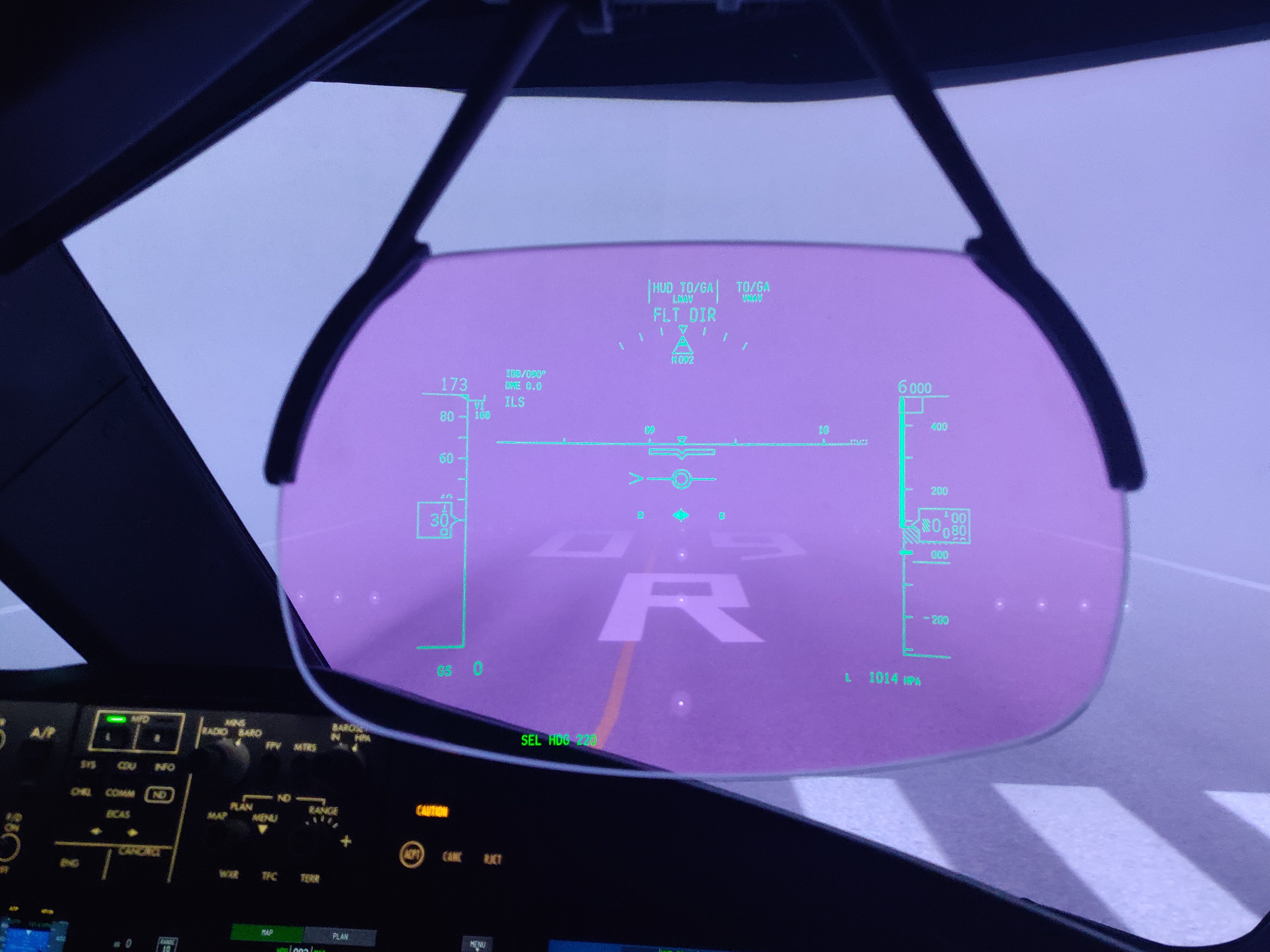
That said, the minima published by the airfield is the absolute minimum allowed. Airlines themselves will have their own minima down to which they will allow their aircraft to takeoff. This is normally 125 meters (400 feet). Contrary to this rule, the Boeing 787 Dreamliner, which I fly, is different. Because of the Head Up Display (HUD), we are able to reduce the takeoff minima down to just 75 meters (246 feet).
However, as I mentioned previously, the RVRs may be different at each stage of the runway. On takeoff, we require all three reported RVRs to be at least the minima required. So, on a 787 I would need RVRs of 75/75/75. If any of the three values was below 75 meters, I would not be allowed to takeoff.
Once we as a crew are happy with the reported RVRs, it's time to go. As we start to pick up speed, the PF (normally the Captain in LVP takeoffs) is staring straight down the runway, keeping the aircraft on the centerline with their feet. The PM is scanning the engine and aircraft indications like a hawk, ready to call out any problems should anything occur.
Hurtling down a strip of concrete at 180 mph when you can only see 75 meters in front of you is a pretty disconcerting experience. You have to keep faith in ATC's ability and the procedures that all aircraft follow to keep the runway ahead of you clear. It's exactly why, when taxiing, that you don't want to end up on a runway by mistake.
Once airborne, the layer of fog may only be a couple of hundred feet thick. As you burst through into clear blue skies, it's almost as if entering another world.
Approach
While there is always plenty of time to prepare for a takeoff in fog, the sudden formation of fog on a runway may catch out some poorly prepared crew. During the flight, a good crew will always be monitoring the weather at the destination. If the temperature continues to drop but the dew point remains the same, it's an indication that fog could be on its way.
If LVPs are in force, this will be notified to the crew via the airfield's information broadcast. This can either be picked up over the radio, or via Datalink for aircraft equipped with this technology. In addition to the usual weather, it will also give the latest reported RVRs. However, these should always be treated with a pinch of salt, as RVRs can change minute by minute.

In order for the pilots to guide the aircraft toward the runway, we must hook onto a signal that is projected up from the runway, the Instrument Landing System, or ILS. The ILS actually comprises of two signals.
The first, the localizer, sits short of the runway threshold but in line with the middle. This shows us where we are in relation to the centerline of the runway. The second beam projects upward at a 3 degree angle, from a point roughly 1,000 feet into the runway, abeam the touchdown point.
The aircraft detects these signals and displays them on the screens in the flight deck. We then instruct the Autopilot to latch onto these signals and follow them to the runway.
Approach Minima
Like on take off, each runway, and specifically the approach to the runway has minimum weather criteria governing when we can and cannot make an approach. ILS approaches are used in foggy conditions as they have the most accurate signal.
The minima dictates the minimum RVR needed to commence an approach to land, the start of the approach normally being 1,000 feet above the ground. Once again, the three different RVRs will be reported to the pilots. This is where it gets a little complicated.
For an ILS approach to a runway, there are various different minima, depending on the equipment the aircraft has on board. For now, I'll just discuss the most useful type of approach, "CAT 3B with no decision height."
On these kind of approaches, we can land with a visibility of 75 meters. Also, there is no requirement to see anything out of the windscreen before allowing the aircraft to touch down, such is the accuracy of the systems. There are even redundancies built into the systems so that in the case of certain failures, the aircraft can still continue to touchdown safely.
Landing
The landing itself is what's called an auto-land. The Autopilot remains engaged all the way to touchdown and while the aircraft is decelerating on the runway. By leaving the Autopilot to do the physical flying, both pilots are able to give all our attention to making sure the aircraft is doing exactly what we want it to be doing. If the slightest thing starts to go wrong, we will notice immediately and take the appropriate action. As the aircraft passes over the threshold of the runway, the Autopilot raises the nose slightly to slow down the rate of descent. Quite often, auto-lands are fairly agricultural. The Autopilot is great at putting the aircraft in the right spot, it just sometimes lacks some grace. With the wheels firmly on the ground, we can apply the reverse thrust and allow the braking system to slow the aircraft down. All this time, the Autopilot is still keeping the nose tracking down the centerline of the runway. When we have reached taxiing speed and have identified a runway exit, the Autopilot is disengaged and the toughest part of the arrival begins — the taxi to the gate.
Bottom line
Flying in foggy conditions provides challenges to pilots that are only experienced a few times a year. That said, it isn't always easy to predict when the conditions will fog out, so we have to be prepared at all times. Taxiing to and from the gate is potentially the most dangerous stage of the flight, with the reduced visibility making it difficult to discern your surroundings. That said, we train regularly in the simulator for operations in foggy conditions so when it happens for real, we're well practiced in what to do.
TPG featured card

at Capital One's secure site
Terms & restrictions apply. See rates & fees.
| 5X miles | Earn 5X miles on hotels, vacation rentals and rental cars booked through Capital One Travel |
| 2X miles | Earn unlimited 2X miles on every purchase, every day |
Pros
- Stellar welcome offer of 75,000 miles after spending $4,000 on purchases in the first three months from account opening. Plus, a $250 Capital One Travel credit to use in your first cardholder year upon account opening.
- You'll earn 2 miles per dollar on every purchase, which means you won't have to worry about memorizing bonus categories
- Rewards are versatile and can be redeemed for a statement credit or transferred to Capital One’s transfer partners
Cons
- Highest bonus-earning categories only on travel booked via Capital One Travel
- LIMITED-TIME OFFER: Enjoy $250 to use on Capital One Travel in your first cardholder year, plus earn 75,000 bonus miles once you spend $4,000 on purchases within the first 3 months from account opening - that’s equal to $1,000 in travel
- Earn unlimited 2X miles on every purchase, every day
- Earn 5X miles on hotels, vacation rentals and rental cars booked through Capital One Travel
- Miles won't expire for the life of the account and there's no limit to how many you can earn
- Receive up to a $120 credit for Global Entry or TSA PreCheck®
- Use your miles to get reimbursed for any travel purchase—or redeem by booking a trip through Capital One Travel
- Enjoy a $50 experience credit and other premium benefits with every hotel and vacation rental booked from the Lifestyle Collection
- Transfer your miles to your choice of 15+ travel loyalty programs
- Top rated mobile app