Airbus Unveils Cargo Deck Sleeping Compartments With Up to 24 Bunks

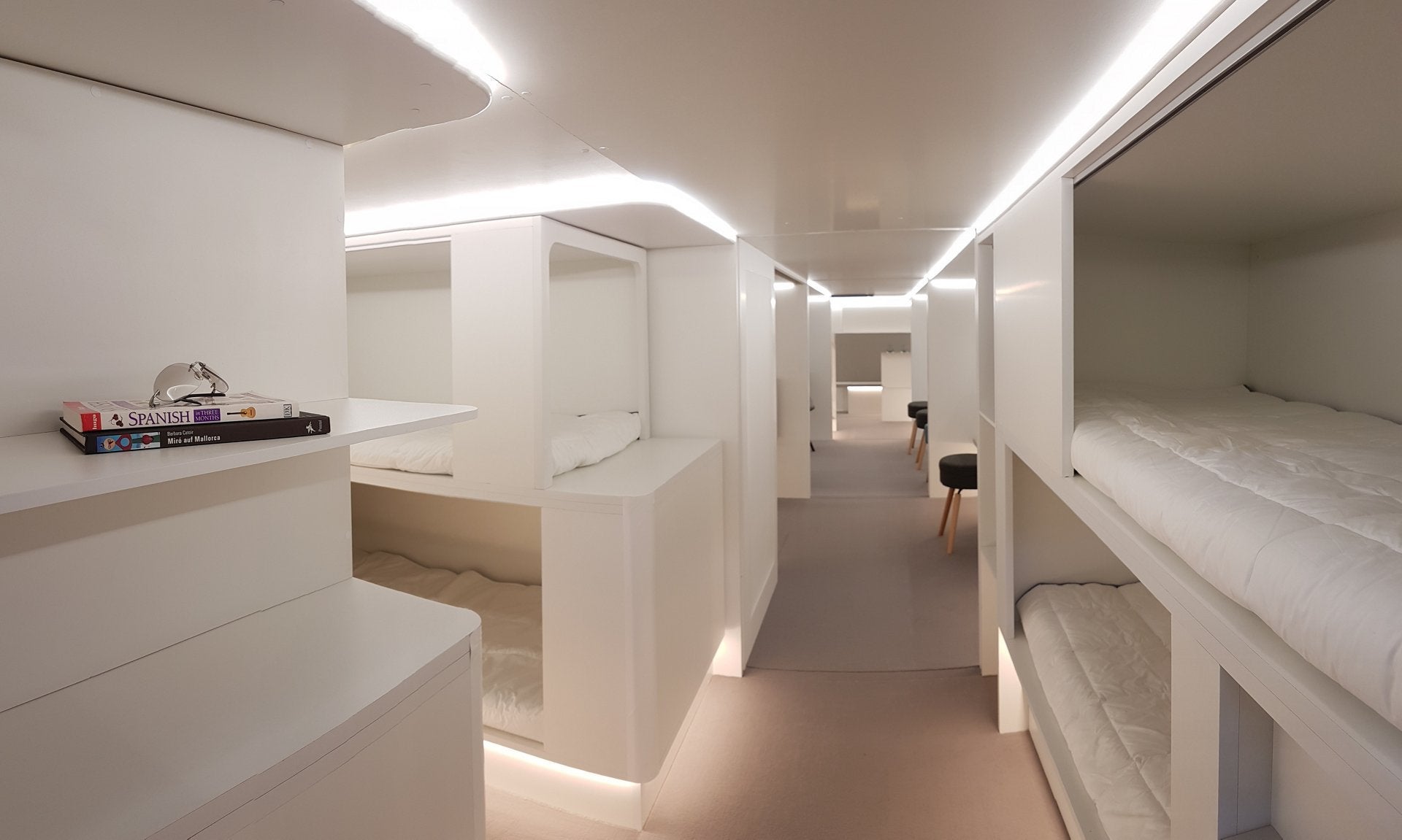
Just after arriving in London on the Perth-London inaugural, Qantas CEO Alan Joyce made news by discussing the idea of having sleeping berths and exercise areas in the cargo deck of an aircraft. Now, Airbus and Zodiac have signed a partnership to make that idea a reality by 2020.
Announced in a closed-door ceremony at the Aircraft Interiors Expo in Hamburg, the new product would allow airlines to easily add and remove customizable modules into space otherwise reserved for cargo.
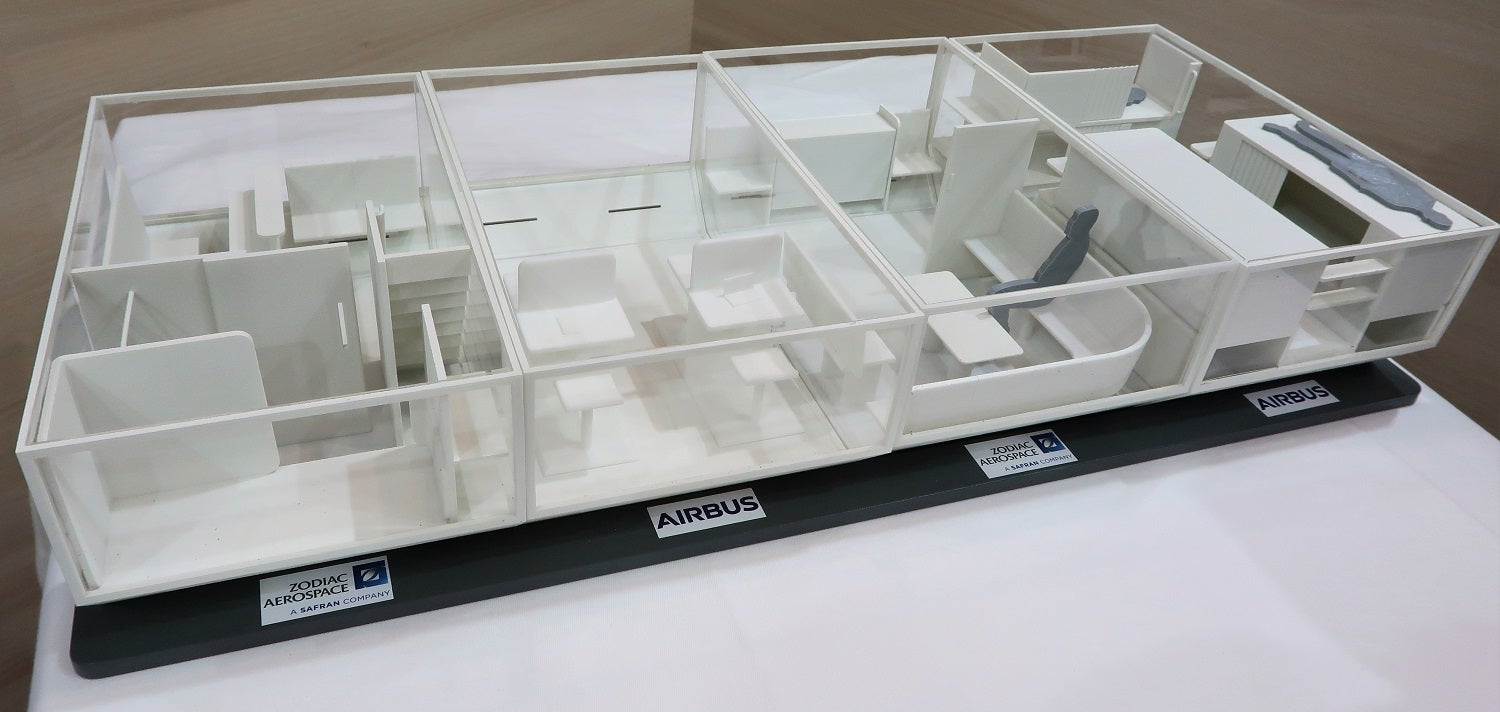
For the unveiling, the focus was on the idea of a premium "hotel-like" living space. In the model unveiled in Hamburg, there's only one six-bed sleeping berth while the other modules are dedicated to dining and working areas. However, airlines could choose from a variety of other modules such as lounges, conference rooms, living rooms, combination work/sleep areas and more.
Designed with ease in mind for crew to swap out on an overnight layover, airlines would have the flexibility to choose between cargo and these new living areas — or between different types of modules — on a day-by-day basis.
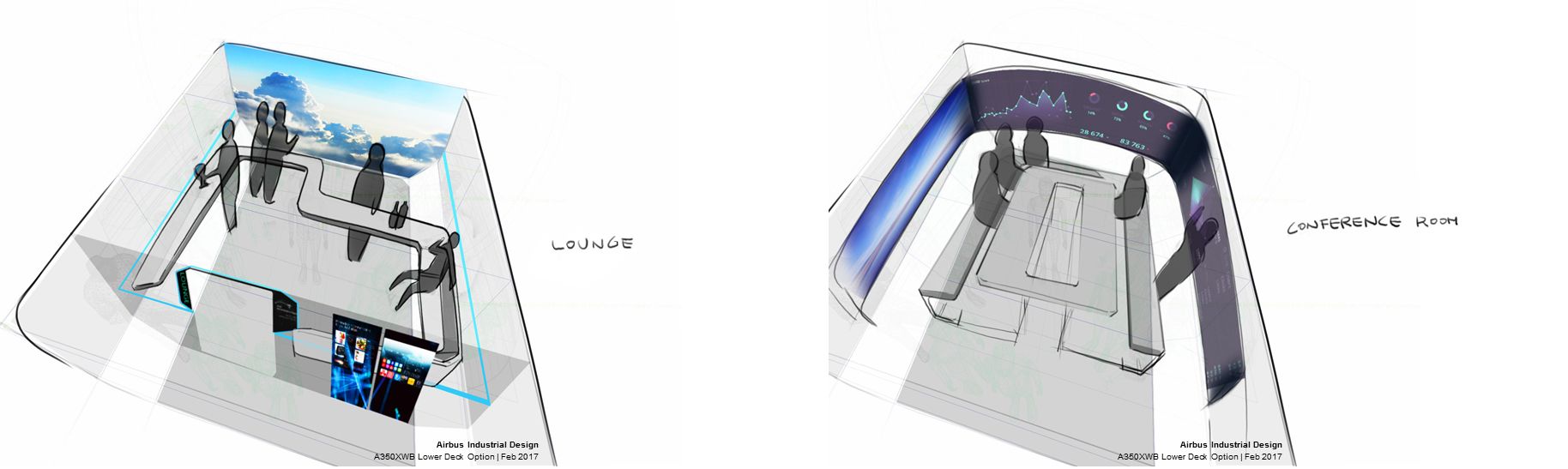
Geoff Pinner, Airbus' head of cabin and cargo, said after the unveiling that the airlines will be the ones driving the modular innovation. A premium airline would have the option to arrange their cargo deck into a Residence-like living space for ultra-premium passengers.
On the flip side, airlines could install four modules of sleeping berths to be able to provide beds for 24 passengers. And, if six bunks in a roughly 13-by-8-by-5-foot space isn't enough, Pinner said that the Airbus/Zodiac partnership could develop an even higher-density sleeping berth option.

To start out, Airbus is developing the product for the Airbus A330. That's primarily because there are currently around 150 Airbus A330s that already have lower-deck stairs installed for crew rest areas.
Once development and certification of those modules is complete, the aircraft could be able to immediately add modules via existing cargo doors without any retrofit required to install them. Aircraft that don't have lower-deck stairs already installed would only be required to undergo a retrofit to add the stairs before modules could be used.
After introducing it for the A330, the next step for the partnership would be to adapt the product for the A350. Understandably, as the A380 program is on and off the brink of shutting down, Airbus isn't planning to adapt this idea for the superjumbo at this time.

While this is the beginning of an official relationship, Airbus notes that it already has a full-size mock-up of the concept in its Toulouse innovation center. And, it seems that this mock-up has already been visited by a few airlines. In the press release, Pinner is quoted as saying, "We have already received very positive feedback from several airlines on our first mock-ups." When asked for specifics, he noted that it's too early to share which airlines have already expressed interest.
There's one major issue that wasn't addressed in the unveiling: height. With the cargo deck only able to support a module that's 5 feet and 4 inches in height, there's not going to be enough room for most passengers to stand up straight. My assumption is that this is going to be a major factor in airlines opting to go more toward sleeping berths rather than lounges and other premium spaces.
TPG featured card
at American Express's secure site
Terms & restrictions apply. See rates & fees.
| 4X | Earn 4X Membership Rewards® points per dollar spent on purchases at restaurants worldwide, on up to $50,000 in purchases per calendar year, then 1X points for the rest of the year. |
| 4X | Earn 4X Membership Rewards® points per dollar spent at US supermarkets, on up to $25,000 in purchases per calendar year, then 1X points for the rest of the year. |
| 5X | Earn 5X Membership Rewards® points on prepaid hotel stays booked through AmexTravel.com or the Amex Travel App™. |
| 3X | Earn 3X Membership Rewards® points on flights booked through AmexTravel.com, the Amex Travel App™, or purchased directly from airlines. |
| 2X | Earn 2X Membership Rewards® points on prepaid car rentals booked through AmexTravel.com or the Amex Travel App™ and cruises booked and paid through AmexTravel.com. |
| 1X | Earn 1X Membership Rewards® point per dollar spent on all other eligible purchases. |
Pros
- Valuable dining and food-related credits
- Flexible rewards with airline and hotel transfer partners
- Multiple travel and purchase protections
- No foreign transaction fees
- Access to Amex Offers for additional savings (enrollment required)
Cons
- Not as useful for those living outside the U.S.
- Some may have trouble using Uber and other dining credits
- You may be eligible for as high as 100,000 Membership Rewards® Points after you spend $8,000 in eligible purchases on your new Card in your first 6 months of Card Membership. Welcome offers vary and you may not be eligible for an offer. Apply to know if you’re approved and find out your exact welcome offer amount – all with no credit score impact. If you’re approved and choose to accept the Card, your score may be impacted.
- Earn 4X Membership Rewards® points per dollar spent on purchases at restaurants worldwide, on up to $50,000 in purchases per calendar year, then 1X points for the rest of the year.
- Earn 4X Membership Rewards® points per dollar spent at US supermarkets, on up to $25,000 in purchases per calendar year, then 1X points for the rest of the year.
- Earn 5X Membership Rewards® points on prepaid hotel stays booked through AmexTravel.com or the Amex Travel App™.
- Earn 3X Membership Rewards® points on flights booked through AmexTravel.com, the Amex Travel App™, or purchased directly from airlines.
- Earn 2X Membership Rewards® points on prepaid car rentals booked through AmexTravel.com or the Amex Travel App™ and cruises booked and paid through AmexTravel.com.
- Earn 1X Membership Rewards® point per dollar spent on all other eligible purchases.
- Pay It® lets you tap in the American Express® App to quickly pay for small purchase amounts throughout the month and still earn rewards the way you usually do. Plan It® gives you the option to split up big purchases into equal monthly payments with a fixed fee. You’ll know upfront exactly how much you’ll pay.
- $120 Dining Credit: Earn up to a total of $10 in statement credits monthly when you pay with the Gold Card at Grubhub (including Seamless), Buffalo Wild Wings, Five Guys, The Cheesecake Factory, and Wonder. This can be an annual savings of up to $120. Enrollment required.
- $100 Resy Credit: Get up to $100 in statement credits each calendar year at over 10,000 qualifying U.S. Resy restaurants after you pay for eligible purchases with the American Express® Gold Card. That’s up to $50 in statement credits semi-annually. Enrollment required.
- $84 Dunkin' Credit: Earn up to $7 in monthly statement credits after you pay with the American Express® Gold Card at U.S. Dunkin’ locations. Enrollment required.
- $120 Uber Cash on Gold: Enjoy up to $120 in Uber Cash annually with your Gold Card. Just add your Card to your Uber account and you'll get $10 in Uber Cash each month to use on orders and rides in the U.S. when you select an Amex Card for your transaction.
- Enjoy complimentary Hertz Five Star® Status benefits like skipping the counter at select locations, adding an additional driver at no additional cost*, and vehicle upgrades**. Benefit enrollment and Hertz Gold+ registration are required. *Additional drivers must meet standard rental qualifications and must be a spouse or domestic partner to qualify as complimentary. Other additional drivers subject to fees. **Benefits are subject to availability and vary by location. Additional Hertz program Terms and Conditions including age restrictions apply.
- Book two nights or more with The Hotel Collection through AmexTravel.com or the Amex Travel App™ and receive a $100* credit towards eligible charges at over 1,400 upscale hotels worldwide. *Eligible charges vary by property.
- Book your travel through the Amex Travel App™ with added peace of mind – backed by American Express® service and support. Only for American Express® Card Members.
- Whenever you need us, we're here. Our Member Services team will ensure you are taken care of. From lost Card replacement to statement questions, we are available to help 24/7.
- No Foreign Transaction Fees.
- Annual Fee is $325.
- Terms Apply.