How Airbus uses "the weirdest jet in the world" to assemble its airplanes

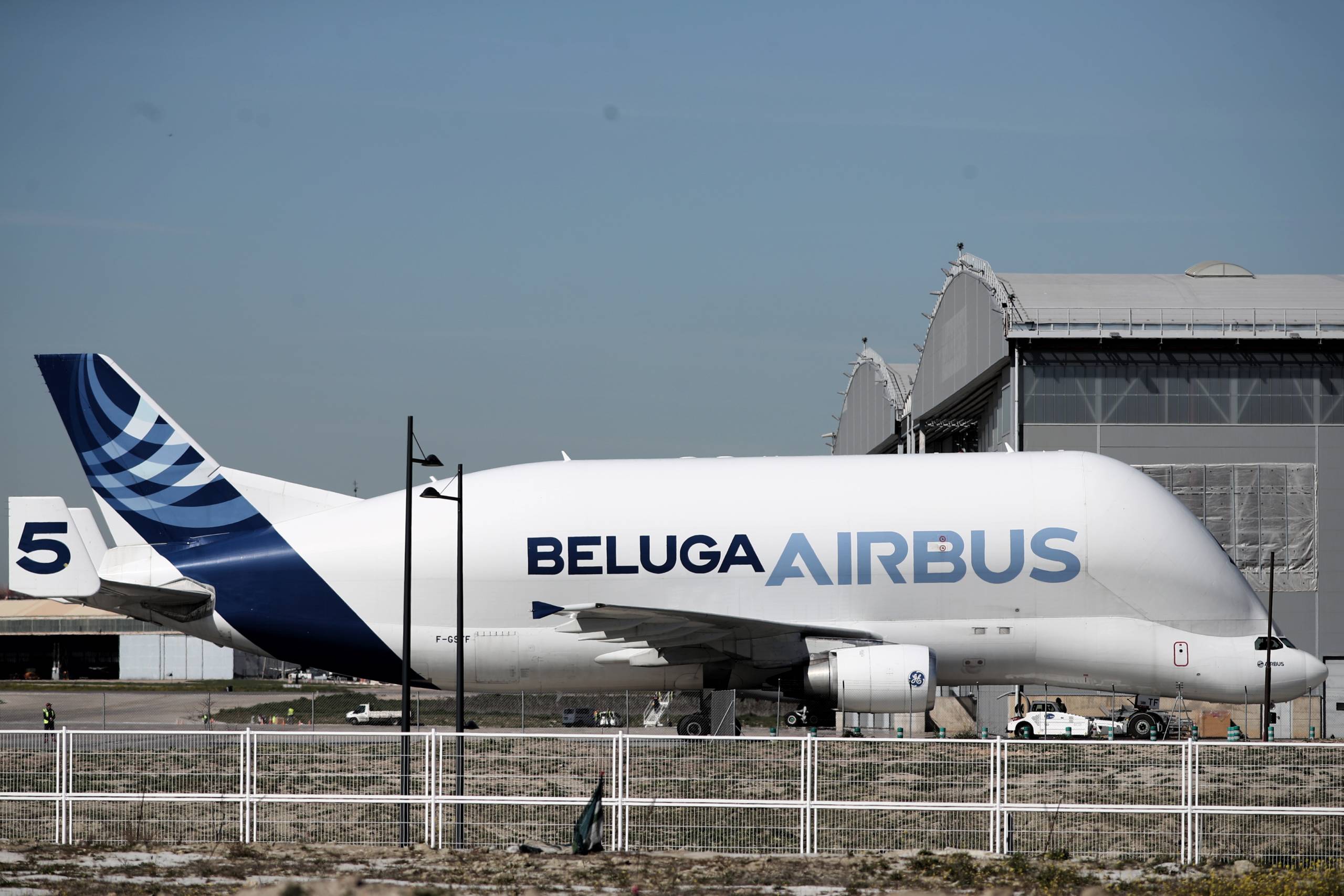
Few planes have a more appropriate name than the Airbus Beluga. If you've seen one, you'll know: It looks exactly like a beluga whale, with an enormously bulbous forehead. Google "the weirdest jet in the world," and it will show up among the top results.
But the Beluga isn't just a crazy-looking machine: It's a major player in the global economy.For two and a half decades, Belugas have been the logistical backbone of Airbus.
For more TPG news and deals delivered each morning to your inbox, sign up for our daily newsletter.
Like all major planemakers, Airbus has a decentralized production structure, with plants in different European countries, each responsible for the completion of specific aircraft sections. Wings, for example, are made in the U.K.; fuselage sections in Germany and France; horizontal tail stabilizers in Spain. Belugas were developed from commercial jets to fly all these parts to the final assembly lines in Toulouse and Hamburg, from which completed aircraft emerge. (Boeing has a fleet of similarly unusual aircraft, the Dreamlifters, which are modified 747s.)
TPG was recently granted a rare opportunity to watch one of these fascinating freighters in action, as it arrived in Toulouse early in the morning to unload its valuable cargo of parts for A330 jets.
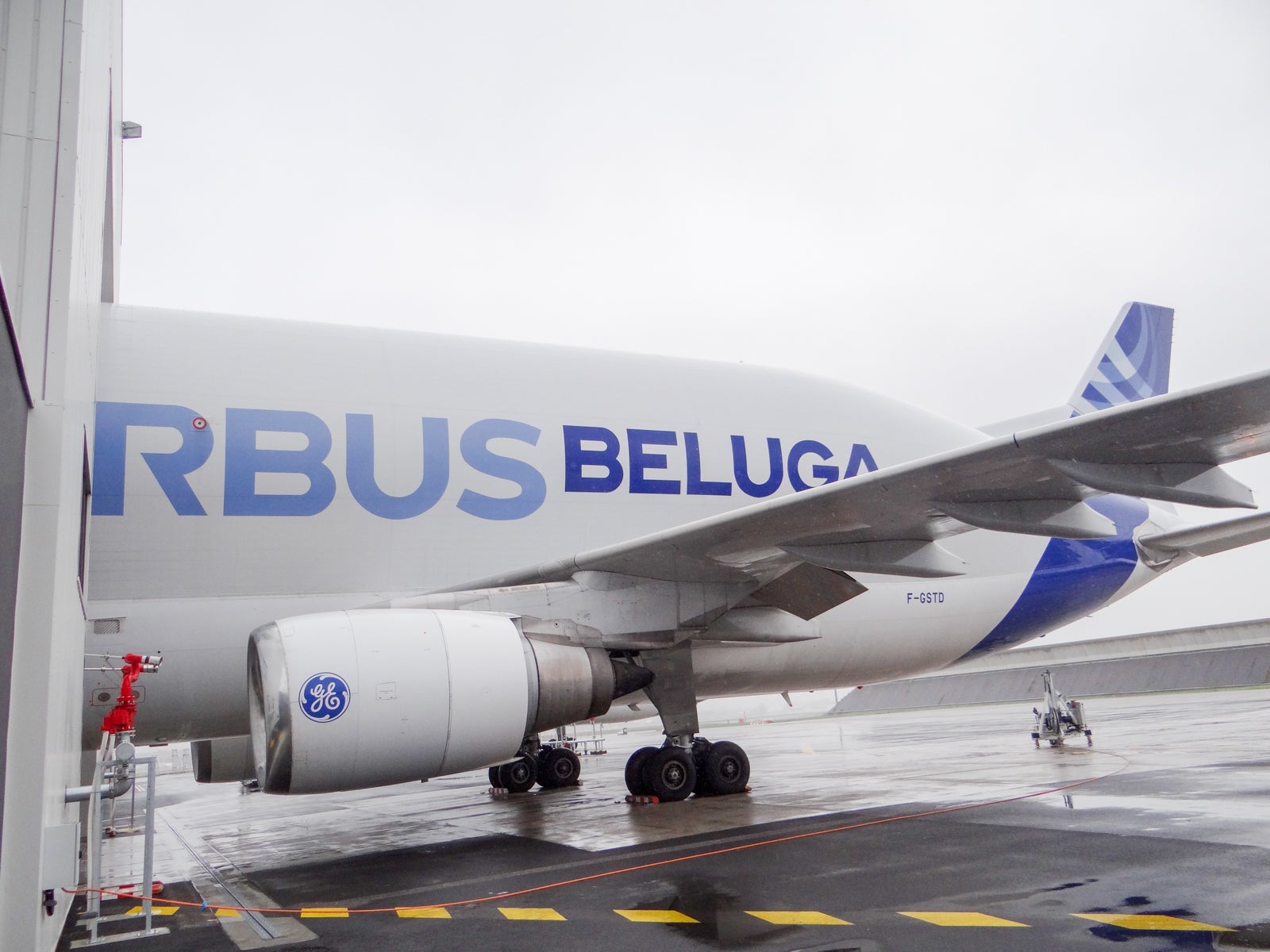
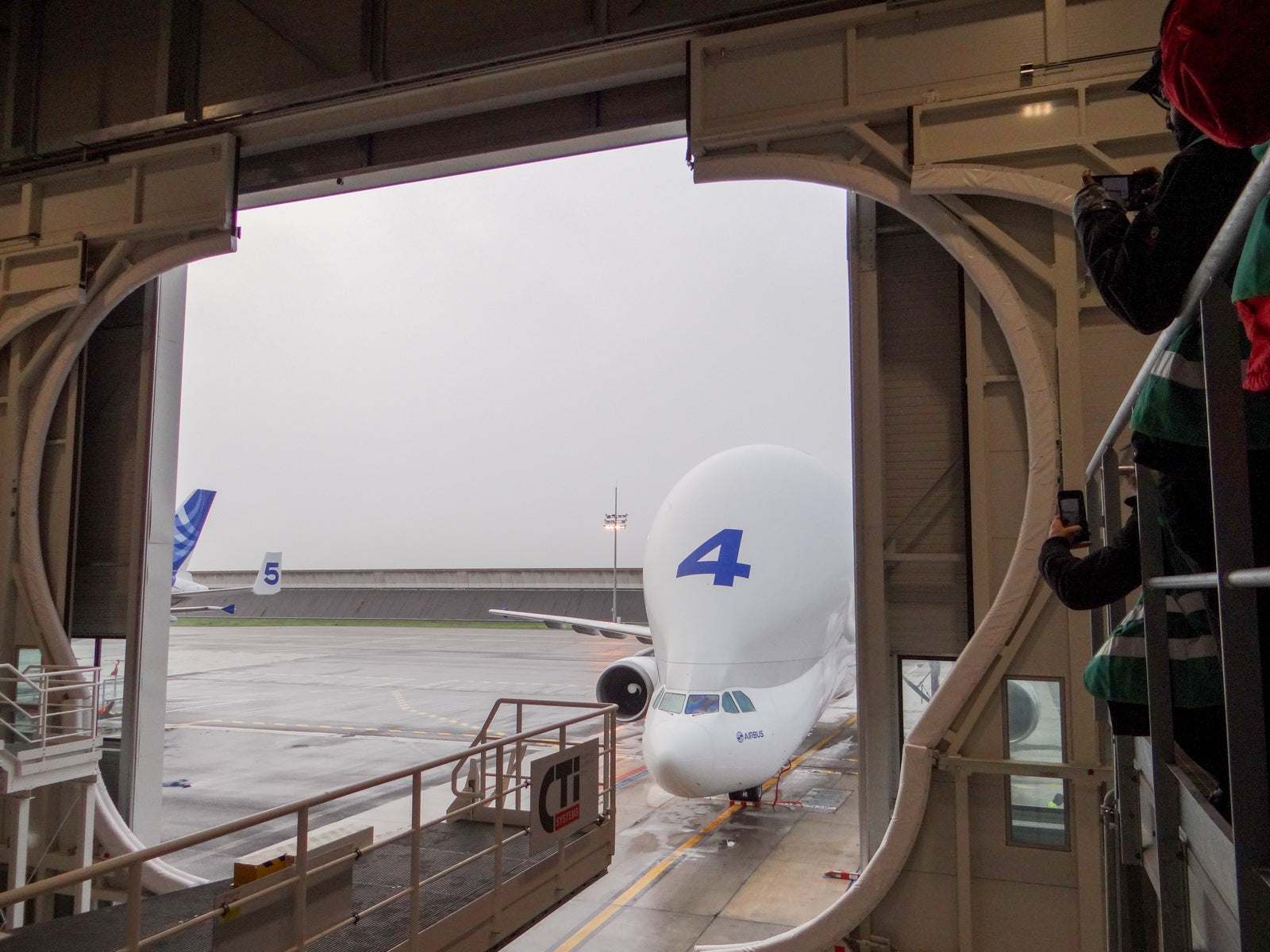
Unloading and loading operations are conducted inside a dedicated hangar. It is essential to operate in a sheltered location, since due to safety reasons, Belugas are unable to open their cargo doors in strong winds. The hangar is fitted with custom-designed doors, with a hole in the middle that can be adjusted to fit perfectly the fuselage of either of the two models of the Beluga — the Beluga ST, which we saw in action, and XL. (The ST is a derivative of the Airbus A300-600, a 1970s design, and the bigger Beluga XL is based on the more recent A330 airliner.)
Right after the Beluga's nose and frontal section are in the hangar, the cargo doors slide sideways and the unloading can start.
The Beluga has a conveniently low cockpit, with a giant bubble mounted on top to transport parts. This makes it possible for cargo to simply be slid horizontally in and out of the Beluga's "hump." This is done by placing the cargo bay level with an elevated platform fitted with conveyor belts.
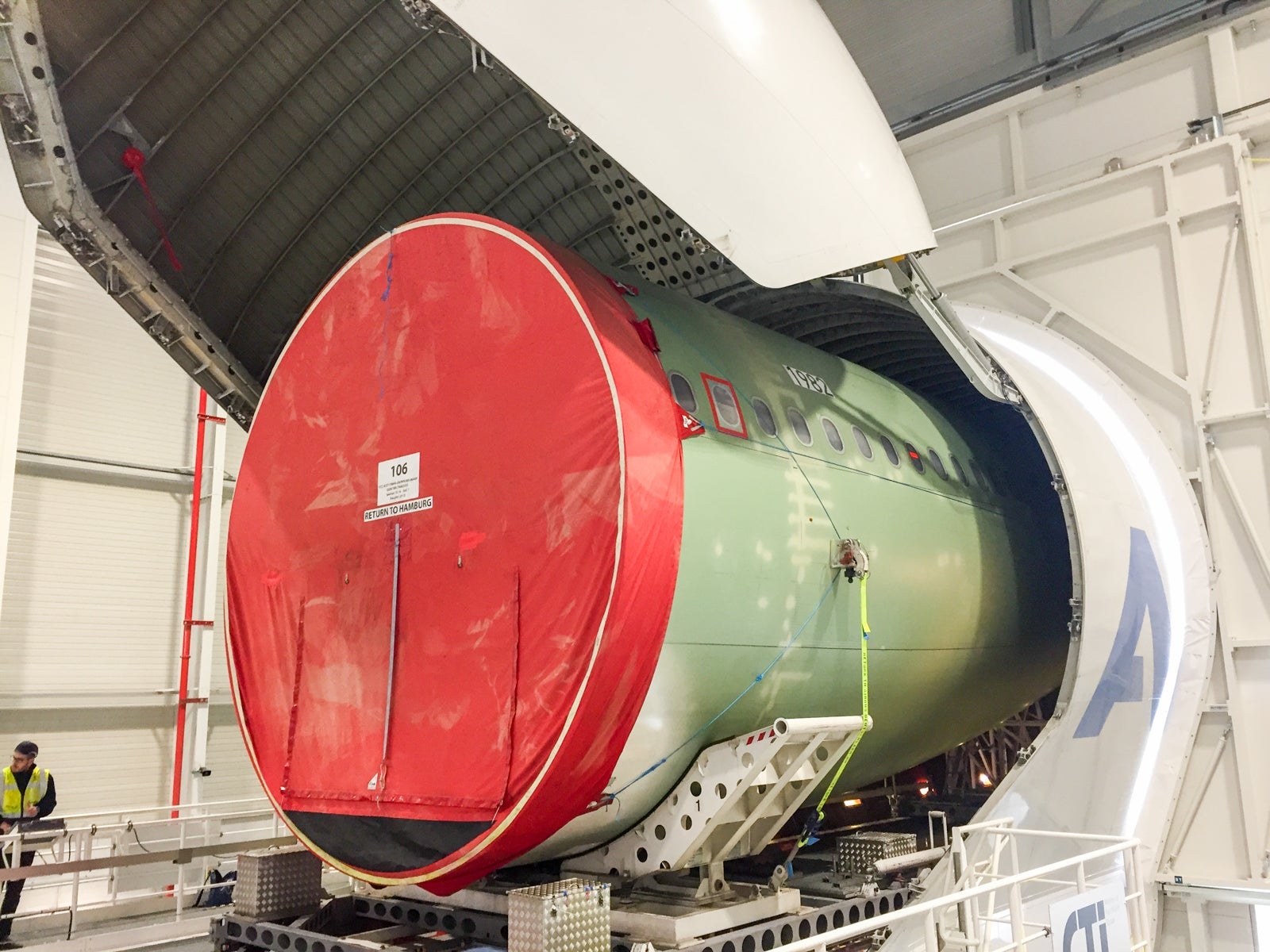
This time, we got to see an A330's rear fuselage section and tail fin. Belugas can transport wings, too, but none were being carried that day.

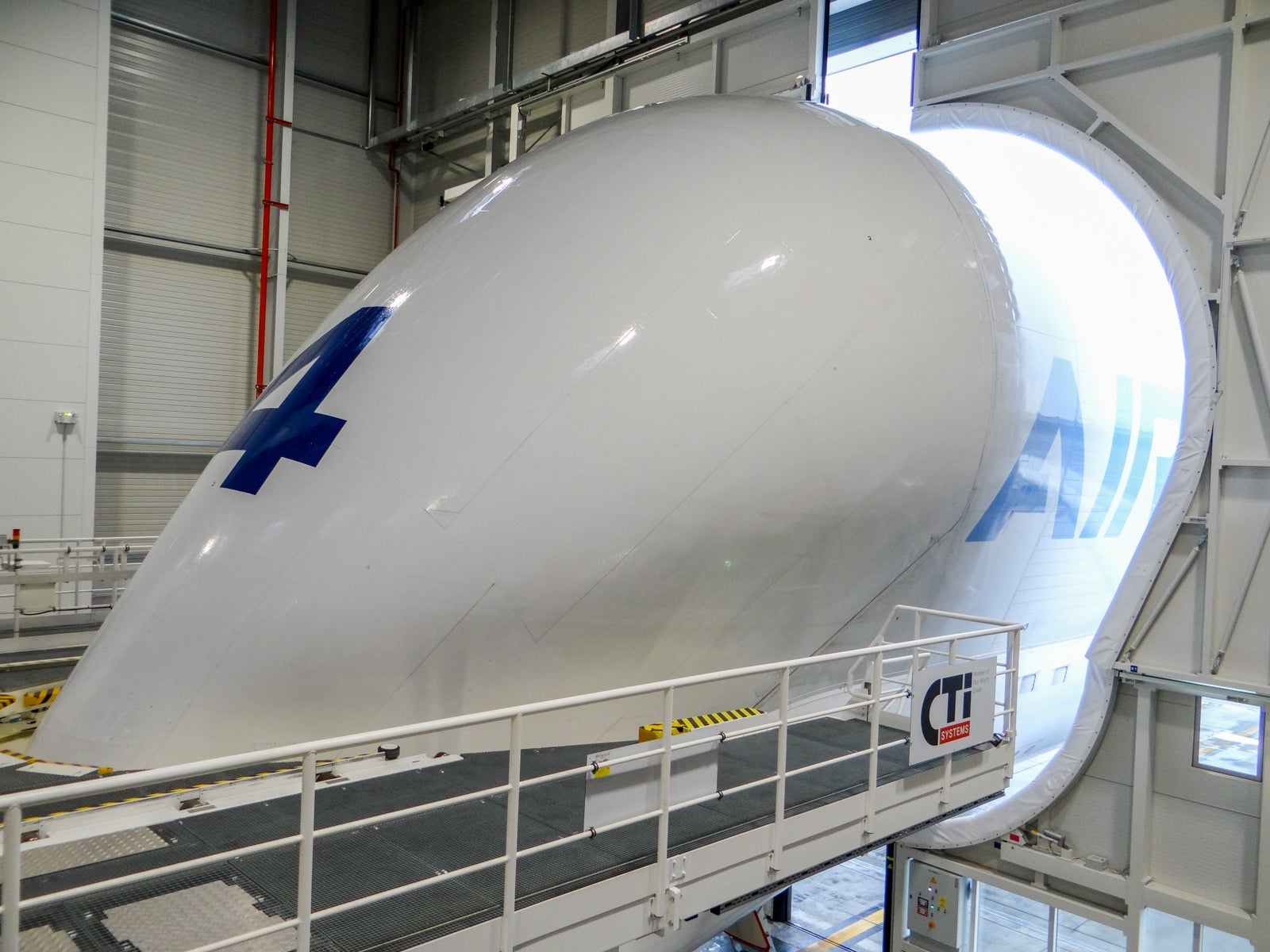
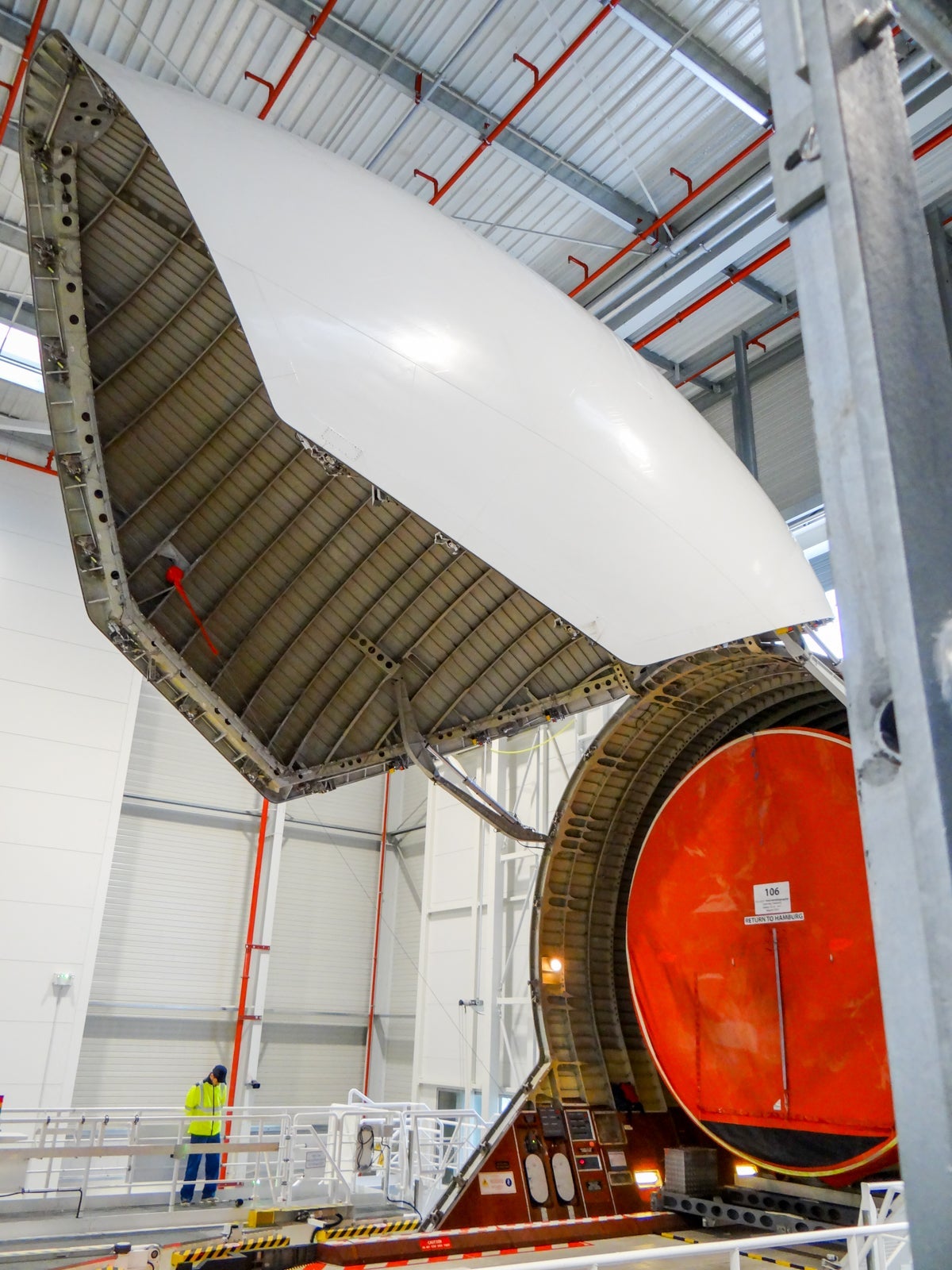
The Beluga hangar is equipped with several parallel automated moving platforms, not unlike those found at railway yards, so cargo can be moved to the side and won't interfere with the loading or unloading of other parts. The process is then repeated, but in reverse, with different parts disappearing slowly into the belly of the whale. This happens several times per day, pretty much year round, throughout Airbus' network of factories. The current Beluga fleet of six aircraft (five STs and one XL) flies 21 legs per day on average.
The covering at the end of the fuselage section in the image below, marked "Return to Hamburg," would be sent back on the Beluga return flight, ready to be used during another airlift.
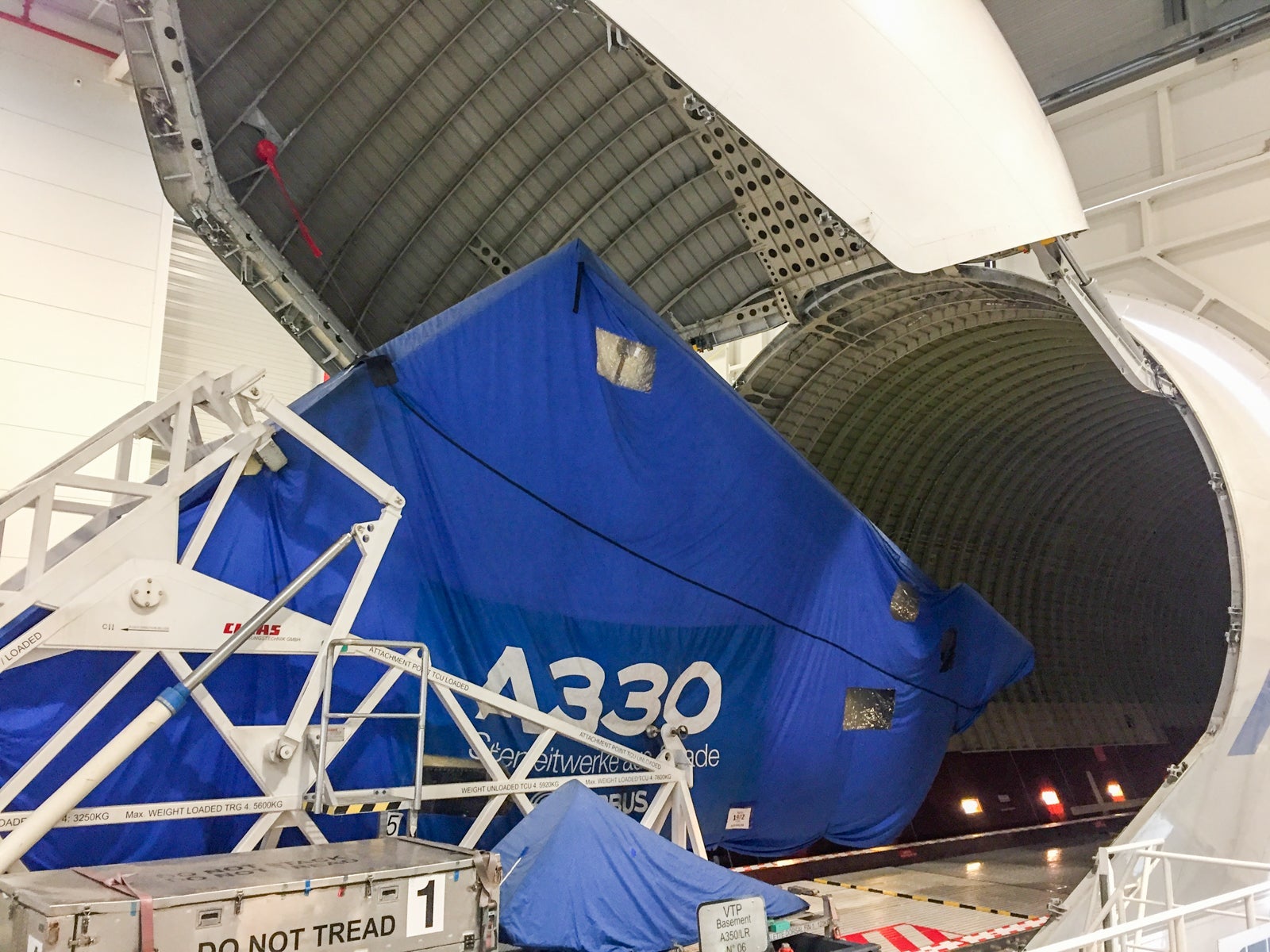
The first Beluga XL began operating in January 2020; four more will join the fleet and take the place of the STs, which have been soldiering on since the 1990s. They are a considerable improvement in terms of capacity.
The XL is capable of carrying a larger, more voluminous payload; two wings, for example, instead of one. This effectively doubles, in one stroke, the capacity available for some key operations, a major upgrade for the clockwork mechanism that, day in and day out, keeps the European planemaker running. Each Beluga XL will perform approximately 900 to 1,000 flights per year, or about 1,800 flight hours.
All photos by the author except featured photo by Eduardo Parra /Europa Press via Getty Images
TPG featured card

at American Express's secure site
Terms & restrictions apply. See rates & fees.
| 3X | Earn 3X Miles on Delta purchases. |
| 1X | Earn 1X Miles on all other eligible purchases. |
Pros
- Delta SkyClub access when flying Delta
- Annual companion ticket for travel on Delta (upon renewal)
- Ability to earn MQDs through spending
- Various statement credits for eligible purchases
Cons
- Steep annual fee of $650
- Other Delta cobranded cards offer superior earning categories
- Earn 100,000 Bonus Miles after you spend $6,000 or more in purchases with your new Card within the first 6 months of Card Membership and an additional 25,000 bonus miles after you make an additional $3,000 in purchases on the Card within your first 6 months, starting from the date that your account is opened. Offer Ends 04/01/2026.
- Delta SkyMiles® Reserve American Express Card Members receive 15 Visits per Medallion® Year to the Delta Sky Club® when flying Delta and can unlock an unlimited number of Visits after spending $75,000 in purchases on your Card in a calendar year. Plus, you’ll receive four One-Time Guest Passes each Medallion Year so you can share the experience with family and friends when traveling Delta together.
- Enjoy complimentary access to The Centurion® Lounge in the U.S. and select international locations (as set forth on the Centurion Lounge Website), Sidecar by The Centurion® Lounge in the U.S. (see the Centurion Lounge Website for more information on Sidecar by The Centurion® Lounge availability), and Escape Lounges when flying on a Delta flight booked with the Delta SkyMiles® Reserve American Express Card. § To access Sidecar by The Centurion® Lounge, Card Members must arrive within 90 minutes of their departing flight (including layovers). To access The Centurion® Lounge, Card Members must arrive within 3 hours of their departing flight. Effective July 8, 2026, during a layover, Card Members must arrive within 5 hours of the connecting flight.
- Receive $2,500 Medallion® Qualification Dollars with MQD Headstart each Medallion Qualification Year and earn $1 MQD for each $10 in purchases on your Delta SkyMiles® Reserve American Express Card with MQD Boost to get closer to Status next Medallion Year.
- Enjoy a Companion Certificate on a Delta First, Delta Comfort, or Delta Main round-trip flight to select destinations each year after renewal of your Card. The Companion Certificate requires payment of government-imposed taxes and fees of between $22 and $250 (for itineraries with up to four flight segments). Baggage charges and other restrictions apply. Delta Basic experiences are not eligible for this benefit.
- $240 Resy Credit: When you use your Delta SkyMiles® Reserve American Express Card for eligible purchases with U.S. Resy restaurants, you can earn up to $20 each month in statement credits. Enrollment required.
- $120 Rideshare Credit: Earn up to $10 back in statement credits each month after you use your Delta SkyMiles® Reserve American Express Card to pay for U.S. rideshare purchases with select providers. Enrollment required.
- Delta SkyMiles® Reserve American Express Card Members get 15% off when using miles to book Award Travel on Delta flights through delta.com and the Fly Delta app. Discount not applicable to partner-operated flights or to taxes and fees.
- With your Delta SkyMiles® Reserve American Express Card, receive upgrade priority over others with the same Medallion tier, product and fare experience purchased, and Million Miler milestone when you fly with Delta.
- Earn 3X Miles on Delta purchases and earn 1X Miles on all other eligible purchases.
- No Foreign Transaction Fees. Enjoy international travel without additional fees on purchases made abroad.
- $650 Annual Fee.
- Apply with confidence. Know if you're approved for a Card with no impact to your credit score. If you're approved and you choose to accept this Card, your credit score may be impacted.
- Terms Apply.
- See Rates & Fees