Airbus' First-Ever A340 is Reborn as a FlightLab to Help Revolutionize Flying


A 2.5-decade-old aircraft has recently been reborn in a quest to revolutionize the future of aircraft wings. Airbus' first-ever A340 aircraft (MSN001, registration F-WWAI) looks a lot different today than when it took its first flight on October 25, 1991 — almost exactly 26.5 years ago.
This rebirth has been a decade in the works. In 2008, 21 partners across eight European countries launched a partnership called the Clean Sky Joint Undertaking to develop new innovations for quieter and more efficient aircraft. One of its initial projects was the "BLADE" (Breakthrough Laminar Aircraft Demonstrator in Europe) project.
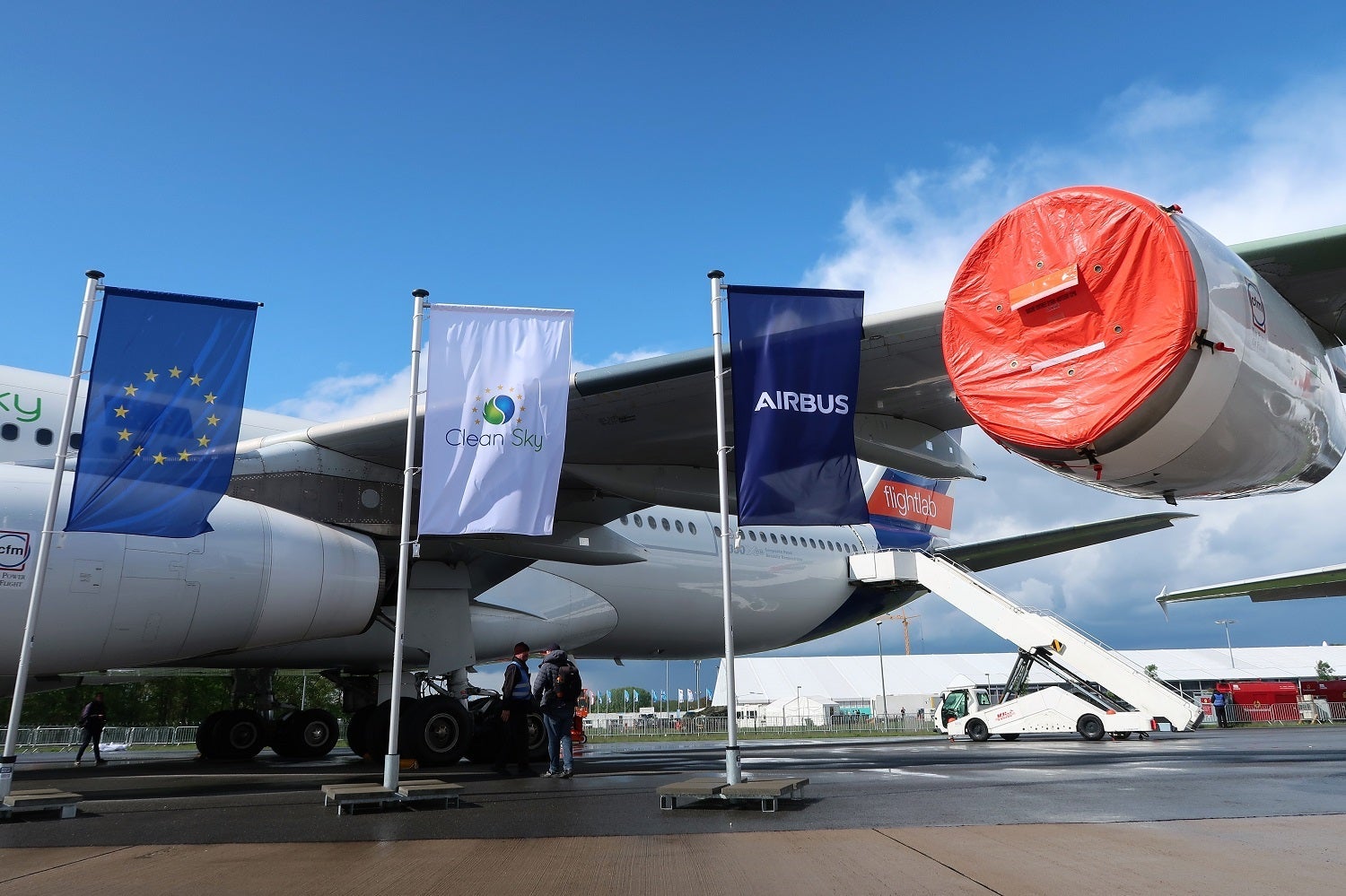
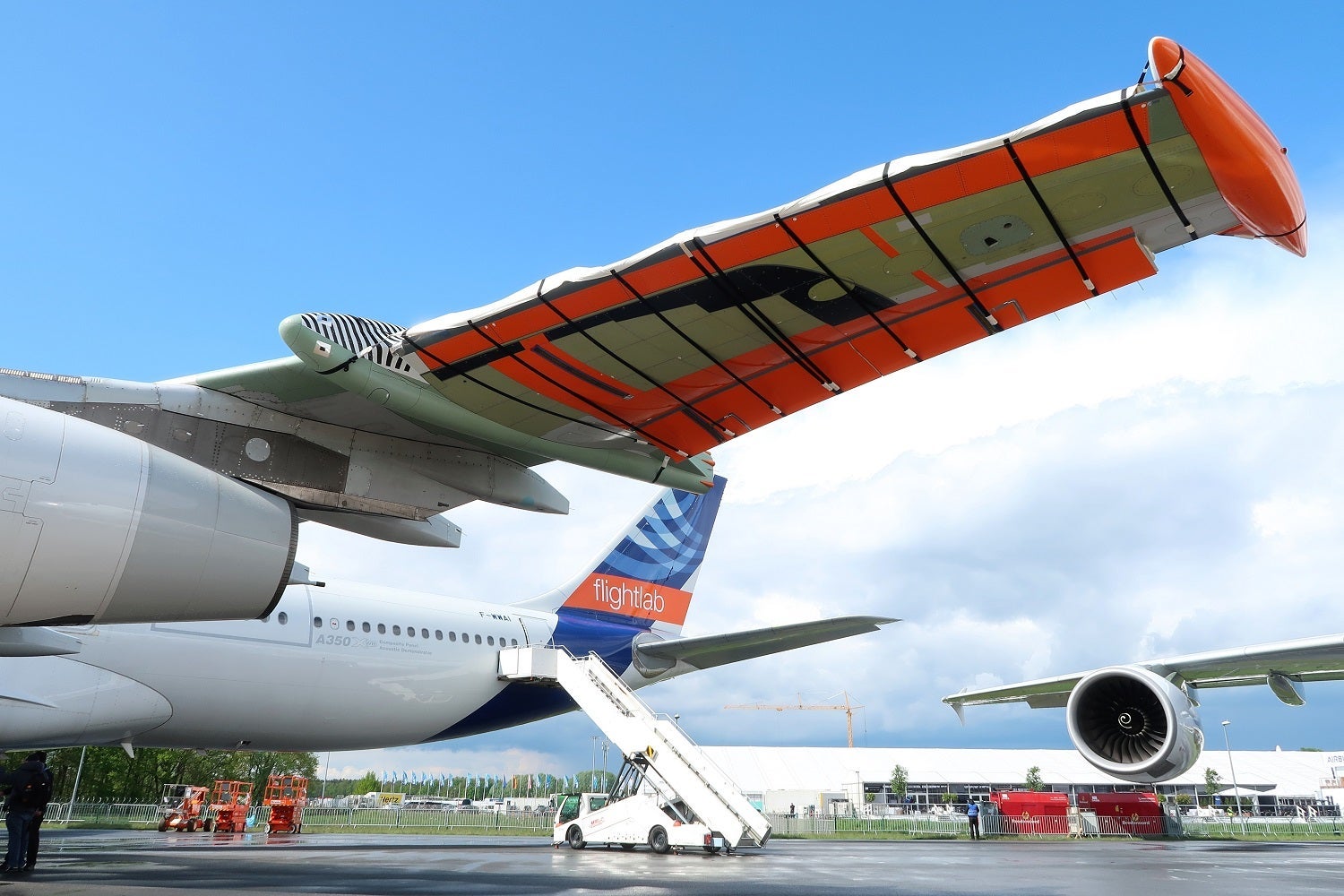
BLADE's quest: a laminar flow wing design. Simply put, BLADE is trying to create a wing with a perfectly smooth airflow. Based on models, Airbus believes that a laminar flow wing design can reduce wing drag by 50% and increase fuel efficiency by 5%.
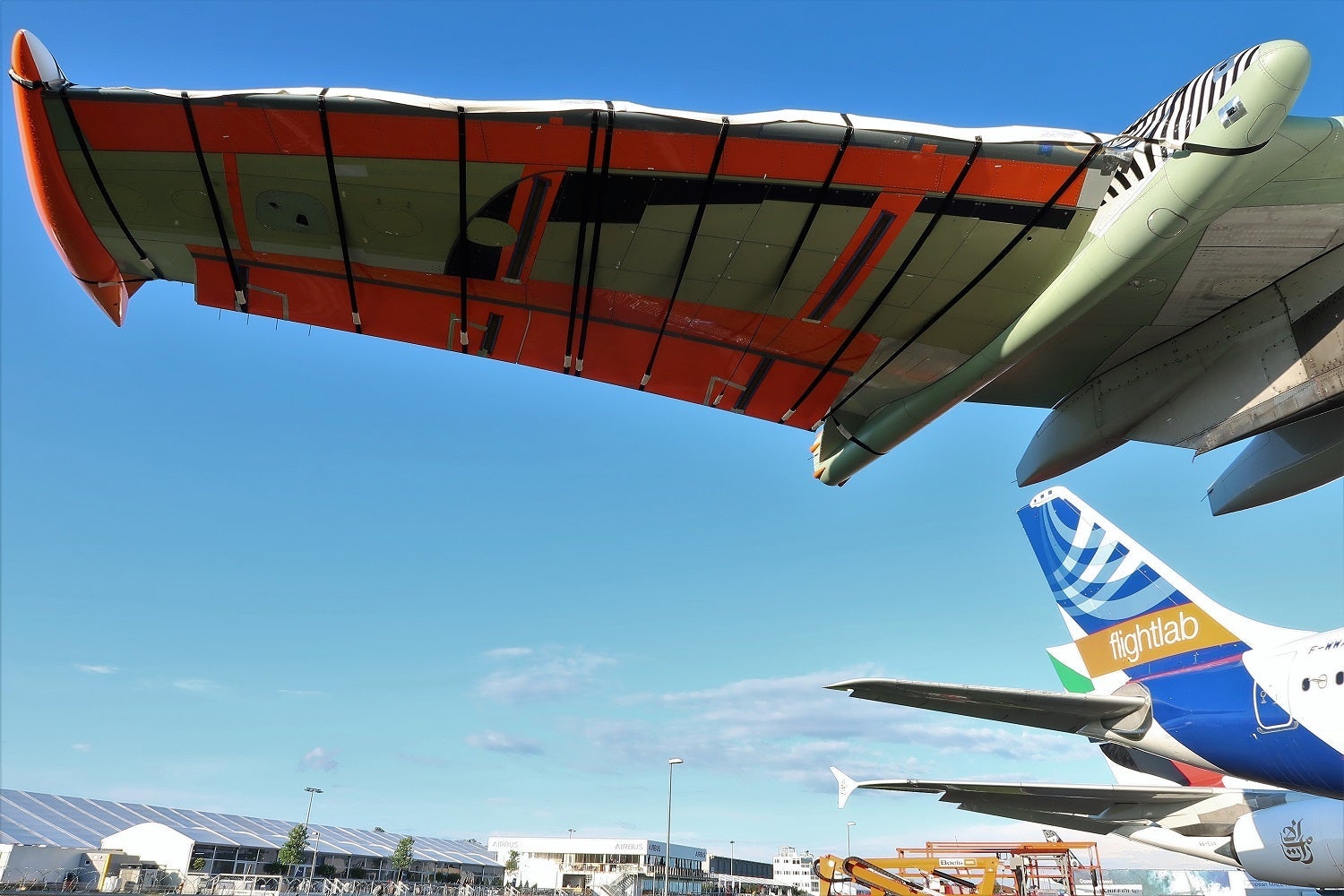
After substantial modeling, it was time to put the research to the test. So, Clean Sky's lead partner Airbus donated its first ever Airbus A340 to the cause. The aircraft manufacturer chopped off the ends of each wing — just past the second engines. In its place, it fitted two prototype wing designs — one on the end of each of the wings. On the left, the "more innovative" Saab design. On the right, a "more traditional" GKN Aerospace design. And with that, the BLADE FlightLab was born.
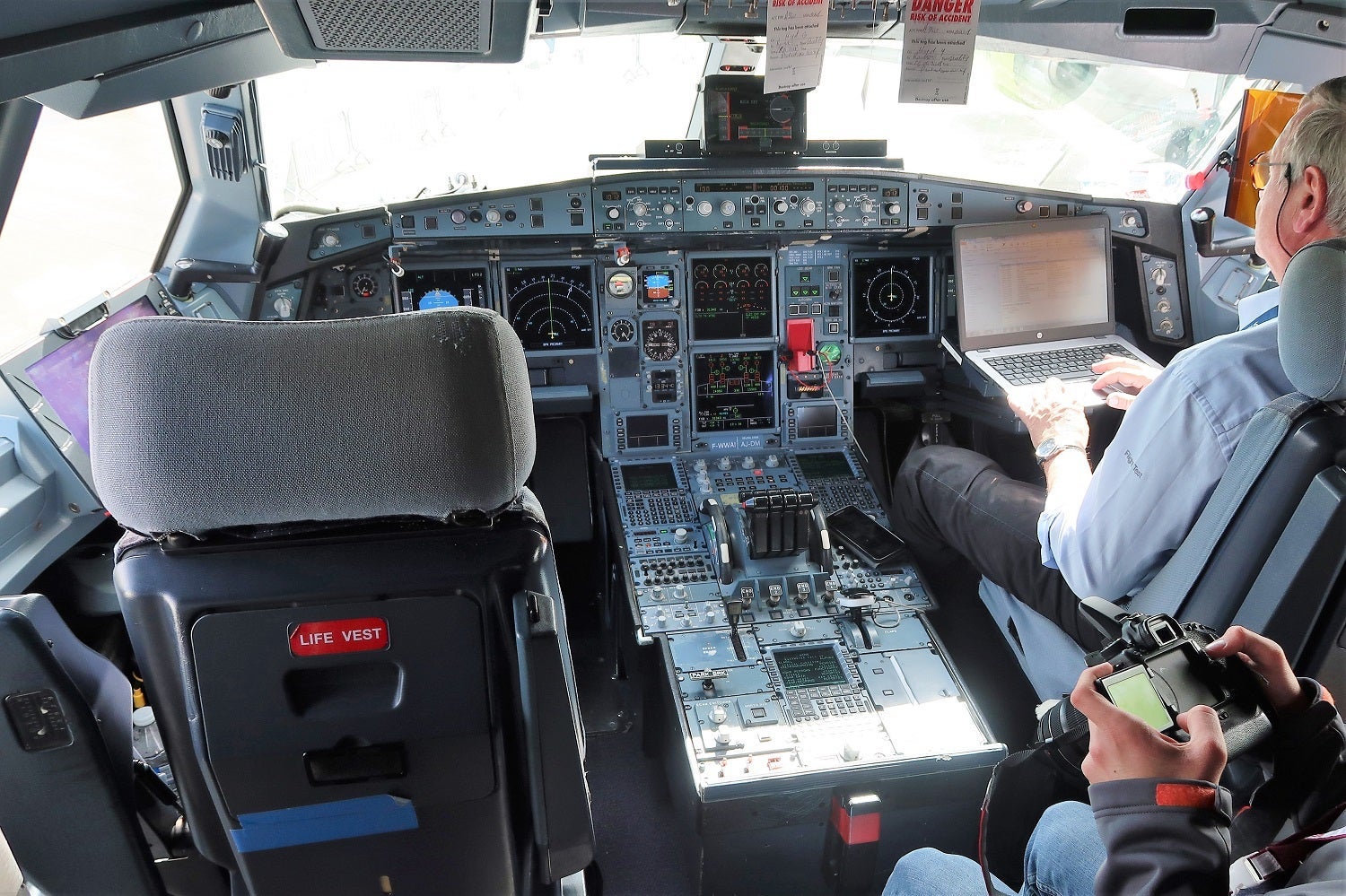
As this technology is still in the experimental phase, only five crew are on board during the test flights — two pilots and three test flight engineers.
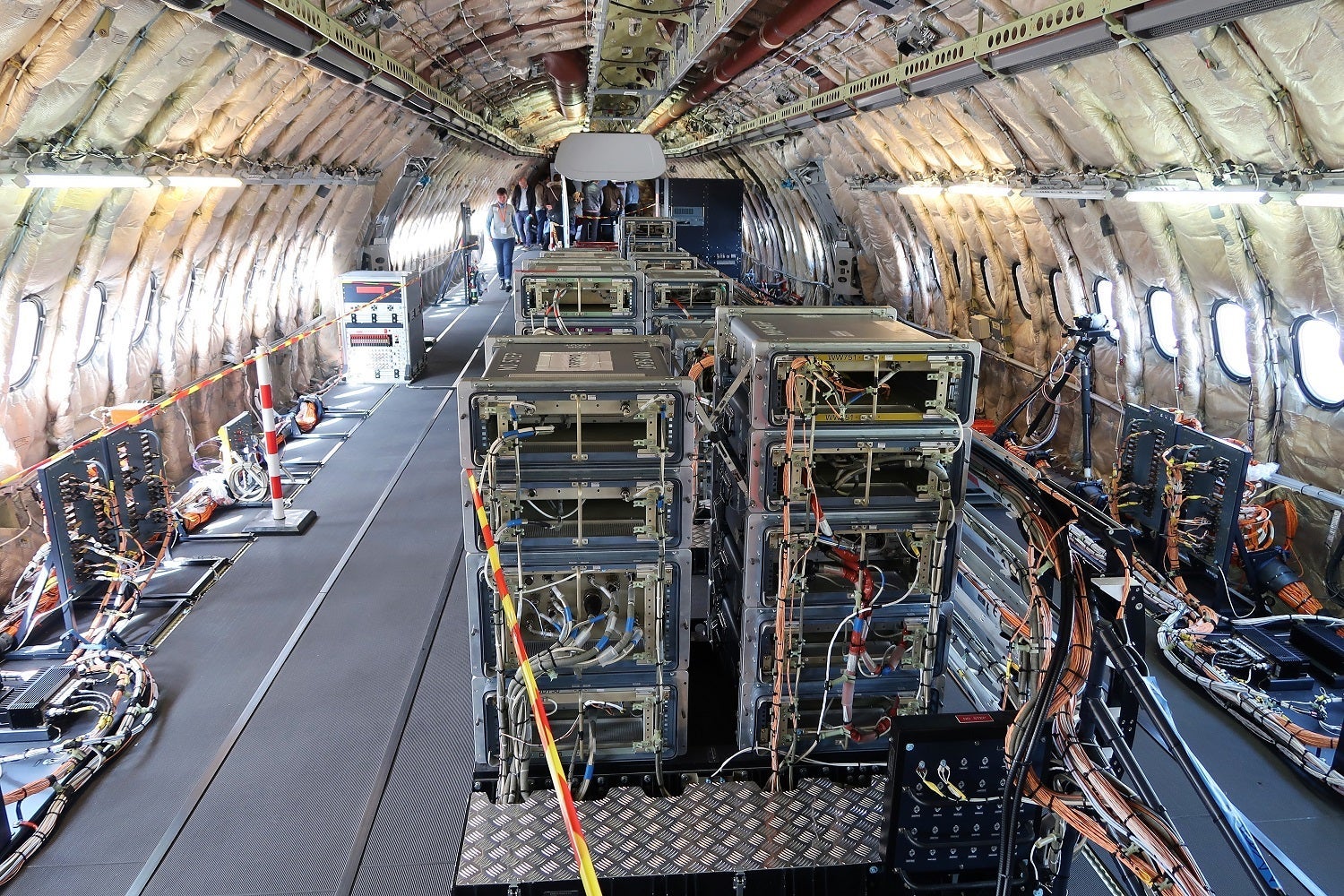
Two of the engineers sit at this station to monitor up to 1,650 different parameters during flight.
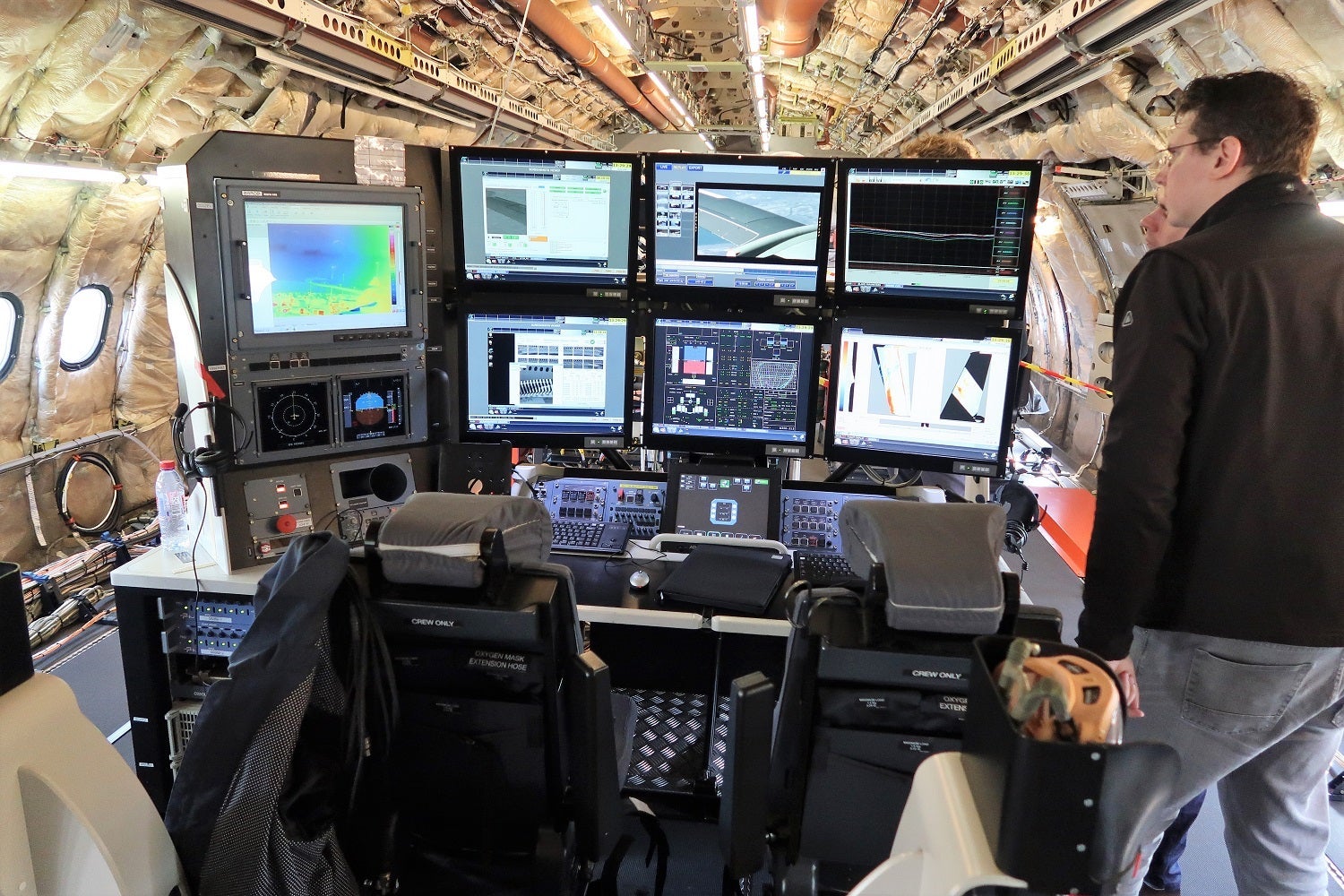
To make room for the test equipment needed to record and analyze all of those parameters, all of the seats, wall paneling and most of the overhead bins were stripped out of the interior.
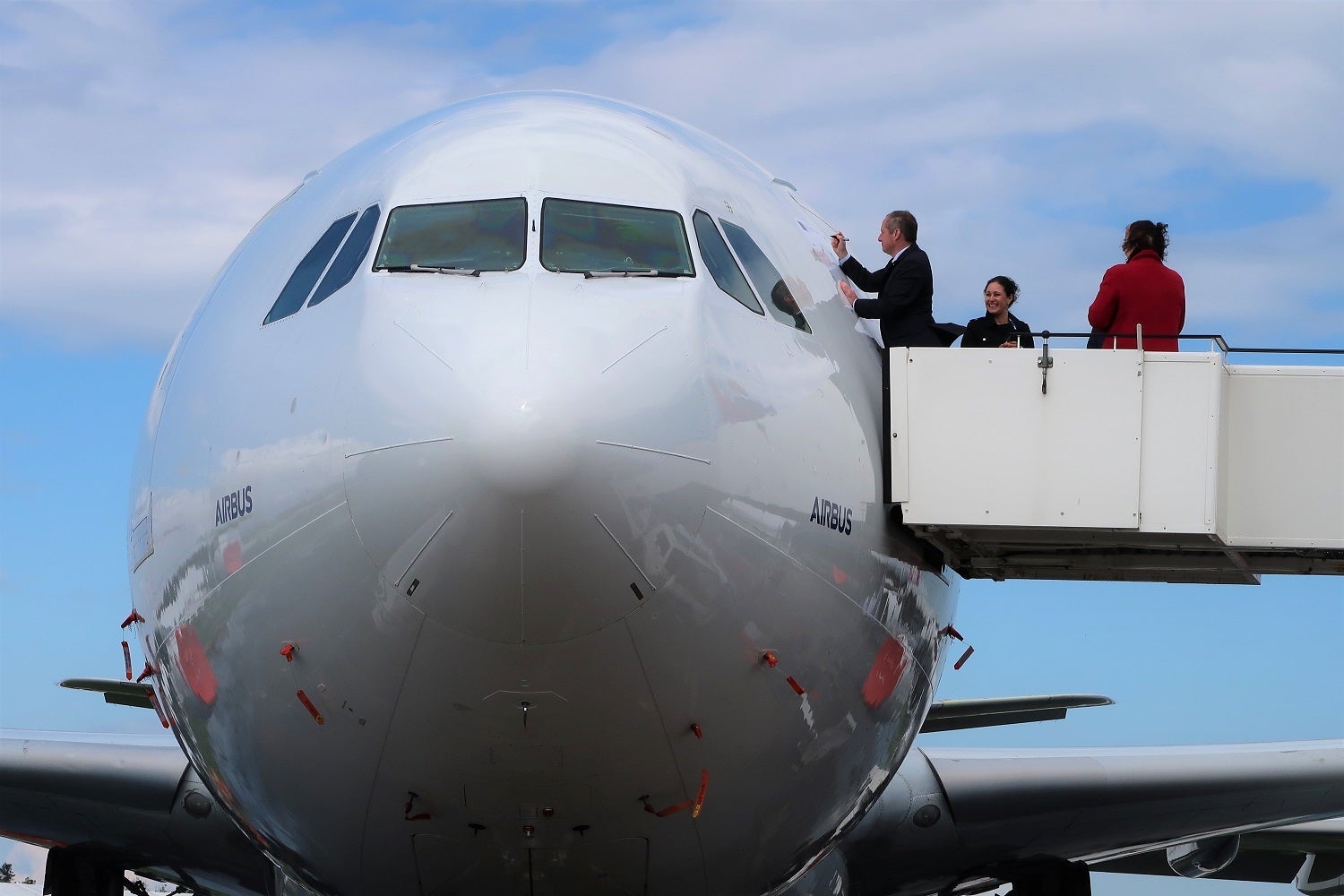
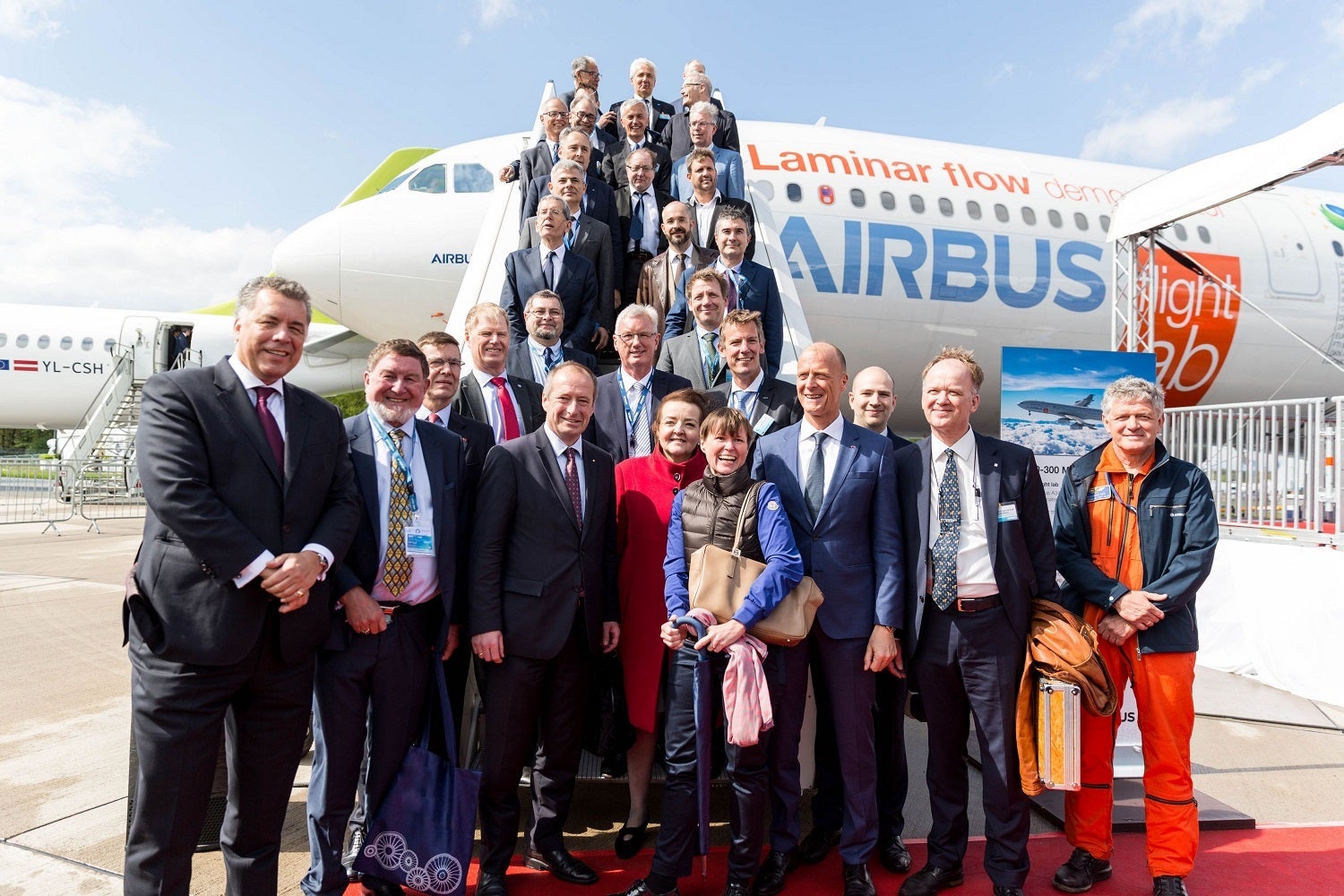
Although it's been flying since September 2017, the partnership waited until the ILA Berlin airshow to show it off to the aviation public. In a signing ceremony on Wednesday, all of the Clean Sky partners marked the occasion by signing the aircraft, one at a time.
Between its first flight in September 2017 and the conclusion of the testing in 2019, researchers plan to operate 168 hours of flight time with the new wing segments. As of today, the test aircraft has recorded 66 flight hours. From what's being shared so far, the results have been great. Even on the first flight, the engineers were able to determine there was laminar flow over both wing designs.

That said, there's still a long way to go, even with the initial testing — and there are challenges to overcome. One of those is insects. While the wing segments are designed to have perfect laminar flow, something as small as insects smashing against the leading edge of the wing can create airflow turbulence and decrease performance.
Once the initial testing is complete, the Clean Sky initiative hopes to have enough research done on the technology to create a full experimental wing with laminar flow for additional testing. So, while laminar flow wings are still a way off from commercial aviation, it's exciting to see what innovations are in the works for even more fuel-efficient aircraft.
TPG featured card
at American Express's secure site
Terms & restrictions apply. See rates & fees.
| 4X | Earn 4X Membership Rewards® points per dollar spent on purchases at restaurants worldwide, on up to $50,000 in purchases per calendar year, then 1X points for the rest of the year. |
| 4X | Earn 4X Membership Rewards® points per dollar spent at US supermarkets, on up to $25,000 in purchases per calendar year, then 1X points for the rest of the year. |
| 5X | Earn 5X Membership Rewards® points on prepaid hotel stays booked through AmexTravel.com or the Amex Travel App™. |
| 3X | Earn 3X Membership Rewards® points on flights booked through AmexTravel.com, the Amex Travel App™, or purchased directly from airlines. |
| 2X | Earn 2X Membership Rewards® points on prepaid car rentals booked through AmexTravel.com or the Amex Travel App™ and cruises booked and paid through AmexTravel.com. |
| 1X | Earn 1X Membership Rewards® point per dollar spent on all other eligible purchases. |
Pros
- Valuable dining and food-related credits
- Flexible rewards with airline and hotel transfer partners
- Multiple travel and purchase protections
- No foreign transaction fees
- Access to Amex Offers for additional savings (enrollment required)
Cons
- Not as useful for those living outside the U.S.
- Some may have trouble using Uber and other dining credits
- You may be eligible for as high as 100,000 Membership Rewards® Points after you spend $8,000 in eligible purchases on your new Card in your first 6 months of Card Membership. Welcome offers vary and you may not be eligible for an offer. Apply to know if you’re approved and find out your exact welcome offer amount – all with no credit score impact. If you’re approved and choose to accept the Card, your score may be impacted.
- Earn 4X Membership Rewards® points per dollar spent on purchases at restaurants worldwide, on up to $50,000 in purchases per calendar year, then 1X points for the rest of the year.
- Earn 4X Membership Rewards® points per dollar spent at US supermarkets, on up to $25,000 in purchases per calendar year, then 1X points for the rest of the year.
- Earn 5X Membership Rewards® points on prepaid hotel stays booked through AmexTravel.com or the Amex Travel App™.
- Earn 3X Membership Rewards® points on flights booked through AmexTravel.com, the Amex Travel App™, or purchased directly from airlines.
- Earn 2X Membership Rewards® points on prepaid car rentals booked through AmexTravel.com or the Amex Travel App™ and cruises booked and paid through AmexTravel.com.
- Earn 1X Membership Rewards® point per dollar spent on all other eligible purchases.
- Pay It® lets you tap in the American Express® App to quickly pay for small purchase amounts throughout the month and still earn rewards the way you usually do. Plan It® gives you the option to split up big purchases into equal monthly payments with a fixed fee. You’ll know upfront exactly how much you’ll pay.
- $120 Dining Credit: Earn up to a total of $10 in statement credits monthly when you pay with the Gold Card at Grubhub (including Seamless), Buffalo Wild Wings, Five Guys, The Cheesecake Factory, and Wonder. This can be an annual savings of up to $120. Enrollment required.
- $100 Resy Credit: Get up to $100 in statement credits each calendar year at over 10,000 qualifying U.S. Resy restaurants after you pay for eligible purchases with the American Express® Gold Card. That’s up to $50 in statement credits semi-annually. Enrollment required.
- $84 Dunkin' Credit: Earn up to $7 in monthly statement credits after you pay with the American Express® Gold Card at U.S. Dunkin’ locations. Enrollment required.
- $120 Uber Cash on Gold: Enjoy up to $120 in Uber Cash annually with your Gold Card. Just add your Card to your Uber account and you'll get $10 in Uber Cash each month to use on orders and rides in the U.S. when you select an Amex Card for your transaction.
- Enjoy complimentary Hertz Five Star® Status benefits like skipping the counter at select locations, adding an additional driver at no additional cost*, and vehicle upgrades**. Benefit enrollment and Hertz Gold+ registration are required. *Additional drivers must meet standard rental qualifications and must be a spouse or domestic partner to qualify as complimentary. Other additional drivers subject to fees. **Benefits are subject to availability and vary by location. Additional Hertz program Terms and Conditions including age restrictions apply.
- Book two nights or more with The Hotel Collection through AmexTravel.com or the Amex Travel App™ and receive a $100* credit towards eligible charges at over 1,400 upscale hotels worldwide. *Eligible charges vary by property.
- Book your travel through the Amex Travel App™ with added peace of mind – backed by American Express® service and support. Only for American Express® Card Members.
- Whenever you need us, we're here. Our Member Services team will ensure you are taken care of. From lost Card replacement to statement questions, we are available to help 24/7.
- No Foreign Transaction Fees.
- Annual Fee is $325.
- Terms Apply.