Air Canada plans to add up to 15 new US destinations by 2028

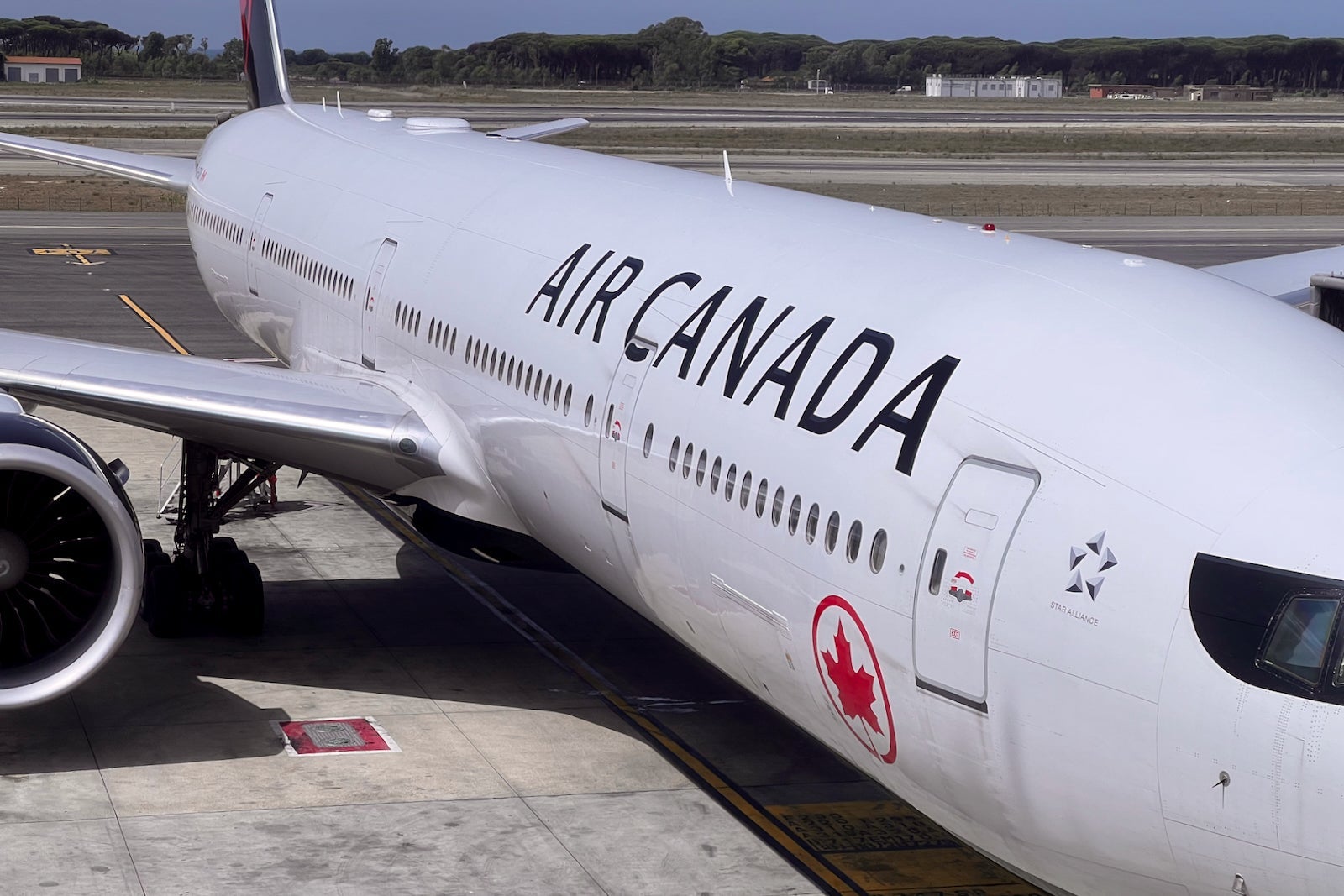
Air Canada plans to add 10 to 15 new destinations in the U.S. over the next three years as it works to bring more American travelers through its hubs on their way to Europe and Asia.
The Montreal-based Star Alliance carrier plans to serve 60 to 65 U.S. "stations" — or airports, such as New York's John F. Kennedy International Airport (JFK) and LaGuardia Airport (LGA), both of which are considered separate stations — by 2028, Alexandre Lefèvre, Air Canada's vice president of planning and scheduling, said at the Routes Americas conference in Nassau, Bahamas, on Tuesday.
Schedule data from aviation analytics firm Cirium shows that Air Canada will serve 50 U.S. destinations in the second quarter. The airline has unveiled one new U.S. destination to date this year: Jacksonville International Airport (JAX).
Bargain hunting: The best time to book flights for the cheapest airfare
"We need to offer more connectivity," Lefèvre said. "We need to offer more dots on the map, [and] basically create more value."
Air Canada's planned U.S. expansion follows an established playbook. The airline focuses primarily on midsize American cities where connections over one of its three hubs — Montreal-Trudeau International Airport (YUL), Toronto Pearson Airport (YYZ) and Vancouver International Airport (YVR) in British Columbia — make sense for trips to Asia or Europe. These are known as "sixth-freedom" itineraries where travelers originate in one country, change planes in another country and arrive in a third country.
The growth of Air Canada's sixth-freedom business from the U.S. enables it to grow in Europe and Asia as well. It will add Ninoy Aquino International Airport (MNL) in the Philippines, Naples International Airport (NAP) in Italy, Václav Havel Airport Prague (PRG) and Porto Airport (OPO) in Portugal to its map in 2025.
Fueling this growth is a robust airplane order book. Air Canada's latest fleet plan from the end of October 2024 shows that the carrier has at least 83 aircraft, including 27 Airbus A220-300s, 30 Airbus A321XLRs and 18 Boeing 787-10s, on firm order, with deliveries scheduled through 2029.
The airline will use those new planes to grow its schedule by 5% to 6% annually over the next three to four years, Lefèvre said. Continuing delivery delays at both Airbus and Boeing could slow that growth.

Where Air Canada could deploy those planes in the U.S. is the question. Asked what type of destinations the airline is looking at, Lefèvre said, "Our big focus, and our big success over the past few years, have been in those unaligned markets where we've got a right to win."
"Look at Hartford for example," he continued. "Hartford is a market market where you can make a difference but not as much as if you want to serve Oklahoma City, for example. If you look at Oklahoma City and you look at the routing to go from [there] to Europe ... and we're exactly on the right path. Those are the markets we're looking at."
Air Canada has no immediate plans to serve Oklahoma City's Will Rogers World Airport (OKC), Lefèvre added.
Salt Lake City, San Antonio and Louisville, Kentucky, are other types of destinations that fit Lefèvre's description of potential future Air Canada markets.
Air Canada ended service to Hartford in October after more than two decades of serving the market, Cirium schedules show.
The airline's growth in the U.S. will be part of its joint venture with United Airlines. The two carriers coordinate schedules and fares on transborder routes, and United helps sell Air Canada flights in the American market.
Air Canada and United also have a separate joint venture with the Lufthansa Group that covers transatlantic routes.
Even as Air Canada plans to add more breadth to its U.S. map, it's the largest markets that still generate the most traffic for the airline.
"Most of our international connections are still big markets — San Francisco, LAX, Chicago and New York — all those cities, none of them have enough nonstops to serve the demand," Lefèvre said.
Related reading:
TPG featured card

at Capital One's secure site
Terms & restrictions apply. See rates & fees.
| 5X miles | Earn 5X miles on hotels, vacation rentals and rental cars booked through Capital One Travel |
| 2X miles | Earn unlimited 2X miles on every purchase, every day |
Pros
- Stellar welcome offer of 75,000 miles after spending $4,000 on purchases in the first three months from account opening. Plus, a $250 Capital One Travel credit to use in your first cardholder year upon account opening.
- You'll earn 2 miles per dollar on every purchase, which means you won't have to worry about memorizing bonus categories
- Rewards are versatile and can be redeemed for a statement credit or transferred to Capital One’s transfer partners
Cons
- Highest bonus-earning categories only on travel booked via Capital One Travel
- LIMITED-TIME OFFER: Enjoy $250 to use on Capital One Travel in your first cardholder year, plus earn 75,000 bonus miles once you spend $4,000 on purchases within the first 3 months from account opening - that’s equal to $1,000 in travel
- Earn unlimited 2X miles on every purchase, every day
- Earn 5X miles on hotels, vacation rentals and rental cars booked through Capital One Travel
- Miles won't expire for the life of the account and there's no limit to how many you can earn
- Receive up to a $120 credit for Global Entry or TSA PreCheck®
- Use your miles to get reimbursed for any travel purchase—or redeem by booking a trip through Capital One Travel
- Enjoy a $50 experience credit and other premium benefits with every hotel and vacation rental booked from the Lifestyle Collection
- Transfer your miles to your choice of 15+ travel loyalty programs
- Top rated mobile app