Benji Stawski is a former reporter for the site, covering all things points, miles, credit cards, travel and aviation.
February 25, 2021 • 12 min read
The cards we feature here are from partners who compensate us when you are approved through our site, and this may impact how or where these products appear. We don't cover all available credit cards, but our analysis, reviews, and opinions are entirely from our editorial team. Terms apply to the offers listed on this page. Please view our advertising policy and product review methodology for more information.Editorial disclaimer: Opinions expressed here are the author's alone, not those of any bank, credit card issuer, airline or hotel chain, and have not been reviewed, approved or otherwise endorsed by any of these entities.
Comments
By commenting, you agree to our Community Guidelines to help create a positive space for conversation. The responses below are not provided or commissioned by the bank advertiser, our partners, or The Points Guy (“TPG”). They have not been reviewed, approved, or otherwise endorsed by any of these parties. All responses are submitted by individual contributors, and neither the bank advertiser, our partners, nor TPG are responsible for ensuring that all posts and/or questions are answered.
Related stories
Quick summary
Booking award travel for families is more complex than for solo travelers or couples, mainly due to limited seat availability at the lowest redemption levels.
Key strategies include booking as early as 11 months out, searching for seats individually, and considering splitting the group to increase options.
Dynamic pricing programs and family pooling features can help secure more seats, though may offer less value for premium cabins or last-minute bookings.
Families can benefit from tools to manage multiple loyalty accounts and should be aware of lap infant rules and associated fees, which vary by airline and route.
What to consider
Award availability for multiple seats is often limited, especially in premium cabins, so flexibility and early planning are crucial.
Dynamic pricing programs allow redemptions for any unsold seat but may yield lower value for business or first class travel.
Some offers and benefits discussed in the article may no longer be available.
What you'll miss from the article
Detailed tactics for maximizing family award bookings, including leveraging schedule changes, pooling options, and specific airline policies.
Generated by AI with support from our editorial team.
Update: Some offers mentioned below are no longer available. View the current offers here.
Singles and couples may be the ideal award travelers. Having one or two accounts per frequent flyer program is easy to manage and it's not too hard to find just one or two award seats on the same flights. But for families who want to earn and spend their loyalty points together, the complexities increase exponentially with the number of travelers.
When it comes to family award travel, earning huge numbers of points and miles may actually be the easy part. Families can double up on travel credit card bonuses and perhaps even earn referral bonuses along the way. The challenge, however, is finding award seats for everyone, especially when you want to travel in business or first class.
Today we're going to review some tips for booking travel for a family of three or more.
Book awards 11 months in advance
Most airlines begin selling seats on a rolling schedule, about 11 months ahead of each flight, and that is usually the best time to look for awards when you need multiple seats. Now, that doesn't necessarily mean that carriers release all of their award inventory at that time. So, it's certainly possible for a flight to have zero award availability even when booking 11 months out. However, it's still the most predictable time that most airlines will release most of their award seats, giving you the greatest chance of finding three or more low-priced awards on one flight.
This strategy works best when making one-way bookings. In other words, book each leg the day it becomes available, rather than risk losing the outbound seats by waiting until you can book a round-trip ticket. And, since families will know their children’s school schedules long in advance, they can leverage their inflexibility to find their award seats farther in advance than most solo travelers and couples like to plan.
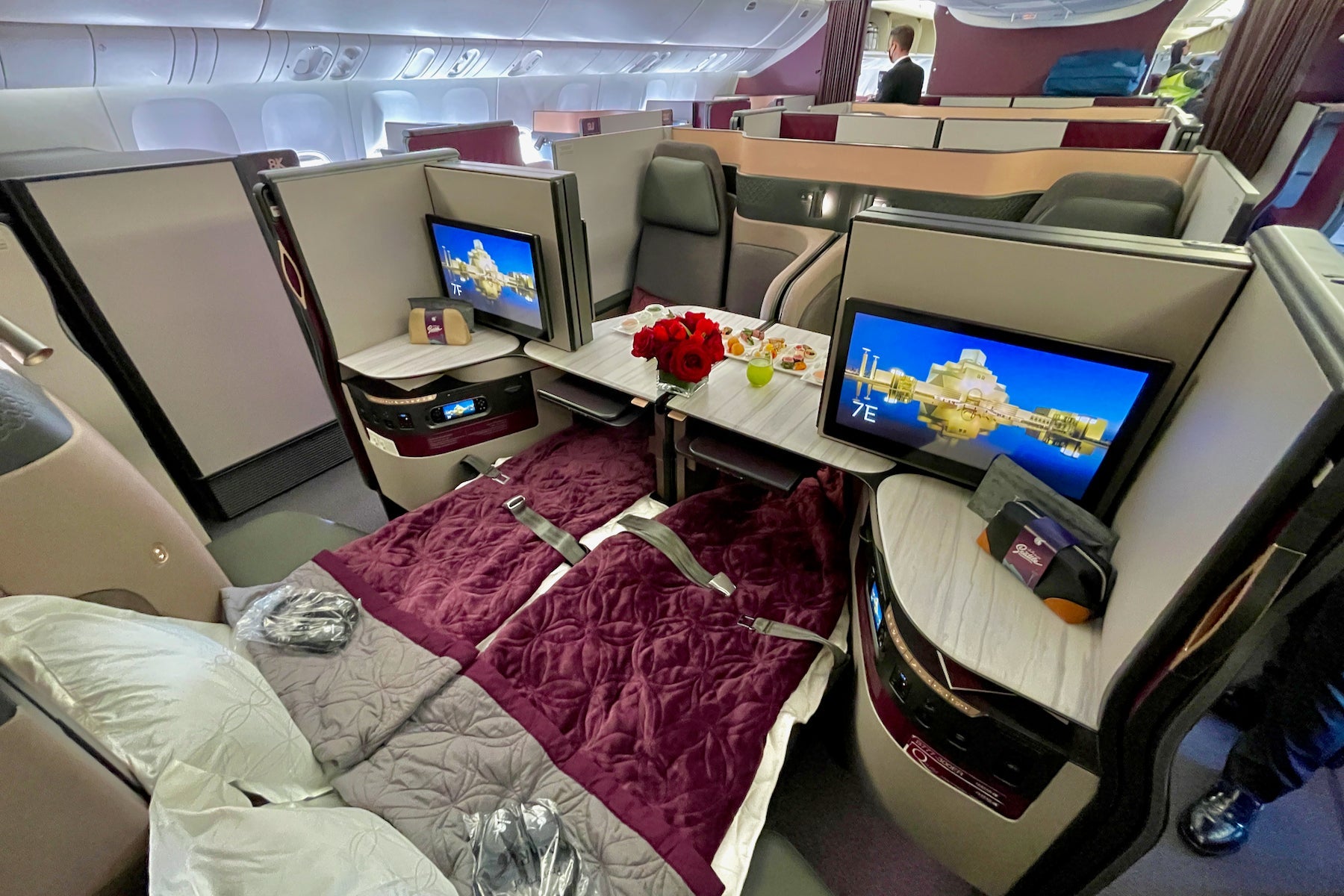
Qatar Qsuites are great for traveling families. (Photo by Benji Stawski/The Points Guy)
Search for tickets individually
Few travelers realize how airlines price multiple award and revenue tickets. Carriers release seats in buckets with a limited number of seats in each fare or award class. When you search for a specific number of tickets, the results will only show the fare or award class availability for your entire party.
For example, if you search for three award tickets in the lowest mileage tier and only two are available, the reservation system will indicate that no saver award seats exist, but three non-saver awards are available. But if you search for one award seat first, you might find that one or more is available at the lowest mileage level and others at a higher mileage level. The same is true when making paid bookings.
You can then decide if you want to split your family’s reservations between paid and award seats. When doing so, always have the most frequent (paid) fliers travel on revenue tickets to further their quest to earn elite status. Additionally, this could improve their upgrade chances.
If your goal is to find four or more award tickets at the lowest mileage levels on the same flight, then you're going to be disappointed most of the time. This is especially true if you are trying to book awards in business or first class. But if your family is willing to split into two groups, you'll have many more options.
Think of it this way: When traveling with children, the vacation is all about the destination, not the journey. Also, travel will always be easier when the group is smaller, and splitting up can allow kids to have valuable time alone with a parent in the absence of their siblings, or at least some of them.
Leverage schedule changes
So long as your family is booking award flights far in advance, the chances are that there will be a schedule change of some sort before the date of your flight. This is especially true nowadays with all of the uncertainty surrounding the pandemic. And when that happens, most airlines will be willing to open up low-mileage award seats when there's a significant impact on your schedule. This could allow you to reunite your family's separate itineraries or select a more optimal routing that wasn't initially available.
Just remember that an airline will usually only open up saver level awards on flights that it operates. It will have little, if any, control over its partner flights, although some carriers can communicate with their partners and try to find alternative flights on your behalf.
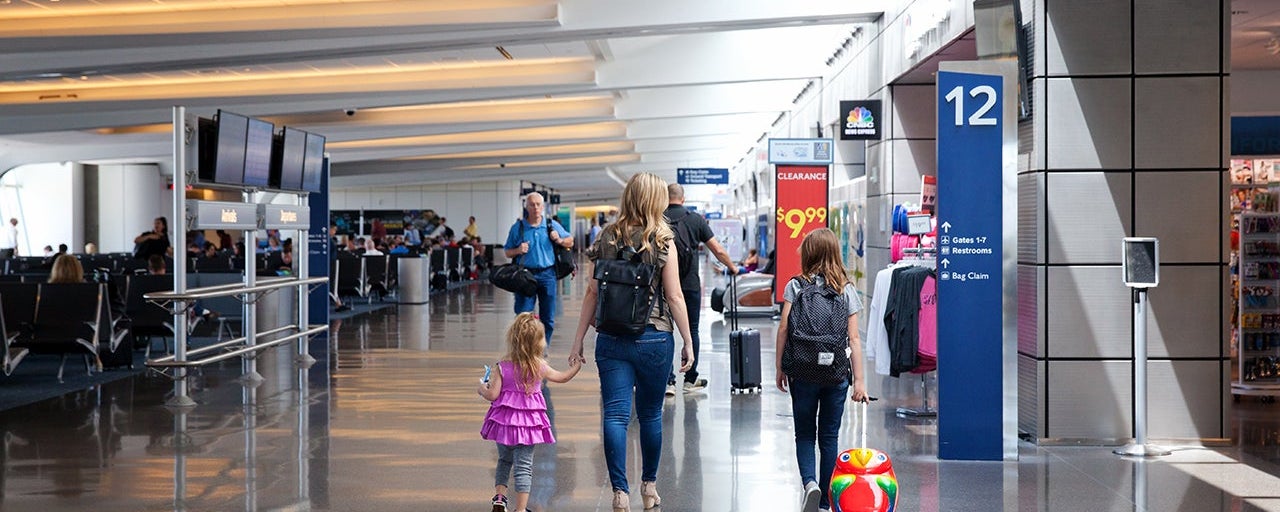
(Image by Getty Images)
For example, Delta is notorious for frequent schedule changes, but it will open up low-mileage award inventory when travelers are affected. On the other hand, Southwest seldom makes any changes once it releases its schedule. So if you book on a flight on Southwest, be sure you’re getting the exact flights you want, though you can always change or cancel without penalty.
Over the last few years, more and more airlines have been shifting toward dynamic award pricing. What this means is that you'll usually get a relatively fixed value when redeeming your points. The advantage for families is that there usually aren't any capacity controls on dynamic awards. This means that you can redeem your points in these programs for any unsold seat, just like if you were paying for your tickets with cash. So if you have enough points, you can book as many award seats as you want.
These programs can also be a better use of points for cheap, short-haul trips or when fares go on sale. The downside is that you usually won't get outstanding value from these programs when booking last-minute flights or seats in business or first class.
If you're a regular Southwest flyer, you've probably heard about the Companion Pass. In short, it allows you to bring a designated friend or family member for free (plus applicable taxes and fees) on any Southwest flight you take.
It can be possible for each adult in a family to earn a Southwest Companion Pass, thereby doubling the value of their Southwest points. Also, I’m going to let you in on a secret: You can change your designated companions up to three times in a calendar year after that. As a result, there is plenty of flexibility for families, even if you don’t always travel together.
Fly a family member with a Companion Pass. (Photo by The Points Guy)
Perhaps the most exciting aspect of the Companion Pass is that you don't need to be a road warrior to earn it. In fact, you can get it without any flying at all. That's because points earned from Rapid Rewards credit cards count toward the Southwest Companion Pass. However, if you apply for a personal Southwest card — like the Southwest Rapid Rewards Priority Credit Card — by March 10, 2021, you can get the Companion Pass (valid through 2/28/2022), plus 30,000 bonus points after you spend $5,000 on purchases in the first three months of account opening.
If you're traveling with a child under the age of two, you'll usually be able to save some points or miles by bringing them as a lap infant. However, it's important to familiarize yourself with the rules first — lap infants typically still need their own boarding pass.
Airlines will usually let you bring along an infant for free when flying domestically. However, when traveling internationally, there are fees for this privilege — and they can vary drastically by airline and route. Some airlines just charge the taxes and fees, some charge a flat rate and some charge a percentage of the adult fare.
United recently reduced its lap infant fares for international awards and now charges a flat $20 to $250 plus taxes, depending on the route and cabin of service. By comparison, American Airlines and Delta charge 10% of the adult fare, plus taxes and fees. So, on an international business class award that usually costs $5,000, you could be paying $500 in fees.
You'll sometimes be able to save on lap infant fees by booking through a foreign frequent flyer program. For instance, Air Canada Aeroplan allows lap infants to travel for free wholly within Canada and between Canada and the United States and charges just CA$25 ($19) or 2,500 points for all other itineraries.
While it may be possible for some people to manage all of their frequent flyer accounts with a simple spreadsheet, families will want to organize and manage usernames and passwords with a tool such as AwardWallet. Having your accounts all in one place is the best way to ensure you can make the most of your rewards when it comes time to use them.
Book flights with points from anyone's account
Most loyalty programs offer some mileage transfer options, but they charge far more than the service is worth. Instead, there's no reason why you can't issue awards from one person's account in another person's name for no additional charge. This is especially true for booking flights using points transferred from a credit card rewards program. For instance, unless your child is an authorized user on your account, American Express won't let you transfer your Membership Rewards points directly to their frequent flyer account.
When you can't find enough award seats at the lowest mileage levels, you don't have to give up and (gasp!) pay for tickets with your hard-earned money. Instead, you can use points or miles from credit card programs that let you redeem your rewards for travel reservations. For example, the Capital One Venture Rewards Credit Card offers 2x miles for each dollar spent, and miles are worth 1 cent as statement credits toward any travel reservations.
The Chase Sapphire Preferred Card lets you redeem Ultimate Rewards points for 1.25 cents each toward travel booked through Chase, while the Chase Sapphire Reserve offers a fantastic 1.5 cents per point toward travel reservations. Redeeming this way can make a lot of sense when cash fares are cheap. Plus, you won't need to worry about finding award space or paying any taxes or fees out of pocket. As an added bonus, you'll earn both frequent flyer miles and elite-qualifying credit when booking flights this way.
One of the best ways to find multiple saver-level award seats on a flight is to tap into the expanded award availability that United offers its MileagePlus credit cardholders. When searching United's website and using Expert Mode, it's not uncommon to find as many as nine saver award seats in the XN fare class offered to United credit card holders and elites, but zero seats in the X fare class offered to everyone else.
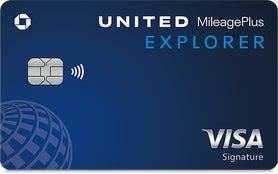
To see the expanded award saver space, make sure you're logged in to your account before searching. Having a card like the United Explorer Card helps you access more saver award space in economy class. But if you're looking to travel in a premium cabin, then you can call and ask to be put on a waitlist for saver business class award space.
Booking award tickets for a large family isn't easy, especially when you're forced to work around school and work schedules. However, it can be done and these simple strategies may help you get the seats you need for your next trip. Fortunately, most airlines have eliminated change fees, so you can redeposit your award without penalty if your family's plans change.
By commenting, you agree to our Community Guidelines to help create a positive space for conversation. The responses below are not provided or commissioned by the bank advertiser, our partners, or The Points Guy (“TPG”). They have not been reviewed, approved, or otherwise endorsed by any of these parties. All responses are submitted by individual contributors, and neither the bank advertiser, our partners, nor TPG are responsible for ensuring that all posts and/or questions are answered.