The Points Guy believes that credit cards can transform lives, helping you leverage everyday spending for cash back or travel experiences that might otherwise be out of reach. That's why we publish a variety of editorial content and card comparisons: to help you find a great card to turn your goals into reality.
Our site may earn compensation when a customer clicks on a link, when an application is approved, or when an account is opened with our partners, and this may impact how or where these products appear. While we don't cover all available credit cards, our editorial team creates and maintains all of the analysis of these cards, and our content is not influenced nor subject to review by any credit card company, bank or partner prior to (or after) publication. Please view our advertising policy and product review methodology for more information.
Advertiser disclosure
The Points Guy believes that credit cards can transform lives, helping you leverage everyday spending for cash back or travel experiences that might otherwise be out of reach. That's why we publish a variety of editorial content and card comparisons: to help you find a great card to turn your goals into reality.
Our site may earn compensation when a customer clicks on a link, when an application is approved, or when an account is opened with our partners, and this may impact how or where these products appear. While we don't cover all available credit cards, our editorial team creates and maintains all of the analysis of these cards, and our content is not influenced nor subject to review by any credit card company, bank or partner prior to (or after) publication. Please view our advertising policy and product review methodology for more information.
Guides
Top 6 mistakes every points and miles beginner makes
Richard Kerr is a veteran naval officer and founder of the Award Travel 101 Facebook community. He’s one of the foremost experts in points and miles strategy, featured in Forbes, US News, Money Magazine, Kiplinger Personal Finance and presented at #SXSW 2017. Richard has visited over 45 countries, lived in England and Japan, and spends his spare time dissecting loyalty program award charts to maximize the value of points and miles. Richard holds a BBA in International Business and has his wife and two small children in tow for his travels as often as possible.
December 6, 2022 • 8 min read
The cards we feature here are from partners who compensate us when you are approved through our site, and this may impact how or where these products appear. We don't cover all available credit cards, but our analysis, reviews, and opinions are entirely from our editorial team. Terms apply to the offers listed on this page. Please view our advertising policy and product review methodology for more information.Editorial disclaimer: Opinions expressed here are the author's alone, not those of any bank, credit card issuer, airline or hotel chain, and have not been reviewed, approved or otherwise endorsed by any of these entities.
Comments
By commenting, you agree to our Community Guidelines to help create a positive space for conversation. The responses below are not provided or commissioned by the bank advertiser, our partners, or The Points Guy (“TPG”). They have not been reviewed, approved, or otherwise endorsed by any of these parties. All responses are submitted by individual contributors, and neither the bank advertiser, our partners, nor TPG are responsible for ensuring that all posts and/or questions are answered.
Related stories
Quick summary
The article highlights six common mistakes beginners make when starting with points and miles, including misunderstanding the value differences among loyalty currencies and not leveraging airline partnerships for redemptions.
Transferring points before confirming award availability can lead to lost value due to issues like phantom availability.
Lack of organization in tracking loyalty accounts, application dates and spending requirements can result in missed rewards or unnecessary fees.
Chasing elite status and avoiding cards with fees without evaluating the benefits are also frequent pitfalls for newcomers.
What to consider
Not all points and miles have equal value; each loyalty currency should be evaluated individually for its redemption potential.
Always confirm award seat availability before transferring flexible points to a partner program to avoid losing flexibility or value.
Elite status is often not worthwhile for leisure travelers unless achieved through organic travel or targeted challenges.
What you'll miss from the article
A detailed breakdown of each mistake and practical strategies to avoid them for maximizing your points and miles experience.
Generated by AI with support from our editorial team.
Update: Some offers mentioned below are no longer available. View the current offers here.
There’s a reason why dozens of all-encompassing, detailed resources exist for maximizing points and miles: This is a complicated hobby. If you’re new to it all, you’re withstanding the proverbial fire hose of information and trying to navigate potential pitfalls and mistakes — which probably feel like they’re everywhere.
At one time or another, points and miles humble us all. It doesn’t matter your background, personality, strengths or weaknesses — there are errors that all points and miles beginners (and even seasoned pros) make.
Let’s take a look at six of these mistakes in the hopes of saving you from the stomach-churning realization that you just gave up — or missed out on — significant value.
Believing all points and miles are equal
Think of loyalty currencies just like foreign cash currencies. You can “buy” the same products (in this case, award flights and hotels) with different types of currency. However, depending on which one you’re going to use, the amount of currency required varies significantly. Just like one U.S. dollar isn’t equal to one British pound, one Chase point is not equal to one American Express point or one American AAdvantage mile. Every currency has its own unique value.
Compounding the confusion are banks like Capital One, which refers to its rewards as “miles.” If we go to dinner and I ask why you’re using the American Express® Gold Card to pay instead of your Chase Sapphire Preferred® Card, don’t say because the Amex Gold earns 4 points per dollar spent at restaurants (on up to $50,000 in purchases per calendar year, then 1 point per dollar) while your Sapphire card only earns 3.
A better answer would be that you value an Amex Membership Rewards point higher than a Chase Ultimate Rewards point. That way, you’re comparing the value of the rewards earned, not the number of miles earned. So, make sure you understand the value of the currencies you’re collecting and figure out which will help you achieve your award travel goals most efficiently.
Not understanding airline partnerships
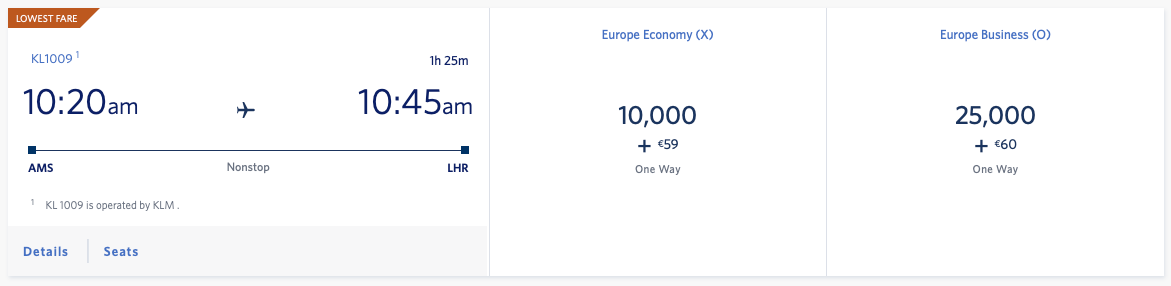
In my opinion, this is the largest knowledge hurdle to overcome for beginners to maximize redemptions. Redeeming miles for partner-operated airline flights typically yields the highest value for your miles. But to someone who’s never heard of this concept before, the idea of using Delta SkyMiles to fly KLM is as foreign a concept as trying to use Euros to pay for groceries here in the U.S.
DELTA.COM
The process of redeeming miles on partner flights also confuses beginners. When booking a partner flight, the key thing to remember is that you do everything with the program whose miles you hold.
So in the above example, you’d use Delta SkyMiles on the Delta website or with a Delta phone agent to book the KLM flight and pay according to the price Delta charges. If you needed to change the ticket later, you’d do it through Delta. There’s no transfer of miles from Delta to KLM. In fact, you don’t do anything with the operating carrier (KLM in this case) until it is time to check-in and fly.
Transferring points before confirming availability
Transferable points like Chase Ultimate Rewards or American Express Membership Rewards are the most valuable and highly coveted loyalty currencies. They provide flexibility via multiple airline and hotel transfer partners — giving you many ways to make award travel a reality. However, they can easily trip up beginners when it comes time to redeem them.
Some airline websites — such as those for United Airlines, British Airways and JetBlue — are known to show seats in the initial search results as available, only to have them unable to be confirmed on the final checkout page. We call this “phantom availability.” You need to confirm with a phone agent that the seats you want are actually available before transferring your Chase, Amex or Citi ThankYou points to the airline.
Some programs, such as American AAdvantage, even let you put award tickets on hold without the required miles in your account, so be sure to ask about that option before transferring.
Lacking organization
You may think you’re organized, but points and miles will put that notion to the test. Tracking your credit score, card application dates, bank account log-ins, payment dates, minimum spending requirements, annual bonuses, annual fees and the loyalty currencies you hold is a daunting task. Failing to keep these organized could mean hundreds of dollars in interest and late fees, or thousands of missed points and miles.
Chasing status
KYLE OLSEN/THE POINTS GUY
The allure of holding mid- to top-tier airline or hotel status can cause unwarranted irrational behavior and invoke significant expenses — both in time and money.
My personal rule of thumb for status is pretty simple: Unless you routinely fly for business (funded by your company or client), allowing you to earn and enjoy status benefits organically, then you should be an airline free agent and avoid chasing status. The only exception is if you are targeted for top-tier status via a challenge or match, and you can complete it with almost all organic travel.
Before the pandemic, I received dozens of questions from readers who were contemplating mileage running and incurring hundreds, if not thousands, of dollars in expenses (plus days of their time) to achieve airline status; after all that, they may have only used the status benefits a handful of times a year. Don’t let airlines lure you with their shiny elite cards and (devaluing) statuses. In most cases, it's just not worth it for the leisure traveler.
As a beginner, it’s important not to get sticker shock when looking at an annual fee. Instead, analyze all the benefits that the card and its loyalty program are giving in return. If you were offered a business class ticket to Europe in return for $95, you’d probably take it. Well, several cards routinely have sign-up bonuses capable of getting you that ticket — you just need to pay the annual fee. (The fee is often waived in the first year.)
Similarly, recurring travel benefits like lounge access, airline credits, primary car rental insurance, trip delay protection and concierge service can easily justify an annual fee. So don’t avoid cards just because you see a fee — do the math and see if the cost makes sense for you.
These beginner mistakes aren’t meant to dissuade you from pursuing points and miles, but rather to bring awareness to potential mistakes. It’s important to set realistic expectations and remind all of us about the time and effort required to truly maximize our loyalty portfolios. So be proactive in protecting against mistakes, and make sure to reach out to a forum for help when you’re unsure!
Comments
By commenting, you agree to our Community Guidelines to help create a positive space for conversation. The responses below are not provided or commissioned by the bank advertiser, our partners, or The Points Guy (“TPG”). They have not been reviewed, approved, or otherwise endorsed by any of these parties. All responses are submitted by individual contributors, and neither the bank advertiser, our partners, nor TPG are responsible for ensuring that all posts and/or questions are answered.