The Points Guy believes that credit cards can transform lives, helping you leverage everyday spending for cash back or travel experiences that might otherwise be out of reach. That's why we publish a variety of editorial content and card comparisons: to help you find a great card to turn your goals into reality.
Our site may earn compensation when a customer clicks on a link, when an application is approved, or when an account is opened with our partners, and this may impact how or where these products appear. While we don't cover all available credit cards, our editorial team creates and maintains all of the analysis of these cards, and our content is not influenced nor subject to review by any credit card company, bank or partner prior to (or after) publication. Please view our advertising policy and product review methodology for more information.
Advertiser disclosure
The Points Guy believes that credit cards can transform lives, helping you leverage everyday spending for cash back or travel experiences that might otherwise be out of reach. That's why we publish a variety of editorial content and card comparisons: to help you find a great card to turn your goals into reality.
Our site may earn compensation when a customer clicks on a link, when an application is approved, or when an account is opened with our partners, and this may impact how or where these products appear. While we don't cover all available credit cards, our editorial team creates and maintains all of the analysis of these cards, and our content is not influenced nor subject to review by any credit card company, bank or partner prior to (or after) publication. Please view our advertising policy and product review methodology for more information.
Guides
These are the 12 hotel design choices I’m seeing everywhere — and I wish hotels would stop
TPG's director of travel content Eric Rosen has used points and miles to visit some of the world's most remote corners, including swimming with whale sharks off Western Australia's Ningaloo Coast, exploring the wilds of Botswana's Okavango Delta and tasting the high-altitude wines of Argentina's Mendoza region.
August 6, 2026 • 13 min read
The cards we feature here are from partners who compensate us when you are approved through our site, and this may impact how or where these products appear. We don't cover all available credit cards, but our analysis, reviews, and opinions are entirely from our editorial team. Terms apply to the offers listed on this page. Please view our advertising policy and product review methodology for more information.Editorial disclaimer: Opinions expressed here are the author's alone, not those of any bank, credit card issuer, airline or hotel chain, and have not been reviewed, approved or otherwise endorsed by any of these entities.
Comments
By commenting, you agree to our Community Guidelines to help create a positive space for conversation. The responses below are not provided or commissioned by the bank advertiser, our partners, or The Points Guy (“TPG”). They have not been reviewed, approved, or otherwise endorsed by any of these parties. All responses are submitted by individual contributors, and neither the bank advertiser, our partners, nor TPG are responsible for ensuring that all posts and/or questions are answered.
Related stories
Quick summary
The article highlights 12 common hotel room design choices that can negatively impact guest comfort and convenience.
Examples include bathtubs placed in the middle of rooms, sliding barn doors for bathrooms, half-glassed showers and open-concept closets.
Other issues discussed are poor lighting in bathrooms, awkward TV placements, beds pushed against walls and overly complex light switches.
The author acknowledges that some design trends may save space or look stylish but often sacrifice practicality for most travelers.
What to consider
Many design choices, such as sliding doors and open closets, are intended to maximize space but can reduce privacy and functionality.
Bathroom layouts with sinks in the main room or half-glassed showers may lead to noise, water spillage or congestion, especially when sharing a room.
Awkward furniture placement and inaccessible power outlets can make working or relaxing in the room less comfortable.
What you'll miss from the article
A detailed breakdown of each design pitfall and practical suggestions for what hotels could do differently to enhance the guest experience.
Generated by AI with support from our editorial team.
Goodness knows I’ve made some questionable design and decor choices in my time. There was the all-leather living room set that made my tiny studio apartment look like a sleazy bachelor pad — and let me tell you, sitting on leather furniture during a hot L.A. summer is not where you want to be.
Then, I thought it would be a great idea to buy an all-white set of bedroom linens. “It’ll feel like a fancy hotel room!” I told myself. And it sort of did...until the dog came in after a rainy walk and, before we could wipe him down, got mud all over the duvet and pillows.
Such is life — something that seems like a smart decor choice in concept turns out to be less practical in real time. So I have a modicum of sympathy for hotels where certain design decisions don’t quite work out. Only a modicum, though. After all, unlike me, hotels have teams of architects and designers to focus-group each and every aspect of the guest experience. And yet, somehow, dubious choices still abound.
Sometimes it’s a trend gone awry. Other times, it’s a way to save space at the cost of privacy. Still others, it seems to be a lack of foresight about what different types of guests might want.
This isn’t meant to be a screed against poorly designed hotels, and I won’t name names. Quite the opposite. Some of these choices are fun and interesting — and okay to experience for two or three nights while away from home. Occasionally.
But these are the 12 design choices I wish hotels would stop making so we could all have a more comfortable stay.
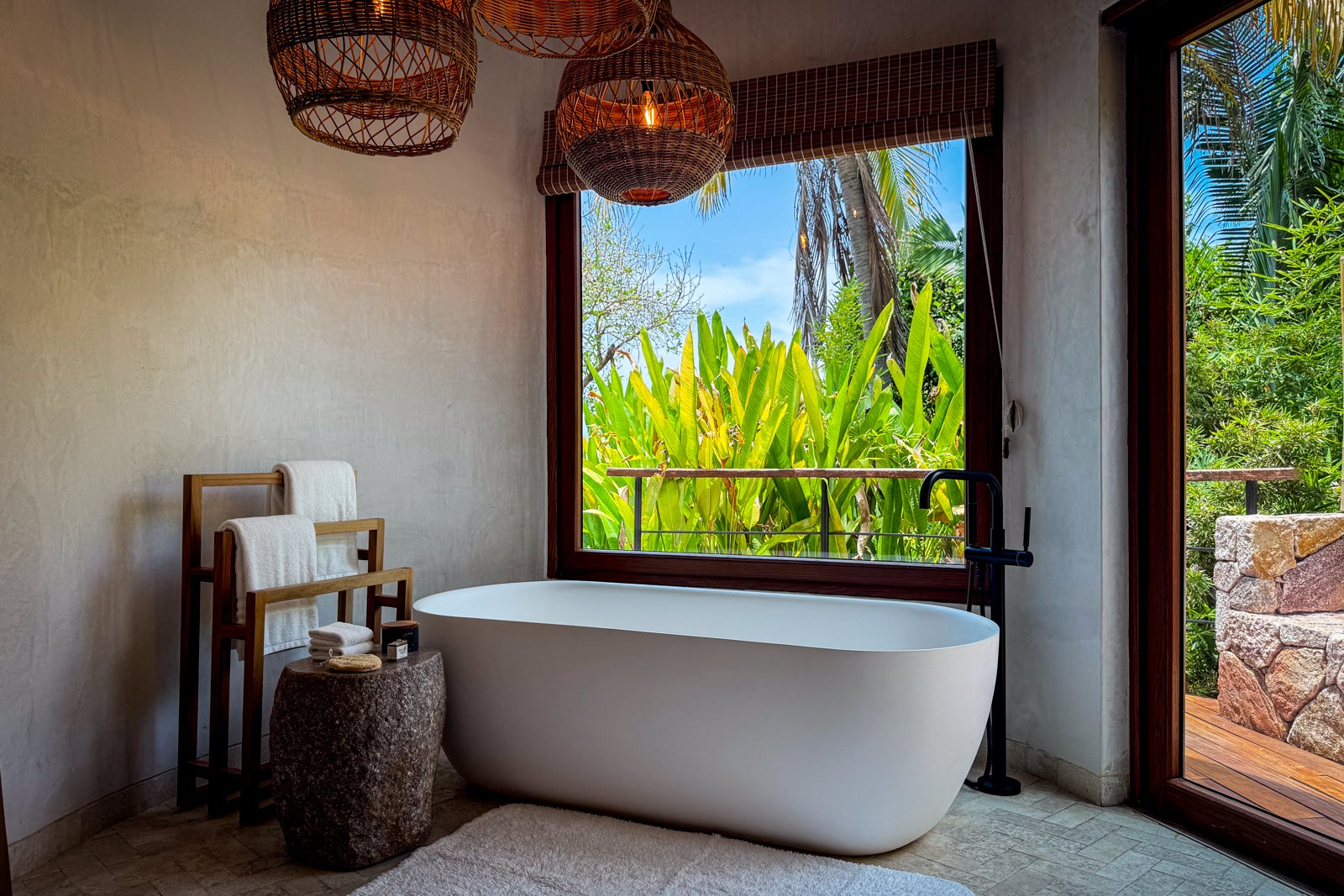
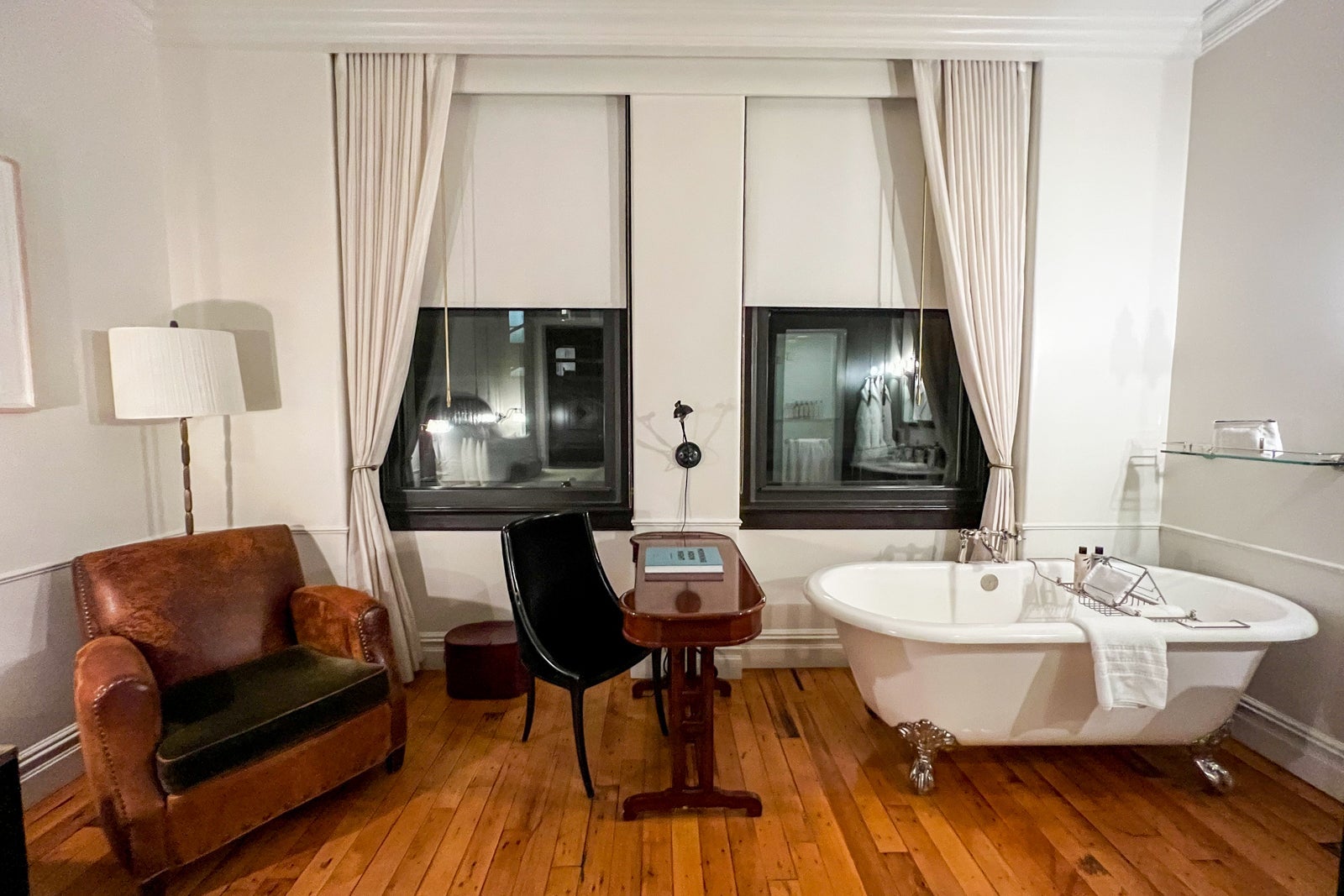
When I first moved to New York City after college, I was on a tight housing budget, and so I could only afford to consider small living spaces, usually with a roommate (or several). What I did not know until I started looking around, however, was just how many former tenement buildings there are with (very) old plumbing and a specific oddity: a bathtub in the middle of the living room or kitchen. I must have seen seven or eight of these before I started looking elsewhere.
So imagine my surprise when I started seeing a flotilla of tubs starting to populate the main spaces of hotel guest rooms. What was once the domain of cheesy “honeymoon suites” in roadside motels has gone mainstream, and even upscale. While I can understand this choice at hideaways predicated on romantic getaways, I’m seeing this in smart city hotels and rustic country inns alike. Part of it must be attributed to limited bathroom space, but in that case, I suggest just skipping the tub altogether.
Maybe I’m in the minority, but I don’t want to be soaking and sloshing right in the middle of the room, even if I’m traveling alone or with my husband. The whole bedroom becomes a splash zone that way, let alone the wet footprints I leave behind on the carpet.
Does an old-fashioned clawfoot tub look cool standing on its own in the middle of the room? Absolutely. Do I want to have to navigate around it and then listen to it drain for 30 minutes after use? Not really.
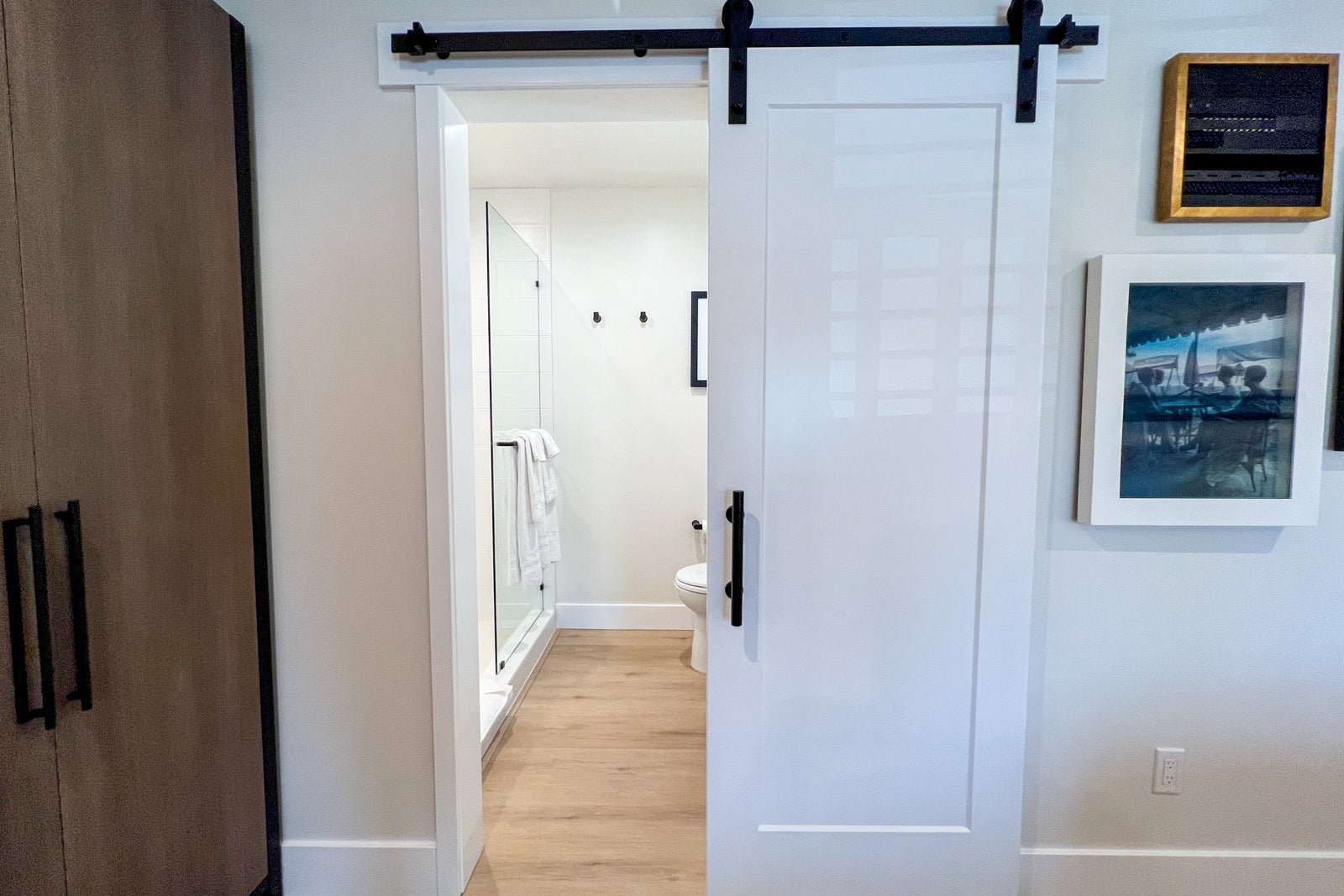
More and more, I see hotels installing barn-style sliding doors to bathrooms. I totally understand that this is a space-saving measure. Not having to swing a door open and closed conserves floor space for room occupants. But even a pocket door is preferable to a barn door, which slides along a track and doesn’t actually seal off the bathroom for privacy.
ERIC ROSEN / THE POINTS GUY
I travel alone for work all the time, and in those instances, this isn’t an issue. But when I’m traveling with friends or my husband, I want my bathroom time to be private, and these types of doors, while aesthetically pleasing, just do not cut it.
Half-glassed-in showers
ERIC ROSEN/THE POINTS GUY
Speaking of bathroom time, it’s getting a lot more waterlogged due to another questionable design feature I’ve been noticing lately: showers that are only half glassed-in.
Again, this is an understandable choice on a number of levels. Less glass means less expense. You also save some move-around space in sometimes tiny bathrooms if you don’t have a door that opens and shuts.
Only the problem is, the showerhead tends to be on the glassed-in side, meaning you have to duck into the shower to turn on the water then dash out while it warms up, then step back in and, maybe I’m just an active scrubber, but I find the floor is soaked after my ablutions, even if I put a bath mat down.
Peekaboo windows and all-glass showers
ERIC ROSEN/THE POINTS GUY
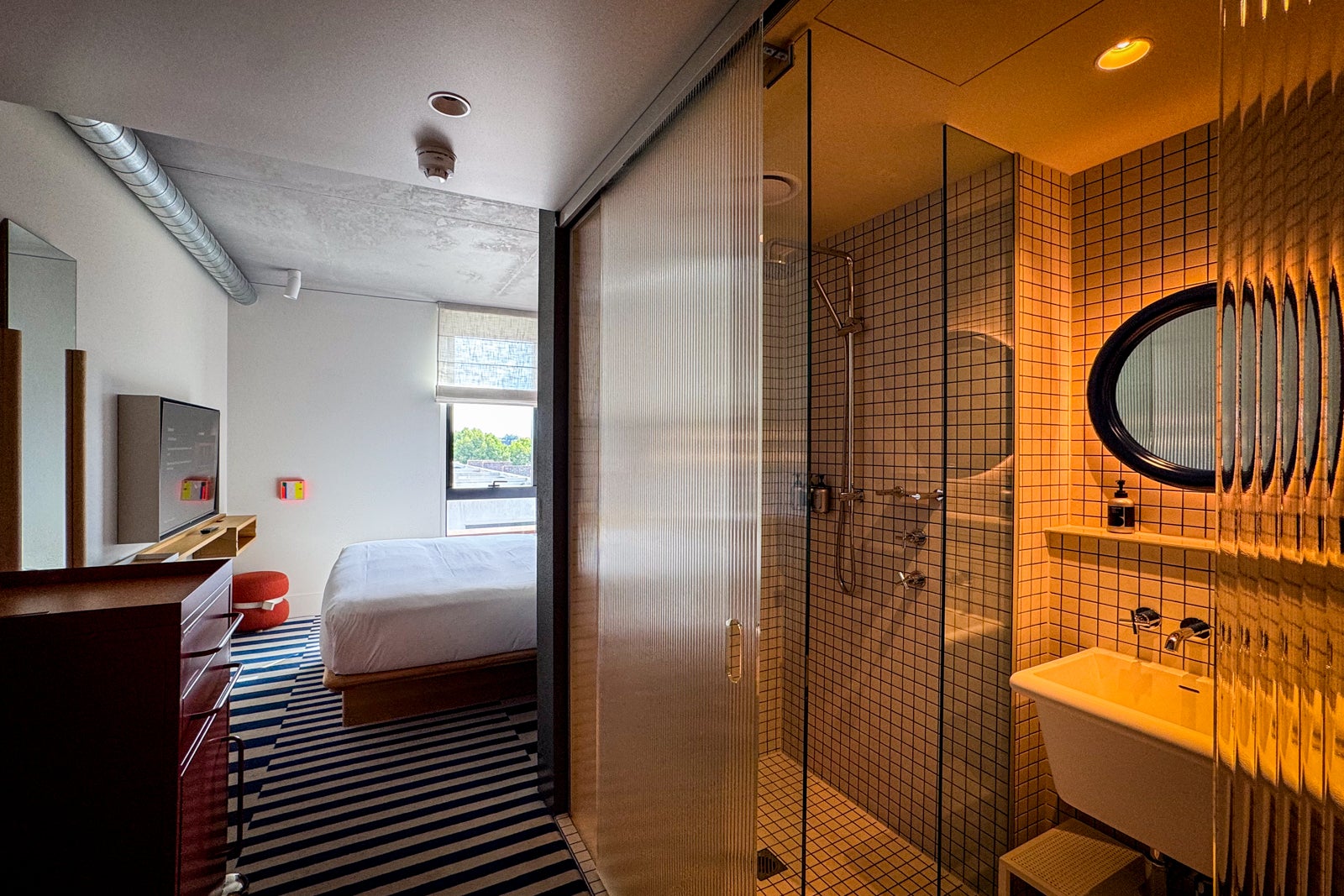
On the other end of the spectrum, sometimes a shower can have too much glass. This tends to happen at a lot of luxurious hotels that try to lend their bathrooms a spa-like ambience. For the past two decades or so, hotels have been installing peekaboo windows through which you can peer from the bedroom into the bathroom and, specifically, the shower. And while sexy shower time might be in order if you’re on a romantic escapade, for the most part, I think hotel guests are looking to lather up in peace and quiet before getting on with their day.
Luckily, many of these windows come with shutters or shades that the bathroom user can shut with the touch of a button. But I have had the odd room where my travel companions and I have had to take shifts showering while the other stepped out into the hall (or into the hotel bar) before a night out on the town.
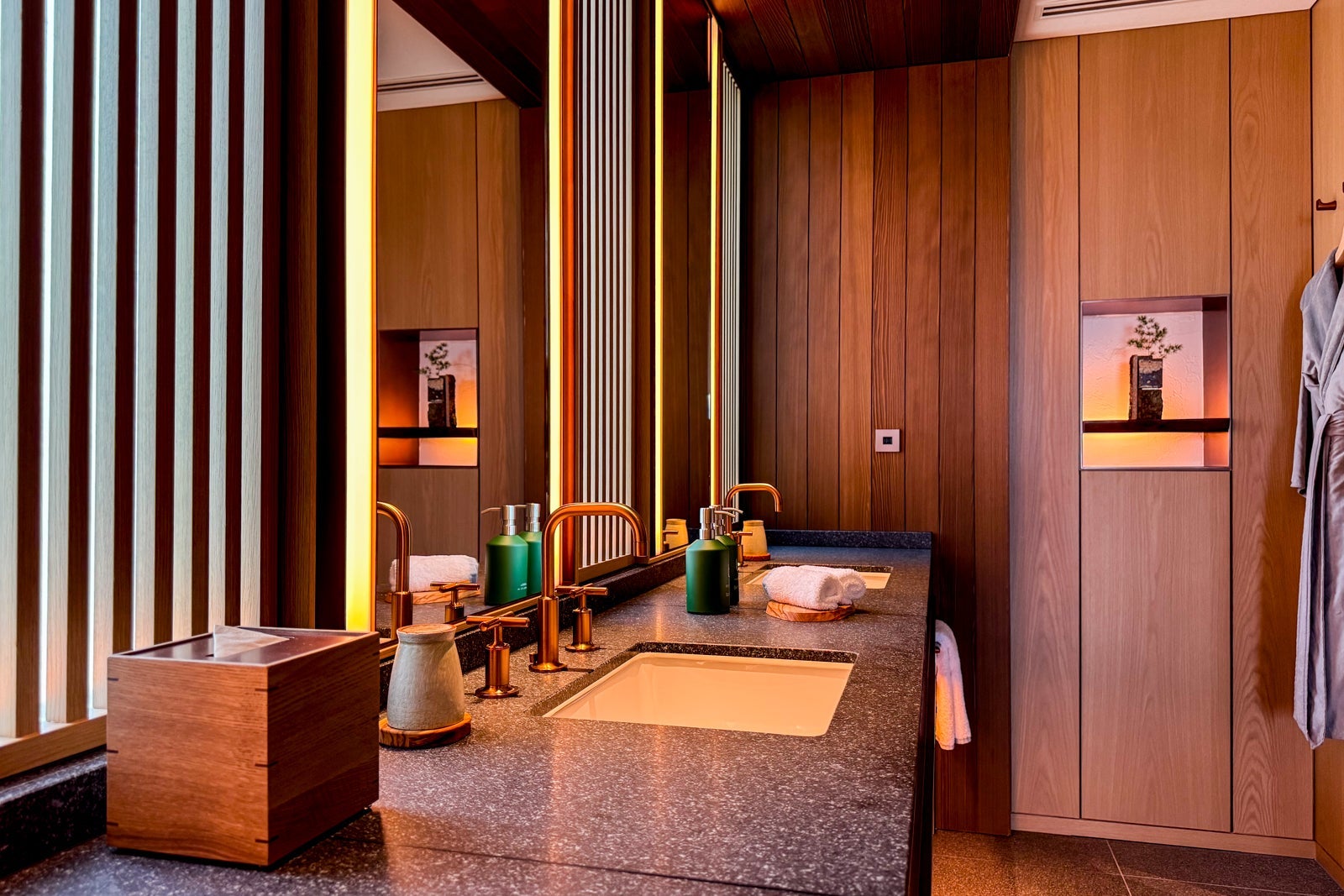
It’s also the zen hotel bathrooms where lighting tends to be an issue for me. I get wanting to make the bathroom a tranquil space. Especially since I have the world’s brightest, buttercup-yellow vintage tiling in my master bathroom at home. It gives everything a jaundiced hue.
ERIC ROSEN/THE POINTS GUY
But there’s a fine line between oasis-like lighting and...just dark. And a lot of hotels don’t seem to know when they’ve crossed that line. That’s also coming from someone with a relatively easy grooming routine. But if I can’t see clearly enough to shave, you have not installed bright enough lighting in the bathroom. And for travelers who want to put on a little makeup before a day or evening out, lighting is crucial. I’ve heard fellow guests tell me about toting their toiletries out to the main room by the window in order to primp to their normal standards. At least install a small, lit vanity mirror somewhere easy to access.
Sinks in the main room
TANNER SAUNDERS/THE POINTS GUY
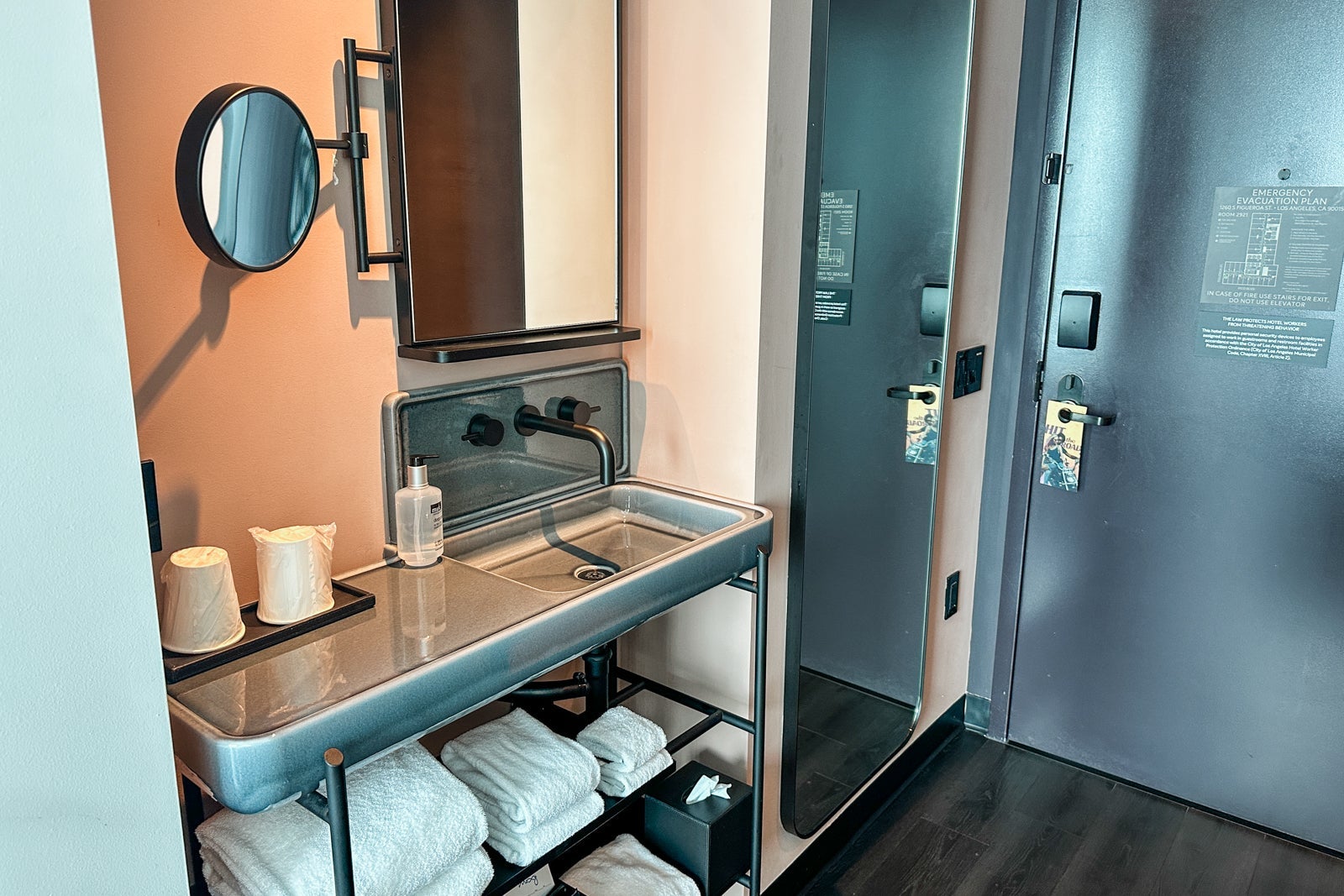
I guess I have a lot of bathroom-specific pet peeves! One of the others I’ve noticed a lot of lately has been hotels that put the bathroom sink in the main room, with the toilet and shower in a separate water closet. While I can live with this one, the sink tends to be between the doorway and the bedroom; in other words, a high-traffic area, so what seems like a space-saving measure actually creates a lot of congestion.
It also means that if you’re traveling with someone and get up during the night, you’re making a lot more noise washing your hands in the middle of the room than if the sink were contained within the bathroom.
The open-concept closet
ERIC ROSEN/THE POINTS GUY
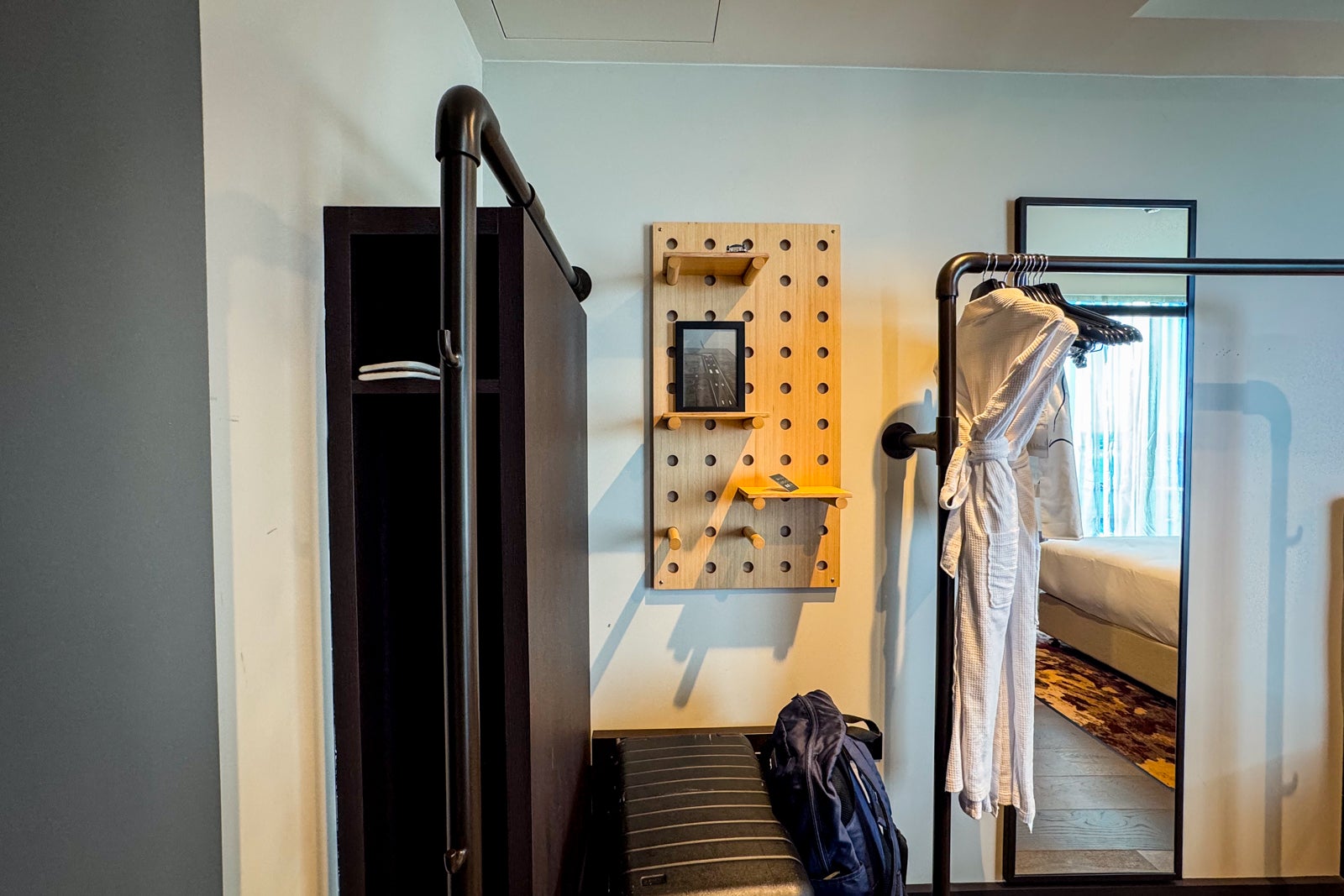
Another budget-friendly, space-saving measure that seems to have caught on? Non-closet closets. More and more hotels are just putting in an open hanging rack, usually just industrial metal tubing with a few hangers, or even just some pegs mounted on the wall, and expecting guests to use that as the closet.
Even for work travel when I might need to hang just a few items, having them out in the middle of the room is not ideal. Plus, in this type of set up, I end up living out of my suitcase anyway since there typically aren’t drawers.
Where’s the desk?
ERIC ROSEN/THE POINTS GUY
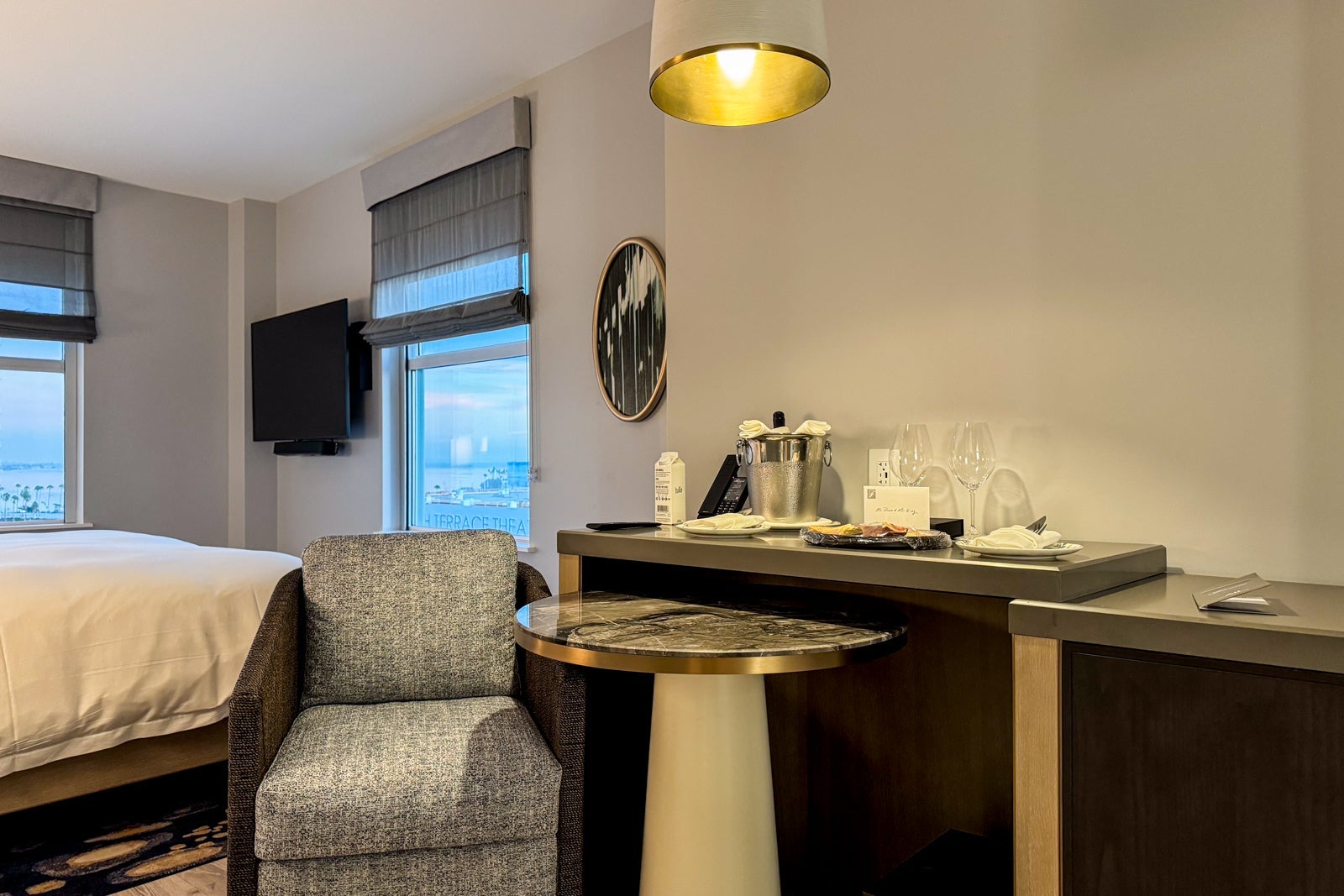
Maybe I sound like an old fogey, or at least a road warrior who travels for work a lot, but a random table with no plugs does not make for a great workspace. I don’t mean that I need an imposing walnut desk that would look right at home in a law firm partner’s office. But I do want a comfortable chair with arms, a surface that’s at a convenient height and nearby plugs to keep my devices charged and where I don’t have to scramble to clear my laptop and papers if I need somewhere to set down a room service tray.
Who watches TV at this angle?
ERIC ROSEN/THE POINTS GUY
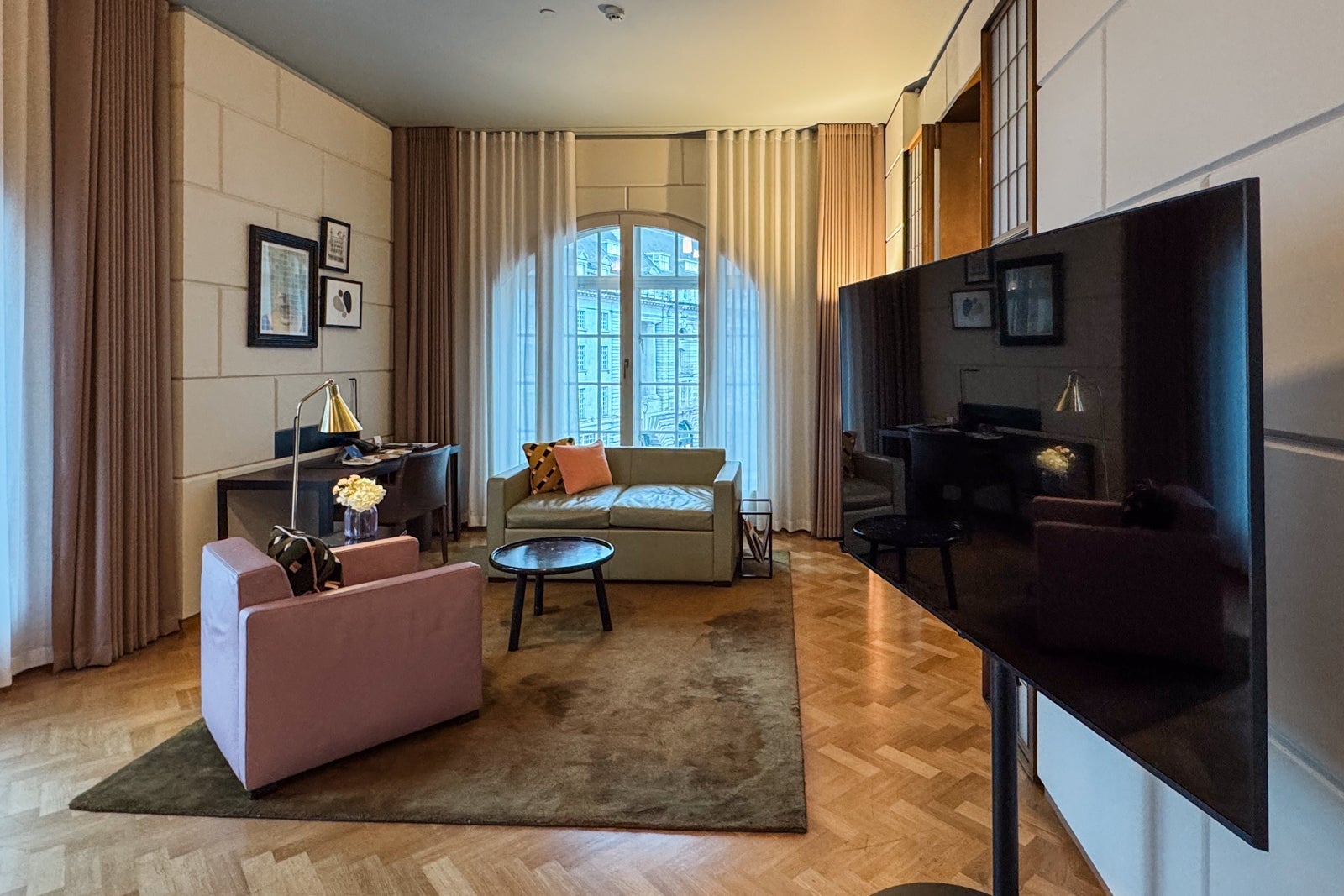
I love a hotel room with a large flat-screen television since my TVs at home are relatively small. But sometimes hotels overdo it with a 55-inch or larger monitor that only fits in one place on the wall and then is mounted in such a way that it can’t be adjusted to a better viewing angle from different spots in the room.
How hard is it to purchase and install sturdy, swiveling wall mounts? Granted, that probably means more folks pull them off the wall or knock into them by accident. But even this accident-prone traveler would rather take that chance than have to crane my neck uncomfortably just to catch up on late-night reruns of “The Big Bang Theory.”
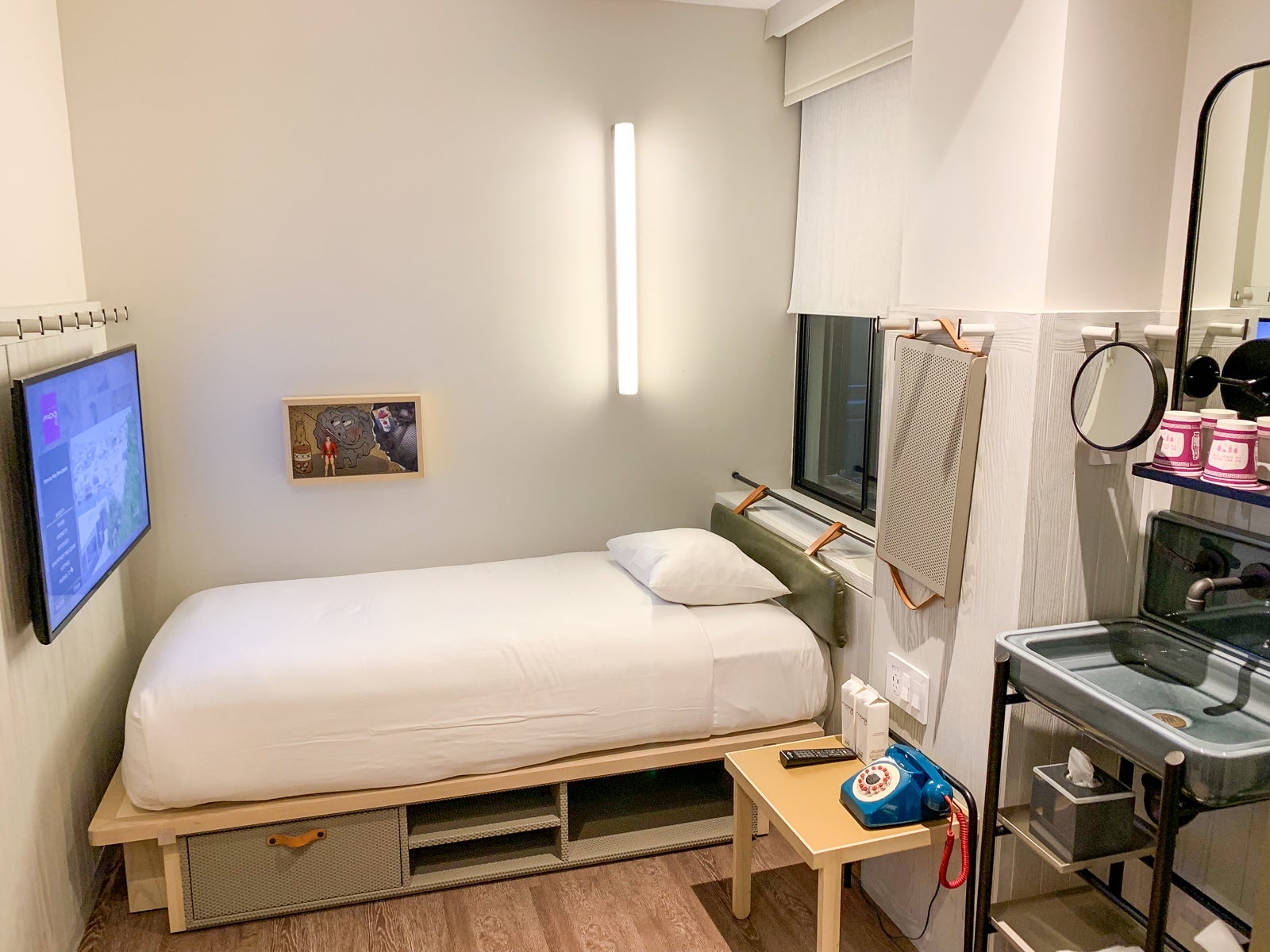
How does housekeeping make the bed?
Moxy Times Square (Photo by Scott Mayerowitz/The Points Guy)
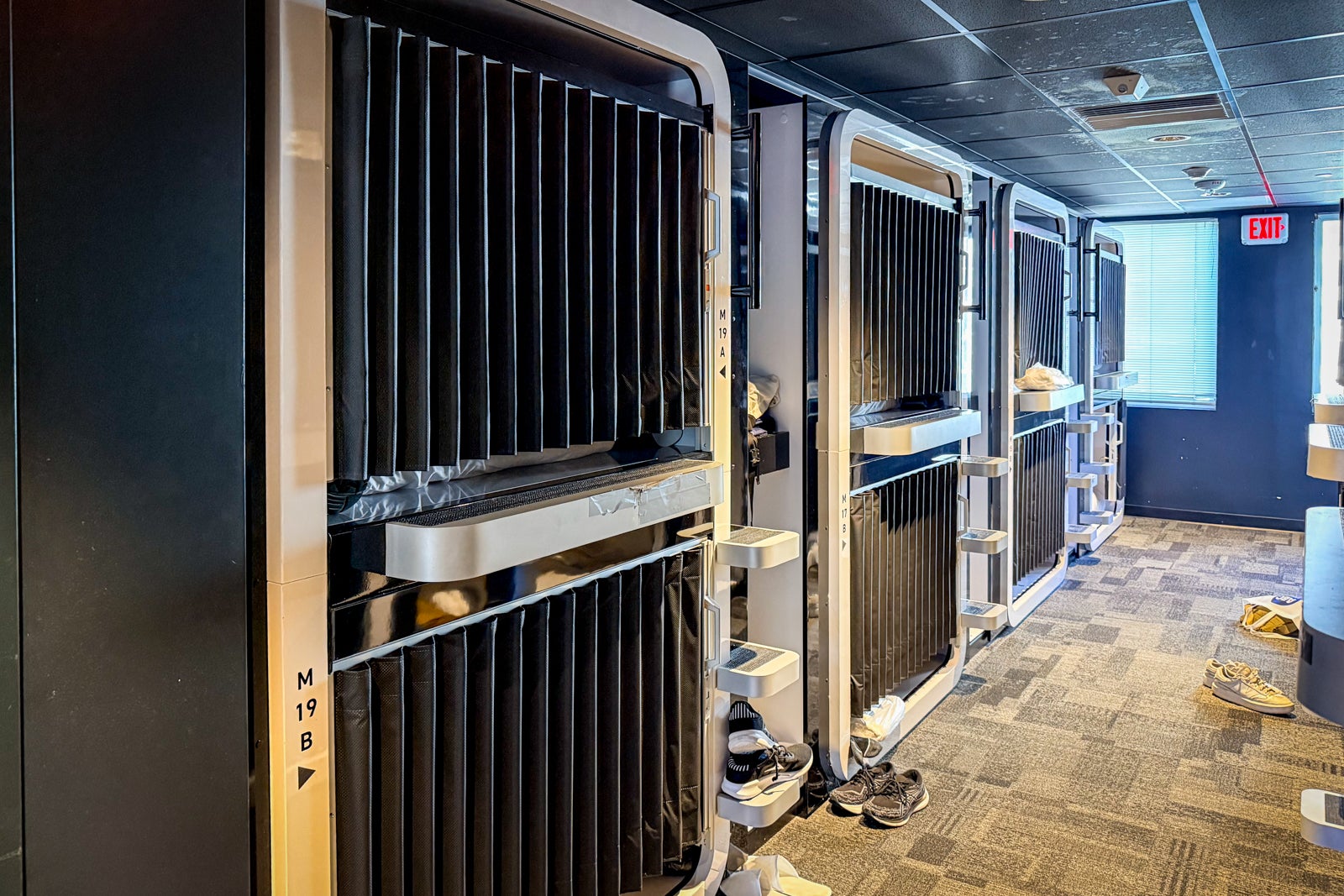
In more budget-friendly hotels, which I frequent a lot, especially on visits to the TPG offices in New York, I have been finding more and more rooms have beds pushed right up against the wall or window on one side. Of course, that helps maximize limited square footage, but if I happen to be traveling with my husband, it means one of us has to scramble over the other to get to the bathroom or to the door at night.
It’s kind of like old-fashioned business-class seats where folks on the window have to Mission Impossible it over the aisle-side passenger to get to the lav. I also think this must make housekeeping a nightmare; I mean, I haven’t figured out how to make a bed pushed up against the wall like that.
Free the minifridge!
ERIC ROSEN/THE POINTS GUY
I have a funny travel tic. I almost never eat or drink out of the minibar unless I arrive somewhere quite late and need a bottle of water. But I always like to check where it is and what it contains. I’m a hotel reviewer, after all.
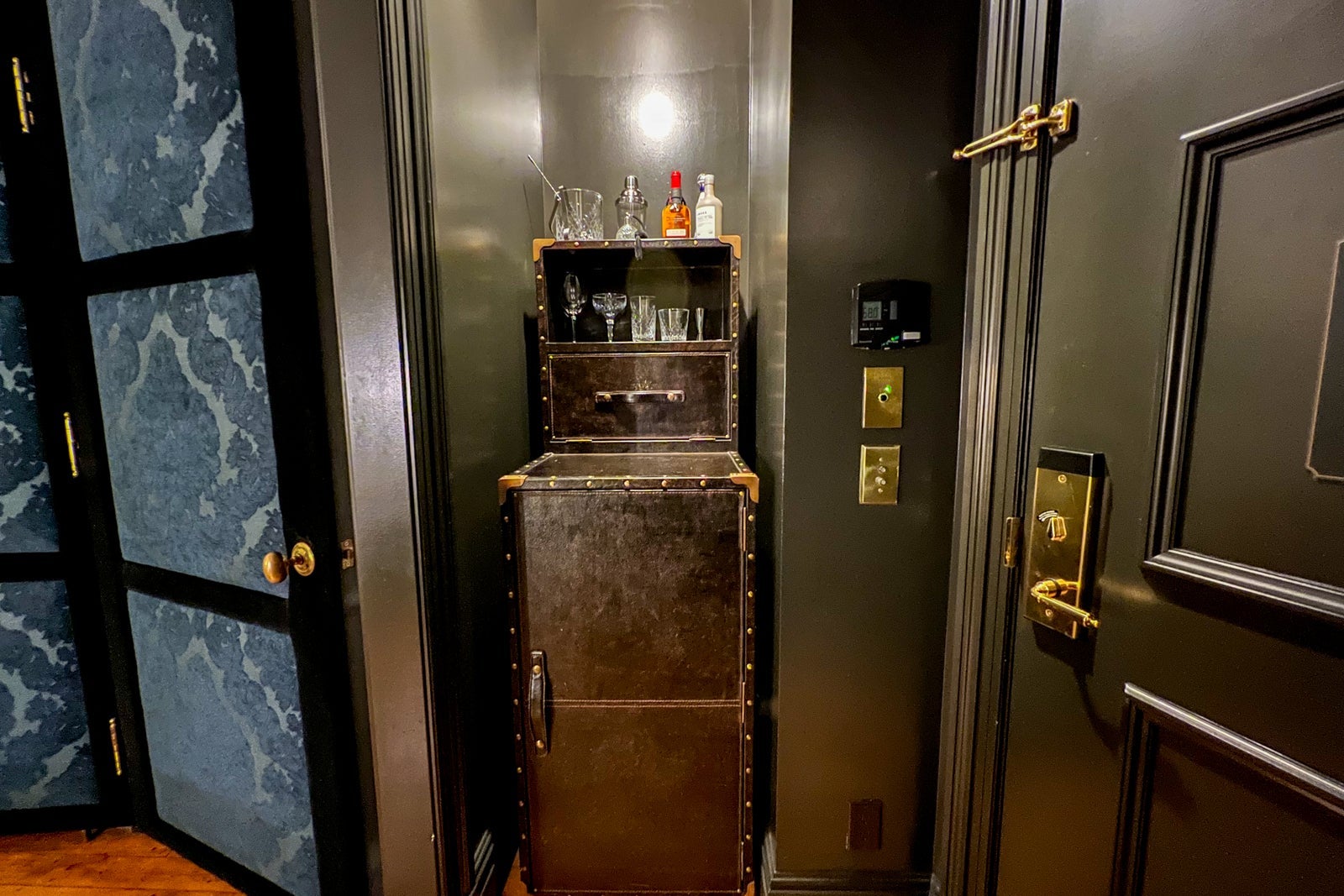
What I don’t understand, though, is why so many hotels shove the minibar refrigerator into cabinetry. I suppose a minifridge out in the open does lend a certain dorm room vibe to accommodations. But when you tuck the device into an armoire with no circulation, it just tends to overheat that part of the room (which can’t be good for machines under warranty) and create a veritable echo chamber for the shudders, shakes and gurgles the refrigerator makes as it operates. So by trying to hide the minibar, hotels end up making it a sonic focal point of the room.
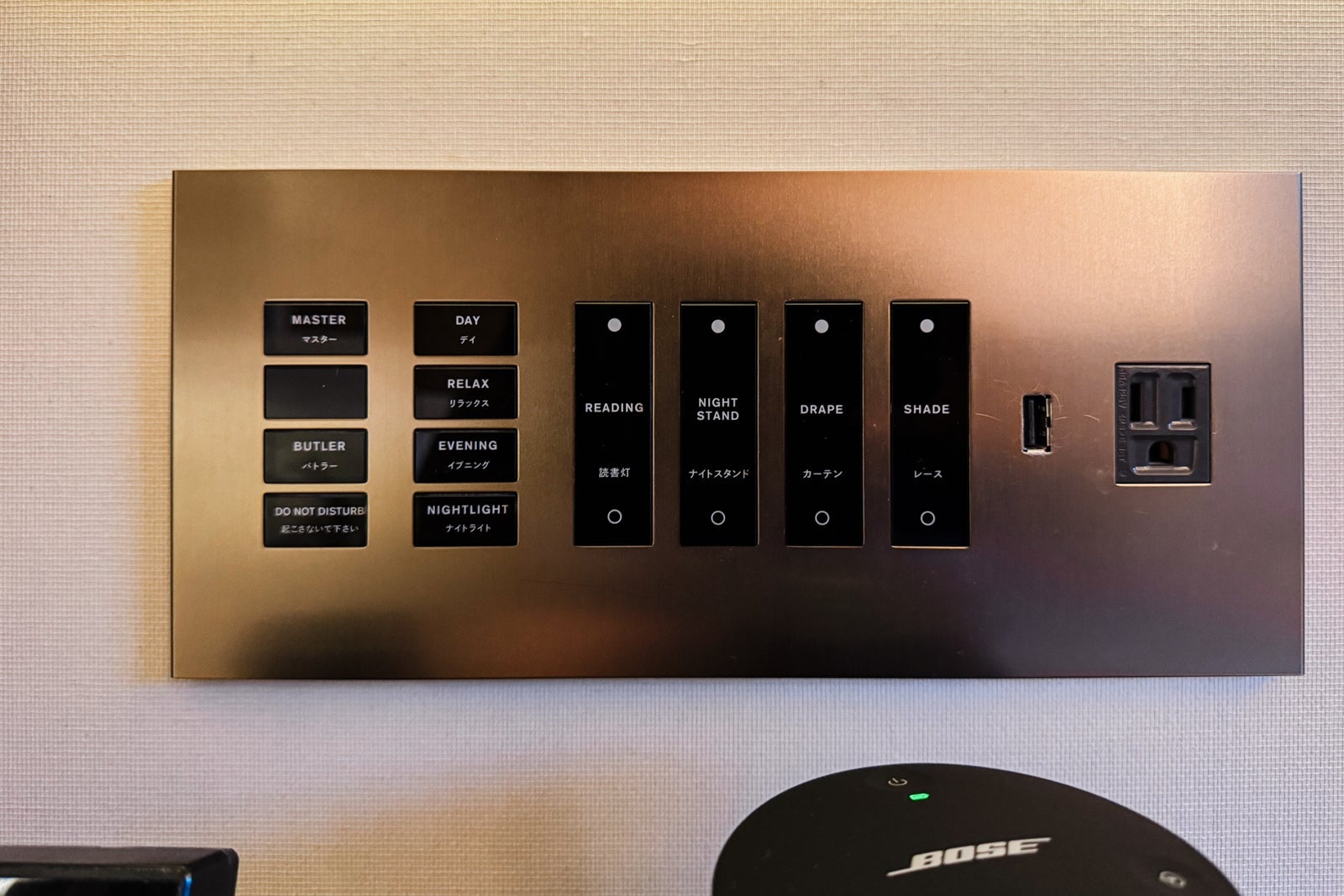
I love being able to control various room functions with the touch of a button. Window shades down? No problem. Lighting in relaxation mode, let’s do it. But sometimes, hotel rooms have panels of buttons and switches so complex that, just when I think I’ve turned everything out and can crawl into bed, there’s that one single light in the entryway or the closet that just will not go out, no matter how many buttons I try, including the master switch.
ERIC ROSEN/THE POINTS GUY
Call me a simple man, but I’d much prefer just two or three switches with dimmers that can control all the lights, and leave it at that. It would save me so many 20-minute searches at the end of the night trying to extinguish that last, lonely bulb.
Bottom line
Those are some of my biggest bugbears when I check into hotel rooms. And yes, I’m aware that some of them are sure to make me sound crotchety. But I also suspect that other guests feel the same way about a lot of these. Should any hotel owners or designers want to have a focus group of one, I’m always available.
In the meantime, I’d love to hear whether you agree with my take, and what some of your own hotel design aversions?
By commenting, you agree to our Community Guidelines to help create a positive space for conversation. The responses below are not provided or commissioned by the bank advertiser, our partners, or The Points Guy (“TPG”). They have not been reviewed, approved, or otherwise endorsed by any of these parties. All responses are submitted by individual contributors, and neither the bank advertiser, our partners, nor TPG are responsible for ensuring that all posts and/or questions are answered.