Don’t be a crybaby: What to do when babies cry on a plane


Editor's note: This is a recurring post, regularly updated with new information.
You've settled into your airplane seat, started a movie, opened a book or powered up your laptop when you hear that dreaded ear-splitting sound — a baby has started crying just a few seats away. It may begin as a whimper or whine and eventually escalate to an all-out howl, as whatever the baby wants clearly isn't happening fast enough.
News flash: Babies cry on planes. And, well, everywhere else, too.
Of course, a crying baby can frustrate both the parents and nearby passengers on the plane. Before you start yelling or sending evil eyes at the parents — or the baby — consider this definitive guide to dealing with outbursts from the tiniest travelers on board.
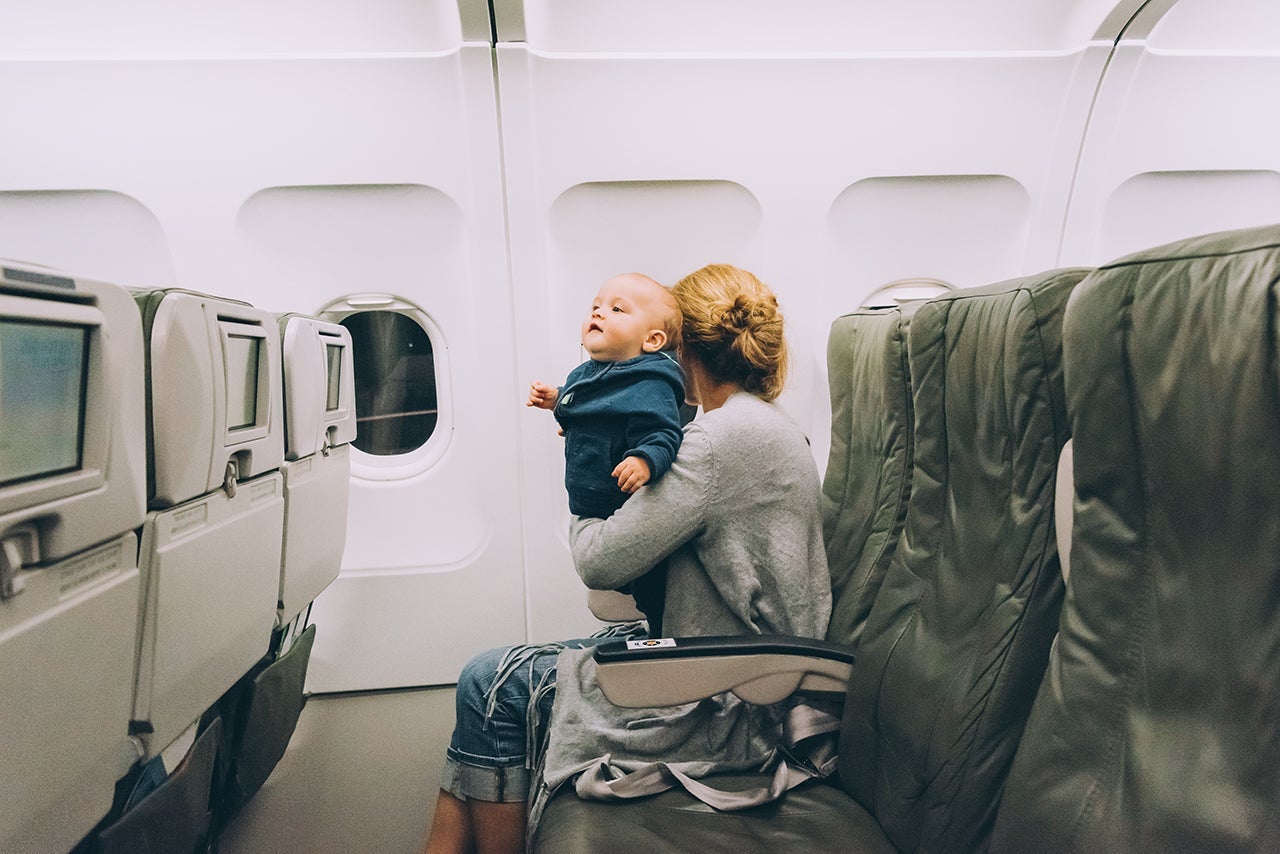
Why do babies cry on planes?
As most people know, the baby is not crying to make your life harder. Babies cry because they need or want something, and this happens to be the communication tool at their disposal. Once you have lived with a baby, you quickly learn that babies cry ... a lot. Or rather, there are developmental time frames when crying is pretty common.
Feelings of discomfort, exhaustion, hunger, loneliness, boredom, anger, pain and general unrest are all expressed by wails and tears. The sobs can be pretty intense at times, but normally only parents and caregivers hear and respond to those cries. However, on a tightly packed airplane, others share in the stressful experience, whether they like it or not.
I'm a mom of two, and when my babies would cry as infants, my blood pressure and stress level would immediately spike. A physiological response to their distress compelled me, as their mom, to respond as quickly as possible. That stress response happens at home but is magnified on an airplane.
At 36,000 feet, the added pressures of limited resources and extra audience members intensify the experience. It's absolutely miserable as a parent to know that your baby is in distress — and others are distressed as a result.
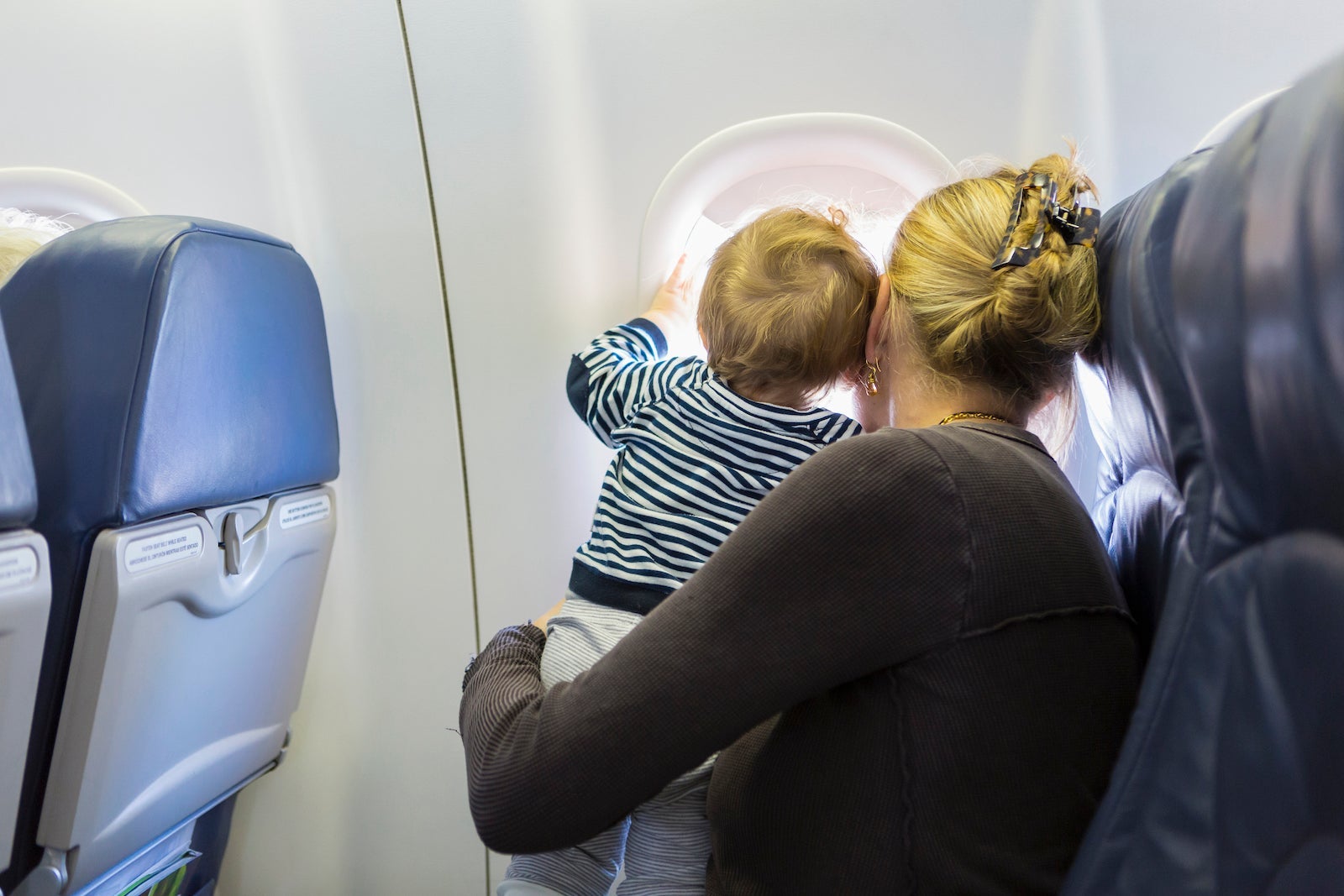
The last thing parents in this situation need is snarky looks, comments, eye rolls, audible sighs or people berating them on social media. Parents should focus on attending to their baby's needs as best they can.

If you are a passenger unfortunately subjected to a crying baby, strap on those noise-canceling headphones, pop in some ear plugs, turn up the volume to your movie and just be thrilled you aren't the one in the hot seat.
Related: Flying with a lap infant? Here's what you need to know
How to keep your baby from crying on a plane
As much as we sometimes wish they could, babies can't always tell us exactly what they need. Because flying takes babies out of their typical environment (and often throws them off schedule), some amount of crying may be unavoidable. Still, there are things you can do to make your baby as happy and comfortable as possible and, hopefully, quell their crying.
Related: 43 real-world family travel tips that actually work
First, think about where your baby is most comfortable at home. Do they sleep like a baby (pun intended) in their car seat when you are out for a long drive, or do they prefer to stay snuggled up against you in a baby carrier?
If it's the former, you may want to bring a seat (or a travel-friendly car seat) on board. If it's the latter, you also have the option to bring the baby on board as a lap infant and wear them in a carrier (except during takeoff and landing). The baby must be under 2 years old.
Related: Car seats that are airline approved
You also want to ensure you have breast milk or formula available for your baby during your flight. Not only can this help calm a hungry crying baby, but the sucking motion can help mitigate the discomfort that comes along with changes in cabin pressure, which can be especially uncomfortable for babies. A pacifier can come in handy here, too. Just pack a few extras to replace the ones that will inevitably end up under the seat.
You may also consider bringing a favorite stuffed animal, board book or other toys that can help keep your baby distracted and entertained while in flight.
What to do when a baby is crying on the plane
Most of the time, the one thing parents want from fellow passengers is simple: empathy, or at least some non-judgmental space to deal with the situation.
Of course, depending on the specifics, there may be ways for you to proactively help the situation if you feel so inclined and, as a result, help pacify the bawling baby. So, even if you aren't the parent, here are some things you can do as a passenger when a baby is crying on the plane.
Offer an aisle seat if the parent is stuck in the middle
Getting out from between two strangers and into the aisle with just a little extra shoulder room can make all the difference. Of course, you don't have to offer your seat, but if you're looking for practical ways to help, this is one option at your disposal. You can also simply offer to get up and let them into the aisle to walk around some, assuming the seat belt sign is off.
Share a kind word or smile
An easy way to help with minimal effort is to simply give the parents a reassuring smile, a nod or a kind word. Letting the parents know that the crying is normal, we've all been there and it will (eventually) get better, might help lower their stress levels. In turn, this can help them focus on the crying infant.
Provide hands-on help
If you are willing and able, and it feels appropriate, you can offer to help. Perhaps you have a toy or toddler-appropriate snack you can part with that might distract the child from screaming.
Or, in some cases — especially if the parent is the only adult flying with the kid(s) — he or she might even be eager for another adult to take a turn trying to calm the baby. A polite offer that you are available to help if desired is not inappropriate. Just don't take it personally if the parent doesn't accept your offer; we all know things are loaded these days with strangers and kids.
See if there's an empty seat
A couple of minutes of crying hopefully isn't a huge deal. Still, if you are in the direct line of the sound waves in a prolonged situation (and the flight isn't full), you could politely ask the flight attendant if it is OK to move to an empty seat in a quieter area of the plane.
Related: What to do if there's an unruly passenger on your flight
Bottom line
Undoubtedly, it can be stressful and even frustrating to be seated near a crying baby on a plane. But exhibiting those sighs and eye rolls only adds negative energy to a situation that already has plenty. I've often found that the most tired, stressed and ill-prepared families on a plane are the ones traveling for the most stressful and unavoidable reasons.
When a nearby baby is crying on the plane, the best approach for other passengers is to simply not exacerbate the situation. If you are willing and able to offer a reassuring comment or provide hands-on assistance in some way, a polite offer can be appropriate.
As both a mom whose kids are now well past the baby phase and a frequent flyer who is often in the air without my kids, the key is to always remember that a baby is just a baby. The plane will land and that moment will be over — eventually. Until then, come prepared with headphones and a little extra patience.
Related reading:
TPG featured card

at Capital One's secure site
Terms & restrictions apply. See rates & fees.
| 5X miles | Earn 5X miles on hotels, vacation rentals and rental cars booked through Capital One Travel |
| 2X miles | Earn unlimited 2X miles on every purchase, every day |
Pros
- Stellar welcome offer of 75,000 miles after spending $4,000 on purchases in the first three months from account opening. Plus, a $250 Capital One Travel credit to use in your first cardholder year upon account opening.
- You'll earn 2 miles per dollar on every purchase, which means you won't have to worry about memorizing bonus categories
- Rewards are versatile and can be redeemed for a statement credit or transferred to Capital One’s transfer partners
Cons
- Highest bonus-earning categories only on travel booked via Capital One Travel
- LIMITED-TIME OFFER: Enjoy $250 to use on Capital One Travel in your first cardholder year, plus earn 75,000 bonus miles once you spend $4,000 on purchases within the first 3 months from account opening - that’s equal to $1,000 in travel
- Earn unlimited 2X miles on every purchase, every day
- Earn 5X miles on hotels, vacation rentals and rental cars booked through Capital One Travel
- Miles won't expire for the life of the account and there's no limit to how many you can earn
- Receive up to a $120 credit for Global Entry or TSA PreCheck®
- Use your miles to get reimbursed for any travel purchase—or redeem by booking a trip through Capital One Travel
- Enjoy a $50 experience credit and other premium benefits with every hotel and vacation rental booked from the Lifestyle Collection
- Transfer your miles to your choice of 15+ travel loyalty programs
- Top rated mobile app