What is a Schumer box for credit card applications, and why does it matter?


Update: Some offers mentioned below are no longer available. View the current offers here.
Whether you're shopping for a new credit card or trying to understand the details of an account you've already opened, the Schumer box can be a great place to start your research.
This cheat sheet provides the key details about a credit card account, such as the annual percentage rate you might pay to borrow money, and fees a card issuer may charge you.
What is a Schumer box?
Once upon a time, credit card companies used various methods to disclose the annual percentage rates and fees they charged consumers. However, the system was confusing. It could be difficult for consumers to understand the true cost of borrowing money with a credit card. And comparing one credit card to another was even more challenging.
Enter the Schumer box. In the late 1980s, then-Rep. Charles "Chuck" Schumer proposed legislation requiring credit card companies to use a standardized table to summarize a credit card's rates, fees and other pertinent details. Congress passed the Fair Credit and Charge Card Disclosure Act of 1988 (an amendment to the Truth in Lending Act), and card issuers had to begin using the "Schumer box" in 2000.
Example of a Schumer Box
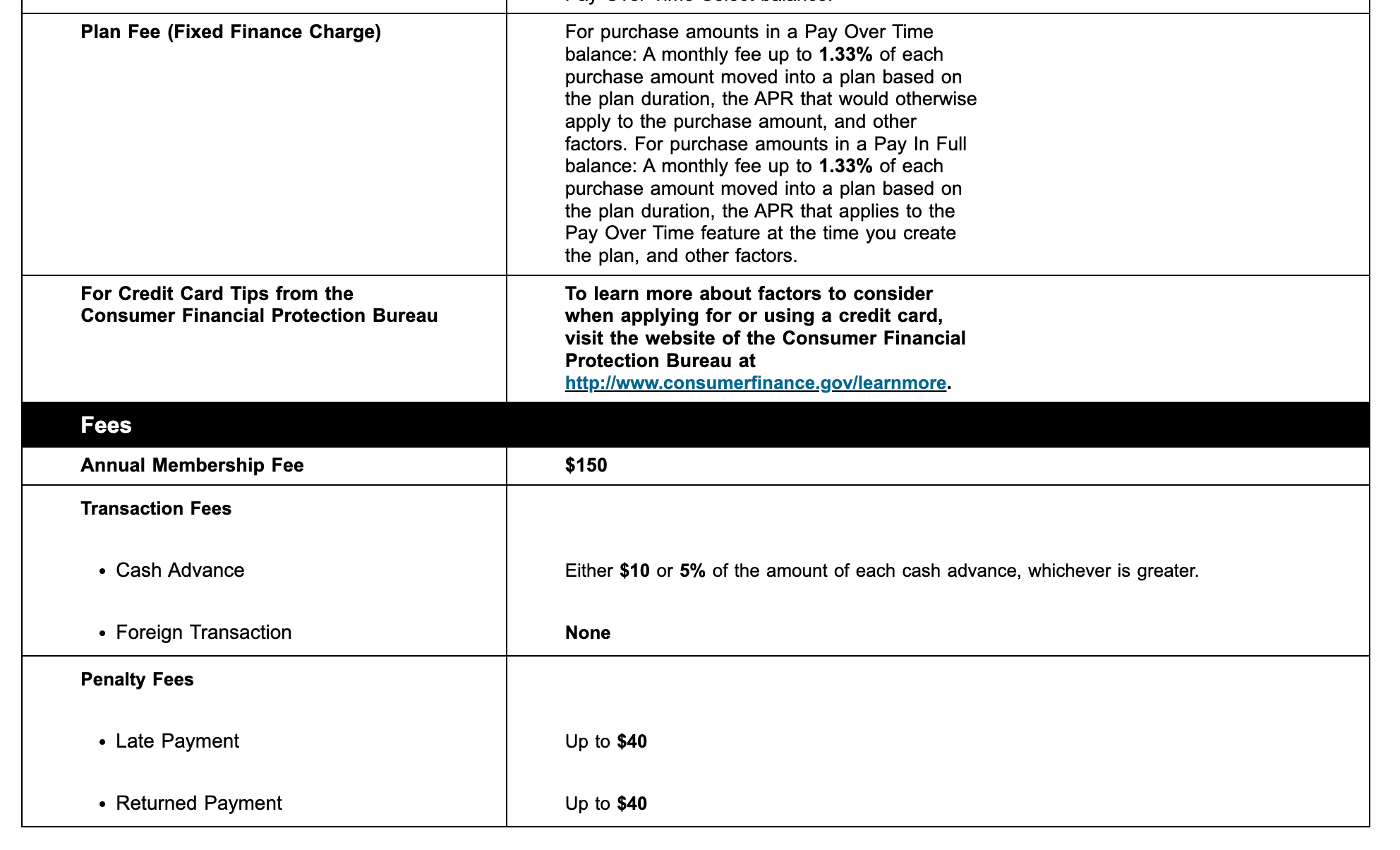
Key information you can find in a Schumer box
Credit card issuers follow specific rules when it comes to Schumer box disclosures. Even the font size a card issuer uses has to meet certain standards. For example, the APR for standard purchases must appear in 18-point font. Bold text is also required for certain disclosures. Additionally, there are key details that card issuers must include in the Schumer box to make it easy to understand each credit card's terms and conditions.
Here is some of the helpful information you can find in a Schumer box:
APR for purchases
The purchase APR is the interest rate a credit card company applies to the purchases you make with your credit card if you don't pay your full statement balance during the grace period. (Tip: If you follow the first rule of credit card rewards and never carry a balance from one month to the next, you can enjoy the benefits of a credit card without paying interest charges.)
If you're reviewing a Schumer box that's part of a credit card application or offer, you might see a range for the purchase APR instead of a single interest rate. The APR a card issuer assigns you will depend on your creditworthiness and other factors.

Related: What is a good APR for a credit card?
APR for balance transfers
When you use your credit card for a balance transfer, the APR may differ from what you pay for standard purchases. If you take advantage of a promotional balance transfer credit card offer to consolidate debt, your balance transfer APR might be temporarily lower. However, once the promotional APR expires, the balance transfer APR could be equal to or higher than your purchase APR.
APR for cash advances
When you use your credit card for a cash advance, you'll typically pay a higher APR than for standard purchases. The Schumer box will tell you how much your APR will be on a cash advance. However, it might not make it clear that you'll probably begin paying interest the same day you request a cash advance instead of enjoying a grace period like you do with the other purchases you make on your credit card.
Penalty APR
If you miss a credit card payment or violate the terms of your credit card agreement in other ways, you risk activating the penalty APR on your account. The Schumer box discloses the (high) cost of your account's penalty APR if you ever trigger it.
Grace period
If a credit card company offers a grace period, the Schumer box explains how many days you have between the statement closing date and your due date to pay off your statement balance to avoid interest charges.
Related: Important dates to know for your credit cards
Annual fee
A card issuer must disclose the cost of any annual fee it charges (if applicable) in the Schumer box.
Transaction fees
It's common for credit card companies to charge fees for certain types of transactions like balance transfers, cash advances and foreign transactions. If a card issuer charges these fees, it must list them in the Schumer box.
Penalty fees
Another type of fee that a card issuer might charge you is a penalty fee. These charges include late fees, fees for going over your credit limit, returned payments fees and returned check fees.
Related: What happens if you go over your credit limit?
Where to find the Schumer box
You can check your credit card statement to find the Schumer box for your account if you're already a cardholder. But if you're shopping for new credit card offers and want to compare different products online, you can also look for this information on different credit card issuers' websites.
It's worth pointing out that locating the Schumer box for individual credit card offers isn't always easy. But most card issuers provide a link to the information under a phrase like "Pricing & information" or "Rates & fees."
The following cheat sheet shows the phrase you'll need to look for on various card issuer websites when you're looking for the Schumer box to compare credit card offers:
- American Express: "Rates & Fees"
- Capital One: "View important rates and disclosures"
- Chase: "Pricing & Terms"
- Citi: "Pricing & Information"
- Discover: "See rates, rewards and other cost information"
Bottom line
A Schumer box contains helpful details you can use when shopping for a credit card (or to stay informed about accounts you already have open). Yet there may be additional steps you need to take to choose the best credit card for you. While it's wise to understand the potential cost of borrowing on a credit card, don't overlook the importance of comparing the best credit card offers based on credit requirements, rewards and benefits before you apply for a new account.