Maximum credit card interest rate by law


Unless you're taking advantage of a 0% promotional offer, all credit cards charge interest on balances carried over month to month. For this reason, it's important that you understand how the interest rates on your credit card work. This includes the amount of interest you're charged and the laws surrounding credit card interest.
At the federal level, there are no usury laws limiting the amount of interest a credit card company can charge borrowers. However, the federal government protects consumers from unfair practices by credit card companies under the Credit Card Accountability, Responsibility and Disclosure Act of 2009.
In this article, we'll explore the maximum interest rates allowed by law, how these rates can differ based on state and how to avoid high interest on credit cards and loans.
What is a usury law?
Usury is the practice of charging consumers unreasonable interest rates on financial products. A usury law caps the maximum interest rate on different kinds of loans, including credit cards.

The lack of usury laws at the federal level means that maximum interest rates will vary depending on the usury laws in each state. In fact, national banks must adhere to the maximum interest rates in the bank's home state, not the cardholder's. That means the rates charged to cardholders can be higher than their state allows.
For example, a person living in California who has a loan from a New York-based bank can be charged up to 16% interest (the maximum rate in New York), even though the interest rate limit for California-based banks is 10%.
It's important to note that most national banks and credit card companies can avoid state usury laws by incorporating in jurisdictions with relaxed usury laws, like Delaware, even though they may operate elsewhere.
Related: How to use a 0% APR credit card as an interest-free loan
Maximum interest rates in your state
Many states set different maximum interest rates for small loans. For example, in California, the maximum interest rate on a $500 loan with a six-month repayment term is 45%, whereas a $2,000 loan with a two-year repayment term has a maximum interest rate of 25%.


These rate differences are illustrated in the National Consumer Law Center's list of state rate caps for $500 and $2,000 loans.
Related: Best balance transfer credit cards
About the Military Lending Act
There is one exception to the state-by-state maximum interest rate and the lack of federal laws on interest rates: the Military Lending Act.
The MLA overrides state laws on maximum interest rates and applies to active-duty military members, including their dependents. The maximum interest rate allowed by law for those within the MLA is capped at a 36% annual percentage rate.
The types of financial products covered under the MLA include payday loans, credit cards, overdraft lines of credit and some installment loans.
How to avoid high interest rates
High interest rates can be detrimental to personal finances and make it harder to pay off debt. However, there are several ways to avoid them, some more advantageous than others.

Start by talking to your credit card issuer or bank to negotiate a lower rate. Loan or credit card APRs are partly based on credit score, so if your credit score has improved since you took out the loan or applied for a credit card, you may qualify for a lower interest rate.
If the rate cannot be adjusted, consider transferring the outstanding balance to a 0% APR credit card. If you're carrying debt across several high-interest loans or credit cards, you may want to consider taking out a debt consolidation loan. In addition to a potentially lower interest rate, you will only have to deal with a single payment.
Related: How to check your credit score for free
Bottom line
While there are no federal usury laws in the U.S., state usury laws can prevent outrageous interest rates on loans and credit cards. That doesn't mean that the credit card you hold will fall within your state's maximum interest rates, though; many national banks and credit card companies take advantage of various exemptions that allow them to set higher rates.
Thankfully, there are steps you can take to avoid high interest rates, including balance transfers and debt consolidation loans. Ultimately, the best step method is not to carry a balance and to pay off your credit card or loan as soon as possible.
TPG featured card
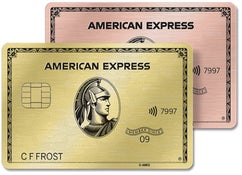
at American Express's secure site
Terms & restrictions apply. See rates & fees.
| 4X | Earn 4X Membership Rewards® points per dollar spent on purchases at restaurants worldwide, on up to $50,000 in purchases per calendar year, then 1X points for the rest of the year. |
| 4X | Earn 4X Membership Rewards® points per dollar spent at US supermarkets, on up to $25,000 in purchases per calendar year, then 1X points for the rest of the year. |
| 5X | Earn 5X Membership Rewards® points on prepaid hotel stays booked through AmexTravel.com or the Amex Travel App™. |
| 3X | Earn 3X Membership Rewards® points on flights booked through AmexTravel.com, the Amex Travel App™, or purchased directly from airlines. |
| 2X | Earn 2X Membership Rewards® points on prepaid car rentals booked through AmexTravel.com or the Amex Travel App™ and cruises booked and paid through AmexTravel.com. |
| 1X | Earn 1X Membership Rewards® point per dollar spent on all other eligible purchases. |
Pros
- Valuable dining and food-related credits
- Flexible rewards with airline and hotel transfer partners
- Multiple travel and purchase protections
- No foreign transaction fees
- Access to Amex Offers for additional savings (enrollment required)
Cons
- Not as useful for those living outside the U.S.
- Some may have trouble using Uber and other dining credits
- You may be eligible for as high as 100,000 Membership Rewards® Points after you spend $8,000 in eligible purchases on your new Card in your first 6 months of Card Membership. Welcome offers vary and you may not be eligible for an offer. Apply to know if you’re approved and find out your exact welcome offer amount – all with no credit score impact. If you’re approved and choose to accept the Card, your score may be impacted.
- Earn 4X Membership Rewards® points per dollar spent on purchases at restaurants worldwide, on up to $50,000 in purchases per calendar year, then 1X points for the rest of the year.
- Earn 4X Membership Rewards® points per dollar spent at US supermarkets, on up to $25,000 in purchases per calendar year, then 1X points for the rest of the year.
- Earn 5X Membership Rewards® points on prepaid hotel stays booked through AmexTravel.com or the Amex Travel App™.
- Earn 3X Membership Rewards® points on flights booked through AmexTravel.com, the Amex Travel App™, or purchased directly from airlines.
- Earn 2X Membership Rewards® points on prepaid car rentals booked through AmexTravel.com or the Amex Travel App™ and cruises booked and paid through AmexTravel.com.
- Earn 1X Membership Rewards® point per dollar spent on all other eligible purchases.
- Pay It® lets you tap in the American Express® App to quickly pay for small purchase amounts throughout the month and still earn rewards the way you usually do. Plan It® gives you the option to split up big purchases into equal monthly payments with a fixed fee. You’ll know upfront exactly how much you’ll pay.
- $120 Dining Credit: Earn up to a total of $10 in statement credits monthly when you pay with the Gold Card at Grubhub (including Seamless), Buffalo Wild Wings, Five Guys, The Cheesecake Factory, and Wonder. This can be an annual savings of up to $120. Enrollment required.
- $100 Resy Credit: Get up to $100 in statement credits each calendar year at over 10,000 qualifying U.S. Resy restaurants after you pay for eligible purchases with the American Express® Gold Card. That’s up to $50 in statement credits semi-annually. Enrollment required.
- $84 Dunkin' Credit: Earn up to $7 in monthly statement credits after you pay with the American Express® Gold Card at U.S. Dunkin’ locations. Enrollment required.
- $120 Uber Cash on Gold: Enjoy up to $120 in Uber Cash annually with your Gold Card. Just add your Card to your Uber account and you'll get $10 in Uber Cash each month to use on orders and rides in the U.S. when you select an Amex Card for your transaction.
- Enjoy complimentary Hertz Five Star® Status benefits like skipping the counter at select locations, adding an additional driver at no additional cost*, and vehicle upgrades**. Benefit enrollment and Hertz Gold+ registration are required. *Additional drivers must meet standard rental qualifications and must be a spouse or domestic partner to qualify as complimentary. Other additional drivers subject to fees. **Benefits are subject to availability and vary by location. Additional Hertz program Terms and Conditions including age restrictions apply.
- Book two nights or more with The Hotel Collection through AmexTravel.com or the Amex Travel App™ and receive a $100* credit towards eligible charges at over 1,400 upscale hotels worldwide. *Eligible charges vary by property.
- Book your travel through the Amex Travel App™ with added peace of mind – backed by American Express® service and support. Only for American Express® Card Members.
- Whenever you need us, we're here. Our Member Services team will ensure you are taken care of. From lost Card replacement to statement questions, we are available to help 24/7.
- No Foreign Transaction Fees.
- Annual Fee is $325.
- Terms Apply.