The do's and don'ts of haggling abroad

Haggling over the cost of goods or services is acceptable in many cultures. When we travel overseas, especially to developing countries, we may know that there is room to negotiate, but haggling just for sport or to see how low you can get the seller to go is a disservice to those who make their living from tourism.
The following tips can help you navigate the haggling experience.
Sign up for the free daily TPG newsletter for more travel news, tips and advice.
Know what you're buying
Most vendors will double (or triple) prices, especially if they know that the tourists are American. This is all part of their business system, so don't be put off. Haggling is generally expected, and in most situations, you can knock a few dollars off an initial offer.
Before traveling, do some research about what things should cost. Message boards and online travel groups are great resources for figuring out what others spent. Post a question in the TPG Lounge Facebook group and you are bound to get a reply.
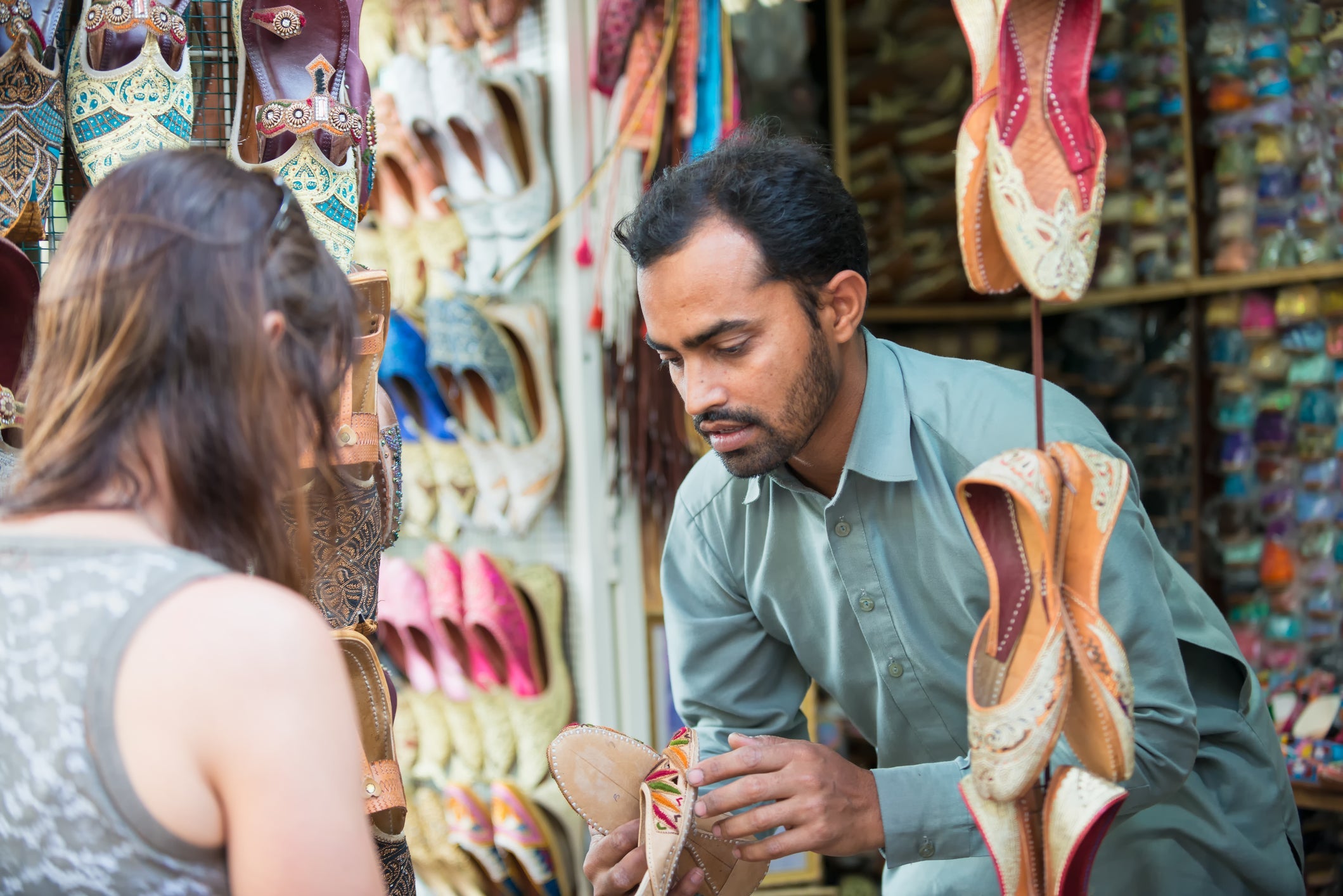
Knowing the exchange rate will also cut down on pricing confusion. Each transaction is unique, but it's helpful to know the average price of an item or service instead of wildly guessing at a price in an attempt to "win" a game of haggling.
For goods, find out if what you're buying is locally made. A lot of souvenirs are mass-produced, but if you find something special that is handmade, it may be worth spending a few extra dollars. If you're not sure if something is handmade, ask the seller. Part of the joy of traveling is interacting with locals and finding out if there is a backstory, even if it may be a little fabricated.
For services, think about what the same service would cost at home. In the U.S., a 30-minute massage in a spa may cost, at the low end, anywhere from $30 to $60. In Colombia, my friend received a 30-minute massage on the beach for 26,000 pesos or roughly $8. She left a great tip and the entire experience cost her $25. Sometimes haggling just isn't necessary.
Related: Can you negotiate for a cheaper upgrade?

Be respectful
Always approach an opportunity to buy from a local as a positive. Greet the vendor warmly and in his or her language if you can. It will open the dialogue with a sign of respect. And, don't get upset if the negotiation doesn't go the way you want. Every transaction is a unique process but, in all cases, the seller knows the rock bottom price that he can offer while still earning money. There is a price floor to everything and if you're not willing to pay that price or above, the sale won't happen.
Of course, vendors in some places can indeed be aggressive. Many sellers, if they sense any sort of interest, will follow you until they make a sale. The best way to handle this is a firm "no."
But don't try to "lowball" sellers just to see if you can get the price down. If you're interested in buying, make a fair offer. In real estate, sellers often won't respond to a lowball offer because it's insulting. They don't want to entertain buyers who aren't serious. The same principle can be applied to haggling. A seller may be desperate enough to lower a price, but it can be a measure of desperation, not respect for the buyer.
Many of us will shrug and pay almost $4 for a bottle of water at Disney World. Because haggling isn't acceptable at Disney World, we justify those prices as just "part of the Disney experience." In other countries, a few more dollars spent on an item or a service may mean the world to a seller and is unlikely to make a huge difference to us. The goal in haggling is to settle on a price that is fair for both the buyer and the seller.
Related: 7 ways to save on overseas ATM withdrawals
Consider where your money is going
Let's face it. We love a good deal. We like to brag to our friends about the great deal we got on a flight, the vacations we booked using only credit card and hotel points or the offseason cruise we booked during wave season. Saving money makes us look savvy and wise. Overpaying can make us feel we've been taken advantage of.
Related: Dynamic currency conversion and why you should avoid it
Bottom line
But when we travel, we are ambassadors for our home countries. Saving money is a high priority for budget-minded travelers, but it's just as important to be thoughtful in the way that we spend our money, especially in countries where tourism is the main source of income. Good haggling is about paying a fair price, having positive interactions with locals and accepting that we don't always need to get the very best deal.
TPG featured card

at Capital One's secure site
Terms & restrictions apply. See rates & fees.
| 5X miles | Earn 5X miles on hotels, vacation rentals and rental cars booked through Capital One Travel |
| 2X miles | Earn unlimited 2X miles on every purchase, every day |
Pros
- Stellar welcome offer of 75,000 miles after spending $4,000 on purchases in the first three months from account opening. Plus, a $250 Capital One Travel credit to use in your first cardholder year upon account opening.
- You'll earn 2 miles per dollar on every purchase, which means you won't have to worry about memorizing bonus categories
- Rewards are versatile and can be redeemed for a statement credit or transferred to Capital One’s transfer partners
Cons
- Highest bonus-earning categories only on travel booked via Capital One Travel
- LIMITED-TIME OFFER: Enjoy $250 to use on Capital One Travel in your first cardholder year, plus earn 75,000 bonus miles once you spend $4,000 on purchases within the first 3 months from account opening - that’s equal to $1,000 in travel
- Earn unlimited 2X miles on every purchase, every day
- Earn 5X miles on hotels, vacation rentals and rental cars booked through Capital One Travel
- Miles won't expire for the life of the account and there's no limit to how many you can earn
- Receive up to a $120 credit for Global Entry or TSA PreCheck®
- Use your miles to get reimbursed for any travel purchase—or redeem by booking a trip through Capital One Travel
- Enjoy a $50 experience credit and other premium benefits with every hotel and vacation rental booked from the Lifestyle Collection
- Transfer your miles to your choice of 15+ travel loyalty programs
- Top rated mobile app