Flying with nut allergies: What to do to ensure a safe flight

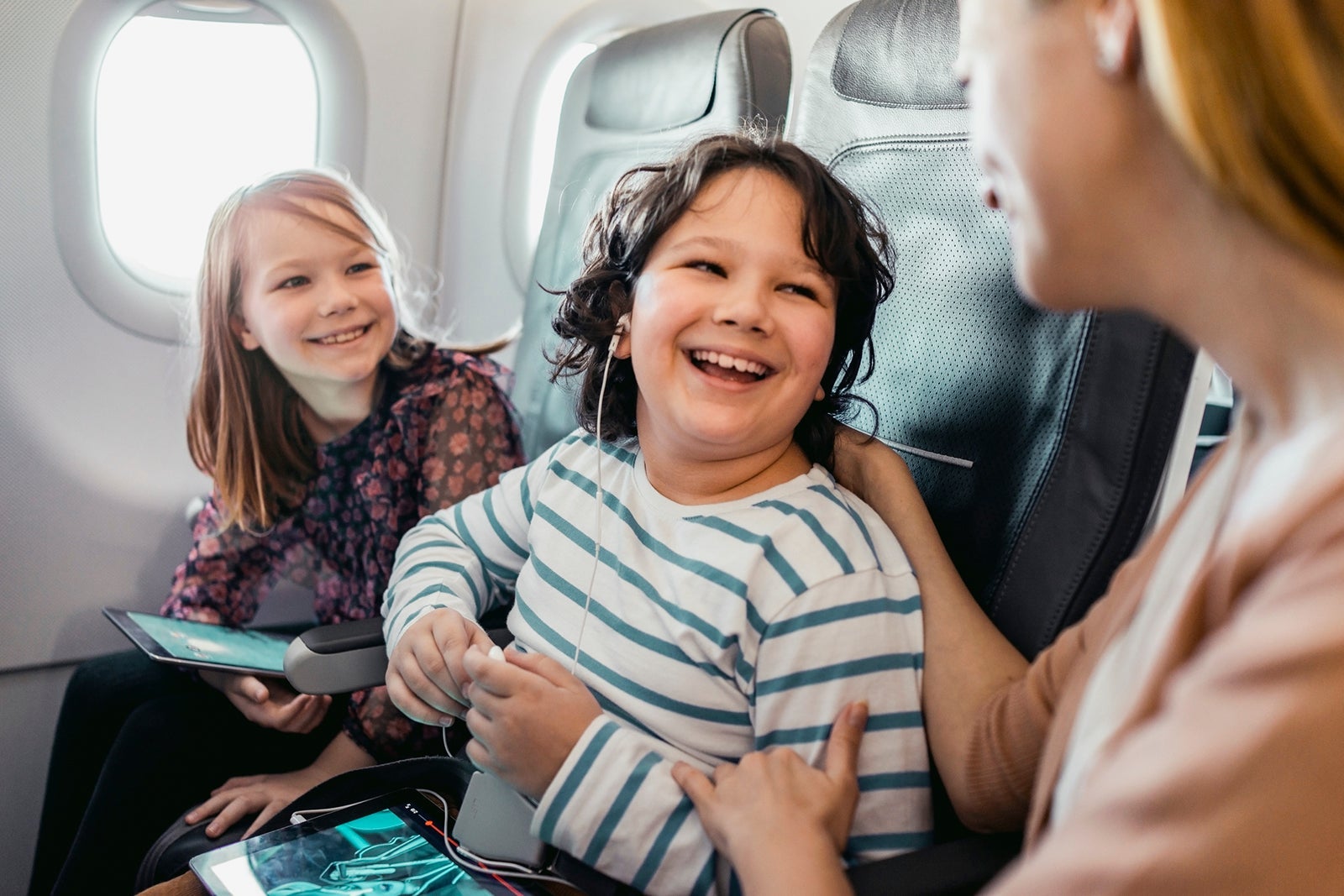
Flying with food allergies can be a harrowing experience. In addition to the planning and preparation before your flight, you may also encounter rude or dismissive behavior from fellow passengers and airline staff. This exact situation happened to Lianne Mandelbaum with her own child, prompting her to take up the mantle of education and advocacy for food-allergic flyers through her nonprofit, The No Nut Traveler.
After returning home from her own negative experience, Mandelbaum searched online and found many stories similar to hers. The rest is, as they say, history. Her website started as a safe space where other travelers could share their experiences, but it has grown into something with the power to affect change across the airline industry.
TPG spoke with Mandelbaum, who is also an airline correspondent for Allergic Living, to learn what travelers with food allergies can do to protect themselves when they fly, and also how she is pushing for change in the airline industry.
Preparing for a safe flight

You can't control other passengers or airline employees, but there are steps you can take before you fly to ensure a safe flight and be your own safety advocate. These are the most important tips Mandelbaum shared with TPG:
- Talk with your physician before you travel: They can advise you on best practices and provide you with a doctor's note to verify that you are allowed to carry medication and safe food on the plane.
- Read up on the airline's policies before you travel: Every airline is different when it comes to which accommodations they will allow for passengers with food allergies. Get familiar with your airline's policies either by speaking with them or searching online. Some airlines request advance notice for any allergy-related accommodations, so give as much notice as possible.
- Choose your flight carefully: Mandelbaum advises that the first flight of the day will likely be the cleanest. Whenever possible, a direct flight is also going to be better because you will only need to clean your area once.
- Pack your own food: Even if a meal or snack is labeled nut-free, the only way to eliminate any room for error is to bring your own food. Mandelbaum shares that some meals do not have a list of ingredients, and even if they do, there is still a risk of cross-contamination. She also recommends bringing more food than you need in case of delays or cancellations.
- Know your rights: Travelers with severe allergies do have the right to preboard on U.S. airlines. Check with your individual airline ahead of time to learn the proper procedure to be allowed preboarding.
- Clean the area around your seat: Mandelbaum recommends thoroughly cleaning your area, including the tray table, armrests, seat and anything else you may come into contact with during your flight, with disinfecting wipes, not hand sanitizer, which is not strong enough to remove the allergens. You can also cover your tray table with a napkin before you eat.
- Keep your medication with you: Always keep your medications with you and accessible at all times. Make sure they are labeled and in the original boxes to reduce delays at security.
- Enroll in TSA Cares: TSA Cares provides additional screening assistance to travelers with disabilities. You can also reach out to them for information on what to expect during your screening and guidelines for bringing food, medicine and other exempt items through the security checkpoint. You may also request the services of a TSA Passenger Support Specialist (PSS) at the airport, who can provide you with additional screening assistance. These officers have received specialized training to assist passengers who require special accommodations.
- Share your experience: Whether good or bad, you can share your experience on Mandelbaum's website to inform other food allergy travelers better.
Food allergy policies vary from airline to airline
Although most airlines no longer serve peanuts during their complimentary inflight service, some still serve tree nuts and also serve meals and snacks with peanuts and tree nuts available for purchase. On top of that, airlines cannot control what other passengers eat during a flight.
That doesn't mean passengers with food allergies must entirely fend for themselves when they fly. Most airlines have policies to protect passengers with food allergies. However, they vary wildly and are not always well-known or understood by airline staff.
For example, United, Spirit Airlines, JetBlue and others state in their allergy policies that they will provide a "buffer zone" around a passenger with a nut allergy. This means they will request the passengers sitting in the rows in front of and behind the passenger not to consume nuts during the flight. They cannot demand that passengers not consume nuts, but they can make the other passengers aware and ask them to comply with the request.

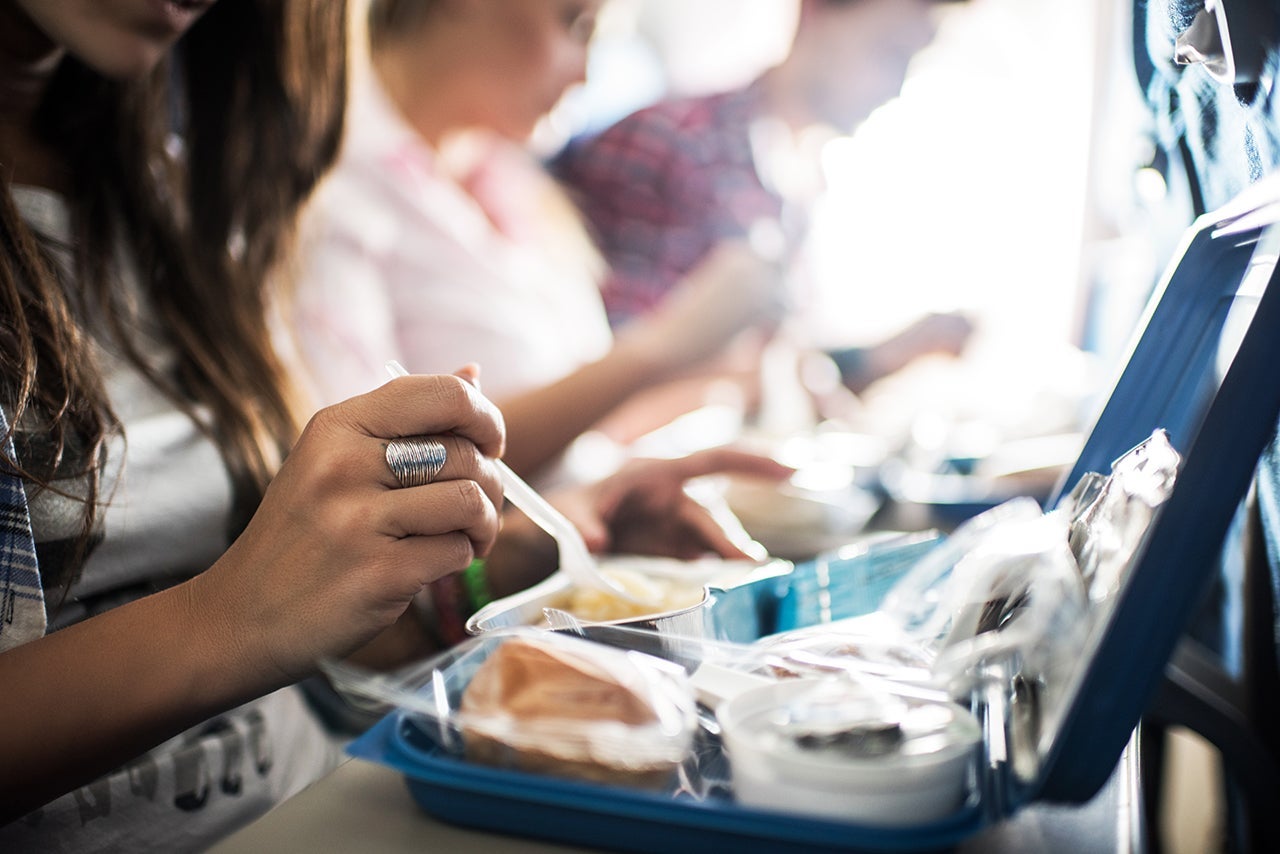
If you make Delta aware that you have a peanut allergy before your flight (by filling out an Accessibility Service Request form or calling Delta at 404-209-3434), they will refrain from serving peanuts or peanut products during your flight, instead offering non-peanut snacks to everyone onboard.
You can view the food allergy policies for all major U.S. airlines on the U.S. Department of Transportation (DOT) website.
In addition, the DOT's Air Carrier Access Act prohibits U.S. airlines from discriminating against passengers on the basis of their disabilities. This act ensures that passengers with severe food allergies have the right to board the plane early in order to clean the area around their seats of any potential allergens.
Despite these policies, many travelers with food allergies are met with confusion or outright disdain. Mandlebaum's website has story after story of passengers who deal with airline staff disregarding the policies or passengers who lash out at them, claiming they don't deserve special accommodations.
"We don't want to be the center of attention," Mandelbaum said. "We don't want to be on our hands and knees cleaning our area before the flight. We are only asking for what we need to keep our families safe."
For every negative story, there are just as many positive interactions. It's these inconsistencies, however, that cause travelers with food allergies to feel anxious when they fly. A recent survey of 4,704 people with food allergies conducted by Northwestern University's Center for Food Allergy and Asthma Research found that 98% of respondents had anxiety related to air travel because of their allergy.
The study also revealed that close to two-thirds of respondents who reported that air travel makes them anxious said they would feel less stress with better policies and accommodations in place. According to Mandelbaum, the benefits of consistent, solid food allergy policies are twofold. Not only would passengers feel safer and more comfortable, but there's a real economic potential for the airlines.
"[Travelers with food allergies] are often searching for airlines with the best policies, and we provide free advertising because we share our experiences with others, guaranteeing the airlines new customers and repeat business," Mandelbaum explained.
Advocating for travelers with food allergies
In addition to the DOT's Air Carrier Access Act, the DOT also recently introduced a Bill of Rights for passengers with disabilities. The first item on the list promises that air travelers with disabilities have the right to be treated with dignity and respect.
"That's what we deserve at the very least," Mandelbaum said. "We deserve not to be mocked and made fun of, which can push people to not even disclose their legitimate health conditions."
Mandelbaum does feel that the response to DOT complaints has improved as a result. Before the Bill of Rights was introduced, there wasn't a clear recourse for travelers who had been disrespected, disregarded or worse, laughed at by airline staff. Now, this treatment would be in violation of the DOT's Bill of Rights and, as mentioned along with her other tips, Mandelbaum recommends those who feel their rights have been violated should file a consumer complaint with the DOT.
While Mandelbaum is hopeful this will lead to fewer negative experiences for travelers with nut allergies, it isn't the only initiative she is working on right now.
"My biggest focus is to try and get epinephrine auto-injectors on airplanes," she said.
She's not alone. "Most allergy organizations and the American Association of Pediatrics (AAP) want auto-injectors on airplanes," Mandelbaum explained.
There are a handful of airlines, including JetBlue and American Airlines, that voluntarily carry this life-saving medicine in their emergency medical kits, but others either don't carry auto-injectors or carry vials of epinephrine and syringes, which take more time to administer in the event of a severe allergic reaction (anaphylaxis).
"Time is precious with an allergic reaction. Getting medicine in is of the utmost importance, and you can get it in much faster with an auto-injector than a vial," Mandelbaum said. "The tools to save lives exist, but airplanes aren't stocking the right tools to save people," she added.
There are other benefits to requiring airlines to carry auto-injectors.
"Hopefully, there would be some food allergy training that goes along with training staff on how to use auto-injectors, Mandelbaum shared. "The more you know, the more likely you are to treat someone with dignity and respect."
Mandelbaum has worked tirelessly for 10 years to get epinephrine auto-injectors on airplanes, making it as far as introducing legislation to require all flights to carry auto-injectors with the help of U.S. Senator Tammy Duckworth. She hasn't yet succeeded in getting a bill signed into law, but she isn't giving up.
"I'm hoping for a stand-alone bill at some point so we can initiate this change before tragedy strikes," Mandelbaum said.
Bottom line
"There are lives at stake, and those lives matter," Mandelbaum shared. "My goal is to act in front of a tragedy."
Severe food allergies are a legitimate disability that shouldn't affect a person's ability to travel. Mandelbaum is at the forefront of the movement to make air travel safer for those with food allergies, but until those protections become mandatory, there are proactive steps food allergy travelers can take to ensure a safe flight.
Related reading:
- Key travel tips you need to know — whether you're a beginner or an expert traveler
- The best travel credit cards
- The 18 best places to travel in 2023
- 6 real-life strategies you can use when your flight is canceled or delayed
- 8 of the best credit cards for general travel purchases
- 13 must-have items the TPG team can't travel without
TPG featured card

at Capital One's secure site
Terms & restrictions apply. See rates & fees.
| 5X miles | Earn 5X miles on hotels, vacation rentals and rental cars booked through Capital One Travel |
| 2X miles | Earn unlimited 2X miles on every purchase, every day |
Pros
- Stellar welcome offer of 75,000 miles after spending $4,000 on purchases in the first three months from account opening. Plus, a $250 Capital One Travel credit to use in your first cardholder year upon account opening.
- You'll earn 2 miles per dollar on every purchase, which means you won't have to worry about memorizing bonus categories
- Rewards are versatile and can be redeemed for a statement credit or transferred to Capital One’s transfer partners
Cons
- Highest bonus-earning categories only on travel booked via Capital One Travel
- LIMITED-TIME OFFER: Enjoy $250 to use on Capital One Travel in your first cardholder year, plus earn 75,000 bonus miles once you spend $4,000 on purchases within the first 3 months from account opening - that’s equal to $1,000 in travel
- Earn unlimited 2X miles on every purchase, every day
- Earn 5X miles on hotels, vacation rentals and rental cars booked through Capital One Travel
- Miles won't expire for the life of the account and there's no limit to how many you can earn
- Receive up to a $120 credit for Global Entry or TSA PreCheck®
- Use your miles to get reimbursed for any travel purchase—or redeem by booking a trip through Capital One Travel
- Enjoy a $50 experience credit and other premium benefits with every hotel and vacation rental booked from the Lifestyle Collection
- Transfer your miles to your choice of 15+ travel loyalty programs
- Top rated mobile app