Deciphering Air Traffic Control Calls in Emergency Situations


No matter if you're a frequent business traveler or simply fly for vacation, most of us just want to get from point A to point B as smoothly as possible. But even the most experienced traveler has likely contemplated the "what ifs" of taking to the sky, including in-flight emergencies.
In-flight emergencies can range from medical issues on board with passengers to more serious events like a malfunction of the aircraft or issues with fuel. While these events are rare for the average passenger, in-flight events do happen.
During an in-flight emergency, airline flight crews and controllers on the ground have to be able to communicate effectively. At the heart of these interactions are two key Air Traffic Control (ATC) terms denoting the types of emergency situations in the air — one of urgency and one of distress — as designated by the FAA.
Here's what they mean.
PAN-PAN-PAN
Flight crews indicate to controllers that they are in an urgent situation by the prefix "PAN-PAN-PAN" at the start of a radio transmission. In the case of Qantas flight 32 in 2010, the crew issued a PAN call after the loss of engine number two — the port side inboard engine — on the flight's A380.
Issuing a PAN call over the radio lets both ATC and other aircraft in the area know that the crew has a problem and keeps radio transmissions to a minimum.

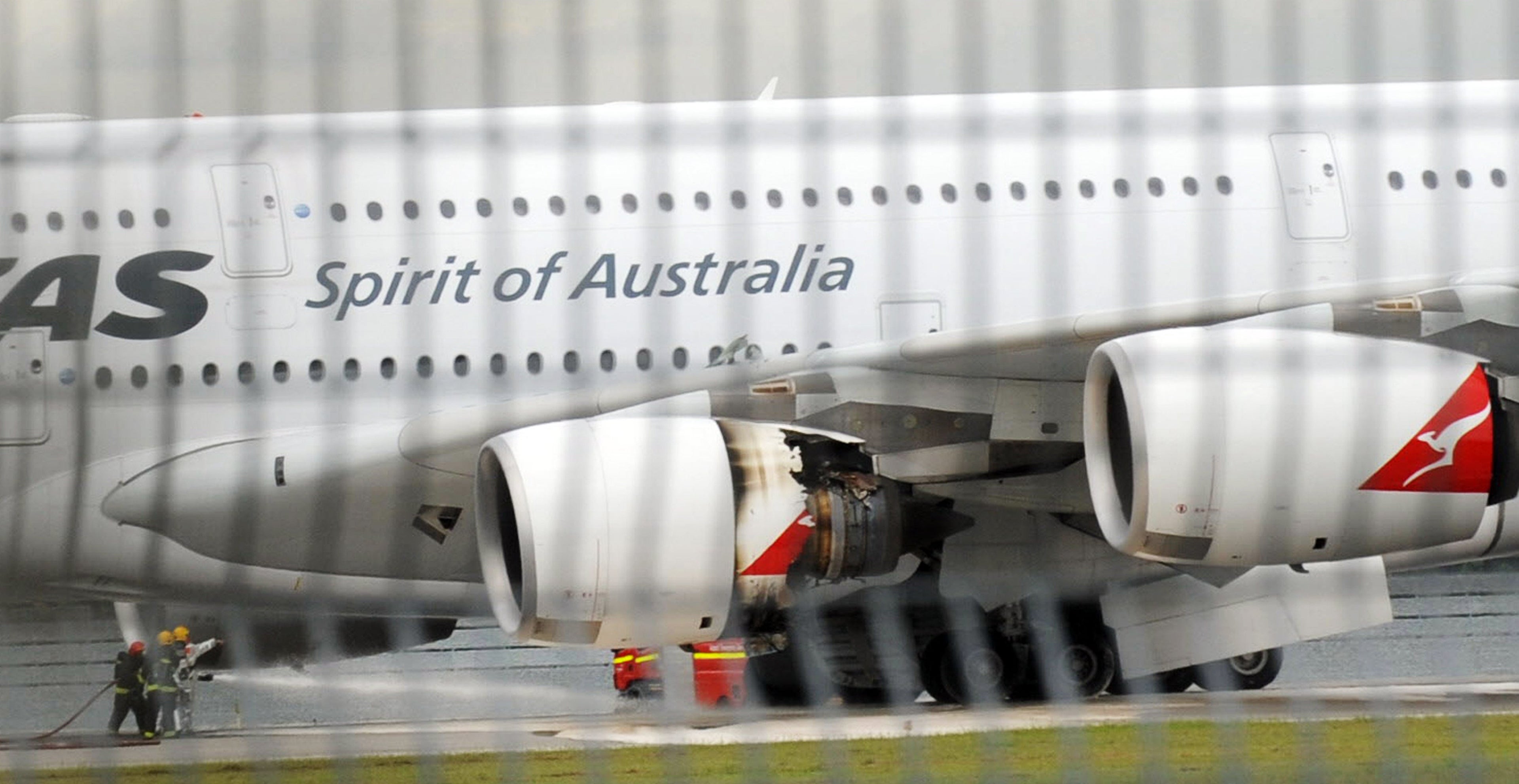
In the case above, the Qantas crew was able to perform a control check to see which systems were degraded or unavailable and make plans for landing after issuing the PAN call. The plane flew for two hours after the number two engine suffered a catastrophic failure, causing damage to a number of flight controls, onboard systems and the number one engine as well. Because of damaged control linkages, emergency ground crews had to blast water and firefighting foam into the engine to get it to shut down. But, the important thing to remember is that even in this PAN situation, the crew was able to safely land the plane.
MAYDAY-MAYDAY-MAYDAY
A Mayday broadcast means that an emergency situation has moved beyond urgent and into one of distress. Pilots rarely put this out on the radio unless the situation is dire or uncontrollable. Emergency situations could include medical emergencies, fuel starvation, landing gear not extending properly or flight-control issues that make the aircraft unstable to fly.
In the United States, pilots may simply tell ATC that they are "declaring an emergency." At that point, ATC will ask the nature of the emergency and clear airspace to get the aircraft on the ground as quickly as possible. Controllers will usually notify first responders like firefighters and EMTs as well so that everyone is ready when the plane makes it to the ground.
Bottom Line
It involves few words, but it's good to know that flight crews and ground control have clear methods of communication and procedures when things go wrong in the air. Just remember if you find your self in an emergency situation onboard, try to stay calm, review the safety card in the seat back pocket, locate your nearest exit, and follow any and all instructions that the flight crew might have for you.
For the latest travel news, deals, and points and miles tips please subscribe to The Points Guy daily email newsletter.
TPG featured card

at Capital One's secure site
Terms & restrictions apply. See rates & fees.
| 5X miles | Earn 5X miles on hotels, vacation rentals and rental cars booked through Capital One Travel |
| 2X miles | Earn unlimited 2X miles on every purchase, every day |
Pros
- Stellar welcome offer of 75,000 miles after spending $4,000 on purchases in the first three months from account opening. Plus, a $250 Capital One Travel credit to use in your first cardholder year upon account opening.
- You'll earn 2 miles per dollar on every purchase, which means you won't have to worry about memorizing bonus categories
- Rewards are versatile and can be redeemed for a statement credit or transferred to Capital One’s transfer partners
Cons
- Highest bonus-earning categories only on travel booked via Capital One Travel
- LIMITED-TIME OFFER: Enjoy $250 to use on Capital One Travel in your first cardholder year, plus earn 75,000 bonus miles once you spend $4,000 on purchases within the first 3 months from account opening - that’s equal to $1,000 in travel
- Earn unlimited 2X miles on every purchase, every day
- Earn 5X miles on hotels, vacation rentals and rental cars booked through Capital One Travel
- Miles won't expire for the life of the account and there's no limit to how many you can earn
- Receive up to a $120 credit for Global Entry or TSA PreCheck®
- Use your miles to get reimbursed for any travel purchase—or redeem by booking a trip through Capital One Travel
- Enjoy a $50 experience credit and other premium benefits with every hotel and vacation rental booked from the Lifestyle Collection
- Transfer your miles to your choice of 15+ travel loyalty programs
- Top rated mobile app