The Points Guy believes that credit cards can transform lives, helping you leverage everyday spending for cash back or travel experiences that might otherwise be out of reach. That's why we publish a variety of editorial content and card comparisons: to help you find a great card to turn your goals into reality.
Our site may earn compensation when a customer clicks on a link, when an application is approved, or when an account is opened with our partners, and this may impact how or where these products appear. While we don't cover all available credit cards, our editorial team creates and maintains all of the analysis of these cards, and our content is not influenced nor subject to review by any credit card company, bank or partner prior to (or after) publication. Please view our advertising policy and product review methodology for more information.
Advertiser disclosure
The Points Guy believes that credit cards can transform lives, helping you leverage everyday spending for cash back or travel experiences that might otherwise be out of reach. That's why we publish a variety of editorial content and card comparisons: to help you find a great card to turn your goals into reality.
Our site may earn compensation when a customer clicks on a link, when an application is approved, or when an account is opened with our partners, and this may impact how or where these products appear. While we don't cover all available credit cards, our editorial team creates and maintains all of the analysis of these cards, and our content is not influenced nor subject to review by any credit card company, bank or partner prior to (or after) publication. Please view our advertising policy and product review methodology for more information.
Guides
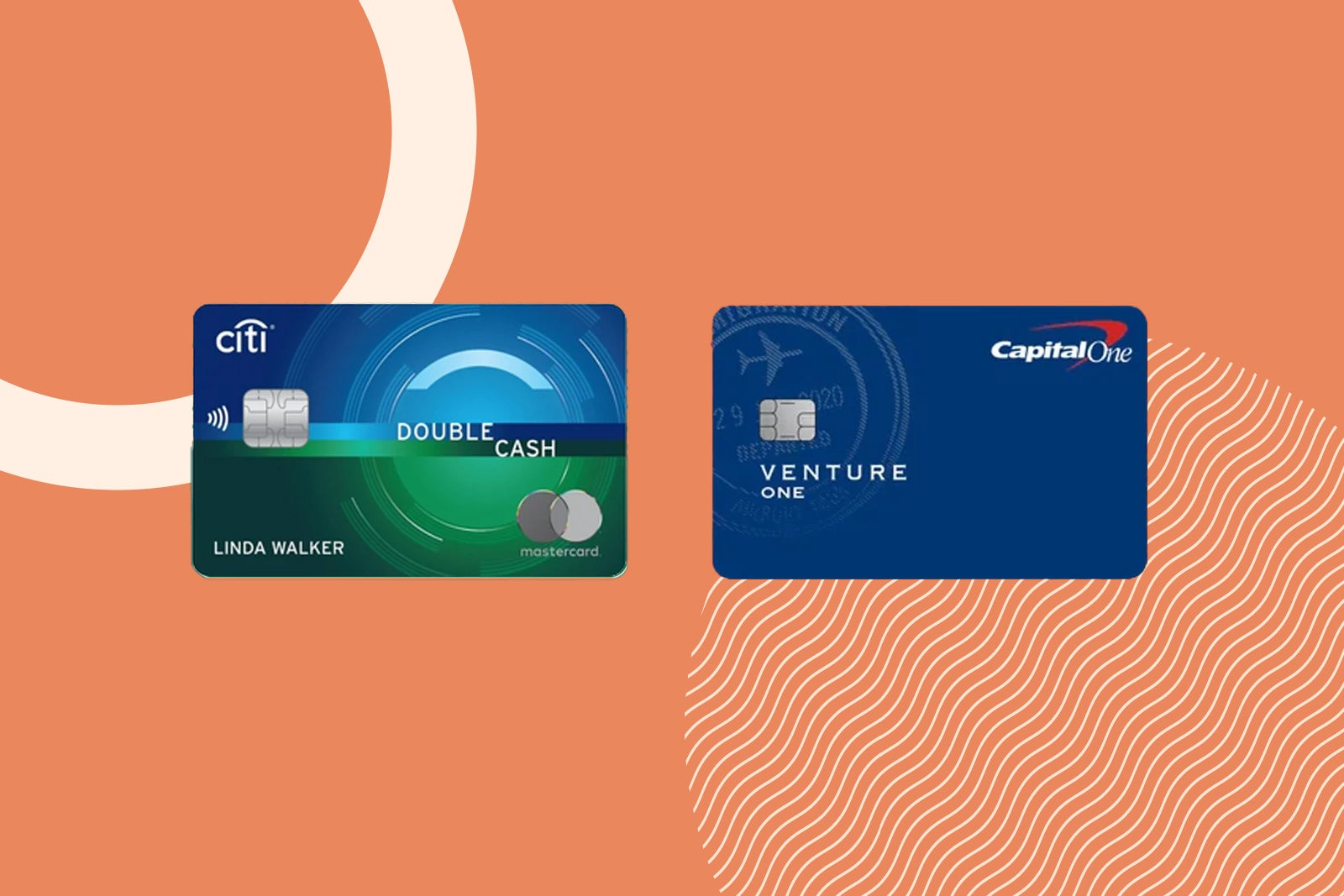
Capital One VentureOne vs. Citi Double Cash: 2 no-annual-fee travel rewards cards face off
Chris Nelson is a credit cards writer for TPG. He specializes in budget travel, hotels, earning elite status through minimal spending and redeeming points for maximum value.
November 20, 2025 • 9 min read
The cards we feature here are from partners who compensate us when you are approved through our site, and this may impact how or where these products appear. We don't cover all available credit cards, but our analysis, reviews, and opinions are entirely from our editorial team. Terms apply to the offers listed on this page. Please view our advertising policy and product review methodology for more information.Editorial disclaimer: Opinions expressed here are the author's alone, not those of any bank, credit card issuer, airline or hotel chain, and have not been reviewed, approved or otherwise endorsed by any of these entities.
Comments
By commenting, you agree to our Community Guidelines to help create a positive space for conversation. The responses below are not provided or commissioned by the bank advertiser, our partners, or The Points Guy (“TPG”). They have not been reviewed, approved, or otherwise endorsed by any of these parties. All responses are submitted by individual contributors, and neither the bank advertiser, our partners, nor TPG are responsible for ensuring that all posts and/or questions are answered.
Related stories
Quick summary
Two flat-rate rewards cards with no annual fee are compared, both offering fully transferable rewards and simple earning structures.
One card provides a higher baseline return on everyday purchases, while the other offers more robust travel-related benefits and no foreign transaction fees.
Both cards allow points transfers to a range of airline and hotel loyalty programs, but transfer ratios and partner access differ.
Redemption options include travel, cash back and gift cards, but the value varies depending on the method chosen.
What to consider
One card charges foreign transaction fees, making it less suitable for international use.
Transferring points to travel partners may yield reduced value on one card unless you hold a premium companion product.
Redemption values fluctuate, with some options offering less than 1 cent per point or mile.
What you'll miss from the article
A detailed side-by-side comparison of benefits, earning rates, transfer partner access and redemption strategies for each card.
Generated by AI with support from our editorial team.
In the world of travel rewards cards that earn fully transferable rewards, there are very few no-annual-fee options. Most require you to hold a second card with an annual fee in order to access transfer partners. Even rarer in this space are cards with flat earning rates.
Let's compare the two and see how they stack up against each other.
Comparing the Capital One VentureOne vs. the Citi Double Cash
Citi Double Cash
VentureOne
Welcome offer
Earn $200 cash back after spending $1,500 on purchases in the first six months from account opening.
Earn 20,000 bonus miles after spending $500 on purchases within the first three months from account opening.
Earning rates
Earn 5% total cash back on Citi Travel bookings (3% cash back on hotels, car rentals and attractions booked through the Citi Travel portal, and unlimited 2% cash back — 1% when you buy, 1% when you pay).
Earn 2% cash back on other purchases (1% when you buy and 1% when you pay).
Earn 5 miles per dollar spent on hotels, vacation rentals and rental cars booked through the Capital One Travel portal.
Earn 1.25 miles per dollar spent on all purchases.
Notable benefits
Access to Citi Entertainment
Secondary car rental insurance
Foreign transaction fees
3%
None
Capital One VentureOne vs. Citi Double Cash welcome offer
New VentureOne cardholders can earn 20,000 bonus miles after spending $500 on purchases within the first three months from account opening.
Based on TPG's November 2025 valuations, this welcome offer is worth $370.
THE POINTS GUY
Meanwhile, new applicants for the Citi Double Cash can earn $200 cash back after spending $1,500 on purchases in the first six months from account opening. This cash back is given in the form of 20,000 Citi ThankYou Rewards points.
According to TPG's November 2025 valuations, this welcome offer is worth $380.
Winner: VentureOne. Even though it is valued slight less, you can earn 5,000 more miles for a third of the spending.
Neither card offers extensive benefits like those found on its more expensive counterparts. However, the VentureOne does have a slight upper hand. With the VentureOne, you'll receive benefits like:
Plus, if you live near a Capital One Cafe, you can receive 50% off beverages when you pay with your card. I've personally been to the Portland cafe every day this past week to get my caffeine fix. I certainly can't complain about a matcha under $4.
FRAZO STUDIO LATINO/GETTY IMAGES
Meanwhile, with the Citi Double Cash, benefits are more limited. You'll receive access to Citi Entertainment, plus common no-annual-fee benefits like $0 liability fraud protection and identity-theft protection.
It's important to note that the Double Cash card charges foreign transaction fees, making it a less favorable option for use abroad.
Winner: VentureOne. Its benefits are more robust than the Double Cash's, and it doesn't charge foreign transaction fees.
Earning rewards with the Capital One VentureOne vs. Citi Double Cash
Both cards earn flat-rate rewards on every purchase. With the VentureOne, you'll earn at least 1.25 miles per dollar spent on all purchases. This is a 2.3% return based on TPG's valuations.
ALEKSANDARNAKIC/GETTY IMAGES
On the other hand, with the Citi Double Cash, you'll earn at least 2% back on all purchases (1% when you buy and 1% when you pay). Cash back is provided in the form of Citi ThankYou points, which equate to a 3.8% return based on TPG's valuations.
Also, both cards earn 5% or 5 miles per dollar spent in rewards on select purchases made through each issuer's respective travel portal, but the Citi Double Cash takes the slight edge as you can earn bonus rewards on attractions, plus hotels and rental cars.
Winner: Citi Double Cash. You'll earn more on nonbonus spending.
Redeeming rewards with the Capital One VentureOne vs. Citi Double Cash
Both cards allow you to redeem rewards in similar ways.
With the VentureOne, you can redeem miles for a statement credit on travel purchases or on travel booked through Capital One Travel at a rate of 1 cent per mile. You can also redeem miles for:
However, these redemption methods all provide a value of less than 1 cent per mile, something I don't recommend. Cash-back redemptions are worth just 0.5 cents per mile, and all the other redemption options are worth 0.8 cents per mile.
Additionally, with the VentureOne, you can redeem rewards at checkout on Amazon and on Capital One Entertainment.
You can redeem ThankYou points for cash back through the Citi Travel portal. Using Shop with Points yields a redemption value under 1 cent per point. Redeeming points for gift cards can occasionally yield a higher return than 1 cent per point. I would avoid these options, besides cash back or travel, altogether.
However, transferring rewards with either card will maximize their value.
Winner: Citi Double Cash, as rewards can be redeemed for cash back at a rate of 1 cent per point.
Transferring rewards with Capital One VentureOne vs. Citi Double Cash
Transferring rewards to travel partners allows you to maximize your rewards with either card. Both issuers have solid rosters of travel partners, including options in Oneworld, SkyTeam and Star Alliance.
I recently added the VentureOne to my wallet and am intrigued by one of its newer partners: I Prefer Hotel Rewards. I'm planning on transferring miles to that program to book a few hotels for an upcoming trip to India.
American Airlines Flagship Business Suite seats. ERIC ROSEN/THE POINTS GUY
Transfer ratios are reduced by 30% with the Double Cash (typically 1:0.7). If you want access to the full transfer ratio, you'll need to hold a card like the Citi Strata Premier® Card (see rates and fees).
If your redemption strategy is solely to transfer rewards to partners, the VentureOne may be a better option despite earning less on purchases.
When you factor in the reduced transfer ratio on the Double Cash, you're effectively getting a 2.7% return with the Double Cash compared to a 2.3% return on the VentureOne, based on TPG's November 2025 valuations.
Winner: VentureOne, since you can transfer to most partners at a full 1:1 ratio.
Should I get the Capital One VentureOne or the Citi Double Cash?
If maximizing rewards earning is your goal, opt for the Citi Double Cash, as it offers a higher baseline earning rate on all purchases.
However, if you value travel perks and having no foreign transaction fees, the VentureOne is the better choice, especially for those who travel abroad or want full 1:1 ratio transfer access without paying an annual fee.
Bottom line
Adding a no-annual-fee, flat-rate rewards card can be a great addition to any credit card setup, as you guarantee you'll earn more than 1% in rewards on every purchase. Even if you're looking for simplicity, with no need to remember bonus categories, or only want to carry one card, the Capital One VentureOne and Citi Double Cash are both solid options.
And since both cards have no annual fee, you could add both to your wallet, earning two easy welcome bonuses and diversifying your rewards currencies.
By commenting, you agree to our Community Guidelines to help create a positive space for conversation. The responses below are not provided or commissioned by the bank advertiser, our partners, or The Points Guy (“TPG”). They have not been reviewed, approved, or otherwise endorsed by any of these parties. All responses are submitted by individual contributors, and neither the bank advertiser, our partners, nor TPG are responsible for ensuring that all posts and/or questions are answered.