The Points Guy believes that credit cards can transform lives, helping you leverage everyday spending for cash back or travel experiences that might otherwise be out of reach. That's why we publish a variety of editorial content and card comparisons: to help you find a great card to turn your goals into reality.
Our site may earn compensation when a customer clicks on a link, when an application is approved, or when an account is opened with our partners, and this may impact how or where these products appear. While we don't cover all available credit cards, our editorial team creates and maintains all of the analysis of these cards, and our content is not influenced nor subject to review by any credit card company, bank or partner prior to (or after) publication. Please view our advertising policy and product review methodology for more information.
Advertiser disclosure
The Points Guy believes that credit cards can transform lives, helping you leverage everyday spending for cash back or travel experiences that might otherwise be out of reach. That's why we publish a variety of editorial content and card comparisons: to help you find a great card to turn your goals into reality.
Our site may earn compensation when a customer clicks on a link, when an application is approved, or when an account is opened with our partners, and this may impact how or where these products appear. While we don't cover all available credit cards, our editorial team creates and maintains all of the analysis of these cards, and our content is not influenced nor subject to review by any credit card company, bank or partner prior to (or after) publication. Please view our advertising policy and product review methodology for more information.
Guides
United Club Card vs. Chase Sapphire Reserve: Which premium option stands out?
Augusta Stone is a credit cards writer for TPG. She joined the TPG team in 2023 and is excited to take points and miles beginners with her on a journey toward maximizing rewards.
August 14, 2025 • 13 min read
The cards we feature here are from partners who compensate us when you are approved through our site, and this may impact how or where these products appear. We don't cover all available credit cards, but our analysis, reviews, and opinions are entirely from our editorial team. Terms apply to the offers listed on this page. Please view our advertising policy and product review methodology for more information.
Editorial note: This is a recurring post, regularly updated with new information and offers.
Editorial disclaimer: Opinions expressed here are the author's alone, not those of any bank, credit card issuer, airline or hotel chain, and have not been reviewed, approved or otherwise endorsed by any of these entities.
Comments
By commenting, you agree to our Community Guidelines to help create a positive space for conversation. The responses below are not provided or commissioned by the bank advertiser, our partners, or The Points Guy (“TPG”). They have not been reviewed, approved, or otherwise endorsed by any of these parties. All responses are submitted by individual contributors, and neither the bank advertiser, our partners, nor TPG are responsible for ensuring that all posts and/or questions are answered.
Related stories
Quick summary
This article compares two leading premium travel rewards cards, focusing on their lounge access, travel credits and reward flexibility.
One card is ideal for those loyal to a specific airline, offering enhanced perks like priority services and expanded award availability.
The other card provides broader travel benefits, flexible credits and transferable rewards for use with multiple loyalty programs.
The analysis highlights which card suits frequent flyers with airline loyalty versus those seeking versatile travel and lifestyle perks.
What to consider
Eligibility for these cards may be affected by recent card openings due to issuer-specific rules.
Some benefits, such as lounge access or travel credits, require meeting certain spending thresholds or activation steps.
TPG's October 2026 valuations estimate one program's points at 2.05 cents each and the other's miles at 1.35 cents each.
What you'll miss from the article
A detailed side-by-side breakdown of benefits, earning categories and redemption options to help you choose the best premium travel card for your needs.
Generated by AI with support from our editorial team.
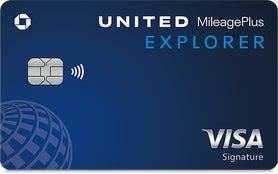
Two of our favorite options represent each of these choices. The (see rates and fees) earns valuable Chase Ultimate Rewards points that you can transfer to multiple programs, whereas the (see rates and fees) is the top-tier choice for United Airlines loyalists who want to earn more with the airline.
Let's walk through earning rates, benefits and lounge access features with each of these premium cards to help you decide which is the best to add to your wallet.
United Club Card vs. Chase Sapphire Reserve comparison
Card
United Club Card
Chase Sapphire Reserve
Welcome bonus
Earn up to 100,000 bonus miles: Earn 90,000 bonus miles after spending $5,000 on purchases in the first three months from account opening. Plus, earn 10,000 bonus miles after adding an authorized user in the first three months from account opening.
Earn 100,000 bonus points after spending $6,000 on purchases in the first three months from account opening.
Earning rates
Earn 11 total miles per dollar spent on eligible United flights
Earn 5 miles per dollar spent on prepaid stays through Renowned Hotels and Resorts
Earn 5 miles per dollar spent on all other eligible United purchases
Earn 2 miles per dollar spent on dining and all other travel purchases
Earn 1 mile per dollar spent on all other purchases
Earn 10 points per dollar spent on Peloton equipment and accessory purchases (through Dec. 31, 2027) of $150 or more, with a maximum of 50,000 points
Earn 8 points per dollar spent on purchases made through Chase Travel℠, including The Edit
Earn 5 points per dollar spent on Lyft rides through Sept. 30, 2027
Earn 4 points per dollar spent on flights and hotels booked directly
Earn 3 points per dollar spent on dining worldwide
Earn 1 point per dollar spent on all other purchases
United Club individual membership: United Club access; one adult guest and dependent children under the age of 18
Spend to earn United Club All Access membership: United Club and Star Alliance lounge access; an additional guest, plus four one-time passes
Chase Sapphire Lounge access
Priority Pass Select membership
Access to Air Canada Maple Leaf lounges when traveling on a Star Alliance airline
Other standout benefits
First and second checked bags free on United flights
Priority check-in, security screening, boarding and baggage for United flights
Shortcut to elite status through an annual boost (starting in 2026) and spending
Expanded award availability for United flights
Mileage discount on United Economy Saver awards
Travel and purchase protections
Annual travel credit
Credits for The Edit credit
Biannual StubHub and Viagogo credit
Biannual dining credit
Monthly Lyft credit and DoorDash promos
Complimentary Apple TV+ and Apple Music subscriptions
Bonus points on redemptions made through Chase Travel
Travel and purchase protections
Complimentary IHG One Platinum elite status (through Dec. 31, 2027)
United Club vs. Sapphire Reserve welcome offer
The is offering up to 100,000 bonus miles: Earn 90,000 bonus miles after spending $5,000 on purchases in the first three months from account opening. Plus, earn 10,000 bonus miles after adding an authorized user in the first three months from account opening. Based on TPG's October 2026 valuations, this welcome bonus is worth up to $1,200 (including the points from adding an authorized user) toward flights.
THE POINTS GUY
Meanwhile, with the , you can earn 100,000 bonus points after spending $6,000 on purchases in the first three months from account opening. TPG's October 2026 valuations place this bonus at $2,050.
When it comes to benefits, these two cards provide lounge access and other valuable perks. Let's compare them.
Lounge access
The offers a United Club membership that grants the primary cardholder, one adult guest and dependent children under 18 years old access to more than 45 United Clubs worldwide. This perk is valued at $750, which more than offsets the card's $695 annual fee.
Then, if you spend $50,000 on purchases with your United Club Card in a calendar year, you'll receive a United Club All Access membership. This upgraded tier includes access to participating Star Alliance lounges and the ability to bring an additional adult guest (for a total of two) into United Clubs. You'll also receive four one-time passes for your authorized users each year.
If you prefer United Club lounges or can spend to unlock All Access membership, then the United Club Card will be a better choice for you. However, Chase continues to expand its own lounge footprint and comes with a broader perk with Priority Pass, giving cardholders access to a higher number of lounges across the globe. So, the Reserve will be the better choice for someone who isn't so loyal to United.
Other benefits
The United Club Card is a great option if you're flying United and looking for premium perks, including:
The first two checked bags are free (for the primary cardholder and a companion on the same reservation)
Premier access: Priority check-in, security screening, boarding and baggage handling (where available)
Expanded award availability
25% back on United inflight purchases
With the card, you'll receive up to $200 in annual statement credits to use on bookings with Renowned Hotels and Resorts. That's United's luxury hotel portal, which grants cardholders perks such as daily breakfast for two, complimentary Wi-Fi and room upgrades at check-in (when available).
You'll also receive credits on ride-hailing, JSX and Instacart purchases, plus Avis/Budget car rentals booked through United's car rental portal. To learn more, check out our full review of the United Club Card.
With the United Club Card, you can spend your way toward elite status with United. You'll receive a boost of 1,500 Premier qualifying points each year, starting in 2026. You'll also receive 1 PQP for every $15 spent on the card (up to 28,000 PQP in a calendar year). This can be applied up to and including the Premier 1K level.
ZACH GRIFF/THE POINTS GUY
As for the , it offers one of the simplest travel credits on the market: a flexible $300 statement credit in travel. This credit automatically kicks in on your first $300 in travel purchases you make with the card each account anniversary year. Plus, Chase broadly defines travel, meaning you'll receive it automatically on the first $300 you spend on purchases for everything from flights and hotels to tolls and parking.
Other standout Sapphire Reserve benefits include:
Up to $500 in annual credits with The Edit, earned as two up to $250 credits
Up to $300 in annual StubHub and Viagogo credits (through Dec. 31, 2027), earned as two $150 biannual credits
Up to $300 in annual dining credit with Sapphire Reserve Exclusive Tables, earned as two $150 biannual credits
Up to $324 annually in complimentary Apple TV+ and Apple Music subscriptions (through June 22, 2027)
Up to $120 in annual in-app Lyft credits (through Sept. 30, 2027)
Up to $120 in Peloton credits, earned as $10 monthly credits (through Dec. 31, 2027; activation required)
The Sapphire Reserve outshines the United Club Card for most travelers thanks to its flexible travel credit and broad list of perks that can apply to multiple facets of travel and lifestyle purchases. However, the United Club Card is better for those who are extremely loyal to United since its standout perks are related to flying with the airline.
Winner: Sapphire Reserve. It has broader benefits for cardholders to use when traveling and making daily purchases.
Earning rewards on the United Club vs. Sapphire Reserve
When you pay with the , you'll earn:
11 total miles per dollar spent on eligible United flights
5 miles per dollar spent on stays purchased through Renowned Hotels and Resorts
5 miles per dollar spent on all other eligible United purchases
2 miles per dollar spent on dining and all other travel
1 mile per dollar spent on all other purchases
That’s a 13.2% return when you use the card to pay for United flights, which is higher than any other airline credit card.
ZACH GRIFF/THE POINTS GUY
Meanwhile, the earns the following:
10 points per dollar spent on Peloton equipment and accessory purchases (through Dec. 31, 2027) of $150 or more, with a maximum of 50,000 points
8 points per dollar spent on purchases made through Chase Travel, including The Edit
5 points per dollar spent on Lyft rides through Sept. 30, 2027
4 points per dollar spent on flights and hotels booked directly
3 points per dollar spent on dining worldwide
1 point per dollar spent on all other purchases
The United Club shines brighter when you make purchases with United and is the better option if you frequently book with the airline and want to collect United MileagePlus miles.
However, with the Sapphire Reserve, you'll receive a better return in a broader list of bonus categories, including flights and hotels booked directly and dining. It is important to note that the United Club Card earns bonus points on general travel, while the Sapphire Reserve does not. However, you can earn bonus points for using Chase Travel.
Winner: Sapphire Reserve. The United Club offers lucrative earnings on United flights, but the Sapphire Reserve’s broader categories generally win out.
Redeeming and transferring rewards on the United Club vs. Sapphire Reserve
The offers more flexible rewards than the , making it a better option for most travelers looking to maximize rewards. You'll get the most value from your Chase Ultimate Rewards points by transferring them to one of Chase's 14 airline and hotel partners.
Chase's solid list of transfer partners includes United, which means you can still use your points earned with the Sapphire Reserve toward United flights if you want to fly the airline and its partners.
Plus, the flexibility of Chase points opens up the potential for incredible redemptions when you transfer your points. This is especially true with the award-friendly World of Hyatt hotel program.
For example, you could stay at the luxurious Park Hyatt Sydney for 35,000 to 45,000 points per night, which would be a fantastic deal for your points.
PARK HYATT SYDNEY
With the , you can also book travel through Chase Travel with your points for up to 2 cents per point, thanks to Points Boost, depending on the redemption. This is a great option for boutique hotels that don’t belong to a larger brand. It’s also great for booking flights when cash prices are low.
Meanwhile, United miles are much more restrictive since they can only be redeemed for United flights, flights with its partners and other United-related purchases. They are also subject to devaluation. Dynamic award pricing also means that redemption rates vary significantly depending on the ticket you book.
However, the MileagePlus program still offers good value through sweet spots. For instance, Katie Genter, TPG's lead points and miles writer, redeemed 6,000 United miles per person for a one-way flight from Amsterdam to Munich.
There are also other ways to find value in the program, such as the United Excursionist Perk or booking partner awards with United miles. For example, Rachel Craft, a travel writer at TPG, redeemed 88,000 United miles for a one-way business-class ticket on Ethiopian Airlines from Denver to Antananarivo, Madagascar.
Winner: Sapphire Reserve. Its redemption and transfer options are much more flexible.
Should I get the United Club or Sapphire Reserve?
The is the better all-around travel card, as it earns valuable Ultimate Rewards points across multiple high-earning bonus categories. Plus, you can transfer these points to United if you're really into the airline. However, the card features multiple statement credits that may be difficult for some to fully use, and the $795 annual fee is higher than the United Club Card.
The is the better option if you are fiercely loyal to United, want access to United Clubs and value priority perks when flying the airline. Plus, the annual fee is slightly lower, at $695.
Bottom line
Both the Chase Sapphire Reserve and the United Club Card are solid premium cards, but they serve different purposes.
If you're a United devotee looking for a suite of perks when you fly with the airline, the United Club is the better option. For travelers looking for broader luxury perks, multiple credits to maximize and more flexible rewards, the Sapphire Reserve is the choice.
Remember that no matter which card you choose, they’re both issued by Chase and will be subjected to the issuer's 5/24 rule. If you’ve opened five or more personal credit cards in the past two years, you're unlikely to be approved for either card.
By commenting, you agree to our Community Guidelines to help create a positive space for conversation. The responses below are not provided or commissioned by the bank advertiser, our partners, or The Points Guy (“TPG”). They have not been reviewed, approved, or otherwise endorsed by any of these parties. All responses are submitted by individual contributors, and neither the bank advertiser, our partners, nor TPG are responsible for ensuring that all posts and/or questions are answered.