Olivia Mittak is a credit cards editor at TPG. She specializes in maximizing earn for points and miles, finding the best welcome bonuses and choosing the right credit cards for your wallet.
November 4, 2025 • 10 min read
The cards we feature here are from partners who compensate us when you are approved through our site, and this may impact how or where these products appear. We don't cover all available credit cards, but our analysis, reviews, and opinions are entirely from our editorial team. Terms apply to the offers listed on this page. Please view our advertising policy and product review methodology for more information.Editorial disclaimer: Opinions expressed here are the author's alone, not those of any bank, credit card issuer, airline or hotel chain, and have not been reviewed, approved or otherwise endorsed by any of these entities.
Comments
By commenting, you agree to our Community Guidelines to help create a positive space for conversation. The responses below are not provided or commissioned by the bank advertiser, our partners, or The Points Guy (“TPG”). They have not been reviewed, approved, or otherwise endorsed by any of these parties. All responses are submitted by individual contributors, and neither the bank advertiser, our partners, nor TPG are responsible for ensuring that all posts and/or questions are answered.
Related stories
Quick summary
The article highlights lesser-known credit cards that may offer unique value depending on individual needs, such as business, travel or credit-building purposes.
Some cards provide straightforward features like basic travel protections or incentives for timely payments, while others focus on credit-building or debt management.
Entry-level airline and hotel cards are discussed as options for infrequent travelers or brand enthusiasts seeking select perks without high costs.
The importance of evaluating all available card options, not just the most popular ones, is emphasized for finding the best personal fit.
What to consider
Certain cards are no longer open to new applicants but may be accessed through product changes after meeting specific requirements.
Some options lack robust benefits or rewards but compensate with features like credit line increases or introductory interest-free periods.
Eligibility, statement credits and protections vary, so it's important to review each card's terms and intended audience carefully.
What you'll miss from the article
A detailed breakdown of overlooked cards, including their specific features, ideal users and how they compare to more prominent options.
Generated by AI with support from our editorial team.
We often talk about the same cards here at TPG. The (see rates and fees), and get a lot of attention around here, among many other top-tier cards from the major issuers.
There's a good reason for that since these cards offer great value to most travelers. However, some other cards from major issuers hardly get any buzz, which begs the question:are they actually worth it?
For me, the answer is yes — any card can be worth it for the right cardholder. So let's see what each of these has to offer.
American Express
American Express has a reputation for luxury, with card products that offer far-reaching lounge access, hotel elite status and numerous statement credits. Amid all of the buzz that some of its cards generate, a few of its offerings get lost in the noise.
The information for the Plum Card Amex has been collected independently by The Points Guy. The card details on this page have not been reviewed or provided by the card issuer.
THE POINTS GUY
If you're in the market for a no-frills business card, the Plum Card may be a good option. However, its $250 annual fee may be hard to stomach given this card doesn't offer any significant benefits.
You'll only earn rewards on the Plum Card if you pay your bill within 10 days of your statement closing date. If so, you'll receive 1.5% cash back on eligible charges. This could be a good way to encourage better spending habits, as overspending may prevent you from paying your bills on time and earning rewards.
This card offers some basic travel and purchase protections, but nothing as comprehensive as those on Amex's more popular business cards.
Many overlook the fact that the popular American Express® Classic Green Card (no longer accepting applications) has a business counterpart: the .
The information for the American Express Classic Green Card has been collected independently by The Points Guy. The card details on this page have not been reviewed or provided by the card issuer.
THE POINTS GUY
Unlike the Plum Card, the Business Green has a welcome offer. It's fairly basic, but that's to be expected with a low $95 annual fee (see rates and fees).
New cardmembers can earn 15,000 bonus points after spending $3,000 on purchases in the first three months of card membership.
It's unusual for an Amex business card to have a lower annual fee than its personal counterpart. The personal Amex Classic Green currently costs $150 each year, but that price tag comes with a few benefits to help offset it.
With the Business Green, you don't have any statement credits to help justify the $95 annual fee. However, you'll earn valuable Membership Rewards points on every purchase. Cardmembers earn 2 points per dollar spent on flights and prepaid hotels booked on amextravel.com and 1 point per dollar spent on all other eligible purchases.
Plus, you'll get a solid range of travel and purchase protections.
If you want an affordable way for your business to enter the Membership Rewards program, the Business Green card may be a good bet.
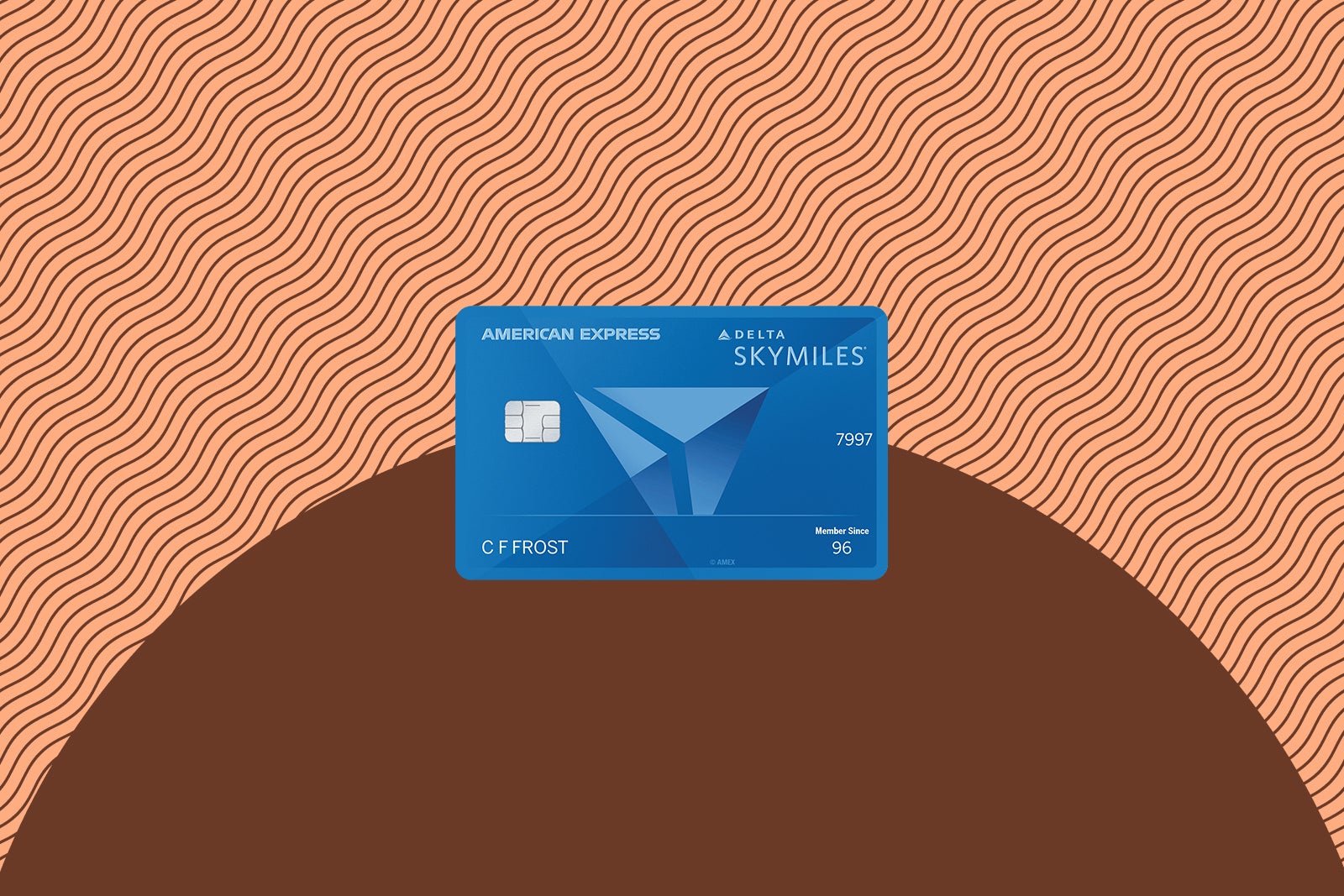
Delta's SkyMiles cards are among the most well-known airline cards, yet one of the options in this lineup often gets forgotten: the .
THE POINTS GUY
This is the only Delta cobranded card that doesn't charge an annual fee (see rates and fees), so it's worth considering for beginner or infrequent travelers who fly Delta occasionally. If you don't fly with Delta more than once a year, there's no need to have a Delta card with an annual fee.
The Delta Blue doesn't offer any statement credits, but that's not a huge deal since there's no annual fee to justify. You'll still receive 20% back in the form of a statement credit on inflight food and beverage purchases, as well as a decent array of travel and shopping protections.
Fortunately, this card does come with a welcome offer. New cardmembers can earn 10,000 bonus miles after spending $1,000 on purchases in the first six months of card membership.
Cardmembers also earn 2 miles per dollar spent with Delta and dining at restaurants worldwide (including takeout and delivery in the U.S.), and 1 mile per dollar spent on all other purchases.
Most of Capital One's cards get a fair amount of attention, since they have a reputation for being simple to use and easy to justify. Still, there's one card from this issuer that I don't see a lot of chatter about.
Getting your first credit card from a reputable issuer like Capital One is always a good idea. I didn't follow that advice when I opened my first card, and it ended up costing me in the long run.
As a credit-building card, the Capital One Platinum doesn't offer any rewards or standout benefits. However, after six months, you'll automatically be considered for a credit line increase, which can be a great incentive to keep your account in good standing.
Chase is arguably the king of cobranded credit cards, with more on offer than any of the other major issuers. Given that, it's not surprising that a couple fall through the cracks.
United Gateway Card
The entry-level (see rates and fees) can be a worthwhile card for anyone who flies with United just once a year.
THE POINTS GUY
It doesn't have an annual fee, so cardholders don't need to worry about getting a lot of value out of it year-to-year. You'll get 25% back as a statement credit on United Club premium drinks, plus inflight food, beverages and Wi-Fi.
If you spend $10,000 on this card in a calendar year, you'll also receive your first two checked bags for free. I don't recommend going out of your way to spend that much on this card each year, but it's a nice perk if you want this to be the only card in your wallet.
The Gateway offers a solid welcome bonus for a beginner airline card. New cardholders can earn up to 50,000 bonus miles: Earn 40,000 bonus miles after spending $1,000 on purchases in the first three months from account opening. Plus, earn 10,000 bonus miles after adding an authorized user in the first three months from account opening.
Cardholders can also earn 2 miles per dollar spent on eligible United purchases, as well as at gas stations and on local transit and commuting.
The Ritz-Carlton™ Credit Card is unique on this list, since it's currently closed to new applicants. However, you can still get this card by product-changing an existing Chase Marriott card to it. Keep in mind, however, that this path is only open to you if you've had that Marriott card for at least 12 months.
The information for the Ritz-Carlton Credit Card has been collected independently by The Points Guy. The card details on this page have not been reviewed or provided by the card issuer.
THE POINTS GUY
I recommend considering the Ritz-Carlton card if you're a Marriott enthusiast or you want Chase Sapphire lounge access for less than what you'd pay with other premium Chase cards.
While this card's $450 annual fee is nothing to brush off, it's easily offset with perks like an annual free night award worth up to 85,000 points and a flexible $300 airline credit.
Even if you don't stay with Marriott often, the Ritz-Carlton card may be worth it solely for unlimited Sapphire lounge access and that airline credit.
Citi made waves recently with its overhaul of the Strata lineup of cards, but a couple of other credit cards from this issuer are also worth some attention.
Citi Diamond Preferred
The (see rates and fees) targets those looking to consolidate debt or pay off a large purchase over time.
THE POINTS GUY
At TPG, we always preach paying your credit card bills off in full, every cycle. Life happens, though, and sometimes that isn't possible. A card like the Citi Diamond Preferred won't earn rewards or provide statement credits, but it can help you rein in your finances.
New cardholders will receive 0% APR on all purchases for the first 12 months and 0% APR on balance transfers for 21 months (then a variable rate of 16.74%—27.49% applies). That's plenty of time to pay off a big expense or significantly reduce accumulated debt.
Many balance transfer cards only offer a 0% introductory APR period for balance transfers, so receiving one for both purchases and balance transfers is a great perk.
Amid all the buzz around the most popular credit cards on the market, it's easy to skip over some of these cards. But they all have something to offer for the right cardholder, so it's worth looking closely to determine whether one (or more) makes sense for your wallet.
Sometimes, one of the most valuable cards in your arsenal isn't one you'd expect. I always recommend evaluating all of the cards an issuer has available, since you never know what you might find.
By commenting, you agree to our Community Guidelines to help create a positive space for conversation. The responses below are not provided or commissioned by the bank advertiser, our partners, or The Points Guy (“TPG”). They have not been reviewed, approved, or otherwise endorsed by any of these parties. All responses are submitted by individual contributors, and neither the bank advertiser, our partners, nor TPG are responsible for ensuring that all posts and/or questions are answered.